Search This Blog

Friday, December 25, 2020

Russia cuts size of COVID-19 vaccine study, stops enrollment

 Russia's Health Ministry agreed Wednesday to cut the size of a study of a domestically developed coronavirus vaccine and to stop the enrollment of volunteers.

The decision comes a week after developers said enrollment of study volunteers has slowed since Russia began giving out the Sputnik V  while the late-stage study was still continuing. They also cited ethical concerns about giving a dummy shot to some of the volunteers. The study size was cut to about 31,000 from 40,000 participants.

Alexander Gintsburg, head of the Gamaleya Center, the state-run medical research institute that developed Sputnik V, said that many of those who received dummy shots had figured it out and gotten vaccinated.

If large numbers of volunteers in the placebo group drop out, it could affect the results, Svetlana Zavidova, executive director of Russia's Association of Clinical Trials Organizations, said.

"They simply won't be able to gather (the necessary) statistics," she said.

Russia has been widely criticized for giving Sputnik V regulatory approval in August after the vaccine only had been tested on a few dozen people. Two weeks later, the 40,000-volunteeer study was announced.

Despite warnings to wait for the study's results, Russian authorities started offering it to people in risk groups—such as medical workers and teachers—within weeks of approval.

President Vladimir Putin, who has publicly hailed Sputnik V, ordered the Russian government this month to start a large-scale immunization campaign. By mid-December, over 150,000 people had been vaccinated, according to Gintsburg.

In a statement, the Health Ministry said that interim study data on the vaccine's safety and effectiveness was considered as part of the decision to reduce the study size. The ministry said the study would continue and participants will be monitored for at least six more months.

Gintsburg had suggested giving the vaccine to all volunteers who received the placebo shot, but the ministry said there would be no "unblinding" of the study at this point. In other words, volunteers will not be told whether they received real or dummy vaccines.

Kirill Dmitriev, head of the Russian Direct Investment Fund that bankrolled Sputnik V, noted that U.S. drugmaker Johnson & Johnson recently reduced the size of its vaccine trial.

Sputnik V's developers have said data suggests the vaccine was 91% effective, a conclusion based on 78  infections among nearly 23,000 participants. That's far fewer cases than Western drugmakers have accumulated during final testing before analyzing how well their candidate worked. Important demographic and other details from the study also have not been released.

Western vaccine developers have released much more information, while a lot about the Russian vaccine remains unknown at this point, said Ilya Yasny, head of scientific research at the Russian investment fund Inbio Ventures.

"We don't have any data about the vaccine's proven effectiveness aside from what Gintsburg and the Russian Direct Investment Fund says," Yasny said.

https://medicalxpress.com/news/2020-12-russia-size-covid-vaccine-enrollment.html

Coronavirus variant: What is spike protein? Why are mutations on it important?

 The emergence of a new variant of coronavirus has sparked renewed interest in the part of the virus known as the spike protein.

The new variant carries several peculiar changes to the spike  when compared to other closely related variants—and that's one of the reasons why it's more concerning than other, harmless changes to the  we have observed before. The new mutations may alter the biochemistry of the spike and could affect how transmissible the virus is.

The spike protein is also the basis of current COVID-19 vaccines, which seek to generate an immune response against it. But what exactly is the spike protein and why is it so important?

Cell invaders

In the world of parasites, many bacterial or fungal pathogens can survive on their own without a  to infect. But viruses can't. Instead, they have to get inside  in order to replicate, where they use the cell's own biochemical machinery to build new virus particles and spread to other cells or individuals.

Our cells have evolved to ward off such intrusions. One of the major defenses cellular life has against invaders is its outer coating, which is composed of a fatty layer that holds in all the enzymes, proteins and DNA that make up a cell. Due to the biochemical nature of fats, the outer surface is highly negatively charged and repellent. Viruses must traverse this barrier to gain access to the cell.

New coronavirus variant: what is the spike protein and why are mutations on it important?
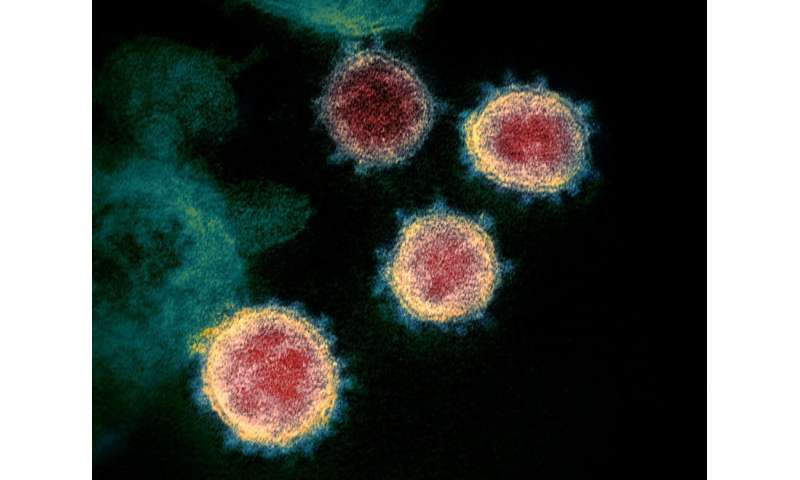
The SARS-CoV-2 coronavirus molecule. Credit: Klerka/Shutterstock

Like cellular life, coronaviruses themselves are surrounded by a fatty membrane known as an envelope. In order to gain entry to the inside of the cell, enveloped viruses use proteins (or glycoproteins as they are frequently covered in slippery sugar molecules) to fuse their own membrane to that of cells' and take over the cell.

The spike protein of coronaviruses is one such viral glycoprotein. Ebola viruses have one, the influenza virus has two, and herpes simplex virus has five.

The architecture of the spike

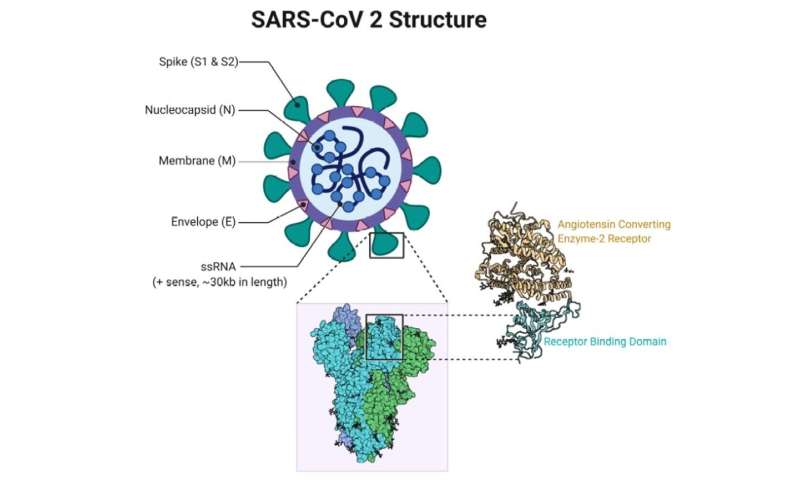
The spike protein is composed of a linear chain of 1,273 amino acids, neatly folded into a structure, which is studded with up to 23 sugar molecules. Spike proteins like to stick together and three separate spike molecules bind to each other to form a functional "trimeric" unit.

The spike can be subdivided into distinct functional units, known as domains, which fulfill different biochemical functions of the protein, such as binding to the target cell, fusing with the membrane, and allowing the spike to sit on the viral envelope.

New coronavirus variant: what is the spike protein and why are mutations on it important?
The SARS-CoV-2 coronavirus molecule. Credit: Klerka/Shutterstock

The spike protein of SARS-CoV-2 is stuck on the roughly spherical viral particle, embedded within the envelope and projecting out into space, ready to cling on to unsuspecting cells. There are estimated to be roughly 26 spike trimers per virus.

One of these functional units binds to a protein on the surface of our cells called ACE2, triggering uptake of the virus particle and eventually membrane fusion. The spike is also involved in other processes like assembly, structural stability and immune evasion.

Vaccine vs spike protein

Given how crucial the spike protein is to the virus, many antiviral vaccines or drugs are targeted to viral glycoproteins.

For SARS-CoV-2, the vaccines produced by Pfizer/BioNTech and Moderna give instructions to our immune system to make our own version of the spike protein, which happens shortly following immunization. Production of the spike inside our cells then starts the process of protective antibody and T cell production.

  • New coronavirus variant: what is the spike protein and why are mutations on it important?
    The SARS-CoV-2 virus is changing over time. Credit: NIAID-RMLCC BY
  • New coronavirus variant: what is the spike protein and why are mutations on it important?
    The spike protein is made up of different sections that perform different functions. Credit: Rohan Bir SinghCC BY
  • New coronavirus variant: what is the spike protein and why are mutations on it important?
    The SARS-CoV-2 virus is changing over time. Credit: NIAID-RMLCC BY
  • New coronavirus variant: what is the spike protein and why are mutations on it important?
    The spike protein is made up of different sections that perform different functions. Credit: Rohan Bir SinghCC BY

One of the most concerning features of the spike protein of SARS-CoV-2 is how it moves or changes over time during the evolution of the virus. Encoded within the viral genome, the protein can mutate and changes its biochemical properties as the virus evolves.

Most mutations will not be beneficial and either stop the spike protein from working or have no effect on its function. But some may cause changes that give the new version of the virus a selective advantage by making it more transmissible or infectious.

One way this could occur is through a mutation on a part of the spike protein that prevents protective antibodies from binding to it. Another way would be to make the spikes "stickier" for our cells.

This is why new mutations that alter how the spike functions are of particular concern—they may impact how we control the spread of SARS-CoV-2. The new variants found in the UK and elsewhere have mutations across spike and in parts of the protein involved in getting inside your cells.

Experiments will have to be conducted in the lab to ascertain if—and how—these mutations significantly change the spike, and whether our current control measures remain effective.

https://phys.org/news/2020-12-coronavirus-variant-spike-protein-mutations.html

Studies find having COVID-19 may protect against reinfection

 Two new studies give encouraging evidence that having COVID-19 may offer some protection against future infections. Researchers found that people who made antibodies to the coronavirus were much less likely to test positive again for up to six months and maybe longer.

The results bode well for vaccines, which provoke the  to make antibodies—substances that attach to a virus and help it be eliminated.

Researchers found that people with antibodies from natural infections were "at much lower risk ... on the order of the same kind of protection you'd get from an effective vaccine," of getting the virus again, said Dr. Ned Sharpless, director of the U.S. National Cancer Institute.

"It's very, very rare" to get reinfected, he said.

The institute's study had nothing to do with cancer—many federal researchers have shifted to  work because of the pandemic.

Both studies used two types of tests. One is a  for antibodies, which can linger for many months after . The other type of  uses nasal or other samples to detect the virus itself or bits of it, suggesting current or recent infection.

One study, published Wednesday by the New England Journal of Medicine, involved more than 12,500  at Oxford University Hospitals in the United Kingdom. Among the 1,265 who had coronavirus antibodies at the outset, only two had positive results on tests to detect active infection in the following six months and neither developed symptoms.

That contrasts with the 11,364 workers who initially did not have antibodies; 223 of them tested positive for infection in the roughly six months that followed.

The National Cancer Institute study involved more than 3 million people who had antibody tests from two private labs in the United States. Only 0.3% of those who initially had antibodies later tested positive for the coronavirus, compared with 3% of those who lacked such antibodies.

"It's very gratifying" to see that the Oxford researchers saw the same risk reduction—10 times less likely to have a second infection if  were present, Sharpless said.

His institute's report was posted on a website scientists use to share research and is under review at a major medical journal.

The findings are "not a surprise ... but it's really reassuring because it tells people that immunity to the virus is common," said Joshua Wolf, an infectious disease specialist at St. Jude Children's Research Hospital in Memphis who had no role in either study.

Antibodies themselves may not be giving the protection, they might just be a sign that other parts of the immune system, such as T cells, are able to fight off any new exposures to the , he said.

"We don't know how long-lasting this immunity is," Wolf added. Cases of people getting COVID-19 more than once have been confirmed, so "people still need to protect themselves and others by preventing reinfection."

https://medicalxpress.com/news/2020-12-covid-reinfection.html


Asymptomatic transmission of covid-19


  • Allyson M Pollock, professor of public health1,  
  • James Lancaster, independent researcher2

  • BMJ 2020371 doi: https://doi.org/10.1136/bmj.m4851
    PDF: https://www.bmj.com/content/371/bmj.m4851.full.pdf

    What we know, and what we don’t

    The UK’s £100bn “Operation Moonshot” to roll out mass testing for covid-19 to cities and universities around the country raises two key questions. How infectious are people who test positive but have no symptoms? And, what is their contribution to transmission of live virus?

    Unusually in disease management, a positive test result is the sole criterion for a covid-19 case. Normally, a test is a support for clinical diagnosis, not a substitute. This lack of clinical oversight means we know very little about the proportions of people with positive results who are truly asymptomatic throughout the course of their infection and the proportions who are paucisymptomatic (subclinical), presymptomatic (go on to develop symptoms later), or post-infection (with viral RNA fragments still detectable from an earlier infection).

    Earlier estimates that 80% of infections are asymptomatic were too high and have since been revised down to between 17% and 20% of people with infections.12 Studies estimating this proportion are limited by heterogeneity in case definitions, incomplete symptom assessment, and inadequate retrospective and prospective follow-up of symptoms, however.3 Around 49% of people initially defined as asymptomatic go on to develop symptoms.45

    It’s also unclear to what extent people with no symptoms transmit SARS-CoV-2. The only test for live virus is viral culture. PCR and lateral flow tests do not distinguish live virus. No test of infection or infectiousness is currently available for routine use.678 As things stand, a person who tests positive with any kind of test may or may not have an active infection with live virus, and may or may not be infectious.9

    The relations between viral load, viral shedding, infection, infectiousness, and duration of infectiousness are not well understood. In a recent systematic review, no study was able to culture live virus from symptomatic participants after the ninth day of illness, despite persistently high viral loads in quantitative PCR diagnostic tests. However, cycle threshold (Ct) values from PCR tests are not direct measures of viral load and are subject to error.10

    While viral load seems to be similar in people with and without symptoms, the presence of RNA does not necessarily represent transmissible live virus. The duration of viral RNA shedding (interval between first and last positive PCR result for any sample) is shorter in people who remain asymptomatic, so they are probably less infectious than people who develop symptoms.11

    Viral culture studies suggest that people with SARS-CoV-2 can become infectious one to two days before the onset of symptoms and continue to be infectious up to seven days thereafter; viable virus is relatively short lived.7 Symptomatic and presymptomatic transmission have a greater role in the spread of SARS-CoV-2 than truly asymptomatic transmission.121213

    The transmission rates to contacts within a specific group (secondary attack rate) may be 3-25 times lower for people who are asymptomatic than for those with symptoms.1121415 A city-wide prevalence study of almost 10 million people in Wuhan found no evidence of asymptomatic transmission.16 Coughing, which is a prominent symptom of covid-19, may result in far more viral particles being shed than talking and breathing, so people with symptomatic infections are more contagious, irrespective of close contact.17 On the other hand, asymptomatic and presymptomatic people may have more contacts than symptomatic people (who are isolating), underlining the importance of hand washing and social distancing measures for everyone.

    Missed opportunity

    By failing to integrate testing into clinical care, we have missed an important opportunity to better understand the role of asymptomatic infection in transmission. Given the variation in prevalence and testing strategies by region, the proportions of people with positive and negative test results should be published alongside the purpose of the testing strategy and the population tested (screening healthy populations in schools, universities, and health and social care, or testing people with symptoms). Government regulations on recording the age, ethnicity, sex, and place of residence of people with positive results must also be followed.18

    Searching for people who are asymptomatic yet infectious is like searching for needles that appear and reappear transiently in haystacks, particularly when rates are falling.19 Mass testing risks the harmful diversion of scarce resources. A further concern is the use of inadequately evaluated tests as screening tools in healthy populations.20

    The UK’s testing strategy needs to be reset in line with the Scientific Advisory Group for Emergencies’ recommendation that “Prioritising rapid testing of symptomatic people is likely to have a greater impact on identifying positive cases and reducing transmission than frequent testing of asymptomatic people in an outbreak area.”21

    Testing should be reintegrated into clinical care with clinical and public health oversight and case definitions based on clinical diagnosis. Carefully designed prospective studies of cases and contacts are needed to estimate transmission rates by people with and without symptoms. These should include careful investigations of outbreaks—for example, testing all contacts of people with a clear history of exposure, especially in high risk environments such as nursing homes, prisons, and other institutional settings.

    Coronavirus infection surveys by the Office for National Statistics22 and the REACT survey23 could be expanded to include clinical follow-up of participants combined with tests of viral load and viral cultures. The absence of strong evidence that asymptomatic people are a driver of transmission is another good reason for pausing the roll out of mass testing in schools, universities, and communities.

    https://www.bmj.com/content/371/bmj.m4851

    New coronavirus variant in S .Africa: Are concerns justified?

     South Africa has identified a new variant of the novel coronavirus, which authorities believe is driving a surge in COVID-19 infections that could overwhelm its healthcare system.

    Several countries, including Britain which has found the mutant variant in cases linked to South Africa, have banned flights from South Africa, disrupting holiday travel and frustrating tour operators.

    WHAT IS THE NEW VARIANT?

    The new variant, referred to as 501.V2, was discovered by a network of scientists around South Africa who have been tracking the genetics of the SARS-COV-2 virus.

    The variant appears to be focused in the south and southeast regions of the country and has been dominating findings from samples collected since October, they say.

    First identified in Nelson Mandela Bay, along South Africa's east coast, it spread rapidly to other districts in the Eastern Cape, and to the Western Cape and KwaZulu Natal (KZN) provinces.

    Scientists say the variant is different from others circulating in South Africa because it has multiple mutations in the important "spike" protein that the virus uses to infect human cells.

    It has also been associated with a higher viral load, meaning a higher concentration of virus particles in patients' bodies, possibly contributing to higher levels of transmission.

    Between 80% and 90% of new cases in the country are carrying the mutant variant, according to health authorities.

    ARE THE CONCERNS JUSTIFIED?

    All viruses, including the one that causes COVID-19, change over time, and there have been hundreds of variations of this virus identified worldwide.

    South African scientists say there is no clear evidence at this stage that this variant is associated with more severe disease or worse outcomes. However, it does appear to spread faster than previous iterations.

    "What has happened with the sheer number of infections growing very fast is that's overwhelmed really fast the health care system," said Professor Tulio de Oliveira, director of the KZN Research Innovation and Sequencing Platform (KRISP), who helped conduct genome sequencing on South Africa’s mutant variant. "And when that happens, we have a big spike of increased mortality."

    The positivity rate - or the percentage of all coronavirus tests performed that are actually positive - stood at 26% as of Dec. 23, around double the average rate of infection before December, when the virus showed signs of waning.

    In the first wave of infections, which peaked during the winter months between June and July, the positivity rate reached as high as 27%.

    "The rate of spread is much faster than the first wave and we will surpass the peak of the first wave in the coming days," health minister Zweli Mkhize said on Wednesday.

    IS IT DIFFERENT TO THE UK VARIANT?

    The variants reported by South Africa and the UK share a common change in the spike protein that may make them more infectious. But they are different variants, and sequence analysis revealed that they originated separately, the World Health Organization said.

    Dr Andrew Preston, reader in microbial pathogenesis at the University of Bath, said, "The 'South African' variant is distinct from the UK variant, but both contain an unusually high number of mutations compared to other SARS-CoV-2 lineages."

    WILL COVID-19 VACCINES PROTECT AGAINST THIS VARIANT?

    South African authorities say it is too early to say whether the vaccines currently being deployed in Britain and the United States, or other COVID-19 shots in development, will protect against the new variant.

    Vaccine developers including AstraZeneca, BioNTech and Moderna Inc said this week that they expect their shots to still work against the UK variant. 

    https://www.marketscreener.com/quote/stock/MODERNA-INC-47437573/news/The-new-coronavirus-variant-in-S-Africa-Are-concerns-justified-32085492/

    Potential Culprit for Covid-19 Vaccine Allergic Reaction Eyed

     Scientists are eyeing a potential culprit causing the allergic reactions to the Pfizer Inc. and BioNTech SE Covid-19 vaccine: the compound polyethylene glycol, also known as PEG.

    Six severe allergic reactions to the vaccine have been reported in the U.S., according to the Centers for Disease Control and Prevention, out of 272,001 doses administered through Dec. 19. At least two cases of anaphylaxis have also occurred in the U.K. People in the U.S. began receiving Moderna Inc.'s vaccine Monday, and no allergic reactions to it have been reported so far.

    In a statement, Pfizer said it "will closely monitor all reports suggestive of serious allergic reactions following vaccination." The company said its prescribing information includes a warning that "appropriate medical treatment and supervision should always be readily available in case of a rare anaphylactic event following the administration of the vaccine."

    Scientists are homing in on PEG as a potential suspect even as health authorities say they are still investigating the incidents and plan to study the issue further. The compound is found in other drugs and is known to trigger anaphylaxis on rare occasions.

    "Although I think we're just speculating here...it is known that one of the components that is present in both of the vaccines -- polyethylene glycol -- can be associated, uncommonly, with allergic reactions," said Peter Marks, director of the Food and Drug Administration's Center for Biologics Evaluation and Research, at a Dec. 18 press conference.

    "What we're learning now is that those allergic reactions could be somewhat more common than the highly uncommon that we thought they were because people do get exposed to polyethylene glycol in various pharmaceutical preparations," he said, adding that the FDA also plans to watch the Moderna vaccine rollout "very closely" since both vaccines contain PEG.

    In both the Pfizer-BioNTech and Moderna vaccines, PEG is part of the fatty envelope that surrounds the messenger RNA, the main ingredient in the vaccine. Once the mRNA gets into cells, it teaches them to make a protein that resembles the spike protein found on the surface of the coronavirus. That induces a specific immune response that shores up the body's defenses for when it is exposed to the real virus. The PEG-containing fatty envelope helps ensure the mRNA gets across the cell membrane and into the cells.

    Allergies to PEG are extremely rare, allergists and immunologists say, and it is possible that the few people who had reactions after getting the Pfizer-BioNTech vaccine reacted to something else. The compound is found in a range of products, they say, such as cosmetics, foods and drugs. Some vaccines also contain PEG-like compounds, they note.

    Some types of PEG are more likely to cause allergic reactions than others, scientists say.

    "They're all in a big large family, but in terms of their allergic potential, they're not equal," said Elizabeth Phillips, director of the Center for Drug Safety and Immunology at Vanderbilt University Medical Center. Types of PEG that are heavier are generally more likely to elicit allergic reactions than others, she said.

    At the same time, "the PEG in the vaccines is different than what has been previously associated with allergic reactions," said James Baker, an immunologist who heads the Michigan Nanotechnology Institute for Medicine and the Biological Sciences at the University of Michigan.

    "The overall structure is very different from anything that's been in a vaccine before," he said. That makes it hard to tell how allergic reactions to the PEG in the Covid-19 vaccines will compare to allergic reactions to other PEGs, like those in certain laxatives, that have caused rare allergic reactions in the past.

    Allergy experts say it isn't certain yet whether the reactions seen so far were classic allergic reactions -- that is, immune reactions involving an antibody called immunoglobulin E, or IgE, which are part of the so-called adaptive arm of the immune system, which learns to recognize specific intruders. The reactions could also be due to a misfiring of the innate immune system, causing a cascade of reactions in what's known as the body's complement system.

    "We have to look at all the possibilities," said Dr. Baker.

    Both he and Dr. Phillips recently attended a virtual meeting hosted by the National Institute of Allergy and Infectious Diseases to discuss the Covid-19 vaccine allergic reactions. The agency said it is designing a study to look more closely at the issue.

    "We anticipate studying highly allergic individuals with prior episodes of anaphylaxis, as well as some other groups such [as] patients with known PEG allergy," said Daniel Rotrosen, the director of the Division of Allergy, Immunology and Transplantation at NIAID, in an email. The study will include healthy individuals for comparison, he said, and researchers will gather biologic samples before and after vaccination to monitor for any immune changes induced by the vaccine.

    While PEG is a possible culprit, "we need to keep an open mind regarding other possibilities," he added.

    For now, the CDC says people who have a history of severe allergic reactions to any component of the Pfizer-BioNTech or Moderna vaccines should not receive the vaccine, and those who have a severe allergic reaction after the first dose should not receive the second.

    People with severe allergies to any other vaccine or injectable may receive the vaccine, but should speak with their medical providers beforehand about weighing the risks of an allergic reaction with the benefits of receiving the vaccine, the agency advises.

    There is no reason why people who have a history of mild or severe allergic reactions to food, pets, oral medications or environmental allergens shouldn't receive the vaccine, the CDC says.

    The agency also says people who get the shots should be observed for 15 minutes after vaccination to monitor for possible adverse reactions. People with a history of anaphylaxis should be observed for 30 minutes, it says.

    The FDA requires that appropriate medical treatment for allergic reactions be immediately available in the event of an acute, anaphylactic reaction.

    https://www.marketscreener.com/quote/stock/PFIZER-INC-23365019/news/Scientists-Eye-Potential-Culprit-for-Covid-19-Vaccine-Allergic-Reactions-32085747/


    New Study Suggests Asymptomatic COVID Patients Aren't 'Driver Of Transmission'

     Thanks in part to a massive investment in research by the British government, a lot of interesting data has come out of the UK, including a study which supposedly found evidence that immunity to COVID 'degrades' in the months after infection. Now, other studies have come to seemingly contradictory conclusions. It's just another reminder how fraught and complicated the process of study and research can be during an unprecedented pandemic.

    It should also be a reminder, particularly as all the world's top COVID-vaccine manufacturers reassure the public that their vaccines will work against the more infectious mutated strains allegedly discovered in the UK and South Africa, among other places, that the leading scientific and public health authorities aren't always 100% certain when it comes to - as they like to call it - "the science".

    And in yet another reminder of this principle, the American Medical Association's JAMA Network Open journal has published new research from a government-backed study that appears to offer new evidence that asymptomatic spread of COVID-19 may be significantly lower than previously thought.

    Some members of the public might remember all the way back in February and January when public officials first speculated that mass mask-wearing might not be that helpful unless individuals were actually sick. They famously back-tracked on that, and - for that, and other reasons - decided that we should all wear masks, and that lockdowns were more or less the best solution to the problem, even as millions of Americans continued to flout the new "rules" daily.

    But for those who don't, this paper makes one thing clear: For all the talk in the press about asymptomatic people being infectious, which included a heavy-handed rebuke of a WHO scientist who nonchalantly said a few months back that asymptomatic people don't spread the virus as effectively, there haven't been many large-sample-size longer-term studies that study how  "asymptomatic" patients actually spread the virus vs. how "symptomatic" patients do, since most public health agencies don't even collect data on whether people who test positive are asymptomatic, pre-symptomatic, or symptomatic (a specification which, as most people probably know by now, can vary widely).

    Since the pandemic has only been ongoing for less than a year now, researchers have instead tried conducting "meta studies" - that is, comparing data collected in dozens of studies examining some aspect of the virus's functionality. In the paper noted above which examined 54 separate studies with nearly 78K total participants, the authors claim that "The lack of substantial transmission from observed asymptomatic index cases is notable...These findings are consistent with other household studies reporting asymptomatic index cases as having limited role in household transmission."

    This is of course not the first time we have heard this. Aside from the WHO scientist example cited above, two British scientists recently published an editorial in the BMJ imploring scientists to rethink how the virus spreads "asymptomatically".

    They pointed to "the absence of strong evidence that asymptomatic people are a driver of transmission" as a reason to question such practices as "mass testing in schools, universities, and communities."

    That's not to say that asymptomatic people can't spread the virus, it's just to say that maybe there is a significant difference in risk levels in terms of exposure. Of course, public health officials at this point seem to be afraid to acknowledge anything that questions the notion that everybody is potentially a threat. To be clear, the WHO's current guidance on the issue is that "while someone who never develops symptoms can also pass the virus to others, it is still not clear to what extent this occurs, and more research is needed in this area" - but at this point, they have changed their guidance and flip-flopped so many times, who even knows, understands or cares what they say?

    Anyway, it's just some more food for thought next time somebody tries to lecture you about "the science".

    https://www.zerohedge.com/geopolitical/new-study-suggests-asymptomatic-covid-patients-arent-driver-transmission