Search This Blog

Saturday, March 13, 2021

Walgreens, Amazon Offer Telehealth as Alternative to Doctor’s Office

 With the coronavirus pandemic continuing to push healthcare away from in-person treatment and onto virtual platforms, Amazon and Walgreens have both expanded their telehealth offerings to offer an alternative to the hospital or doctor’s office.

Earlier this month Walgreens announced 11 new and four expanded connected health partnerships with care providers on its Walgreens Find Care platform, giving the pharmacy chain’s customers online access to more than 45 services.

“Walgreens Find Care addresses even more needs during the pandemic by connecting patients to care and helping customers think differently about how their pharmacy can become a resource for more of their healthcare needs,” Giovanni Monti, senior vice president of healthcare services for the Walgreens Boots Alliance, said in a press release.

Also this month, Amazon quietly expanded its year-old Amazon Care platform beyond the company’s Seattle headquarters to 21 more states, according to Stat. The company has also been hiring healthcare providers and pitching its mHealth app to other companies.

Amazon is also joining the effort to expand telehealth coverage for home-based healthcare. The company is a member of Moving Health Home, a recently formed coalition that aims to “change the way policymakers think about the home as a site of clinical service.”

The announcements point to a continued connected health expansion in the retail space, as companies look to give employees and patrons a direct-to-consumer telehealth link to both primary and specialty care services.

They’re also playing off public fears that hospitals, doctors’ offices and health clinics aren’t necessarily safe because of the COVID-19 emergency.

“Expansion of these services is important as the pandemic continues and both patients and practitioners seek to reduce exposure to COVID-19,” Walgreens said in its press release. “The Centers for Disease Control and Prevention (CDC) has provided continued guidance to healthcare facilities and providers to offer clinical services through telehealth to help address medical needs while supporting social distancing during the COVID-19 pandemic. According to the CDC, remote access to healthcare services may also better serve those who are medically or socially vulnerable or who do not have ready access to providers.”

https://mhealthintelligence.com/news/walgreens-amazon-offer-telehealth-as-an-alternative-to-the-doctors-office

5 Trump administration healthcare initiatives that should stick around

 As Joe Biden works to reverse policies enacted by the Trump administration, there are some healthcare initiatives implemented during that time that are worth preserving, Elisabeth Rosenthal, MD, former emergency room physician and editor-in-chief of Kaiser Health News, wrote in a March 11 column published in The New York Times.

Five initiatives Dr. Rosenthal said the Biden administration should preserve or work to continue:

1. Former President Donald Trump's administration required most hospitals post lists of their standard prices, supplies, drugs, tests and procedures. Dr. Rosenthal said it encouraged some healthcare providers to lower their prices.

2. In 2019, his administration ordered hospitals to publish discounted rates they agree to accept from insurers for common medical services and prices for uninsured patients who pay in cash. Pricing transparency allows patients to shop around for the most affordable care.

3. Drug makers were ordered to list prices in advertisements for medications that cost more than $35 per month. It was blocked by a court before the order took effect.

4. President Trump's health secretary, Alex Azar, said importing medicine from Canada “poses no additional risk to the public’s health and safety” and would result in “a significant reduction in the cost," Dr. Rosenthal said. This opened the door to importing prescription medicine, which could significantly lower the cost of prescription medications.

5. President Trump issued an executive order to ensure prices for certain drugs purchased by Medicare did not exceed the lowest price available in other developed countries. The court later ruled against this measure.

https://www.beckershospitalreview.com/hospital-management-administration/viewpoint-5-trump-administration-healthcare-initiatives-that-should-stick-around.html

Lilly Alzheimer's drug shows benefit on cognition, function in mid-stage trial

 Eli Lilly and Co on Saturday said its experimental Alzheimer’s drug slowed the rate of decline in a measure of cognition and function by 32% compared with a placebo in a mid-stage trial of patients at an early stage of the mind wasting disease.

The drug, donanemab, also showed positive trends that failed to reach statistical significance on a range of secondary trial goals, the company said, providing details for the first time.

The 18-month, 272-patient study showed, for instance, that patients treated with donanemab had a 23% slower rate of decline in a measure known as the Clinical Dementia Rating Scale Sum of Boxes, a tool commonly used to gauge dementia severity.

The ability to carry out activities like dressing and eating is often impacted by Alzheimer’s disease, which reduces cognitive ability like memory and language.

Donanemab is an antibody designed to remove clumps of the Alzheimer’s-related protein beta amyloid from the brain. It targets a specific type of beta amyloid that Lilly believes can be rapidly cleared, enabling short-term, but durable treatment.

Patients in the study stopped receiving donanemab and were switched to placebo once their brain plaques reached levels seen in healthy people.

Beta amyloid has been a popular target for dozens of experimental Alzheimer’s drugs, all of which have failed so far.

Unlike other drugs aimed at alleviating symptoms, Lilly is “thinking about Alzheimer’s disease as a pathology of the brain - more like cancer that you treat,” said Daniel Skovronsky, Lilly’s chief scientific officer.

In the study, the drug provided the most benefit to patients who entered the trial with lower levels of plaque.

A brain swelling side effect, known as ARIA-E, occurred in 27% of trial patients treated with donanemab, the company said.

Skovronsky said the company is continuing to study the drug in a second, 500-patient trial.

The U.S. Food and Drug Administration is expected to decide in June whether to approve aducanumab, an experimental amyloid-targeting drug developed by Biogen Inc that has demonstrated mixed trial results.

The number of Americans living with Alzheimer’s is expected to rise to around 13 million by 2050 from more than 6 million currently, according to the Alzheimer’s Association.

https://www.reuters.com/article/us-lilly-alzheimers/lilly-alzheimers-drug-shows-benefit-on-cognition-function-in-mid-stage-trial-idUSKBN2B50BF

Italy headed back to lockdown amid COVID spike

 Italy will be on lockdown for Easter as the country struggles to contain spiking COVID-19 cases.

Starting Monday, Italians in the most populated regions will be required to stay home except for work, health or other essential reasons.

The whole country will be locked down on Easter weekend for the second year in a row from April 3-5.

Cases have been rising across the country in excess of 25,000 a day over the past six weeks, as Italy’s vaccination campaign is hit by delays.

Officials warn they are quickly losing ground in the fight against new, highly contagious variants.

Only 3 percent of the country is vaccinated, according to Johns Hopkins University data.

“Italy is administering about 170,000 doses a day — our aim is to triple that,” Prime Minister Mario Draghi said.

“It is only with widespread vaccinations that we will be able to do without restrictions like the ones we have had to adopt.”

More than 100,000 Italians have died from coronavirus complications, the second-highest toll in Europe after the UK.

Unlike last year, when Italy became the first western county to implement a nationwide lockdown, officials will allow for limited visits to friends and relatives over the Easter holiday.

Pope Francis’ Easter Vigil will likely be held earlier so that worshipers can abide by a 10 p.m. curfew.

Italians in non-essential jobs were also ordered to stay indoors over much of the Christmas and New Year’s holiday.

“I hope that this will be the last sacrifice asked of our citizens,” said Lombardy President Attilio Fontana.

Italian health officials Friday approved Johnson & Johnson’s single-dose vaccine. The doses will be delivered in a month, which leaders said will help efforts to fight back the surge.

https://nypost.com/2021/03/12/italy-headed-back-to-lockdown-amid-covid-spike/

Opening Large Higher-Education Institutions and County-Level COVID-19

 Andrew J. Leidner, PhD; Vaughn Barry, PhD; Virginia B. Bowen, PhD; Rachel Silver, MPH; Trieste Musial, MS; Gloria J. Kang, PhD; Matthew D. Ritchey, DPT; Kelly Fletcher, MPH; Lisa Barrios, DrPH; Eric Pevzner, PhD

Introduction

During early August 2020, county-level incidence of coronavirus disease 2019 (COVID-19) generally decreased across the United States, compared with incidence earlier in the summer;[1] however, among young adults aged 18–22 years, incidence increased.[2] Increases in incidence among adults aged ≥60 years, who might be more susceptible to severe COVID-19–related illness, have followed increases in younger adults (aged 20–39 years) by an average of 8.7 days.[3] Institutions of higher education (colleges and universities) have been identified as settings where incidence among young adults increased during August.[4,5] Understanding the extent to which these settings have affected county-level COVID-19 incidence can inform ongoing college and university operations and future planning. To evaluate the effect of large colleges or universities and school instructional format* (remote or in-person) on COVID-19 incidence, start dates and instructional formats for the fall 2020 semester were identified for all not-for-profit large U.S. colleges and universities (≥20,000 total enrolled students). Among counties with large colleges and universities (university counties) included in the analysis, remote-instruction university counties (22) experienced a 17.9% decline in mean COVID-19 incidence during the 21 days before through 21 days after the start of classes (from 17.9 to 14.7 cases per 100,000), and in-person instruction university counties (79) experienced a 56.2% increase in COVID-19 incidence, from 15.3 to 23.9 cases per 100,000. Counties without large colleges and universities (nonuniversity counties) (3,009) experienced a 5.9% decline in COVID-19 incidence, from 15.3 to 14.4 cases per 100,000. Similar findings were observed for percentage of positive test results and hotspot status (i.e., increasing among in-person–instruction university counties). In-person instruction at colleges and universities was associated with increased county-level COVID-19 incidence and percentage test positivity. Implementation of increased mitigation efforts at colleges and universities could minimize on-campus COVID-19 transmission.

The National Center for Educational Statistics' Integrated Postsecondary Education Data System[6] was used to identify not-for-profit baccalaureate degree–granting colleges and universities enrolling ≥20,000 full-time and part-time students. Colleges and universities that enrolled <20,000 students or were considered for-profit were excluded. Fall class start dates and instructional formats on the first day of scheduled classes were abstracted from college and university websites during early September 2020. Counties with large colleges and universities were assigned the start date and instructional format of the school. If a county contained multiple large colleges or universities with different start dates, the earliest start date and corresponding instructional format was assigned. If a county contained multiple large schools with the same start date but different instructional formats, then in-person instruction was assigned. Among 133 counties with large colleges and universities (university counties), the 101 (76%) in which classes started from July 27 to August 28 were included in the analysis (i.e., 32 were excluded because they included institutions that started on or after August 29 and had insufficient data for the 21 days after the start of classes at the time of analysis). County-level mean estimates of COVID-19 incidence,§ testing rates, percentage test positivity, and hotspot status** were compared for university counties with remote-instruction, in-person–instruction, and nonuniversity counties during the 21 days before and after the start of classes.

For all analyses, mean county population size, full-time student enrollment size, urban-rural classifications (large central metro, large fringe metro, medium metro, small metro, micropolitan, and noncore), and COVID-19 outcomes are reported and stratified by county university status and instructional format. The COVID-19 outcomes included incidence and testing rates per 100,000 population, test positivity by SARS-CoV-2 reverse transcription–polymerase chain reaction (RT-PCR) testing, and the percentage of counties identified as hotspots for ≥1 day during the observation periods. COVID-19 outcomes were reported as means for the 21 days before and after the class start date. Absolute differences (i.e., percentage point differences) are described for percentage-based measures (test positivity and hotspot detection) and relative changes described for rate-based measures (testing rate and incidence). Seven-day moving averages for testing rates, percentage test positivity, and incidence are presented as trends over the observation period (day –21 to day +21). In an unmatched analysis, remote-instruction and in-person instruction university counties were compared with nonuniversity counties. Nonuniversity counties were assigned the median start date of university counties. In the matched analysis, in-person–instruction university counties were matched with nonuniversity counties based on geographic proximity and population size. This analysis of 68 matched pairs was conducted to account for differences in population size, urbanicity, and geographic location between university and nonuniversity counties.†† Nonuniversity counties in the matched sample were assigned the start date of their matched university-county counterpart. In the matched analysis, a regression-based difference-in-difference approach§§ was used to quantify the impact of in-person instruction on COVID-19 incidence, with and without adjustment for transient student populations,¶¶ and percentage test positivity. A sensitivity analysis was conducted to explore whether students' early return to campus might affect observed changes using day –7 as the demarcation between before and after periods. Statistical significance was set at α = 0.05. Analyses were conducted using R statistical software (version 4.0.2; The R Foundation).

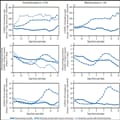
Among 101 university counties (3.2% of all U.S. counties, accounting for 29.4% of the U.S. population), instructional format was remote for 22 (22%) and in-person for 79 (78%). University counties had higher mean population size and were more urban than were nonuniversity counties (Table). Before the start of school, COVID-19 testing rates at the county-level were already higher in university counties than in nonuniversity counties (Figure). Comparing the time from the start of classes through day 21 with the 21 days before classes began, mean daily testing increased 4.2% and 14.1% among remote instruction and in-person instruction university counties, respectively, and decreased 1.0% among nonuniversity counties. Mean test positivity decreased among remote-instruction university counties (absolute change = –1.8%) and nonuniversity counties (–0.6%) but increased among in-person instruction university counties (1.1%). Incidence decreased in nonuniversity counties (–5.9%) and remote-instruction counties (–17.9%), whereas, incidence increased in in-person (56.2%) university counties. The percentage of counties identified at least once as a hotspot increased for all three groups, with the highest percentage observed in in-person instruction university counties (30.4% absolute increase), followed by remote-instruction university counties (9.1%) and nonuniversity counties (1.5%).

Figure.

Trends* in COVID-19 testing rates (A, D), percentage test positivity (B, E), and incidence (C, F) for unmatched U.S. counties and counties matched§ based on population size and geographic proximity, 7-day moving average — United States, 2020
Abbreviation: COVID-19 = coronavirus disease 2019.
*Trends are presented relative to the start date for fall 2020 classes for counties with large colleges and universities (university counties) and the assigned start date for nonuniversity counties.
University counties with remote (n = 22) and in-person (n = 79) instruction versus nonuniversity (n = 3,009) counties.
§University counties with in-person instruction versus nonuniversity counties (68 matched pairs). Matches for each in-person university county were identified by listing all candidate (county) matches without large colleges or universities that had a similar population size (± 30%) and that were located within 500 miles (805 km) of each university county. From these candidate matches, the final match was selected based on closest proximity such that no nonuniversity county was matched more than once. After matching, the average distance between counties in matched in-person university county and nonuniversity county pairs was 114 miles (183 km) with a maximum distance of 471 miles (758 km). Eleven in-person university counties were excluded from the matched analysis because there were no candidate matches meeting population size and proximity specifications. All remote university counties were excluded from the matched analysis because there was an insufficient number of nonuniversity county matches.

COVID-19 outcomes were similar in the matched analysis. Compared with nonuniversity counties, in-person instruction university counties experienced a higher relative change in testing rates (18.8% versus –5.6%), a higher absolute change in test positivity (1.6% versus –0.8%), a higher relative change in incidence (78.3% versus –19.5%) (Table) (Figure), and a higher absolute change in the percentage identified as hotspots (33.8% versus 1.5%). Based on the difference-in-difference analysis, university counties with in-person instruction were associated with an increase of 14.4 cases per 100,000 (p<0.05) and an increase of 2.4 percent test positivity (p<0.05) relative to nonuniversity counties with in-person instruction. When adjusting incidence for the influx of full-time students, in-person instruction university counties were associated with an increase of 10.6 cases per 100,000 (p<0.05) (Supplementary Table, https://stacks.cdc.gov/view/cdc/99533). These results did not change meaningfully in the sensitivity analysis. ...

https://www.medscape.com/viewarticle/943859

Self-Unblinding Threatens COVID Vaccine Trial

 As vaccine availability increases, some research participants are eager to know if they actually got vaccinated.

On social media, participants in Novavax's ongoing trial have been hotly debating whether it's a good idea -- or ethical -- to unblind themselves by taking commercially available antibody tests. Many say they've already done so and used the results to help them decide whether to drop out and get a definitely active vaccine.

Others, like a 54-year-old pilot from Kentucky, are just curious.

"It's human nature to want to know," she told MedPage Today. "It's a personal choice, and I don't think it's harmful to the study."

Stanford University epidemiologist Steven Goodman, MD, PhD, doesn't share her lack of concern.

"There is no good scientific reason for someone to do this," he told MedPage Today. "I can understand why they want that information, but it can only serve to diminish the value of the trial. Getting tested is not right unless there is a pressing need for unblinding for health reasons."

Enrollment is complete in the 30,000-patient randomized, double-blind, placebo-controlled Novavax trial, which began in December in the U.S. and Mexico. The company later announced that the trial will include a "blinded crossover" component after it confirms that the vaccine is safe and effective enough to warrant an application for emergency use authorization. This means the trial participants will receive a second pair of shots. If they got placebo the first time, as one-third did, they will get the vaccine. The two-thirds who did get the real vaccine would then receive placebo.

It's not certain when the crossover shots will begin, and subjects may need to wait until April or later. The timing raises big questions for worried participants who are already eligible for the authorized vaccines or expect to become eligible soon.

One participant, a 39-year-old software engineer in North Carolina, recently took an antibody test before taking a brief plane trip that he couldn't get out of. "I thought it would make it less stressful," he said. (This man and the pilot from Kentucky asked not to have their names used.)

"My wife and I have been on our best behavior, not eating in restaurants or hanging out with people. It would be a real relief to have the confidence of knowing I do have some protection," he said. "I am more looking for some stress relief -- light-at-the-end-of-the-tunnel kind of stuff -- rather than, 'Hey, I'm going to go out and party.'"

Unfortunately for him, his antibody test suggests -- but doesn't definitively prove -- that he hasn't been infected by COVID-19 or exposed to a vaccine. Now, he is closely watching the timing of the crossover shots. "It's not impossible that I could be eligible sometime in April for one of those [authorized] vaccines. That would put me in a difficult situation."

COVID-19 antibody tests are not foolproof. However, "we know that clinical trials show that a majority of vaccinated people will produce antibodies at a level similar to those who have recovered from COVID by about 42 days. This has occurred across all vaccines that have published antibody data," said Benjamin Larimer, PhD, of the University of Alabama at Birmingham, who has developed a coronavirus antibody test, in an interview.

"Antibody testing should be a reliable indicator across those who have been vaccinated, although it can only be used to differentiate vaccination from recovery after infection by looking for antibodies against different parts of the virus. Antibodies against the nucleocapsid protein, found inside the virus, will only be found in those who have been infected, since the vaccines are targeted against the spike protein, which is [on the] outside of the virus."

Self-Interest Versus Science

The Novavax study has already had defectors -- those who chose to leave and be unblinded whether they got the vaccine or not. As of Feb. 1, 1.5% had done so, according to the company, and 55% of those were 65 or older. The company also reported its final enrollment numbers: 12.5% of participants were aged 65 or older. The goal was 25%.

The self-unblinding of participants spells trouble even if they stay in the trial, geneticist and cardiologist Elizabeth McNally, MD, PhD, of Northwestern University, told MedPage Today.

"The purpose of blinding the participants is so that they don't change their behavior and decide to take more risks in terms of getting COVID," she said. "We know vaccination will cause some people to take more risks. For example, it's possible that vaccinated people are less likely to wear a mask and not social distance. If one group of people is more likely to get COVID than the placebo group, this will skew the results. It could make the vaccine look less effective than it is."

Goodman, the Stanford University epidemiologist, said that those who unblind themselves via antibody tests "undermine the contributions of fellow trial participants and make this behavior seem acceptable by violating the trust within the trial, potentially weakening the ability to do other trials in a scientifically valid way as well."

Participants in these trials don't need to enroll purely from altruism, he said. But "if one is enrolling only for self-interested reasons, they shouldn't be enrolling. It is laudable to enroll in a trial and perfectly fine not to. But to enroll and then undermine it for personal benefit is a small act of scientific sabotage that should be strongly condemned."

What About Me?

I'm a participant in the Novavax trial myself, and earlier this month I signed an updated consent form disclosing the crossover component. As I wrote in a previous article for MedPage Today, I've been torn about whether to stay in the study -- potentially delaying my access to a vaccine -- or drop out.

As part of my reporting for this story, I got an antibody test myself in San Diego, where I live. The Kroger family of supermarkets has touted its rapid finger-prick antibody tests, so I dropped by one of its pharmacies and asked for a test, which cost a flat fee of $25. The results came in 15 minutes. To my surprise, since my first round of shots produced no side effects, I tested positive for both the IgM and IgG antibodies, suggesting I did actually get the vaccine or had an infection without knowing it.

I'd been leaning toward staying in the trial regardless of the results since the crossover format guarantees I would get the Novavax vaccine at some point. And there are signs that the vaccine is a good product, although it may ultimately turn out inferior to the authorized vaccines.

I don't plan to change my super-cautious, borderline-paranoid anti-germ behavior. Relaxing would make me nervous, regardless of the antibody test results, and I don't want to somehow throw off the findings of the study. I am, after all, getting paid to participate.

The pilot from Kentucky is remaining cautious too. Her LabCorp antibody test results suggest she's either been infected or got the vaccine, so she believes she is in the clear.

Even so, "my behavior has not changed whatsoever since learning that I have antibodies. That really surprised me," she said. "I'm still double masking going in and out of work and while grocery shopping. I still feel uncomfortable being around non-mask wearers or people who wear their mask below their nose. Maybe it's because I believe that we should all be trying to do our best at controlling this pandemic, so I'm going to continue to do that."

https://www.medpagetoday.com/special-reports/exclusives/91584

Pathologists 'Urge Caution' on At-Home COVID Test Kits

 Though the push is on to make at-home COVID-19 tests much more widely available, patients and their clinicians should be aware of downsides that could diminish their accuracy, experts from the College of American Pathologists warned at a news conference Thursday.

They cautioned that in addition to being uncomfortable to administer at home and possibly not covered by insurance, such tests may produce inadequate sample material and could be damaged by improper handling, thus producing false results.

It's also unclear whether any or some of the at-home tests -- particularly those detecting viral antigens -- are capable of picking up all of the variants that are increasingly circulating around the country, they said.

"It's very important how it's collected, and also the sensitivity and specificity of the test," said Kalisha Hill, MD, regional chief medical officer for Amita Health St. Joseph Medical Center and St. Mary's Hospital in Kankakee, Illinois. "The most important thing to recognize is that if you do have symptoms and are suspicious that you have COVID, it's very important to see your healthcare provider, and obtain a real-time PCR test for confirmation."

She emphasized that her organization understands the need for various platforms for COVID testing, and that at-home tests are good screening tools "on a one-time basis."

But the "gold standard is still a laboratory performed, real-time PCR test, and that is the most sensitive and most accurate test that we do that is very specific for COVID-19," Hill said.

Carey August, MD, medical director of laboratories for Advocate Illinois Masonic Medical Center, added that if the test requires that the sample be sent to a laboratory, any misstep in the process could lead to a misdiagnosis. "You have to be sure: is it all labeled properly? Is it preserved properly? Did you put it on the heater? Did it sit in the sun? All of these steps can contribute to false negatives, which is what we really do not want."

She emphasized that people using these tests have to realize that inserting a nasopharyngeal swab is uncomfortable, "so people have to know that if they are going to do that particular test at home, they're going to have to do that to themselves."

CAP President Patrick Godbey, MD, who directs the Southeastern Pathology Associates and Southeast Georgia Health System laboratory in Brunswick, noted another challenge. For most of the test kits that require samples be sent to a lab for processing, they must be shipped the same day that samples were collected, which may be inconvenient. These issues worry pathologists, he said.

Will At-Home Tests Detect Variants?

Godbey said most lab-processed tests will detect the variants, and those tests that use a nucleic acid amplification technique apparently do detect known variants. But "there are some antigen tests that we frankly don't know if they will detect the variants," he said. Many of these tests are self-contained, yielding results on the spot.

Each manufacturer of other at-home tests "needs to answer that question on its own." Both the FDA and CAP are asking each manufacturer that question, he said.

The speakers emphasized that as far as what is known today, all COVID-19 tests done in accredited pathology labs have the capability to detect currently circulating variants.

Another issue, Godbey said, are those tests that require individuals to transmit photos of their tests by mobile device, such as a smartphone. "That may be a problem for some of our most vulnerable populations," he said.

The bottom line is that with any test, at-home tests included, "bad data is worse than no data at all," Godbey said.

A person who falsely tests positive will be inconvenienced and perhaps unable to work or participate in activities. But a person who falsely tests negative, he continued, "you go out and see your grandmother and you go to work, thinking wrongly that you do not have the virus and you do."

One looming question the speakers did not address was just how accurate the at-home tests are when used in community settings. In an interview with MedPage Today after the conference, moderator Kisha Mitchell Richards, MD, director of pathology and laboratory at Greenwich Hospital in Connecticut, said that's just not known.

More than 300 COVID-19 diagnostic tests have received FDA emergency use authorization, she said, with new ones added every week. Among the subset of those intended for at-home use, their companies tout sensitivity rates of 90% to 100%, Mitchell Richards said. But that was in controlled settings. How they function in real life, with other variables such as sample collection or handling, she quickly added, "that's the data we need."

Test Shortages Persist

The speakers also announced results from a recent survey showing that close to half of laboratories around the country still have shortages of the supplies they need for COVID testing, and many have resorted to discontinuing testing for other conditions, such as sexually transmitted diseases, because of a lack of pipette tips.

Shortages reported recently are less severe than during earlier months of the pandemic, Godbey said. But it's still unacceptable.

"Almost half of the laboratories surveyed last month are still having problems securing reagents and test kits, 30% of the laboratories are showing shortages of pipette tips, and the number of laboratories still short of SARS-CoV-2 instruments and nasopharyngeal swabs still hovers around 20%," Godbey said.

https://www.medpagetoday.com/special-reports/exclusives/91606