Search This Blog

Thursday, April 15, 2021

Obesity, smoking, hypertension linked with blunted serological response to COVID mRNA vax

 Mikiko Watanabe, Angela Balena, Dario Tuccinardi, Rossella Tozzi, Renata Risi, Davide Masi, Alessandra Caputi, Rebecca Rossetti, Maria Elena Spoltore, Valeria Filippi, Elena Gangitano, Silvia Manfrini, Stefania Mariani, Carla Lubrano, Andrea Lenzi, Claudio Mastroianni, Lucio Gnessi

3 mRNA vaccines researchers are working on (that aren't COVID)

 The world's first mRNA vaccines—the COVID-19 vaccines from Pfizer/BioNTech and Moderna—have made it in record time from the laboratory, through successful clinical trials, regulatory approval and into people's arms.

The high efficiency of protection against severe disease, the safety seen in clinical trials and the speed with which the vaccines were designed are set to transform how we develop vaccines in the future.

Once researchers have set up the mRNA manufacturing technology, they can potentially produce mRNA against any target. Manufacturing mRNA vaccines also does not need living cells, making them easier to produce than some other vaccines.

So mRNA vaccines could potentially be used to prevent a range of diseases, not just COVID-19.

Remind me again, what's mRNA?

Messenger  (or mRNA for short) is a type of genetic material that tells your body how to make proteins. The two mRNA vaccines for SARS-CoV-2, the coronavirus that causes COVID-19, deliver fragments of this mRNA into your cells.

Once inside, your body uses instructions in the mRNA to make SARS-CoV-2 spike proteins. So when you encounter the virus' spike proteins again, your body's immune system will already have a head start in how to handle it.

So after COVID-19, which mRNA vaccines are researchers working on next? Here are three worth knowing about.

1. Flu vaccine

Currently, we need to formulate new versions of the  each year to protect us from the strains the World Health Organization (WHO) predicts will be circulating in flu season. This is a constant race to monitor how the virus evolves and how it spreads in real time.

Moderna is already turning its attention to an mRNA vaccine against seasonal influenza. This would target the four seasonal strains of the virus the WHO predicts will be circulating.

But the holy grail is a universal flu vaccine. This would protect against all strains of the virus (not just what the WHO predicts) and so wouldn't need to be updated each year. The same researchers who pioneered mRNA vaccines are also working on a universal flu vaccine.

The researchers used the vast amounts of data on the influenza genome to find the mRNA code for the most "highly conserved" structures of the virus. This is the mRNA least likely to mutate and lead to structural or functional changes in viral proteins.

They then prepared a mixture of mRNAs to express four different viral proteins. These included one on the stalk-like structure on the outside of the flu virus, two on the surface, and one hidden inside the virus particle.

Studies in mice show this experimental vaccine is remarkably potent against diverse and difficult-to-target strains of influenza. This is a strong contender as a universal flu vaccine.

2. Malaria vaccine

Malaria arises through infection with the single-celled parasite Plasmodium falciparum, delivered when mosquitoes bite. There is no vaccine for it.

However, US researchers working with pharmaceutical company GSK have filed a patent for an mRNA vaccine against malaria.

The mRNA in the vaccine codes for a parasite protein called PMIF. By teaching our bodies to target this protein, the aim is to train the immune system to eradicate the parasite.

There have been promising results of the experimental vaccine in mice and early-stage human trials are being planned in the UK.

This malaria mRNA vaccine is an example of a self-amplifying mRNA vaccine. This means very small amounts of mRNA need to be made, packaged and delivered, as the mRNA will make more copies of itself once inside our cells. This is the next generation of mRNA vaccines after the "standard" mRNA vaccines seen so far against COVID-19.

3. Cancer vaccines

We already have vaccines that prevent infection with viruses that cause . For example, hepatitis B vaccine prevents some types of liver cancer and the human papillomavirus (HPV) vaccine prevents cervical cancer.

But the flexibility of mRNA vaccines lets us think more broadly about tackling cancers not caused by viruses.

Some types of tumors have antigens or proteins not found in normal cells. If we could train our immune systems to identify these tumor-associated antigens then our immune cells could kill the cancer.

Cancer vaccines can be targeted to specific combinations of these antigens. BioNTech is developing one such mRNA vaccine that shows promise for people with advanced melanoma. CureVac has developed one for a specific type of lung cancer, with results from early clinical trials.

Then there's the promise of personalized anti-cancer mRNA vaccines. If we could design an individualized vaccine specific to each patient's tumor then we could train their immune system to fight their own individual cancer. Several research groups and companies are working on this.

Yes, there are challenges ahead

However, there are several hurdles to overcome before mRNA vaccines against other medical conditions are used more widely.

Current mRNA vaccines need to be kept frozen, limiting their use in developing countries or in remote areas. But Moderna is working on developing an mRNA vaccine that can be kept in a fridge.

Researchers also need to look at how these vaccines are delivered into the body. While injecting into the muscle works for mRNA COVID-19 vaccines, delivery into a vein may be better for cancer vaccines.

The vaccines need to be shown to be safe and effective in large-scale human clinical trials, ahead of regulatory approval. However, as regulatory bodies around the world have already approved mRNA COVID-19 vaccines, there are far fewer regulatory hurdles than a year ago.

The high cost of personalized mRNA cancer vaccines may also be an issue.

Finally, not all countries have the facilities to make mRNA vaccines on a large scale, including Australia.

Regardless of these hurdles, mRNA  technology has been described as disruptive and revolutionary. If we can overcome these challenges, we can potentially change how we make vaccines now and into the future.

https://medicalxpress.com/news/2021-04-mrna-vaccines-covid.html

Altered immune signature linked to long COVID

 University of Manchester scientists have discovered a persistent alteration in the immune system of patients, six months after they have been hospitalized for COVID-19, which could be associated with poorer health outcomes.

The study, published in the journal Med, examines the impact of a SARS-CoV-2 infection on the  of hospitalized patients in the period after a COVID-19 infection, once they have been discharged.

The team—based at the University's Lydia Becker Institute of Immunology and Inflammation and supported by the UK Coronavirus Immunology Consortium (UK-CIC)- identified an immunological  occurring in some of the patients that was associated with unresolved chest X-rays, indicating those patients had a poorer clinical outcome.

The researchers therefore identified immune characteristics in convalescent COVID-19 patients are associated with negative impacts on subsequent health.

The team compiled the immune cell characteristics of over 80 convalescent patients recruited from Manchester hospitals between July and October 2020.

They found that changes to B cells—a type of lymphocyte—that occur during the peak of COVID-19 hospitalization were largely restored by six months of convalescence. However, changes to T cells, another lymphocyte, persisted into COVID-19 convalescence.

Study author Dr. Joanne Konkel from The University of Manchester said: "Our study details persistent immune alterations in previously hospitalized COVID-19 patients up to six months after hospital discharge. Significantly, we outline an immune signature associated with poorer clinical outcomes in convalescent patients.

"Association, however, is not a causation, and what we now want to understand is what other long COVID symptoms this signature could be associated with and whether it could be used to identify the patients that should be most closely followed after hospital discharge."

The signature present in the group of patients with the poorer clinical outcome was characterized by the team as having high levels of cytotoxic T cells—which can destroy other cells—as well as elevated production of special types of proteins called type-1 cytokines.

Study author Dr. Madhvi Menon from The University of Manchester said: "It remains to be established if these immune alterations are unique to COVID-19, or whether they are also observed following other severe respiratory infections."

The team hoped the results can be fed into larger UK wide studies, such as the University of Leicester led post-hospitalization COVID-19 study known as PHOSP-COVID

PHOSP-COVID aims to better understand the interactions between immune cell changes and long COVID symptoms, as well as examine the clinical utility of the immune signature defined.

"Follow-up studies will determine whether this signature can provide a tool to identify acute COVID-19 patients at risk of Long COVID, enabling close monitoring and improved clinical management.", said Dr. Menon.

Study author Dr. John Grainger from the University of Manchester and deputy Director of the Lydia Becker Institute said: "Given the vast numbers of previously infected individuals across the globe, it is vital to understand the impact of COVID-19 on the phenotype and functional potential of all immune .

"This will allow for better understanding of the long-term impacts of being hospitalized with COVID-19 on subsequent anti-pathogen or auto-inflammatory responses."

The paper, "Alterations in T and B cell function persist in convalescent COVID-19 patients," is published in Med.


Explore further

Follow the latest news on the coronavirus (COVID-19) outbreak

More information: Halima A. Shuwa et al. Alterations in T and B cell function persist in convalescent COVID-19 patients, Med (2021). DOI: 10.1016/j.medj.2021.03.013
https://medicalxpress.com/news/2021-04-immune-signature-linked-covid.html

With impressive accuracy, dogs can sniff out coronavirus

 Many long for a return to a post-pandemic "normal," which, for some, may entail concerts, travel, and large gatherings. But how to keep safe amid these potential public health risks?

One possibility, according to a new study, is . A proof-of-concept investigation published today in the journal PLOS ONE suggests that specially trained  can sniff out COVID-19-positive samples with 96% accuracy.

"This is not a simple thing we're asking the dogs to do," says Cynthia Otto, senior author on the work and director of the University of Pennsylvania School of Veterinary Medicine Working Dog Center. "Dogs have to be specific about detecting the odor of the infection, but they also have to generalize across the background odors of different people: men and women, adults and children, people of different ethnicities and geographies."

In this initial study, researchers found the dogs could do that, but training must proceed with great care and, ideally, with many samples. The findings are feeding into another investigation that Otto and colleagues have dubbed "the T-shirt study," in which dogs are being trained to discriminate between the odors of COVID-positive, -negative, and -vaccinated individuals based on the volatile organic compounds they leave on a T-shirt worn overnight.

"We are collecting many more samples in that study—hundreds or more—than we did in this first one, and are hopeful that will get the dogs closer to what they might encounter in a community setting," Otto says.

Through the Working Dog Center, she and colleagues have had years of experience training medical-detection dogs, including those that can identify ovarian cancer. When the pandemic arrived, they leveraged that expertise to design a coronavirus detection study.

Collaborators Ian Frank from the Perelman School of Medicine and Audrey Odom John from the Children's Hospital of Philadelphia provided SARS-CoV-2-positive samples from adult and , as well as samples from patients who had tested negative to serve as experimental controls. Otto worked closely with coronavirus expert Susan Weiss of Penn Medicine to process some of the samples in Penn's Biosafety Level 2+ laboratory to inactivate the virus so they would be safe for the dogs to sniff.

With impressive accuracy, dogs can sniff out coronavirus
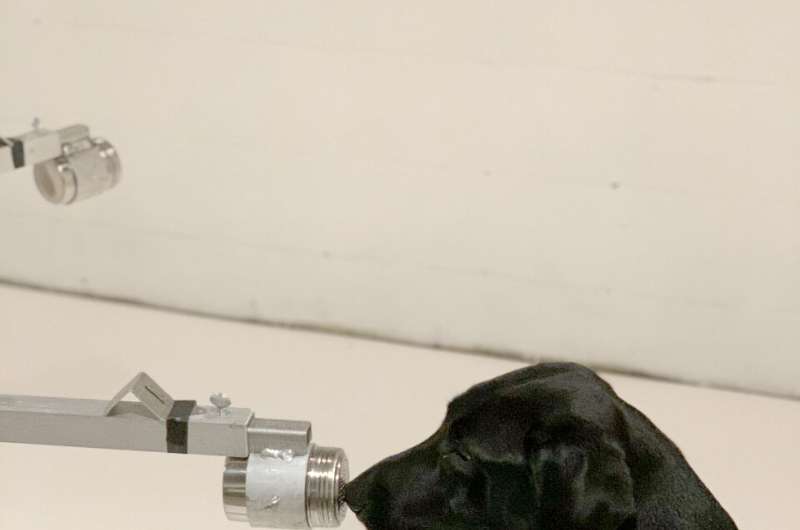
The nine dogs in the study, including Miss M, above, were 96% accurate in identifying positive samples. Credit: Pat Nolan

Because of workplace shutdowns due to the pandemic, instead of working with dogs at Penn Vet, the researchers partnered with Pat Nolan, a trainer with a facility in Maryland.

Eight Labrador retrievers and a Belgian Malinois that had not done medical-detection work before were used in the study. First the researchers trained them to recognize a distinctive scent, a synthetic substance known as universal detection compound (UDC). They used a "scent wheel" in which each of 12 ports is loaded with a different  and rewarded the dog when it responded to the port containing UDC.

When the dogs consistently responded to the UDC scent, the team began training them to respond to urine samples from SARS-CoV-2 positive patients and discern positive from negative samples. The negative samples were subjected to the same inactivation treatment—either heat inactivation or detergent inactivation—as the positive samples.

Processing the results with assistance from Penn criminologist and statistician Richard Berk, the team found that after three weeks of training all nine dogs were able to readily identify SARS-CoV-2 positive samples, with 96% accuracy on average. Their sensitivity, or ability to avoid , however, was lower, in part, the researchers believe, because of the stringent criteria of the study: If the dogs walked by a port containing a positive sample even once without responding, that was labeled a "miss."

The researchers ran into many complicating factors in their study, such as the tendency of the dogs to discriminate between the actual patients, rather than between their SARS-CoV-2 infection status. The dogs were also thrown off by a sample from a patient that tested negative for SARS-CoV-2 but who had recently recovered from COVID-19.

"The dogs kept responding to that sample, and we kept telling them no," Otto says. "But obviously there was still something in the patient's sample that the dogs were keying in on."

Major lessons learned from the study, besides confirming that there is a SARS-CoV-2 odor that dogs can detect, were that future training should entail large numbers of diverse samples and that dogs should not be trained repeatedly on the samples from any single individual.

"That's something we can carry forward not only in our COVID training but in our cancer work and any other medical detection efforts we do," says Otto. "We want to make sure that we have all the steps in place to ensure quality, reproducibility, validity, and safety for when we operationalize our dogs and have them start screening in community settings."


Explore further

Are COVID-sniffing dogs the new tool in helping detect the virus?

More information: Jennifer L. Essler et al. Discrimination of SARS-CoV-2 infected patient samples by detection dogs: A proof of concept study, PLOS ONE (2021). DOI: 10.1371/journal.pone.0250158
https://phys.org/news/2021-04-accuracy-dogs-coronavirus.html

Social Harms Vax Passports Pose

 The COVID-19 debates have reached a new milestone: vaccine passports. A vaccine passport is three things. First, it is a non-forgeable record that documents SARS-CoV-2 vaccination. Non-forgeable means it is likely to be digital and not a paper slip. Second, it ties that status to you. This means it must include a photo or fingerprint to ensure the bearer is actually the vaccinated person. Third, it is a gatekeeper. Some entity, such as government or private industry, must use it to deny access to some place or service. Here, I provide an in-depth policy analysis of domestic vaccine passports, and find many reasons why they are a bad idea.

Gatekeeping

There are many venues where a vaccine passport can be used. It can be used to restrict international travel. Already, some countries require proof of yellow fever vaccination to enter. It can be used to restrict access to unique shared spaces. When I attended college, proof of meningococcus vaccination was needed to live in the dorms. Some proponents of the SARS-CoV-2 vaccine passport envision it will be used beyond these precedents. They imagine the passport will be used to restrict access to daily activities with many participants such as movie theaters, malls, amusement parks, concerts, bars, and churches. In what follows, I will focus on this potential use of passports: regulating daily, domestic activities – this is fundamentally different than other forms of restriction, as it is a novel restriction.

Who Do Vaccine Passports Protect?

Just as defining a passport is important, it is also important to be very clear about who will benefit and who will be harmed. Of course, for a passport to be fair, it must be launched at a point in the future when all Americans who wish to be vaccinated have been vaccinated.

Now, imagine two scenarios in a hypothetical movie theater in the fall of 2021: without and with the vaccine passport.

Without vaccine passports:

Three groups of people will be in the theater. The first group will be vaccinated people. Because of the spectacular efficacy of the vaccines, these individuals will be almost entirely shielded from bad outcomes such as death or hospitalization. Some members of this group may be very elderly or immunocompromised, and despite vaccination, carry a risk of acquiring the virus and bad outcomes. The second group will be people who cannot be vaccinated. Children under the age of 16, or perhaps 12, may be in the theater, and in the future, they still may not have an approved vaccine option. Thankfully, these folks are also largely shielded from bad COVID-19 outcomes because the risk of these events in young kids is very low. A few individuals who can't get the vaccine because they have a contra-indication may also be present. The third group in the theater will be unvaccinated people who have chosen not to be vaccinated.

In a world without a vaccine passport, the vast majority of group one and group two will be fine. Individuals in group three will be the main group taking increased personal risk by attending the event. Keep in mind, this is the group who has chosen not to be vaccinated. There will be a very tiny number of vulnerable people in group one and two whose risk is increased while attending the event, and they may choose not to attend.

With vaccine passports:

In a world with vaccine passports, the makeup of the theater is different. The first and second groups are both present. The risk to the vast majority of these groups is almost exactly the same: very low. The risk to the very few vulnerable individuals in group one and two has been modestly lowered. Group three individuals have been excluded -- because they don't have the passport. What happens to their risk?

Of course, what happens to their risk is driven by what they choose to do instead. Do they assemble in someone's living room or garage and watch a movie in a make-shift theater? If so, their risk may be comparable or increased. Do they protest or scheme how to overturn what they may view as a government intrusion? If they do so indoors, they replace the risk of the movie theater with the risk of a clandestine indoors gathering, which might be similar. If you want to reduce the chance of a variant emerging -- and I do -- that risk is reduced if instead of the movies, unvaccinated people go home. But that risk might be increased if instead of the movies, unvaccinated people create makeshift movie theaters or have other in-person gatherings. It all depends on what they do instead. Finally, even one or two angry individuals may perpetuate violent harms that negate the health gains of the entire passport strategy.

The biggest error I see is many are not considering what the banned or displaced individuals do instead of attending the restaurant, movie-theater, mall, or other indoor public space. That unanticipated behavioral change is literally what determines if the policy helps or hurts. In today's polarized America, I have concerns.

Now, we should also consider what the passport does to the incentive to be vaccinated. Some argue that such a passport will motivate vaccination, but in reality, it merely alters the incentive. Instead of the current benefit of health, these people will get the benefit of access to public spaces. Will that work or will it backfire?

What is the Trade-off?

The trade-off of the vaccine passport for domestic uses such as theaters, churches, bars, restaurants, amusement parks, and so on is the following. If you do it, you very slightly reduce the risk to healthy vaccinated individuals -- who are mostly shielded by a great vaccine. You very slightly reduce risk to kids -- who are mostly shielded by age. You modestly reduce the risk of vulnerable folks -- of whom there are few. You may change their behavior and they may be more likely to go to crowded spaces. On the other hand, you might incur the anger of a large swath of Americans whom the passport displaces. Those individuals may not experience reduced risk as they may partake in other activities that have equal or greater risk. Those individuals may become motivated by anger and engage in activities that diminish your gains. Finally, you expend massive political capital to achieve this change. That is the trade-off. Is it worth it?

The COVID-19 Vaccine is Different

The SARS-CoV-2 vaccine is different than other vaccines for which we have previously issued mandates, such as MMR (for schools) and meningococcus (for dorms). The key distinguishing feature is the efficacy of the COVID-19 vaccine in guarding against severe infection is massive. In the other cases, in order for healthy, vaccinated individuals to be protected, we must ensure a high fraction of people have been vaccinated. In this case, healthy, vaccinated individuals are overwhelmingly protected from severe outcomes, even if we fall short of high vaccination rates because the vaccine is so potent.

Errors

Any system of vaccine passport will have errors. Some experts have pointed out that passports may wrongly exclude vaccinated people due to malfunction. A reporter for The Washington Post tested one early version of the vaccine passport, which has been deployed in New York City. He found it did not always work and it was easy to set up a fake pass. Every time the vaccine passport malfunctions, resentment will grow. Malfunction is inevitable when a pass is used in hundreds of millions of encounters. Finally, as one thinks through the logistics of implementing the pass -- who will ask for it, how will they check it, where will this occur -- a series of practical concerns emerges -- for example, how will resources be deployed to enforce the passport?

Inequality

From a progressive standpoint, it is possible that passports may result in discrimination around racial and socioeconomic lines. Although some surveys suggest little difference in desire to be vaccinated by race -- though there are differences by gender -- these polls may be inaccurate as other recent polls have been. This is for the simple reason that polling depends on consenting to be polled, and it is possible that folks reluctant to take polls may be less likely to be vaccinated.

If there are differences in vaccination by gender, race, or socioeconomics, the passport may serve to perpetuate inequality. Put another way, if people of some group are more likely to decline vaccines, we should be crafting public health messaging to reach them, to improve communication and answer their questions. The wrong answer is to disproportionately exclude them from public spaces. That is punitive, unfair, and not consistent with longstanding public health principles.

Finally, my first rule of vaccine passports is that they cannot be forged. If this requires a digital transfer, then the passport may discriminate against people who do not own smart phones.

Conclusion

When it comes to daily domestic activities, a vaccine passport results in a trade-off. It very modestly changes the risk to vaccinated individuals and those who do not have a vaccine option. It changes the places unvaccinated individuals can congregate, which may or may not curb or fuel viral spread, depending on what they do instead. It will be met with political opposition and may result in unanticipated, unpredictable, harmful outcomes, including perpetuating discrimination. It will, at times, surely malfunction and some people will be angered by that. It will require massive political capital to institute.

In contrast with what I see – superficial analyses of the passport – my analysis is that they are, on balance, if used for the purposes I describe, a bad idea, and we should work to promote vaccination without this tool. Vaccination is good; vaccine passports for domestic activities are unrealistic and possibly unhelpful. That's the sort of nuance we need more of in this pandemic.

Vinay Prasad, MD, MPH, is a hematologist-oncologist and associate professor of medicine at the University of California San Francisco, and author of Malignant: How Bad Policy and Bad Evidence Harm People With Cancer.

https://www.medpagetoday.com/blogs/vinay-prasad/92107

Clinicians Urged to Be on High Alert for Rare J&J COVID Vax Events

 Clinicians should pay close attention to patients with suspected thrombotic events or thrombocytopenia following vaccination with the Johnson & Johnson COVID-19 vaccine, including consulting a hematologist, CDC staff said on a call with clinicians on Thursday.

CDC health alert cautioned that clinicians should have a "high index of suspicion" for patients with these events. Following a vaccination history, they should be evaluated with a screening platelet factor 4 (PF4) enzyme-linked assay, such as what would be performed for autoimmune heparin-induced thrombocytopenia (HIT). Moreover, these patients should not be treated with heparin unless HIT testing is negative.

CDC staff held this call to inform clinicians about the "pause" in Johnson & Johnson's COVID-19 vaccine due to six cases of cerebral venous sinus thrombosis (CVST) with thrombocytopenia following vaccination, including one fatal case, first announced by CDC and FDA on Tuesday. CDC's Advisory Committee on Immunization Practices (ACIP) agreed to extend this pause until more information on the cases is available.

On this call, Tom Shimabukuro, MD, of the CDC, reminded clinicians to report all serious adverse events to the HHS Vaccine Adverse Events Reporting System (VAERS), adding that they may then be contacted by VAERS or CDC to release patient medical records.

"HIPAA permits reporting of protected health information to public health authorities, including CDC and FDA," he said. "There are no HIPAA issues with providing this information to CDC, and we appreciate your cooperation."

CDC staff also told clinicians to consult with a hematologist for these patients, and Sara Oliver, MD, of the CDC, even recommended that "a screening CBC [complete blood count] might be informative" to detect these rare events.

However, a CBC should only be in the setting of a recently vaccinated patient who presents with concerning symptoms, and she recommended against patients taking prophylactic aspirin, for example.

"Ultimately, we're not saying everyone with [Johnson & Johnson] vaccine needs to start getting serial CBCs," Oliver said, adding that if a clinician has certain concerns about anticoagulation for any patient, they should consult a hematologist.

She also said a hematologist should be consulted when clinicians asked about whether or not to give heparin to vaccinated dialysis patients, as well as in response to questions about treatment for oncology patients on drugs that normally decrease platelet counts.

Clinicians inquired if headaches related to CVST were "aneurysm-like," but Shimabukuro said that the "initial presentation was not particularly notable" enough to stand out, though he did not have "specifics of the narratives given."

Oliver presented data showing that the vaccine was available as of March 2, and prior to March 30, 48% of total doses were administered. However, 52% of doses were administered from March 31 to April 13, and thrombocytopenic thrombotic events may still occur, as symptoms tend to show up 1-2 weeks following vaccination. Indeed, the first case of CVST with thrombocytopenia occurred on March 19, with cases through April 12.

She added that while these events appear similar to those occurring following AstraZeneca's COVID-19 vaccine in Europe, they are "still learning the extent to which those cases represent the same syndrome."

Shimabukuro was asked why this complication didn't occur following administration of other adenoviral vector vaccines, such as the Ebola vaccine. Because Ebola vaccine use was on the order of "hundreds of thousands," not millions or tens of millions, rare adverse events would be less likely to be detected, he said.

Oliver said ACIP will reconvene in 1 to 2 weeks to discuss additional accumulated data, and hopefully make more formal recommendations on vaccine use.

https://www.medpagetoday.com/infectiousdisease/covid19vaccine/92119

IDEAYA Webcast to Review Clinical Data from Phase 1/2 Trial

 IDEAYA Biosciences, Inc. (NASDAQ: IDYA), a synthetic lethality-focused precision medicine oncology company committed to the discovery and development of targeted therapeutics, announced that the company plans to issue a pre-market press release and conduct a webcast on Friday, April 16, 2021, to discuss clinical data from the ongoing Phase 1/2 trial evaluating darovasertib (IDE196) as monotherapy and darovasertib and binimetinib combination in patients with metastatic uveal melanoma (MUM) (ClinicalTrials.gov Identifier: NCT03947385).

IDEAYA will host a Darovasertib Investor Day, including a conference call and webcast with participation of leading clinical investigators, at 8:00 a.m. ET on Friday, April 16, 2021. The link to the webcast of the conference call will be posted on the Investor Relations Events section of the Company's website at: https://ir.ideayabio.com/events. The update may also be accessed by dialing 1-866-248-8441 (domestic) or 1-720-452-9102 (international) five minutes prior to the start of the call and providing the passcode 2793795. An archived replay will be accessible for 90 days following the event.

https://finance.yahoo.com/news/ideaya-announces-investor-day-webcast-200100449.html