Search This Blog

Friday, January 7, 2022

AbbVie Submits US, EU Applications for RINVOQ in Non-Radiographic Axial Spondyloarthritis

 Submissions supported by Phase 3 study in which upadacitinib (RINVOQ®) demonstrated significant improvements in signs and symptoms as well as physical function and disease activity versus placebo

- No new safety risks were observed compared to the known safety profile of upadacitinib

- AbbVie has also submitted results from two studies of upadacitinib in adult patients with ankylosing spondylitis (AS) to request label enhancements in the European Union (EU)

- RINVOQ is approved for use in active psoriatic arthritis (PsA), moderate to severe active rheumatoid arthritis (RA), moderate to severe atopic dermatitis (AD) and active AS in the EU, and for PsA and RA in the US

https://finance.yahoo.com/news/abbvie-submits-applications-upadacitinib-rinvoq-140000364.html

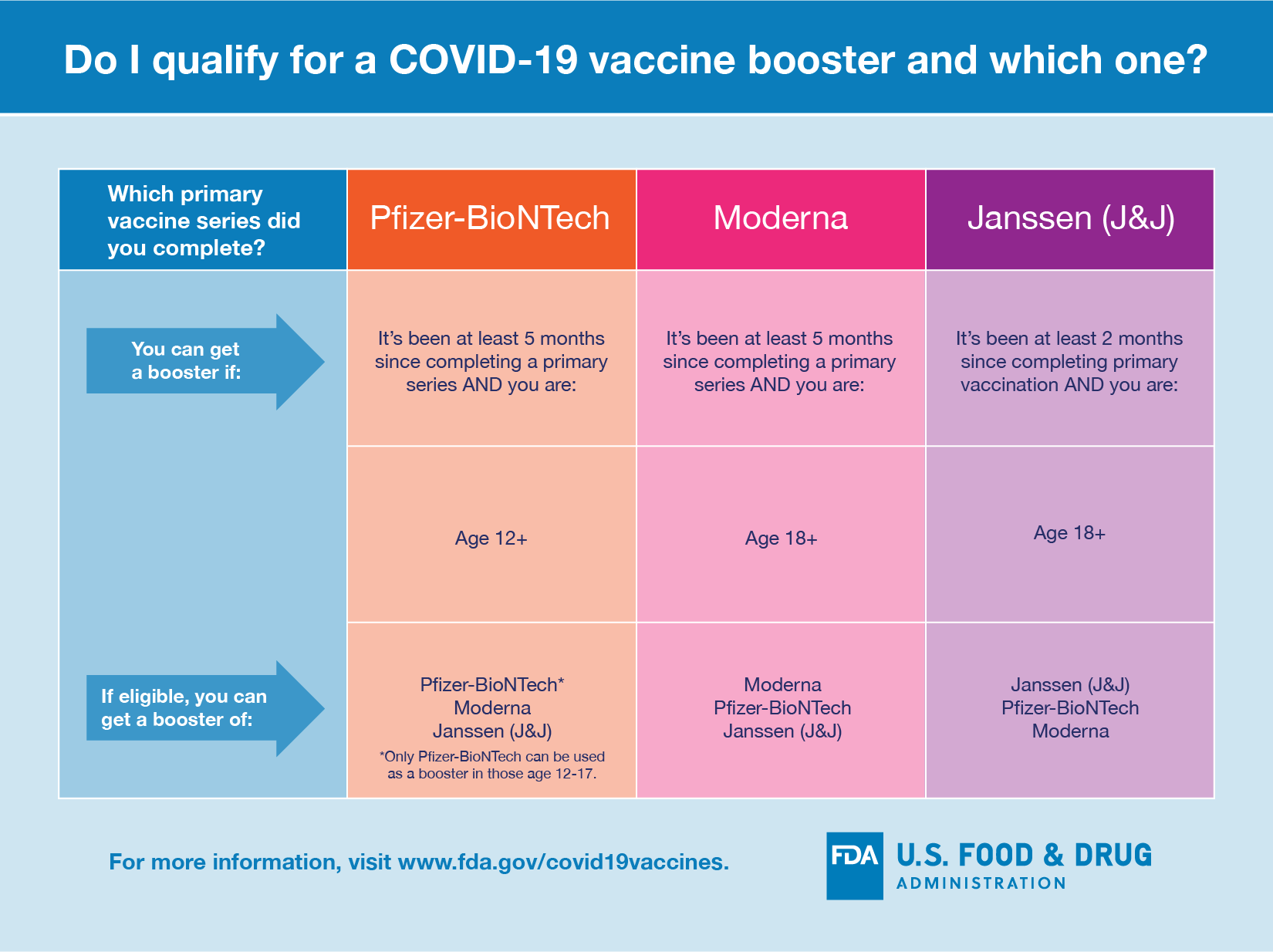
FDA Cuts Interval for Booster Dose of Moderna COVID-19 Vaccine to 5 Months

Today, the U.S. Food and Drug Administration amended the emergency use authorization (EUA) for the Moderna COVID-19 Vaccine to shorten the time between the completion of a primary series of the vaccine and a booster dose to at least five months for individuals 18 years of age and older. 

“The country is in the middle of a wave of the highly contagious omicron variant, which spreads more rapidly than the original SARS-CoV-2 virus and other variants that have emerged,” said Peter Marks, M.D., Ph.D., director of the FDA’s Center for Biologics Evaluation and Research. “Vaccination is our best defense against COVID-19, including the circulating variants, and shortening the length of time between completion of a primary series and a booster dose may help reduce waning immunity. Today’s action also brings consistency in the timing for administration of a booster dose among the available mRNA vaccines. We encourage everyone to get vaccinated—it’s never too late to get your COVID-19 vaccine or booster.” 

The most commonly reported side effects by individuals who received a booster dose of the Moderna COVID-19 Vaccine after completion of a two-dose primary series were pain, redness and swelling at the injection site, as well as fatigue, headache, muscle or joint pain and chills. The fact sheets for recipients and caregivers and for healthcare providers include information about the potential side effects, as well as the risks of myocarditis and pericarditis.

The amendment to the EUA was granted to ModernaTx Inc.

Moderna Booster Infographic 01072021

Thursday, January 6, 2022

Why rapid Covid tests are missing some cases

 Marianna Parker, a Boston-area pediatrician, wanted to make sure she, her husband, and her toddler didn’t have Covid-19 when they developed a nasty cold around Dec. 18. Over the course of a week she used five Covid rapid tests and took three PCR tests, testing negative. Her husband tested negative on a rapid test on his second day of infection but positive on his sixth, a result that was confirmed via PCR. “If he hadn’t decided to do that random test on day 6 we would never have known,” she said.

Nevertheless, she’s convinced all three of them had Covid, and that the tests simply produced the wrong results. In a Facebook post, she advised friends to remember that if they are vaccinated, their tests might only be positive for a short period of time.

Parker is not alone in puzzling over how to interpret the antigen tests. Social media platforms are rife with anecdotes from people who contracted Covid but who report that rapid tests came back negative. Meantime, a small, 30-patient study this week cast doubts about rapid Covid tests’ reliability early on after infection, showing that the tests took several days after infection before detecting the virus.

Now scientists are trying to determine why the tests are missing cases, many of them of the Omicron variant, and what could be done about it.

No one is arguing that antigen tests should not be used, nor that it is reasonable to expect they will detect every case. They are essential at a moment when getting a PCR often involves waiting an hour for a test and then several days for results. They will be important for identifying patients who should receive new drugs, such as Pfizer’s Paxlovid and Merck’s molnupiravir, that can keep patients out of the hospital if they are given soon after infection. But experts also worry that if they prove unreliable it could affect their usefulness in some situations, such as the common practice of using them before gatherings as an extra barrier against superspreader events or as protection in workplaces.

Growing evidence indicates Omicron collects in the throat, not in the nose, which could be why the nasal swabs used in rapid testing kits often aren’t detecting the variant.

“One of the things that we’re worried about is with all of this rapid antigen testing with nasal swabs, are we missing a lot of early infection?” said Donald Milton, a co-author of a December study showing that saliva tests may work better. “We know that people are transmitting during that period — minus three to plus two days of symptom onset. It’s when transmission happens.”

Abbott Laboratories, maker of the BinaxNOW test, said in a statement that it is well-known that PCR tests are more sensitive than antigen tests. Quidel, maker of the QuickVue test, said in a statement that performance against the new variant appears “similar” as with previous variants, and that the company will remain “vigilant” in evaluating its assays using genetic sequencing and real-world studies of virus samples.

Abbott said that in its continuing surveillance efforts, it has completed extensive testing on Omicron on a total of 74 clinical specimens. “In all cases, our studies confirm that BinaxNOW continues to detect the Omicron variant at comparable viral load levels as all other variants and the original SARS-CoV-2 strain,” the company said.

John Moore, a professor of microbiology and immunology at Weill Cornell Medical College, said there’s still reason for concern.

“Whether there is too little virus on nasal swabs or reduced assay sensitivity, the [rapid antigen tests] are often failing to detect Omicron during early symptomatic infection,” Moore said.

It’s unlikely, many experts say, that the false negatives are the result of mutations in the proteins of the virus, because that would likely affect different rapid antigen tests differently. More likely, any differences are the result of changes in how the virus behaves in the body.

The Food and Drug Administration has authorized antigen tests so long as they are 80% sensitive — meaning they return a false negative 20% or less of the time — and they are at least 98% specific, meaning that false positives are rare. That means that it is expected that false negatives will happen, and the test’s packaging recommends using two tests 24 to 36 hours apart, and getting a PCR test if there is any doubt.

In an interview, a top FDA official emphasized that there is some data indicating the sensitivity of the tests might decrease further against Omicron compared to previous variants, but more data are needed.

“If you are positive on these tests, then there’s a very high likelihood you really do have Covid,” said Jeffrey Shuren, the director of the Center for Devices and Radiological Health at the FDA. “If you’re negative, we’ve always said it’s presumptive.” That means a person who has been exposed or who has symptoms might want to get a PCR when an antigen test turns up negative.

Another uncomfortable fact, according to Shuren: It’s possible to transmit the virus to someone else when there is a negative antigen test. “Rapid antigen tests are not tests of infectiousness,” said Shuren.

All of that was true even before the emergence of Omicron. But Omicron could also change the functionality of the tests in various ways.

Researchers with the National Institutes of Health’s RADx program were able to obtain samples of the Omicron variant that were inactivated by heat. On those samples, the antigen tests performed well. Failure to detect the heat-inactivated virus would have been a red flag, Shuren said, but success does not guarantee the tests function as well in the real world as they have with other variants.

But the FDA made an announcement on Dec. 28 that the tests do detect the Omicron variant but “may have reduced sensitivity” based on “preliminary” data using live virus patient samples.

Other very preliminary data from NIH has shown that, in a small number of samples from Omicron patients, the amount of protein (what’s detected by the rapid antigen tests) relative to genetic material (what’s detected by PCR) may be lower compared to previous strains. But there are limitations to the technique used to determine this, including that protein may be present but bound up in ways that make it more difficult to detect.

That has left even physicians wondering exactly how to use the tests. “I’m afraid I can’t offer much more than a frustrated shoulder shrug here and assurances that I share your questions,” said Craig Spencer, an assistant professor of emergency medicine at the Columbia University Medical Center. “I still do rely on them before small social gatherings, but recognize they might not be the fail-safe we once thought they were.”

“Previously rapid antigen tests have been, OK, they’re less sensitive, but indeed, they catch individuals when they’re infectious, and that’s what we really want to know,” said Anne Wyllie, a Yale microbiologist who is one of the 30-person study’s authors. But, she said, it is “alarming” how much virus was seen in the study in people who tested negative using the antigen tests. “They are such high viral loads in saliva, you cannot tell me that that is not infectious.”

Using saliva samples or throat swabs might be one way around the problem. A December study from researchers in South Africa said that saliva swabs should be the “preferred sample” for PCR tests against the Omicron variant. That’s led to hopes that using throat swabs instead of nasal ones could lead to earlier detection with the rapid tests.

Sanjat Kanjilal, the associate medical director of clinical microbiology at the Brigham & Women’s Hospital, said his interpretation of the study, which has not yet been peer-reviewed, is that the throat approach might be better for Omicron. He said that there is a need for manufacturers and labs to start validating throat swabs.

But not everyone is so sure that will be a complete solution.

“I think it’s just something different about Omicron, and I don’t know how to predict it,” said Blythe Adamson, an epidemiologist and the lead author of the 30-person paper. “I don’t think it’s just time dependency. I don’t think it’s just viral load. And I don’t even think it’s just site of collection, saliva or nasal.”

Adamson is also an employee at Flatiron Health, an affiliate of Roche. Another Roche unit makes PCR tests. One of the co-authors of the paper is the CEO of a company developing saliva-based Covid tests.

Kanjilal said that he is no longer comfortable using the rapid tests as a strategy to ensure gatherings are safe, after his own experience at a family gathering where someone tested positive. Kanjilal himself did not test positive after repeated tests.

“I mean, look, Omicron is out of control,” Kanjilal said. “We’re using rapid tests a lot. It’s still out of control, right?”

The tests will help pick up people who need antiviral treatment. They might help decide when people are no longer contagious and can return to work. But will they catch people who will become superspreaders or make gatherings safe? “For me, I don’t think it’s enough. I wouldn’t feel comfortable with that strategy anymore.”

https://www.statnews.com/2022/01/06/scientists-try-to-pinpoint-why-rapid-covid-tests-are-missing-cases/

FDA gives AbbVie’s c-Met lung cancer ADC a breakthrough tag

 The FDA thinks an antibody-drug conjugate (ADC) developed by AbbVie could set new standards in treatment for certain patients with lung cancer, awarding the drug breakthrough status.

Teliso-V (telisotuzumab vedotin) is pitching to become the first targeted cancer treatment for people with non-small cell lung cancer (NSCLC) whose tumours overexpress c-Met.

The c-Met protein thought to be both a driver of cancer itself, as well as a resistance mechanism that tumours can develop to protect them from some widely-used NSCLC therapies, including EGFR inhibitors.

Teliso-V is currently in a 233-patient phase 2 study (LUMINOSITY) involving subjects with c-Met-positive, non-squamous NSCLC as a second- or third-line treatment after chemotherapy, immunotherapy with checkpoint inhibitors or drugs targeted at specific mutations.

Preliminary results from that study showed a 53.8% overall response rate (ORR) in patients with high levels of c-Met expression, and 25% in those with intermediate levels, showing proof of concept for the ADC.

The FDA reserves breakthrough therapy status for therapies that could represent a significant improvement over standard of care – in this case platinum-based chemotherapy – in either efficacy, safety, or both.

Excluded from that study are patients with EGFR mutations, and AbbVie is looking specifically at this group in a phase 1 study that is looking at the combination of Teliso-V and AstraZeneca’s EGFR inhibitor Tagrisso (osimertinib), to see if the ADC can boost efficacy and potentially reduce the risk of resistance developing.

A phase 3 trial – called TeliMET-NSCLC-01 – is also due to start in the coming months that will compare Teliso-V to docetaxel chemotherapy in c-Met-positive, non-squamous NSCLC, in patients both with and without other gene mutations including EGFR and ALK.

Other drugmakers have been looking at Met as a target in cancer, including Novartis, Merck KGaA and Hutchmed, which have all bagged regulatory approvals for oral therapies that target NSCLC harbouring a specific mutation in Met known as exon 14 skipping  which affects about 3% to 4% of NSCLC patients.

Merck’s Tepmetko (tepotinib) was approved by the FDA last year for both treatment naïve and previously treated METex14 positive NSCLC patients, as was Novartis’ Tabrecta (capmatinib), while Hutchmed’s Orpathys (savolitinib) has been approved as a second-line option in China.

Hutchmed’s drug is also being paired with Tagrisso and AZ’s PD-L1 blocker Imfinzi (durvalumab) in global registrational trials.

https://pharmaphorum.com/news/fda-gives-abbvies-c-met-lung-cancer-adc-a-breakthrough-tag/

White House seeks out community digital health examples

 The Biden administration has launched a fact-finding mission to try to find ways to deploy digital health technologies effectively in community settings, in order to boost “individual wellness and health equity.”

The request for information – which appeared in the Federal Register yesterday – was filed by the White House Office of Science and Technology Policy (OSTP) and is aimed particularly at community-based programmes in populations that are currently “underserved” by healthcare.

It’s looking for pertinent examples from both the US and overseas from community health workers, social services, healthcare providers, faith and community-based organisations, technology developers and other groups.

The move comes as the pandemic has brought social and racial injustice and inequity to the forefront of public health in the US and other countries around the world.

The Centres for Disease Control and Prevention (CDC) recently said that COVID-19 has highlighted that health equity is still not a reality in the US, as it has “unequally affected many racial and ethnic minority groups, putting them more at risk of getting sick and dying from COVID-19.”

The OSTP notes that the pandemic also revealed “continuing, substantial limitations” in the US healthcare system, despite decades of investment in digital health ecosystems.

“Community health, defined as the collective influence of socioeconomic factors, physical environment, health behaviours, and availability of quality clinical care services, serves as one of the most important drivers of health and wellness for all Americans,” says the notice.

“This request is part of an initiative dedicated to Community Connected Health – an effort that will explore and act upon how innovation in science and technology can lower the barriers to access quality healthcare and lead healthier lives by meeting people where they are in their communities.”

The request for information if focusing on digital health tools that can improve healthcare by connecting people with other people, with data, or with health information.

That could include applications within telehealth, remote patient monitoring devices, health trackers, mobile devices, mobile health apps, and technologies for managing health information such as electronic health records.

This isn’t the first example of the US trying to harness digital health technologies to drive towards health equity.

Towards the end of last year, the US health department welcomed 15 digital health startups to a new accelerator programme – PandemicX – to try to address the problems with healthcare access and delivery exposed by COVID-19.

https://pharmaphorum.com/news/white-house-seeks-out-community-digital-health-examples/

UK reports human case of avian flu

 The United Kingdom Health Security Agency (UKHSA) says there has been a confirmed human case of avian flu in southwest England, adding that the person had been in close contact with infected birds and there was no evidence of onward transmission.

"The person acquired the infection from very close, regular contact with a large number of infected birds, which they kept in and around their home over a prolonged period of time," the UKHSA said.

"All contacts of the individual, including those who visited the premises, have been traced and there is no evidence of onward spread of the infection to anyone else," it added.

"The individual is currently well and self-isolating."

The UKHSA said the risk to the wider public from avian flu continues to be very low but said people should not touch sick or dead birds.

"Bird to human transmission of avian flu is very rare and has only occurred a small number of times in the UK previously," it said.

The UK has recently registered a large number of bird flu outbreaks among animals, with the UK's Chief Veterinary Officer Christine Middlemiss issuing warnings to bird owners over hygiene.

On December 21, she said the UK faced its largest ever outbreak of bird flu with more than 60 cases confirmed across the country since the start of November.

Some strains of bird flu can pass from birds to people but this is extremely rare, according to the UKHSA.

It usually requires close contact with an infected bird, so the risk to humans is generally considered very low.

Human-to-human transmission of bird flu is also very rare, the organisation said.

The case was detected after the Animal and Plant health Agency identified an outbreak of the H5N1 strain of bird flu in a flock of birds.

The infected birds have all been culled.

As a precaution, the UKHSA swabbed the person involved and detected low levels of flu.

Further lab analysis showed that the virus was the H5 type found in birds.

White House Says Decision to Enact Vaccine Mandates for Schools up to Local School District

 The White House said on Thursday the decision to enact vaccine mandates for schools is up to local school districts.

"Those decisions related to schools .... will always be up to local school districts in terms of what steps need to be taken," White House press secretary Jen Psaki told reporters.

The White House also said it would continue to make the case for schools to be kept open, including in Chicago, where officials canceled classes in the nation's third-largest school district on Wednesday amid a dispute with the teachers' union.