Search This Blog

Tuesday, October 3, 2023

Ginkgo Bioworks Unit Zymergen Filed for Chapter 11 Bankruptcy

 Ginkgo Bioworks unit Zymergen filed for Chapter 11 bankruptcy in Delaware. Neither Ginkgo nor other subsidiaries are filing for bankruptcy protection.

  • Ginkgo ended the second quarter of 2023 with $1.1 billion of cash and cash equivalents
  • Ginkgo entered into an asset purchase agreement with Zymergen as the stalking horse bidder to acquire exclusive rights to substantially all of Zymergen’s intellectual property assets and certain other assets
    • Ginkgo’s bid includes a $5 million cash component and assumption of up to $77 million of potential future liabilities, including a lease

Exscientia trims pipeline to focus on top cancer prospects

 UK biotech Exscientia has tapped the brakes on the rapid expansion of its R&D pipeline, narrowing its in-house activities to oncology programmes that it says offer the greatest chance of making a difference to patients.

The specialist in applying artificial intelligence to drug discovery is zeroing in on its CDK7 and LSD1 programmes, currently at or near the clinical trials stage, and will offer some others up for partnering.

That includes its adenosine A2a receptor antagonist EXS21546, currently in the phase 1/2 IGNITE trial in kidney and lung cancers which will now be wound down.

Its partnered projects – including a recently signed $674 million alliance with Merck KGaA in cancer and immunology – are unaffected by the change in strategy.

Exscientia’s founder and chief executive Professor Andrew Hopkins (pictured top) said the intention is to focus on “well-understood development challenges where our platform can have a clear impact that, if successful, would lead to significant therapeutic benefit.”

“Today’s decision allows us to…focus on those programmes of highest value and differentiation while deprioritising projects internally that may be in better hands with a strategic partner,” he added.

On the A2A decision, the biotech said that while the premise behind the programme remains sound, the profile of the lead drug means it will be “challenging…to reach a suitable therapeutic index.”

Balancing safety and efficacy has been an issue with other A2A drugs, including for example Acorda’s tozadenant and MSD’s preladenant, but the biotech said it thinks the A2A programme could still flourish with another owner.

The company told pharmaphorum it has already designed a backup programme of molecules with improved properties and will be looking for a partner with immunotherapy assets in its pipeline to take them forward.

Other companies working on A2A antagonists include Arcus/Gilead with etrumadenant – recently dropped for prostate cancer but still in trials in colorectal cancer – as well as MSD/Portage, Corvus, AstraZeneca and Bristol-Myers Squibb.

Exscientia’s in-house efforts will now be led by CDK7-targeted GTAEXS617, currently in the phase 1/2 ELUCIDATE trial in advanced solid tumours, including cancers of the head and neck cancer, breast, lung, pancreas, ovaries and colorectal tract.

The company is also prioritising LSD1 inhibitor EXS74539, with an application to start trials expected early next year and indications likely to include small cell lung cancer (SCLC) and acute myeloid leukaemia (AML).

There’s no firm news yet on the MALT1 programme currently in late-stage preclinical development, but the company said it remains “excited” about the mechanism and has data to share at the upcoming ESMO meeting. A further update is expected in early 2024.

The narrowed focus means that Exscientia’s current cash reserves of almost $509 million as of the end of the first half of this year will provide operating funding “well into 2026.”

It also mean that the company will remain “well-capitalised through the potential achievement of multiple clinical and partnership milestones,” said Hopkins.

https://pharmaphorum.com/news/exscientia-trims-pipeline-focus-top-cancer-prospects

ProMIS started at Buy by BTIG

  ProMIS Neurosciences (NASDAQ:PMN) traded higher on Tuesday after BTIG launched its coverage with a Buy rating and an $8 per share target

https://seekingalpha.com/news/4017851-promis-neuro-stock-draws-buy-btig-alzheimers-asset

Ukraine Accused Of Using Cluster Bombs On Russian Village Near Border

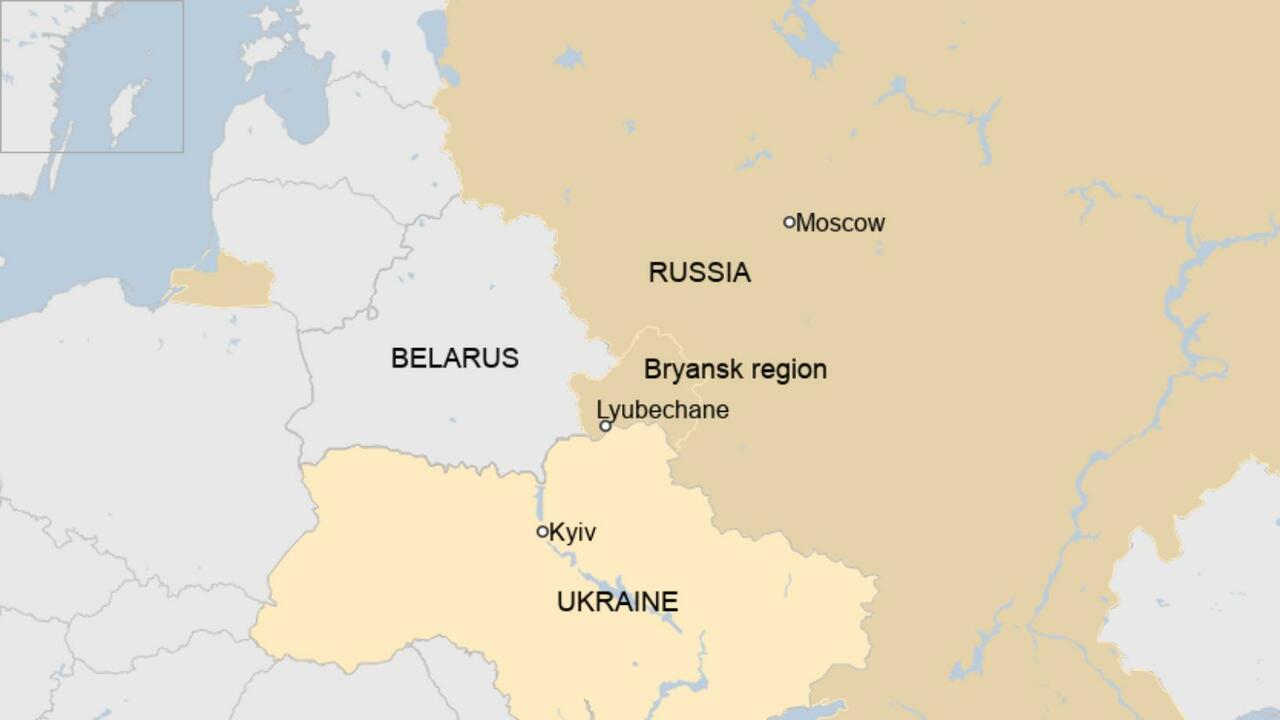
Russian officials have accused Ukraine forces of using cluster munitions against civilian targets. The governor of Russia's Bryansk region on Tuesday said that a Russian village came under attack which lies near the border.

Gov. Alexander Bogomaz announced on Telegram that cluster bomblets were observed in a cross-border attack on the village of Klimovo, but no casualties have been reported.

Reuters said it wasn't able to independently verify the claim, for which there was no immediately available visual evidence. "The governor of Russia's Bryansk region has alleged Ukraine used cluster munitions on a Russian village near the Ukrainian border, hitting several houses," EuroNews reports.

Russian border regions like Bryansk and Belgorod in particular have come under frequent indiscriminate shelling throughout at least the last year of war.

It was only in this past summer that Washington escalated its support to Kiev through the supply of cluster munitions, a weapon type currently banned by more than 120 countries:

Washington controversially supplied Kyiv with cluster bombs in July -  which was blasted as a "terrible mistake" by politicians and rights groups. 

...Like a shotgun, they splatter explosive submunitions over an area as big as several football fields. These can then lie dormant like landmines, killing and maiming civilians years after a conflict has finished.  

The Biden administration late last month announced it would likely include more cluster bombs in the next weapons package for Ukraine, which will draw on previously approved funds. 

This isn't the first time that Russian officials have alleged cross-border shelling from Ukraine which used cluster bombs, with initial accusations having come as early as July, at around the time the Ukrainians reportedly received their first US shipments.

White House national security spokesman John Kirby at that time said, "We have gotten some initial feedback from the Ukrainians, and they're using them quite effectively." But if these latest attacks on Russian civilian villages are accurate, Putin could use it to escalate with continued large-scale attacks on decision-making centers across Ukraine, as the Kremlin has threatened before. 

SUPREME COURT WILL HEAR CASE ON FLORIDA, TEXAS BANNING BIG TECH FROM CENSORING CITIZENS

 The United States Supreme Court has agreed to review the legitimacy of two landmark laws from Texas and Florida aimed at preventing tech giants from censoring content posted on their platforms. This decision has been rightly hailed as potentially resulting in a pivotal constitutional judgment on how the rights enshrined in the First Amendment apply to tech dominions in an increasingly digital world.

Undeniably, social media platforms and tech companies have morphed into modern-day gatekeepers of information flow, with an immense capability to influence global dialogues. The legislations enacted by Texas and Florida in 2021, specifically Texas House Bill 20 (HB 20) and Florida Senate Bill 7072 (SB 7072), strive to curb such unmonitored power and have rightly been celebrated as harbingers of accountability in the virtual world. Both pieces of legislation afford users the legal means to challenge allegations of political censorship by social media platforms, which has sparked passionate debate on the fine line between moderating content for the sake of propriety and downright censoring diverse opinions.

Suffice to say, should these laws pass the supreme scrutiny, they could serve as blueprints for similar legislation in other states, underscoring the urgent need to prevent technocratic monopolies from suppressing innovative and differing viewpoints.

Yet, this proposed legal revolution has not gone unchallenged. Both laws were temporarily halted by federal courts, leading to their eventual elevation to the Supreme Court.

These state-based laws could potentially overhaul the way tech platforms handle user-generated content. Critics suggest this could make it cumbersome for tech platforms to police false information, so-called “hate speech,” or offensive material.

But from the perspective of champions of free speech and anti-censorship activists, this could be a step towards securing freedom of expression in a digital era where information flows are often dictated by Silicon Valley.

Texas’ HB 20 circumvents the likelihood of censoring individuals predicated upon their viewpoints or geographic locations. Similarly, Florida’s SB 7072, or the Stop Social Media Censorship Act, seeks to prevent bans on users due to their political leanings. These legislations have been applauded for safeguarding freedom of expression, perceived as a counter to purported Silicon Valley censorship.

Undeniably, these cases are complex, entwining constitutional, legal, and ethical predicaments. The pivotal questions revolve around the extent to which social media platforms can argue for their First Amendment rights while performing the roles of publishers, and how far they can go in moderating content without infringing upon the rights of users.

The Supreme Court recognizes that the influence tech companies wield on global discourse is enormous, and this forthcoming decision guarantees that the universal right to freedom of speech will not go undefended.

https://www.blacklistednews.com/article/85380/the-supreme-court-will-hear-the-case-on-florida-and-texas-banning-big-tech-from-censoring.html

THE CDC AWARDS $260 MILLION CONTRACT FOR DISEASE SURVEILLANCE

 Taking a significant stride towards the surveillance state, the Centers for Disease Control and Prevention (CDC) disclosed its plans to back a colossal health endeavor with a hefty sum of over $260 million. The objective is an unprecedented aggregation of individual and community data leading to a predictive model. However, some critics contend that the initiative entails a serious threat of potential misuse.

The colossal investment targets at setting up a wide-ranging “public-private” network. Harnessing the prowess of artificial intelligence (AI), the sophisticated overlay of technology will assimilate unprecedented amounts of data and engender algorithms that anticipate disease outbreaks. These intricate and futuristic models with predictive abilities could then guide local, state, and national cohorts in establishing suitable “control measures” for disease outbreaks.

The plan unveiled last week reports about an estimated funding of $262.5 million spread over five years that aims at creating 13 forecasting and analytics centers for infectious diseases across the U.S. This network will channelize the coordinated effort to predict and control disease outbreaks.

Several universities involved in COVID-19 modeling and response activities would receive around $20 million each out of this investment. These include the Johns Hopkins Center for Health Security, that arranged the simulation Event 201, and the University of North Carolina Gillings School of Public Health, known for its gain-of-function research led by Ralph Baric.

Two private entities – Kaiser Permanente Southern California and a “disaster preparedness organization” named International Responder Systems LLC, will also be participants.

Engaging several esteemed entities, few centers involve US Department of Defense (DOD) researchers and bioengineering corporations in the initiative. These team-ups aim at inventing new AI and machine learning-based modeling equipment and platforms for the cause.

The concerning aspect of the proposals is where it comes to data.

While some entities monitor factors like viruses detected in waste water, others scoop up data from health insurance companies, healthcare providers, local health departments, and some even gather data from individual search histories, personal communications, social media posts, and health records.

These practitioners will test tracking and prediction tools in neighboring communities or amongst certain demographic groups and go on to scale up successful projects.

The new CDC-led endeavor, functioning like a forecast for infectious diseases, executes under the new Center for Forecasting and Outbreak Analytics (CFA). Launched by the Biden administration, the CFA seeks to model, predict, and control disease outbreaks throughout America.

Ironically, CFA holds clear corporate leanings, with strong ties to private industry despite being established in an orbital government body. The enormous funding it receives, and its closest ties to private corporations raise significant privacy concerns.

https://www.blacklistednews.com/article/85382/the-cdc-awards-260-million-contract-for-disease.html

Mexican president blames US sanctions on Cuba and Venezuela for migrant surge

 Mexican President Andrés Manuel López Obrador on Monday went on the offensive against U.S. immigration policy, blaming sanctions against countries such as Cuba and Venezuela for the rise in regional migration.

At his daily press conference Monday, López Obrador drew a direct line between U.S. foreign policy in Latin America and 10,000 daily arrivals at the U.S.-Mexico border.

He commented on a car accident where Cuban migrants were killed in the southern state of Chiapas, using it as a segue into a critique of U.S. sanctions.

“That’s why we’re going to keep insisting on addressing the root causes of migration, the origins, go deep, stop politicking, thinking rights are above ideology, that sanctions cannot be maintained — blockades — and that the poorest countries have to be helped.

Over the past week, López Obrador has been busy setting the table to receive Secretary of State Antony Blinken, Attorney General Merrick Garland, Homeland Security Secretary Alejandro Mayorkas, and Homeland Security adviser Elizabeth Sherwood-Randall.

That visit, focused on migration and security issues, follows a reciprocal one focused on trade, where Blinken, Commerce Secretary Gina Raimondo and U.S. Trade Representative Katherine Tai hosted Mexican Foreign Secretary Alicia Bárcena and Secretary of the Economy Raquel Buenrostro in Washington.

Rhetorically, López Obrador has lashed out over sanctions and negatively compared Ukraine aid to U.S. efforts to curtail root causes of migration in the Western Hemisphere.

On Monday, he noted in his press conference, which goes on for around three hours daily, that the short-term budget approved by Congress over the weekend cut aid to Ukraine.

“But how much have they destined to the war in Ukraine, $30 [billion] or $50 billion for the war, which is the most irrational thing there can be, and harmful,” he said.

López Obrador has avoided directly taking sides in Russia’s invasion of Ukraine but has raised eyebrows with his openings toward Russia — in September, Mexico’s annual independence day military parade included a Russian cohort. The yearly parade traditionally includes foreign military detachments as guests, but rarely those of countries actively involved in a shooting war.

While López Obrador has prodded the United States ahead of the high-level visit, he’s also made moves to appease U.S. concerns about Mexican cooperation on drugs and migration.

Most significantly, the Mexican military made a show of force over the weekend in Badiraguato, Sinaloa, the remote mountain hometown of imprisoned drug kingpin Joaquín “El Chapo” Guzmán, the former head of the Sinaloa Cartel.

Tuesday’s press conference opened with General Luis Rodríguez Bucio — a key player in internal security — touting the extradition of eight high-level targets to the United States.

The United States has been amping up pressure on Mexico to extradite cartel kingpins and do more to suppress the fentanyl trade, most of which has been controlled by the Sinaloa Cartel and the Cartel de Jalisco Nueva Generación, two rival organizations.

https://thehill.com/latino/4235507-mexico-president-blames-us-sanctions-on-cuba-and-venezuela-for-migrant-surge/