Search This Blog

Tuesday, November 7, 2023

Biden Briefed On China's Plans For First Military Base In The Middle East

 China is reportedly seeking to establish a permanent military base in the Middle East for the first time, which Washington will certainly see as a significant 'challenge' - also given the planned base would be in the Arab Gulf region, where the US also has major bases, as in the case of the Navy Central Command installations in Qatar and Bahrain. 

"President Joe Biden has been briefed on what his advisers see as a Chinese plan to build a military facility in Oman, people familiar with the matter said, amid a broader effort by Beijing to deepen defense and diplomatic ties with the Middle East," Bloomberg writes in its major Tuesday story.

"Biden was told that Chinese military officials discussed the matter last month with Omani counterparts, who were said to be amenable to such a deal, said the people, who asked not to be identified discussing private deliberations. They said the two sides agreed to more talks in the coming weeks," the report continues.

It's as yet unknown precisely where the potential Oman base would be located. Just last August, Oman and China held a formal celebration for their 45 years of official diplomatic relations. 

The Chinese and Omani militaries have in the recent past coordinated events and exercises, with Oman's port of Muscat semi-regularly hosting Chinese PLA warships. Last month, the Omani and PLA militaries held joint drills, and pledged to work "to expand their naval defense and military cooperation."

China is also believed to have long eyed the United Arab Emirates (UAE) as a possible host country for another base. Currently, Beijing's only other significant overseas military base is in the East African country of Djibouti

Bloomberg suggests the deepened military ties between China and Oman parallels energy ties:

Oman is sometimes referred to as the Switzerland of the Middle East given that it follows a policy of neutrality and regularly acts as a mediator, including between the US and Iran. It’s also sought to balance between maintaining its partnership with the US and nurturing ties with China, which imports the bulk of its crude output. China also invested in the first stage of Oman’s Duqm special economic zone, which will be the site of the Middle East’s biggest oil-storage facility.

The US itself doesn't have a permanent, stand-alone military base inside Oman; however, it has a key agreement with the government to use Omani bases when needed for a variety of operations. 
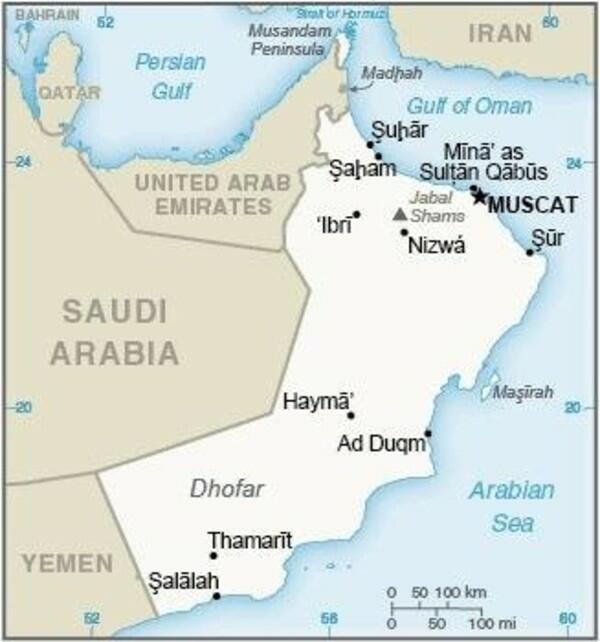
For example, the US Air Force uses RAFO Thumrait airbase, a military airport located near Thumrait in the country's south. The US Navy also frequently patrols waters off Oman's coast, looking for Iranian weapons and sanctioned oil or other shipments. One military publication has described of the Pentagon's minimal presence (compared to other Gulf nations) in Oman as follows

The U.S. maintains an ability to use Omani bases through the Oman Facilities Access Agreement, originally signed in 1980, and most recently renewed in 2010.55 This accord made Oman the first country among the Persian Gulf States to explicitly partner militarily with the U.S.56 According to the agreement, the U.S. can request access to these facilities in advance for a specified purpose. Some of the bases listed in this section are those the U.S. may access, but not necessarily where a presence is maintained. Oman has allowed 5,000 aircraft overflights, 600 landings, and 80 port calls annually. 

Starting in 2021, US Africa Command (AFRICOM) began warning that China is not content with its Djibouti base on the continent's east coast, but is looking to establish a military presence on the Atlantic. The US has long seen China as the top threat to the so-called "rules-based international order" (alongside Russia)--but Beijing very obviously lacks a global military presence like Washington has.

China also has a small naval outpost at Pakistan's major Indian Ocean port.
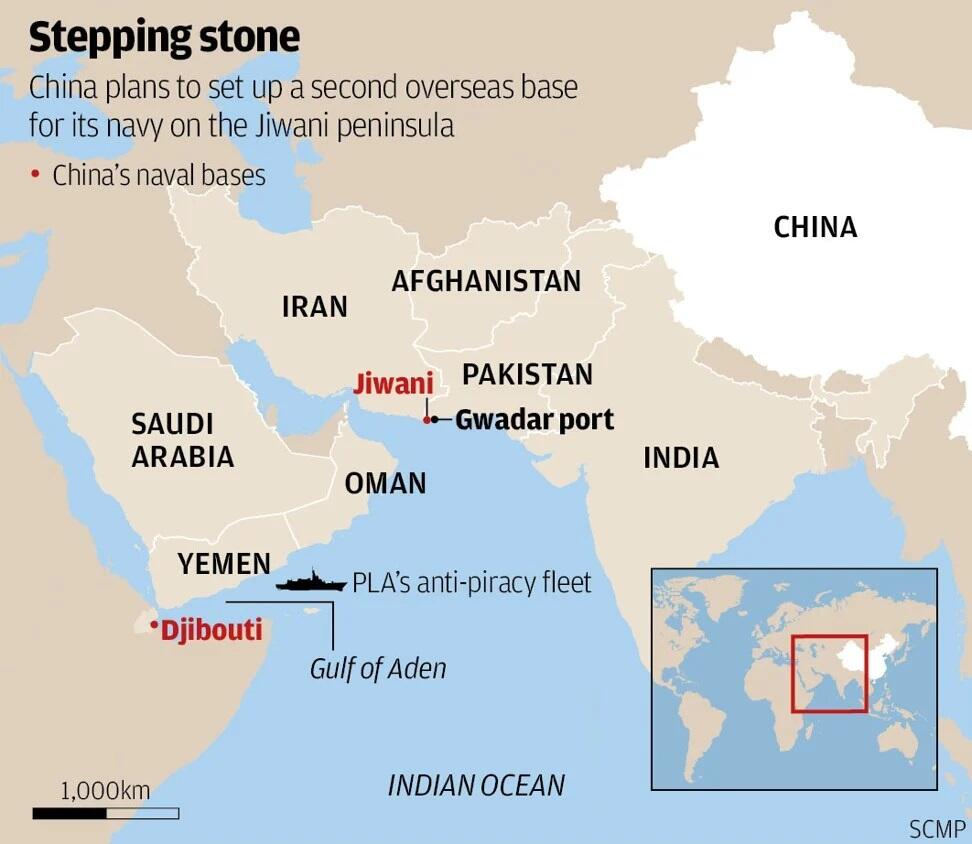
Lately, every Chinese move to expand militarily is seen as a serious "threat" by US officials, and this is even more acute now with the Ukraine and Gaza wars happening, given Beijing often takes stances opposite Washington's when it comes to these raging conflicts.

https://www.zerohedge.com/geopolitical/biden-briefed-chinas-plans-first-military-base-middle-east

NYC Speed Cameras Have Issued 4.5 Million Tickets Totaling "Hundreds Of Millions" This Year

 In the first 9 months of New York City's school zone speed cameras, almost 4.5 million tickets have already been issued with fines totaling an astonishing "hundreds of millions of dollars". 

The speed cameras in New York City now monitor and issue citations continuously, operating 24/7 throughout the year, after a considerable enlargement of the program in August 2022, according to SILive.com.

This expansion marks a significant shift from the previous restriction that limited speed camera operation to weekdays between 6 a.m. and 10 p.m.

While there is a legislative limit of 750 school zones where cameras can be placed, the actual number of cameras exceeds this figure due to the allowance of multiple cameras within these zones, resulting in approximately 2,000 cameras deployed across all five boroughs.

The report, analyzing data from the city’s Open Data page, notes that New York City's speed cameras, restricted to within a quarter-mile of schools, have levied $50 fines on drivers going over the speed limit by 10 mph or more.

From January 1 to September 26, 2023, these cameras recorded 4,458,783 violations, amounting to approximately $222.9 million in fines. Averaging 16,575 violations daily or 12 per minute over 269 days, Queens saw the highest number of fines, while Staten Island recorded the fewest.

This intensive ticketing has prompted criticisms of the city's reliance on cameras as a revenue source rather than a means to enhance public safety, especially among Staten Islanders.

The Department of Transportation (DOT) disclosed in August that there was an average reduction of 30% in speed camera citations within the initial year following the implementation of round-the-clock enforcement, accompanied by a 25% decrease in traffic-related deaths during the periods covered by the extended enforcement hours.

DOT Commissioner Ydanis Rodriguez commented: “One year ago we launched 24/7 speed camera enforcement, and the results are in: the program has reduced speeding, decreased the number of injuries, and made our streets safer. Speeding happens most often on nights and weekends, and expanded enforcement has been a highly effective tool to keep New Yorkers safe.”

Here are the total sums of fines issued, from SILive:

- STATEN ISLAND
  - Violations issued: 312,083
  - Total fines: $15,604,150

- BROOKLYN
  - Violations issued: 1,400,365
  - Total fines: $70,018,250

- MANHATTAN
  - Violations issued: 330,683
  - Total fines: $16,534,150

- QUEENS
  - Violations issued: 1,739,351
  - Total fines: $86,967,550

- THE BRONX
  - Violations issued: 676,301
  - Total fines: $33,815,050

https://www.zerohedge.com/markets/nyc-speed-cameras-have-issued-45-million-tickets-totaling-hundreds-millions-dollars-tickets

Biogen-Sage postpartum depression pill priced at $15,900

 Sage Therapeutics (SAGE.O) has priced the oral postpartum depression (PPD) pill it developed with partner Biogen (BIIB.O) at $15,900 for a full 14-day course of treatment, the company said on Tuesday, months after the drug was approved by the U.S. health regulator.

https://www.reuters.com/business/healthcare-pharmaceuticals/biogen-sage-therapeutics-postpartum-depression-pill-priced-15900-2023-11-07/


'Biden administration urges US court to uphold asylum restrictions'

 A lawyer for the administration of U.S. President  on Tuesday told an appeals court that a judge was wrong to block a rule imposing new restrictions on asylum seekers at the U.S.-Mexico border.

A three-judge panel of the 9th U.S. Circuit Court of Appeals in Pasadena, California, heard the government's appeal of a decision that said the rule adopted earlier this year violates federal immigration law, which explicitly states that crossing the border illegally should not be a bar to asylum.

The challenge to the rule was brought by immigrant advocacy groups represented by the American Civil Liberties Union (ACLU).

Biden, a Democrat, took office in 2021 pledging to reverse many of the hardline policies of Republican former President Donald Trump, but has adopted many strict border measures as record numbers of migrants have been caught crossing illegally.

The regulation presumes most migrants are not eligible to apply for asylum if they passed through other nations without seeking protection there first, or if they crossed the border illegally instead of arriving at a designated port of entry.

The 9th Circuit in August paused the judge's ruling that blocked the rule, allowing it to remain in effect pending the outcome of the appeal.

Brian Boynton of the U.S. Department of Justice argued on Tuesday that the rule is valid because rather than categorically barring asylum for migrants, it includes various exceptions to rebut the presumption that they are ineligible.

Through September, 12% of migrants who had applied for an exception under the rule had received it, Boynton said.

But that statistic merely shows that the vast majority of migrants are being barred from even being considered for asylum because of the way they entered the U.S., in violation of immigration law, ACLU lawyer Spencer Amdur told the court.

"Such a small exception can’t be what makes the difference to the rule’s legality," Amdur said.

The judges did not indicate how they were leaning during the hour-long hearing. But two of them noted that federal immigration law appears to give the government broad discretion to consider any relevant factors in deciding who ultimately receives asylum protections.

If the manner of entry can be considered in making a final decision on asylum, it makes sense that it could be factor in determining whether a migrant can apply in the first place, Circuit Judge Lawrence VanDyke said.

https://news.yahoo.com/biden-administration-urges-us-court-001818848.html

AMGEN PRESENTS NEW RESEARCH IN EARLY PSORIATIC ARTHRITIS


FOREMOST Study Finds Oral Otezla® (apremilast) Significantly Improved Disease Control vs. Placebo

Amgen (NASDAQ:AMGN) today announced results from the global Phase 4 FOREMOST study evaluating Otezla® (apremilast) in patients with early oligoarticular psoriatic arthritis. FOREMOST is the first placebo-controlled study designed to specifically assess people with oligoarticular psoriatic arthritis with early disease duration of five or fewer years. Results will be presented at the American College of Rheumatology (ACR) Convergence 2023, Nov. 10-15 in San Diego.

https://www.biospace.com/article/releases/amgen-presents-new-research-in-early-psoriatic-arthritis-at-acr-2023/

Why Bluebird Bio Stock Soared


The company posted some encouraging numbers and said it had sufficient resources to take care of financial obligations through the second quarter of 2024.

Bluebird Bio (BLUE 7.27%) had quite a ride with their stock on Tuesday. Following the gene-editing specialist's release of its latest quarterly results, its shares climbed to a more than 7% gain on the day. That was more than good enough to beat the 0.3% uptick of the S&P 500 index.

Bluebird edged past the consensus bottom-line estimate

Before market open, Bluebird divulged it earned just under $12.4 million in its third quarter, well up from the $71,000 it booked in the same period of 2022. The specialty biotech also managed to narrow its net loss, which came in at $71.7 million, or $0.66 per share, against the year-ago deficit of $76.5 million.

That bottom-line result edged past the average analyst estimate, which was $0.67 per share. However, the consensus prognosticator forecast for revenue was nearly $13.6 million.

Bluebird is a company on the upswing with two commercialized drugs: Zynteglo, which treats transfusion-dependent beta-thalassemia (TDT), a blood disease; and Skysona, a treatment for pediatric disorder cerebral adrenoleukodystrophy (CALD). Both won U.S. Food and Drug Administration (FDA) approval in the second half of 2022. While neither is a common disease, the pair provides a modest revenue base for the company.

Cash on hand

Bluebird did not proffer any guidance for either its current (fourth) quarter or full-year 2023. It did say that aided by a cash balance of around $227 million as of the end of September, it should be able to pay operating expenses and capital expenditures into the second quarter of 2024.

https://www.fool.com/investing/2023/11/07/why-bluebird-bio-stock-soared-7-higher-on-tuesday/

HHS Considers Removing J&J’s Stelara from Medicare Drug Price Negotiations

 The Department of Health and Human Services in a supplemental court filing posted late last week has suggested that Johnson & Johnson’s blockbuster psoriasis therapy Stelara (ustekinumab) might soon be “deselected” from the Inflation Reduction Act’s Drug Price Negotiation Program.

The development comes after the FDA last week approved Amgen’s Wezlana (ustekinumab-auub), an interchangeable biosimilar to Stelara. In May 2023, Amgen and J&J settled their patent dispute over the biosimilar challenge to Stelara, allowing the entry of Wezlana “no later than January 1, 2025.”

Under the current negotiation guidelines, the Centers for Medicare and Medicaid Services can reconsider a drug product for price negotiations when it is “subject to meaningful competition.” HHS referred to this provision in a separate October 2023 court filing, supporting its prior motion to dismiss a lawsuit filed by various trade groups including the Pharmaceutical Research and Manufacturers of America (PhRMA).

“A generic or biosimilar competitor could enter the market, which would remove a drug from the list of those eligible for price negotiation,” HHS wrote last month in its court filing, adding that this would also apply specifically to Stelara for which a biosimilar competitor is “expected no later than early 2025.”

“If those predictions are realized, Stelara will be deselected, and negotiated prices will never take effect for the administration of Stelara,” HHS stated in its October document. Given this possibility, Stelara’s selection for the first round of price negotiations poses no certain future harm to J&J, according to the agency.

HHS noted in its court filing last week that “those predictions are now, in fact, beginning to be realized” with Wezlana’s recent approval.

Under the Inflation Reduction Act (IRA), which was signed into law in August 2022, CMS is authorized to renegotiate the prices for Medicare’s most highly prescribed medicines, with the goal of generating $25 billion in drug savings over the next eight years.

CMS released its initial roster of medicines to be impacted by this program in August 2023. In addition to Stelara, the list also includes BMS’s blood thinner Eliquis (apixaban), Lilly’s diabetes drug Jardiance (empagliflozin) and Novartis’ heart failure treatment Entresto (sacubitril/valsartan). Two other J&J products are up for negotiations, including blood cancer therapy Imbruvica (ibrutinib) and anticoagulant Xarelto (rivaroxaban).

Besides trade groups like PhRMA, several big biopharma players have also lodged lawsuits against HHS seeking to block the drug price negotiation program. These include J&JAstraZeneca and Merck.

https://www.biospace.com/article/hhs-considers-removing-j-and-j-s-stelara-from-medicare-drug-price-negotiations/