Search This Blog

Friday, January 19, 2024

Has Biden bribed Mexico to control border – and help him win the election?

 Just in time for election year, border crossings have plummeted — a sign that Joe Biden has struck a secret deal with the Mexican president to help his campaign.

Daily Border Patrol encounters of illegal immigrants crossing the border was 12,000 to 14,000 per day at the end of December. But according to government data confidentially shared with me, it has dropped to a still managerially catastrophic yet smaller 4,000 to 5,000 a day.

What led to those numbers dropping from ionospheric heights? The answer will have something to do with the Biden administration’s diplomatic missions to Mexico City over Christmas.

The officials returned to Washington reporting fuzzy platitudes and no details about whatever deal they struck with President Andres Manuel Lopez Obrador.

But while the US press has been silent, Mexican media is brimming with reports of what happened afterward.

Members of the Mexican army patrol the migrant camp, after a significant portion of the area was cleared by authorities, in Matamoros, Mexico, December 28, 2023.
Members of the Mexican army patrol a migrant camp after the area was cleared by authorities.REUTERS

Mexico suddenly started doing some serious anti-immigration work, the kind necessary to cut down on the shocking border images that front-running Donald Trump could use to help win this year’s election.

Among the news:

  •  Mexican law enforcement officials are rounding up immigrants in the country’s north and shipping them by bus and airplane to southern cities like Tapachula in Chiapas State and Villahermosa in Tabasco State. They are all expected to go home or stay put alongside those continuing to enter from Guatemala. They’ll be held back to wait for a molasses-slow bureaucracy to approve individual travel papers.

In a story headlined “Truncated American Dream: Learn about Miguel’s Story,” the Tabasco Herald described how Mexican immigration agents rounded up Guatemalan Don Miguel and his six children from a long-standing migrant camp in Matamoros on December 31.

They shipped him to Villahermosa, where he has requested a ride back to Guatemala.

  • To eliminate another obvious draw, Mexican authorities have emptied and then bulldozed at least one longstanding migrant camp, the sprawling one in Matamoros across the Rio Grande from Brownsville and dug deep anti-pedestrian trenches to deny further easy access to popular crossings there. It was done “under U.S. pressure,” one Mexican newspaper said.
  •  Perhaps one of Mexico’s most impactful slow-down measures is that, finally, it is doing something about “La Bestia,” the system of cargo trains that have super-powered the Biden border crisis for three years running by transporting hundreds of thousands of migrants from deep southern Mexico to its northern border cities.

Mexican media shows that Mexico’s military is blockading railyards all over the country and rousting immigrants already on the trains.

People in popular northern railway destination cities like Juarez across from El Paso have noticed the sharp change.

“After the arrival of thousands of migrants aboard cargo trains during the last quarter of 2023, a train with around five people headed to the border was observed,” wrote El Diario on January 12. “The small group traveling on a wagon was photographed by a resident of that town, who at the end of last year witnessed the passage of different trains with hundreds of people towards this border.”

According to Mexican media, this is part of a broader “agreement” signed by Mexico’s immigration service and the U.S. Border Patrol to also block northbound immigrants on public roads.

What does the Mexican president get in return?

AMLO has called for $20 billion dollars to be shared among his country and some others, for starters, according to media reports.

Biden may also have convinced AMLO he’ll get a better deal from him than Trump.

When Trump was in office, he threatened to ruin Mexico’s economy with trade tariffs if AMLO didn’t play ball with his policies and demands to slow the flow from Guatemala.

Biden dropped that hard-ball tactic and switched to carrots (lots of cash).

AMLO, however, has repeatedly double-crossed Biden.

In September 2021, for example, AMLO ordered the release and busing of 15,000 Haitians who were rioting for release from Tapachula, the big city at the Guatemala-Mexico border — just so they wouldn’t get in the way of upcoming “El Grito” street parties. Those Haitians went on to create the infamous Del Rio migrant camp crisis that made international headlines for many days.

In the years since, as I have repeatedly reported, AMLO switched to “ant operation” strategy, which is to let thousands bottled up in Tapachula leave by spreading them out across a dozen northern provinces so TV cameras can’t see them in big congregations.

This time may be different, though. AMLO may feel motivated to endure riots and trouble for nine months because he so hates and fears Trump’s big stick.

The Mexican president will want Biden to win so he can keep releasing immigrants in ant operations — and get paid U.S. tax dollars to do it.

Todd Bensman is a senior national security fellow at the Center for Immigration Studies.

https://nypost.com/2024/01/18/opinion/has-biden-bribed-mexico-to-control-border-and-help-him-win-election/

Thursday, January 18, 2024

3 Gun Rights Cases Before the Supreme Court

 by Michael Clements via The Epoch Times (emphasis ours),

Both sides of the Second Amendment debate will be watching the U.S. Supreme Court closely in 2024 as it applies the standards from previous decisions to new high-profile cases.

In the 2022 New York State Rifle and Pistol Association v. Bruen decision, the Supreme Court ruled that, to be constitutional, new gun laws must match the plain text of the Constitution and the “history and tradition” of the United States.

“The test that ... applies today requires courts to assess whether modern firearms regulations are consistent with the Second Amendment’s text and historical understanding,” Justice Clarence Thomas wrote for the majority in June 2022.

One of the first major post-Bruen cases, United States v. Rahimi has court watchers curious about how Bruen will be applied. The high court heard oral arguments on Rahimi on Nov. 7, 2023.

Federal law currently bars those who are under domestic violence restraining orders from possessing guns. The Supreme Court in the Rahimi case will decide if it stays or goes.

Gun control advocates say the “text and tradition” standard of the Bruen decision, if applied in Rahimi, would allow violent abusers access to guns, resulting in the deaths of domestic violence victims.

“The Supreme Court must reverse this dangerous [Bruen] ruling,” Janet Carter, senior director of issues and appeals at Everytown Law, wrote on the Everytown for Gun Safety website. “Domestic abusers do not have—and should not have—the constitutional right to possess a firearm.”

Gun rights advocates say the Rahimi case has been mischaracterized as an attempt to arm violent criminals when it’s really about protecting society without preemptively suspending constitutional rights.

Members of the public shoot a variety of rifles and other weapons at a shooting range during the Rod of Iron Freedom Festival in Greeley, Pa., on Oct. 9, 2022. (Spencer Platt/Getty Images)

“It’s going to answer one issue, which is, do we as a country have a historical tradition of disarming people that we believe to be dangerous?” William Kirk, a Washington state-based lawyer who specializes in the Second Amendment, told The Epoch Times.

“And the answer is, ‘Yes, we do.’”

Second Amendment lawyers predict that the Supreme Court will uphold the federal domestic violence law in Rahimi. They hope that the court will also ensure that due process rights are protected and an avenue for returning confiscated firearms is preserved.

“The real issue being decided goes far beyond the narrow question,” Tom Grieve, a Wisconsin criminal defense lawyer, told The Epoch Times.

Mark Smith, a constitutional attorney and author, agreed. He said it’s vital that the court protect the due process rights of gun owners.

“The most important thing Second Amendment supporters should want the Supreme Court to state in the Rahimi case is that the government may not disarm any American citizen unless there is first and foremost a court finding that a person is violently dangerous, after a robust evidentiary hearing with counsel, live witnesses, and ample due process,” he wrote in an email to The Epoch Times.

According to court records, Zackey Rahimi is a drug dealer based in Arlington, Texas, who abused his girlfriend and had a penchant for shooting at people when he was angry.

In 2019, he was placed under a domestic violence restraining order that barred him from possessing or purchasing firearms. Mr. Rahimi reportedly agreed to the order during a court hearing. He later assaulted a different woman and was involved in at least five more shootings, court records show.

He was indicted by a federal grand jury in the U.S. District Court for the Northern District of Texas for violating the restraining order after police found guns, drugs, and cash in his home.

He asked the Court of Appeals for the 5th Circuit, which covers Texas, Louisiana, and Mississippi, to toss the indictment because the restraining order was issued before he was convicted of any of the crimes for which the order was issued.

The court upheld the indictment. He pleaded guilty to violating the restraining order and was sentenced to 73 months in prison.

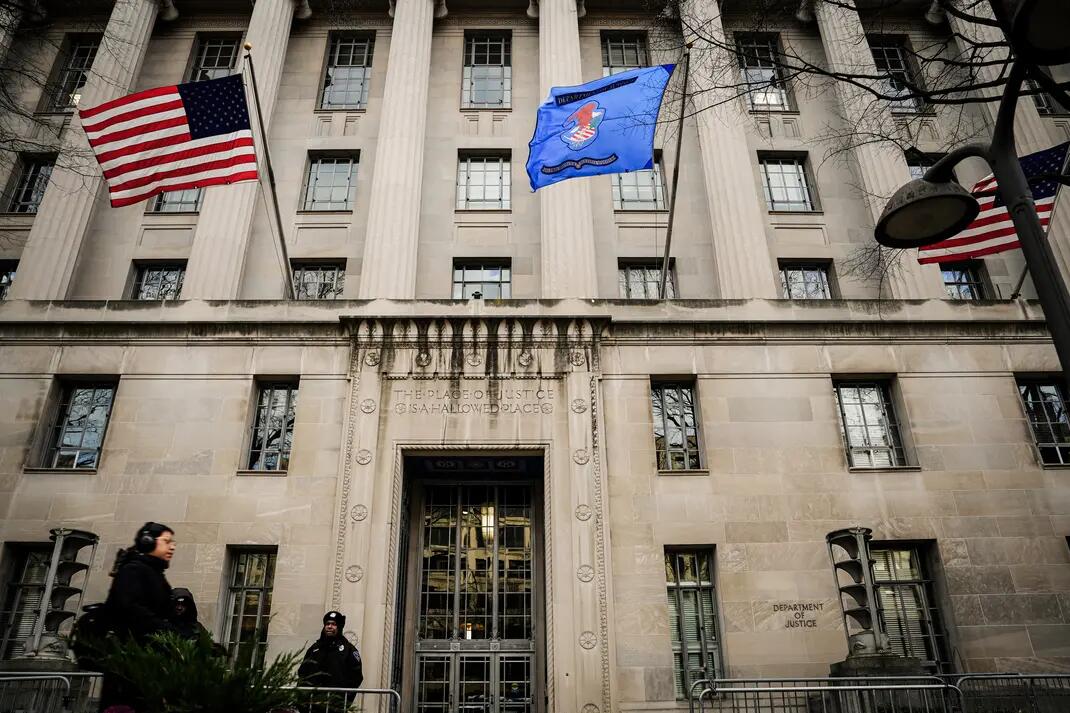
After the Bruen decision, the 5th Circuit reversed its decision, according to a petition filed by the Department of Justice (DOJ).

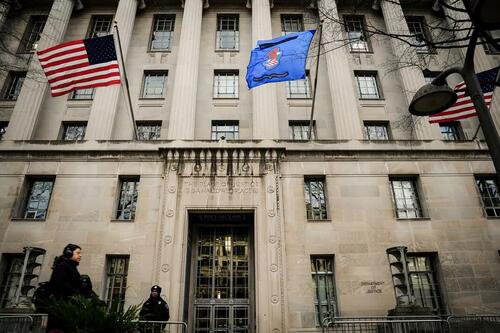
The Department of Justice in Washington on Jan. 4, 2024. (Madalina Vasiliu/The Epoch Times)

“The Fifth Circuit at first affirmed [the indictment], reasoning that its decision in McGinnis foreclosed Rahimi’s Second Amendment challenge. But after this Court decided New York State Rifle & Pistol Association v. Bruen, the Fifth Circuit withdrew its opinion. After receiving supplemental briefing on Bruen, the court reversed,” the petition reads.

The 5th Circuit ruled that, under the Bruen standard, 18 USC 922 (g) (8), which relates to unlawful possession of a firearm, didn’t align with the text of the Second Amendment and that there was no historical analog to indicate that the law was in line with the United States’ history and tradition of firearms regulation.

The court ruled that Mr. Rahimi had been deprived of his Second Amendment rights.

Define ‘Dangerous’

DOJ lawyers told the court that the 5th Circuit had misread the Bruen decision.

At that time, Republican-appointed Chief Justice John Roberts asked Mr. Rahimi’s lawyer, J. Matthew Wright, “You don’t have any doubt that your client is a dangerous person, do you?”

When Mr. Wright said it depends on what was meant by ‘dangerous person,’ the chief justice responded with, “Well, it means someone who’s shooting, you know, at people. That’s a good start,” according to The Associated Press.

However, Justice Samuel Alito, a Bush appointee, expressed concern that someone could receive a domestic violence restraining order without “any finding of dangerousness” before losing their Second Amendment rights.

Now, suppose someone is later prosecuted for violating that provision. Would it be a defense for that person to say that the state law in question did not require such a finding and, in fact, there was no such finding in my case?” he asked U.S. Solicitor General Elizabeth Prelogar.

Mr. Kirk, who also hosts a YouTube channel focused on Second Amendment issues, expects the court to be particular in its decision.

“It’s going to be a narrow, tailored opinion, and it’s going to answer one issue, which is, do we as a country have a historical tradition of disarming people that we believe to be dangerous? And the answer to that question is, ‘yes, we do,’” Mr. Kirk told The Epoch Times.

Supreme Court Chief Justice John Roberts arrives at the Senate chamber for impeachment proceedings at the U.S. Capitol in Washington on Jan. 16, 2020. (Drew Angerer/Getty Images)

While he agrees with Mr. Kirk on what the court will likely decide, Mr. Grieve said that the bigger question is how the justices will come to their conclusions.

There’s a lot of ways this can go, right and wrong. And I think we may see a mixture of both,” he said.

Mr. Grieve pointed out that under Bruen’s text requirement, the justices will need to determine the definition of “the people.”

“What are the limits of the phrase ‘the right of the people?’ Is it just law-abiding citizens? Is it everyone?” he said.

The justices will also have to determine what constitutes “tradition.” How far back do they have to trace a law’s lineage before it can be considered a tradition?

Conflicting Ideas on Tradition

According to Mr. Grieve, many gun control advocates point out that the Second Amendment was incorporated into the states under the Constitution’s 14th Amendment, which guarantees equal protection under the law.

But most gun rights activists say tradition requires the court to consider the law in the context of the year that the Constitution was ratified, 1791. At that time, there were far fewer gun regulations.

There is seemingly no end to the directions this could be going,” Mr. Grieve said.

And while it’s not as significant in the Rahimi case, some gun rights advocates expect due process to be a factor.

This was evidenced by Justice Alito’s question about whether “a finding of dangerousness” should be required before firearms are confiscated.

Aidan Johnston, director of federal affairs for Gun Owners of America, said this is crucial since many state red flag laws don’t have any due process requirements. He said this could result in the disarming of people who need protection during contentious divorce proceedings.

“Often, an innocent victim is deprived of the right to defend themselves. The Second Amendment is actually about empowering the victims,” Mr. Johnston told The Epoch Times.

https://www.zerohedge.com/markets/3-gun-rights-cases-supreme-court-you-should-know-about

"Food Deserts" Rise In Democrat Run Cities As Grocers Leave In Droves

 The panic is palpable.  Democrat controlled cities across the nation are experiencing something they might never have experienced before:  Consequences for their terrible criminal prosecution policies.  And, they don't like.  Not one bit.

Democrats have argued for the past couple years that crime rates are actually falling in the US compared to previous decades, but this does not seem to be represented on the streets as retailers in numerous metro areas are closing up shop after many years of operations due to increasing theft.  If crime rates are falling, why are so many businesses leaving blue areas?

Boston, for example, has been bleeding retailers in recent months, with companies like Walgreens closing down four stores in the area in a single year.  Residents and officials are “outraged”, arguing that these companies have a civic duty to stay and service communities in need.  It's estimated that Massachusetts retailers are losing more than $2 billion per year to criminal theft.  Maybe if the community stopped robbing them on a daily basis, these companies wouldn't feel the need to shut down.


The series of closures in Boston is similar to what is happening in San Francisco, with some neighborhoods slowly but surely losing nearby access to grocers.  Companies have in some cases tried to hide the reason for shutting down (high crime) by suggesting that they are “improving” the area by opening land up for development, but locals know the real cause.

Conclusion – Crime is not falling at all in leftist run cities.  Crime rates rely on reports and arrests.  If leftist officials are making policies which discourage arrests and reporting, then crime rates go down – It's like magic.

Due to changes in the way data is being collated by the FBI during the covid years, many major cities are not actually required to provide full crime rate information until 2024-2025, and quite a few are taking advantage (at least 30%).  San Francisco will not be reporting complete crime stats until 2025.   

This means that when Democrats argue that crime is going down (ostensibly because of their leadership), this is based on a false and incomplete picture of the data.  Lack of data, as mentioned, is also coupled with lack of arrests, lack of prosecution, and the consistent release of repeat offenders in blue cities.  Lack of arrests and convictions does not mean there's less crime.  

Again, using San Francisco as an example, the police department's closure rate on cases remains dismal because the city's District Attorney refused to prosecute; for every 100 suspects arrested, three are charged and one is convicted.  Until he was recalled in a July 8, 2022, election, San Francisco’s DA was Soros-backed radical leftist Chesa Boudin.  The Soros connection is widely considered one of the prime indicators of crooked DA's and prosecutors, as well as high crime rates for a city.

Soros DAs run several other major prosecutorial offices, including Los Angeles, Chicago, Philadelphia, Austin, Dallas, San Antonio, St. Louis, New York, Baltimore, Albuquerque, Orlando, and three urban counties in Northern Virginia.  In Massachusetts, Soros-backed federal prosecutor Rachael Rollins was forced to resign after the Department of Justice’s Office of the Inspector General and the Office of Special Counsel released devastating reports outlining her serious ethical lapses and partisan political activity.  It's not surprising that wherever Soros influenced DAs and prosecutors run things, food deserts seem to follow.        

Once this dynamic of corruption is understood, it becomes clear why so many grocers and retailers are uprooting their stores and leaving.  It's no longer profitable to stay because Democrat city governments have chosen criminals over businesses. 

https://www.zerohedge.com/political/food-deserts-rise-democrat-run-cities-grocers-leave-droves

The Silent Epidemic Eating Away Americans' Minds

 by Marina Zhang via The Epoch Times (emphasis ours),

Billy was a bright 10-year-old boy with two Ivy-League-educated parents. He was book smart—got straight A’s in school—but lacked street smarts.

He was also a poor sport. Billy would frequently lie and cheat when playing board games or participating in team activities and have full-blown meltdowns when he lost. His friends, who had been with him since kindergarten, began losing patience. His parents recognized that something had to be done.

So Billy’s parents brought him to Dr. Victoria Dunckley, a pediatric psychiatrist specializing in screen use.

After a four-week “screen fast” prescribed by Dr. Dunckley, which eliminated all TVs, phones, and video games, Billy’s problems miraculously cleared up. His parents were so pleased that they decided to maintain the fast.

Six months passed, and Billy’s friends were no longer avoiding him, and his sportsmanship had improved markedly. Billy decided to run for class president and delivered a speech, something that would have previously terrified him.

Billy is one of Dr. Dunckley’s many patients whose mental and behavioral problems disappeared once they eliminated or significantly reduced screen time.

Excessive use of screens has become an epidemic silently eroding lives with little resistance. Gallup’s 2012 survey found that around 60 percent of young adults admit to spending too much of their time on the internet; a subsequent survey estimated that 83 percent of smartphone users say they keep their phone near them “almost all the time during their waking hours.”

Screens can overstimulate our brains, resulting in a perpetual, highly stressed, fight-or-flight state. This then makes us prone to meltdowns, depression, and anxiety when even minor changes in the environment occur.

Rising Problem

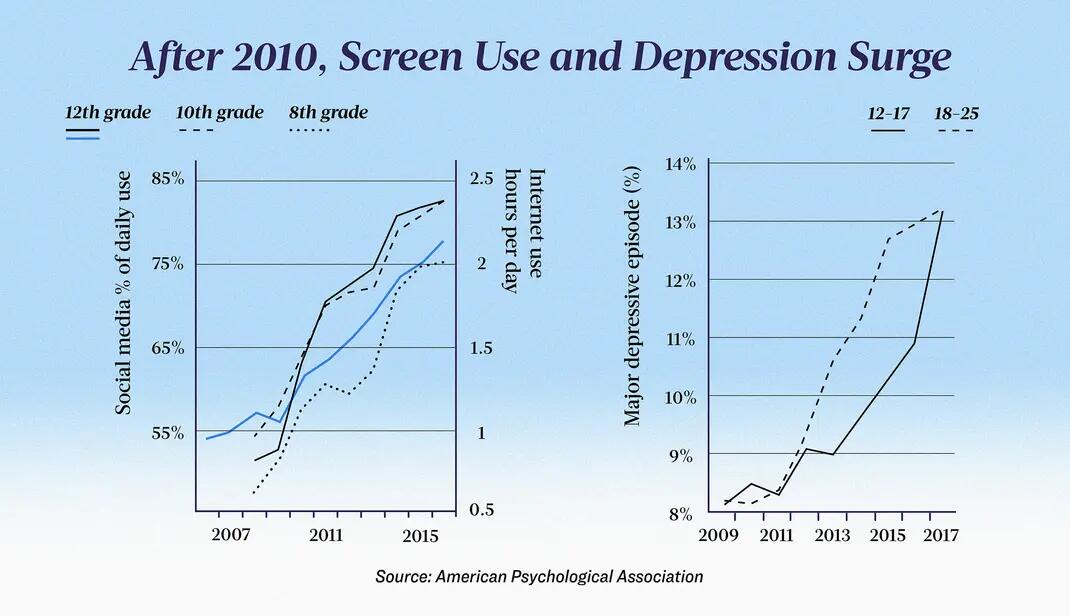
The initial link between screen time and poor mental health was spotted through generational studies by Jean Twenge, who has a doctorate in psychology and is a professor of psychology at San Diego State University.

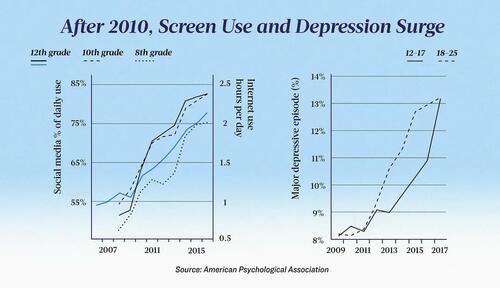
“I got used to changes that would grow slowly and steadily over time,“ but then after 2010, ”I started to see some changes that were much more sudden—I had really never seen anything like it,” Ms. Twenge said in a TEDx talk.

Around 2010, social media and internet use saw a dramatic increase, followed by an increase in major depression. (The Epoch Times)

Between 2005 and 2012, the change in rates of depressive episodes in teens aged 12 to 17 barely exceeded 1 percent. However, between 2012 and 2017, there was an almost 4 percent increase.

Additionally, fewer teenagers are going outside or reading books, while their time on social media and the internet is dramatically surging.

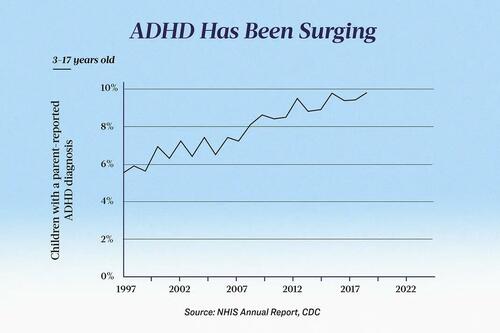
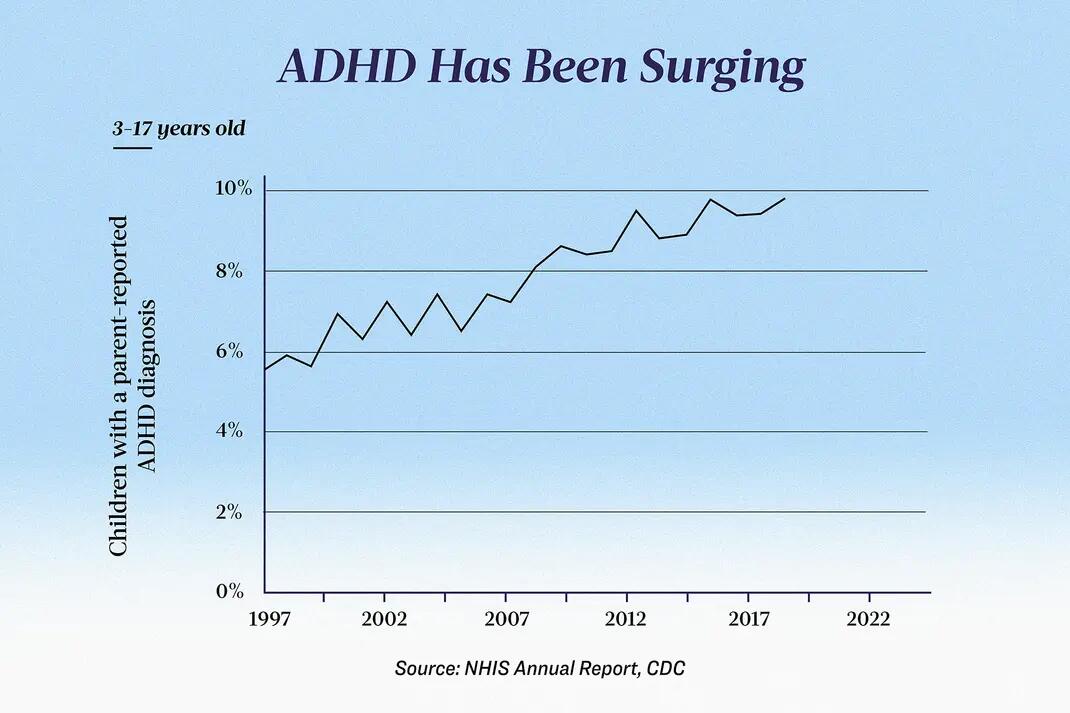
In 2008, psychotherapist Tom Kersting, who worked as a school counselor for 25 years, saw a rise in attention-deficit/hyperactivity disorder (ADHD) diagnoses in children over age 8.

ADHD tends to be detected in early childhood after a child starts school. However, he has witnessed increasingly delayed diagnoses in teenagers and adults. While it could be possible that some of these teens were missed by clinicians when they were young, Mr. Kersting suspects that some developed symptoms of ADHD due to screen use.

ADHD diagnosis has been on the rise. (The Epoch Times)

Around 2012, when 30 percent of teenagers had a smartphone, he started to see rebellious behavior and anxiety disorders becoming more common among children. Young adults and teenagers growing up now also tend to be more antisocial and have reduced emotional resilience, which may be related to insufficient in-person socializing due to spending most of their time behind screens.

It’s not just the amount of time spent in the cyber world,” Mr. Kersting told The Epoch Times, “but also what they missed out on: outside play and social learning.”

During the pandemic, adolescents’ screen time doubled.

Few studies investigated internet addiction in children during the pandemic, but a large study done in adults in 2021 showed that adults who were considered at risk of internet addiction were 2.3 times more likely to have depression and 1.9 times more likely to have anxiety than the general population. Furthermore, people with definite or severe addiction were 13 times more likely to have both depression and anxiety.

Fast forward to post-pandemic times, with teachers reporting that the latest generation—Gen Alpha, also known as “iPad kids”—is aggressive, undisciplined, and regulates emotions poorly in the classroom.

Dr. Clifford Sussman, a psychiatrist specializing in screen addiction, has focused his practice on treating this condition due to increasing need. Especially after the pandemic, “demand for help with this issue exploded,” he told The Epoch Times.

How Screens Hook You

Screen activities—whether they include video games, social media, internet scrolling, or video streaming—offer an escape. These activities are also highly stimulating for the brain due to their bright colors and seamless integration into the virtual world, professor and psychotherapist David Rosenfeld at Buenos Aires University told The Epoch Times.

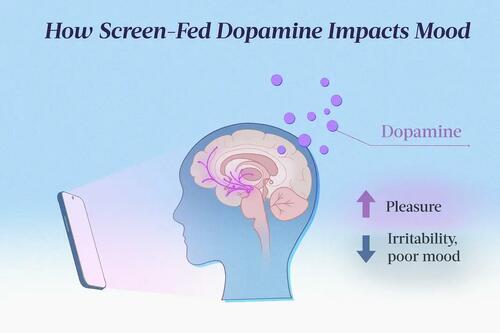
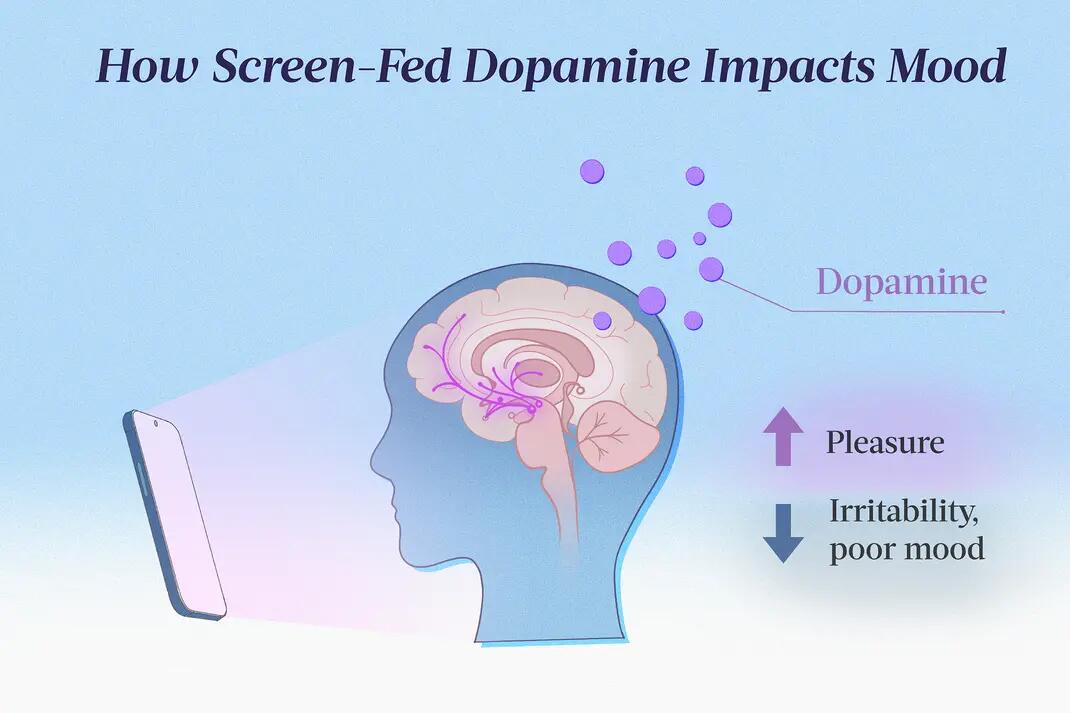
When presented with anything new and exciting, the brain releases dopamine, and anything that induces dopamine release can be addictive. Dopamine produces a feeling of pleasure, while a drop in it is linked to irritability and poor mood.

Dopamine produces a feeling of pleasure, while a drop in it is linked to irritability and poor mood. (Illustration by The Epoch Times, Shutterstock)

Screen activities have been designed to capture our attention by feeding us regular doses of dopamine. Like playing an immersive video game, giving you a thrill when you level up, defeat a boss, or find a new item, screens entice you to spend more time in the virtual world.

“Video games are governed by microscopic rules,” Bennett Foddy, who teaches game design at New York University’s Game Center, said in the book “Irresistible: The Rise of Addictive Technology and the Business of Keeping Us Hooked” by Adam Alter, as excerpted by The Guardian.

These micro-rules can be a “ding” sound or a white flash whenever a character moves over a particular square and are synced to the player’s actions so they feel they were the one who caused it. This micro-feedback generates a sense of reward, hooking people into continuously playing the game.

This system may also explain why interactive screen activities may be more problematic for children than passive screen activities, like watching TV.

Dr. Dunckley has observed that while two hours of TV is linked to signs of dysregulation in children, only 30 minutes of interactive screen activities is stimulating enough for signs to occur.

Many video games also employ strategies used in gambling, such as loot-box rewards, where players are rewarded at random intervals throughout the game. Since players do not know when the next reward drop will come, they are further compelled to play the game—even if they are not enjoying it.

This strategy came from the works of psychologist Burrhus Frederic Skinner. Skinner put pigeons in a box with a button, rewarding them with food whenever they pressed it. He found that the pigeons rewarded irregularly were more compelled to press the button than those rewarded with every button press.

This compulsion also exists in humans.

https://www.zerohedge.com/political/silent-epidemic-eating-away-americans-minds

Short, toxic RNAs kill brain cells and may allow Alzheimer's to develop

 Alzheimer's disease, which is expected to have affected about 6.7 million patients in the U.S. in 2023, results in a substantial loss of brain cells. But the events that cause neuron death are poorly understood.

A new Northwestern Medicine study shows that RNA interference may play a key role in Alzheimer's. For the first time, scientists have identified short strands of toxic RNAs that contribute to brain cell death and DNA damage in Alzheimer's and aged brains. Short strands of protective RNAs are decreased during aging, the scientists report, which may allow Alzheimer's to develop.

The study also found that older individuals with a superior memory capacity (known as SuperAgers) have higher amounts of protective short RNA strands in their . SuperAgers are individuals aged 80 and older with a memory capacity of individuals 20 to 30 years younger.

"Nobody has ever connected the activities of RNAs to Alzheimer's," said corresponding study author Marcus Peter, the Tom D. Spies Professor of Cancer Metabolism at Northwestern University Feinberg School of Medicine. "We found that in aging brain cells, the balance between toxic and protective sRNAs shifts toward toxic ones."

The paper is published in Nature Communications.

The Northwestern discovery may have relevance beyond Alzheimer's. "Our data provide a new explanation for why, in almost all neurodegenerative diseases, affected individuals have decades of symptom-free life and then the disease starts to set in gradually as cells lose their protection with age," Peter said.

The findings also point to a new way for treating Alzheimer's and potentially other .

Alzheimer's is characterized by a progressive occurrence of amyloid-beta plaques, tau neurofibrillary tangles, scarring and ultimate brain cell death.

"The overwhelming investment in Alzheimer's drug discovery has been focused on two mechanisms: reducing amyloid plaque load in the brain—which is the hallmark of Alzheimer's diagnosis and 70 to 80% of the effort—and preventing tau phosphorylation or tangles," Peter said. "However, treatments aimed at reducing amyloid plaques have not yet resulted in an effective treatment that is well tolerated.

"Our data support the idea that stabilizing or increasing the amount of protective short RNAs in the brain could be an entirely new approach to halt or delay Alzheimer's or neurodegeneration in general."

Such drugs exist, Peter said, but they would need to be tested in animal models and improved.

The next step in Peter's research is to determine in different animal and cellular models (as well as in brains from Alzheimer's patients) the exact contribution of toxic sRNAs to the cell death seen in the disease and screen for better compounds that would selectively increase the level of protective sRNAs or block the action of the toxic ones.

What are toxic and protective short RNAs?

All our gene information is stored in the form of DNA in the nucleus of every cell. To turn this gene information into the building blocks of life, DNA must be converted into RNA which is used by cell machinery to produce proteins. RNA is essential for most biological functions.

In addition to these long coding RNAs, there are large numbers of short RNAs (sRNAs), which do not code for proteins. They have other critical functions in the cell. One class of such sRNAs suppresses long coding RNAs through a process called RNA interference that results in the silencing of the proteins for which the long RNAs code.

Peter and colleagues have now identified very short sequences present in some of these sRNAs that when present can kill cells by blocking production of proteins required for cells to survive resulting in . Their data suggest that these toxic sRNAs are involved in the death of neurons which contributes to the development of Alzheimer's disease.

The toxic sRNAs are normally inhibited by protective sRNAs. One type of sRNA is called microRNAs. While microRNAs play multiple important regulatory roles in cells, they are also the main species of protective sRNAs. They are the equivalent of guards that prevent the toxic sRNAs from entering the cellular machinery that executes RNA interference. But the guards' numbers decrease with aging, thus allowing the toxic sRNAs to damage the cells.

Scientists analyzed the brains of Alzheimer's disease mouse models, the brains of young and old mice, induced pluripotent stem cell-derived neurons from normal individuals (both young and aged) and from Alzheimer's patients, the brains of a group of older individuals over 80 with memory capacity equivalent to individuals 50 to 60 years old, and multiple human -derived neuron-like cell lines treated with amyloid beta fragments, a trigger of Alzheimer's.

More information: Death Induced by Survival gene Elimination (DISE) is correlated with neurotoxicity in Alzheimer's disease and aging, Nature Communications (2024).


https://medicalxpress.com/news/2024-01-short-toxic-rnas-brain-cells.html

Oncologists Sound the Alarm About Rise of White Bagging

 For years, oncologist John DiPersio, MD, PhD, had faced frustrating encounters with insurers that only cover medications through a process called white bagging.

Instead of the traditional buy-and-bill pathway where oncologists purchase specialty drugs, such as infusion medications, directly from the distributor or manufacturer, white bagging requires physicians to receive these drugs from a specialty pharmacy.

On its face, the differences may seem minor. However, as DiPersio knows well, the consequences for oncologists and patients are not.

White bagging, research showed, leads to higher costs for patients and lower reimbursement for oncology practices. The practice can also create safety issues for patients.

That is why DiPersio's cancer center does not allow white bagging.

And when insurers refuse to reconsider its white bagging policy, his cancer team is left with few options.

"Sometimes, we have to redirect patients to other places," said DiPersio, a bone marrow transplant specialist at Siteman Cancer Center, Washington University in St. Louis, St. Louis, Missouri.

In emergency instances where patients cannot wait, DiPersio's team will administer their own stock of a drug. In such cases, "we accept the fact that by not allowing white bagging, there may be nonpayment. We take the hit as far as cost."

Increasingly, white bagging mandates are becoming harder for practices to avoid.

In a 2021 survey, 87% of Association of Community Cancer Centers members said white bagging has become an insurer mandate for some of their patients.

2023 analysis from Adam J. Fein, PhD, of Drug Channels Institute, Philadelphia, Pennsylvania, found that white bagging accounted for 17% of infused oncology product sourcing from clinics and 38% from hospital outpatient departments, up from 15% to 28% in 2019. Another bagging practice called brown bagging, where specialty pharmacies send drugs directly to patients, creates many of the same issues but is much less prevalent than white bagging.

This change reflects "the broader battle over oncology margins" and insurers' "attempts to shift costs to providers, patients, and manufacturers," Fein wrote in his 2023 report.

White Bagging: Who Benefits?

At its core, white bagging changes how drugs are covered and reimbursed. Under buy and bill, drugs fall under a patient's medical benefit. Oncologists purchase drugs directly from the manufacturer or distributor and receive reimbursement from the insurance company for both the cost of the drug as well as for administering it to patients.

Under white bagging, drugs fall under a patient's pharmacy benefit. In these instances, a specialty pharmacy prepares the infusion ahead of time and ships it directly to the physician's office or clinic. Because oncologists do not purchase the drug directly, they cannot bill insurers for it; instead, the pharmacy receives reimbursement for the drug and the provider is only reimbursed for administering it.

Insurance companies argue that white bagging reduces patients' out-of-pocket costs "by preventing hospitals and physicians from charging exorbitant fees to buy and store specialty medicines themselves," according to advocacy group America's Health Insurance Plans (AHIP).

Data from AHIP suggested that hospitals mark up the price of cancer drugs considerably, charging about twice as much as a specialty pharmacy, and that physician's offices also charge about 23% more. However, these figures highlight how much insurers are billed, not necessarily how much patients ultimately pay.

Other evidence shows that white bagging raises costs for patients while reducing reimbursement for oncologists and saving insurance companies money.

A recent analysis in JAMA Network Open, which looked at 50 cancer drugs associated with the highest total spending from the 2020 Medicare Part B, found that mean insurance payments to providers were more than $2000 lower for drugs distributed under bagging than traditional buy and bill: $7405 vs $9547 per patient per month. Investigators found the same pattern in median insurance payments: $5746 vs $6681. Patients also paid more out-of-pocket each month with bagging vs buy and bill: $315 vs $145.

For patients with private insurance, "out-of-pocket costs were higher under bagging practice than the traditional buy-and-bill practice," said lead author Ya-Chen Tina Shih, PhD, a professor in the Department of Radiation Oncology at UCLA Health, Los Angeles, California.

White bagging is entirely for the profit of health insurers, specialty pharmacies, and pharmacy benefit managers, the middlemen who negotiate drug prices on behalf of payers.

Many people may not realize the underlying money-making strategies behind white bagging, explained Ted Okon, executive director for Community Oncology Alliance, which opposes the practice. Often, an insurer, pharmacy benefit manager, and mail order pharmacy involved in the process are all affiliated with the same corporation. In such cases, an insurer has a financial motive to control the source of medications and steer business to its affiliated pharmacies, Okon said.

When a single corporation owns numerous parts of the drug supply chain, insurers end up having "sway over what drug to use and then how the patient is going to get it," Okon said. If the specialty pharmacy is a 340B contract pharmacy, it likely also receives a sizable discount on the drug and can make more money through white bagging.

Dangerous to Patients?

On the safety front, proponents of white bagging say the process is safe and efficient.

Specialty pharmacies are used only for prescription drugs that can be safely delivered, said AHIP spokesman David Allen.

In addition to having the same supply chain safety requirements as any other dispensing pharmacy, "specialty pharmacies also must meet additional safety requirements for specialty drugs" to ensure "the safe storage, handling, and dispensing of the drugs," Allen explained.

However, oncologists argue that white bagging can be dangerous.

With white bagging, specialty pharmacies send a specified dose to practices, which does not allow practices to source and mix the drug themselves or make essential last-minute dose-related changes — something that happens every day in the clinic, said Debra Patt, MD, PhD, MBA, executive vice president for policy and strategy for Texas Oncology, Dallas.

White bagging also increases the risk for drug contamination, results in drug waste if the medication can't be used, and can create delays in care.

Essentially, white bagging takes control away from oncologists and makes patients care more unpredictable and complex, explained Patt, also president of the Texas Society of Clinical Oncology, Rockville, Maryland.

Patt, who does not allow white bagging in her practice, recalled a recent patient with metastatic breast cancer who came to the clinic for trastuzumab deruxtecan. The patient had been experiencing acute abdominal pain. After an exam and CT, Patt found the breast cancer had grown and moved into the patient's liver.

"I had to discontinue that plan and change to a different chemotherapy," she said. "If we had white bagged, that would have been a waste of several thousand dollars. Also, the patient would have to wait for the new medication to be white bagged, a delay that would be at least a week and the patient would have to come back at another time."

When asked about the safety concerns associated with white bagging, Lemrey "Al" Carter, MS, PharmD, RPh, executive director of the National Association of Boards of Pharmacy (NABP), said the NABP "acknowledges that all these issues exist."

"It is unfortunate if patient care or costs are negatively impacted," Carter said, adding that "boards of pharmacy can investigate if they are made aware of safety concerns at the pharmacy level. If a violation of the pharmacy laws or rules is found, boards can take action."

More Legislation to Prevent Bagging

As white bagging mandates from insurance companies ramp up, more practices and states are banning it.

In the Association of Community Cancer Centers' 2021 survey, 59% of members said their cancer program or practice does not allow white bagging.

At least 15 states have introduced legislation that restricts and/or prohibits white and brown bagging practices, according to a 2023 report by the Institute for Clinical and Economic Review. Some of the proposed laws would restrict mandates by stipulating that physicians are reimbursed at the contracted amount for clinician-administered drugs, whether obtained from a pharmacy or the manufacturer.

Louisiana, Vermont, and Minnesota were the first to enact anti–white bagging laws. Louisiana's law, for example, enacted in 2021, bans white bagging and requires insurers to reimburse providers for physician-administered drugs if obtained from out-of-network pharmacies.

When the legislation passed, white bagging was just starting to enter the healthcare market in Louisiana, and the state wanted to act proactively, said Kathy W. Oubre, MS, CEO of the Pontchartrain Cancer Center, Covington, Louisiana, and president of the Coalition of Hematology and Oncology Practices, Mountain View, California.

"We recognized the growing concern around it," Oubre said. The state legislature at the time included physicians and pharmacists who "really understood from a practice and patient perspective, the harm that policy could do."

Oubre would like to see more legislation in other states and believes Louisiana's law is a good model.

At the federal level, the American Hospital Association and American Society of Health-System Pharmacists have also urged the US Food and Drug Administration to take appropriate enforcement action to protect patients from white bagging.

Legislation that bars white bagging mandates is the most reasonable way to support timely and appropriate access to cancer care, Patt said. In the absence of such legislation, she said oncologists can only opt out of insurance contracts that may require the practice.

"That is a difficult position to put oncologists in," she said.

https://www.medscape.com/viewarticle/oncologists-sound-alarm-about-rise-white-bagging-2024a10001fw