Search This Blog

Thursday, April 11, 2024

Russia Bombards Ukraine With Hypersonic Missiles & Drones, Damaging Power Plants, NatGas Facilities

 Russia launched a major missile and suicide drone offensive on Thursday, bombarding Ukraine's power grid and underground natural gas storage sites. 

Bloomberg reports Russia air-launched six hypersonic Kinzhal missiles that hit critical infrastructure near Kyiv and a region around western Ukraine's biggest city, Lviv. Ukraine's air defense system was not able to intercept the hypersonic missiles. However, 18 out of 42 more traditional and slower Russian missiles were downed, and only one of 40 drones. 

In a Facebook post, Energy Minister German Galushchenko wrote that power plants near Kyiv, the Kharkiv region in the east, Zaporizhzhia in the south, and Lviv in the west were damaged. Volodymyr Zelenskiy said on Telegram that a power plant was damaged in Odesa. 


A person familiar with one of the strikes told Bloomberg that six missiles hit the Trypilska plant south of Kyiv, the largest power plant in the region.

Footage of the destroyed Trypilska plant was posted on X. 

Russia also targeted two of Ukraine's underground NatGas sites during the attack, according to a post on Telegram by Naftogaz Ukrainy, the largest national oil and gas company of Ukraine. 

The operator of the underground storage site, Ukrtransgaz JSC, wrote on its website that the missile attack damaged the site's aboveground infrastructure. 

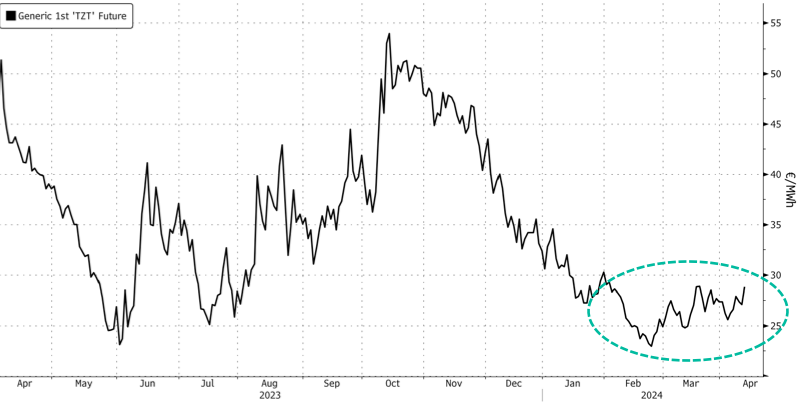
While energy traders are bracing for potential strikes on Israel by Iran or its proxies, which could ignite a regional war across the Middle East, Russia's intensified strikes on Ukraine's energy infrastructure are likely the reason European NatGas futures are surging on Thursday, up nearly 7%—the highest in two weeks. 
Meanwhile, some of the world's top traders and big banks on Wall Street are eying a possible return of $100 Brent crude.

"The current geopolitical environment continues to provide support to oil prices," said Warren Patterson, the head of commodities strategy for ING Groep NV in Singapore.
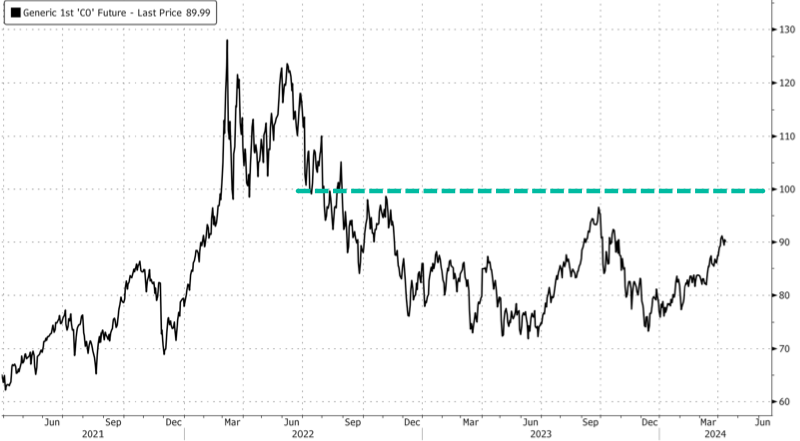
A combination of geopolitical tensions and OPEC+ supply cuts pushes crude prices higher, complicating the Federal Reserve's pivot as inflation reaccelerates. Higher energy prices could doom President Biden's election odds come November. 

https://www.zerohedge.com/commodities/russia-bombards-ukraine-hypersonic-missiles-drones-damaging-power-plants-natgas

Why is Japan seeking a summit with nuclear-armed North Korea?

 United States President Joe Biden on Wednesday said he supported his Japanese counterpart Fumio Kishida's attempts to hold face-to-face talks with North Korean leader Kim Jong Un.

"I have faith in Japan," Biden told reporters during Kishida's state visit to Washington this week. "I think seeking a dialogue with him is a good thing."

Kishida hopes to become the first Japanese leader in 20 years to hold leadership talks with nuclear-armed Pyongyang, but his prospects of doing so remain unclear.

WHY IS JAPAN SEEKING A SUMMIT?

While Kishida says he is willing to hold talks without preconditions, the burning issue he wants to resolve is that of Japanese nationals abducted by North Korea in the 1970s and 1980s.

The Japanese government has said 17 people were kidnapped by the reclusive state. Five returned to Japan in 2002 following previous summit talks, but 12 still remain unaccounted for.

North Korea has said the issue is settled. It has previously said that the unaccounted Japanese nationals had either died, or that it knew nothing about their whereabouts.

Resolving the abductee issue has broad public support and Japan is being spurred to take action while the elderly family members of the abductees are still alive.

The poster child of the abductees, Megumi Yokota, was just 13 when she was kidnapped while walking home from school in 1977. Her mother continues to lobby for her return despite North Korea saying she committed suicide.

At a meeting with the families last May, Kishida said he would directly oversee high-level discussions with North Korean counterparts to try and realise the summit.

IS NORTH KOREA OPEN TO IT?

North Korea has so far been non-committal on Kishida's repeated calls for a summit.

Kim Yo Jong, the powerful sister of North Korea's leader, said in February there is no impediment to closer ties with Japan and there may come a day when Kishida visits Pyongyang, state news agency KCNA reported.

Japan said it would not comment on the statement but added North Korea's position that the abduction issue had been resolved was unacceptable.

A month later, Kim Yo Jong issued another statement saying North Korea had no interest in a summit with Japan and would reject any talks, according to KCNA.

Kim accused Tokyo of "clinging to the unattainable issues," the KCNA report said.

HAS A SUMMIT HAPPENED BEFORE?

In a historic first, then Japanese Prime Minister Junichiro Koizumi travelled to Pyongyang to meet his North Korean counterpart Kim Jong Il in 2002.

Although North Korea denied any involvement in the abductee issue, the 2002 summit proved to be a breakthrough with Kim Jong Il admitting to some of the abductions.

Koizumi and Kim Jong Il met again in Pyongyang in 2004, the last leadership talks between the two countries.

Although Japanese and North Korean officials have had meetings since, ties have soured over Pyongyang's nuclear and missile programmes, with the North conducting a number of test launches and Japan labelling the country a threat to regional stability.

COULD IT BACKFIRE?

With North Korea refusing to engage if the abductee issue is on the negotiating table, Kishida risks coming home empty-handed should he visit Pyongyang.

A failure to provide any tangible wins from engaging with a nuclear-armed state that has continued to launch missiles into waters surrounding Japan could hurt Kishida's already low domestic approval ratings.

Although Kishida has expressed his desire to meet with Kim Jong Un as early as possible, some government officials say privately it could be a politically risky gambit.

https://www.yahoo.com/news/explainer-why-japan-seeking-summit-075308657.html

'China tried to meddle but Canadians decided the last two elections, says PM Trudeau'

 China tried to meddle in the last two Canadian elections but the results were not impacted and it was "improbable" Beijing preferred any one party over another, Prime Minister Justin Trudeau told an official probe on Wednesday.

In sworn testimony before a commission conducting a public inquiry into alleged foreign interference in the 2019 and 2021 Canadian elections, Trudeau answered questions about intelligence briefings he had received and asserted the elections were "free and fair."

Trudeau set up the commission last year under pressure from opposition legislators unhappy about media reports on China's possible role in the elections.

Erin O'Toole, who led the main opposition Conservative party during the 2021 campaign, has estimated Chinese interference cost his party up to nine seats but added it had not changed the course of the election. Trudeau's Liberal Party won both the elections.

"Nothing we have seen and heard despite, yes, attempts by foreign states to interfere, those elections held in their integrity. They were decided by Canadians," he said.

Asked about an intelligence report about Chinese officials in Canada expressing a preference in 2021 for a Liberal minority government due to the perception that minority governments would be more limited in enacting anti-China policies, Trudeau said the report had not reached him.

"While individual (Chinese) officials may well have expressed a preference or another, the impression we got and consistently would get is that ... it just would seem very improbable that the Chinese government itself would have a preference in the election," Trudeau said.

On Monday, Canada's domestic spy agency told the commission that China "clandestinely and deceptively interfered" in both the elections, the firmest evidence so far of suspected Chinese meddling in Canadian politics.

A spokesperson for the Chinese embassy in Canada said Trudeau "slandered" China during the inquiry hearing, and that "China strongly deplores and resolutely opposes this."

The spokesperson said some politicians have attempted to target China in the public investigation. The testimony was full of specious words, and no substantive evidence had been produced, according to a statement on Thursday.

"China has never had any interest in interfering in Canada's internal affairs," the spokesperson added.

Beijing has previously denied all allegations of meddling in Canadian affairs and said it had no interest in doing so.

The elections were conducted amid high tensions between the countries over the arrest of an executive of the Chinese company Huawei Technologies in Canada, followed by the arrest of two Canadians on spying charges in China. All three were freed in 2021.

The commission will complete an initial report by May 3 and deliver its final report by end-2024.

https://www.yahoo.com/news/china-tried-meddle-canadians-decided-232141500.html

'FBI concerned about possible coordinated attack in US after Russia massacre'

 The FBI is concerned about the possibility of an organized attack in the United States similar to the one that killed scores at a Russian concert hall last month, the bureau's director plans to tell a House of Representatives panel on Thursday.

“Looking back over my career in law enforcement, I’d be hard pressed to think of a time where so many threats to our public safety and national security were so elevated all at once,” Christopher Wray is set to tell lawmakers during a budget hearing. “But that is the case as I sit here today.”

The March 22 attack on a concert hall in suburban Moscow killed at least 144 people, the deadliest in Russia in 20 years. A branch of the Islamic State militant group claimed responsibility, but Russian President Vladimir Putin, without citing evidence, has sought to blame Ukraine.

U.S. officials have been worried about the possibility of an attack carried out by an individual or small group inspired by the war between Israel and Hamas in Gaza. But the FBI is growing concerned about a more coordinated attack following the concert massacre in Russia, Wray will say during testimony.

Of inceasing concern "is the potential for a coordinated attack here in the homeland, akin to the ISIS-K attack we saw at the Russia Concert Hall a couple weeks ago,” he will say.

Wray also plans to press lawmakers to renew a U.S. surveillance program set to expire this month, calling it an indispensable tool against U.S. adversaries. A modest overhaul of that program was blocked in the House on Wednesday amid concerns from members of both parties that it did not go far enough in curbing the government’s surveillance powers.

“It’s critical in securing our nation, and we’re in crunch time,” Wray plans to tell lawmakers.

https://finance.yahoo.com/news/fbi-concerned-possible-coordinated-attack-090000343.html

US to close 'gun show loophole' and require more background checks

 A rule requiring gun dealers to obtain federal licenses and conduct background checks regardless of where they sell guns has been finalized and will soon go into effect, the U.S. Justice Department announced on Thursday.

WHY IT'S IMPORTANT

Aimed at closing the so-called "gun show loophole," the rule clarifies what it means to be "engaged in the business," so that those selling weapons at gun shows, other venues and online will face the same requirements as gun stores to check the backgrounds of would-be buyers.

BY THE NUMBERS

An estimated 23,000 individuals are engaged in unlicensed gun dealing in the United States, and the rule will impact tens of thousands of gun sales per year, a White House official said.

The number of children killed by guns in the U.S. hit a high in 2021, mass shootings have surged in recent years and the country overall has much higher rates of gun death than other wealthy nations.

KEY QUOTE

"Under this regulation, it will not matter if guns are sold on the internet, at a gun show, or at a brick-and-mortar store. If you sell guns predominantly to earn a profit, you must be licensed, and you must conduct background checks," U.S. Attorney General Merrick Garland said.

CONTEXT

The Justice Department proposed the rule in August and invited the public to comment. It was submitted to the Federal Register on Tuesday and will be published soon, with the rule taking effect 30 days after its publication.

Although it will increase the number of background checks, the rule does not constitute a universal background check. Certain firearms transfers, including those among family members, will still be allowed without a background check.

U.S. lawmakers passed a federal gun reform law in June 2022 following a string of mass shootings and days after a Supreme Court decision that expanded firearm owners' rights.

In March 2023, President Joe Biden issued an executive order aimed at expanding background checks for gun purchases and asked Congress to take additional action to reduce gun violence.

WHAT'S NEXT

Gun rights groups are likely to challenge the rule in court.

https://www.yahoo.com/news/us-close-gun-show-loophole-090512989.html

Middle East on alert for Iranian attack as Lufthansa suspends Tehran flights

 The German airline Lufthansa on Thursday extended the suspension of its flights to Tehran due to the situation in the Middle East, which is on alert for Iranian retaliation for a suspected Israeli air strike on Iran's embassy in Syria.

An Iranian news agency had published an Arabic report on the social media platform X saying all airspace over Tehran had been closed for military drills, but then removed the report and denied issuing such news.

The region and the United States have been on alert for a retaliatory attack by Iran since April 1, when Israeli warplanes were suspected of bombing the Iranian embassy compound in Syria.

Lufthansa on Thursday said it had suspended flights to and from Tehran until probably April 13, extending its suspension by two days.

A spokesperson said it had decided not to operate a flight from Frankfurt to Tehran last weekend to avoid the crew having to disembark to spend the night in Tehran.

Lufthansa and its subsidiary Austrian Airlines are the only two Western carriers flying into Tehran, which is mostly served by Turkish and Middle Eastern airlines.

Austrian Airlines, which is owned by Lufthansa and flies from Vienna to Tehran six times a week, said it was still planning to fly on Thursday but was adjusting timings to avoid an overnight layover.

There was no immediate word from other international airlines that fly to Tehran. Iranian air space is also a key overflight route for Emirates' and Qatar Airways' flights to North America.

Iranian Supreme Leader Ayatollah Ali Khamenei said Israel "must be punished and it shall be" for the strike, which killed seven members of the Iranian Revolutionary Guards Corps, among them a senior commander in its elite overseas unit, the Quds Force.

Israel, which launched a war in the Gaza Strip six months ago against Iran-backed Hamas, has not confirmed it was behind the strike on Damascus, but the Pentagon has said it was.

IRANIAN RESPONSE TO ISRAELI STRIKE AWAITED

In an apparent response to Khamenei, Israeli Foreign Minister Israel Katz said Israel would respond if Iran attacked Israel from its own soil.

The United States and its allies believe major missile or drone strikes by Iran or its proxies against military and government targets in Israel are imminent, Bloomberg reported on Wednesday, citing U.S. and Israeli security sources.

U.S. Secretary of State Antony Blinken, in a call with Israeli Defense Minister Yoav Gallant, made clear the U.S. would stand with Israel against any threats by Iran, the State Department said.

U.S. Middle East envoy Brett McGurk called the foreign ministers of Saudi Arabia, United Arab Emirates, Qatar and Iraq to ask them to deliver a message to Iran urging it to lower tensions, a source with knowledge of the situation said.

Iran's foreign ministry said those countries had spoken on the phone with Iranian Foreign Minister Hossein Amirabdollahian.

On Jan. 8, 2020, Iran's Revolutionary Guards mistakenly shot down a Ukrainian passenger flight shortly after it took off from Tehran at a time of heightened tensions with Washington over the killing of Quds Force head Qasem Soleimani in a U.S. drone strike in Baghdad airport.

Iranian forces had fired missiles at military bases housing U.S. troops in Iraq in retaliation for the killing of Soleimani on Jan. 3.

Iranian-backed groups have entered the fray across the region since Israel launched its assault on Gaza in response to a Hamas attack on Israel on Oct. 7 that killed 1,200 people, according to Israeli tallies.

More than 33,000 Palestinians have since been killed by Israeli bombardment, according to Gaza's health ministry.

https://www.yahoo.com/news/finance/news/germanys-lufthansa-suspends-flights-tehran-193423849.html

China's weak CPI, factory-gate deflation point to more stimulus

 China's consumer inflation cooled more than expected in March, while producer price deflation persisted, maintaining pressure on policymakers to launch more stimulus as demand remains weak.

Worrying deflationary pressures in the world's second-largest economy appear to be slowly easing, though a protracted property crisis is still weighing heavily on consumer and business confidence.

Consumer prices rose by a muted 0.1% in March from a year earlier, National Bureau of Statistics (NBS) data showed on Thursday, versus a 0.7% rise in February which was the first gain in six months and a 0.4% rise in a Reuters poll.

Data over the January-February period and factory surveys for March showing improving demand had been a relief for Chinese officials seeking to spur a feeble post-COVID recovery, but economists warned of Lunar New Year distortions.

"Seasonal effects definitely played a role - food prices rose sharply during the Chinese New Year in February and subsequently came back down," said Xu Tianchen, senior economist at the Economist Intelligence Unit.

"More broadly, the overcapacity issue is passing into prices in a way that will thwart the People's Bank of China's efforts to reflate the economy," Xu added. "Vehicle prices fell an annual 4.6%, which could suggest manufacturers are introducing deeper price cuts in the distribution and sales process."

Producer prices in March fell 2.8% year on year, widening a 2.7% slide the previous month and extending a year-and-a-half long stretch of declines. On a month-on-month basis, PPI fell 0.1%.

"Although consumer prices are no longer falling, rapid investment in manufacturing capacity is still weighing on factory-gate prices," said Julian Evans-Pritchard, head of China economics at Capital Economics.

In recent months China has rolled out a raft of incentives to spur household spending including easier car loan rules, but consumers remain cautious about big-ticket purchases amid worries about the sputtering economy and the weak job market.