Search This Blog

Wednesday, January 22, 2025

Trump Says He'll Reinstate Troops Who Refused COVID-19 Vaccination

 by Zachary Stieber via The Epoch Times (emphasis ours),

President Donald Trump said on Jan. 20—moments after being sworn into office—that he would reinstate former members of the military who refused to receive a COVID-19 vaccine.

President Donald Trump reviews the troops in Emancipation Hall during inauguration ceremonies at the US Capitol in Washington on Jan. 20, 2025. Jim Watson/Pool/AFP via Getty Images

This week, I will reinstate any service members who were unjustly expelled from our military for objecting to the COVID vaccine mandate with full back pay,” Trump said at the U.S. Capitol in Washington.

“And I will sign an order to stop our warriors from being subjected to radical political theories and social experiments while on duty. It’s going to end immediately.”

Both promises drew applause from the crowd that had gathered to watch Trump be sworn in and deliver a speech.

Our armed forces will be freed to focus on their sole mission: defeating America’s enemies,” Trump said.

Under direction from then-President Joe Biden, the military imposed a COVID-19 vaccine mandate in 2021. More than 16,000 troops requested religious accommodation, but many of the requests were denied. The military discharged more than 7,000 troops whose requests were denied, and who still refused to receive a COVID-19 shot.

The military rescinded the mandate in 2023, obeying a bill approved by Congress and signed by Biden.

Another bill required the military to consider reinstating former members who were discharged for refusing the vaccine and had requested reinstatement, but it did not compel the military to accept them back.

Some lawmakers advocated for including mandatory reinstatement in the legislation but did not succeed in ultimately including it.

“Thank you @realDonaldTrump for pledging to implement provisions in my bill, the Troop Act, which would reinstate soldiers who were discharged for refusing to take a COVID shot,” Rep. Neal Dunn (R-Fla.), a doctor, wrote on the social media platform X on Monday. “Today marks the beginning of the American golden age!”

Multiple courts found that the military violated federal law in processing religious exemption requests, although one of those rulings was thrown out by the U.S. Supreme Court.

A federal watchdog also concluded that several branches violated their own rules in handling requests for exemptions from the mandate. A settlement reached in one of the lawsuits brought by aggrieved members resulted in the correction of records for the members, which led to them being eligible for reenlistment.

Trump’s nominee for defense secretary, Pete Hegseth, told senators on Capitol Hill recently that the Pentagon would be giving back pay to former members who were “forced out due to an experimental vaccine.”

He also said the individuals would be reinstated to their previous rank, and receive apologies.

https://www.zerohedge.com/political/trump-says-hell-reinstate-troops-who-refused-covid-19-vaccination

Birthright Citizenship Isn't Real

 by Ryan McMaken via The Mises Institute,

Donald Trump yesterday issued a new executive order declaring that so-called “birthright citizenship” does not apply to the children of foreign nationals residing illegally within the United States.
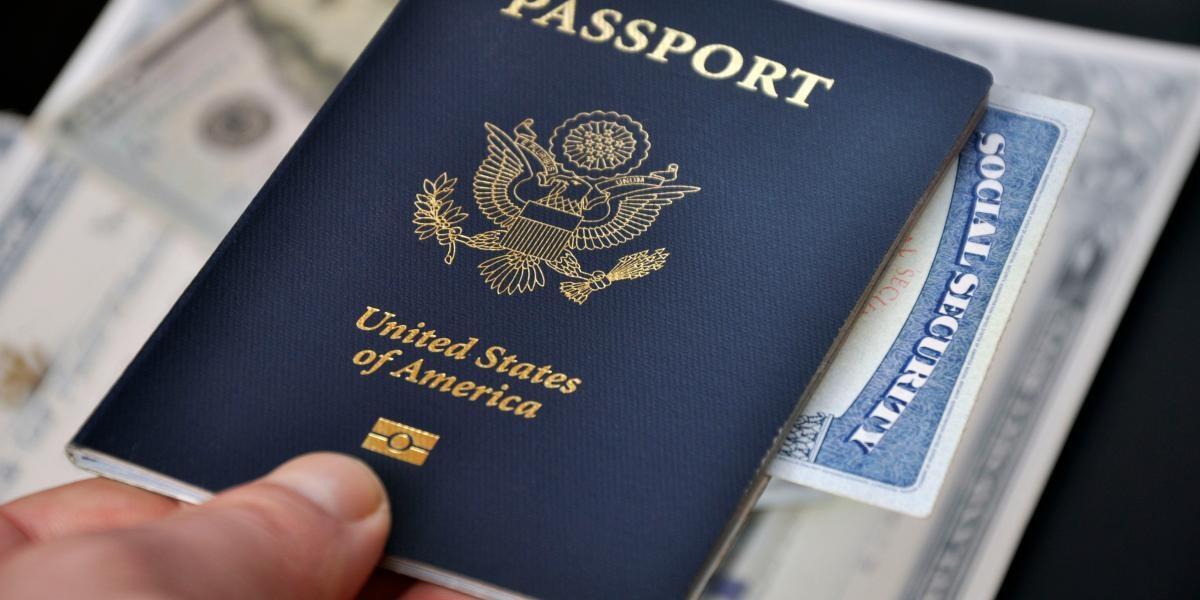
The order reads, in part:

 (a) It is the policy of the United States that no department or agency of the United States government shall issue documents recognizing United States citizenship, or accept documents issued by State, local, or other governments or authorities purporting to recognize United States citizenship, to persons: (1) when that person’s mother was unlawfully present in the United States and the person’s father was not a United States citizen or lawful permanent resident at the time of said person’s birth, or (2) when that person’s mother’s presence in the United States was lawful but temporary, and the person’s father was not a United States citizen or lawful permanent resident at the time of said person’s birth.

There is a common misconception in the United States that the Fourteenth Amendment to the US Constitution mandates that the US government grant citizenship to anyone and everyone born within the borders of the United States.

This misconception is largely due to the fact that, for several decades, US courts and technocrats have conspired to redefine the original meaning of the amendment, and thus apply it to every child of every tourist and foreign national who happens to be born on this side of the US border.

Some have even attempted to define access to birthright citizenship as some sort of natural rightThis is a common tactic among some libertarians who have twisted the idea of property rights to extend the idea of a “right” to the governmental administrative act known as “naturalization.”

Even when looking at the issue strictly in terms of procedural legal rights, however, it is clear that the current definition of birthright citizenship is in conflict with the law as originally intended and interpreted.

To understand the central point of contention, let’s note the text of the Fourteenth Amendment itself, which states that citizenship shall be extended to: “[a]ll persons born or naturalized in the United States and subject to the jurisdiction thereof…”

Note that there are two qualifying phrases here.

The persons in question must be both born or naturalized in the United States and subject to the jurisdiction thereof.

It is this second qualification that remains a matter of debate.

What does it mean to be subject to the jurisdiction of the United States? This issue is explained by legal scholar Hans Spakovsky who notes that advocates of granting birthright citizenship to anyone born in the United States

erroneously believe that anyone present in the United States has “subjected” himself “to the jurisdiction” of the United States, which would extend citizenship to the children of tourists, diplomats, and illegal aliens alike.

But that is not what that qualifying phrase means. Its original meaning refers to the political allegiance of an individual and the jurisdiction that a foreign government has over that individual.

The fact that a tourist or illegal alien is subject to our laws and our courts if they violate our laws does not place them within the political “jurisdiction” of the United States as that phrase was defined by the framers of the 14th Amendment.

This amendment’s language was derived from the 1866 Civil Rights Act, which provided that “[a]ll persons born in the United States, and not subject to any foreign power” would be considered citizens.

Sen. Lyman Trumbull, a key figure in the adoption of the 14th Amendment, said that “subject to the jurisdiction” of the U.S. included not owing allegiance to any other country.

The courts themselves have historically recognized this distinction, noting that the whole purpose of the Fourteenth Amendment was to grant citizenship to former slaves who obviously were not connected to any other country or sovereign. In the Slaughter-House Cases, 83 U.S. 36 (1872), the court ruled:

That [the Fourteenth Amendment’s] main purpose was to establish the citizenship of the negro can admit of no doubt. The phrase ‘subject to its jurisdiction’ was intended to exclude from its operation children of ministers, consuls, and citizens or subjects of foreign States born within the United States.”

This was further confirmed by the Court in 1884 (in Elk v. Wilkins, 112 U.S. 94) when the Court stated that the idea of birthright citizenship did not apply to Native American tribes which were nonetheless within the borders of the United States:

“[The Fourteenth Amendment] contemplates two sources of citizenship, and two sources only: birth and naturalization. The persons declared to be citizens are ‘all persons born or naturalized in the United States, and subject to the jurisdiction thereof.’ The evident meaning of these last words is, not merely subject in some respect or degree to the jurisdiction of the United States, but completely subject to their political jurisdiction, and owing them direct and immediate allegiance. And the words relate to the time of birth in the one case, as they do to the time of naturalization in the other. Persons not thus subject to the jurisdiction of the United States at the time of birth cannot become so afterwards, except by being naturalized, either individually, as by proceedings under the naturalization acts; or collectively, as by the force of a treaty by which foreign territory is acquired. Indians born within the territorial limits of the United States, members of, and owing immediate allegiance to, one of the Indian tribes (an alien though dependent power,) although in a geographical sense born in the United States, are no more ‘born in the United States and subject to the jurisdiction thereof,’ within the meaning of the first section of the Fourteenth Amendment, than the children of subjects of any foreign government born within the domain of that government, or the children born within the United States, of ambassadors or other public ministers of foreign nations.”

In short, the court recognized that the tribal lands were within the legal jurisdiction of the United States, but this did not mean that everyone born within those borders was automatically granted citizenship. Those tribal members believed to be subjects of “foreign” tribal governments were therefore not “subject to the jurisdiction” of the United States in a way that conferred automatic citizenship. 

Congress further reinforced the court’s interpretation by adopting new legislation granting citizenship to all tribal members in 1924. Had the Fourteenth Amendment really granted automatic citizenship to everyone born within the borders of the United States, no such legislation would have been necessary.

In the year 2024, however, advocates of the new and novel interpretation of “birthright citizenship” insist that the child of foreign nationals automatically becomes a citizen of the United States based entirely on the location of birth. 

This is a rather odd way of doing things. In historical practice nearly everywhere, citizenship depends largely on the citizenship of parents, or on the parents’ place of birth, and not on the place where parents happen to temporarily reside when the child is born. Thus, historically and globally, the child of foreign nationals is himself a foreign national. This is true, for instance, of children born to American nationals overseas. 

Only in the United States does there appear to be widespread confusion about this.

Of course, some libertarian or “classical liberal” readers might argue that such legal precedents are meaningless, and that everyone “deserves” the legal “right” of citizenship. How citizenship is any sort of natural right or property right, however, remains a mystery. Has the child somehow “homesteaded” his citizenship? Obviously not. Has the child entered into a contract with a legitimate property owner to acquire the “property” of citizenship? To ask these questions is to see the absurdity of them. 

On the other hand, it is important to note that a lack of citizenship in any particular place does not negate anyone’s property rights. Real property rights—what Rothbard called “universal rights”—exist regardless of one’s citizenship, where he lives, or where he happens to have been born.

https://www.zerohedge.com/markets/birthright-citizenship-isnt-real

Lisata prelim data in Phase 2 pancreatic cancer trial

 Cohort A data to be presented in a poster session at the 2025 American Society of Clinical Oncology Gastrointestinal Cancers Symposium

Data reported positive trend in overall survival, including 4 complete responses observed in the certepetide treatment group compared to none in placebo group

Data from Cohort B expected in the coming months, with full data from both cohorts to be reported thereafter

https://www.globenewswire.com/news-release/2025/01/22/3013425/18623/en/Lisata-Therapeutics-Reports-Encouraging-Preliminary-Cohort-A-Data-from-the-AGITG-led-Phase-2-ASCEND-Trial-Evaluating-Certepetide-with-Standard-of-Care-Chemotherapy-in-Metastatic-Pa.html

Anixa Touts Cancer, Vaccine Programs Progress

  Anixa Biosciences, Inc. ("Anixa" or the "Company") (NASDAQ: ANIX), a biotechnology company focused on the treatment and prevention of cancer, today provided the following letter to shareholders from the Company's, Chairman and CEO, Dr. Amit Kumar:

To our valued shareholders,

I am excited to highlight our key achievements from the past year and share our upcoming goals and milestones for 2025 at Anixa Biosciences. In 2024, we made remarkable progress in our mission to develop innovative therapies and vaccines to combat cancer, all while maintaining a strong financial foundation that positions us to confidently pursue our ambitious goals.

We utilized only $7 million of cash during the 2024 fiscal year, concluding with $20 million in cash and investments. Our prudent financial management has ensured a strong balance sheet, giving us the flexibility to advance our programs effectively.

At the Society for Immunotherapy of Cancer (SITC) conference on November 8, 2024, we presented positive preliminary Phase 1 data from our breast cancer vaccine trial. The vaccine demonstrated promising results across three patient groups:

  • Recurrence Group: Survivors of triple-negative breast cancer (TNBC) concerned about recurrence post-treatment.
  • Prevention Group: Women with genetic mutations placing them at high risk of developing breast cancer.
  • Therapeutic Group: Women with residual disease following standard-of-care treatment, where the vaccine was combined with Keytruda (pembrolizumab).

We are encouraged by the positive data trends as additional patients are enrolled in all three cohorts. The vaccine demonstrated a strong safety profile, being well tolerated by participants with protocol-defined immune responses observed in over 70% of patients. Looking ahead, a Phase 2 study evaluating the vaccine in the neoadjuvant setting is planned to commence in 2025, marking an important next step in its development.

These early results provide a solid foundation for expanding our vaccine programs. Building on the success of our breast cancer vaccine, we began developing vaccines targeting prostate, lung, and colon cancers, along with other major indications. The collaboration with the National Cancer Institute on our ovarian cancer vaccine also continues to progress. Meanwhile, we broadened our patent portfolio across all development projects, strengthening our intellectual property position.

Concurrently, our CAR-T program targeting ovarian cancer advanced significantly. We completed treatment of the second dose cohort and initiated treatment of the third dose cohort. A patient from the first dose cohort showed a strong response, receiving FDA authorization for a second dose of T cells. This patient remains alive and well 21+ months after initial treatment. Other patients in the trial have also shown encouraging results. These findings offer promising signs that the CAR-T therapy may serve as a successful long-term treatment option, highlighting its potential effectiveness in the fight against ovarian cancer. Unlike conventional CAR-T therapies, which excel in hematological cancers but struggle with solid tumors, our platform shows promise in overcoming this challenge. We believe it may effectively treat ovarian cancer and other solid tumor types.

2025 holds significant promise as we aim to build on the momentum of 2024:

  • Breast Cancer Vaccine: Complete the Phase 1 trial, present additional clinical data at scientific conferences, and initiate the Phase 2 trial.
  • CAR-T Clinical Trial: Complete treatment of the third, fourth, and fifth dose cohorts and share data updates. Additionally, we plan to initiate pre-clinical studies of our CAR-T's effectiveness on other solid tumors.
  • Vaccine Development: Continue development of vaccines for ovarian, lung, prostate, and colon cancers, with progress updates expected throughout the year.

With $20 million in cash and investments, we have a cash runway of over 2.5 years. Our clean capital structure—free of warrants, preferred stock, and debt—positions us well to execute our plans and remain agile in a dynamic environment.

We believe Anixa Biosciences is at the forefront of developing transformative therapies for cancer, driven by science, innovation, and a commitment to improving patient outcomes. Our strong financial foundation and dedicated team ensure that we are well-equipped to achieve our objectives and deliver value to our shareholders.

Thank you for your continued support and belief in our mission. Together, we are making significant strides in the fight against cancer and paving the way for a healthier future.

Sincerely,

Dr. Amit Kumar
Chairman and CEO
Anixa Biosciences

https://www.prnewswire.com/news-releases/anixa-biosciences-ceo-provides-letter-to-shareholders-302355489.html

Nutriband started at Outperform by Noble Capital

 Target $13

https://finviz.com/quote.ashx?t=NTRB&p=d

ImmunoPrecise Pioneers AI-Designed GLP-1 Therapies in Diabetes

 ImmunoPrecise Antibodies Ltd. (IPA) (NASDAQ: IPA) has developed a new class of GLP-1 therapies entirely through artificial intelligence, designed to enhance efficacy, safety, therapy longevity, and patient satisfaction in diabetes treatment. These AI-designed therapeutics aim to improve upon current GLP-1 therapies, which are widely used for managing type 2 diabetes and obesity. Created using the Company's proprietary LENSai™ platform, an AI-driven system that analyzes evolutionary patterns in biological data, these novel AI-generated sequences have been optimized to maximize therapeutic performance while improving the patient experience. Enhancements are aimed at increased patentability, extended stability and resistance to degradation, improved administration routes for greater compliance, reduced dosing requirements, and more efficient manufacturing methods. The Company’s GLP-1-like alternatives are currently being evaluated for potential transdermal delivery as non-invasive alternatives to injections. These novel constructs represent the Company's first fully AI-generated assets, complementing their growing portfolio of AI-assisted and laboratory-developed therapies.

https://www.businesswire.com/news/home/20250122287383/en/IPA

'Global health funds push for more private money, fearing government retreat'

 One of the world's biggest global health funders will ask the private sector for a steep increase in donations as concern of a shortfall in government contributions grows following a U.S. decision to exit the World Health Organization.

    The Global Fund to Fight AIDS, Tuberculosis and Malaria told Reuters it will ask for almost 50% more money from private entities, including philanthropic organisations and companies, for a total of $2 billion, when it launches a new funding round later this year.

    Executive Director Peter Sands said the plan, due to be announced at the World Economic Forum in Davos, Switzerland, was already in place before the U.S. election in November. International aid groups are grappling with a tight fiscal climate globally, as well as increasing demand for their work, from coping with conflict to responding to climate change, he said.

    The fund is "raising the bar on what we want to achieve with private sector donors," Sands said in an interview this week.

    In its last funding round, the Global Fund raised $15.7 billion for its work over three years. That included $1.3 billion from the private sector, including philanthropic groups like the Gates Foundation and companies such as mining giant Anglo American and Japanese pharmaceutical company Takeda. The Fund will announce the total amount of money it is seeking for the next period of work, 2027-2029, later this year.

US RETREAT SENDS SHOCKWAVES

    The U.S. is historically the Fund's biggest donor, pledging $6 billion to the last funding round. The country's contributions during Trump's first term as president from 2016-2020 were similar to previous administrations.

    Trump was inaugurated for the second time on Monday, and swiftly moved to exit the WHO and freeze international aid, sending shockwaves around the global health community worldwide.

   "It's unfortunate that it has come to this point," said Sands, saying the US had an extraordinary record in global health alongside the WHO's role critical role in setting guidance and norms. "We need to keep the focus on the human impact, and particularly on the impact on the health of the poorest and most marginalised."

    The Global Fund gives grants directly to organisations working in disease-hit regions to curb the spread of illness and improve health systems. The WHO focuses on global co-ordination to track and contain epidemics, responding to emergencies and promoting health and universal health care internationally.

    A number of other global health organizations are also looking to raise money this year, including the vaccine group Gavi, which is seeking $9 billion to help support childhood immunization in the world's poorest countries.

    In board documents released in December, it too warned of the increasing risk of missing its targets due to government shortfalls, citing the slowing global economy, wars, competing aid priorities, and elections in many donor countries.   

    Gavi also plans to set up a private sector investors group this year and focus on diversifying its funding sources, the documents showed.

    "Gavi never takes support from donors for granted," she said, saying they were aware of the conflicting issues facing governments. The U.S. is also one of Gavi's biggest donors, alongside the United Kingdom and the Gates Foundation.

Gavi works with the WHO to support countries' vaccination programmes.

https://www.marketscreener.com/quote/stock/UNITED-STATES-STEEL-CORPO-14934/news/Exclusive-Global-health-funds-push-for-more-private-money-fearing-government-retreat-48833860/