Search This Blog

Tuesday, August 5, 2025

Addus HomeCare (ADUS) Q2 Revenue Up 22%


  • Revenue grew 21.8% year over year to $349.4 million in Q2 2025, topping GAAP revenue estimates by $2.9 million.

  • Non-GAAP EPS reached $1.49, surpassing analyst expectations for non-GAAP EPS by $0.02 and rising 10.4% from the prior year in adjusted net income per diluted share.

  • Personal Care and Hospice segments reported organic revenue growth of 7.4% and 9.9%, respectively, in Q1 2025, while Home Health saw a slight year-over-year decline.

  • These 10 stocks could mint the next wave of millionaires ›

Addus HomeCare (NASDAQ:ADUS), a leading provider of home-based personal care, hospice, and home health services, reported its second quarter 2025 financial results on August 4, 2025. The company posted revenue (GAAP) and earnings per share (non-GAAP) figures that exceeded Wall Street estimates in Q2 2025, supported by solid organic growth and recent acquisitions. Revenue (GAAP) was $349.4 million in Q2 2025, beating the consensus GAAP revenue estimate of $346.5 million and growing 21.8% from the prior year. Non-GAAP earnings per share reached $1.49, outpacing the $1.47 consensus (Non-GAAP EPS) and climbing 10.4% year-over-year. The quarter reflected strong performance in the Personal Care and Hospice divisions, but also highlighted ongoing challenges in the Home Health segment. Overall, it was a quarter marked by reliable operational execution and expanding market reach despite some headwinds.

Metric

Q2 2025

Q2 2025 Estimate

Q2 2024

Y/Y Change

EPS (Non-GAAP)

$1.49

$1.47

$1.35

10.4%

Revenue (GAAP)

$349.4 million

$346.5 million

$286.9 million

21.8%

Adjusted EBITDA

$43.9 million

$35.3 million

24.4%

Net Income

$22.1 million

$18.1 million

22.1%

Cash Flow from Operations

$22.5 million

$18.8 million

19.7%

Source: Analyst estimates for the quarter provided by FactSet.

About Addus HomeCare and Key Business Drivers

Addus HomeCare delivers home-based health services in 23 states, focusing on personal care, hospice care, and home health. Personal care services involve non-medical assistance like bathing, dressing, and meal preparation, especially for seniors and chronically ill individuals. Hospice care offers specialized support for patients facing terminal illness, focusing on comfort and quality of life through in-home nursing and counseling. Home health combines skilled nursing and rehabilitation services provided in patients' homes.

The company’s business strategy centers on growing organically—by increasing service volumes and rates—as well as expanding through acquisitions. Recent efforts have targeted efficient integration of newly acquired businesses, improved caregiver hiring and retention, and investment in scheduling and care management technology. The company’s success relies on maintaining good relationships with government payors, operational efficiency, and patient growth within its largest business, Personal Care.

Quarter in Review: Growth, Segment Performance, and Strategic Moves

During the quarter, Addus HomeCare’s GAAP revenues increased sharply, up 21.8% year-over-year. This growth was driven by both steady demand and contributions from acquired companies, most notably Gentiva Personal Care Services. Personal Care, accounting for 77% of total revenue, grew 26.5% year-over-year. Organic growth in Personal Care came in at 7.4%, primarily due to increased service hours and higher rates in key states such as Illinois, where a 5.5% state-mandated rate increase took effect January 1, 2025. While the average number of clients served (billable census) dipped from 37,993 in Q2 2024 to 36,049, higher hours per client and improved caregiving efficiency kept revenue moving up.

Hospice services—the company’s end-of-life care offering—accounted for 17.8% of revenue, Hospice revenue delivered 10.0% organic growth over the second quarter of 2024. The segment showed a 10.0% organic growth rate, reflecting operational adjustments and a higher patient census. The average daily hospice census rose 7.0% to 3,720 patients, with revenue per patient day was $184.92, a 3.0% increase over Q2 2024. Growth in patient admissions and total patient days signaled that strategic changes implemented over the past year are having an impact.

The Home Health segment, which provides skilled nursing and therapy, remained a small portion of overall revenue, at 5.2% (GAAP). Home Health revenue was $18,048,000 compared to $18,075,000 in Q2 2024, a slight year-over-year decline, with organic revenues down 6.0% and new admissions dropping 7.6%. Management continues to view Home Health as a complementary business rather than a growth engine, and is seeking targeted acquisition opportunities to supplement its presence in existing markets.

The quarter also featured progress in technology adoption. The company continued to roll out a proprietary caregiver scheduling app in Illinois and is expanding it to other states. This app improves communication, allows staff to adjust schedules directly, and helps capture more authorized hours, which in turn boosts efficiency. Recent acquisitions, such as the integration of Gentiva Personal Care and the completed purchase of Helping Hands Home Care in Pennsylvania, have expanded the company’s market coverage and service density. As of June 30, 2025, Addus HomeCare had 260 locations in 23 states, serving approximately 62,000 patients.

Outlook and Forward-Looking Considerations

However, commentary pointed to ongoing expectations of “robust demand” for home-based care, steady focus on operational efficiency, and continued pursuit of accretive acquisitions. Organic revenue growth in Personal Care was 7.4%, above the company’s long-term 3–5% range. For Hospice, this was helped by momentum in census and strategic changes made last year.

The company is paying close attention to government reimbursement rates and regulatory developments, as most of its revenue comes from Medicaid and Medicare programs. While current rate support in major markets like Illinois and New Mexico remains positive, potential changes to federal or state funding could impact margins. Management noted minimal direct exposure to policy changes such as Medicaid expansion rollbacks, given its core patient base of elderly and dual-eligible recipients. Cash flow from operations and a conservative balance sheet support ongoing acquisition and technology investments.

https://www.aol.com/finance/addus-homecare-adus-q2-revenue-055715450.html

Encompass Health Q2 results beat estimates, guidance raised

 Encompass Health Corporation (NYSE:EHC), the largest owner and operator of inpatient rehabilitation hospitals in the United States, reported second-quarter earnings that exceeded analyst expectations and raised its full-year outlook, sending shares up 3.4% in trading.

The company posted adjusted earnings per share of $1.40 for the quarter ended June 30, 2025, significantly beating the analyst estimate of $1.21. Revenue came in at $1.46 billion, surpassing the consensus estimate of $1.43 billion and representing a 12.0% increase compared to the same period last year.

"During the quarter, we further increased our capacity to serve patients in need of inpatient rehabilitation care, opening a new 60-bed hospital in Fort Myers, Florida, and adding 26 beds to an existing hospital," said President and Chief Executive Officer Mark Tarr.

The strong performance was driven by a 7.2% increase in total patient discharges, including same-store discharge growth of 4.7%. Net patient revenue per discharge also grew by 4.2% compared to the second quarter of 2024.

Encompass Health’s cash flows from operating activities increased 24.3% to $270.2 million, primarily due to higher net income. Adjusted EBITDA rose 17.2% to $318.6 million, reflecting increased revenue and expense leverage.

Following the strong quarterly results, the company raised its full-year 2025 guidance. Encompass Health now expects revenue between $5.88 billion and $5.98 billion, up from its previous forecast of $5.85 billion to $5.93 billion, and above the analyst consensus of $5.89 billion. The company also increased its adjusted earnings per share guidance to $5.12-$5.34, exceeding the consensus estimate of $5.02.

https://www.investing.com/news/earnings/encompass-health-shares-rise-as-q2-results-beat-estimates-guidance-raised-93CH-4168925

Jefferies raises AxoGen stock price target to $25 on strong sales growth

 Jefferies raised its price target on AxoGen, Inc. (NASDAQ:AXGN) to $25.00 from $24.00 on Tuesday, while maintaining a Buy rating on the stock. 

The price target increase follows AxoGen’s second-quarter sales results, which exceeded consensus estimates by approximately 8% with double-digit growth across all markets.

Gross margins rebounded quarter-over-quarter after elevated inventory write-offs in the first quarter, surpassing consensus expectations.

AxoGen has raised its fiscal year 2025 sales growth guidance to at least 17% year-over-year, up from its previous forecast of 15-17%, compared to consensus estimates of 16%.

The company’s Avance Biologics License Application (BLA) timelines remain on track, with Jefferies viewing AxoGen as "an underappreciated growth story with good margins and catalyst path at a cheap valuation."

In other recent news, Axogen Inc . reported impressive financial results for the second quarter of 2025. The company exceeded expectations with an adjusted earnings per share (EPS) of $0.12, doubling the anticipated $0.06. Additionally, Axogen’s revenue reached $56.7 million, surpassing the forecasted $52.66 million. 

https://au.investing.com/news/analyst-ratings/jefferies-raises-axogen-stock-price-target-to-25-on-strong-sales-growth-93CH-3959890


'Novo Nordisk expands legal action to protect US patients from unsafe, non-approved compounds'


  • New legal actions are directed at organizations involved in illegal activities, including violating laws prohibiting the corporate practice of medicine, interfering with doctors' decisions and steering patients toward unapproved knockoff drugs under the false guise of personalization
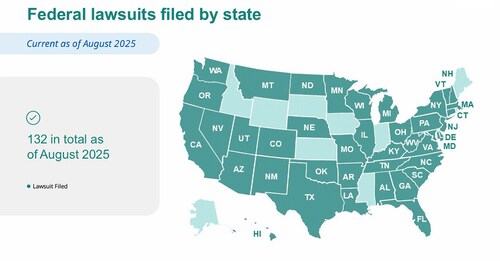
  • Novo Nordisk has filed more than 130 lawsuits across 40 states, resulting in 44 permanent injunctions to stop unsafe, illegal marketing and selling of knockoff Wegovy® and Ozempic®
  • These filings come after FDA issued its latest warning to patients and healthcare professionals about the serious dangers of compounded GLP-1 drugs, as the medical community and consumer advocacy groups continue to call for urgent action to protect public health

PLAINSBORO, N.J.Aug. 5, 2025 /PRNewswire/ -- Novo Nordisk today announced the filing of 14 new lawsuits to safeguard patients from unsafe and unapproved compounded drugs claiming to contain "semaglutide." The defendants named in these lawsuits employ tactics that deceive patients into believing compounded products have been reviewed and approved by FDA or have equivalent safety or effectiveness as Novo Nordisk's approved semaglutide medicines. The lawsuits allege that telehealth providers violate state corporate practice of medicine laws by improperly influencing doctors' decisions and steering patients toward knockoff compounded "semaglutide" under the false guise of personalized medicine. In reality, these are unapproved knockoffs that have not been approved as safe and effective and are often made with illicit foreign active pharmaceutical ingredients (API).

"Patients deserve safe, effective treatments from companies they can trust. No one should have to gamble with their health by using knockoff drugs made with ingredients that lack oversight and safety standards," said Dave Moore, Executive Vice President, US Operations of Novo Nordisk Inc. "Novo Nordisk is addressing this issue through education, advocacy, and legal action against businesses that mislead Americans and jeopardize their health with unsafe and unapproved knockoffs. We urge regulators to enforce laws designed to protect public health."

Taking action to protect patients
To date, Novo Nordisk has filed 132 complaints in federal courts across 40 states, targeting companies whose illegal marketing and business practices put patient safety at risk. Today's lawsuits build on Novo Nordisk's earlier litigation successes and expand the focus of its legal actions into two new areas:

  • Pharmacies producing unapproved compounded "semaglutide" drugs under the fake guise of personalization in violation of state law.
  • Telehealth companies where corporations, not doctors, improperly steer patient care to compounded "semaglutide" drugs using sham claims of personalization, violating California law.

Courts have already issued 44 permanent injunctions against defendants in similar cases, prohibiting them from a variety of unlawful conduct including unlawfully compounding "semaglutide" and falsely claiming that compounded "semaglutide" products are FDA-approved, safe, or equivalent to Novo Nordisk's authentic medicines like Wegovy® or Ozempic®. Courts have also taken steps to deter similar conduct, including ordering defendants to forfeit illegally obtained profits.

The risks of compounded "semaglutide" made with illicit foreign API
FDA has issued multiple alerts, the latest on July 29th, warning patients and healthcare professionals about the dangers of these knockoff drugs, including reports of patients overdosing by mistakenly administering five to 20 times the intended dose and requiring hospitalization.  

Independent data underscores the dangers posed by compounded "semaglutide" products:

  • A recent Brookings Institution report highlights that many compounded "semaglutide" products rely on synthetic API imported from facilities in China that lack FDA oversight or quality controls. Alarmingly, 60% of Chinese manufacturers importing "semaglutide" for use in compounding or further manufacture are not even permitted to distribute that API in China for use in human drugs.
  • According to FDA data, all "semaglutide" imported into the US designated for use in compounding since June 2023 originated from suppliers in China.

These findings confirm that the API in compounded "semaglutide" products often fail to meet basic safety standards, putting patients at serious risk.

Novo Nordisk has launched educational campaigns like "Check Before You Inject" and "Choose The Real Thing" to raise awareness about the risks of unapproved knockoffs. Novo Nordisk also created semaglutide.com, a resource for patients to learn about the dangers of compounded and counterfeit products, as well as how to access authentic, FDA-approved treatments.

With all doses of Wegovy® and Ozempic® available nationwide, the company continues to explore new channels to meet patients where they receive care, ensuring they can access safe, effective treatments under the supervision of licensed healthcare professionals.

The company is fighting on behalf of patients who deserve to know what they are injecting into their bodies. For more information about these efforts to protect patients and ensure access to safe, effective FDA-approved treatments, visit semaglutide.com.

https://www.prnewswire.com/news-releases/novo-nordisk-expands-legal-action-to-protect-us-patients-from-unsafe-non-fda-approved-compounded-semaglutide-302522326.html

Amneal Pharmaceuticals lifts annual outlook after strong Q2, Specialty segment drives growth

 Amneal Pharmaceuticals (NASDAQ:AMRX) reported better-than-expected second-quarter results on Tuesday, as strength in its Specialty division helped lift earnings, prompting the company to raise its full-year profit guidance.

Adjusted earnings for the quarter came in at $0.25 per share, beating the $0.17 analyst consensus and marking a 56% jump from $0.16 in the same quarter last year. Revenue grew 3% year-over-year to $725 million, just shy of the $748.18 million analysts had forecast.

The standout performer was the Specialty segment, where revenue climbed 23%, bolstered by robust sales of key branded therapies such as CREXONT, RYTARY, and UNITHROID. The Affordable Medicines unit recorded a 1% increase, while AvKARE saw a 4% decline.

“Amneal delivered another quarter of solid growth, strong profitability, and we are pleased to raise our full year 2025 guidance,” said Chirag and Chintu Patel, Co-Chief Executive Officers. “The quarter was also marked by strong commercial uptake of CREXONT for Parkinson’s disease, and the FDA approval of Brekiya autoinjector for the acute treatment of migraine and cluster headache in adults.”

Adjusted EBITDA rose 13% year-on-year to $184 million, driven by increased revenue and improved gross margins.

Reflecting the strong results, Amneal revised its full-year 2025 earnings forecast upward to $0.70–$0.75 per share, compared to the previous range of $0.65–$0.70. The updated guidance is in line with the $0.71 consensus. The company maintained its revenue forecast at $3.0–$3.1 billion.

Additionally, Amneal completed a $2.7 billion debt refinancing on August 1. The company said the move will lower its interest expenses and extend debt maturities to 2032, enhancing its financial flexibility.

https://www.msn.com/en-us/money/topstocks/amneal-pharmaceuticals-lifts-annual-outlook-after-strong-q2-specialty-segment-drives-growth/ar-AA1JWuvI

Two Chinese nationals in California accused of illegally shipping Nvidia AI chips to China

 Two Chinese nationals were arrested in California and charged with illegally shipping tens of millions of dollars' worth of AI chips to China, including Nvidia H100s, the U.S. Justice Department said Tuesday.

Chuan Geng, 28, of Pasadena, and Shiwei Yang, 28, of El Monte, exported the advanced Nvidia chips and other technology to China from October 2022 through July 2025 without obtaining the required licenses from the U.S. Commerce Department, a criminal complaint says.

According to the complaint, Geng and Yang's El Monte-based company, ALX Solutions Inc, was founded in 2022, shortly after the U.S. imposed sweeping export controls on technology to China and began to require licenses for the chips.

A spokesperson for Nvidia declined comment.

Over 20 shipments from ALX solutions went to shipping and freight forwarding companies in Singapore and Malaysia, which are often used as transshipment points for illegal goods to China.

ALX received a $1 million payment from a China-based company in January 2024 and other payments from companies in Hong Kong and China, not the freight forwarding companies.

Nvidia H100s are advanced chips that can be used to train large language models and for other applications, such as developing self-driving cars and medical diagnosis systems.

Records show that from at least August 2023 to July 2024, ALX Solutions bought over 200 Nvidia H100 chips from San Jose, Calif-based server maker Super Micro Computer, declaring that the end users were in Singapore and Japan.

Super Micro did not immediately respond to a request for comment.

In addition to Nvidia's H100s, the pair are accused of illegally shipping Nvidia video graphics cards known as PNY GE Force RTX 4090, which also require a license for export to China.

Geng and Yang appeared in U.S. District Court in Los Angeles late Monday, according to the Justice Department. Geng, a permanent resident, was released on $250,000 bond. Yang, who overstayed her visa, has a detention hearing on August 12.

https://ca.finance.yahoo.com/news/two-chinese-nationals-california-accused-193312016.html

Pfizer raises 2025 profit forecast as cost-cutting program gains traction

 Pfizer said its full-year profit should benefit from cost cuts across its research and manufacturing operations after posting higher-than-expected second-quarter earnings on Tuesday.

CEO Albert Bourla also said the company has been in active discussions with members of the U.S. government, including President Donald Trump, over demands drugmakers lower prices for Americans.

The New York-based drugmaker's shares were up 3.7% at $24.37 midday after it raised its full-year profit forecast.

Pfizer shares have lost more than half their value from their pandemic-era highs as it deals with waning revenue from COVID products and looming patent expirations for key drugs. In response, the company launched a major cost-cutting program.

Pfizer said it was on track to deliver $7.2 billion in net savings by the end of 2027, about $4.5 billion coming by the end of 2025.

The pharmaceutical industry is facing intense pressure from Trump to lower prices that Americans pay for prescription medicines, while preparing for 15% tariffs on imports from the European Union.

"We are trying collectively to find solutions that, from one hand would make medicines affordable in the U.S., (and) on the other hand will make our industry even more competitive compared to China," Bourla said.

Drugmakers want to reach a resolution soon because the president is impatient and wants results quickly, the CEO said.

Beyond Trump's calls for most favored nation pricing and threatened tariffs, Bourla said drugmakers have discussed policies including reducing the influence of middlemen in the healthcare system and the drug price negotiations occurring under the Inflation Reduction Act.

The company now expects adjusted earnings of $2.90 to $3.10 per share, up from its prior view of $2.80 to $3.00. The forecast includes a one-time charge of 20 cents per share related to its licensing deal with China's 3SBio for an experimental cancer treatment.

"Pfizer continues to lean on cost management as the main lever to drive performance going forward," said Daniel Barasa, portfolio manager at Gabelli Funds, which owns Pfizer's shares.

Pfizer shares had fallen over 11% this year, compared to a 1.7% decline for the broader NYSE Arca Pharmaceutical Index.

The company said its forecast also absorbs the impact of currently imposed tariffs on goods imported from China, Canada and Mexico, as well as potential price changes this year based on the letter it received from Trump on July 31.

Pfizer has said it has enough manufacturing capacity across its 10 U.S. sites to mitigate any tariff impact and is open to shifting some production to those facilities.

Total quarterly sales of $14.65 billion topped analysts' estimates by over $1 billion, according to LSEG data, and included a $22 million favorable impact from foreign exchange.

'NOT A GOOD SIGN'

Despite the beat, Pfizer maintained its full-year sales forecast of $61 billion to $64 billion. Two investors said the company was being conservative.

"I think that they're just trying to balance the outlook over the next 12 to 18 months from where they grow revenue as it starts to fall off as some of those more popular drugs turn generic," said Brian Mulberry, portfolio manager at Zacks Investment Management.

The blood thinner Eliquis, which Pfizer shares with Bristol Myers Squibb, could start facing U.S. generic competition in 2028. It had sales of $2 billion for the quarter, while analysts were expecting $1.94 billion.

Sales of antiviral COVID-19 treatment Paxlovid of $427 million and COVID vaccine Comirnaty, which Pfizer makes with German partner BioNTech, brought in sales of $381 million. While both far exceeded second-quarter expectations, Pfizer said it was cautious on full-year COVID product results due to potential volatility in the rate of cases.

On an adjusted basis, Pfizer earned 78 cents per share for the quarter, topping analysts' expectations by 20 cents.

David Wagner, portfolio manager at Aptus Capital Management, said that while the company should be credited for its near-term execution, concerns about long-term growth remained.

"It's just not a good sign where you're cutting costs because there's a lack of growth in the future for your company," he said.

https://www.msn.com/en-us/money/companies/pfizer-raises-2025-profit-forecast-as-cost-cutting-program-gains-traction/ar-AA1JXGe4