Search This Blog

Tuesday, February 10, 2026

"Largest Deregulation In US History": Trump Admin To Repeal Obama-Era Greenhouse Gas Finding

 The U.S. Environmental Protection Agency is about to pull the rug from underneath climate regulation...

The EPA, under Lee Zeldin, plans to revoke the 2009 "endangerment finding", an Obama-era determination that six greenhouse gases “threaten the public health and welfare of current and future generations” and that has anchored federal climate regulation under the Clean Air Act, according to a new Wall Street Journal report.

Bloomberg reported that the repeal could be announced as soon as Wednesday, citing an unnamed source.

Repealing the Obama-era climate finding would strip away the legal foundation for federal greenhouse gas regulation, which has been nothing more than toxic and degrowth for the economy, while China and India expanded coal-fired generation to power manufacturing hubs.
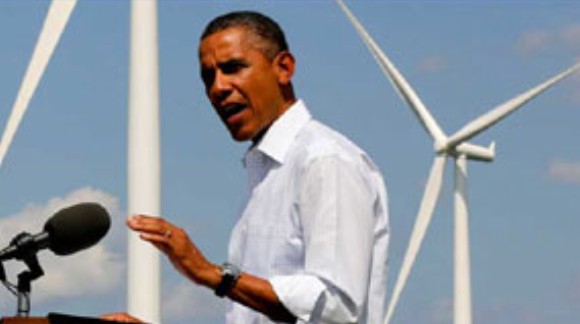
"This amounts to the largest act of deregulation in the history of the United States," EPA head Zeldin said in an interview.

Officials say it does not directly apply to emissions rules for oil-and-gas power plants and other stationary sources, but repealing the finding could make it easier to challenge or roll back those regulations at a later date.

The rollback would be a major win for the economy, which has been burdened by years of Democrats' "climate crisis" policies, which have epically backfired as electricity rates have soared amid terrible bets on unreliable solar and wind generation and the retirement of fossil-fuel plants.

This has all collided with grid strain in the data center era, triggering a power bill crisis across Maryland and other Mid-Atlantic states.

Also, this brutally cold winter has only underscored one very important point for 'team fossil fuels': coal and natural gas have helped keep the Mid-Atlantic and Northeast power grids from collapsing in recent weeks.

Related:

Since taking office, President Trump has pursued deregulation and pushed for reliable fossil fuels, telling supporters during the campaign trail, "drill, baby, drill." The goal, the president has stated over and over, is to reverse the worst inflation storm in a generation, which he blames on Democrats and their nation-killing green agenda.

On President Trump's first day of office last year, he signed an executive order directing the EPA to submit an assessment on the endangerment finding. Then by July, he received the proposal to rescind the finding.

Now, the rollback that would equal upwards of $1 trillion in cuts is set to be announced this week, along with several other energy- and climate-related announcements that will help drive down the cost of living.

"More energy drives human flourishing," Interior Secretary Doug Burgum said in an interview. "Energy abundance is the thing that we have to focus on, not regulating certain forms of energy out."

The U.S. economy has spent two decades under "climate crisis" regulations, and it has backfired spectacularly. Time to get back to basics. 

https://www.zerohedge.com/technology/largest-act-deregulation-us-history-trump-admin-repeal-obama-era-greenhouse-gas-finding

Amazon, Meta, Alphabet report plunging tax bills thanks to AI investment, new rules

 The build-out of artificial intelligence data centers along with business-friendly provisions in President Trump's "One Big Beautiful Bill" are combining to make 2025 a banner tax year for Big Tech.

Tax bills have dropped for three companies at the center of the ongoing AI build-out, thanks to new business world deductions enacted last year by Republicans for things like depreciation and research and development costs.

Some of the new provisions offer deferrals, meaning tax bills may be higher down the road, but the changes are set to add billions to these companies' bottom lines for now.

So far this year, Amazon (AMZN), Meta Platforms (META), and Alphabet (GOOG) have filed annual reports to the government — and all reported significant drops in what they expect to pay in US federal income taxes.

Amazon's tax bill dropped from about $9 billion in 2024 to $1.2 billion in 2025. Likewise, Meta reported a year-over-year drop from about $9.6 billion in 2024 to $2.8 billion in 2025.

The annual report from Alphabet, meanwhile, reported a tally that combined US federal and state tax totals and showed a drop from about $21.1 billion in 2024 to $13.8 billion in 2025.

These dropping tax bills for 2025 also came as all three companies report profits are on the rise.

Amazon's domestic profits jumped to nearly $90 billion in 2025 — an over 40% increase from 2024. Alphabet's domestic profits jumped over 32% to $143.6 billion, while Meta came in at $79.6 billion, a 20% jump.

Some appear to be preparing for criticism — dropping tax bills is an issue that has long inflamed anti-tech sentiments.

Amazon got unwelcome notice in 2018 when it paid $0 in federal taxes. This time, it has offered a lengthy statement to explain that it is simply playing by the new rules.

"Last year Congress made changes to the tax code to encourage greater investment in the American economy, its innovation, and its workers ... our tax bill this year reflects those changes," said the company.

The company said its varied 2025 investments included "Artificial Intelligence (AI) innovation" and totaled more than $340 billion in the US last year. It was also quick to note that many taxes deferred this year will eventually be paid, and reiterated that "this policy ultimately doesn't change the amount of tax we pay."

Meta CFO Susan Li added in her company's recent earnings call that Meta is seeing "substantial cash tax savings from the new US tax laws, given the significant investments that we're making in infrastructure and R&D."

Key new credits for corporations

A key reason for the windfalls: a series of tax deductions enacted last year and signed into law by Trump that offered credits for corporations around things like property depreciation, capital investments, new factory construction, interest expenses, and research and development costs.

A key last-minute wrinkle was allowing a 100% expensing deduction for new factories and updates to existing factories. This provision came late in the process, in part after a White House push led by Treasury Secretary Scott Bessent.

The changes will have a notable impact on company bottom lines this year but could lead to significant tax bills down the road.

All three companies also have recently reported billions in deferred taxes for 2025. Amazon reported over $11 billion and Meta's deferred taxes topped $18 billion. The deferred federal and state taxes for 2025 reported by Alphabet were about $8 billion.

And the actual amounts these companies are set to pay this year will be a bit higher than the 2025 bill alone because of deferrals from previous years. Amazon's total payments this year, for example, total $2.75 billion.

Yet these results have already drawn criticism.

The Institute on Taxation and Economic Policy, a left-leaning think tank, charges that those three companies "avoided" almost $50 billion in taxes when comparing what they paid against the statutory rate of 21%.

The group looked at four companies and included Tesla (TSLA) — which managed to avoid federal taxes completely for 2025. They note that the CEOs of all four companies prominently attended Trump's inauguration last year.

"Tax cuts pushed through by the Trump administration last year and in 2017 have made it possible for the fastest-growing companies in the world to pay record-low federal income tax rates on their income," the group wrote. “This is likely just the tip of the iceberg with the vast majority of the nation's largest corporations yet to disclose their 2025 tax payments."

https://finance.yahoo.com/news/amazon-meta-and-alphabet-report-plunging-tax-bills-thanks-to-ai-investment-and-new-rules-in-washington-161229652.html

Obamacare Fraud Targeted By New Federal Rule

 by Lawrence Wilson via The Epoch Times,

The Centers for Medicare and Medicaid Services has unveiled new regulations to strengthen the integrity of the Obamacare insurance exchanges and promote innovation.

The new federal rule, released for comment on Feb. 9, will lower the cost of health care, according to Secretary of the Department of Health and Human Services Robert F. Kennedy Jr.

“At President [Donald] Trump’s direction, [this agency] is driving down costs and rooting out fraud across our health insurance programs,” Kennedy said in a statement, predicting that the policy changes overall will reduce premiums and increase consumer choice.

Eligibility Verification

New anti-fraud regulations will require stronger enforcement of eligibility and income verification, correcting a situation that some observers say allowed unscrupulous insurance brokers to sign up millions of people for the program without their knowledge, particularly in plans with no premiums.

America’s Health Insurance Plans, the trade association for health insurance companies, has disputed that claim. However, 24 had more enrollees in Obamacare zero-premium plans in 2024 than they had qualifying residents, according to data from the think tank Paragon Health Institute.

The new regulations, once finalized, will require agents and brokers to use federally-approved forms for verifying enrollee eligibility and to obtain their consent for enrollment.

The regulations also make it clear what action a consumer must take to review and affirm their personal and eligibility information, and to signify their consent.

The rule would clarify which individuals qualify for Obamacare subsidies as “eligible noncitizens,” and would deny subsidies to those who are ineligible for Medicaid due to their immigration status.

Marketing Practices

A second program change prohibits certain marketing practices for agents and brokers who help customers sign up for Obamacare through the federal and state marketplaces.

Providing cash, cash equivalents, or monetary rebates to influence customers to enroll would be prohibited.

Also prohibited are falsely suggesting that customers would qualify for a zero-premium plan and misleading customers about enrollment deadlines.

“This proposal would ensure consumers are provided accurate information about the Exchange prior to enrollment, maintain the integrity of the exchanges, and foster trust between consumers and agents, brokers, and web-brokers,” according to the Centers for Medicare and Medicaid Services.

Payment Tracking

The new rule seeks to create an information security protocol for enrollees of the program as of 2024 to measure improper payments in the state-based exchanges.

Fraud, waste, and abuse costs the program up to $27 billion annually by some estimates, said Chairman of the House Ways and Means Committee Rep. Jason Smith (R-Mo.).

“This fraud can directly impact the legitimate needs of patients, who may face denied claims or delayed care when their providers struggle to verify which insurance is valid due to the chaos created by schemes like people using stolen identities to sign up for multiple plans,” Smith said in November.

Consumer Choice

Other provisions of the rule aim to expand consumer choice and bring down prices.

The draft of the policy permits insurance companies to offer catastrophic plans with terms from one to 10 years. Currently, customers must be either under 30 years old, ineligible for a subsidy for a marketplace plan, or have a hardship or affordability exemption.

The rule would expand hardship exemptions for people aged 30 and above to make catastrophic plans more accessible.

Also, insurers would be allowed to offer Obamacare plans that do not meet the standard plan requirements. Standardized plans have the same deductibles and cost-sharing, which makes it easier to compare various plans based on price and other factors.

The change aims to give issuers more flexibility to tailor plan options to their marketplaces.

“The goal is simple: lower costs, more choice, and exchanges that work as intended,” Dr. Mehmet Oz, administrator of the Centers for Medicare and Medicaid Services, said in a Feb. 9 statement.

The proposed regulations will be published in the Federal Register on Feb. 11 and open for comment for 30 days.

https://www.zerohedge.com/political/obamacare-fraud-targeted-new-federal-rule

Iradimed ups dividend, sets 2026 guidance, launch schedule


Iradimed posts record Q4 2025 results above prior guidance (EPS $0.54 on $22.7M revenue), raises its quarterly dividend 18% to $0.20, issues FY2026 and Q1 2026 guidance (Q1 EPS $0.44–$0.48 on $21–$22M), and sets up the 3870 pump launch aimed at driving 2026 revenue above $100M.

  • Eighteenth consecutive record revenue quarter; Q4 revenue $22.7M, up 17% YoY, above guidance.
  • Q4 GAAP EPS $0.50 and non-GAAP $0.54, both up low‑20s percent YoY.
  • Full-year 2025 revenue $83.8M, up 14% YoY; GAAP EPS $1.75, non-GAAP $1.93.
  • 3870 MR IV pump launch is key growth driver, targeting $100M+ annual revenue run rate in 2026.

Oscar Health expects $18.7B–$19B revenue in 2026


with 61% growth driven by record membership and AI efficiencies

Will Gilead's Solid Fourth Quarter Be Enough To Shake Off Its Light Outlook?

 Less than two months into 2026, shares of Gilead Sciences are already outpacing the most talked-about pharmaceutical companies. Its fourth-quarter earnings, disclosed Tuesday, could convince some investors the strength was warranted.

After the closing bell, the biopharmaceutical company posted adjusted earnings of $1.86 a share, which outstripped analysts’ calls for $1.81. Quarterly revenue increased 5% to $7.9 billion, beating the $7.7 billion consensus call on Wall Street.

Gilead attributed the change to higher sales of HIV and liver-disease products, which were partially offset by lower sales of Veklury, its Covid-19 antiviral. Excluding Veklury, product sales rose 7% to $7.7 billion.

Biktarvy, Gilead’s once-a-day HIV treatment regimen and its biggest moneymaker, brought in $4 billion in the fourth quarter, a 5% increase from the same period last year. Analysts had been expecting $3.8 billion. Sales of Descovy, Gilead’s pre-exposure prophylaxis pill, surged 33% to $819 million, blowing past the $715 million the Street had anticipated.

Gilead’s cell-therapy portfolio was a laggard. Sales fell 6% to $658 million, reflecting “ongoing competitive headwinds,” the company said. Sales for blockbusters Yescarta and Tecartus declined 6% and 9% from last year, respectively.

It was a continuation of a downward trend for cell-therapy treatments. Third-quarter sales fell year over year as well as sequentially. CEO Daniel O’Day said at the time that competitive headwinds would likely persist in the near future.

Strength in HIV products, Gilead’s core business, was expected to be partially offset by a 10% decline in full-year sales of cell therapies, O’Day said in October. Sales for the portfolio ultimately fell 7% in 2025.

Full-year guidance was light. For 2026, the company is targeting adjusted earnings of $8.45 to $8.85 a share. Analysts were looking for $8.79 a share.

Gilead sees product sales between $29.6 billion and $30 billion in 2026. The Street has forecast $29.9 billion, above the midpoint of the range.

Shares declined 5.7% to $139.45 following the report. Industry peers Pfizer and Johnson & Johnson were down slightly and flat, respectively.

Gilead’s reputation as a leader in HIV treatments may cause analysts to overlook weakness in other parts of the portfolio. Much of the conversation in 2025 centered around the launch of Yeztugo, Gilead’s twice-yearly HIV prevention therapy.

Yeztugo made its U.S. debut last June and logged $39 million in sales in the third quarter, helping to boost the company’s profit. The product brought in $150 million in 2025. Analysts are counting on the drug to become one of Gilead’s top sellers over time.

Also on Tuesday, Gilead announced a 3.8% increase in its quarterly cash dividend, resulting in a quarterly dividend of 82 cents per share of common stock.

Shares had gained more than 20% this year heading into the report, outperforming the broader market as well as Eli Lilly and Novo Nordisk, whose businesses center on weight-loss drugs.

As an oncology and HIV play, Gilead has been immune to the increasing competition that has caused those stocks to whipsaw. The biopharma company was named a Barron’s stock pick in October.

https://www.msn.com/en-us/money/topstocks/gilead-s-earnings-surprise-hiv-drug-sales-were-strong/ar-AA1W5xkM

House Republicans subpoena 8 insurers over ACA fraud protection measures

 Republicans on the House Judiciary Committee have subpoenaed eight insurers for documents outlining their measures to head off fraud related to Affordable Care Act subsidies.

The information demands follow an attempt from the Trump administration over the summer to enact new guardrails on improper enrollments, which was paused by the courts amid ongoing litigation. The Republican committee heads said their inquiries could help unstuck that regulatory effort.

Concerns over incentivizing enrollment fraud have been central to Republicans’ argument against extending the advanced premium tax credits (APTC) that expired at the end of last year. That position was galvanized in December when a Government Accountability Office (GAO) report outlined the ease with which its researchers were able to receive approvals for fake coverage applications.

Monday’s subpoenas are an escalation for the committee’s Republicans, who had requested the insurers provide such information voluntarily back in December. Individual cover letters to the insurers accompanying the subpoenas, which were shared by the committee, describe insurers’ varying levels of compliance to the initial information requests.

The insurers who were sent a subpoena are: Blue Shield of California, Centene Corporation, CVS Health, Elevance Health, GuideWell, Health Care Service Corporation, Kaiser Permanente and Oscar Health.

Reps. Jim Jordan (R-Ohio), chairman of the House Judiciary Committee, and Scott Fitzgerald (R-Wisconsin) and Jeff Van Drew (R-New Jersey), who chair relevant subcommittees, wrote that the insurers’ responses would “inform potential legislative reforms” to the Administrative Procedure Act (APA), the law a federal judge said the administration likely ran afoul when finalizing new regulations back in June

That final rule would have introduced various hurdles to address “the surge of improper enrollments” on ACA exchanges. These included the elimination of special enrollment periods that allowed people earning 150% or less of the federal poverty level to secure coverage, new calculations around plan tiers and requirements for pre-enrollment eligibility checks for special enrollment periods and a $5 premium penalty on auto-enrollments.

After multiple large cities and other organizations sued to block the regulation, Judge Brendan Hurson, of the Maryland District Court and an appointee of President Joe Biden, issued a preliminary injunction against several of the measures in August. Hurson determined that plaintiffs were likely to succeed in challenging seven of the regulation’s provisions under the APA, yielding at least a short-term pause that the administration has appealed.

The committee lawmakers, in their subpoena letters, said the information from insurers would help determine “whether reforms are needed to the APA to allow for effective implementation of regulations that address Obamacare fraud.”

The GAO, in its December report and an accompanying letter to lawmakers, said it identified at least 30,000 applications submitted in plan year 2023 and at least 160,000 applications for 2024 that likely included changes made by brokers or agents that were not authorized. The watchdog also found that more than 29,000 numbers in 2023 and 68,000 numbers in 2024 were used to receive more than a single year's worth of coverage, including tax credits.

The GAO noted that the Centers for Medicare and Medicaid Services received approximately 275,000 complaints between January and August 2024 that consumers were enrolled in an ACA plan or had coverage adjusted without their consent. The office also pointed to Justice Department indictments from late 2024 and early 2025 alleging bad actors enrolling consumers by falsifying information on their applications.

“Such practices can result in wasteful federal spending on APTC for enrollees who are not eligible,” the GAO wrote to lawmakers. “Further, such practices can result in harm and unexpected costs for consumers. These can include loss of access to medical providers and medications, higher copayments and deductibles, or repayment of APTC if income or other eligibility was misrepresented.”

https://www.fiercehealthcare.com/payers/house-republicans-subpoenae-8-insurers-over-aca-fraud-protection-measures