Search This Blog

Wednesday, October 7, 2026

Saudi-led coalition says it destroyed 82 Iran-backed Houthi targets in Yemen


The Saudi-led coalition said Wednesday it destroyed 82 military targets belonging to the Iran-backed Houthis across four Yemeni provinces after the group attacked civilian sites in Saudi Arabia.

Coalition spokesperson Major-General Turki al-Maliki said in a post on X that the targets in Saada, Hodeidah, al-Jawf and Marib included 11 mountain-based ballistic missile storage sites in Saada, as well as command centers, communications systems, missile and weapons depots and gathering sites.

Maliki said the operation followed Houthi attacks targeting King Khalid International Airport in Riyadh and Abha International Airport, adding that attacks on civilian sites “will not go unpunished.”

https://www.iranintl.com/en/202610077143 

FBI Accuses Wash. State Man Of Coaching Canada Tumbler Ridge School Shooter, Pact To Livestream Attack

 Federal prosecutors have charged a Bellingham man with helping another person commit murder in a foreign country - alleging he coached an 18-year-old who killed eight people in Tumbler Ridge, British Columbia, in February and agreed to livestream the attack.

Officials at a Seattle news conference announcing the Bryant arrest
At the federal courthouse in Seattle, law enforcement officials on Oct. 6, 2026, announce the arrest of a Bellingham resident accused of aiding in a deadly school shooting in British Columbia. Officials include assistant commissioner Elija Rain of the BC RCMP, left, FBI special agent in charge Mike Herrington, and acting U.S. attorney Neil Floyd. (KUOW Photo/Amy Radil). KUOW's caption spells the RCMP officer's name Elijah. 

James Cody Bryant, 30, was arrested Tuesday, officials said at the federal courthouse in Seattle. The charge carries a possible life sentence, KUOW reported. Bryant is accused, not convicted. A preliminary hearing is set for Oct. 20.

On February 10, Jesse Van Rootselaar, 18, killed his mother and 11-year-old stepbrother at home, then five students and a school staff member at Tumbler Ridge Secondary School, before dying by suicide. Canadian officials said police had been to the home several times over mental health concerns. RCMP assistant commissioner Elija Rain said Canadian authorities contacted the U.S. Department of Homeland Security soon after, based on information from a platform the attacker had used.

Bryant and Van Rootselaar communicated on Discord, officials said, and Discord contacted law enforcement after the shooting. FBI Seattle special agent in charge Mike Herrington said the two discussed the attack in detail. Bryant allegedly sent money through PayPal so Van Rootselaar could buy shoes to wear that day and a lighter to ignite an explosive device.

"In addition to providing money, technical advice, and particular items to be used in the shooting, Bryant agreed to record a livestream feed of the attack and broadcast it in a way that would maximize notoriety for the shooter," Herrington said. Other messages suggest Bryant advised Van Rootselaar when the car would not start on the way to the school, after the killings at home, he added. Acting U.S. Attorney Neil Floyd said the planned broadcast was on Twitch. Officials said the feed shut down after about 20 seconds.

Charging documents show an exchange in which Van Rootselaar said, "I really hope you wouldn't ever snitch." Bryant replied, "I don't want to honestly. I know I can like, save lives I guess but idk." The government's press release also said there were conversations in which Bryant "tried to talk Van Rootselaar out of doing the attack." Officials said Bryant never contacted law enforcement, and agreed to handle the livestream just minutes before the attack.

Officials said the two met about three years ago on Omegle, a now-defunct video chat service that randomly matched strangers, and that there is no indication they ever met in person or had ties to any other group. Both were born male and identified as female, officials said. The criminal complaint uses female pronouns for Van Rootselaar and no gendered pronouns for Bryant.

Herrington said distance does not shield a defendant. "If you think you are safe from prosecution because you did not pull the trigger or were not physically present at the scene of the crime, think again," he said. The Canadian investigation remains active, but Floyd said the case is being brought in the United States for now. "All the activity involved in this was committed here in the state of Washington," Floyd said.

Separately, victims' families and British Columbia, which sued in September, have taken OpenAI to court over Van Rootselaar's use of ChatGPT. The province's suit says the company flagged the chats but did not report them to police. Mother Jones reports ChatGPT helped the attacker get around its safeguards by framing questions as fictional or hypothetical.

DOJ release: Bellingham resident charged with conspiring to commit murder in connection with school shooting.

https://www.zerohedge.com/political/fbi-accuses-washington-man-coaching-canadas-tumbler-ridge-school-shooter-agreeing

Researchers Develop AI 'Mind-Reading' Tool That Reconstructs What Your Eyes See

 by Jacob Burg via The Epoch Times,

A cutting-edge new artificial intelligence (AI) tool can reconstruct images from a person's vision simply by analyzing brain scans.

There's our little test subject!

The technology recreates a person's visual field with startling accuracy and can also predict brain activity by analyzing what a person is looking at in real time.

Professor Michal Irani of the Weizmann Institute of Science developed the "mind-reading" AI model Brain-IT, which interprets functional magnetic resonance imaging (fMRI) scans of participants' brain activity as they view a series of images.

Irani and her team - which includes Roman Beliy, Amit Zalcher, Jonathan Kogman, and Navve Wasserman from Weizmann's Computer Science and Applied Mathematics Department - released their research on Sept. 14.

While the current study used fixed images, Irani's lab plans to test these so-called mind-reading methods on participants' hearing and, eventually, on video.

"What remains especially challenging is decoding video - for example, during dreaming," Irani said in a statement.

"Dozens of images change every second, while an fMRI scan takes about two seconds. If we overcome all these obstacles, it's possible that in the future we may even be able to read dreams."

The study reviewed fMRI scans of eight participants who had viewed thousands of images across 30 to 40 scanning sessions. Participants viewed around 40 images over roughly 10-minute sessions as researchers scanned their brains six times. This created roughly 73,000 image-fMRI pairs for the AI model to analyze.

Irani said other models can translate brain activity into images with "impressive reconstructions," but that they often make basic composition and color errors.

"The new model we developed outperforms them in reconstructing both the content of the image and its details," she said.

"What's more, while every other model requires dozens of hours of brain scans to learn to 'read' a new person, our model needs only one hour," she said.

Scientists have been working on similar technology for years. A paper published in the Journal of Law and the Biosciences in 2017 discussed the possibility of reaching "brain-based mind reading" with neuroimaging techniques.

The paper described how these techniques could be used for lie detection to assess defendants, prisoners, and prospective jurors in court cases to improve the legal system. However, it also notes that brain-based mind reading could have potentially unethical coercive uses.

Improvements in the signal data produced by fMRI machines and in how humans analyze that data in recent years have made this technology possible, according to Kenneth Norman, a psychology and neuroscience professor at Princeton University.

In a discussion with the American Psychological Association in 2022, Norman said the technology could help people with depression or anxiety.

Therapists could use neurofeedback to make participants aware that their thinking has drifted toward negative thought loops and then give them direction to try to control those mental patterns, he said.

Some neuroscientists have heralded the capabilities of Brain-IT's AI model, highlighting how it could therapeutically help people suffering from neurological conditions. But others have raised concerns about how the technology could be abused to coercively extract information from a person's mind.

https://www.zerohedge.com/political/researchers-develop-ai-mind-reading-tool-reconstructs-what-your-eyes-see

Syria considering sending troops to Yemen to fight Iran-backed Houthis - Axios


Syria is considering sending thousands of troops to Yemen to support a Saudi-backed offensive against the Iran-backed Houthis, Axios reported Wednesday, citing three US officials.

Saudi Arabia and Syria are discussing the possible deployment, and Syrian President Ahmed al-Sharaa is seriously considering the request but has not made a final decision, according to the report.

A source familiar with the discussions told Axios that Syria could send between 10,000 and 20,000 troops. Units under consideration include the 90th Division near Damascus and the 84th Division based in southern Syria near Sweida.

The 84th Division includes thousands of Islamist foreign fighters who fought against former President Bashar al-Assad under the umbrella of Hayat Tahrir al-Sham, Axios reported.

The issue was discussed during a meeting between Sharaa and Saudi Crown Prince Mohammed bin Salman in Riyadh earlier this week, a US official told the outlet.

Washington has been consulted by both countries and does not oppose a Syrian deployment in principle, according to Axios. Two US officials said US Central Command had also been consulted on how Syrian troops could be deployed.

The White House and CENTCOM declined to comment to Axios, while the Saudi Embassy and Syrian Foreign Ministry did not respond to the outlet's requests for comment.

https://www.iranintl.com/en/202610077639

NY Times Suggests Babies Are Not Conscious

 by Steve Watson via Modernity News,

The New York Times has decided the open question in science this week is whether a baby is conscious. Not a cluster of cells. Not a theoretical model. An actual newborn baby.

Carl Zimmer's 5 October piece, "Are Babies Conscious?" (yes that's a real headline) walks readers through a lab test and then informs them that a "squirming, gurgling infant" does not seem conscious, "at least not in the way adults are."

Zimmer's setup is the oddball-sound test. A subject hears three low tones and a high one, over and over, then a run of four low tones. Adult brains throw a brief, distinctive blip at the break. People in a coma do not. People who are asleep do not. The Times then puts a newborn in the same frame and asks whether the blip will be there.

The paper calls it an active scientific debate. Dr Topun Austin, a neonatologist at the University of Cambridge, is quoted defining the thing under study: "Consciousness is a process of being receptive to the outside world and mixing that with our own internal world, to create the feeling of who we are and where we are."

A caption under the piece states that there was a time when our brains were too rudimentary to support consciousness. Zimmer's own promo line said he had found scientists "on a mission to find out when consciousness begins in babies."

The reaction online was immediate, and it was not about neuroscience. It was about where the line moves next.

All this is going on while we're debating whether 'machines can be conscious', a disturbing irony.

Of course, there are countless studies that indicate infants, even unborn infants have consciousness as we understand it.

In January, neonatologist Carlo Bellieni of the University of Siena published "A Rudimentary Consciousness Appears in the Late Fetal Period" in EC Gynaecology, reviewing 31 clinical trials from the last decade on fetal anatomy, perception and memory. His conclusion: the early appearance of memory is a sign of rudimental consciousness, and it does not depend on whether the fetus is inside or outside the womb, only on the grade of brain development.

Bellieni's account of the hardware is specific. "Intrauterine life includes structures which, at least partially, replace the developing cortex, that the fetus begins to form around 20 weeks of gestation. These structures are the subplate, useful for most sensations, and the thalamus for pain. ... We can realistically say that the first sensations are perceived by mid-pregnancy."

Fetuses in the trials preferred carrot-flavoured amniotic fluid to kale, responded more to face-like patterns, and touched the uterine wall longer when the mother touched from outside. Magnetoencephalography work found fetuses at 35 weeks and older detecting breaks in tone patterns. The old claim of continuous fetal sedation does not survive the blood chemistry or the sleep-wake cycling.

That sits on earlier research. In 2023, Tim Bayne, Joel Frohlich, Lorina Naci and colleagues published "Consciousness in the cradle" in Trends in Cognitive Sciences. Bayne put the split plainly: researchers disagree on whether consciousness arises early, at birth or shortly after, or late, by one year or much later. "Nearly everyone who has held a newborn infant has wondered what, if anything, it is like to be a baby."

The review's own reading of network connectivity, attention, multimodal integration and cortical responses to global oddballs was that consciousness is likely in place in early infancy and may begin before birth. Naci, who leads Trinity College Dublin's Consciousness and Cognition Group, said newborns can integrate sensory and developing cognitive responses "into coherent conscious experiences to understand the actions of others and plan their own responses."

A 2025 Science report on the Infant Consciousness Conference at NYU recorded the same shift. Bioethicist Claudia Passos-Ferreira, who co-organised it, said fetal consciousness would have been a less central topic at a meeting like that a few years earlier. Preliminary survey results from the room: 47 percent placed the first development of consciousness in the later prenatal window, from about 24 weeks to birth.

A 2026 survey in Neuroscience of Consciousness, of attendees at two leading conferences, found a majority favouring the view that newborns are conscious, and a plurality favouring emergence after 24 weeks of gestation.

In June, New Scientist reported that the fetal connectome already shares 61 percent of the functional organisation of an adult brain. Bayne's line there: "There certainly could be snippets of experience before birth, and the capacity for consciousness is probably there."

None of this is a claim that a six-week embryo writes poetry. It is a claim that the "are they even aware?" framing, applied to born infants and late-term fetuses, is behind the data the same research community has been publishing.

The same day the Times asked whether babies are conscious, LifeNews republished a shocking case that makes the question obscene. A boy at 21 to 22 weeks, about half a pound and the size of a hand, survived an abortion at Christ Hospital in Illinois and lived for 45 minutes. The baby was taken to a soiled utility room because his parents wanted nothing to do with him. There was no care. No intervention.

Nurse Jill Stanek later told a U.S. Senate committee she could not leave him to die alone. "I could not bear the thought of this suffering child dying alone, so I rocked him for the 45 minutes that he lived." He was old enough to gasp for air. He was not old enough, under the logic now being laundered by the New York Times, to count as a human being.

State health figures cited around the same reporting put at least 40 babies born alive after botched abortions in Minnesota, Arizona and Florida between 2016 and 2018, and CDC data at least 143 between 2003 and 2014.

In August, Massachusetts legalised abortion up to birth, and the applause came from the same political class that treats viability as a clerical error.

In March, the UK House of Lords rammed Clause 208 of the Crime and Policing Bill through and decriminalised self-induced abortion at any stage. A YouGov survey found 1 percent support for abortion up to birth. A Whitestone Insight poll found 62 percent saying abortion should remain illegal after 24 weeks, and 53 percent saying it should not be an option if the baby could survive outside the womb. GB News put the gap in one line: "Just 1% of the public agree with this... and yet it has now made it into law."

A country that will arrest someone for silent prayer outside a clinic has arranged the law so that healthy, fully grown babies can be killed without a criminal consequence for the woman.

In March of 2025 the Trump administration moved to cut federal money to Planned Parenthood, which took an average of $592 million a year from taxpayers between 2019 and 2021, more than 40 percent of revenue, while performing 1.11 million abortions in that window.

Anyone who has held their own newborn, or any newborn for that matter, and witnessed the child's curious glare, the tight grip of their hand, and felt the intense emotional connection knows that babies are conscious. The New York Times deciding to ask whether they are or not does not make it a real debate.

https://www.zerohedge.com/medical/ny-times-suggests-babies-are-not-conscious

More Ukrainian-Style One-Way Attack Drones Seized In Mexico

 The emergence of fiber-optic one-way attack drones among Mexican cartels signals a troubling security threat just south of the US border.

Images published by local outlet Luz Noticias show that the Mexican Army seized Category 1 suicide drones with fiber-optic cable reels and improvised explosives. This is sparking ongoing concerns that low-cost attack drones associated with the Ukraine-Russia war and the US-Iran conflict are spreading to narco-terrorists in the Western Hemisphere.

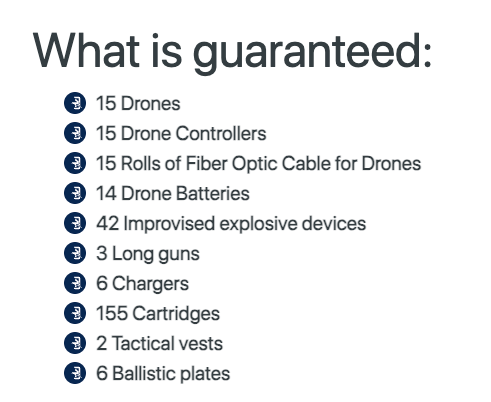
Mexican troops found 15 drones and more than 40 improvised explosive devices in the municipality of El Rosario during security patrols on Monday. The municipality is situated in southern Sinaloa.

Here's what the outlet said:

During the inspection , Mexican Army personnel located and seized drones , drone controllers , fiber optic cables, batteries, improvised explosive devices , chargers, cartridges, long guns , tactical vests, and ballistic plates.

The three long guns seized are AK-47 rifles , better known as Goat Horns , which were allegedly used for clashes between organized crime factions.

The latest development builds on our mid-July note that Ukrainian-style drones were found in a raid deep inside north-central Mexico.

Reuters cited US Army Brigadier General Brian Filler, deputy commander for operations at Joint Task Force Southern Border, who told reporters Monday that the military had detected 378 drone incursions in the last 30 days and that the trend was increasing.

"We are seeing largely commercial off-the-shelf available drones," Filler said, adding that most carry surveillance cameras and are often observed alongside cross-border movements.

The US urgently needs low-cost counter-UAS assets to protect military bases, government buildings, stadiums, critical infrastructure, and data centers. The list is really endless.

https://www.zerohedge.com/technology/more-ukrainian-style-one-way-attack-drones-seized-mexico

15 Economies Sign US-Led Statement Against Industrial Overcapacity; China, Russia, Brazil, Saudi Arabia Opt Out

 Trade ministers from 15 economies, including the United States, South Korea and Japan, signed a joint statement to build sector-specific platforms addressing manufacturing overcapacity, the U.S. Trade Representative's office said Wednesday, according to Seoul Economic Daily. The effort is effectively directed at China, which did not sign. The statement does not name the country.

USTR said 14 countries joined the United States: South Korea, Japan, Argentina, Australia, Canada, the European Union, France, Germany, India, Italy, Mexico, Poland, Turkey and the United Kingdom. The statement came out of discussions at the Group of 20 trade ministers' meeting in Milwaukee.

The statement says structural overcapacity, wherever it arises, distorts prices and production patterns, hinders innovation and competition, and can leave other countries open to economic coercion. It singles out existing and expected overcapacity in autos and electric vehicles, batteries, chemicals, foundational semiconductors and solar panels, which it says would cripple domestic industries, destroy jobs and lower living standards.

The signatories agreed to build new sector-specific platforms to examine overcapacity in those areas and take action. They also agreed to hold technical meetings before December to set the scope of the work and share information.

U.S. Trade Representative Jamieson Greer laid out the overcapacity case at the close of the Milwaukee meeting. The excess-capacity section starts at 14:36.

The Milwaukee meeting, held Sept. 30 to Oct. 1, covered four items: the weaponization of food, structural overcapacity, most-favored-nation reform and the elimination of forced labor from supply chains. Only a joint statement opposing the weaponization of food emerged, with no outcome documents on the other three. China's Ministry of Commerce said most members held divergent positions.

As a result, only 15 of the G20's members appear to have joined the overcapacity statement. China, Indonesia, Saudi Arabia, Russia, Brazil and the African Union did not sign. The G20 summit is scheduled for December in Miami.

https://www.zerohedge.com/markets/15-economies-sign-us-led-statement-against-industrial-overcapacity-china-russia-brazil