Search This Blog

Friday, August 21, 2026

Meghan Markle In Talks To Join Netflix’s ‘The Gentlemen,’ Reports Say

 Meghan Markle, the actress-turned-British royal family member who is moving back to the United Kingdom after a stint in California, is reportedly in talks to return to acting with a role in the Netflix series “The Gentlemen,” which shoots in England.

Key Facts

Multiple outlets reported Friday that Markle is in discussions to join the third season of “The Gentlemen,” an action comedy series created by Guy Ritchie which stars Theo James.

Deadline, which first reported Markle’s potential role in “The Gentlemen,” said the talks are in “very early stages” and are still “hypothetical” because “The Gentlemen” has not yet been renewed for a third season, citing unnamed sources.

Markle’s potential return to acting was first reported by the Australian news outlet, news.com.au, earlier Friday.

Markle, whose best-known acting role was on the drama series “Suits,” hasn’t acted since she married Prince Harry, though she and her husband launched a production company and signed a partnership with Netflix in 2020 through which they have produced several documentaries and reality series.

Forbes has reached out to Markle’s representatives for comment.

surprising fact

In a 2022 interview with Variety, Markle said she was “done” with acting. “I guess never say never, but my intention is to absolutely not,” Markle said.

Why Are Harry And Meghan Moving Back To The United Kingdom?

Harry and Meghan, who moved from the United Kingdom to California in 2020 after stepping back from their royal duties, are expected to return to the United Kingdom in the coming weeks, multiple outlets reported earlier this week. It is not entirely clear why the couple is moving, but the BBC reported they are not expected to return to their roles as working royals, and they are thought to be relocating to a non-royal residence outside of London. The decision comes one month after Harry and Meghan met with King Charles III and Queen Camilla for what Buckingham Palace called a private family visit. Harry also made a rare visit to London to see his father last year, which came months after Harry told the BBC he would “love a reconciliation” with his family.

tangent

After departing their royal roles, Harry and Meghan embarked on several media ventures to varied success. They started a production company, Archewell Productions, which signed a $100 million, five-year contract with Netflix in 2020. They renewed their deal with Netflix last summer, though reports say the renewal is worth less than the previous deal. Markle released two seasons of “With Love, Meghan,” a lifestyle reality series, which was panned by critics. The couple released a docuseries, “Harry & Meghan,” in 2022, which broke documentary records for Netflix, and they have since produced several more series. Markle also hosted a podcast in 2022, “Archetypes,” which lasted just 12 episodes, and she launched a lifestyle brand, As Ever, in 2025.

key background

Markle began her career as an actress, achieving fame for her role as Rachel Zane in seven seasons of the USA Network’s legal drama series “Suits.” She has also starred in several films, including “Horrible Bosses” (2011), “Random Encounters” (2013) and “Anti-Social” (2015), her last film role before marrying Harry.

https://www.forbes.com/sites/conormurray/2026/08/21/meghan-markle-in-talks-to-join-netflixs-the-gentlemen-reports-say/

China Firmly Rejects US Demand To Back Its 'Most Crushing Economic Operation' Against Iran

 China has firmly rejected Washington's call to join in implementing US sanctions to "squash" Iran's economy, pushing back against Trump administration pressure to be part of the "toughest sanctions in history" which has marked a new phase of conflict focused on extended economic warfare, as a military solution is seen as increasingly unrealistic and unlikely.

"Regarding the Iran issue, sanctions and pressure do not help resolve the problem," Reuters quoted a representative of the Chinese Embassy in Washington as saying. The White House's new plan is to include heavy reliance on international pressure on external countries to impose extreme isolation on the Islamic Republic.

Chinese foreign ministry spokesman Lin Jian said the same to reporters Friday in a regular briefing. "China calls on all relevant parties to take responsible measures and resolve the problem through political and diplomatic means," he said.

Asked specifically about the latest comments of US Treasury Secretary Scott Bessent, Lin emphasized the need for all parties to take "responsible measures" in resolving the war. "China opposes illegal unilateral sanctions that have no basis in international law and are not authorized by the UN Security Council," Lin said.

via EPA

Bessent had on Thursday told CNBC: "It is a one-two punch. We have ​the blockade (on Iran), and we are going to have the toughest sanctions in history." He then vowed, "It is going to work in Iran and we are going to collapse this ⁠regime."

He further invoked some (infamous) words of President George W. Bush issued to allies in the wake of the 9/11 attacks. "You are either with us, or against us," Bessent said in the interview. "This is going to be the greatest coordinated economic isolation in the history of the world."

Such back-and-white rhetoric is very unlikely to sway the Chinese, given also that of course they know what happened next after that original proclamation by Bush - American forces got stuck in no less than two quagmires in the Middle East, Afghanistan and Iraq, in what came to be viewed cynically as 'forever wars'. 

What's more as the blowback in Baghdad was pretty immediate, as a key unintended consequence of the US regime change war was the ascendancy of pro-Iran Shia politicians ruling Iraq. Beijing is all too aware of the US score card in the region, even as Washington decision-makers continue ignoring the glaring lessons of recent history.

Bessent seemed perplexed at the reaction in oil prices on Thursday, while he also said that discussions with Beijing would be best done in private:

"I think oil markets are misinterpreting what this economic pressure ​means," Bessent said on Thursday. Oil ​prices climbed to more ⁠than three-week highs on Thursday.

"We have asymmetric information, and I'm not sure why oil has popped up on this," Bessent said. "If we are doing the maximum economic ​pressure, then that means that likely there will not be a large-scale kinetic ​restart."

When asked ⁠if the U.S. could target China for doing business with Iran, Bessent said many conversations were best to have in private.

"We are confident that everyone wants the Strait (of Hormuz) reopened, and for energy prices to come back down," ⁠he continued. "Keep ​in mind that the Chinese get 50% (of their) energy from ​inside the Gulf. So it would do them a big service to get with the program."

Still, Bessent has been busy doubling-down on Trump's message shift this week (opting for an economic siege warfare 'solution' as after military strategy hasn't gone so well)...

Tehran has been consistently saying that is is ready for a long war, whether that come in the form of more US-Israeli bombs, or else an economic siege. Even Reuters has acknowledged the obvious in its own coverage, saying "Iran has weathered punishing economic sanctions for nearly 50 years, since the Islamic Revolution of 1979."

"Iranian Foreign Minister Abbas Araqchi called Trump's comments an attempt to divert American public opinion from domestic financial problems, including record debt and rising interest rates," the report added.

There's an additional important factor. At this point there's no way that the two key UN Security Council permanent members Russia and China will sign off on any big new anti-Iran sanctions regimen brought before the United Nations.

Closer to home, the White House risks more China blowback, especially with President Xi Jinping slated to visit the US next month. Bloomberg poses the following in Friday analysis:

Is the White House willing to prioritize this new economic warfare campaign above its China relationship? And if it chooses to, there are serious ramifications,” said Chris Kennedy, an economic statecraft analyst at Bloomberg Economics. Kennedy said the new threats are also an “admission that the US is running out of options.”

Any decision to hit China would risk worsening tensions just weeks before Trump hosts Xi for the Chinese leader’s first visit to Washington in a decade. It also raises the threat of Chinese countermeasures that could inflict pain on the US economy ahead of November midterm elections that will hinge on pocketbook issues.

Beijing has already demonstrated a willingness to push back against Trump, most notably by announcing export restrictions on rare earths that forced the White House into a climbdown from their tariff fight.

Meanwhile, more pushback against this week's Axios report saying that large quantities of oil are moving through the Strait of Hormuz via a US Navy established 'stealth' corridor:

On Friday, Iranian President Masoud Pezeshkian said that Iran will "under no circumstances bow to bullying." But he also struck somewhat of a conciliatory tone, perhaps signaling Iran is still open to dialogue so long as Washington is willing to compromise.

"It would be better to end the war today, now that we are strong and have dignity, with the whole world acknowledging our victory," the semi-official Iranian Students' News Agency quoted him as saying.

https://www.zerohedge.com/geopolitical/china-firmly-rejects-us-demand-back-its-most-crushing-economic-operation-against-iran

ICE Arrests 5 Suspected Child Predators In Undercover Operation

 by Naveen Athrappully via The Epoch Times,

Immigration and Customs Enforcement (ICE) arrested five suspected child predators during an operation in Omaha, Nebraska, between Aug. 12 and 14, the agency said in an Aug. 20 statement.

(L–R) Bryan Dady, Jocsan Aparicio Santos, Logan Trigg, Law Eh, and Tillian Hutton were arrested for suspected sexual crimes against children in Omaha, Nebraska, between Aug. 12 and 14. Courtesy of ICE

The undercover operation was carried out by ICE's Homeland Security Investigations (HSI) Omaha unit together with state and local partners. Among the five arrested and charged, three had prior convictions for sexual crimes against children and were also listed on sex offender registries, the agency said.

If convicted on the new charges, these three individuals could face enhanced penalties, likely adding 10 more years to any sentence.

ICE said the HSI is "delivering on President Trump and Secretary Mullin's mandate to protect America's children."

More than 5,000 child predators and human traffickers have been arrested since President Donald Trump took office in January 2025, according to an Aug. 18 White House statement.

Trump has backed law enforcement agencies and empowered the Federal Bureau of Investigation to "hunt predators instead of political targets," the White House said.

In its recent statement, ICE said that one of the arrested individuals, Bryan Dady, 48, a U.S. citizen, has been listed in Nebraska's sex offender registry for a 2023 conviction for enticing a 9-year-old girl. The person was also arrested in January this year on new charges alleging the grooming and enticement of a 13-year-old.

Another individual, Jocsan Aparicio Santos, 39, a Mexican citizen with lawful permanent residency in the United States, is currently on a sex offender registry for a 2010 conviction linked to assaulting a 15-year-old girl.

A third individual, Logan Trigg, 29, an American citizen, is also on a sex offender registry for a conviction related to sexually assaulting a 13-year-old girl.

The fourth person, Law Eh, 39, a naturalized American from Burma, also known as Myanmar, was charged with possessing files containing child sexual abuse material, while the fifth, Tillian Hutton, 25, another U.S. citizen, is facing charges of sex trafficking children.

ICE Homeland Security Investigations logo. Samira Bouaou/The Epoch Times

All five suspects intended to engage in sexual acts with children, according to ICE.

"These cases are not hypothetical; they show a real demand for the sexual exploitation of children in our community," HSI Kansas City Special Agent in Charge Rick Sabatini said in the statement.

"They show why law enforcement must continue to identify and disrupt offenders before they have the opportunity to harm a child."

According to ICE, the HSI Omaha Metro Juvenile Sex Trafficking Task Force has obtained 21 federal convictions for sex trafficking children since 2021.

The Epoch Times reached out to the public attorneys representing the charged individuals but did not receive any response by publication time.

Child Trafficking, Exploitation

According to data from the National Center for Missing & Exploited Children, it received more than 113,500 reports of potential child sex trafficking last year, a 323 percent increase from 2024.

A child can be trafficked by family members, strangers, and gangs. In some cases, exploitation of children may not involve any trafficking. Instead, the children may be offered food, money, or shelter in exchange for sexual engagement.

Some of the risk factors of child trafficking include intergenerational sexual abuse, low self-esteem, substance abuse, gang activity, and developmental or physical disabilities, the center said.

Legislative actions have been taken to address the issue of child exploitation. On June 10, Trump signed the Secure America Act into law, which contained a provision to combat child exploitation.

The provision provided the Department of Homeland Security with $108.5 million to hire 200 new child exploitation investigators and analysts, according to a June 9 statement from the office of Sen. Josh Hawley (R-Mo.), who introduced the provision.

Sen. Josh Hawley (R-Mo.) in Washington on Sept. 21, 2021. Ken Cedeno/Getty Images

Before the legislation was in place, Homeland Security employed seven full-time specialists to identify child exploitation victims, the statement said.

"That's two hundred new law enforcement officers to find and rescue kids trafficked by predators and a new initiative to coordinate local, state, and federal enforcement," Hawley said in the statement. "This is the biggest surge against online child exploitation ever by the federal government. It's time to rescue these kids."

Members of the U.S. Marshals’ Missing Child Unit during "Operation Never Forgotten 2021" in Atlanta, Georgia. Courtesy of Shane T. McCoy/U.S. Marshals

In an unrelated operation, the U.S. Marshals Service said on Aug. 10 that 48 missing children from Massachusetts were rescued during a multi-agency operation tied to the FIFA World Cup.

The agency said the rescued children were between 12 and 17 years old. Several of them were found outside state borders after investigators tracked leads across the country and to multiple states. The children have since been reunited with their families or referred to child welfare and victim services, the service said.

In another major operation conducted in April, Operation Iron Pursuit, the FBI targeted alleged child exploitation predators across the United States. The effort led to the rescue of more than 200 child victims and the arrests of more than 350 individuals, the FBI said in a May 15 statement.

An earlier effort, the two-week Operation Relentless Justice conducted in December, resulted in 205 child victims being located and 293 alleged offenders being arrested.

https://www.zerohedge.com/political/ice-arrests-5-suspected-child-predators-undercover-operation

21 health systems warn of MyChart ‘Medicare Kit’ scam

A phishing scam impersonating MyChart is targeting patients at health systems across the country, with fraudulent emails and texts dangling a “MyChart Medicare Kit” or “Senior Health Package” to trick recipients into clicking malicious links or handing over personal information.

The messages, which use subject lines such as “Your MyChart Medicare Kit Awaits!” and references to free senior wellness packages, do not originate from the health systems or from Epic’s MyChart platform. Organizations are urging patients to delete the emails without clicking any links, verify sender addresses, watch for grammatical errors, and be skeptical of unsolicited free offers.

Here are the health systems that have warned patients about the scam, or whose patients reported to Becker’s that they received the phishing emails:

SGMC Health (Valdosta, Ga.)

Riverwood Healthcare Center (Aitkin, Minn.)

Avera Health (Sioux Falls, S.D.)

— Beebe Healthcare (Lewes, Del.)

Premier Health (Dayton, Ohio)

Van Buren County Hospital (Keosauqua, Iowa)

ECU Health (Greenville, N.C.)

University Health (San Antonio)

Sentara Health (Norfolk, Va.)

UMass Memorial Health (Worcester, Mass.)

Methodist Health System (Dallas)

Southeast Health (Dothan, Ala.)

Cass Health (Atlantic, Iowa)

MetroHealth (Cleveland)

— Tampa (Fla.) General Hospital

— UAMS Health (Little Rock, Ark.)

— Mosaic Life Care (St. Joseph, Mo.)

— Cleveland Clinic

— Hoag Health System (Newport Beach, Calif.)

— Tallahassee (Fla.) Memorial HealthCare

— University of Rochester Medicine

In response to a request for comment, Epic pointed Becker’s to a July 27 post on MyChart.org. In it, Trevor Berceau, director of research and development at Epic, said the rise in scam attempts “is due to scammers taking advantage of the popularity of the MyChart brand rather than any security concern,” and that patients “can continue to use MyChart as normal.” He pointed users to the “Staying Safe” page on MyChart.org for additional guidance.

Editor’s note: This list will be updated as more organizations issue warnings. If you know of others that should be on this list, please email gbruce@beckershealthcare.com.

https://www.beckershospitalreview.com/healthcare-information-technology/cybersecurity/21-health-systems-warn-of-mychart-medicare-kit-scam/

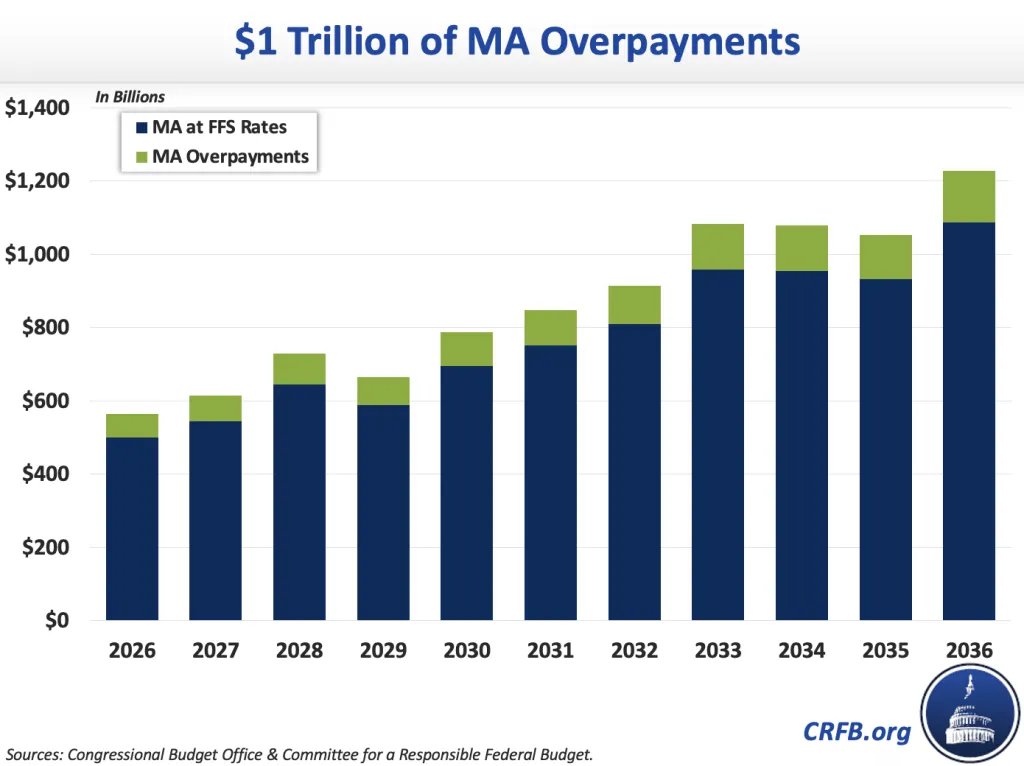
CBO Analysis Suggests $1 Trillion in Medicare Advantage Overpayments

 A recent Congressional Budget Office (CBO) analysis projects that the federal government will pay between 5% and 10% more for Medicare Advantage (MA) enrollees than traditional Medicare (TM), and estimates that for a given person MA costs about 15% more than TM. This suggests the federal government will spend about $1 trillion on MA overpayments over the next decade, which is in line with other estimates. Reducing these overpayments can help to lower health care costs and reduce budget deficits.

Medicare Advantage (MA) is the privately-managed, government-funded alternative to traditional fee-for-service Medicare (TM). Although MA can often be more efficient than traditional Medicare, it ends up being more costly for the federal government due to upcoding, favorable selection, the quality bonus program, and other features. The risk-adjusted payments made to the MA plans tend to far exceed the likely actual cost of delivering health care to beneficiaries.

Earlier this year, the Medicare Payment Advisory Commission (MedPAC) estimated that MA cost the federal government 14% more in 2026 than TM for beneficiaries with the same health status. We estimated that this would translate into $1.3 trillion of additional federal costs over a decade, after accounting for the likely growth of the component parts.

In their latest “Federal Subsidies for Health Insurance 2026 to 2036,” CBO includes an appendix on MA spending with similar findings to MedPAC. As a starting point, CBO estimates that the “average per-beneficiary spending” will be 5% to 10% higher for MA enrollees compared to TM beneficiaries over the next ten years, which would translate into roughly $550 billion of federal costs over a decade. This difference is largely driven by “upcoding” – where plans increase the number of diagnosis codes to make a patient look sicker to increase payments – which CBO believes leads to about 4% more in costs even after accounting for coding intensity adjustments designed to counter this issue.

Yet, this difference in coding adjustment understates how much more costly MA is than FFS. CBO’s review of the literature finds that many MA enrollees are healthier and/or predisposed to use fewer health care services than their TM counterparts – a point that we and MedPAC and others have made before. This favorable selection issue means that MA should cost less than TM for the same beneficiary.

One way to approximate the total excess cost of MA relative to TM is to consider how much more a given beneficiary would cost in a MA plan. Based on a review of the literature, “CBO estimates that if a beneficiary switched from Medicare FFS to MA, federal spending on that enrollee would increase by roughly 15 percent.” Applied to the entire MA population and held steady over the decade, we estimate this amounts to roughly $1 trillion of overpayments. It also amounts to roughly $150 billion in higher Part B premiums, though some of those higher base premiums are offset by premium reductions offered to beneficiaries within MA plans.

Of course, these are just estimates, and other studies have found MA overpayments to be somewhat higher or somewhat lower. But importantly, there is no dispute over the fact that MA costs the federal government significantly more than TM. CBO undertook an extensive review of the available literature that showed that every study found some degree of overpayments to MA: “all published studies of differential coding show that the CMS adjustment does not fully correct for coding differences.

Given the strong evidence of substantial MA overpayments and the country’s high and rising national debt, policymakers should pursue reforms to lower MA costs. This could include our proposals to more accurately account for coding intensity and reform the Quality Bonus Program, Representative Doggett’s (D-TX) Saving MEDICARE Act, Representative Schweikert’s (R-AZ) Reform the Medicare Advantage Program Act, the bipartisan NO UPCODE Act support by Senators Cassidy (R-LA) and Merkley (D-OR), or any number of other options.

As lawmakers look for ways to address waste, fraud, errors, and abuse, MA is a ripe area for changes to curb excessive spending. At a time of high and rising debt and health care costs, it is important to make meaningful reforms to this program.

https://www.crfb.org/blogs/cbo-analysis-suggests-1-trillion-medicare-advantage-overpayments

FDA Clears Novel Alzheimer's Blood Test

 The FDA cleared the PrecivityAD2 blood test to help diagnose Alzheimer's disease as part of a standard clinical workup, C2N Diagnostics announced Thursday.

The test, which measures plasma amyloid beta and tau peptide ratios to assess the likelihood of brain amyloid plaques, is the first Alzheimer's blood-based biomarker for people as young as 40 with cognitive symptoms.

PrecivityAD2 is indicated for adults with signs or symptoms of cognitive impairment being evaluated for Alzheimer's or other forms of cognitive decline. It's intended to be used with a clinical assessment to help healthcare professionals identify patients with amyloid pathology, not as a screening or standalone diagnostic test.

The test uses high-resolution mass spectrometry to quantify Alzheimer's disease biomarkers in blood, producing an outcome called the amyloid probability score 2 (APS2). The APS2 incorporates the ratio of plasma phosphorylated tau 217 (p-tau217) relative to non-p-tau217, combined with a plasma amyloid-beta 42/40 ratio, to rule in or rule out Alzheimer's disease.

In a validation study of 1,142 people with signs or symptoms of cognitive decline, PrecivityAD2 showed a 97.6% positive predictive value (rule-in) and a 93.1% negative predictive value (rule-out) to detect brain amyloid plaques using dual cutoffs measured against amyloid PET or cerebrospinal fluid testing, C2N reported. The test was effective at detecting plaques in a wide range of patients, including people with mild symptoms and those with more advanced cognitive impairment.

PrecivityAD2 showed consistent diagnostic performance as age increased and in people with comorbidities like atrial fibrillation, autoimmune or inflammatory disease, chronic heart failure or kidney disease, coronary heart disease, depression, diabetes, dyslipidemia, history of cancer, history of stroke or transient ischemic attack, hypertension, or obesity, the company added.

A recent study in Sweden showed the test was useful to help primary care physicians rule out Alzheimer's disease. Earlier research showed the APS2 score performed better than primary care doctors or dementia specialists in detecting Alzheimer's disease among people with cognitive symptoms.

In 2025, the FDA cleared two other diagnostic blood tests for Alzheimer's disease: one to help clinicians identify Alzheimer's in people with signs and symptoms, the other to rule out Alzheimer's disease in primary care.

Lab-developed tests not approved by the FDA are also on the market. Last year, the Alzheimer's Association issued guidance outlining sensitivity and specificity parameters for Alzheimer's blood tests to either triage or diagnose people with cognitive impairment.

An estimated 19 to 20 million U.S. adults 65 and older, and hundreds of thousands more between the ages of 45 and 65, have cognitive impairment and may benefit from an early diagnosis, C2N Diagnostics noted.

PrecivityAD2 can be ordered by healthcare professionals experienced in evaluating patients with cognitive impairment, the company stated. It currently is available as a lab-developed test; the FDA-cleared test version is expected to be available later this year.

https://www.medpagetoday.com/neurology/alzheimersdisease/122701

'In Cancer Trials, Federal & Industry Sponsors Play Complementary Roles'

 A comparative study of the cancer clinical trial portfolios supported by federal funding versus industry funding reveals they have distinct, interdependent roles in cancer research.

The work, “Federal and Industry Sponsorship in US Cancer Clinical Trials,” is published online August 20th by JAMA Oncology.

The analysis found that, whereas industry trials were more likely to examine single-agent treatments, federally supported trials were more likely to focus on non-treatment interventions, diagnostics, health services research, cancer prevention, screening, or supportive care.

Federally funded trials were also more likely to study multimodality treatment regimens or treatment de-escalation strategies, or to address the needs of patients with rare or pediatric cancers.

Further, federally sponsored trials were more commonly phase II trials, whereas industry trials were more often very early phase I trials or later stage phase III trials. 

The authors say their findings are consistent with a model in which federal and industry funders contribute complementary and essential functions to the cancer research ecosystem.

“Federally sponsored research brings much of the basic science discovery, trial infrastructure and early efficacy studies, while industry leads in late-stage determinative trials resulting in regulatory approvals,” said lead author Joseph M. Unger, PhD, a biostatistician and health services researcher with SWOG Cancer Research Network and professor in the Public Health Sciences Division at Fred Hutch Cancer Center. “Federally sponsored trials may then test combinations of newly approved drugs with each other or with different treatment approaches such as surgery or radiation, extending therapeutic discovery.” 

Unger led a team that analyzed data from thousands of cancer trials registered in the ClinicalTrials.gov database from 2008 through 2024. The team identified interventional studies that had opened at one or more U.S. sites. 

Trials were classified as federally sponsored if their lead sponsor was a federal agency, such as the National Institutes of Health. Trials with a pharmaceutical or biotech company as lead sponsor were coded as industry trials.

Among 11,681 trials that met the researchers’ criteria, 9,569 (81.9 percent) were industry sponsored. Overall, about 90 percent of all trials had cancer treatment as their primary purpose. 

Among the most marked differences between the two trial portfolios, federally supported trials were much more likely than industry trials to investigate

  • dose de-escalation approaches, which ask whether a drug or other intervention can be taken less frequently, for less time, or at a lower dose without compromising patient outcomes; 
  • regimens combining multiple modes of treatment – drug treatment followed by surgery followed by radiation therapy, for example;
  • non-drug interventions, such as surgery, transplant, or behavioral interventions.

Federal trials were also considerably more likely than industry trials to study childhood cancers or rare cancers (cancers with fewer than 40,000 U.S. diagnoses per year), although the distance between federal and industry sponsors on rare cancer trials has shrunk over the time period studied.

Although they serve a unique and vital role, federally sponsored trials represent a much smaller share of the overall U.S. trial portfolio than industry-sponsored trials; compared to federally supported trials, about 9 out of 10 participants enroll in industry-sponsored trials. 

Given the increasing dominance of industry in cancer clinical research and its core interest in conducting single-agent drug trials, the authors express concern that many research questions important for improving patient care but not commercially attractive may go unanswered.

The work was supported by the Public Health Sciences Division of Fred Hutch Cancer Center and The Hope Foundation for Cancer Research.

In addition to Dr. Unger, contributors to the work include Hong Xiao, PhD, and Michael L. LeBlanc, Ph.D. – both at the SWOG Statistics and Data Management Center and the Fred Hutch Cancer Center – and Dawn L. Hershman, MD, MS, of Columbia University Irving Medical Center.

Reference:
Joseph M. Unger, PhD; Hong Xiao, PhD; Michael L. LeBlanc, PhD; Dawn L. Hershman, MD. “Federal and Industry Sponsorship in US Cancer Clinical Trials.” JAMA Oncol, published online Aug 20, 2026. https://doi.org/10.1001/jamaoncol.2026.3026


https://www.swog.org/news-events/news/2026/08/20/cancer-trials-federal-industry-sponsors-play-complementary-roles