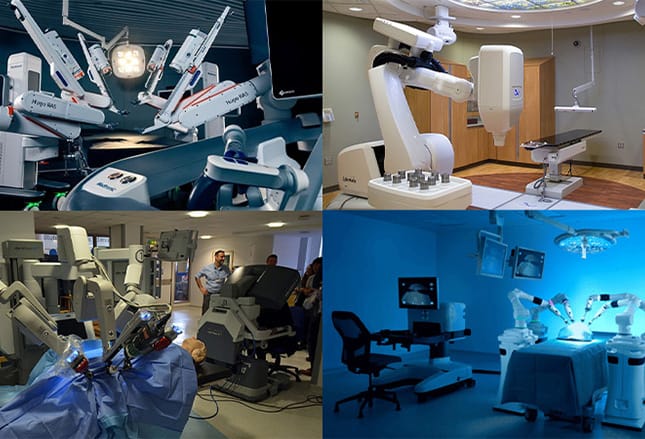
1 of 10
Robots are no longer the stuff of science fiction; they have become a routine part of clinical care. In hospitals today, they are being used for highly precise surgeries, assistance with complex procedures, targeted radiation therapy for tumors, medication inventory management, and day-to-day patient care.
But which robotic systems are truly established in practice? What can they do, and where do they fall short? This slideshow takes a closer look at the most important robotic systems in hospitals, from the early pioneers of robot-assisted surgery to the latest AI-enabled and sensor-based platforms.
2 of 10
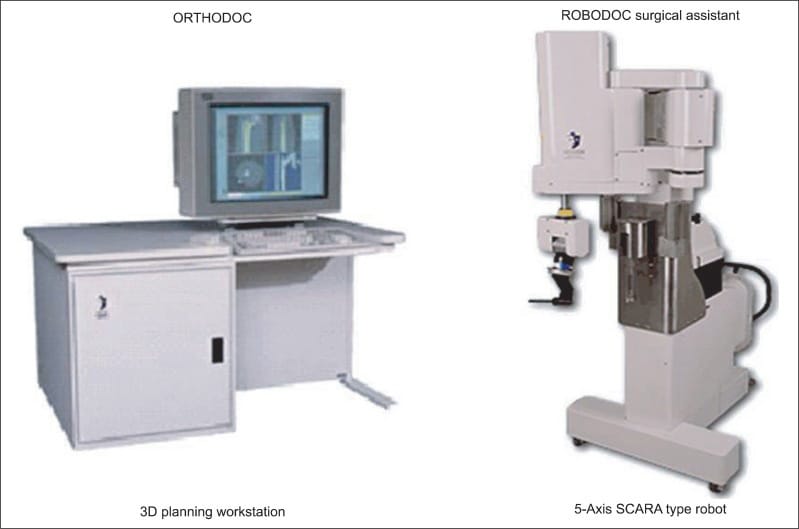
Robodoc was one of the first largely autonomous surgical robots. In the 1990s, the system assisted in the precise preparation of hip and knee replacements. © Sugano, N. (2013). Computer-assisted orthopaedic surgery and robotic surgery in total hip arthroplasty. Clinics in Orthopedic Surgery, 5(1), 1–9, CC BY-NC 3.0
How It All Began: The First Robots in the Operating Room
April 11, 1985, is considered a milestone in medical history. On that day, a robot performed surgery in a hospital for the first time. In Long Beach, California, a surgeon used image data from a CT scanner to control the arm of the PUMA 560 industrial robot. The robot placed a biopsy needle with high precision into a patient’s brain to extract tissue samples.
Progress continued in 1994 with Robodoc, a system capable of performing many steps largely autonomously — and all without AI. After a CT-based scan of the patient, the robot milled the bone cavities with high precision for hip and knee implants. However, the technology was ahead of its time and not without complications. Today, Robodoc has long been on display in a technology museum. In the 1990s, robotic systems were generally still considered inferior to the skills of experienced surgeons.
3 of 10
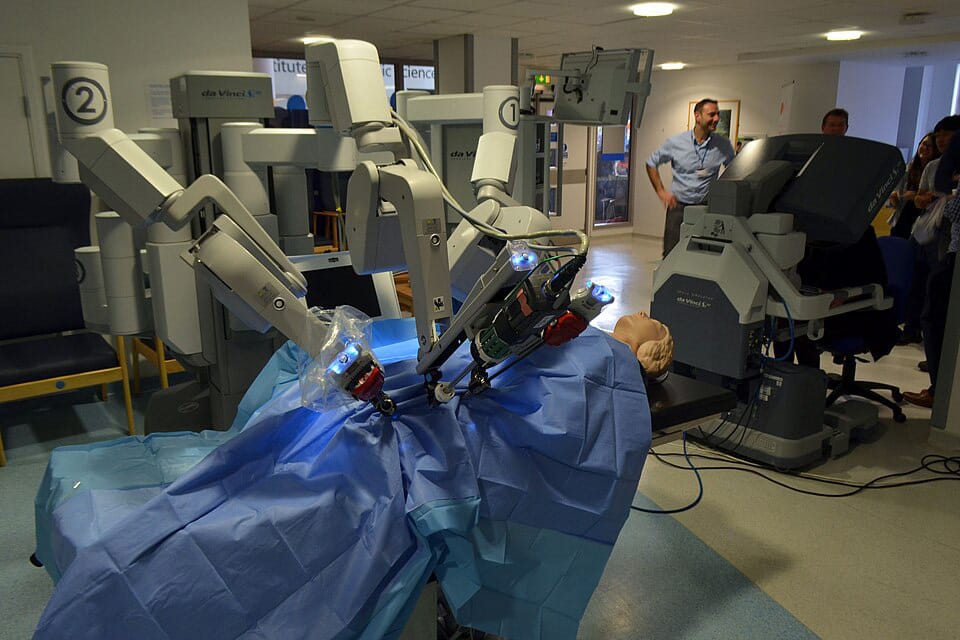
A da Vinci surgical system at Addenbrooke’s Treatment Centre during the Cambridge Science Festival. © Von Cmglee/Wikipedia, CC BY-SA 3.0
The Market Leader: da Vinci Surgical Systems
Hardly any surgical robot has shaped modern surgery as much as the da Vinci robotic surgical system. Named after the Italian polymath Leonardo da Vinci, it is one of the longest-used robotic systems in medicine. Since its market launch in 1999, the technology has been continuously refined and is now in its fifth generation with the da Vinci 5.
The system was originally developed with the goal of performing surgeries over long distances — for example, in crisis or war zones. In reality, however, it has primarily established itself as an assistive system for minimally invasive procedures and is now widely used, particularly in Europe and the US.
During surgery, the surgeon sits at a control console and controls the four robotic arms from there. A high-resolution, three-dimensional camera provides an image of the surgical field magnified up to 10 times. The surgeon’s movements are transmitted to the instruments in real time, while unintended hand movements and tremors are automatically filtered out.
Despite its technical capabilities, the system does not operate autonomously: every step is controlled by the surgeon. However, the manufacturer, Intuitive Surgical, points out that the latest-generation software platform is already designed for future AI applications. Initial analysis functions based on deep learning algorithms are already integrated. In addition to the traditional systems, Intuitive Surgical also offers the Single Port version, a variant specifically developed for procedures performed through a single access point.
While the da Vinci was initially used primarily in urology and gynecology, its range of applications has since expanded significantly. Today, the system is used in general, visceral, and thoracic surgery, among other fields.
The system comes with a substantial upfront price tag of about €2 million, or roughly $2.31 million. Added to that are ongoing expenses, since many of the instruments have only a limited number of reuses. Training also requires a significant investment of time, with surgeons needing intensive instruction before they can operate the platform safely and effectively. Still, once that learning curve is behind them, the ergonomic controls can make even lengthy procedures more comfortable for the surgeon.
The da Vinci system is now considered the gold standard in robotic-assisted surgery. New surgical robots are often compared directly to it. Numerous studies attest to the technology’s benefits for patients. These include reduced blood loss; smaller incisions; faster recovery after surgery; and high precision during complex procedures, such as tumor resections. In addition, hospitals report that new surgical procedures can be established relatively quickly with the help of the platform.
At the same time, cost-effectiveness remains a topic of debate. For example, older studies concluded that while robot-assisted hysterectomies achieved comparable treatment outcomes to conventional procedures, they incurred higher costs.
Despite their high precision, even modern surgical robots are not without risks. Researchers recently analyzed data on all reported incidents during da Vinci surgeries between 2015 and 2025. During this period, an estimated 15.9 million procedures were performed using the system. A total of 66,651 so-called Manufacturer and User Facility Device Experience incidents were recorded: that is, reports of malfunctions, complications, or other adverse events. This corresponds to approximately 420 reports per 100,000 procedures, or 0.42% of all surgeries. Among the 420 reports were 55.2 injuries, 3.1 deaths, 21.8 switches to alternative surgical procedures, and 2.1 abandoned procedures per 100,000 surgeries.
4 of 10
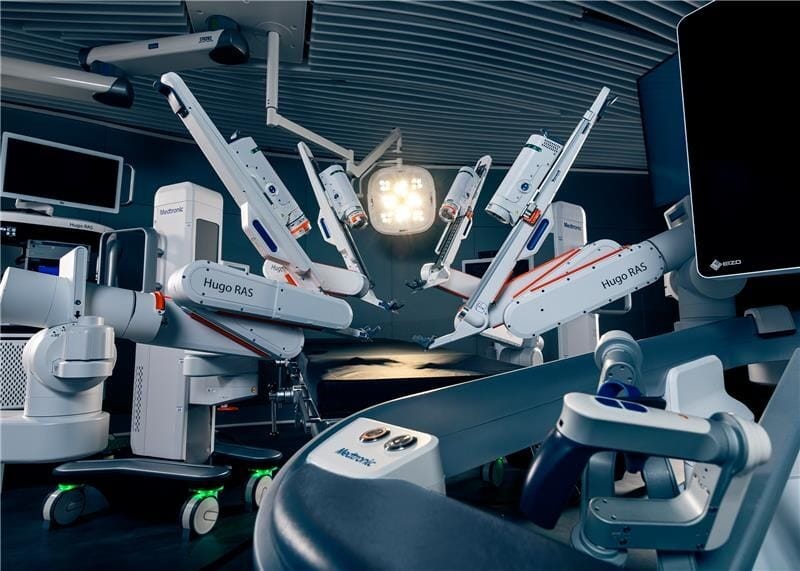
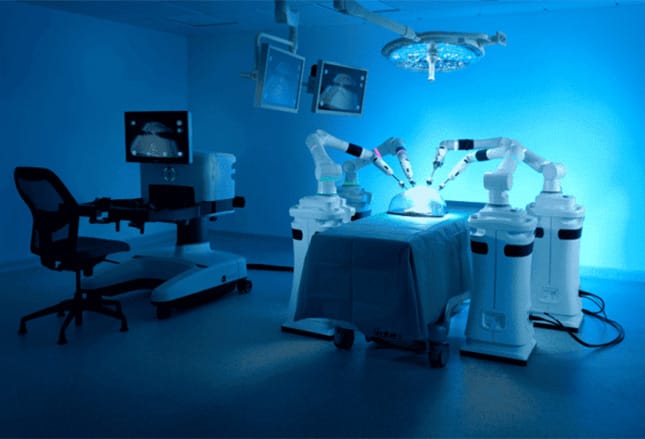
The Hugo RAS System from Medtronic. © Medtronic
Hugo RAS: Flexible Robotics From Space Exploration
“Hugo RAS” stands for "Hugo Robotic-Assisted Surgery System," from medical technology manufacturer Medtronic. The system’s roots date back to the 1990s and, surprisingly, do not lie in the operating room but in space exploration. The foundation for the system stemmed from the Institute of Robotics and Mechatronics at the German Aerospace Center, which at the time was developing particularly sensitive and lightweight robotic arms for use in space. This technology later gave rise to MIRO, a robotic arm specifically designed for medical applications, which in turn served as the technological basis for Hugo RAS.
Unlike many other surgical robots, Hugo RAS uses a modular approach. The individual robotic arms are mobile and can be flexibly positioned in the operating room depending on the procedure. The number of arms used can also be adapted to the specific operation. The system is controlled by a surgeon at a console that provides a high-resolution, three-dimensional, and highly magnified image of the surgical field.
Like other modern surgical robots, Hugo RAS is designed primarily for minimally invasive procedures. Its applications include urology, gynecology, and general surgery. The system is currently CE marked for the European market. In the US, the technology is still undergoing the approval process; there, Hugo RAS is currently classified by Medtronic as an investigational device and is not yet commercially available.
The scientific data on the system have been positive so far. In a comparative study on robot-assisted rectal resection, patients who underwent surgery with Hugo RAS reported less pain 6 months after the procedure than patients who had undergone conventional laparoscopic surgery. In addition, they showed better functional outcomes in terms of urinary and sexual function. The number of adverse events was also lower in the study.
Numerous other studies have reported favorable patient outcomes — including in comparison with da Vinci — as well as good usability and learnability.
5 of 10
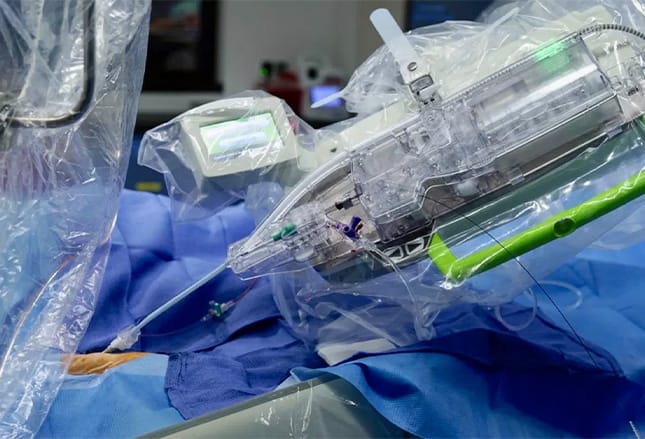
The Versius surgical robotic system. © CMR Surgical
Versius: The Compact Robot
With the Versius surgical robotic system, the British company CMR Surgical has established one of the newest challengers in the robotic surgery market. Since its market launch in 2019, the system has been used in numerous countries, including Europe, India, Australia, New Zealand, Chile, and Brazil.
Like Hugo RAS, the Versius surgical system also follows a modular approach. The individual robotic arms can be positioned independently of one another in the operating room and can be flexibly adapted to the requirements of a procedure. The system is controlled via a console that provides the surgeon with a high-resolution, three-dimensional view of the surgical field. Its range of applications largely corresponds to that of other established systems such as da Vinci or Hugo RAS: Versius was developed primarily for minimally invasive laparoscopic procedures.
A key difference from the market leader, da Vinci, lies in the system’s mobility. Both the robotic arms and the control console can be moved flexibly, eliminating the need for specially equipped operating rooms. The manufacturer particularly highlights the compact design, which is intended to facilitate use in a wide variety of hospital settings.
According to CMR Surgical, more than 40,000 procedures have been performed worldwide using Versius. The system is used in urology, gynecology, and general and visceral surgery, among other fields. Even more complex pelvic surgeries, such as prostatectomies, have been successfully performed using the platform.
Comparative studies suggest that Versius delivers intraoperative performance comparable to that of Hugo RAS and Da Vinci. Studies have also confirmed that the system achieves good results for hysterectomies.
6 of 10
The CorPath GRX1 endovascular robotic system from Corindus, a subsidiary of Siemens Healthineers. © Siemens Healthineers
CorPath GRX: Precision in the Cardiac Catheterization Lab
Not all medical robotic systems are used in the operating room. The CorPath GRX system was developed specifically for procedures in the cardiac catheterization lab and is designed to enable one thing above all else: maximum precision with minimal stress on patients and medical staff.
Introduced in 2012, the first-generation system brought a new level of precision to catheter-based heart procedures. Using a robot-assisted platform, operators can steer catheters, guidewires, and balloons through the vascular system to the heart with exceptional control. Once there, the technology can be used to reopen narrowed or blocked vessels and to place stents with high accuracy. Throughout the procedure, the operator remains in control, closely monitoring and directing every movement of the system.
As with conventional cardiac catheterization procedures, the path through the blood vessels is continuously monitored using fluoroscopy. The key difference: Whereas during conventional procedures, doctors stand directly next to the patient and are exposed to radiation, with CorPath GRX they can sit safely in a control room outside the procedure room. From there, they direct the procedure via a special control console.
In 2017, Corindus Vascular Robotics (originally an Israeli company) launched the second generation of the system, which remains the current version today. The company later relocated its headquarters to the US and was acquired by Siemens Healthineers in 2019 for approximately $1.1 billion — one of the largest acquisitions in the medical technology sector at the time.
The particular strength of CorPath GRX lies in its precision. The system allows for movements accurate to the micrometer and, with this precision, improves the quality of surgeries and thus also patient outcomes.
Economically, however, expectations in the field of interventional cardiology apparently fell short of hopes. In 2023, Siemens Healthineers discontinued further development of the system for coronary vascular applications. Nevertheless, the underlying technology is still considered promising. In the future, it is expected to be used more extensively in the neurovascular field.
7 of 10
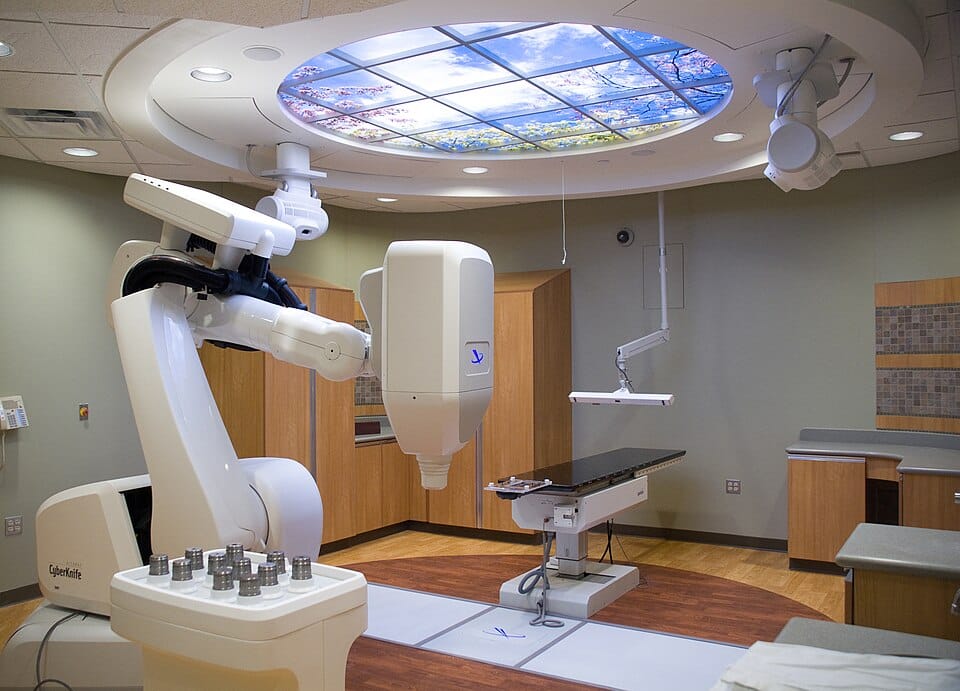
Robotic CyberKnife at St. Mary's Of Michigan Photo provided by Saginaw Future © CC BY 2.0
CyberKnife: The Robot That Fights Tumors
The CyberKnife system is one of the best-known examples of how robotics and radiation therapy are converging. The technology combines a linear accelerator from the US company Accuray Incorporated with a highly maneuverable robotic arm from the German industrial robot manufacturer KUKA (a global automation leader founded in 1898). Together, they enable one of the most precise forms of tumor radiation therapy currently available.
At its core, CyberKnife consists of a compact linear accelerator that generates high-energy photon beams and is mounted on a robotic arm with six degrees of freedom. Unlike conventional radiation therapy devices, this allows the beam to be directed at the tumor from hundreds of different angles. This enables highly precise treatment of both malignant and benign tumors — even in anatomically challenging locations.
CyberKnife has been approved in the US for the treatment of tumors throughout the body since 2000, with approval in Europe following 2 years later. In Germany, the technology is now in use at multiple sites, including Charité–Universitätsmedizin, Berlin, Germany, and the university hospitals in Cologne and Hamburg.
The system’s particular strength lies in its autonomous control. During treatment, two x-ray systems continuously capture stereoscopic images of the patient. These are compared in real time with previously acquired CT scans. Based on these data, the system automatically moves both the robotic arm and the treatment table to keep the tumor precisely in the beam’s focus at all times. Even movements caused by breathing are continuously compensated for. According to the manufacturer, CyberKnife achieves a targeting accuracy of up to 0.2 mm.
In many cases, a single high-dose treatment or a small number of treatment fractions is sufficient to selectively destroy the tumor. This procedure is known as “radiosurgery.”
The third generation of the system is currently in use. CyberKnife is considered an advancement of the Gamma Knife procedure, which was originally limited to the treatment of brain tumors and was operated without robotic assistance.
Today, the applications of CyberKnife extend far beyond neurosurgery. The system is used to treat tumors in nearly all regions of the body, particularly where the highest precision is required — such as in the brain, along the spine, in the lungs, or near sensitive organs.
Studies confirm that the technology delivers good treatment outcomes and a high level of safety. Researchers particularly highlight the ability to better spare healthy tissue and thereby reduce side effects. Studies suggest that the risk for radionecrosis— tissue damage caused by radiation — can be reduced compared to other procedures.
8 of 10
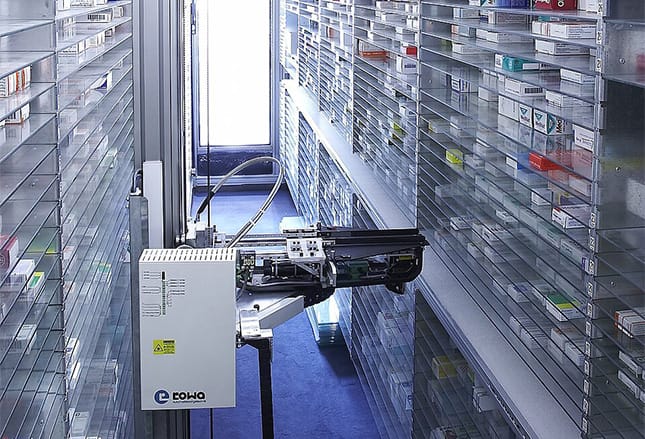
A machine from BD Rowa automates storage, management, and dispensing of medications in pharmacies. © Dominik Scheid - Rowa Automatisierungssysteme GmbH & Co. KG/Wikipedia, CC BY-SA 2.0 de
The Hardworking Warehouse Workers: Robots in the Hospital Pharmacy
When people hear the term “medical robots,” most think of operating rooms and high-tech surgery. In fact, automated order-picking systems in hospital pharmacies are among the oldest and most widespread robotic applications in healthcare. Since the 1990s, they have been replacing traditional pharmacy cabinets in many places and handling a large portion of storage and logistics tasks.
The systems store medication packages in a separate automated storage area, sort them automatically, and make them available as needed. Robotic arms handle storage and retrieval of medications, as well as their dispensing at special pickup stations. At the same time, the systems continuously monitor inventory levels and can trigger reorders largely automatically.
These systems offer significant advantages, particularly in hospitals. The often very extensive medication inventories of central hospital pharmacies can be managed more efficiently, storage space can be utilized more effectively, and picking errors can be reduced. At the same time, pharmacists and pharmaceutical staff are relieved of time-consuming routine tasks and can focus more on pharmaceutical services and patient care.
Today, this technology is used not only in hospital pharmacies but also increasingly in community pharmacies.
9 of 10
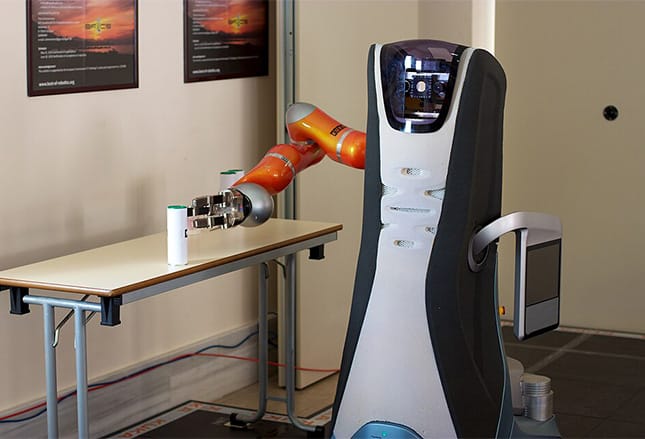
The Care-O-bot assists nursing staff with service and transport tasks in the hospital. © Jiuguang Wang from Pittsburgh, Pennsylvania, United States/Wikipedia, CC BY-SA 2.0
Helping Hands: Robots as Assistants in Nursing Care
Humanoid robots that independently care for people still seem like something out of science fiction. In reality, however, robotics has found its way into nursing facilities and hospitals. Although these systems do not yet perform comprehensive nursing tasks, they already assist nursing staff with a wide range of activities.
For example, mobile transport robots are used to deliver meals, laundry, or medications throughout the wards. In addition, so-called social robots are being tested; these are designed to interact with patients, engage in conversation, and in particular help people with dementia stay oriented and remain active.
The Care-O-bot from the Fraunhofer Institute for Manufacturing Engineering and Automation, Stuttgart, Germany, demonstrates just how far this development has come. Now in its fourth generation, this mobile service robot has two arms and humanoid characteristics. It can navigate independently, transport objects, and perform various support tasks in everyday hospital and nursing care settings.
Robotic assistants are also already being used for night shifts. One example is Hermann, developed in Germany, which is designed to support nursing staff during night-time ward monitoring by autonomously patrolling corridors, monitoring patient movement, and alerting staff to potential problems such as falls or unusual restlessness, particularly during shifts with staffing shortages.
10 of 10
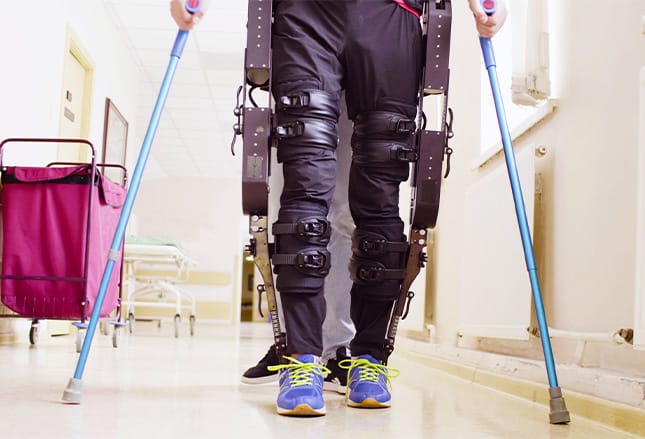
A medical exoskeleton to support gait training during neurologic rehabilitation. © Chudakov | Dreamstime.com
Exoskeletons in Rehabilitation and Care
Not only autonomous robots but also wearable robotics are becoming increasingly important in healthcare and medicine. Among the best-known systems is the Hybrid Assistive Limb exoskeleton, developed by the Japanese company Cyberdyne. This is a robotic assistance system that supports the wearer’s movements using motorized joints. Sensors detect bioelectrical signals from the muscles, enabling the system to recognize intended movements early on and provide targeted assistance. This makes physically demanding tasks — such as lifting, repositioning, or supporting patients — easier and significantly reduces physical strain, particularly on the back. Versions developed specifically for nursing staff have been tested in Japan for several years and are in use at various nursing and healthcare facilities.
In addition to being used to reduce the workload on nursing staff, exoskeletons are also playing an increasingly important role in medical rehabilitation. Medical exoskeletons assist patients who have had stroke, those with spinal cord injuries, and those with neurologic conditions such as multiple sclerosis or Parkinson’s disease. They enable intensive, repeated gait and movement training that can promote rehabilitation, improve mobility, and increase the independence of those affected.
By combining robotics with physical therapy exercises, movement patterns can be trained with greater precision and tailored to the individual needs of patients. Studies show that robot-assisted exoskeletons represent a promising complement to conventional therapeutic methods, particularly in neurologic rehabilitation, and can improve mobility.
https://www.medscape.com/p11/inside-rise-robotic-systems-modern-hospitals-2026a1000rue

No comments:
Post a Comment
Note: Only a member of this blog may post a comment.