Search This Blog

Saturday, December 14, 2019

Myriad’s Polygenic Risk Score Personalizes Risk of Breast Cancer

Myriad Genetics, Inc. (NASDAQ: MYGN), a leader in molecular diagnostics and precision medicine, announced that results of a new validation study of the company’s polygenic risk score (PRS) for breast cancer were presented at the 2019 San Antonio Breast Cancer Symposium (SABCS) in San Antonio, Tx.  The key finding is that the PRS significantly improves the precision and accuracy of breast cancer risk estimates for women of European ancestry who have pathogenic variants (PV) in high- and moderate-penetrance breast cancer genes.
“Our goal is to help women understand their risk of breast cancer so that they can take steps to live longer, healthier lives.  Women who have a family history of breast cancer should consider hereditary cancer testing with the myRisk Hereditary Cancer test,” said Jerry Lanchbury, Ph.D., chief scientific officer of Myriad Genetics.  “In this landmark study, we demonstrated that for women who test positive for a mutation in one of the five most common breast cancer genes, there are additional genetic factors called single nucleotide polymorphisms (SNPs) that can further influence their lifetime risk of breast cancer.”
Myriad Poster Presentation
Title:  Polygenic Breast Cancer Risk Modification in Carriers of High and Intermediate Risk Gene Mutations.
Presenter:  Elisha Hughes, Ph.D.
Date:  Saturday, Dec. 14, 2019, 7:00–9:00 a.m.
Location:  Poster P6-08-07
This validation study evaluated the 86-SNP PRS as a breast cancer risk factor for women who carry PV in the BRCA1, BRCA2, CHEK2, ATM and PALB2 genes and for PV-free women.  The analysis included data from 152,012 women of European ancestry who received a myRisk® Hereditary Cancer test as part of their clinical hereditary cancer risk assessment.  The results demonstrated that the 86-SNP PRS significantly modified the breast cancer risk for women with pathogenic mutations in the five tested breast cancer genes (p-value <10-4).  For some women, the PRS significantly increased the gene-based risk of breast cancer, while in others the gene-based risk was reduced (see Graph 1).  Importantly, the greatest PRS risk-modification was observed in carriers of CHEK2ATM and PALB2 mutations with some women reaching the risk levels associated with BRCA1 and BRCA2 mutations.

New Study Shakes Up Thinking on Hormone Replacement Therapy

The ongoing debate about postmenopausal hormone therapy and breast cancer risk may have turned even more muddy: A large, new study suggests that two different types of hormone therapy have opposite effects on women’s long-term risk of the disease.
The researchers found that combined hormone replacement therapy (HRT) — with estrogen and progestin — increases the risk of breast cancer, with effects that last for years after women discontinue the therapy.
On the other hand, women who take estrogen alone appear to have an equally long-lasting decrease in their breast cancer risk.
The findings come from a long-term follow-up of the Women’s Health Initiative (WHI) — a major U.S. government-funded project begun in the 1990s that tested the health effects of hormone replacement therapy. One trial randomly assigned over 16,000 women aged 50 to 79 to take either combined HRT or placebo pills. The other involved close to 11,000 women the same age who were given either estrogen therapy alone or placebos.
Before the WHI, doctors had thought that menopausal hormone therapy — which helps control hot flashes — had other health benefits, including a lower risk of heart disease.
But the initial findings from the WHI made waves when they instead uncovered higher disease risks: Combined HRT raised women’s odds of developing heart disease, stroke, blood clots and breast cancer.
The picture was different with estrogen-only therapy: It raised the risk of blood clots and stroke, but did not increase heart risks. In addition, it seemed to lower the odds of developing breast cancer.
But only certain women can take estrogen-only therapy, namely, those who’ve had a hysterectomy, since using estrogen by itself raises the risk of uterine cancer.
As if that weren’t complicated enough, things have gotten murkier over the years. A number of observational studies — which followed women in the “real world” who opted for hormone therapy or not — have found that estrogen-only therapy is associated with a higher breast cancer risk.
Enter these latest findings from the WHI. They show that for years after stopping combined HRT, women continue to face an increased risk of breast cancer. Meanwhile, the reduced risk seen with estrogen-only therapy also continued.
“So, who’s right? This big clinical trial or those large observational studies?” asked Dr. Rowan Chlebowski, the lead researcher on the new analysis.
Unfortunately, there is no clear answer, according to Chlebowski, chief of medical oncology at Harbor-UCLA Medical Center, in Los Angeles.
He is to present the findings Friday at the annual San Antonio Breast Cancer Symposium. Such research is considered preliminary until published in a peer-reviewed journal.
“Overall,” Chlebowski said, “this information suggests that combined HRT is a little worse than we’d thought, and estrogen alone is probably a little safer than we’d thought.”
Trial participants on combined HRT typically used it for about five years. Over 18 years of follow-up, those women were 29% more likely to develop breast cancer.
Women on estrogen-only typically used it for seven years. Over 16 years, they were 23% less likely to be diagnosed with breast cancer, the findings showed.
So what does it all mean? Given the overall body of evidence, experts have long advised women against using hormone therapy to prevent any disease.
And that advice still stands, Chlebowski said.
“You should not use hormone therapy to lower chronic disease risks,” he said. “If your menopausal hot flashes are bad enough that you want to try hormone therapy, talk with your doctor about the benefits and risks to you.”
Susan Brown is senior director of education and patient support at the nonprofit Susan G. Komen. The new findings give women another piece of information “to make informed decisions about their health,” she agreed.
“Large population studies are needed to understand the complex impact menopausal hormone therapy has on breast cancer risk and incidence,” Brown said. “We’re encouraged to see the results of research like this.”
More information
The U.S. National Cancer Institute has more on menopausal hormone therapy and cancer.
SOURCES: Rowan Chlebowski, M.D., chief, medical oncology and hematology, Harbor-UCLA Medical Center, Los Angeles; Susan Brown, M.S., R.N., senior director, education and patient support, Susan G. Komen, Dallas; Dec. 13, 2019 presentation, San Antonio Breast Cancer Symposium, San Antonio, Texas

Biopharma has abandoned antibiotic development. Here’s why we did, too.

Timing is Everything
When we launched Octagon Therapeutics in late 2017, I was convinced that the time was right for a new antibiotic discovery venture. The company was founded on impressive academic pedigree and the management team had known each other for years. Our first program was based on a compelling approach to targeting central metabolism in the most dangerous bacterial pathogens. We had already shown a high level of efficacy in animal infection models and knew our drug was safe in humans.
At the time, 12 of the largest 18 biopharma companies had abandoned all antibiotic development efforts, focusing instead on disease-modifying therapies for chronic diseases or cancer. Rather than a negative signal, we believed this thin development pipeline presented an opportunity for small biotechs to fill the void. Weekly headlines were screaming about the rise of “superbugs,” the multi-drug resistant bacteria that cannot be treated with existing medicines. Pew Trusts had published an extensive reporthighlighting superbugs as the next leading global cause of death, eventually claiming more lives than all cancers combined. I was convinced that this clear clinical need would result in real reform in the antimicrobial development space, and that larger players would correspondingly re-enter the market, hungry to pick up first-in-class antibiotic programs.
In addition to a clear clinical need, there had been real movement on generating incentives for antibiotic development, and new funding mechanisms were becoming available. The GAIN Act had recently been signed into law, providing streamlined review and other development incentives for products targeting qualifying pathogens. CARB-X, a public-private effort backed by Gates and BARDA (and others), had been created specifically to fund preclinical antibiotic development efforts. Early companies receiving millions of dollars from CARB-X included Achaogen and Melinta, as well as local Massachusetts players such as Spero, Macrolide, and Tetraphase.
In Short: I Got it Wrong
Octagon was able to raise Seed financing based on our strong data package and founder CVs. However, as we put our heads down and began optimizing our interesting chemical hit, we watched the space further deteriorate:
Spero ($SPRO) had a successful IPO but lost half their market cap in the subsequent 12 months.
Novartis announced that they, too, were abandoning all antibiotic development efforts.
Achaogen ($AKAO) and Paratek ($PRTK) both had NDAs approved for novel antibiotics and saw their stock prices drop sharply in response to the news, as investors anticipated all those pesky expenses related to commercialization.
Months later, Achaogen filed Chapter 11. Commercial stage antibiotic developer Melinta is heading that way as well.
Macrolide pivoted and rebranded to Zikani (their website now has no mention of antibiotics).
Tetraphase ($TTPH) has a new CEO focused on commercialization but has not been able to make their antibiotic product profitable. They have less than 9 months of cash on hand and public markets are betting against them.
And these are the success stories: drug development companies with the skill and good fortune to advance a novel medicine all the way to approval!

Like so many larger biopharma companies, Octagon changed course, putting our promising antibiotic program on the shelf and focusing all efforts on a related approach to treating autoimmunity. The choice was not profit-maximizing; it was existential.
Why Did This Happen?
How has the space gone from bad to worse while rates of multi-drug resistant infection and deaths caused by superbugs steadily increase? Well, it’s actually not entirely clear how many lives are claimed by lack of effective antibiotics. Patients who contract, or succumb to, a resistant infection are severely undercounted. Under the Affordable Care Act, hospitals must pay a penalty for each hospital-acquired-infection (HAI) occurring within their in-patient population. As a result, if a patient dies from a superbug contracted during a procedure such as surgery, the official cause of death may be instead listed as “Complications from Surgery.” Consistent and systemic undercounting of illnesses and deaths from resistant infections further discourages the development of new antibiotics as the number of patients who need these medicines may appear to be very small.
The failure of the market for new antibiotics has also been caused by several economic and commercial factors. Approval incentives were not the only policy included in the GAIN Act. There were also measures designed to promote stewardship, or appropriate use, of new antibiotics. In short, when a new antibiotic becomes available, it should only be used as a last resort to prevent new resistance from arising. This kind of responsible use is a good thing! But stewardship severely limits the number of patients who will receive a new antibiotic and, correspondingly, the potential sales volume.
Insurers pay for in-patient antibiotics as part of a lump sum to hospitals known as a Diagnosis Related Group (DRG). Using a cheap antibiotic increases hospital profit margins, while using an expensive new drug could mean that a hospital might lose money by treating a given patient. As a result, hospitals are incentivized to use cheaper antibiotics whenever possible. This puts significant pricing pressure on new antibiotics, which are one of the only type of medicines paid for like this.
As a result, new antibiotics typically end up with list prices in the $2,000 — $3,000 range (for a one-time cure!) while payers gladly shell out tens or hundreds of thousands for cancer drugs or medicines for rare genetic diseases. Low sales volumes (due to stewardship) and low price points (due to DRG-driven pricing pressures) result in minimal sales for novel antibiotics. Achaogen’s new antibiotic was seeing unimpressive sales of around a million dollars per quarter before the company folded. At these sales figures, the company would have never recouped the cost of developing the drug.
Smart Money is Staying on the Sidelines
This is a complete failure of the market for these critically important products. Programs like CARB-X and the Novo REPAIR Fund, designed to fund risky preclinical work and promote data sharing, are well-meaning but insufficient. Antibiotics are just not worth the cost of development. Without a functioning market, CARB-X and other grant programs are a bridge to nowhere. Venture capital investors know this. VCs will tolerate biology risk, they like clinical risk, but they will not go near a venture where there is major commercial risk of failure. Risk capital is better deployed towards programs addressing large numbers of patients or those that can be expected to receive high price points. No amount of non-dilutive funding can make up for the lack of venture capital and growth capital investment in developing these medicines. Octagon pitched dozens of venture capital firms and watched partners immediately tune out at the mention of antibiotics; there is nothing worse than an investor meeting that is over before it starts.
The lack of venture capital investment into developing these products has further negative consequences. Competition for talent is fierce in the biotech ecosystem. Cash-strapped antibiotic developers may be unable to compete with high profile VC-backed companies on compensation. The most skilled and ambitious scientists will reinvent themselves, joining microbiome companies or synthetic biology startups where they can apply their microbiology smarts. Octagon lost one of our best scientists to organism engineering company, Ginkgo Bioworks. If this trend continues, antibiotic discovery and development may well become a lost art.
Public measures designed to incentivize development of new antibiotics are woefully inadequate. No amount of grant funding will make up for a market that is hopelessly broken. Merck CEO Ken Frazier put it well: “Sometimes new drugs are not available, not because the price is too high, but because it is too low.” New ideas are being explored, such as subscription models that decouple sales from volume while guaranteeing annual minimums, but these are little more than thought experiments at present and may only work in single-payer healthcare systems.
If our industry truly believes we have a responsibility to put patients ahead of profits, we need to work to fix this broken market rather than ignoring the problem in favor of more profitable disease areas. There are major externalities driven by access to new effective antibiotics. Without the ability to treat infections, simple procedures such as C-sections or hip replacements will present enormous risk, and cancer mortality rates will skyrocket. Saving lives should be good business but, in this case, it’s not. Without real market reform, antibiotic development will continue to be uninvestable, and these medicines will not be available to patients who desperately need them.
Isaac Stoner is the co-founder of Octagon, a drug discovery company developing targeted metabolic inhibitors for autoimmune disease. He has spent his career building early stage life sciences companies as a scientist, operator, and investor. 

Friday, December 13, 2019

Novartis Beovu Eye Disease Drug Nears Marketing Approval With CHMP Nod

Novartis AG (NOVN.EB) said Friday that the European Union’s Committee for Medicinal Products for Human Use has given a positive opinion on its Beovu medicine as a treatment for wet age-related macular degeneration, bringing it to the verge of market authorization in the bloc.
The committee recommended that the European Commission approve the medicine to treat the eye disease following positive clinical trial results, the Swiss drug maker said.
In most cases a recommendation by the CHMP leads to marketing approval. Novartis said that it expects a decision to be made within three months.
The U.S. Food and Drug Administration approved Beovu for wet AMD in October.

Bio-Rad ‘making progress’ after ransomware attack

Bio-Rad Laboratories (NYSE:BIO) says it is “making good progress” recovering from a ransomware attack on its network on December 5.
Its website and telephone communications are back online and it has resumed product shipments and order-taking, adding that it has found no evidence of unauthorized access, transfer or misuse of data or personal information.

FDA OKs CV benefit claim for Amarin’s Vascepa

As expected, the FDA approves a cardiovascular (CV) benefit claim for Amarin’s (NASDAQ:AMRN) Vascepa (icosapent ethyl) based on results from the large-scale REDUCE-IT study.
The approved use is as an adjunct therapy to reduce the risk of CV events in adults with elevated triglyceride levels of 150 milligrams per deciliter or higher. Patients must also have either established cardiovascular disease or diabetes and two or more additional risk factors for cardiovascular disease.
Trading has yet to resume.

Glaxo leanest with R&D spend in big pharma – but gets bang for its buck

GlaxoSmithKline’s CEO Emma Walmsley has made great play of her company’s new approach to R&D under the leadership of its guru Hal Barron.
After taking over in 2017 Walmsley is looking for a new direction in research focused on areas such as cancer and respiratory diseases – but according to a new analysis by GlobalData, the UK pharma is the lowest in the top 20 largest drugs firms when it comes to money spent on R&D.
The company’s profits had been propped up for years by the ageing respiratory diseases blockbuster Advair in the US, but its sales are sliding after the FDA finally approved generic rivals following years of delays and knockbacks.
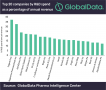
But according to GlobalData’s analysis GlaxoSmithKline’s R&D spend stands at just 12%, a fraction of that spent by Celgene – now part of Bristol-Myers Squibb – where research spend was equal to 37% of its annual revenue.
The US pharma is spending big as it faces up to the patent expiry on its blood cancer blockbuster Revlimid, which generated sales of $9.7 billion in 2018.
But while big pharma’s spend on R&D is increasing, the return on the investment is decreasing according to Madeleine Roche, Associate Global Pharmaceutical Analyst at GlobalData.
She added that GSK may be getting more bang per buck in terms of its R&D investment, with seven drugs in pre-registration phase compared with Celgene’s eight at the same stage of development.
Roche noted that BMS’ $74 billion acquisition of Celgene in November was a bet on the latter’s late-stage pipeline, including three potentially lucrative drugs.
She said: “The acquisition itself takes a gamble on R&D, and contingent value rights issued with Celgene’s shares mean that profitability is hinged on the success of pipeline drugs ozanimod, liso-cel and bb2121.
“Already placing third for percentage R&D spend/annual revenue pre-acquisition, it seems BMS decided to bolster spending with more spending.
“Spare cash, decreasing valuations and key patent losses in the last few years may well have spurred this acquisition from BMS’s side.”