Search This Blog

Friday, January 31, 2020

European advisory group backs Esperion’s bempedoic acid

The European Medicines Agency’s advisory group CHMP has adopted a positive opinion backing approval of Esperion Therapeutics’ (NASDAQ:ESPR) bempedoic acid, branded as Nilembo, for  the treatment of adults with primary hypercholesterolaemia (heterozygous familial and non-familial) or mixed dyslipidemia. The applicant is FGK Representative Service GmbH (manages the regulatory filing process for companies without subsidiaries within the EU and Switzerland).
A final decision from the European Commission usually takes ~60 days.
https://seekingalpha.com/news/3536771-european-advisory-group-back-esperions-bempedoic-acid

NanoViricides up 38% after confirming work on coronavirus treatment

NanoViricides (NYSEMKT:NNVC) is, again, leading coronavirus outbreak-related tickers premarket. Shares are up 38% on average volume after it confirmed that it is working on a treatment for 2019-nCoV, also known as the Wuhan coronavirus.
President & Executive Chairman Anil Diwan, Ph.D. stated that the company has initiated a program but it will need support from governmental and international agencies such as the US CDC, WHO, and Chinese CDC but has not been contacted as yet.
2019-nCov is closely related to SARS-CoV which caused the outbreak in 2002-2003, with the same cell surface receptor, ACE2. According to Dr. Diwan, they have already identified some candidate ligands in their chemical library that can bind to the SARS-CoV spike protein in the same way as ACE2.
Related tickers and premarket movement: Allied Healthcare Products (NASDAQ:AHPI) (+7%), Novavax (NASDAQ:NVAX) (+2%), Alpha Pro Tech (NYSEMKT:APT) (+6%), Co-Diagnostics (NASDAQ:CODX) (+11%), Cleveland BioLabs (NASDAQ:CBLI) (+10%), Inovio Pharmaceuticals (NASDAQ:INO) (+1%)
https://seekingalpha.com/news/3536746-nanoviricides-up-38-after-confirming-work-on-coronavirus-treatment

Worst Month Since August in Sight Amid Virus Outbreak: EM Review

Emerging-market stocks and currencies are heading for their worst month since August amid concerns about the impact of the coronavirus on global growth. The following is a roundup of news and highlights in developing economies for the week ending Jan. 31.

Highlights:

  • The World Health Organization called the outbreak of coronavirus in China a global health emergency, citing the risk that the sometimes-deadly virus could expand to other countries beyond the smattering of cases outside China so far
  • The first official indicator of the Chinese economy in 2020 signaled the nation’s factories were struggling even before the country shut down for the Lunar New Year holidays and the coronavirus outbreak worsened
    • Direct impact of the coronavirus outbreak is mostly on demand as people stay home, while on supply side there have been transport stoppages and workers idled, International Monetary Fund spokesman Gerry Rice said
  • Federal Reserve Chairman Jerome Powell signaled the central bank would pull out all the stops to combat a global disinflationary downdraft, foreshadowing a potential shift toward an easier monetary policy
  • Republican Senator Lamar Alexander said he will vote against calling witnesses in President Donald Trump’s impeachment trial, all but closing off chances that Democrats can secure new evidence and making it increasingly likely the trial will wrap up as soon as Friday
  • Hungary left its monetary policy unchanged as central bankers looked past the weakest forint on record in anticipation that surging inflation will slow
  • The U.S. and Kenya are expected to announce negotiations on a free-trade agreement, America’s first such deal with a sub-Saharan country, a person familiar with the plans said
  • Kenya’s central bank joined its South African counterpart by unexpectedly cutting interest rates, citing well-anchored inflation expectations and an economy that’s operating below its potential. The monetary policy committee reduced its key rate to 8.25% from 8.5%
  • Inflows to exchange-traded funds focused on emerging markets slumped to the lowest in seven weeks as a deadly virus from China spread throughout the world
Asset Moves as of 3:31 p.m. in Singapore on Friday: Weekly January
MSCI EM stocks index -4.4% -4.0%
MSCI EM FX index -0.7% -0.9%
Bloomberg Barclays Global EM Local Currency bond index (up to Thursday) -0.3% +0.2%

Asia:

  • China’s onshore markets were shut for the extended Lunar New Year holidays
  • The spread of the novel coronavirus may negatively affect South Korea’s economy, and sufficient and swift budget support is needed to prevent that, Finance Minister Hong Nam-ki said
    • South Korea will take steps to stabilize markets in case the fear of the coronavirus expands, Vice Finance Minister Kim Yong-beom said
    • Confidence among consumers jumped to the highest level since June 2018 in January
    • The nation’s industrial output rose in December the most in three years and semiconductor stockpiles dropped
    • The U.S. military has begun issuing furlough warnings to almost 9,000 civilian South Korean employees, as Washington and Seoul remain at loggerheads over President Trump’s demand its ally pay more money for its hosting of American troops
  • U.S. Trade Representative Robert Lighthizer will be in India in the second week of February to finalize a trade deal ahead of Trump’s expected visit, according to people with knowledge of the matter
    • India has set up coronavirus screening across 21 airports and in border states
    • The Reserve Bank of India nominates Janak Raj as monetary policy panel member
    • India’s Finance Ministry officials recommended the government cut some subsidies and reallocate spending to sectors where it can help spur demand in the economy, according to people familiar with the matter
  • Foreign direct investment into Indonesia rose 7.7% to 423.1 trillion rupiah ($31 billion) last year from 392.7 trillion rupiah a year earlier
    • Bank Indonesia projects economic growth of 5.5%-6.1% in 2024
    • Central banks cannot be the only game in town amid unprecedented uncertainty and global slowdown, according to Bank Indonesia Governor Perry Warjiyo
    • The central bank continued to intervene in the markets to stabilize rupiah
  • Thailand’s government said it will consider new steps to support the economy, which is on course for disappointing performance because of the coronavirus outbreak, a stalled budget and a sapping drought
    • The Tourism Authority of Thailand expects the number of Chinese visitors to fall by “at least 2 million” amid the outbreak of virus, TAT Governor Yuthasak Supasorn said
    • Thailand “can 100% control” the spread of the novel coronavirus that originated in China, but won’t be complacent, Prime Minister Prayuth Chan-Ocha said
    • The Finance Ministry cut its 2020 economic growth forecast to 2.8% from its October projection of 3.3% and sees the baht averaging 30.50 per dollar this year
    • The Bank of Thailand cut the auction size for some bills and bonds. The maximum issue size per auction for three- and six-month bills and two-year bonds is reduced, the central bank said
    • The nation’s court accepted case seeking ruling on budget vote’s validity
  • The Philippine central bank will go slow on monetary easing this year on signs that economic growth will stay robust and inflation will remain stable, Governor Benjamin Diokno said
  • The virus outbreak could hurt Malaysia’s economy and the nation will monitor food trade movement to safeguard the safety of Malaysians, Economic Affairs Minister Azmin Ali said
  • The outbreak of the coronavirus is unlikely to affect Taiwan’s investments or exports as Taiwanese companies with operations in China may accelerate repatriation of investments back to Taiwan, National Development Council Deputy Minister Cheng Cheng-mount said
    • President Tsai Ing-wen said she has instructed her administration to prepare measures to stabilize equity and foreign-exchange markets to weather the impact of the coronavirus on the economy
    • Economic growth outlook and repatriation of funds by Taiwanese companies indicate ample momentum, Taiwan’s Minister of Finance Su Jain-rong said
    • At least 5 board members of Taiwan’s central bank said they see no need to cut rates, according to the minutes of the Dec. 19 meeting released Thursday

EMEA:

  • Polish economic growth slowed to its worst in three years in 2019, a result that suggests the expansion decelerated to below 3% on an annual basis in the last quarter
    • The European Union’s top official for judicial affairs pressed Poland to help find a solution to their clash over the rule of law, which legal experts warn can isolate the ex-communist country from the rest of the bloc
  • Turkey’s central bank made no changes to its inflation outlook for the end of this year and next, reinforcing a message of confidence that it’s keeping a lid on prices despite a pickup in cost pressures and rapid-fire cuts to interest rates under the new governor
    • President Recep Tayyip Erdogan voiced rare recent criticism of Russia for its conduct in Syria, saying his “patience is running out” over the ongoing bombing of opposition Islamist forces in Idlib province
    • Turkey will take additional measures against “terror attacks” on civilians and its troops in Syria, especially in Idlib, despite agreements with “active nations,” according to National Security Council meeting declaration released late Thursday
  • Moody’s Investors Service said it is looking for signs of a credible medium-term vision for South Africa and said it’s “a bit early” to judge the government’s policy and structural reforms after changing its outlook on the country’s credit ratings to negative almost three months ago
    • South Africa has no fiscal space left and must implement strong budget consolidation and state-owned company reforms to ensure its debt sustainability, the IMF said
  • Saudi Arabia is “closely monitoring” the effect of the Chinese coronavirus outbreak on the oil market, but so far believes the crisis will have a “very limited impact” on global demand
  • Russia plans to help Lebanon cope with its financial crisis and is considering a $1 billion deposit with its central bank, Beirut-based Al-Akhbar newspaper reports, citing information it obtained
  • The United Arab Emirates reported the first cases of the novel coronavirus in the Middle East on Wednesday
  • The Bank of Angola left its key rate unchanged at 15.5%
  • Economic growth in Rwanda could accelerate to more than 10% this year if construction of a planned $1.3 billion airport starts, according to the World Bank, which increased its estimate for 2019 expansion for a second time
  • Zimbabwe’s government has approached the U.A.E. in hopes of selling a stake in its national oil company, according to three company and government officials familiar with the plan. It also wants companies in the U.A.E. to buy more of its gold, they said

Latin America:

  • Argentina’s government has laid out a timeline for its debt negotiations with private creditors, but analysts are skeptical about its ability to meet the March 31 deadline to wrap up talks with bondholders
    • The IMF expects to send staff to Buenos Aires in February for a technical mission as Argentina’s record $56 billion credit line remains on hold
    • The Province of Buenos Aires improved the terms it’s offering bondholders if they agree to accept delayed payments
    • Central bank lowered the floor of its benchmark interest rate for the fifth time under President Alberto Fernandez in an effort to stimulate growth and make credit more accessible.
    • Central bank is forecasting a “significant” slowdown in inflation after consumer prices rose 54% last year
  • Brazil’s Lower House speaker Rodrigo Maia said the tax reform bill is expected to be voted on in April
    • Rapporteur of tax reform in the Lower House said Congress aims to pass the bill in both the House and the Senate in the first half of the year
    • Economy minister Paulo Guedes said the government will send a public sector reform proposal to Congress and will do everything to get the tax reform approved this year
    • Brazil economists lowered their forecasts for both the key rate and inflation this year after activity data disappointed
    • Country received $3.7 billion in foreign direct investment Jan. 1-23, the central bank’s statistics department head said
  • Chile kept its benchmark rate unchanged as the worst social unrest in decades clouds the outlook for economic growth and saps demand for the peso
    • Congress approved a tax bill presented by the administration of President Sebastian Pinera to fund its social agenda and ease months of social unrest
  • Mexico’s economy was flat in the fourth quarter as industrial output shrank, capping an economic contraction in 2019, the first year of President Andres Manuel Lopez Obrador’s term
    • Trump signed into law a new trade pact with Canada and Mexico on Wednesday, sealing a political victory that will help neutralize Democratic attacks on his economic record
    • Retail sales rose 2.1% in November from a year ago, exceeding a 0.4% forecast
  • Peru’s “disappointing” 2019 economic growth figure didn’t accurately reflect strong numbers posted in several key areas, central bank President Julio Velarde said
    • A split new Congress in Peru and a dramatic collapse in support for the opposition Fujimori family may smooth the path of President Martin Vizcarra as he tries to pass economic and judicial reforms in his final 18 months in power
  • Bolivia has depleted its “war chest” of international reserves to the point that it no longer has enough dollars to defend the nation’s fixed exchange rate, according to Fitch Ratings
https://www.bloomberg.com//news/articles/2020-01-31/worst-month-since-august-in-sight-amid-virus-outbreak-em-review

Eisai reports 9M results

Eisai (OTCPK:ESALF): 9M GAAP EPS of ¥255.55.
Revenue of ¥486.07B (+4.0% Y/Y)
https://seekingalpha.com/news/3536742-eisai-reports-9m-results

Facebook will remove coronavirus misinformation

Facebook (NASDAQ:FB) is taking the rare step of removing false claims about cures and prevention methods for the coronavirus, saying such content would violate its ban on misinformation leading to “physical harm.”
Hashtags used to spread misinformation on Instagram will be blocked or restricted, as well as alerts by users who share content about the disease that third-party fact-checkers deem false.
It’s an unusual move for Facebook, which generally limits the distribution of content containing health misinformation through restrictions on search results and advertising, but permits original posts to stay up.
https://seekingalpha.com/news/3536708-facebook-will-remove-coronavirus-misinformation

Arcutis Biotherapeutics prices IPO

Arcutis Biotherapeutics (ARQT) has priced its initial public offering of 9.375M common shares at $17.00 per share, for gross proceeds of ~$159.4M.
The shares are expected to begin trading today on the Nasdaq Global Select Market.
Closing date is February 4.
Underwriters’ over-allotment is an additional 1,406,250 shares.
https://seekingalpha.com/news/3536715-arcutis-biotherapeutics-prices-initial-public-offering

Thursday, January 30, 2020

High and low exercise intensity found to influence brain function differently


High and low exercise intensity found to influence brain function differently
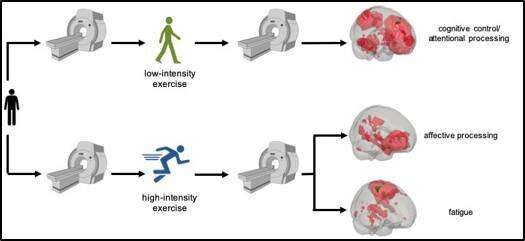
A new study shows for the first time that low and high exercise intensities differentially influence brain function. Using resting state functional magnetic resonance imaging (Rs-fMRI), a noninvasive technique that allows for studies on brain connectivity, researchers discovered that low-intensity exercise triggers brain networks involved in cognition control and attention processing, while high-intensity exercise primarily activates networks involved in affective/emotion processing. The results appear in a special issue of Brain Plasticity devoted to exercise and cognition.
“We believe that will have a major impact for unraveling body-brain interactions,” said lead investigators Angelika Schmitt, MSc, and Henning Boecker, MD, Functional Neuroimaging Group, Department of Radiology, University Hospital Bonn, Bonn, Germany. “These novel methods allow us to ‘look’ directly into the brains of a group of athletes, and, maybe even more importantly, understand the dynamic changes in and function associated with the transition from a sedentary to a .
Twenty-five male athletes underwent individual assessments using an incremental treadmill test. On separate days they performed low- and bouts for 30 minutes. Before and after exercising, Rs-fMRI was used to examine functional connectivity of different brain regions that are linked to specific behavioral processes. Participants also completed a questionnaire to measure positive and negative mood before and after the exercise.
The behavioral data showed a significant increase in positive mood after both exercise intensities and no significant change in negative mood. The results of the Rs-fMRI tests showed that low-intensity exercise led to increased functional connectivity in networks associated with cognitive processing and attention. High-intensity exercise, on the other hand, led to increased functional connectivity in networks related to affective, emotional processes. High-intensity exercise also led to a decreased functional connectivity in networks associated with motor function.
The investigators note that this is the first study to report distinct effects of exercise intensity on specific functional networks within the brain at rest. Future research in this area will help provide neurobiological evidence about what type of exercise intensity is best suited for certain neurological or behavioral modulations and may pave the way for supportive clinical applications in patients or for enhancing brain functional plasticity.

Explore further
Somatic symptom disorder linked to changes in brain functional connectivity

More information: Angelika Schmitt et al. Modulation of Distinct Intrinsic Resting State Brain Networks by Acute Exercise Bouts of Differing Intensity, Brain Plasticity (2019). DOI: 10.3233/BPL-190081