Search This Blog

Saturday, August 22, 2020

Biden: ‘I Would Shut Country Down Again If Recommended By Scientists’

Throughout the Democratic National Convention there was a common, if contradictory, theme: on one hand, the Democrats bashed Trump for his response to the covid pandemic while at the same time they lamented the dismal state of the economy, where millions have lost their jobs and countless corporations have gone bankrupt. Well, which one is it, because you can’t have both: if Trump had enacted a more forceful response to the pandemic, the US economy would have been shut down for longer (as Neel Kashkari now urges, seeking another 6 weeks of shutdowns and setting the stage for the next crisis); alternatively the economy would be firing on all cylinders but the fallout from covid would be much more widespread. 

On Friday afternoon, in an exclusive interview with ABC “World News Tonight”, Biden revealed on which side of the fence he is saying that as president, he would shut the country down to stop the spread of COVID-19 if the move was recommended to him by scientists.

“I would shut it down; I would listen to the scientists,” Biden told Muir Friday, alongside his running mate, Kamala Harris, during their first joint interview since officially becoming the Democratic Party’s presidential and vice presidential nominees.

On Friday afternoon, in an exclusive interview with ABC “World News Tonight”, Biden revealed on which side of the fence he is saying that as president, he would shut the country down to stop the spread of COVID-19 if the move was recommended to him by scientists.

“I would shut it down; I would listen to the scientists,” Biden told Muir Friday, alongside his running mate, Kamala Harris, during their first joint interview since officially becoming the Democratic Party’s presidential and vice presidential nominees.

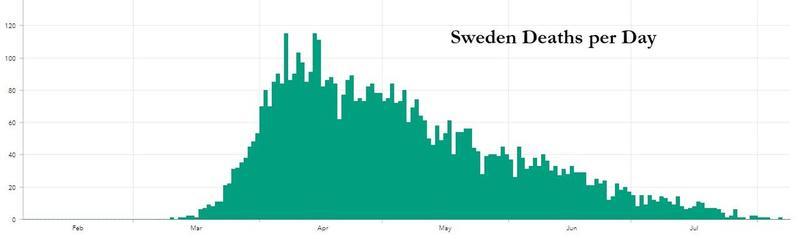
Biden also criticized what he argued is the “fundamental flaw” of the Trump administration’s response to the coronavirus pandemic, that the nation cannot begin to recover economically until the virus and public health emergency is under control, which is strange considering that in isolated cases such as Sweden which did not succumb to the media panic and did not enforce a uniform shutdown – while at the same time not forcing the population to take draconian measures to limit the spread of covid – the economy hit was far less than most of its European counterparts, while the Covid breakout has almost completely faded.


“I will be prepared to do whatever it takes to save lives because we cannot get the country moving, until we control the virus,” Biden added. “That is the fundamental flaw of this administration’s thinking to begin with. In order to keep the country running and moving and the economy growing, and people employed, you have to fix the virus, you have to deal with the virus.”

Biden’s statement brings up one immediate question: which scientists would he listen to? The WHO which, under heavy influence from China, pretended for well over a month that covid was innocuous as the following Feb 23 soundbite from WHO Director Tedros Ghebreyesus confirms:

I have spoken consistently about the need for facts, not fear. Using the word pandemic now does not fit the facts, but it may certainly cause fear. This is not the time to focus on what word we use. That will not prevent a single infection today or save a single life today.

… and only on March 11 – just days before the US announced economic shutdowns – declared the coronavirus outbreak a pandemic (apparently succumbing to “causing fear”). Or perhaps Biden should have listened to scientists like the US Surgeon General Jerome Adams, who on February 29 tweeted “Seriously people- STOP BUYING MASKS! They are NOT effective in preventing general public from catching #Coronavirus.”

Or perhaps he meant listening to scientists like Anthony Fauci who on June 12 said “we know that you don’t need an N95 [mask] if you’re an ordinary person in the street” adding that “masks are not 100% protective.” When confronted with this contradiction in the government’s public-health advice, Fauci said “actually the circumstances have changed,” he said. “That’s the reason why.”

So will Biden shutdown the entire economy, leading to tens of millions more in job losses, just because it is the prevailing opinion circumstance at the time that he should do so?

Or perhaps what Biden meant to say is that as a leader it is his job to weigh costs and benefits of all policy options, as the catastrophic consequences of another economic shutdown could and likely would outweigh the benefits from a draconian response to a disease which as we showed recently has led to virtually no outsized under-40 fatalities, and yet as Jim Reid said in July, it is the “younger people will be suffering most from the economic impact of Covid-19 for many years to come, we wonder how history will judge the global response.”

We wonder too, especially now that we know that if there is another wave of covid in the US – whether domestic, or imported from China again or some other country – the US will have another full-blown economic shutdown, just as Minneapolis Fed president Neel Kashkari has been urging (we also know who Fed chair would be in a Biden administration). 

One final point about science, best laid out on twitter, is that “Science is NOT a magic wand. Especially “science” as it’s practiced today. Bureaucratic science is ALL about consensus. What gets funded is political. What gets published is political.”


Homogeneous diffusion of Covid nonpharma interventions across heterogeneous countries

View ORCID ProfileAbiel Sebhatu, View ORCID ProfileKarl Wennberg, View ORCID ProfileStefan Arora-Jonsson, and View ORCID ProfileStaffan I. Lindberg

PNAS first published August 11, 2020 https://doi.org/10.1073/pnas.2010625117


Significance


We investigate what drives OECD countries to adopt COVID-19 restrictive policies such as lockdowns and school closures, and find that government policies are strongly driven by the policies initiated in other countries. The level of democracy also matters: While strong democracies are slower to initiate restrictive policies, they are more likely to follow the policies of nearby countries. Following the lead of others rather than making decisions based on the specific situation of the country may have led to countries locking down either too early or too late. Conversely, if countries follow each other when easing restrictive policies or reinitiate such policies, there may be a situation where countries adopt epidemiologically suboptimal policies.

Abstract


We analyze the adoption of nonpharmaceutical interventions in the Organisation for Economic Co-operation and Development (OECD) countries during the early phase of the coronavirus disease 2019 (COVID-19) pandemic. Given the complexity associated with pandemic decisions, governments are faced with the dilemma of how to act quickly when their core decision-making processes are based on deliberations balancing political considerations. Our findings show that, in times of severe crisis, governments follow the lead of others and base their decisions on what other countries do. Governments in countries with a stronger democratic structure are slower to react in the face of the pandemic but are more sensitive to the influence of other countries. We provide insights for research on international policy diffusion and research on the political consequences of the COVID-19 pandemic.


Novartis immuno-oncology drug candidate fails skin cancer trial

Swiss drugmaker Novartis said on Saturday that its investigational spartalizumab immuno-oncology drug mixed with the approved medicines Tafinlar and Mekinist failed in a late-stage trial for a type of advanced skin cancer.

The drug did not improve progression-free survival in previously untreated patients with BRAF V600 mutation-positive cutaneous melanoma, compared to Tafinlar + Mekinist alone, Novartis said.

Despite the failure, Novartis is continuing development of spartalizumab, a so-called checkpoint inhibitor thought to help take the brakes off the immune system in fighting cancer, against other kind of tumors, the Basel-based company said.

Novartis has been late in developing such immuno-oncology drugs for its portfolio, a field now dominated by lucrative medicines including Merck’s Keytruda, Bristol-Myers Squibb’s Opdivo, and to a lesser extent, Roche’s Tecentriq.


Moderna says more than 40% of participants enrolled for COVID-19 vaccine trial

Drug developer Moderna Inc (MRNA.O) on Friday said it has so far enrolled 13,194 participants in the ongoing late-stage 30,000-volunteer U.S. trial testing its COVID-19 vaccine candidate.

In a tweet, the company also said that 18% of the participants currently enrolled are Black, Latino, American Indian or Alaska Native, groups among the hardest hit by the coronavirus virus pandemic.

Moderna began the study of its vaccine candidate, mRNA-1273, in July and expects to complete enrollment in September. The 30,000 subject U.S. trial is among the first late-stage studies supported by the Trump administration’s effort to speed development of measures against the novel coronavirus, adding to hope that an effective vaccine will help end the pandemic.

Last week, the company entered a supply agreement with the U.S. government to provide 100 million doses of its potential COVID-19 vaccine for around $1.5 billion.

Moderna, which has never brought a vaccine to market, had earlier received nearly $1 billion from the U.S. government, which is helping bankroll several vaccine candidates under its Operation Warp Speed program.

Black and Latino Americans are infected with COVID-19 at more than twice the rate of white Americans, with Native Americans infected at even higher rates, research has shown. The groups are historically underrepresented in clinical trials.

A top executive of Pfizer (PFE.N) told Reuters that about 19% of the 11,000 people enrolled so far in a 30,000-volunteer U.S. trial of its COVID-19 vaccine with German partner BioNTech (22UAy.F) are Black or Latino.


Argentina joins Chinese coronavirus vaccine trial

Argentina joined Peru, Morocco and the United Arab Emirates in approving Phase 3 clinical trials for a coronavirus vaccine developed by China National Biotec Group (CNBG), the company said late Friday.

As China forges ahead in the global race to develop a vaccine to curb the COVID-19 pandemic and as cases within China dwindle, CNBG needs research participants from other countries for testing.

Phase 3 trials, which usually involve several thousand participants, allow researchers to gather data on the efficacy of potential vaccines for final regulatory approvals.

CNBG will partner with Argentina’s ELEA in the vaccine trial, the Chinese company said in a statement late Friday.

The experimental vaccine by CNBG, a unit of state-owned pharmaceutical giant China National Pharmaceutical Group (Sinopharm), received approval from the UAE in June for a Phase 3 trial and has since recruited 15,000 volunteers.

The company said on Thursday that Peru and Morocco also approved the trials.

CNBG has also obtained approval from Bahrain for a Phase 3 study designed to involve around 6,000 participants.


COVID-19 driving expansion of ‘hospital-at-home’ treatment

The essential need to isolate COVID-19 patients to prevent the spread of infection is driving strong growth in “hospital-at-home” programs enabled by communications technology, portable medical equipment and teams of healthcare professionals.

The programs represent a small slice of the roughly 35 million U.S. hospitalizations each year, but they are growing fast with boosts from Medicare and private health insurers. Like telemedicine, the concept stands to become more popular with consumers hooked on home delivery and other Internet-connected conveniences.

Patients opting for this type of “at home” care are typically acutely ill with chronic heart failure, respiratory ailments, infections and complications from diabetes but do not need 24/7 intensive care.

Even before the coronavirus pandemic emerged earlier this year, some hospitals were considering at-home-care programs to absorb temporary patient spikes — and avoid the high cost of new buildings.

Some hospitals have mounted their own at-home programs. In late March, eight of the Atrium Health system’s 36 hospitals in the Carolinas and Georgia began one for COVID-19 patients who don’t need intensive care. It’s already treated about 11,000 people.

Selected tickers: Humana (NYSE:HUM), HCA Healthcare (NYSE:HCA), Tenet Healthcare (NYSE:THC), Community Health Systems (NYSE:CYH), Universal Health Services (NYSE:UHS)


COVID-19 stocks face turmoil in coming weeks on vaccine data readouts

Investing in companies with COVID-19 pipeline candidates, both treatments and vaccines, has been a winner since March but there is a near-certainty of rough seas next month and beyond when companies release results from ongoing studies and new large-scale trials.

Aimed at quick approval, the FDA has set a relatively low bar for vaccine efficacy, 50% compared to placebo, so the first to report, assuming positive data, should see a spike in buying with commensurate softness in certain competitors. Gains in early leaders may quickly evaporate if subsequent data readouts show better immunogenicity as investors react to new frontrunners.

An indicator of the probable winners may be government supply contracts. In the U.S., the feds have inked deals with Moderna (NASDAQ:MRNA), Pfizer (NYSE:PFE)/BioNTech(NASDAQ:BNTX) and Johnson & Johnson (NYSE:JNJ). In Europe (including the UK), AstraZeneca (NYSE:AZN) [partnering with GlaxoSmithKline (NYSE:GSK)], Sanofi (NASDAQ:SNY), Novavax (NASDAQ:NVAX), Pfizer/BioNTech, Moderna, Valneva (OTCPK:INRLF) and CureVac (NASDAQ:CVAC) have closed deals with more on the way (including JNJ).

One the treatment front, support may soften for Gilead Sciences (NASDAQ:GILD) on perceived waning demand for Veklury (remdesivir) and antibody treatments being developed by such firms as Regeneron Pharmaceuticals (NASDAQ:REGN), Eli Lilly (NYSE:LLY) and Vir Biotechnology (NASDAQ:VIR) if vaccine data are impressive.

Pfizer and partner BioNTech reported positive preliminary data from an ongoing Phase 1/2 study of vaccine candidate BNT162b1 on August 12. Pfizer intends to seek emergency use authorization in the U.S. as early as October.

NIH’s National Institute of Allergy and Infectious Diseases (NIAID) launched a 30K-subject Phase 3 study in late July testing Moderna’s COVID-19 vaccine candidate mRNA-1273. Enrollment should be completed by month-end or the early part of September.

J&J’s large-scale study of its Ad26-based vaccine may start in early September.

Selected additional tickers: Dynavax (NASDAQ:DVAX), Vaxart (NASDAQ:VXRT), VBI Vaccines (NASDAQ:VBIV), CureVac (CVAC), iBio (NYSEMKT:IBIO), Inovio Pharmaceuticals (NASDAQ:INO), Altimmune (NASDAQ:ALT), Merck (NYSE:MRK), Heat Biologics (NASDAQ:HTBX)