Search This Blog

Saturday, August 7, 2021

SF Deputies Threaten to Quit Over Vaccine Mandate

 The union representing San Francisco sheriff's deputies said Friday a number of its officers will quit or retire early if they are forced to get a COVID-19 vaccine.

Under a mandate issued last month, city employees who work in the jails or other high-risk settings are required to be vaccinated by Sept. 15 or risk losing their jobs.

The San Francisco Deputy Sheriffs’ Association said on its Facebook page Friday that about 160 of 600 sheriff employees are rejecting the vaccine due to religious or other beliefs, and would rather wear masks or test weekly.

“If deputy sheriffs are forced to vaccinate a percentage of them will retire early or seek employment elsewhere,” the statement said.

The union said the staffing level at the sheriff's office is already low, and that the loss of more deputies will affect public safety. It is asking the city to follow state guidelines, which offer employees the option of testing regularly.

City officials denounced the union's position, coming days after seven Bay Area counties reinstated indoor masking requirements to stem transmission of the highly contagious delta variant of the coronavirus.

“There is also an undue and unacceptable health and safety risk that is imposed upon the city, our employees and the public we serve, by those who are not vaccinated against COVID-19,” the city’s Department of Human Resources said in a statement. “Vaccines are safe, effective and readily available to our employees.”

About 16% of sheriff's deputies, 17% of police and 9.5% of fire department employees were not vaccinated as of Friday, according to city data obtained by the San Francisco Chronicle.

Meanwhile, the average unvaccinated rate across all city departments is 7.7%.

Nancy Crowley, a spokesperson for the sheriff’s department, said officials are working with the human resources department to obtain full compliance by the deadline.

https://www.usnews.com/news/best-states/california/articles/2021-08-06/san-francisco-deputies-threaten-to-quit-over-vaccine-mandate

IPO Weekly Recap: Postponements abound in a 4 IPO week

 After a busy July, the IPO market began to pump the brakes this past week with four IPOs and four postponements. SPAC activity remained steady with seven blank check IPOs. New filers trickled into the IPO pipeline, with only one IPO and six SPACs submitting initial filings.    


Four companies postponed: biopharmaceutical royalty company Healthcare Royalty (HCRX), clinical trial solutions provider WCG Clinical (WCGC), nutraceutical maker The Better Being Co. (BBCO), and law enforcement supplier Cadre Holdings (CDRE).  

Adagio Therapeutics (ADGI) upsized and priced at the midpoint to raise $309 million at a $2.0 billion market cap. This biotech develops antibody therapies licensed from Adimab to treat and prevent COVID-19. The company's lead program has completed enrollment in a Phase 1 trial for the treatment of COVID-19, and is also currently in a Phase 2/3 global trial for prevention of COVID-19. Adagio Therapeutics finished up 23%.  

Seven blank check companies raised $1.1 billion this past week, led by healthcare-focused SPAC Healthwell Acquisition (HWELU) and Riverview Acquisition (RVACU), each of which raised $250 million.

Some in US getting COVID-19 boosters without FDA approval

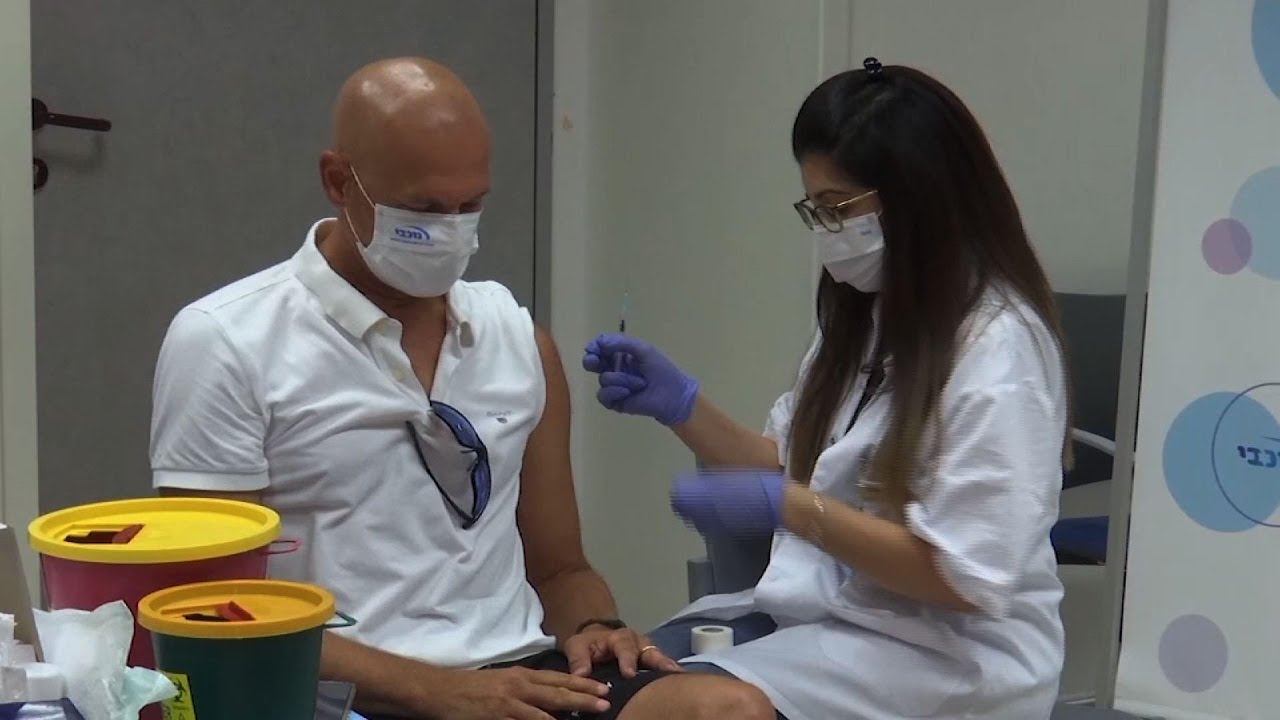
 When the delta variant started spreading, Gina Welch decided not to take any chances: She got a third, booster dose of the COVID-19 vaccine by going to a clinic and telling them it was her first shot.

The U.S. government has not approved booster shots against the virus, saying it has yet to see evidence they are necessary. But Welch and an untold number of other Americans have managed to get them by taking advantage of the nation’s vaccine surplus and loose tracking of those who have been fully vaccinated.

Welch, a graduate student from Maine who is studying chemical engineering, said she has kept tabs on scientific studies about COVID-19 and follows several virologists and epidemiologists on social media who have advocated for boosters.

“I’m going to follow these experts and I’m going to go protect myself,” said Welch, a 26-year-old with asthma and a liver condition. “I’m not going to wait another six months to a year for them to recommend a third dose.”

While Pfizer has said it plans to seek U.S. Food and Drug Administration approval for booster shots, health authorities say that for now, the fully vaccinated seem well protected.

Youtube video thumbnail

Yet health care providers in the U.S. have reported more than 900 instances of people getting a third dose of COVID-19 vaccines in a database run by the Centers for Disease Control and Prevention, an Associated Press review of the system’s data found. Because reporting is voluntary, the full extent of people who have received third doses is unknown. It’s also unknown if all of those people were actively trying to get a third dose as a booster.

“I don’t think that anyone really has the tracking” in place to know how widespread it is, said Claire Hannan, executive director for the Association of Immunization Managers.

One entry in the CDC database shows a 52-year-old man got a third dose from a California pharmacy on July 14 by saying he had never received one and by providing his passport, rather than a driver’s license, as identification. But when the pharmacy contacted the patient’s insurance provider, it was told he had received two doses in March.

In Virginia, a 39-year-old man got a third shot from a military provider on April 27 after he showed a vaccine card indicating he had received only one dose. A review of records turned up his previous vaccines. The patient then told the provider that the time between his first and second doses was more than 21 days, “so they spoke to their provider, who ‘authorized’ them to get a third shot,” an entry states.

Colorado Gov. Jared Polis said at a recent news briefing that he knew of residents who had received third dose by using fake names, but neither his office nor the state health department could provide any evidence.

Despite a lack of FDA approval, public health officials in San Francisco said Tuesday that they will provide an extra dose of the Pfizer or Moderna vaccine for people who got the single-shot Johnson & Johnson variety — referring to it as a supplement, rather than a booster.

Several studies are looking at booster shots for certain at-risk groups — people with weakened immune systems, adults over 60 years old and health care workers. But the verdict is still out on whether the general population might need them, said Dr. Michelle Barron, senior medical director for infection prevention at UCHealth, a not-for-profit health care system based in Aurora, Colorado. She said the best data in favor of possible boosters is for people whose immune systems are compromised.

Israel is giving boosters to older adults and several countries, including Germany, Russia and the U.K. have approved them for some people. The head of the World Health Organization recently urged wealthier nations to stop administering boosters to ensure vaccine doses are available to other countries where few people have received their first shots.

Will Clart, a 67-year-old patient services employee at a Missouri hospital, got a third dose in May by going to a local pharmacy. Clart said he gave the pharmacist all of his information, but that the pharmacist didn’t realize until after administering the shot that Clart’s name was in the vaccine system.

“It sounded like there was a benefit to it. And there’s also been talk that eventually we’ll need a booster — mine was five or six months out and so I thought well I’ll go ahead, that’ll give me a booster,” Clart said.

Ted Rall, a political cartoonist, explained in a Wall Street Journal op-ed that he got a booster because of a history of lung problems, including asthma, swine flu, and repeated bouts of bronchitis and pneumonia.

“I made up my mind after reading a report that states were likely to toss 26.2 million unused doses due to low demand. My decision had no effect on policy, and I saved a vaccine dose from the garbage,” Rall said.

Welch, the graduate student from Maine, put the blame on people who have refused to get the vaccine for political reasons. About 60% of eligible people in the U.S. are fully vaccinated.

“Their absolute demand and screeches for freedom is trampling our public health and our communal health.”

https://apnews.com/article/business-health-coronavirus-pandemic-coronavirus-vaccine-fe8ecebb3b61c7d3ee8ed4225500cb0e

People chasing Covid-19 vaccine boosters create headaches for health care system

 The entire U.S. health care system has been single-mindedly focused on getting Covid-19 vaccine shots in arms, but as the Delta variant spreads, the country’s decentralized vaccination campaign is presenting a different challenge — how to police people seeking unauthorized booster shots.

The buzz around booster shots for Covid-19 vaccines has intensified in recent weeks as Pfizer has sought approval for a third shot of its vaccine regimen, and Israel, the United Kingdom, and Germany have greenlit additional shots. Federal officials in the United States say that booster shots are not needed yet. But some anxious patients are nonetheless trying to get them — either by asking a health care provider willing to prescribe an extra shot, or by lying about their earlier vaccination.

That puts the onus on hospital systems to make prescribing policies, on vaccination sites to check people’s vaccine records, and insurers to decide whether they will cover vaccines outside of the Food and Drug Administration’s authorization.

Many vaccination sites, including those at Walgreens and CVS, have explicit policies not to give additional shots to people who have been fully vaccinated. But they may not always be checking to ensure that that’s the case.

When patients arrive at vaccination sites, they usually have to fill out a consent form that asks whether they have been vaccinated before. In an ideal world, vaccinators would check the information on those forms against state vaccine registries to validate that patients are telling the truth.

“For this idea of boosters, it’s going to be hard to control. You just have to rely on local public health departments and local providers to prevent that from happening,” said Ajay Sethi, an associate professor of population health sciences at the University of Wisconsin-Madison.

In reality, some states don’t require that providers administering the shots check beforehand, and the Covid-19 vaccination mobilization brought in many new providers who may be doing the bare minimum, said Rebecca Coyle, executive director of the American Immunization Registry Association.

Because vaccine supplies have been so plentiful in recent weeks, ensuring patients aren’t overloading on vaccines hasn’t necessarily been top of mind for providers, Coyle said.

“Reviewing a person’s history before administration has been the best practice for many years,” Coyle said. “It’s time for a conversation about, ‘Maybe I should do that,’ as it hasn’t been on everyone’s minds yet.”

If pharmacists don’t check immunization records and a patient receives an unauthorized shot, that could leave providers without payment if insurers deny the claim.

“They don’t have any incentive to say, ‘Hey, come get your third dose,’” said Kurt Proctor, senior vice president of strategic initiatives at the National Community Pharmacists Association.

Kristine Grow, a spokesperson for AHIP, the biggest health insurance lobby, said the group has had no indication that anyone is having trouble getting a third shot covered when it is recommended by a physician.

However, Aetna said that based on current guidelines from the CDC, the insurer does not cover additional Covid-19 shots for fully vaccinated patients.

Health insurer Anthem is monitoring the situation closely, a spokesperson said, and is watching for guidance as to whether additional shots are advisable or necessary.

“That said, any claims for COVID shots that we receive would be paid with no cost sharing for the member, just as they have been since the vaccine became available,” said Michelle Vanstory, Anthem’s vice president for external communications.

The American Medical Association on Friday unveiled a billing code for a Pfizer booster shot that could help insurers track them, but the code will not be active unless the FDA authorizes the third shot.

If providers do catch patients trying to get booster shots, it could be an opportunity for a conversation about current recommendations as opposed to a situation that would escalate.

“People are frightened, and they are not sure what to do,” Coyle said. “There are so many reasons why someone would be motivated to seek an additional shot and it’s hard to catch all of those, so registries can be leveraged to ask questions.”

Aside from just presenting at a vaccination site, patients can have conversations with their doctor about prescribing a third shot outside of the FDA’s authorization. That’s leading hospital systems to develop policies on whether they will allow physicians to prescribe boosters.

Mount Sinai Health System said it does not endorse prescribing booster shots, and said any providers administering extra doses will receive a notice and will have to fill out extra paperwork to help collect safety data.

“The current surge in numbers of individuals with Covid-19 is directly related to individuals declining to be vaccinated, not the need for more vaccines to those who already have been vaccinated,” Mount Sinai Chief of the Division of Infectious Diseases Judith Aberg and George Baehr, a professor of clinical medicine at Mount Sinai’s medical school, said in an email.

The Mayo Clinic, University of Washington Medicine, and Wellforce Health System are also not providing booster shots, spokespeople said. AMA President Gerald Harmon said in an email that the group supports the FDA and CDC position as well.

Associations of specialty physicians who serve immunocompromised patients are also working on guidance, as their patients may be good candidates for boosters in the future. Ted Okon, the executive director of the Community Oncology Alliance, said the group’s leadership is tracking the issue and working to develop guidance. The American Society of Transplantation advised members that there isn’t enough evidence to recommend booster shots, or guidance on when they should be given.

Beyond effectiveness, Deepali Kumar, the president-elect of the American Society of Transplantation, said the organization is keenly aware of the health equity concerns if some patients have more resources to track down unauthorized shots or travel to vaccine sites than others.

“It plays a big role, when we make recommendations for anything, that we want to make sure that all the patients have equal access,” Kumar said.

https://www.statnews.com/2021/08/03/people-chasing-covid-19-vaccine-boosters-create-headaches-for-the-health-care-system/

JPMorgan takes stake in healthcare start-up, to offer service to employees in fall

 JPMorgan Chase’s new healthcare unit has made its first investment, CNBC has learned exclusively.

The bank has agreed to invest $50 million in Vera Whole Health, a Seattle-based start-up that is pioneering a new, subscription-type model for employee healthcare.

Further, through the bank’s Morgan Health unit — a new business unveiled in May after a joint venture with Amazon and Berkshire Hathaway folded — JPMorgan will begin offering Vera’s services to its employees during benefits enrollment season this fall, the companies said.

Vera, founded in 2008, aims to improve outcomes for workers and reduce costs for companies by making primary care teams accountable for the health of employees. Companies pay a flat monthly fee per patient, and primary care doctors are tasked with coordinating all their users’ care. The so-called advanced care model requires Vera to either operate or partner with clinics that work in a fundamentally different way than the prevailing system, according to Vera CEO Ryan Schmid.

“In a traditional model, providers are paid based on the volume of procedures; it’s a highly transactional system which I think creates some perverse incentives,” Schmid said in a recent interview. “In our care model, our teams are paid a salary plus bonus, and that bonus is tied specifically to their outcomes.”

In fact, JPMorgan will be one of the first large corporate employers to partner with Vera, providing a real-world test for a paradigm shift that could tackle one of the thorniest issues facing the U.S.: Despite spending trillions of dollars on medicine, the health of Americans has been deteriorating in recent years.

While the use of Vera will be optional for JPMorgan employees, it provides a “higher level of care” that will likely be sought out once the benefits are appreciated, said Morgan Health CEO Dan Mendelson.

A higher standard

The start-up’s approach involves a more holistic view of an employee’s health than merely focusing on physical ailments; higher patient engagement and an emphasis on mental well-being is more likely to detect diseases or even prevent them in some cases, he said.

“We want to know that our employees are getting screened for cancer,” Mendelson said. “We want to know that our employees are having wellness visits, that if they have high cholesterol they’re actually taking their medicine. That is all about setting up a model where you have a group that is responsible.”

Since it’s not a simple model to execute, only employees in select regions will have access to Vera this year, Mendelson said.

Vera operates primary care centers in ten states; it also partners with Central Ohio Primary Care, the biggest U.S. independent doctor-owned primary care group. JPMorgan runs a technology hub in Columbus with several thousand employees, making that region a likely candidate for the service.

The advanced care model is one that is more common to Medicare providers but has yet to gain traction in employer-sponsored programs, Schmid said.

The partnership came about through a relationship between the private equity firm Clayton Dubilier & Rice and Morgan Health, the companies said. Clayton recently took a majority stake in Vera that valued the company at $400 million.

“This hasn’t been done before at this scale, what we’re doing with Vera in partnership with JPMorgan and Central Ohio Primary Care to have a model focused on improving outcomes and lowering costs for the under-65 population,” said Ravi Sachdev, a Clayton Dubilier partner and former JPMorgan healthcare banker.

“We couldn’t pioneer that without somebody like JPMorgan saying, ‘This is really important for us, we want to be part of the solution’,” Sachdev said.

https://www.cnbc.com/2021/08/04/jpmorgans-new-health-business-makes-inaugural-investment-in-start-up-vera-whole-health.html

CVS: OIG conducting audit of Aetna's Medicare Advantage plans

 The Department of Health and Human Services' Office of Inspector General (HHS-OIG) is putting Aetna's Medicare Advantage plans under the microscope, the insurer's parent company, CVS Health, disclosed Wednesday.

CVS said in the Securities and Exchange Commission filing that the OIG is taking a closer look at the insurer's "risk-adjustment related data." Other insurers, including Anthem and Humana, have come under similar scrutiny.

There has been a significant push to take a closer look at how insurers are submitting such data as the program grows in popularity—and profitability.

"The Company expects [the Centers for Medicare & Medicaid Services] and the OIG to continue these types of audits," CVS said in the filing.


Earlier this year, the feds said a Florida Humana plan overcharged Medicare by more than $200 million, the largest audit penalty ever posed on an MA plan. Shortly thereafter, OIG said Medicare overpaid Anthem in MA by nearly $3.5 million.

MA payments are calculated based on regional factors and spending in fee-for-service Medicare, so the government pays MA plans for members with higher acuity needs, like chronic conditions.

Critics allege that insurers will add unneeded codes or otherwise inflate their risk scores in order to boost payouts. MA plans, meanwhile, argue that the OIG uses flawed methodology to measure overpayment, as it bases its analyses on a small sample.

In the case of Anthem, for example, OIG extrapolated overall payouts from a sample of about $354,000 in inappropriate payments.

CVS flagged the audit as part of its quarterly earnings report released Wednesday morning.

https://www.fiercehealthcare.com/payer/cvs-oig-conducting-audit-aetna-s-medicare-advantage-plans

Democrats reintroduce legislation to create Medicaid-based public option

 Nearly 20 Senate Democrats reintroduced legislation Friday to create a new Medicaid-based public option, reinforcing their commitment to a key priority.

But the legislation isn't certain to become law, as it has not been added to a $3.5 trillion infrastructure package that includes other reforms on drug pricing and expanding Medicare benefits. Nevertheless, the legislation underscores the commitment among the chamber’s Democrats to the issue that also has gotten support from President Joe Biden.

“Our bill will open up each state’s Medicaid program to anyone who wants it, giving people a high-quality, low-cost public health insurance option,” said Sen. Brian Schatz, D-Hawaii, one of the lead sponsors, in a statement. “Our ultimate goal here is to make sure that every single American has comprehensive health care coverage.”

The legislation would let states create a Medicaid buy-in program for all residents regardless of their income.

“Medicaid is a popular and cost-effective program with a large provider network,” a release on the legislation said. “The program has the same positive ratings as private insurance but provides health coverage at a much lower cost.”

The legislation could help state residents who may make too much to qualify for Affordable Care Act (ACA) income-based subsidies on the exchanges but don’t have employer coverage, the release added.

“The bill will also help consumers who live in counties with limited insurance carriers or who worry they may soon have no options for affordable coverage,” it said.


The legislation, and a companion bill introduced in the House, is the latest bid by Democrats to create a public option.

Sens. Sheldon Whitehouse of Rhode Island and Sherrod Brown of Ohio introduced legislation back in March that adds a public option to the ACA’s marketplaces. Companion legislation was also introduced in the House.

The public option would include the same premium tax credits and cost-sharing help offered on the exchanges.

But it remains unclear whether either piece of legislation can make it through the Senate, where Democrats hold a 50-50 slim majority with Vice President Kamala Harris serving as the tiebreaker.

Democrats are planning to put together a $3.5 trillion infrastructure package that will be passed via a procedural move called reconciliation, which ensures budget legislation makes it through the Senate via a simple majority and bypasses the 60 votes needed to clear a legislative filibuster.

Several healthcare policies are likely to be included in the $3.5 trillion package, chief among them adding dental, vision and hearing benefits to Medicare. Democrats are also pursuing giving Medicare the power to negotiate for lower drug prices.

So far, Democrats have not confirmed that the public option will be included nor whether it would qualify to pass via reconciliation. The legislation has widespread opposition from Republicans.

Democrats have long sought to add a public option to the ACA after efforts to include it in the original legislation back in 2009 fell apart. 

https://www.fiercehealthcare.com/payer/democrats-reintroduce-legislation-to-create-medicaid-based-public-option