Search This Blog

Friday, January 27, 2023

Sanofi/Regeneron: Dupixent wins new stage of EU regulatory approval

 Healthcare companies Sanofi and Regeneron announced on Friday that the European Union's medicines regulator had given a new stage of approval for their Dupixent product to treat children as young as six months old with severe atopic dermatitis.

The European Commission is expected to announce a final decision on the Dupixent application in the coming months, while in June 2022 Dupixent had already been approved by the U.S. Food and Drug Administration (FDA) regulator for children in this age group.

https://finance.yahoo.com/news/sanofi-regeneron-dupixent-wins-stage-060811153.html

Disability, civil rights groups file lawsuit challenging Newsom’s CARE Courts program

 Several disability and civil rights advocacy groups in California filed a lawsuit against Governor Gavin Newsom’s (D) new court program targeting mental health concerns that he signed into law last year.

Disability Rights California, Western Center on Law & Poverty and The Public Interest Law Project filed a petition with the California Supreme Court Thursday, alleging that Newsom’s CARE Courts program violates the rights to due process and equal protection in the state constitution. The groups said the Care Courts program created a court-ordered system of involuntary outpatient treatment by restricting patients’ “autonomy in choosing their medical provider and where and with whom they live.”

“Although designed to address the State’s homelessness crisis, it will not further that goal. And on its face, the CARE Act violates essential constitutional guarantees of due process and equal protection while needlessly burdening fundamental rights to privacy, autonomy and liberty,” the petition states.

The petition asks the Supreme Court to block the rollout of the program.

Newsom last year signed into law the Community Assistance, Recovery and Empowerment (CARE) Court, which will require all California counties to provide free comprehensive treatment to homeless citizens suffering from a list of ailments. Under this new law, community members could refer unsheltered people to community-based services to attempt to treat people before they are hospitalized or arrested.

This referral could result in court-ordered individualized interventions and services, stabilization medication, advanced mental health directives and housing assistance, which could last up to one or two years. A public defender and a supporter will also be assigned to those referred the CARE Court “to help individuals make self-directed care decisions.”

However, Disability Rights California said this system takes away “fundamental rights” in California’s Constitution and targets those with schizophrenia, which the group notes could impact communities of color due to Latino and Black people being more likely to be misdiagnosed with the disorder.

The petition argues that the program violates the Equal Protection Clause of the state constitution “because it singles out people with schizophrenia for burdensome court proceedings and coerced treatment not imposed on others similarly situated.”

“No other California mental health statute distinguishes between individuals based on diagnosis, rather than severity of need,” the petition states.

The groups also said that criteria to refer someone to the program is “unclear,” which could lead to “biased and discriminatory enforcement and decision-making.” The petition argues this unclear language effectively violates the due process clause of the state’s Constitution.

“For individuals who are not presently a danger or gravely disabled, the CARE Act’s eligibility criteria require the courts to speculate who might become so in the future, without offering any guidance about how to make such a subjective determination,” the petition states.

https://thehill.com/homenews/state-watch/3832672-disability-civil-rights-groups-file-lawsuit-challenging-newsoms-care-courts-program/

AC Immune Expands Vaccine Candidate to Down Syndrome

 Interim data from the Phase Ib/II ABATE trial showed AC Immune’s anti-amyloid-beta vaccine candidate ACI-24.060 could safely elicit an antibody response in patients with Alzheimer’s disease, the company announced Thursday.

As the second part of ABATE ensues, AC Immune is looking to enroll patients with Down Syndrome. The company has also begun the second, higher-dose Alzheimer’s cohort of the trial.

ABATE is a double-blinded, randomized and placebo-controlled study to assess the safety, tolerability, pharmacodynamic profile and immunogenicity of ACI-24.060.

The trial has two parts: the first includes patients with early Alzheimer’s or mild cognitive impairment due to Alzheimer’s, while the second will enroll patients with Down Syndrome, who are at a heightened risk of developing Alzheimer’s.

In a statement, Dr. Johannes Streffer, chief medical officer, AC Immune, said ABATE’s inclusion of Down Syndrome patients will enable the company to potentially address an unmet medical need of an underserved patient subpopulation, “virtually all of whom will develop amyloid plaques and AD.”

In October 2022, AC Immune demonstrated that its anti-amyloid-beta vaccine was likewise safe and immunogenic in Down Syndrome patients, eliciting an increase in IgG levels without triggering meningoencephalitis, death, imaging-related abnormalities or other serious side effects.

The study, published in JAMA Neurology, marked the first to investigate an anti-amyloid-beta vaccine for Down Syndrome patients.

Derived from the company's proprietary SupraAntigen design platform, ACI-24.060 is a candidate designed to promote the formation of broad-spectrum antibodies.

In turn, the investigational vaccine could potentially inhibit the formation of amyloid plaques and facilitate the clearance of these plaques when they arise. Clinically, ACI-24.060 could slow or outright prevent the progression of Alzheimer’s.

A Buzz Around Amyloid

Ever since Biogen and Eisai’s lecanemab significantly slowed Alzheimer’s progression in a Phase III study last September 2022, the biopharma industry has experienced renewed excitement about the prospects of an anti-amyloid therapeutic for Alzheimer’s disease.

The FDA greenlit lecanemab, now marketed as Leqembi, earlier this month under its accelerated approval pathway.

Close on Biogen and Eisai’s heels is Eli Lilly, whose investigational antibody donanemab outperformed Aduhelm (aducanumab), also developed by Biogen and Eisai, in the industry’s first active-comparator study in the Alzheimer’s space.

However, the FDA  denied donanemab accelerated approval last week, citing the need for more data and lack of efficacy.

Though the rejection might be disappointing to some, others experts believe the FDA made the right call.

While donanemab successfully cleared amyloid plaques from the patients’ brains, Sharon L. Rogers, CEO of AmyriAD and an Alzheimer’s expert, previously told BioSpace there is not enough evidence to connect that with cognitive improvements.

Future studies in the field will also need to demonstrate meaningful improvements in patient function and quality of life.

https://www.biospace.com/article/after-acing-early-alzheimer-s-trial-ac-immune-expands-vaccine-candidate-to-down-syndrome/

Ipsen Receives CHMP Negative Opinion for Palovarotene as Treatment for Fibrodysplasia


  • Ipsen to request re-examination of CHMP opinion on palovarotene as a potential treatment for fibrodysplasia ossificans progressiva in E.U.
  • FOP is an ultra-rare disease that continuously and permanently causes abnormal bone formation.1 There are currently no disease-modifying treatment options available in E.U.
  • Regulatory processes are continuing in other countries including the U.S.

Thursday, January 26, 2023

Marburg virus vax guards against infection with just a single dose

 An experimental vaccine for Marburg virus—a deadly cousin of the infectious agent that causes Ebola—can protect large animals from severe infections for up to a year with a single shot, scientists have found in a new study.

Developed by the National Institute of Allergy and Infectious Diseases, along with collaborators at other institutions, the  produces durable protection, a factor that underlines its promise for clinical translation and pandemic preparedness. So far its safety profile suggests that investigators may be on the brink of a vaccine that, in the not-too-distant future, may help control a Marburg virus outbreak.

The pathogen is extraordinarily virulent, one of the most lethal in the world—an infectious agent so dangerous that it's on lists of viruses with potential to be exploited in devastating acts of bioterrorism. It causes a severe infection that once was known as Marburg hemorrhagic fever, but now is widely referred to as Marburg virus disease. The pathogen belongs to the Filovirdae family, the same viral family as Ebolavirus.

Writing in the journal Science Translational Medicine, Dr. Ruth Hunegnaw, lead author of a new research paper on a series of studies testing an investigational vaccine in , underscores the urgent need for measures that can prevent infection and control Marburg virus outbreaks.

"Marburg virus has been identified as a category A bioterrorism agent by the U.S. Centers for Disease Control and Prevention and a Category-A Priority Pathogen by the National Institute of Allergy and Infectious Diseases, needing urgent research and development of countermeasures because of the high public health risk it poses," Hunegnaw wrote in the journal.

The potential for deadly Marburg virus hotspots and full-blown outbreaks remain a genuine threat, especially on the continent of Africa where rare but lethal outbreaks episodically ignite human infections. As with Ebolavirus, it's posited that the Marburg  jumped the species barrier from bats to people and nonhuman primates. While bats live without harm from the pathogen, scientists at the World Health Organization estimate human mortality at 90%.

Between June 28 and September 16 of last year, Ghana's Ministry of Health was monitoring three confirmed cases of Marburg virus disease. All of the infected, two adults in their twenties and a baby, were from the same household. The 14-month old boy died within three days of hospital admission. His 26-year old father also died. The 24-year-old mother survived; however,  identified a total of 198 contacts for the three family members. All contacts were monitored for 42 days.

Scientists at the Vaccine Research Center of the National Institute of Allergy and Infectious Diseases in Bethesda, Maryland have taken significant steps toward making a vaccine against Marburg virus a reality. Working with collaborators at the National Emerging Infectious Diseases Laboratories of Boston University and the Department of Microbiology and Immunology at the University of Texas Medical Branch in Galveston, the researchers are already analyzing data from a human clinical trial. An investigational vaccine, like the one used in the animal tests, has been administered in a newly completed Phase 1 trial.

Hunegnaw, lead author of the research in nonhuman primates, reports that a single shot of the vaccine generated protective immunity within seven days of vaccination. Additionally—and perhaps more important—the investigational vaccine protected nonhuman primates when they were challenged with exposure to the lethal Marburg virus.

Hunegnaw and her colleagues note that the immunization is called ChAd3-MARV vaccine, an adenovirus-vectored shot that expresses the Marburg virus (MARV) glycoprotein. The harmless adenovirus in the vaccine is of chimpanzee origin, hence the initials "Ch" in the name of the vaccine.

"The recent cases of Marburg virus in West Africa underscore the substantial outbreak potential of this virus," Hunegnaw reported in Science Translational Medicine. "The potential for cross-border spread, as had occurred during the 2014–2016 Ebola virus outbreak, illustrates the critical need for Marburg virus vaccines."

Hunegnaw additionally reported that the animals remained protected from the pathogen when exposed to the virus a year after vaccination. The researchers also identified antigen-specific antibodies in the animals' blood, an important finding as scientists move toward regulatory approval by the U.S. Food and Drug Administration.

Marburg virus was first identified in 1967 when laboratory workers in Marburg and Frankfurt, Germany came down with a virulent hemorrhagic fever. The same infection was diagnosed in a Serbian laboratory worker in Belgrade. Scientists in all three locations were working with infected tissue samples from African green monkeys, Chlorocebus aethiops and were unaware of the exceptionally lethal nature of the virus. A total of 31 people were infected and seven died.

The , meanwhile, which is being studied in Hunegnaw's laboratory and elsewhere in the United States, is seen as a major step toward fulfilling multiple goals—a vaccine for regions at risk of Marburg outbreaks and development of a vaccine in the event the virus is used in an act of bioterrorism.

"The demonstration of protection shortly after ChAd3-MARV vaccination and durability of the protection suggests that ChAd3-MARV is suitable for deployment both to protect healthcare workers during an outbreak and in a ring-vaccination scenario," Hunegnaw concluded.

More information: Ruth Hunegnaw et al, A single-shot ChAd3-MARV vaccine confers rapid and durable protection against Marburg virus in nonhuman primates, Science Translational Medicine (2022). DOI: 10.1126/scitranslmed.abq6364


https://medicalxpress.com/news/2023-01-experimental-vaccine-deadly-marbug-virus.html

Global Military Buyers Flooded Vegas Arms Expo, Spurred By World War III Threats

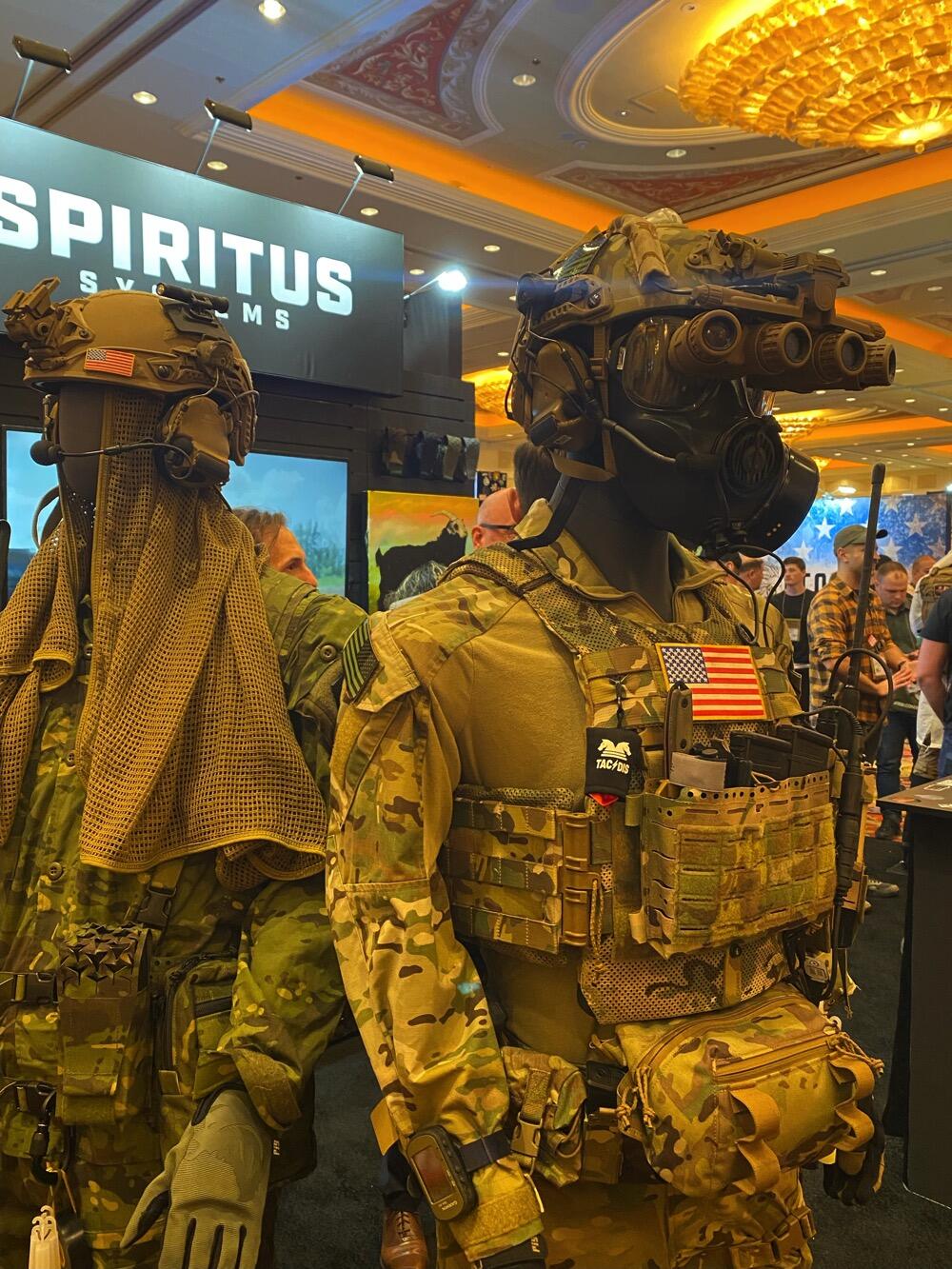
 Last week, military buyers from Europe and Asia flooded the Venetian Expo and Caesars Forum in Las Vegas for the world's largest firearms trade show of its kind. 

The Washington Times said Poland, Romania, and the Baltic States sent defense buyers to SHOT Show, where more than 2,500 exhibitors showed off new weaponry, drones, robots, and other high-tech devices for war. 

Taiwan, Japan, the Philippines, and other Asian states also sent military buyers. The Times even said visitors from China and North Korea were present at the closed-door event. 

We attended the event (read: here & here) and can confirm the military buyers were present. This comes as European and Asian nations are preparing for possible conflict. The US and Germany are sending main battle tanks to Ukraine, with even the possibility Lockheed Martin is ready to send F-16 fighter jets. 

The Times said 40 nations sent delegations to purchase firearms and equipment. Most of the deals are made at the event or a follow-up meeting. There's even an event before the Shot Show where a select group of attendees tests the weapons in a nearby desert. We were there and observed multiple military buyers from Asia, including ones from Singapore, shooting machine guns and high-powered sniper rifles. 

Hubert Marciniak, a Polish defense contractor, told The Times that Russian aggression has resulted in Warsaw modernizing its forces. 

"Russia is our neighbor. But it's also a crazy neighbor, so we need to be prepared for what they are doing," Marciniak said.

Military officials from Taiwan, Japan, South Korea, and the Philippines were also walking the floors of the event. Many of them were making deals with US defense companies for military-grade weapons. Here are some of the exhibitors we came across.

A Japanese official declined to comment on Tokyo's shopping list, but when asked by The Times if they were buying or selling at the show, they replied: "buying." 

What's clear is that foreign defense buyers are on spending sprees with long shopping lists for US weaponry as risks of war in Ukraine and the Taiwan Strait spark an arms race. 

https://www.zerohedge.com/military/global-military-buyers-flooded-vegas-arms-expo-spurred-world-war-iii-threats

State Department Issues Travel Warning To Popular Mexico State

 by Jack Phillips via The Epoch Times (emphasis ours),

The U.S. State Department on Monday issued a travel warning for American citizens visiting tourist areas in the Mexican state of Quintana Roo due to “recent incidents involving taxi and Uber drivers.”

The “security alert” said that American citizens should be wary of “application-based transportation services in Mexico,” the State Department wrote. Quintana Roo encompasses Cancun and other popular resort areas on the Yucatan Peninsula.

“Application-based car services such as Uber and Cabify are available in many Mexican cities, and generally offer another safe alternative to taxis,” the bulletin stated. “Official complaints against Uber and other drivers do occur, however, and past disputes between these services and local taxi unions have occasionally turned violent, resulting in injuries to U.S. citizens in some instances.”

Medallion taxi drivers in the state have reportedly harassed and attacked Uber drivers and passengers due to complaints of competition in recent days. This week, medallion taxi drivers blocked all three Cancun Hotel Zone entrances, according to local media reports and photos published online.

A reporter with the Riviera Maya News outlet said that dozens of taxi drivers blocked the three main roadways that go into the hotel zone on Monday, forcing hundreds of tourists to scramble to find a way in or out of the zone. The state’s National Guard and local police were deployed to deal with the demonstration, it was reported.

The Cancun police department shared photos of travelers getting into the beds of police trucks, and said that “given the blockades on the Kukulcan boulevard, our transit officers helped people get to the airport.” Cancun’s mayor called on the taxi drivers to show restraint amid the unrest.

Some Cancun residents also posted videos or photos of taxis encircling suspected ride-hailing cars, and one man said he was just giving a ride to some people when his car was pelted with stones and dented by taxi drivers.

I am not going to allow a small group to damage the reputation of the resort and human safety,” Mayor Ana Patricia Peralta said in a recorded message, according to The Associated Press.

And State Secretary Cristina Torres Gomez told reporters that the “free demonstration of the citizens of Quintana Roo” is fine “as long as it does not violate or harm the rights of third parties.”

“We listen to absolutely all groups, but under no circumstance are we going to allow peace and tranquility to be violated, nor for the roads to collapse in a state that is Mexico’s window to the world,” she added.

Ride-hailing apps had been blocked in Cancun until earlier this month, when a court granted an injunction allowing Uber to operate. Given the high cost of local medallion taxis in Cancun, many travelers prefer to use apps.

A group representing about 12,000 members in Cancun called the Taxi Union was angered by the court ruling, issued on Jan. 11, that allows Uber to operate, according to the Mexico Daily News. That triggered the protests this week.

On social media, some users targeted the Taxi Union and called on people not to use medallion taxis.

“The Quintana Roo taxi drivers are just another cartel. Don’t ride one,” a Twitter user said. “These mafia taxi drivers, just like the sargassum, are ending Cancún,” another user said, the outlet reported.

But the union described the court ruling as unjust.

“Just as today voices have been raised condemning taxi drivers, we also raise our voices to demand certainty and action against the activities that violate our source of income,” the Andres Quintana Roo taxi union said in a statement to the Daily News.

Other Warnings

Amid cartel-related violence, crime, and kidnappings, the U.S. State Department frequently issues travel alerts against traveling to certain Mexican states. Earlier this month, the agency warned Americans not to travel to Sinaloa state following reports of cartel violence sparked by the arrest of a powerful drug lord.

https://www.zerohedge.com/geopolitical/state-department-issues-travel-warning-popular-tourist-destination