Search This Blog

Tuesday, February 21, 2023

Retail Investors Pour $1.5 Billion Each Day Into US Markets, The "Highest Amount Ever Recorded"

 For much of the waning days of 2022, the broader theme in markets was a downbeat one, especially for one group of habitual gamblers investors: after a stellar 2021 when nothing made sense and the junkiest of companies exploded higher steamrolling shorts, for retail investors 2022 felt like the polar opposite: a relentless series of gut punches which knocked the air out of basement dwelling daytraders and crushed some of the most popular retail names.

And indeed, a quick search of headlines from mid/late 2022 confirmed that the retail spirit had been broken:

It all culminated with the near record year-end liquidation when in addition to momentum, tax loss selling prompted retail investors to dump single stocks at an unprecedented pace as described Retail Investors Slamming The Bid Amid Tax-Loss Selling Capitulation
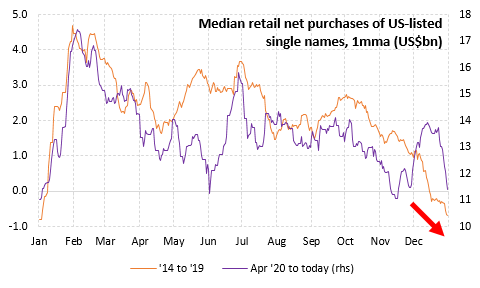
However, this record selling flow would not last long, and indeed, just one month later, we wrote that with LO institutions and hedge funds extending their bearish positioning, it was retail investors that picked up the BTFD torch in January, adding that "if retail is once again a more powerful price setter than institutions and hedge funds (thank you zero market liquidity), and we are facing another Jan 2021-type meltup, then watch out above even if none of the abovementioned technicals go into play."

In retrospect we were right, but not even we had any idea just how much we were right.

That's because according to the latest report from retail orderflow specialist Vanda Research, January was a blowout, record month for retail buyers in the market.

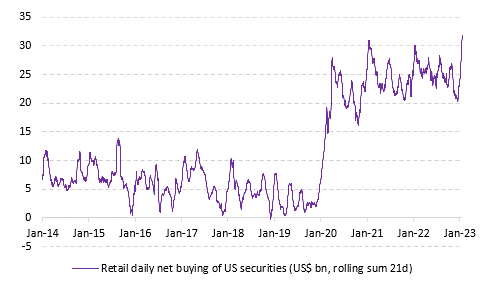
As Vanda's Mario Iachini writes, "in the last month, retail investors poured an average of $1.51bn/day into the US markets, the highest amount ever recorded." And as we expected, this group of investors "has continued driving US equity market swings since the second half of last year."

Echoing verbatim our own thoughts, Vanda writes that "with recent surveys showing the institutional investor community remaining broadly bearish on stocks, it would be unwise to underestimate the importance of the retail cohort" as so many bearish hedge funds learned the very hard way in early 2021. "That’s in keeping with retail sales and jobs data for January, suggesting that consumers retain impressive levels of buying power. While the jury is still out on whether that’s due to a robust job market or excess savings from pandemic stimulus, the bottom line is that investors should heed signals from the ‘unsophisticated money’ crowd."

Having said that, seasonality suggests that flows could abate somewhat in the weeks ahead as earnings season falls in the rear-view mirror and investors start preparing for Tax Day in mid-April. However, if broad equity markets continue to perform well, we may instead see flows shifting towards smaller, more speculative companies (this is already occurring to an extent). And while the same could take place in the options market, especially with the dominance of 0DTE option activity, Vanda does not anticipate a repeat of the 2020-21 bubble, given that we are still in the late stages of the economic cycle.

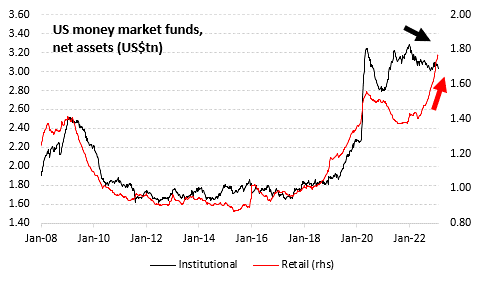
Finally, contrary to popular belief, retail money market funds' net assets at an all-time high suggest that retail investors still have plenty of capital to allocate to riskier investments, provided that market conditions remain supportive.
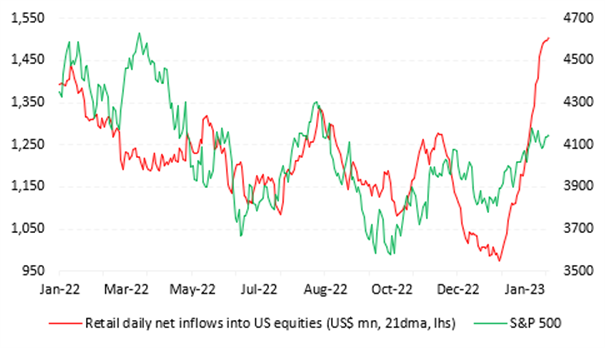
Vanda discusses this and other related topics in more detail below.

Total net purchases of US securities exceeded expectations by a significant margin on Wednesday. If we only consider periods when the S&P 500 closed in positive territory, Wednesday's aggregate purchases surpassed the previous record set on February 8th. Normally, Vanda would expect this this level of inflows on a day when the S&P 500 experiences a daily decline between -1% and -4%. Instead, "this type of behavior suggests retail traders are FOMO-ing more than any sentiment recent survey would show."

The flipside to the recent retail euphoria is that Vanda expects retail flows into cash equities to decrease in the weeks ahead, as seasonality suggests that March-April are typically middle-of-the-road months during the calendar year.
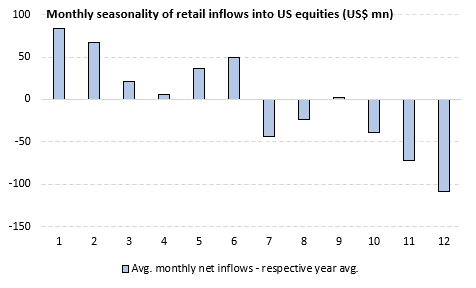
Furthermore, when looking at a rolling one-month period, inflows have never been higher since the dataset began in 2014 (second chart below). Sustaining such a robust daily pace will prove challenging but it won’t mean the end of the current bull market if institutional investors pick up the slack.
At the same time, and contrary to popular belief (especially among bears), the above doesn’t mean that retail investors are running out of capital to allocate to risky investments. Indeed, from a stock level perspective, the chart below suggests that retail investors have plenty of dry powder in the form of capital parked in money market funds that could be deployed in the equity space once confidence about future market returns increases more broadly.
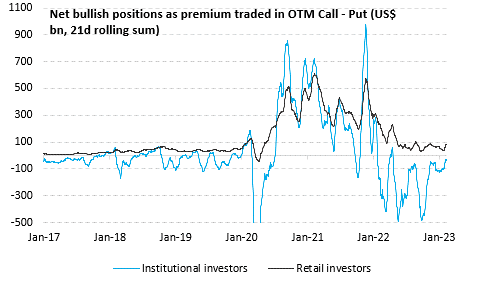
Adding insult to injury for the institutional bears - of which there is plenty - there is potential for bullish positions to be added in the options market. However, it is uncertain to what extent retail investors are willing to participate in the rally with leverage, given they’re still sitting on significant losses (-25% on average). In any case, nobody expects that the level of speculation observed during the 2020-2021 period will be replicated as we’re still in the later stages of the market cycle. Those dynamics are more likely to take hold during the early recovery phases after a recession has occurred.
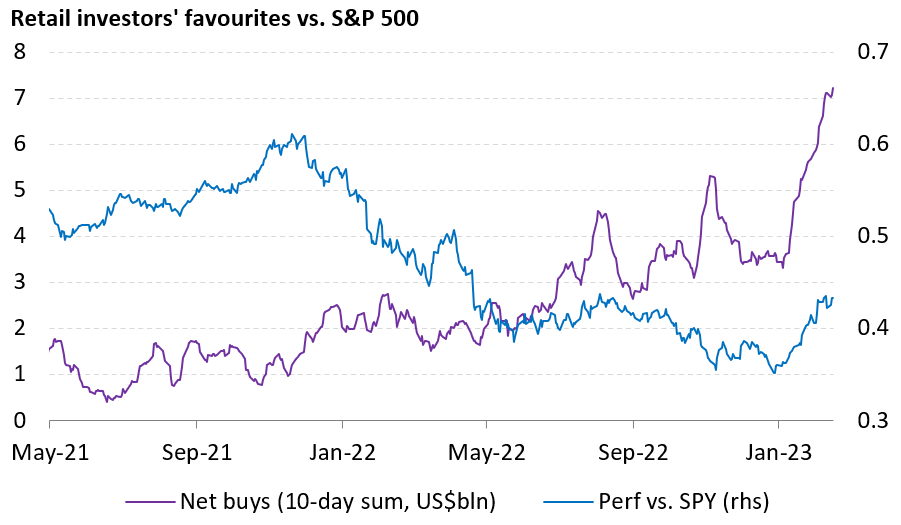
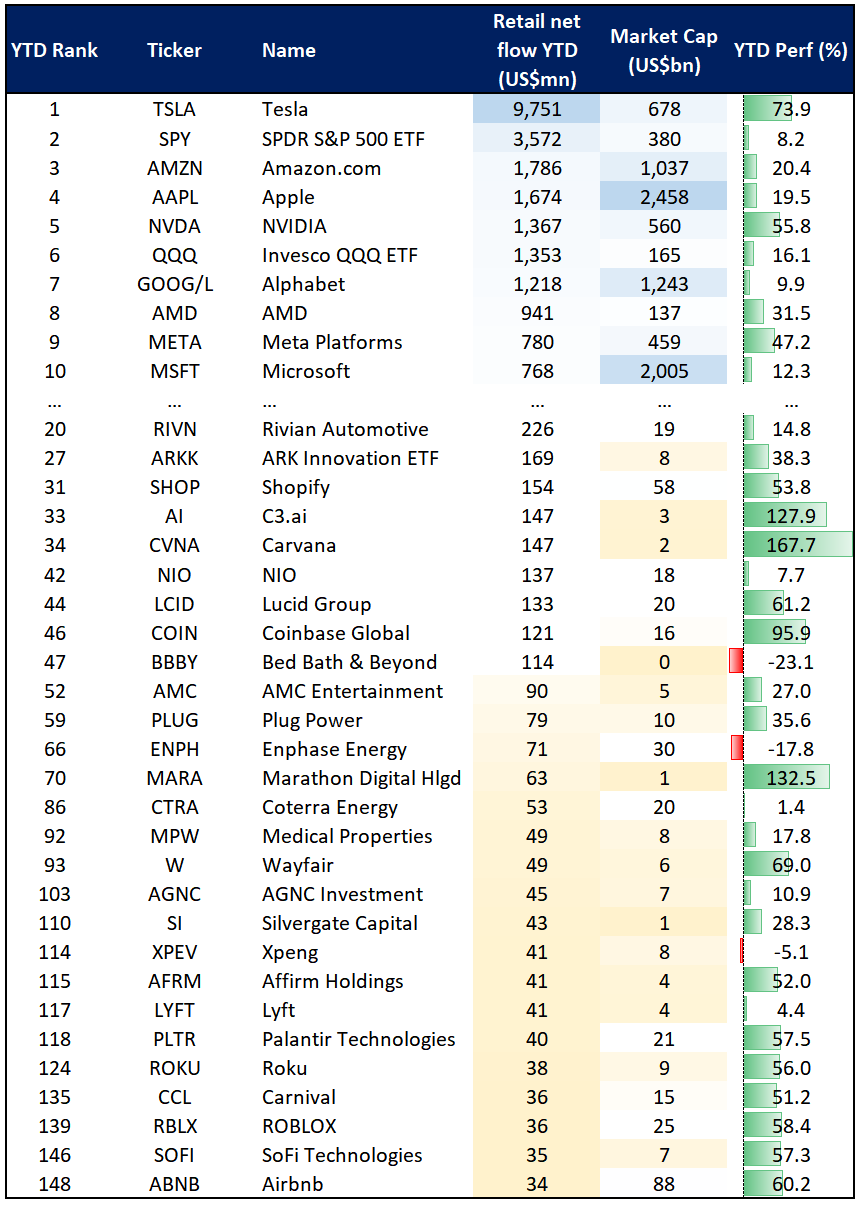
The soaring retail investor flows underpin the outperformance of their favorite stocks. A basket of the top 10 most-purchased retail stocks over recent months is experiencing a strong rebound relative to the SPX in 2023. Retail flows have accounted for a +US$18.5bn capital injection YTD in these names (listed below the chart). Should positive momentum in the broad equity market persist, it could push retail investors toward more speculative names, which are more susceptible to such flows given their smaller market cap.
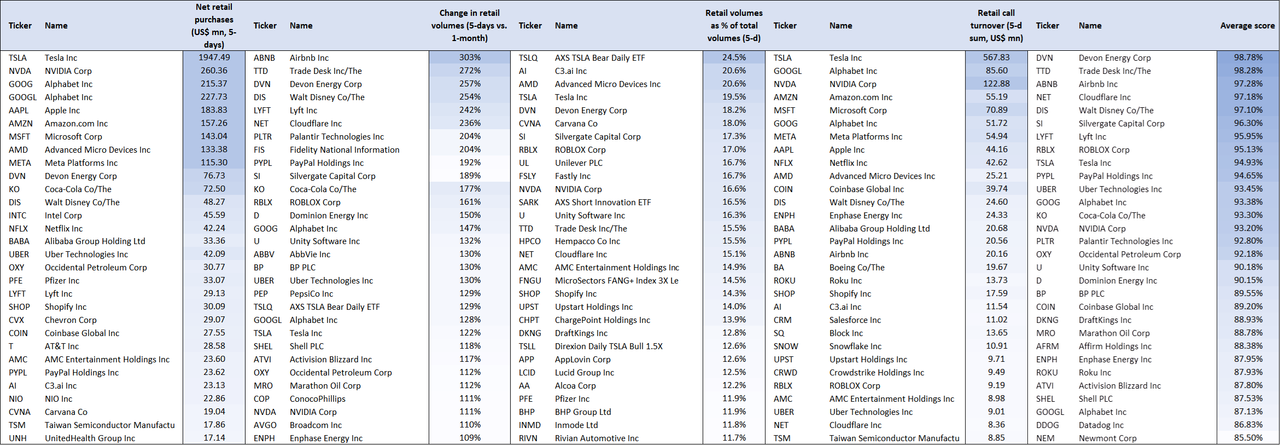
Many smaller-cap single stocks are also beginning to populate the top part of the retail leaderboard so far in 2023. Indeed, the first table below shows that beyond the top 10 most-bought securities, there’s a host of smaller-cap names that have attracted significant inflows this year (~US$2.23bn in total). Moreover, the weighted average performance of this group of stocks is roughly +50%, which is widely outpacing the S&P500 total return of 8.2%.
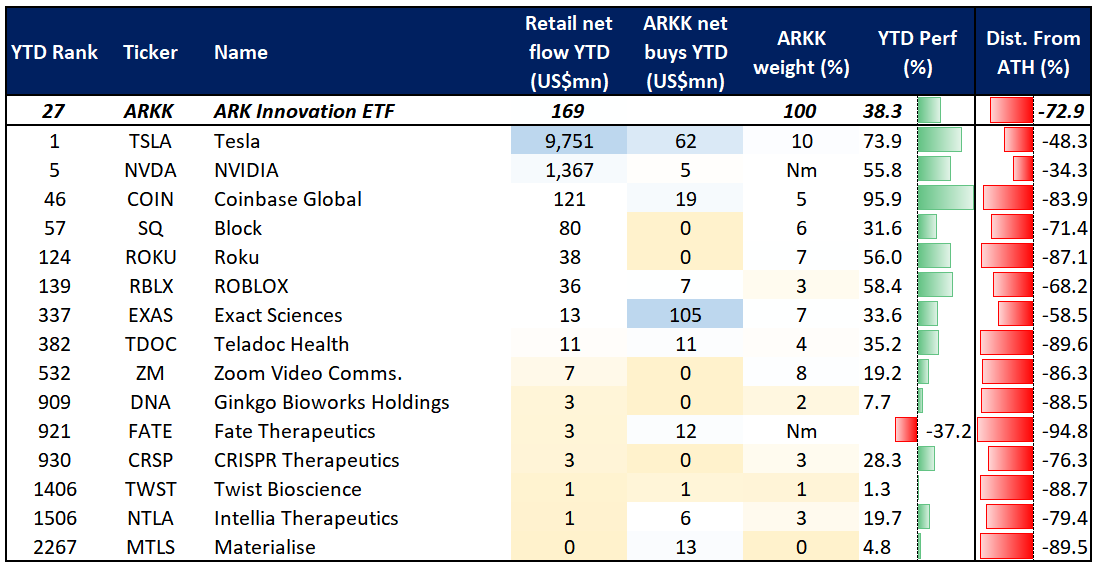
The other outcome of this dynamic is a pick-up in retail purchases in the ARKK ETF and some of its underlying holdings. It was common back in 2020-21 for retail investors to buy ARK ETFs while at the same time piling in some of their more hyped underlyings. While we don’t expect retail speculation to reach those levels for the reasons discussed above, it is noteworthy that retail investors are vastly outpacing Cathie Wood and Co. regarding purchases across some of these names.
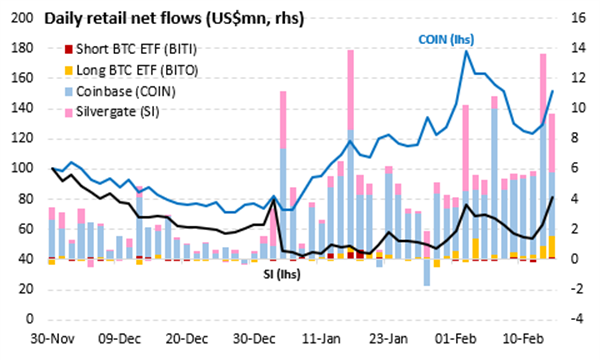
Vanda concludes its weekly retail tracking by pointing out that crypto TradFi proxies are among some of the best performers week-to-date.

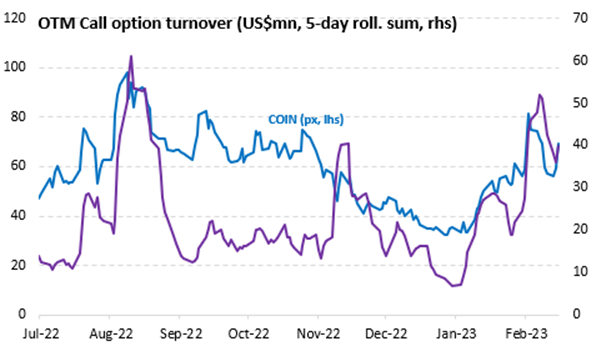
Silvergate Capital (SI) shares were up 28.6% at the end of trading Wednesday after Citadel Securities announced that it had taken a stake in the company. Indeed, 13F filings show Citadel Securities bought 5.5% in the digital currency banking company. The shares are up 69% over the past month but remain 91% below their all-time high. With the latest data showing 67% of SI’s shares held short it is likely that retail purchases have helped fuel a short-squeeze over the last three trading days. Given the size of the short book, we wouldn’t be surprised to see retail traders attempt to push the stock further in the coming days, although flows over the past three months show that interest in this name tends to be sporadic and short-lived. In contrast, Coinbase (COIN) seems to enjoy stronger retail tailwinds as bullish activity in the options space is surging as well (second chart).
Finally, here is the aggregate retail flow tracker"
Pfizer Knowingly Allowed Dangerous Components In Its Vaccines

 by Yuhong Dong M.D., Ph.D and Qinyang Jiang via The Epoch Times,

Pfizer’s COVID-19 vaccine contains mRNA fragments called “truncated mRNA.” This is a serious issue on top of the vaccine’s life-threatening safety events. Stunningly, Pfizer submitted falsified mRNA analytical reports to multiple health authorities.

The issue of truncated mRNA led the European Medicines Agency (EMA) to raise a “major objection” before its December 2020 conditional approval of the vaccine. What has happened? How have these issues been considered resolved? This two-part series article will address the matter in depth and examine its potential consequences for human health.

Summary of Key Facts

  • Pfizer’s COVID-19 vaccine contains truncated mRNA, which the EMA flagged as a reason for its “major objection,” indicating a preclusion of their approval.

  • Pfizer has not investigated the detrimental outcomes of truncated mRNA in its vaccines.

  • Pfizer submitted Western blot figures to the Food and Drug Administration (FDA) and the EMA that were digitally generated—not from actual experiments.

  • There has been an alarming lack of action taken by health authorities on this issue.

  • Truncated mRNA potentially contributes to multiple vaccine-related injuries, including misfolded spike protein-induced fibrous blood clots, autoimmune disorders, and cancer.

  • These problems with the Pfizer vaccine could have resulted in drastic product quality variations from batch to batch. This could explain the difference in adverse events experienced by vaccine recipients.

  • The root cause of such irresponsible conduct by pharma and health authorities is a lack of ethics.

When you go to a supermarket and want to buy 10 bottles of whole milk for your children, you usually assume the chemicals and concentrations in these 10 bottles are the same or similar. No one would expect five of the bottles to be filled with watered-down milk while the other five were filled with yogurt.

Most store-bought foods meet our expectations because of regulations and quality control. The same criteria also exist in the pharma industry, including vaccine products.

We expect consistent physical and chemical parameters of key ingredients across different batches of drug or vaccine products. Consistency is the foundation that allows patients and consumers to have confidence in the safety and effectiveness of medications.

The CMC process—short for chemistry, manufacturing, and controls—involves defining manufacturing practices and product specifications that must be followed to ensure product safety and consistency between batches. This is a mandatory criterion for global health authorities to approve a drug or vaccine.

Controlling the quality of a traditional chemical product is relatively straightforward, but for a biological product, like an mRNA, things become more complicated.

What Is Truncated mRNA? Why Does it Matter?

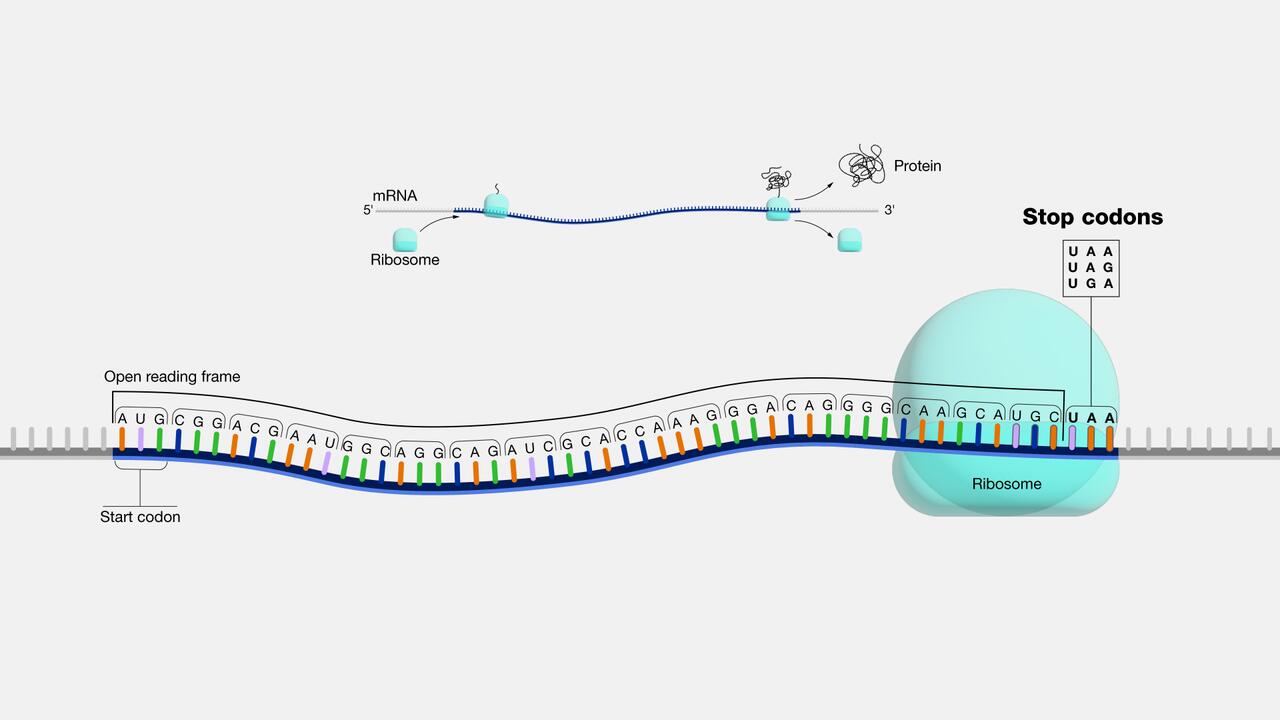
Our DNA contains gene codes composed of nucleotides. DNA makes proteins consisting of amino acids. Between the gene code and protein, there is a bridge molecule, a “translator”—called messenger RNA (mRNA).

The full-length mRNA sequence of the Pfizer vaccine coding for the spike protein is 4,284 nucleotides in length.

It consists of a 5′ CAP structure to prime its translation into a spike protein. It works like an ignition box of a car. At the end of the translatable region, the open reading frame, there is a stop codon, which is like a car’s brakes. If a truncated mRNA does not contain a stop codon, it fails to give a “brake” signal. The protein translation process will continue endlessly.

An mRNA translation into a protein and the role of the stop codon. (Courtesy: National Human Genome Research Institute)

Truncated mRNA’s missing stop codon is highly detrimental to humans. It can lead to the production of toxic protein products.

Pfizer’s COVID-19 Vaccine Contains Truncated mRNA

The EMA is responsible for approving all medicinal products for human use in Europe, including drugs and vaccines. The Committee for Medicinal Products for Human Use (CHMP) is the EMA’s committee responsible for interpreting the agency’s opinions.

In an EMA assessment report coded EMA/CHMP/448917/2021, the EMA requested that Pfizer address the impurities of its vaccine product, which the EMA report described as “truncated and modified mRNA.”

Pfizer’s report to the EMA clearly showed that Pfizer’s vaccine contained impurities, as indicated by “Peak 1” in the graph below, based on a screenshot from page 14 of the EMA’s August 2021 report.

https://www.zerohedge.com/covid-19/pfizer-knowingly-allowed-dangerous-components-its-vaccines

Affimed's AbCheck to Apply Microfluidics Tech to Antibody Discovery

 AbCheck s.r.o., a technology company delivering disruptive antibody discovery and development solutions for challenging targets, announced today that it has entered into a collaboration with a biotech company developing antibodies targeting peripheral neural response, funded by a top-tier European Venture Capital firm.

Under the terms of the agreement, AbCheck will apply its proprietary technology suite comprising a tailored combination of state-of-the-art antibody discovery technologies to delivering antibodies against an undisclosed target with a particularly challenging Target Product Profile. AbCheck’s high-class drug discovery platform centered on the Company’s unique microfluidics technology, is designed to overcome target-specific challenges and improve success rates for drug discovery campaigns, paving the way towards next generation protein therapeutics.

https://finance.yahoo.com/news/abcheck-announces-collaboration-apply-microfluidics-100000546.html

Data reinforce AstraZeneca commitment to help prevent RSV in infants

 AstraZeneca will showcase new data across its Vaccines and Immune Therapies Respiratory Syncytial Virus (RSV) portfolio at the 7th Respiratory Syncytial Virus Foundation (ReSViNET) Conference in Lisbon, Portugal from 22-24 February 2023, reinforcing its commitment to help protect infants from RSV. The Company is set to present five abstracts and posters at the event, including new data featuring Beyfortus (nirsevimab) and Synagis (palivizumab).\

https://www.astrazeneca.com/media-centre/press-releases/2023/resvinet-2023-data-reinforce-astrazenecas-commitment-to-help-prevent-respiratory-syncytial-virus-in-infants.html

Beijing signs MoU to import some drugs from Merck

China's capital Beijing signed a strategic memorandum of understanding (MoU) on Feb. 16 to import some drugs from Merck starting this year, the company said on Tuesday.

Merck is also known as MSD outside the United States and Canada.

https://news.yahoo.com/beijing-signs-mou-import-drugs-090842066.html

Disgraced Doctor Who Gene Edited Babies Gets Hong Kong Visa

 The disgraced Chinese scientist who created the world’s first genetically altered babies has received a top talent visa to work in Hong Kong.

He Jiankui, a researcher who drew widespread condemnation worldwide when he revealed his experiment in 2018, was granted the work permit in early February under the city’s newly launched Top Talent Pass Scheme. At a press briefing Tuesday in Beijing, He said he plans to explore potential opportunities to work in Hong Kong on gene therapies for rare diseases. 

https://www.bloomberg.com/news/articles/2023-02-21/disgraced-baby-gene-editing-scientist-gets-hong-kong-talent-visa

Polish PM: "We Want Permanent US Military Bases"

 by Grzegorz Adamczyk via Remix News,

During an interview with the CBS program “Face the Nation,” Polish Prime Minister Mateusz Morawiecki said he hoped that U.S. President Joe Biden would confirm his determination to see Russia beaten in the war with Ukraine.

Morawiecki disagreed with those European leaders such as French President Emmanuel Macron and German Chancellor Olaf Scholz who are saying that Russia “cannot win this war and Ukraine cannot be defeated.”

“We have to change that paradigm and we have to say, Ukraine must win and Russia must be defeated,” said Morawiecki.

The reason for this is that “the very nature of Russia is to conquer other countries.”

Asked whether Poland ruled out any negotiations while Putin stays in power, Morawiecki said that he had just returned from the Munich Security Conference and noted that the city was the site of another conference back in 1938 at which European leaders felt they had negotiated peace.

“This time around, there was no room for such naivety, and it was up to the Ukrainians to define what would be negotiated with Russia and when,” said Morawiecki.

The Polish prime minister was also asked whether Poland was expecting any breakthrough in increasing the number of U.S. troops stationed in the country.

Morawiecki confirmed that Poland was in discussions with the Biden administration over making the U.S. presence in Poland “more permanent” and larger than the current 11,000 troops.

He recalled the words of the U.S. president in Warsaw last year when he said that every inch or square inch of NATO’s territory will be defended.

But he warned that “if we fail to integrate Ukraine into NATO and the European Union, Ukraine will always be a buffer zone,” which will mean it and the region are not secure. 

Asked whether Poland would supply fighter planes to Ukraine, Morawiecki said that a year ago, no one imagined that tanks and the Patriot systems would be made available to Ukraine.

However, he added that fighter jets could only be supplied “in combination with other NATO allies, and in particular, under the leadership of the United States.”

https://www.zerohedge.com/geopolitical/polish-pm-we-want-permanent-us-military-bases