Search This Blog

Tuesday, April 18, 2023

School discipline can be predicted, new research says. Is it preventable?

 Rates of school discipline fluctuate widely and predictably throughout a school year and increase significantly faster for Black students than for their white counterparts, University of California, Berkeley, researchers have found.  

new study published today in the journal Proceedings of the National Academy of Sciences documents for the first time the “dynamic” nature of student discipline during an academic year. Daily rates of punishment across all schools in the study ratchet up in the weeks before Thanksgiving break, decline immediately before major vacations and increase rapidly again when classes resume.

Schools with a high degree of racial disparity regarding discipline referrals or suspensions early in the year see discipline rates for Black students increase even faster as the semester continues, researchers found. By November, the Black student discipline rate is 10 times higher than at the beginning of the year. Compared to white students, it’s 50 times higher.

“This work is a game-changer,” said Jason Okonofua, assistant professor of psychology at UC Berkeley, and the study’s principal investigator. “We can predict year-long suspension rates in just the first 21 days of school. That's information that we needed to know. And now we do.”

Okonofua and his colleagues used improved daily discipline-tracking technology to study the snapshots of middle school punishments. Going forward, the granular information they gleaned can help educators keep tabs on escalating school tension. It can even help teachers and school officials ward off potential discipline-causing incidents, much like they modify a lesson plan to overcome a learning gap in the classroom. 

“The more information you have, the better decisions you can make,” Okonofua said. “If principals or teachers know by Halloween in any given year these students are facing this very heightened risk of being kicked out of school, or in which schools these students face the highest risk, we can get in there and do something about it, as opposed to letting it fester. 

“Because the data shows, it would.”

Long the focus of federal inquiries, policy debate and scholarly interest, school discipline disparities have been well-documented nationwide. Recent research has shown that high school students who are suspended are more than twice as likely to be charged or convicted of a crime and incarcerated as young adults. Brief online coursework for teachers can even increase empathy and reduce suspensions. Yet, the debate is increasing about whether school officials should be quicker to kick students out of class.

While cycles of school tension might seem intuitive, the focus historically has not been on measuring punishment rates in real-time or introducing interventions before incidents occur. 

Instead, districts collect data on student discipline and produce year-end reports for state and federal regulators to examine how discipline varies among schools, which ones are more punitive and where to target interventions. While that “static” data provides a summary of what’s gone on throughout the year, it fails to capture the day-to-day realities at school. 

To understand this more “dynamic nature” of student discipline, Okonofua and his colleagues assembled four years of data about the daily disciplinary experiences of 46,964 students across 61 middle schools in one of the 10 largest school districts in the country. The district was located in a southern U.S. state and, like an increasing number of organizations, it had implemented a more sophisticated discipline data tracking system.

The results — especially the disparities — were immediately startling.

“It is incredibly important, useful and valuable to know we should do a specific type of intervention at a specific point in the year based on the real-time data. That's where we're going to get the biggest bang for our buck,” Okonofua said. “If we can be more cost-efficient, everybody wins.”

Okonofua’s co-authors — Sean Darling-­Hammond of UCLA, Michael Ruiz of UC Berkeley and Jennifer L. Eberhardt of Stanford University — also published a short video that uses beeping tones to illustrate discipline disparities between Black and white students. The anxiety-inducing tones are meant to simulate how stressful school can be when students are witnessing increasing discipline. 

Okonofua likened school discipline tracking tools to an athlete’s heart rate monitor at the gym. Rather than simply estimating how hard a workout was, real-time data can be more useful. 

“The more data we have, the more we know,” Okonofua said. “And the more we know, the more we can do.” 

The study shows how important it is for districts to create systems for teachers to regularly monitor school discipline, he said. Policy leaders should likewise take note as they write policies and dedicate funding meant to curb discipline, alleviate disparities and minimize disruption.

“It's important to think about each data point. That's a whole story,” said Okonofua, reflecting on discipline's lasting effects on both the student in trouble and classmates witnessing the punishment. “I hope we can do as much as possible going forward to just keep in mind that each one of these data points is a whole life.” 

'Changing context for masking in healthcare settings'

 The time has come and gone for universal masking in healthcare settings, according to healthcare epidemiologists and infectious diseases experts from healthcare systems throughout Boston and beyond. In a commentary published in Annals of Internal Medicine and co-authored by experts from Mass General Brigham, Beth Israel Lahey Health, Tufts Medicine, the VA Healthcare System Boston, and other healthcare systems across the country, the authors describe the changing context and conditions of the pandemic and outline why universal masking should no longer be required in healthcare settings.

“While critically important in the earlier phases of the pandemic, we’ve entered a more stable phase, with substantial population-level immunity, durable protection against severe disease, a series of less virulent variants, and other important and favorable changes,” said corresponding author Erica S. Shenoy, MD, PhD, medical director of Infection Control for Mass General Brigham and an infectious diseases physician at Massachusetts General Hospital (MGH). “As conditions change, we need to re-evaluate our infection prevention policies, including masking requirements in healthcare settings, and adapt.”

In the commentary, the authors emphasize different phases of the pandemic and describe that while universal masking was justifiable before medical countermeasures were available, advancements and population immunity have changed the appropriateness of the policy. Highlighting a theme of constant and ongoing change, they review the rationale for initially expanding mask use in healthcare settings, the reasons why de-escalation is needed, and conditions that could prompt reconsideration of use of masks more widely again.

“After three years of universal masking in healthcare, the risk-benefit calculation has shifted,” said Shira Doron, MD, chief infection control officer for Tufts Medicine health system and hospital epidemiologist at Tufts Medical Center. “Masks do have downsides, such as impaired communication and disrupted human connection.  We are at a stage of the pandemic where it now makes sense to end mandatory masking.”

Given advancements, the authors advocate for managing SARS-CoV-2 in a similar way to how other respiratory viruses are managed in healthcare settings. This includes ensuring healthcare personnel use masks (and eye protection) when engaging in activities that could generate splashes or sprays and having patients mask if they have respiratory symptoms.

“As the pandemic moves into an endemic phase, we need to transition prevention efforts to incorporate all respiratory viruses. Performing risk assessments and applying lessons learned from COVID-19, including about how to apply masking, will permit a more flexible, durable response now and in future seasons,” said co-author Sharon Wright, MD, MPH, chief infection prevention officer at Beth Israel Lahey Health in Cambridge.

“The best evidence-based policy making is dynamic, and adapts to changing conditions, evidence, and contexts. As all these factors change, even policy goals may need to be updated,” said senior author Westyn Branch-Elliman, MD, MMSc, an infectious diseases specialist and clinical investigator at VA Boston Healthcare System. Since 2020, she explained, society has been living in a constant state of change during which we have achieved major preventative and therapeutic advancements and the infection fatality rate has fallen dramatically. She continued: “At the same time, we know universal masking is not without costs, even in healthcare. Given these realities, it is time to update policies once again, recognizing this is unlikely to be the last update. Change and adaptation are expected. That does not mean ‘the science has changed’, but almost everything around it has.”

Disclosures: None of the authors have relevant conflicts of interest to disclose. The views expressed are those of the authors. They do not necessarily represent those of the US Department of Veterans Affairs or the US Federal government.

Funding: No funding.

Paper cited: Shenoy ES et al. “Universal Masking in Healthcare Settings: A Pandemic Strategy Whose Time Has Come, and Gone, For Now.” Annals of Internal Medicine DOI: https://www.acpjournals.org/doi/10.7326/M23-0793  


Protester breaks silence on China's crackdown on COVID demonstrators

 Dazed and terrified, Yicheng Huang narrowly managed to escape being detained by police in Shanghai while attending historic protests calling for an end to China's COVID-19 curbs that spread across numerous cities last November.

The protests, unprecedented in President Xi Jinping's decade in power, were suppressed by police within days but helped hasten the end of three years of restrictions, sources have previously told Reuters.

Four months later, 26-year-old Huang fled to Germany and decided to speak out in support of fellow demonstrators, some of whom remain in detention.

He is one of the first to publicly reveal his identity, after the vast majority of protesters fell silent under threat of official retribution.

"The moment I was detained was the most terrifying minute of my life. But after having experienced that, I now feel like I won't be afraid again," Huang told Reuters from the northern port city of Hamburg, where he is studying for a postgraduate degree.

"I feel like I need to speak up for Cao Zhixin and the other detained protesters... I want to urge more global forces to pay attention to them and Chinese people's efforts to struggle for their own freedom."

Immediately following the protests, in which hundreds took to the streets in several cities across the country, police interrogated and detained dozens of participants, according to rights group, lawyers and friends of those individuals.

Many were only held for 24 hours or less or were released after a few weeks in detention.

Reuters could not independently verify the total number of protesters who were detained by police or have been charged and remain in custody.

But Human Rights Watch has said Cao, a 26-year-old book editor, is one of four protesters who remain in detention in Beijing, having been formally charged with "picking quarrels and provoking trouble", which carries a sentence of up to five years.

Reuters could not reach Cao or her legal representatives but one of her friends, who declined to be identified, confirmed she remains in detention.

China's Public Security Bureau did not respond to a faxed request for comment. The public security bureaus of Beijing and Shanghai could not be reached for comment.

China has not commented officially on the protests, whether they triggered the end of the zero-COVID policy or subsequent detentions. But Xi reportedly told visiting European officials last December that 'frustrated students' were behind the protests.

'EXTREME FEAR'

Huang said he still remembers clearly the evening of November 27, when he saw "around 400 to 500" protesters near downtown Shanghai's Wulumuqi Road, named after the city of Urumqi where a deadly apartment blaze two days earlier triggered nationwide protest vigils against COVID lockdowns.

The protests were initially peaceful, he said, as demonstrators chanted slogans and held up blank sheets of paper as a symbol of their discontent. But after nightfall, police started violently arresting protesters en masse, he said.

"A group of police officers rushed forward and pinned me to the ground, punching and kicking me. Then they grabbed me upside down and dragged me along the ground while upside down. My chin was bleeding profusely. I lost my glasses and shoes," he told Reuters.

He was then sat near the front of a police bus full of other detained protesters. There, he witnessed police slapping and beating several female protesters and managed to sneak out unnoticed amid the chaos. On the street, Huang bumped into an acquaintance who led him to a safe place away from the protest site, from where he caught a taxi home.

His name had not been taken down by the police, he said.

After the protests ended, Huang kept a low profile and "lived in exreme fear" of arrest while waiting for his student visa to travel to Germany. He finally left China in late March, without having been contacted by the police.

"The protesters who are still detained are young intellectuals and creatives: editors, journalists, Shakespeare lovers," Huang said, adding that they were neither seasoned activists or dissidents but idealistic youngsters who acted spontaneously out of a sense of justice.

"Over the past ten years, the space for us to exist - and the space for civil society in China - has continued to shrink."

Huang said he believes that the demonstrations directly triggered the end of the zero-COVID policy, but their lasting impact on China comes at a price.

"Even though zero-COVID is over, these people who sacrificed their freedom for us are still in prison," he said.

"As long as one protester is still detained, the world cannot stop paying attention to the white paper movement."

https://news.yahoo.com/protester-breaks-silence-chinas-crackdown-040558169.html

The Great COVID-19 Vaccine Bribe

 by John Leake and Dr. Peter A. McCullough, MD via Courageous Discourse (emphasis ours),

Many readers of this Substack have doubtless wondered why their “health care providers”—i.e., doctors, repeatedly exhorted them to get the COVID-19 vaccines and boosters. In my extended social circle, I heard many reports of doctors being downright pushy about it—as though getting the COVID-19 vaccine was the single most pressing matter of medicine and health.

Even patients who’d recently recovered from COVID-19 were urged by their doctors to get the shots, as were patients who had bad reactions to the first injection.

For a long time, Dr. McCullough and I wondered if these doctors really were that brainwashed, or was there some other explanation for their zeal?

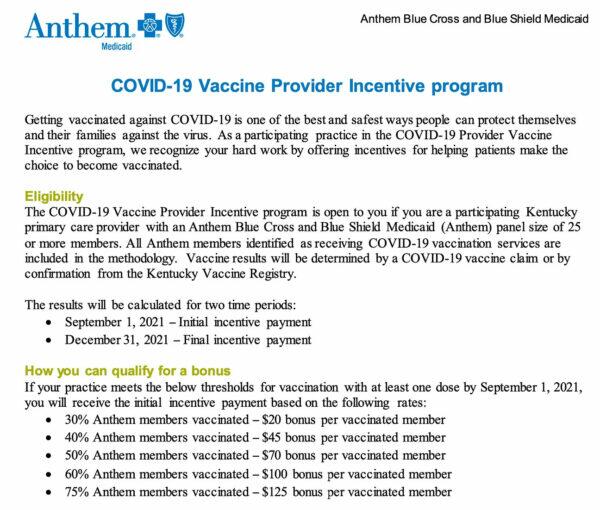
A few days ago, fellow Substack author, Tessa Lena (Tessa Fights Robots) published this document that was apparently circulated to doctors with patients insured by Anthem Blue Cross and Blue Shield Medicaid in the state of Kentucky.

The document raises a number of intriguing questions. I wonder: How many members might be registered in a given practice—that is, how many of those $125 bonuses per vaccinated member could a busy and efficient doctor with a good support staff receive?

Secondly, how many of these “COVID-19 Vaccine Provider Incentive Programs” were operating in the United States during 2021?

As we awakened souls try to figure out what’s going on in our bizarre world, it’s always useful to follow the money. It almost always leads to the explanation for any strange state of affairs that puzzles us.

https://www.zerohedge.com/covid-19/great-covid-19-vaccine-bribe

DoD Could Derail Biden's Offshore Wind Farm Dreams

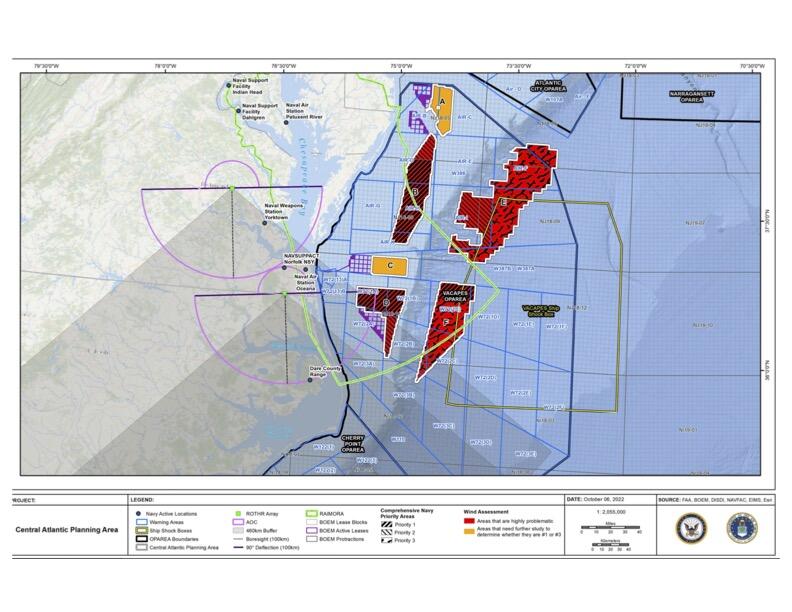
 Bloomberg report reveals that the Defense Department is increasingly worried about President Biden's proposals to build massive wind farms across the mid-Atlantic region, as some of these areas are considered "highly problematic" for potential interference with military operations. 

The DoD shared the map with energy industry stakeholders and lawmakers late last year. It outlines four large sections of water off the coasts of North Carolina, Virginia, Maryland, and Delaware, earmarked for potential wind farms. Areas in red are labeled "highly problematic." Areas in yellow indicate that military officials need to conduct more research. 

US Navy Tests Iron Man-Like Jetpacks

 Gravity Industries showcased their Iron Man-like jetpacks at a field training exercise earlier this month in Virginia Beach, Virginia.

Gravity worked with the Joint Prototyping and Experimentation Maritime program at Naval Surface Warfare Center to conduct multiple mock exercises with the jetpacks, including rapid transit from shore-to-sea and sea-to-shore missions. 

Each jetpack is powered by five micro jet turbines that generate about 1,000 horsepower.

In the video, two pilots maneuvered from ship to shore and shore to ship to demonstrate the impressive capabilities the jetpacks can one day give Tier 1 operators. 

The suit can run on jet fuel, diesel, or kerosene. Users can travel as fast as 80 mph and reach an altitude of 12,000 feet. However, both pilots in the video performed maneuvers at lower heights for safety purposes.  

In the near future, jetpacks will likely be deployed with special forces units on the modern battlefield. The Brits are already flying theirs around

https://www.zerohedge.com/military/us-navy-tests-iron-man-jetpacks

Biden is letting China dodge responsibility for COVID — what else?

 It’s now almost undeniable that a leak (or two?) from a Chinese lab set off the COVID pandemic that’s killed nearly 7 million, including more than a million Americans.

Yet Beijing continues to evade responsibility, with no pushback from Team Biden.

What won’t he let China get away with?

At a House hearing Tuesday, former National Intelligence Director John Ratcliffe told lawmakers a leak is the “only” credible explanation for the virus: “My informed assessment, as a person with as much access as anyone to our government’s intelligence,” is that “a lab leak is the only explanation credibly supported by our intelligence, by science and by common sense.”

That followed a Senate committee’s release Monday of its full, 301-page report on COVID’s origins, which cited “two leaks” — possibly as early as “July or August” 2019 — as “the most likely” source.

What kind of evidence has emerged?

  • The Wuhan Institute of Virology was conducting risky “gain-of-function” research, despite shoddy biosafety measures.
  • Lab researchers began getting sick in the fall of 2019, which is consistent with a leak.
  • Cases of flu-like symptoms surged in Wuhan in October and November that year, yet tests for influenza proved negative.
  • Beijing rushed personnel to the lab around then. “All guards went up,” notes ex-Health and Human Services and intel official Larry Kerr, an adviser on the report.
  • A Chinese military scientist filed a patent for a COVID vaccine in February 2020, suggesting work on it began as early as November — before most folks ever heard of the virus.

Most tellingly, China’s been covering up evidence — “destroying medical tests, samples and data,” “intimidating and disappearing witnesses,” “lying and coercing global health authorities” and intentionally spreading propaganda, Ratcliffe said.

Why won’t Team Biden press the issue? Because it fears the “enormous implications” of blaming China.

Which is nothing less than outrageous.

As David Feith, a former top State Department official put it, if COVID “emerged from a lab, particularly one conducting gain-of-function virology experiments, then this was akin to [a] Hiroshima event.”

Pinning that down is critical, because a mistake or “deliberate” act at such a lab could pose a “species-level risk” to humans.

It’s been more than three years since COVID hit, and Beijing is avoiding accountability for the worst pandemic in a century as President Joe Biden & Co. remain radio silent.

China’s leaders have plainly learned the lesson: This administration will let you get away with almost anything.

https://nypost.com/2023/04/18/biden-is-letting-china-dodge-responsibility-for-covid-what-else/