Search This Blog

Tuesday, May 2, 2023

New! Advanced Public Education! Compare With Brand 'Equity'!

 Nico’s prospects were already looking dicey in the second grade. Raised by his Latina grandmother in a Spanish-speaking home, he was a witty boy whose clowning got him branded as a troublemaker in an Arizona public school outside Phoenix. 

But Nico was saved from this downward spiral by an unlikely intervention —a test given to all third graders. Scoring in the 97th percentile, Nico was placed with other gifted kids and challenged academically like never before, providing him desperately needed focus. By fifth grade in 2021, according to Karen Brown, director of gifted services at Paradise Valley Unified School District, the class clown had become a class leader and was elected to the Student Council. 
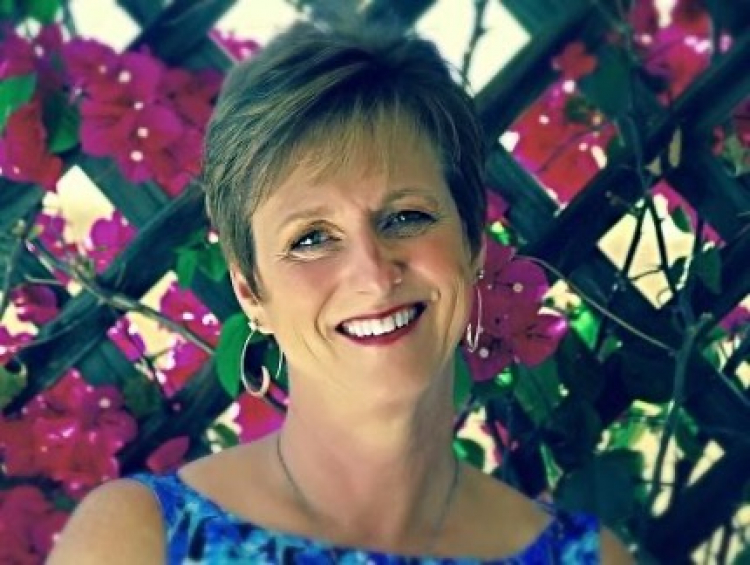
Karen Brown
Karen Brown, gifted ed director in Arizona: “It works because teachers can truly target instruction after we provide that narrowed range in classrooms."

The boy’s turnaround wasn’t a fluke at Paradise Valley. It’s one of a small number of districts nationwide using an innovative approach to organizing classrooms. Elementary students are placed in six different groups based on ability and then are carefully mixed together in classrooms in ways that shrink the huge achievement gaps among them that make teaching so hard. 

This orchestration of students allows teachers to tailor instruction so all students are challenged and can advance more quickly. And they typically do. 

The model, called schoolwide cluster grouping, is a counterpoint to today’s prevalent ideology on education pushed by social justice advocates. They oppose most forms of ability grouping, from gifted programs to selective schools, arguing that all students should learn together, no matter their wide range of abilities. The mashed-up classroom in their view is the best way to ensure an equal education and avoid locking black and Latino kids into low performing ability tracks, a widespread practice only a few decades ago. 

But many teachers say the result of this approach – classrooms where five grade levels of ability or more separate students – makes effective instruction impossible. They liken it to emergency room triage. Higher performing students are typically shortchanged, as teachers trust them to fend for themselves. The upshot is if the students are getting an equal education, it’s often an equally poor one. 

Last year, New York City officials bowed to pressure from advocates and ended selective admissions to most of the city’s middle schools. Earlier, Seattle dropped its gifted program of accelerated instruction. 

“There’s a backlash. Districts are seeing a problem with underrepresentation in their gifted programs and say, ‘Let’s just get rid of them,’ and that’s a problem,” says Matt Fugate, an academic expert in gifted education who consults with districts. “They should be saying, ‘How do we make the programs more equitable?’”

Paradise Valley Unified School District
In minority-heavy Paradise Valley, "cluster grouping" can identify more as gifted and give them a leg up.

Paradise Valley and some other districts have done just that. At Paradise Valley, Brown says, test scores have gone up for students in all ability groups since it adopted the model. 

What’s more, in a district that’s about one-third Latino, a much larger percentage of kids like Nico are being identified as gifted, which can dramatically improve the trajectory of their education. 

“It works because teachers can truly target instruction after we provide that narrowed range in classrooms,” Brown says. “The model plays a key role in allowing us to address the learning of all students.” 

The model has taken root in states such as Arizona, Florida, Indiana, Iowa, South Carolina, and Texas, where progressive educators have less influence and where gifted programs get more support. 

The Vail School District near Tucson began the program in 2018, and after fifth graders showed improved performance on a cognitive abilities test, officials are expanding it to three more elementary schools, says Christine In-Albon, the director of gifted and advanced learning.  

The Trotwood-Madison district in Ohio is aiming for the same kind of academic growth when it debuts the ability grouping program in kindergarten through third grade this fall. 

Customized Instruction 

The model was first developed by the late Purdue University Professor Marcia Gentry, a prominent scholar on gifted education. She traced the idea back to her own experience of boredom in an easy Michigan high school where she was the valedictorian. Later, as a middle school teacher, she created a gifted program for students who wanted to be challenged. 

Purdue University
Marcia Gentry: Pioneered “total school cluster grouping” back in the 1990s.

Then, in pursuing her Ph.D., she developed the hypothesis that all students, not just the gifted, would benefit academically if they were put in ability groups so teachers could customize instruction for them. 

Gentry called the model “total school cluster grouping” and tested it. Her 1999 study compared two low-income elementary schools over three years in Michigan. In the school that grouped all students by ability, “a significant increase in achievement test scores … was found” when compared to students in the control school, Gentry and her co-author wrote. 

Paradise Valley in 2006 was one of the first districts in the country to adopt the model, albeit a slightly modified version. Dina Brulles, who developed and ran the program at Paradise Valley until last year, is the gifted program coordinator at Arizona State University. 

Here’s how it works: Elementary students are evaluated each year for placement in one of six ability groups: Gifted, above average, average, low average, low, and special needs. 

Next, classrooms are pieced together, often with students from three groups to reduce their vast achievement gaps. So gifted kids and low performers are not put together. A typical set up: above average, low average and low. 

Motivating students is a guiding principle of classroom design: Gifted and above average students are never mixed in classrooms to allow the latter to shine instead of being overshadowed by the brightest minds. The diligent above-average students emerge as role models for lower achievers, a position for which some gifted kids are not well suited.  

These mixed classrooms also seek to avoid the stigmatization that arose when schools placed students into easy-to-identify high, medium, and low tracked-classrooms in the 1980s and later. At Paradise Valley, students are not told which ability group they belong to, although some likely figure it out. 

Scores Rise at Paradise Valley 

The program appealed to Paradise Valley because it’s a cost saver: Districts can address the academic needs of gifted kids, which Arizona and some other states require, without creating a costly stand-alone program and hiring new teachers. Instead, gifted students remain within the regular pool of students as one of six ability groups.  

Before beginning the program, Paradise Valley was in a bit of a funk. Many elementary students weren’t achieving the academic growth sought by the district. Gifted students in particular were unchallenged and disengaged in class and barely grew over the school year. 

Google Maps
In state testing, the performance of Paradise Valley school district  (dotted outline) topped a neighboring district by a wide margin.

A small group of Paradise Valley principals, eager to try something new, raised their hands to be the first to test the program at their schools. After only a year, they were thrilled to see that test scores in reading and math rose across the board. That prompted the rest of the district’s 30 elementary schools to quickly sign up, Brown, the gifted director, says. Test scores rose in these schools too. 

The district wants every student to master a year’s worth of material before moving to the next grade. Now, about 75% of students on average get there, an increase that coincides with schoolwide cluster grouping. “We don’t always see this growth with every student, and when we see a year where we dipped, we go back and fix that,” Brown says. 

Paradise Valley also measures itself against other Phoenix area districts with similar student demographics: half white, a third Latino and a third low income. Its passing rates on a 2022 state test, for instance, topped neighboring Peoria Unified by a wide margin: 56% vs. 42% in English, and 48% vs. 36% in math. 

Latino students are a significant part of Paradise Valley’s progress. Amid criticism that gifted programs nationwide enroll too few kids from low-income families, the district revamped the way it finds these students as part of its switch to the grouping model.  

In the past, the district relied on parents to nominate their kids for testing, which meant the pool was mostly white and Asian. Now teachers are trained to spot behaviors associated with gifted students – they can be impatient with repetitive instruction, dismissive with a roll of their eyes, and intensely perfectionistic – and more Latinos are now being evaluated. 

The district also decided to bear the costs of testing all students in one grade each year to find gifted kids who otherwise go unnoticed.  

At 23 of Paradise Valley’s 30 elementary schools, there is now equal representation: The percentage of Latinos in gifted clusters mirrors the schools’ overall demographics – a feat that’s hard for most schools to match. Four other schools are closing in on that mark and the remaining three are making progress, Brown says.  

Ability Grouping and Its Discontents 

Although the data doesn’t lie, critics find fault with the basic premise of reengineering classrooms around academic abilities. 

The influential scholar Jeannie Oakes, whose research at UCLA focused on inequality in education, says students have too many diverse characteristics to accurately divide them neatly into homogenous ability groups for tailored instruction. A child can be exceptional in English but years behind in math. So customizing instruction based on faulty assessments may limit rather than expand the possibilities for learning, Oakes told the advocacy group Learning for Justice. 
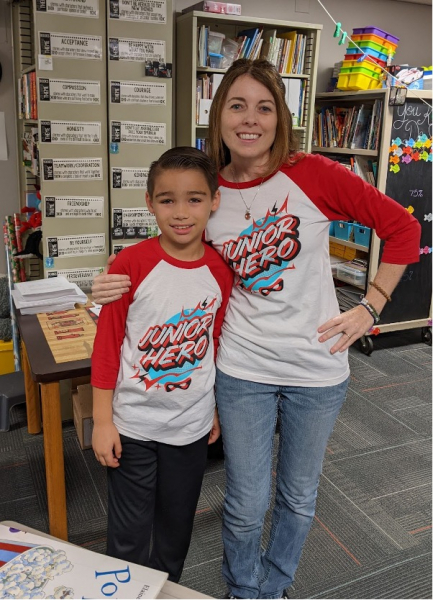
Julie Voeller
Julie Voeller, third-grade teacher: The ability range is still wide, but classrooms are more manageable.

Ability grouping labels, like low average, can also become self-fulfilling prophecies because these students receive less challenging work and less is expected of them, says Allison Roda, a professor of education at Molloy University who researched gifted program admissions in New York City. “The model isn’t worth pursuing. It’s better to put all the students together, and if they are given high expectations, they will rise to the occasion.” 

Julie Voeller, who teaches third grade at Paradise Valley, doesn’t agree. She says the program is popular among teachers in the district because it makes the classroom more manageable, giving them time to address the different needs of students. 

The ability range is still wide. For a lesson on World War II that started with reading a text, Voeller assigned her gifted group an essay requiring students to think empathically about how they would feel if their parents went off to war. One student wrote about feeling “anguished” at the absence of the father, showing a remarkable vocabulary for a third grader. 

The rest of the class, made up of average and below average groups, was given multiple choice questions. Some needed help from Voeller to find the answers in the text. 

But lower performers are also allowed to tackle the tougher assignments, like the essay, and some do. But they are not graded on them. 

When children fall behind, Voeller says, the program makes the problem easier to fix. After a math quiz revealed that 75% of her students were on track with fractions, which wasn’t a surprise in a classroom with gifted students in the mix, Voeller could quickly pivot to the small number of kids that needed a little extra help. 

If she also had the weakest students in her class, which would be the case in a typical U.S. classroom, they would need a more robust intervention. Like most teachers, Voeller would turn her attention to the students who are furthest behind, leaving others who also need help in the lurch. 

“Because I don’t have to focus on every type of student at once, I can give my students what they need so they hit the standards,” she says.  

A Rocky Rollout in Texas  

But as some districts discover, the sweeping changes required of the model are hard to pull off. 

Consider the Richardson Independent district, located north of Dallas.  

Monica Simonds
Monica Simonds, advanced ed director outside Dallas: Teachers "hate the model because it was a training nightmare."

As the rollout began in 2020, the biggest challenge came into focus –teachers. They can make or break most education reforms, and ability grouping requires them to do more. 

Each spring, teachers must evaluate the performance of every student for placement in an ability group because, year-to-year, they may improve enough to move up to a higher group. That’s a goal of the program. 

Then there’s the training of teachers, which may be the most important piece of all. They need to learn how to customize instruction to students of different abilities, which requires more effort than just giving everyone in class the same assignment. They also need specialized training in how to work with gifted kids, whose learning process differs from general education students. 

Richardson decided to hit the pause button on the training requirement on concern that teachers would be overwhelmed by the workload. Instead, only 30 teachers were trained in gifted ed to serve as consultants to the district’s 40 elementary schools. 

“I don't need to make enemies of teachers who hate the model because it was a training nightmare,” says Monica Simonds, director of advanced learning programs and services. 

The lack of training adds to the challenge of getting schools to buy into the program. At Richardson, many schools are enthusiastic, a handful are resisting it, and about a third are struggling mostly because of behavior issues among students who don’t like to be grouped together. Simonds sees these challenges as growing pains that are part of any big transformation. 

“Sometimes people say, ‘It's just an initiative and it'll go away,’” she says. “But when we implement something, we implement it because it has got data behind it. I don't want to change paths.” 

Major Study, Mixed Results 

The largest study of the program so far, involving more than 70 schools, underscores Richardson’s experience of tough sledding. The federally funded and large-scale study was undertaken by Marcia Gentry, who died in 2022, and colleagues to further investigate the program’s effect on academic performance. 

While researchers are now analyzing data and aim to publish results this year, co-author and Purdue University Professor Nielsen Pereira offered a preview into some of the study’s findings. In the first wave of 31 schools that joined the study, only six implement the program with a high degree of fidelity to its standards for sorting students into groups, training teachers, and tailoring instruction. Fifteen schools did a pretty good job, and ten scored low on fidelity. 

Neilsen Pereira
Nielsen Pereira, previewing the major study he co-authored: “It shows how difficult it is for schools to make this type of change."

“It shows how difficult it is for schools to make this type of change,” Pereira says. “It takes time and effort of everyone, administrators and teachers, who are always busy.” 

But there’s an upside for the schools that execute total school cluster grouping in its entirety. Pereira says he is “cautiously optimistic” that data will show that these school achieved an increase in academic growth of students in all ability groups, and importantly, in the percentage of black and Latino kids found to be gifted. 

The benefits of identifying these young students can be enormous for their future. 

At Paradise Valley, Meghan, a Native American with family on the Navajo reservation, kept a low profile in school, partly because her culture frowns on grandstanding. 

Then an elementary art teacher noticed her advanced spatial skills and asked the district to test her. Meghan qualified and was placed in the gifted cluster, which taught her the importance of perseverance when faced with more challenging studies. 

She began to excel, and in high school her life took a dramatic turn. She won a scholarship to an elite university in California, where she now studies graphic design. 

“Meghan is not the exception,” Brown says.  “Our model allows us to serve hundreds of gifted learners from all socio-economic groups each year, as well as accelerate the growth of all of our learners." 

https://www.realclearinvestigations.com/articles/2023/04/26/new_improved_advanced_education_compare_with_brand_equity_895382.html

Murdochs Spoke With Zelenskyy Weeks Before Firing Anti-War Host Tucker Carlson

 Both Rupert and Lachlan Murdoch spoke with Ukrainian President Volodymyr Zelenskyy shortly before firing Fox News' anti-war host Tucker Carlson, who has repeatedly asked why the United States is sending vast resources to one of the most historically corrupt nations on the planet while neglecting its own citizens.

"Fox News Executive Chairman Rupert Murdoch held a previously unreported call with Ukrainian President Volodymyr Zelenskyy this spring in which the two discussed the war and the anniversary of the deaths of Fox News journalists last March," according to Semafor, adding "The Ukrainian president had a similar conversation with Lachlan Murdoch on March 15, which Zelenskyy noted in a little-noticed aside during a national broadcast last month."

As Semafor further notes; "The conversations came weeks before the Murdochs fired their biggest star and most outspoken critic of American support for Ukraine, Tucker Carlson. Senior Ukrainian officials had made their objections to Carlson’s coverage known to Fox executives, but Zelenskyy did not raise it on the calls with the Murdochs, according to one person familiar with the details of the calls."

Weeks later, Lachlan Murdoch was credited with the decision to let Carlson go, according to the NY Times.

The decision to let Mr. Carlson go was made on Friday night by Lachlan Murdoch, the chief executive of Fox Corporation, and Suzanne Scott, chief executive of Fox News Media, according to a person briefed on the move. Mr. Carlson was informed on Monday morning by Ms. Scott, another person briefed on the move said.

Carlson, according to the report, has previously described Zelenskyy as a "dictator."

Interestingly, on March 11 - right around the time of the Lachlan Murdoch call, Carlson suggested to Redacted host Clayton Morris that he could be fired over his anti-war stance.

"I'm saying what I really think and I think it really really matters and if I get fired for it, I don't know what to say, I'm not going to change," he said, adding that one of the top people he worked for at the network texted him to say "For the record, I really disagree with you on Ukraine!"

To which Carlson said: "And I wrote back and said, 'I know you do and I'm so grateful that you let me disagree with you in public," adding "This is someone I work for -- a well known person."

"Whatever you think of Fox ... they are allowing me to say things that they disagree with and I think that's wonderful."

Watch (via Information Liberation):

IBM CEO warns AI could wipe out many jobs within 5 years

As artificial intelligence develops at an unprecedented pace, its potential impacts on humanity are not fully understood prompting some to issue doomsday warnings and others to champion the role AI could play in everyday life. 

One tech CEO is speaking out about the potential economic impacts of AI, claiming the technology could wipe out "many jobs" in less than a decade.

"I do believe, and I’ve said this before, that A.I. is going to replace many clerical white collar jobs and that’s the kind which I expect A.I. will replace over the next five years," IBM CEO Arvind Krishna said in a FOX Business exclusive on "The Claman Countdown" Tuesday. 

Krishna was joined by SAP SE CEO Christian Klein to discuss a recent deal between the two companies. Announced Tuesday, IBM's Watson, a cognitive learning machine made famous after winning Jeopardy, will be embedded into SAP's business solutions. The deal marks a huge opportunity for making business more efficient but also raises questions about jobs. 

"AI can take over a lot of these [business] activities. So it's about cost avoidance," Klein said. "And then the second part is as long as you have a growing business and you are transforming your business, you need different skills. So this also allows you to re-skill your workforce, not to just cut your workforce, which is, I guess, also equally important."

During an interview with Bloomberg, Krishna revealed he anticipates AI replacing 30% of IBM's non-consumer-facing jobs over the next five years.

"I did say we have about 26,000 of those roles," Krishna told host Liz Claman. "We do want our company to grow. So as we grow, you would expect those to increase, so a big part of the decrease will be a lack of increase. Also, we have, as many people do, close to 10% attrition in the workforce."

number of experts have already discussed the impact AI will have on jobs. Goldman Sachs warned in a March report that around the world, as many as 300 million jobs could be impacted by artificial intelligence automation, CNBC reported. 

Jobs across numerous fields could be replaced, according to the company ChatGPT. The tech company, which has sparked debate in recent months, said it could "potentially replace jobs that involve written communication," such as translation services and social media managers. 

"It’s not as simple as jobs go away," Krishna said. "The number of jobs though, perhaps in customer care, in coding, in business process, in developing artificial intelligence is going to increase so much that the net increase is going to be positive while there’s a movement from one area to the other and that by the way has been the nature of technology for 250 years. It takes away from some areas, but gives better in others."

When asked what jobs could be replaced by AI broadly, ChatGPT said financial analysts and customer service representatives, among others, could potentially be replaced by AI in the future. 

Some examples specifically given by ChatGPT include transportation, manufacturing and financial services. Other industries that could be at risk include healthcare in which "AI can assist with diagnosing and treating patients, reducing the need for some healthcare workers" and journalism where "AI can generate news articles and summaries, potentially impacting jobs."

The Goldman Sachs report found that, while about two-thirds of U.S. jobs are exposed to some degree of AI-informed automation, the average number of tasks in the daily workload for a given job ranged between a quarter to one-half, leaving a significant amount of work for humans. 

"People who face up to our customers are going to be needed," Krishna said. "It's much more of the back office, you know, whether it is data entry, whether it's doing routine repetitive work. Those are the things that AI is going to help automate at least over the next decade.

While not denying AI will cut jobs, Krishna noted there is still a need for human employees for more complex work.

The authors of the study echoed Krishna's comments that while broader adoption of AI tools could replace some jobs, the increased productivity and economic output could lead to the creation of new types of jobs spawned by the wave of innovation, like how the rise of information technology created several new professions like internet marketers and web designers.

https://www.foxbusiness.com/technology/ibm-ceo-warns-ai-could-wipe-out-many-jobs-within-5-years

Reduced exercise tolerance and other changes in long COVID

 A recent study published in Pulmonary Circulation assesses changes in oxygen extraction following post-acute sequelae of SARS-Cov-2 infection (PASC) syndrome, or "long COVID." PASC may affect half of patients who recover from COVID-19. One debilitating hallmark is a persistent decrease in exercise tolerance.

This study, led by Inderjit Singh, MBChB, BMedSci, FRCP, assistant professor (pulmonary, , and sleep medicine) and Hyung J. Chun, MD, associate professor adjunct (cardiovascular medicine), assessed a cohort of patients using invasive cardio-pulmonary exercise testing, which was conducted in parallel for each patient with multiplex proteomics profiling evaluating thousands of circulating proteins.

While prior studies have shown dysregulated alterations in the  following COVID-19 infection, no study to date had associated such findings with the impaired oxygen  that may be a critical driver of persistent exertional intolerance in long COVID patients.

"We previously demonstrated on invasive cardiopulmonary exercise testing (iCPET) that the pathophysiologic abnormality in patients with PASC was a primary peripheral limit to exercise characterized by impaired or systemic oxygen extraction," states Singh. "This current study combined our iCPET capability with an unbiased proteomic analysis to better understand why PASC patients experience this impaired oxygen extraction phenomenon."

Differences in cardiopulmonary responses to exercise

A large cohort of PASC patients referred to the Yale New Haven Hospital Pulmonary Vascular Disease Clinic with continued inability to partake in  typically associated with their age underwent invasive cardiopulmonary testing. The authors identified two subsets of PASC patients: those with mild reduction in the body's ability to extract oxygen from the blood, and those with severe reduction in oxygen extraction capacity.

Multiomic proteomic analysis of blood collected from these patients identified increased circulating levels of proteins implicated in the inflammatory and fibrotic processes among the PASC patients with severely-reduced oxygen extraction capacity, as well as increased levels of proteins associated with , or the inner layer of blood vessels critical for normal function of the lungs in extracting oxygen.

Singh states, "The current study shows that there exists a dichotomy of cardiopulmonary and proteomic phenotype that begets the observed impaired systemic oxygen extraction in PASC. These distinct cardiopulmonary proteomic phenotypes can help foster future studies to develop a personalized medicine approach for the different PASC phenotypes."

Chun adds, "These findings not only identify new mechanisms that may help identify those patients most likely to develop persistent long COVID symptoms, but also identify disease mechanisms that may be potentially targeted to improve the long COVID symptoms."

Overall, there is a continuum of biologic changes in  extraction that may affect patients with PASC. Pathways related to inflammation and endothelial dysfunction may be implied, as the authors discuss.

Future work assessing biological mechanisms and functional pathways altered by such atypical protein expressions are necessary to improve therapies for those suffering from long COVID. Chun states, "At the moment, we still have no effective treatment for patients who continue to struggle with long COVID. We hope to apply our new findings to develop new treatment strategies that will need to be rigorously tested to see if they may offer benefit to the long COVID patients."

More information: Inderjit Singh et al, Proteomic profiling demonstrates inflammatory and endotheliopathy signatures associated with impaired cardiopulmonary exercise hemodynamic profile in Post Acute Sequelae of SARS‐CoV‐2 infection (PASC) syndrome, Pulmonary Circulation (2023). DOI: 10.1002/pul2.12220


https://medicalxpress.com/news/2023-05-uncovers-tolerance-covid.html

Demand for AI skills on freelance services website Fiverr skyrockets

 Amid the rapid rise of artificial intelligence technology, search queries on Fiverr, a freelance gig hub, have "skyrocketed," according to the website. 

placeholder

Fiverr’s Spring 2023 Business Trends Index shows that searches for AI-related services have increased as more businesses became aware of new opportunities to integrate this technology. 

Over the last six months, for instance, searches for "ChatGPT," a chatbot developed by the Silicon Valley-based OpenAI, were comparable to searches for "Facebook" and "Product Design." 

Per Fiverr’s index, searches for "Jasper," an AI content generation platform for businesses, exceeded "TikTok Video" and "Custom Logo" — both of which typically have high search volumes. 

Earnings for freelancers who offered AI services related to programming and tech — such as AI app development — were responsible for the majority of revenue for AI services, Fiverr said. 

Altogether, search queries for "artificial intelligence" increased 56%. Search queries for "AI" and "AI Art" increased more than 1,000% and nearly 7,000%, respectively. 

In the U.S., AI-related services in most demand were "Brand Identity Design," at 968%, and "Claymation" at 18,654%. 

The significant increase in demand for AI-related services underscores the proliferation of the technology in various sectors. 

A recent survey conducted by WordFinder found nearly one in four employed Americans reported using ChatGPT for work, just months since it was released to the public. 

The tool's most popular use among respondents was for generating ideas (41%), while 20% of workers use it for creating content, and 14% said they utilize the chatbot for responding to emails. 

Eleven percent of employees reported using the app to write code, 10% of folks lean on it for writing resumes and cover letters, and 9% report using it for creating presentations.

https://www.foxbusiness.com/economy/demand-ai-skills-freelance-services-website-fiverr-skyrockets

'Wearable devices may be able to capture well-being through effortless data collection using AI'

 Applying machine learning models, a type of artificial intelligence (AI), to data collected passively from wearable devices can identify a patient's degree of resilience and well-being, according to investigators at the Icahn School of Medicine at Mount Sinai in New York.

The findings, reported in the May 2 issue of JAMIA Open, support , such as the Apple Watch, as a way to monitor and assess psychological states remotely without requiring the completion of mental health questionnaires.

The paper, titled "A machine learning approach to determine  utilizing wearable device data: analysis of an observational cohort," points out that resilience, or an individual's ability to overcome difficulty, is an important stress mitigator, reduces morbidity, and improves chronic disease management.

"Wearables provide a means to continually collect information about an individual's physical state. Our results provide insight into the feasibility of assessing psychological characteristics from this passively collected data," said first author Robert P. Hirten, MD, Clinical Director, Hasso Plattner Institute for Digital Health at Mount Sinai. "To our knowledge, this is the first study to evaluate whether resilience, a key mental health feature, can be evaluated from devices such as the Apple Watch."

Mental health disorders are common, accounting for 13% of the burden of global disease, with a quarter of the population at some point experiencing psychological illness. Yet we have limited resources for their evaluation, say the researchers.

"There are wide disparities in access across geography and , and the need for in-person assessment or the completion of validated mental health surveys is further limiting," said senior author Zahi Fayad, Ph.D., Director of the BioMedical Engineering and Imaging Institute at Icahn Mount Sinai. "A better understanding of who is at psychological risk and an improved means of tracking the impact of psychological interventions is needed. The growth of digital technology presents an opportunity to improve access to mental health services for all people."

To determine if machine learning models could be trained to distinguish an individual's degree of resilience and psychological well-being using the data from wearable devices, the Icahn Mount Sinai researchers analyzed data from the Warrior Watch Study. Leveraged for the current digital observational study, the data set comprised 329  enrolled at seven hospitals in New York City.

Subjects wore an Apple Watch Series 4 or 5 for the duration of their participation, measuring  and resting heart rate throughout the follow-up period. Surveys were collected measuring resilience, optimism, and  at baseline. The metrics collected were found to be predictive in identifying resilience or well-being states. Despite the Warrior Watch Study not being designed to evaluate this endpoint, the findings support the further assessment of  from passively collected wearable data.

"We hope that this approach will enable us to bring psychological assessment and care to a larger population, who may not have access at this time," said Micol Zweig, MPH, co-author of the paper and Associate Director of Clinical Research, Hasso Plattner Institute for Digital Health at Mount Sinai. "We also intend to evaluate this technique in other patient populations to further refine the algorithm and improve its applicability."

To that end, the research team plans to continue using wearable data to observe a range of physical and psychological disorders and diseases. The simultaneous development of sophisticated analytical tools, including artificial intelligence, say the investigators, can facilitate the analysis of data collected from these devices and apps to identify patterns associated with a given mental or physical disease condition.

More information: A machine learning approach to determine resilience utilizing wearable device data: analysis of an observational cohort, JAMIA Open (2023). DOI: 10.1093/jamiaopen/ooad029


https://medicalxpress.com/news/2023-05-wearable-devices-capture-well-being-effortless.html