Search This Blog

Wednesday, May 3, 2023

US Navy Enlists Drag Queen For 'Digital Ambassador' Role To Attract More Recruits

 And the Department of Defense wonders why multiple military branches are projected to miss their recruitment goals this year?  The Navy expects to fall short by over 6000 sailors in 2023, while the military struggles with a growing lack of interest, not to mention a lack of physically viable candidates.  So, they have embarked on a new strategy, giving their marketing the Bud Light treatment. 

That's right, the Navy has recruited a squadron administrator and drag queen using the name "Harpy Daniels" to be their new "Digital Ambassador."  The post is designed to inspire more civilians to join the Navy.

Implanted Ultrasound Device Opening Blood-Brain Barrier Promising in Brain Tumors

 Use of a novel skull-implantable ultrasound device was able to open the blood-brain barrier, which allowed for penetration of albumin-bound paclitaxel into critical regions of the brain in patients with glioblastoma, a dose-escalation phase I trial showed.

Looking at low-intensity pulsed ultrasound with concomitant administration of intravenous microbubbles (LIPU-MB) with six dose levels of intravenous albumin-bound paclitaxel ranging from 40 to 260 mg/m², no dose-limiting toxicities were observed for escalating dose levels up to 215 mg/m², reported Adam M. Sonabend, MD, of the Feinberg School of Medicine at Northwestern University in Chicago, and colleagues.

At a dose of 260 mg/m2, grade 3 encephalopathy occurred in one of 12 patients during the first cycle, which was considered a dose-limiting toxicity, and grade 2 encephalopathy occurred in one patient during the second cycle. In both cases, the toxicity resolved and treatment continued at a lower dose (175 mg/m2 in the case of grade 3 encephalopathy and 215 mg/m2 in the case of grade 2 encephalopathy), they noted in Lancet Oncology

opens in a new tab or window.

Grade 2 peripheral neuropathy was also observed in one patient during the third cycle with a 260 mg/mdose.

There were no surgical complications or infections related to implanting the device. Sonabend and team reported that 68 cycles of LIPU-MB-based blood-brain barrier opening were performed across all patients, with a median of 3 cycles per patient.

According to Sonabend and colleagues, the inability of most drugs to cross the blood-brain barrier limits treatment options for brain diseases. They pointed out that while paclitaxel is approximately 1,400 times more potent than temozolomide -- the standard chemotherapeutic agent for gliomas -- it does not cross the blood-brain barrier, unlike temozolomide.

With the use of LIPU-MB, intravenously administered microbubbles oscillate in brain capillaries upon stimulation by ultrasound, generating mechanical stress on the endothelial wall that opens the blood-brain barrier. It has been shown to work in animal models and early clinical trials.

"Results from this phase I clinical trial suggest that ultrasound treatments can enhance chemotherapeutic delivery of different agents by up to six times in patients with brain tumors," wrote Antonios N. Pouliopoulos, MSc, PhD, of King's College London, in a commentary accompanying the studyopens in a new tab or window. "This outcome further emphasizes the potential for therapeutic ultrasound to enhance the treatment effect of new and existing drugs."

"Agents deemed to have inadequate efficacy in clinical trials because of their inability to cross the blood-brain barrier, including antibodies and liposomes, could be reused in conjunction with ultrasound treatments," he added.

No progressive neurological deficits attributed to LIPU-MB were observed in the study. LIPU-MB-based blood-brain barrier opening was most commonly associated with immediate, yet transient, grade 1-2 headache (12 of 17 patients), and other grade 1-2 neurological deficits, such as paresthesia (12%), facial or limb weakness (24%), dysphasia (12%), dysarthria (12%), dysesthesia (18%), and blurred vision (29%).

The most common grade 3-4 treatment-emergent adverse events were neutropenia (47%), leukopenia (29%), and hypertension (29%).

Additionally, pharmacokinetic analyses of seven patients who received paclitaxel, and three patients who received carboplatin in a separate studyopens in a new tab or window, showed that use of LIPU-MB led to substantial increases in the chemotherapy concentration in the brain parenchyma.

Specifically, serial biopsy samples in peritumoral areas treated with ultrasound showed that the mean brain tissue concentration of paclitaxel was 3.7 times higher than in non-sonicated brain tissue (0.139 μM vs 0.037 μM, P<0.0001), while the mean absolute brain carboplatin concentration was 5.9 times higher (5.878 μM vs 0.991 μM, P=0.0001).

The investigators' analyses also showed that blood-brain barrier integrity is mostly restored within an hour after LIPU-MB.

"Our trial results have led us to investigate LIPU-MB for the delivery of albumin-bound paclitaxel plus carboplatin for glioblastoma in an ongoing phase II clinical trialopens in a new tab or window," Sonabend and colleagues wrote. "Along with several other reports, our findings support the feasibility of LIPU-MB to effectively bypass the blood-brain barrier and treat diseases in the brain, an organ that is beyond the reach of many pharmacological agents."

While the study suggests ultrasound treatments can enhance chemotherapeutic delivery of different agents, Pouliopoulos noted in his commentary that "evidence of increased drug concentration following ultrasound treatment is not sufficient for clinical adoption."

"Future phase II and III randomized clinical trials are needed to establish whether ultrasound-mediated drug delivery increases progression-free and overall survival," he wrote. "However, designing such trials is challenging, given the ethical barriers of active control trials that include groups of patients not treated with state-of-the-art regimens."

For this study, 17 adult patients with recurrent glioblastoma, a tumor diameter of ≤70 mm, and a Karnofsky performance status of at least 70 were enrolled from October 2020 to February 2022. Median age was 57, 53% were men, and 94% were white. They underwent resection of their tumors and implantation of the ultrasound device, and then started treatment within 3 weeks of implantation.

LIPU-MB with intravenous albumin-bound paclitaxel infusion was done every 3 weeks for up to six cycles. Dose levels of 40 mg/m2, 80 mg/m2, 135 mg/m2, 175 mg/m2, 215 mg/m2, and 260 mg/m2 were evaluated.

Median follow-up was 11.89 months. One patient was treated per dose level of albumin-bound paclitaxel for levels 1 to 5 (40-215 mg/m2), and 12 patients were treated at dose level 6 (260 mg/m2).

The primary endpoint was dose-limiting toxicity occurring during the first cycle of sonication and albumin-bound paclitaxel chemotherapy.

At data cutoff, all patients experienced disease progression, and 10 of 17 patients died due to disease progression. In a post-hoc descriptive analysis, median progression-free survival was 2.9 months, and median overall survival was 11 months.

Upon progression, three patients did not receive additional treatment due to poor clinical condition, seven underwent additional tumor resection, 10 received immunotherapy, five received chemotherapy, and 12 received bevacizumab (Avastin).

Disclosures

This work was funded by the National Institutes of Health and National Cancer Institute and SPORE for Translational Approaches to Brain Cancer, in addition to philanthropic support from the Moceri Family Foundation and the Panattoni family. In-kind support was provided by Carthera and Bristol Myers Squibb for devices and drugs, respectively.

Sonabend received support from Bristol Myers Squibb, Carthera, and Agenus, and is also co-author alongside other study authors of intellectual property filed by Northwestern University related to therapeutic ultrasound.

Co-authors reported multiple relationships with industry.

Pouliopoulos had no disclosures.

Primary Source

Lancet Oncology

Source Reference: opens in a new tab or windowSonabend AM, et al "Repeated blood-brain barrier opening with an implantable ultrasound device for delivery of albumin-bound paclitaxel in patients with recurrent glioblastoma: a phase 1 trial" Lancet Oncol 2023; DOI: 10.1016/S1470-2045(23)00112-2.

Secondary Source

Lancet Oncology

Source Reference: opens in a new tab or windowPouliopoulos AN "Evaluating drug delivery enhancement following ultrasound treatment" Lancet Oncol 2023; DOI: 10.1016/S1470-2045(23)00149-3.


https://www.medpagetoday.com/hematologyoncology/braincancer/104325

Ghost Provider Networks Big Problem for Patients, Especially in Mental Health

 Nine years ago, Keris Jän Myrick had a problem: she got a new job in a new state, and with it, new health insurance, and she needed to change her mental health provider.

"Navigating the Blue Cross Blue Shield for federal employees provider directory to find a psychiatrist in the D.C. or Maryland area turned into one rejection after another," Myrick said Wednesday at a hearing on improving provider directory accuracy held by the Senate Finance Committee. "Call after call resulted in the following types of responses: 'Who?' 'He doesn't work here. No, I don't know where they are.' 'Who? I don't know who that is. I'm not sure they ever worked here' ... Or a recorded message: 'Doctor Fill-in-the-Blank is no longer accepting new patients. If this is an emergency, hang up and dial 911.'"

Short-Lived Success

After countless days and hours, Myrick said, she finally found a provider who was taking new patients, but when she told the person her diagnosis was schizophrenia, "A pause, a long silence, and then the response: 'Oh, I don't take patients with schizophrenia.' I asked if they have any suggestions or referrals to help me find a doctor who does, and the answer was, 'Check the provider directory.'" She wound up calling her former psychiatrist in California and flying back at her own expense several times a year to see him.

And Myrick is not alone, especially when it comes to appointments with mental health providers, said committee chair Sen. Ron Wyden (D-Ore.). "Last month, my staff conducted a 'secret shopper' study," he said. "They made over 100 calls to make an appointment with a mental health provider for a family member with depression, and they looked at 12 Medicare Advantage insurance plans in six states. The results were clear: our secret shoppers could get an appointment only 18% of the time. That means more than eight in 10 mental health providers listed in these insurance company materials were inaccurate or weren't taking appointments."

"Other secret shopper studies looked at commercial health insurance and found the same thing," he continued. "In 2017, researchers posing as parents seeking care for a child with depression got an appointment 17% of the time. 'Ghost networks' are an ongoing, persistent problem." The solution is "a three-legged approach. We've got to have more oversight, greater transparency, and serious consequences for insurance companies that are fleecing American consumers."

Incorrect directory information "is costly and devastating for patients," testified American Medical Association (AMA) president Jack Resneck Jr., MD. "At a time when our nation is fighting a mental and behavioral health crisis, inaccurate directories are not only an absolutely infuriating barrier for patients and families already in great periods of stress ... They help mask the fact that insurers consistently and frankly egregiously fail to provide adequate networks and comply with parity laws, causing harm to millions of Americans."

The Plans' Responsibility

Resneck, chair of the department of dermatology at the University of California San Francisco, said he conducted a secret shopper study himself a few years ago. "I had med students call every dermatologist listed in directories for many of the largest MA [Medicare Advantage] plans in a dozen U.S. metropolitan areas," he said. "They sought appointments for a fictitious patient with a severe rash, and the results were dismal. Of 4,754 listings, almost half represented duplicates. Among the remaining listings, many of those practices didn't exist, had never heard of the listed physician, or reported that they had died, retired, or moved away ... In the end, just 27% of listings were unique, accepted the listed plan, and offered an appointment."

Doctors do have a role to play in solving the problem, but the main responsibility ultimately lies with the plans, which are not making it easy for physicians to help, said Resneck. "I work at a pretty big academic medical center. You'd think our big staff devoted to this work would equate to more accurate listings, but health plans are typically taking 6 to 8 months to add or delete physicians after we notify them of changes. They don't use standardized formats, so we have to send different rosters with different formatting to each and every one. For big and small practices typically contracting with 20 or more plans, this amounts to a costly and just demoralizing administrative burden."

Robert Trestman, MD, PhD, a psychiatrist at the Virginia Tech Carilion School of Medicine in Roanoke, said that patients who had trouble finding providers felt that "it was somehow their fault." He noted that "the national administrative burden for physician practices to send directory updates to insurers through disparate technologies, schedules, and formats is $2.76 billion annually ... Not all mental health clinicians practice in settings like mine that are willing and able to invest the resources needed to participate in the networks. Private practitioners make up a significant portion of the psychiatric workforce, and many do not participate in the networks because of the administrative burden." He suggested that Congress incentivize doctors to adopt integrated care models that would help primary care physicians deliver more of the psychiatric care.

Mary Giliberti, of the mental health consumer group Mental Health America, in Alexandria, Virginia, said patients who end up seeing an out-of-network provider due to a provider directory error should not be held financially responsible. "It should not fall on the person who's least able to bear this cost. If it's not accurate, that shouldn't be their problem. They shouldn't have to pay for it."

Carrots, Not Sticks

Sen. Thom Tillis (R-N.C.) said he was "shocked" that health plans weren't doing their own internal audits of their provider directories. "Rather than mandating that, why couldn't we move towards mandating CMS [the Centers for Medicare & Medicaid Services] -- and giving CMS the resources necessary to do it -- that we're going to perform audits?"

Plans with inaccurate provider directories could be given an "F" grade and have it published on the CMS website. "I think the competitive advantage for the insurers would be, 'Go to the CMS website see our rating -- we've got an 'A' or 'B' or 'C' grade," Tillis said. "Because if we come down with a heavy hammer they're going to comply, but that's also taking their attention away from finding additional providers, driving down the cost of insurance, and a number of other things."

Jeff Rideout, MD, of the Integrated Healthcare Association in Oakland, California, told the senators about an effort in that state -- the Symphony

opens in a new tab or window program -- which aims to be a single-source provider directory for health plans. "Symphony creates a 'golden record' by applying a strict set of agreed-upon rules that determine what the best information is," he said. "Symphony now has 17 contracted health plans and more than 100 contracted provider organizations, and is also engaged with Covered California," the state health insurance exchange.

The organization has found that "provider data encompasses literally hundreds of specific data elements, and most need to be verified on a very frequent basis," he said, adding that providers are more likely to verify the accuracy of their data -- in this case, every 90 days -- if they can do it just once and have it apply to multiple plans. In addition, the association has found that "we need more data elements related to LGBT support; we need more data elements related to race and ethnicity. So this problem of the data elements will just grow, not shrink."

https://www.medpagetoday.com/practicemanagement/reimbursement/104328

Older adults voice safety, efficacy concerns on COVID boosters as fewer than half take shots

 Older adults are expressing concerns for the bivalent COVID booster shots, according to a recent Health Canal survey.

Despite the recommendation by the Centers for Disease Control and Prevention (CDC) for older adults to have new bivalent mRNA COVID-19 vaccines from Moderna and Pfizer, which were launched last year, so far only 42.4% of that age group have received the booster.

Why? Patients are citing personal health and safety concerns (40.7%) as the top reasons for not getting the booster, according to the survey.

They are also deterred by risks they see as associated with the vaccine and potential side effects (31.1%), while another reason listed for not getting the booster was skepticism about the new formula’s effectiveness, with 27.8% reporting that concern.

There is also a belief that they still have strong protection against COVID-19 (29.4%) and the belief that they have strong protection against severe illness due to COVID-19, with just over 20% of respondents reporting that.

As many as 57.2% of older adults said they are likely to get the booster at some point. Those planning to get the booster said they would get it to protect against the new omicron variant, 88.9%; to protect against severe illness due to COVD-19, 70%; to prevent long-term COVID symptoms, 60.9%; and due to the CDC recommendation, 53.8%.

Currently, 95% of people in the 65-plus demographic in the U.S. have received at least one dose of the original COVID-19 vaccine, according to Health Canal.

The discrepancy in the numbers of adults who have received the updated booster is likely due to misinformation, according to Shiv Pillai, M.D., Ph.D., a professor of medicine at Harvard Medical School, director of the Autoimmune Center of Excellence at Massachusetts General Hospital and director of the Ragon Institute of Mass General, MIT and Harvard.

Pillai also commented that these beliefs could be misguided and that COVID-19 is still very serious for unvaccinated older adults. However, he is hopeful that awareness of the new bivalent booster is increasing as only 4.8% of respondents said they did not know that the booster exists and another 4.4% did not know whether they were eligible.

Overall, safety was the top motivator either for or against getting the bivalent booster. Therefore, Health Canal believes more information about the omicron variant and potential vaccine side effects should be made available to the public.

https://www.fiercepharma.com/marketing/older-adults-voice-safety-efficacy-concerns-covid-boosters-fewer-half-take-shots

Neurocrine gives up on Parkinson's drug Ongentys, citing 'unsustainable' launch

 Even though Neurocrine Biosciences has had great success with one neurological disorder drug, Ingrezza, it has struggled with Parkinson’s disease med Ongentys. Now, the company has decided to call it quits on the latter medicine.

Neurocrine will return Ongentys to its original licenser, Portuguese company Bial, in December, the California biotech said Wednesday.

The reason behind the decision is simple: The launch is “unsustainable,” the company said in the release.

In a statement to Fierce Pharma, a Neurocine spokesperon said it isn’t planning any layoffs. It’s not clear whether Bial will continue to market Ongentys in the U.S. after the transition. The company didn’t reply to a Fierce Pharma’s request for comment by publication time.

For Neurocrine, the decision will wrap up nearly three years of commercial struggles around the medicine. For 2022, Ongentys only brought in $13 million in sales. In the first quarter of this year, the drug pulled in $5.3 million.

In 2017, Neurocrine paid Bial $30 million upfront to in-license Ongentys rights in the U.S. and Canada. At that time, the drug was already available in Europe. Three years later, the FDA approved Ongentys as an add-on treatment to treat Parkinson’s disease during “off” episodes, when patients experience motor symptoms between their usual levodopa/carbidopa treatment doses.

The Ongentys approval came in April 2020 at the height of the COVID-19 pandemic. As the world reeled from the crisis, Neurocrine delayed the launch into the fall of 2020.

“Unfortunately, from the time we licensed this medicine to the launch in 2020, the Parkinson’s adjunctive therapeutic category went through fundamental changes, which posed significant commercial challenges,” Neurocrine CEO Kevin Gorman told investors during a call Wednesday.

Gorman didn’t provide further details about the “fundamental changes” afflicting the treatment field, but he did say Neurocrine wasn’t alone in struggling in this category.

Competing with older COMT inhibitors and their generics, Ongentys was not included on formularies of most Medicare plans, Neurocrine noted at the beginning of 2022. The problem was seen across all branded Parkinson’s medicines, Neurocrine’s chief commercial officer Eric Benevich noted at the time. Although Ongentys is dosed less frequently, experts aren’t excited about its well-known COMT inhibition mechanism, SVB Securities analysts wrote in a note back in 2021.

In 2019, the FDA also approved Kyowa Kirin’s Nourianz as an add-on treatment to levodopa/carbidopa. That drug delivered 6.5 billion Japanese yen ($48 million) in sales outside of Japan in 2022.

Just a month after Ongentys’ nod, Sumitomo Pharma’s Sunovion won an FDA go-ahead for Kynmobi sublingual film to treat Parkinson’s “off” episodes. Sumitomo earlier this year booked an impairment loss of 56 billion yen ($410 million) after reviewing the sales forecast for Kynmobi.

Neurocrine is ditching Ongentys as the company gears up for a potential label expansion for Ingrezza to treat involuntary body movements in patients with Huntington's disease. The FDA is expected to reach a decision by August 20. If approved, Ingrezza would go up against Teva’s Austedo and Lundbeck’s Xenazine. All three drugs are VMAT2 inhibitors.

Only about 20% of Huntington patients with chorea are treated with existing VMAT2 drugs, Neurocrine’s Benevich noted during Wednesday’s call.

“We believe that some of the reasons that Ingrezza is the most prescribed agent in [tardive dyskinesia] would apply equally here in HD chorea,” Benevich said.

Unlike Ongentyx, Ingrezza has had a successful launch. Ingrezza’s sales reached $410 million in the first quarter, handily beating Wall Street’s expectation of $397 million. Based on the strong growth during the first three months of the year, Neurocrine believes Ingrezza will reach $1.67 billion to $1.77 billion in sales this year. That figure excludes any potential contribution from a label expansion into Huntington's disease.

In a Wednesday note to clients, William Blair analysts said the new nod could add $14 million to Ingrezza sales this year

Without any meaningful contribution from Ongentys, Ingrezza remains Neurocrine’s bread and butter. But that may start to change later. The company expects pivotal trial data for crinecerfont in both adult and pediatric congenital adrenal hyperplasia in the fourth quarter.

In their note, the William Blair analysts called crinecerfont “the next major addition to [Neurocrine’s] pipeline with blockbuster potential if successful.” In a separate note on Wednesday, Evercore ISI analysts also said they believe crinecerfont could become a blockbuster by the end of the decade.

https://www.fiercepharma.com/pharma/neurocrine-gives-parkinsons-drug-ongentys-citing-unsustainable-launch

Merck entitled to $1.4B in cyberattack case as court rejects insurers' 'warlike action' claim

 Merck may finally be entitled to a hefty insurance payout from the high-profile NotPetya cyberattack—if an appeals court ruling stands.

A New Jersey appellate court on Monday ruled that a group of insurers can’t use war as an argument to deny Merck coverage from the notorious cyberattack that afflicted the company and others back in 2017.

Upholding a prior ruling, the appeals court said in an opinion (PDF) that the “hostile/warlike action” exclusion clause shouldn’t be applied to a cyberattack on a non-military company—even if it originated from a government or sovereign power. In this case, the hack was tied to Russia as part of its aggression against Ukraine, according to U.S. officials.

The Superior Court of New Jersey previously granted Merck a $1.4 billion payout after the pharma company sued its insurers who had denied coverage for the NotPetya attack. In appeal, eight insurers disputed nearly $700 million in coverage, or about 40% of the total Merck had in its property insurance program at the time.

The case stemmed from a ransomware attack Merck suffered in June 2017 on the eve of Ukraine’s Constitution Day. The NotPetya malware was delivered into an accounting software developed by a Ukrainian company that was used by Merck and other companies, according to the court’s description of events. More than 40,000 machines in Merck’s global network were infected.

The U.S. government later attributed the attack to Russia’s military intelligence operations and charged six Russian officers in connection with the event.

Pointing to Russian military involvement, Merck’s insurers invoked the hostile/warlike action exclusion clause in their policies and refused to cover the company’s losses.

In the appellate court’s opinion, a panel of three judges argued that the insurers employed an overly broad interpretation of the exemption. The insurance companies contended that any state-backed action that “reflects ill will or a desire to harm” falls within the “hostile/warlike action” exclusion. But the judges said they “stretched the meaning of ‘hostile’ to its outer limit.”

The NotPetya attack “is not sufficiently linked to a military action or objective as it was a non-military cyberattack against an accounting software provider,” the judges wrote in their opinion.

Beyond the Merck case, the healthcare industry remains a top target for cyberattacks. A 2021 report from the U.S. government found that healthcare accounted for nearly a quarter of cyberattack events in 2020, the most of all industries.

Just last month, German biotech Evotec had to shut down its network to cope with a cyberattack. India’s Sun Pharma disclosed an IT security breach in March. Novartis was reportedly the victim in an extortion malware attack last year.

https://www.fiercepharma.com/pharma/merck-entitled-14b-payout-cyberattack-case-after-judge-refutes-insurers-warlike-action-claim

Newsom Activates National Guard And Highway Patrol To Combat San Francisco's Drug Crisis

 Gov. Gavin Newsom has called up the California Highway Patrol and the California National Guard to combat San Francisco's out-of-control open-air drug market as parts of the progressive-run city descend into chaos. 

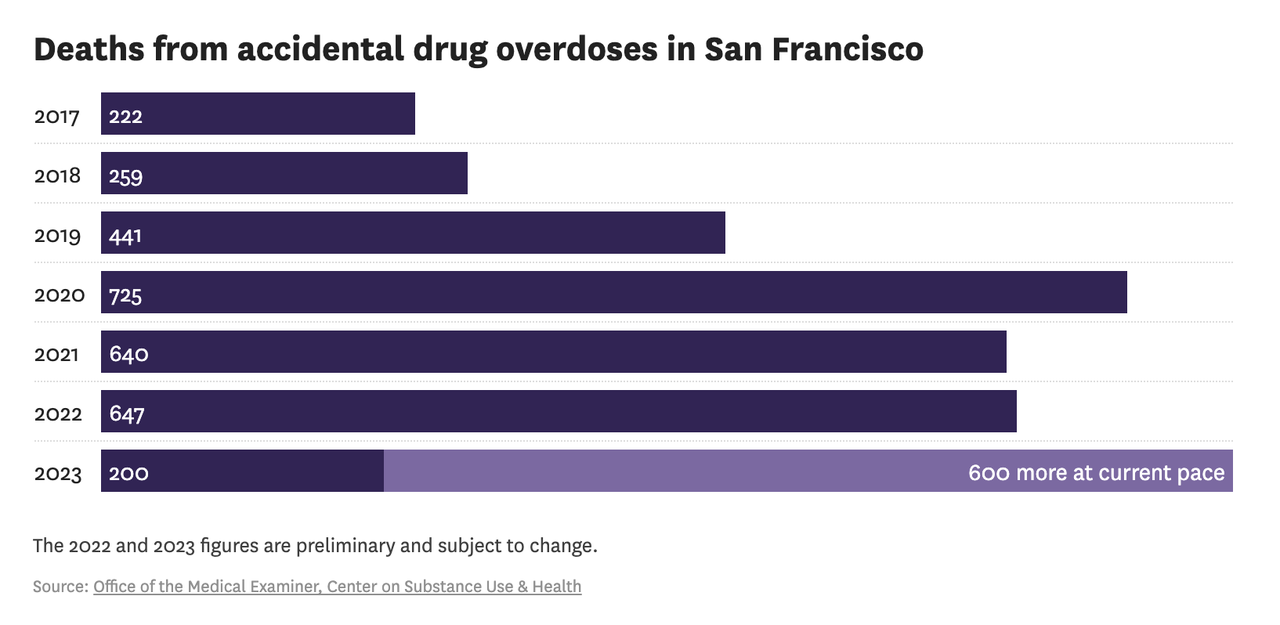
According to ABC7 News, CHP officers will be deployed across Tenderloin and South of Market neighborhoods, while guardsmen will run intelligence analysis operations behind the scenes. The governor brought the two agencies together as the drug-related deaths in the city jumped 41% in the first quarter. 

Newsom's announcement last Friday did not specify the number of personnel on the ground or which units of the Natural Gaurd will be providing intelligence analysis. Supervisor Matt Dorsey said:

"As we hopefully wind down the drug market, we also have to make sure that we are winding up support for the people who are going to have a harder time finding drugs." 

San Francisco recorded 200 drug-related overdose deaths in the first three months of the year compared with 142 in the same period last year. Homelessness doubled as junkies littered the streets in tent cities while crime soared. 

"It's a crying shame that a city as wealthy as San Francisco can't get its act together to deal with overdose deaths," Dr. Daniel Ciccarone, a professor of addiction medicine at the University of California San Francisco, recently told The Guardian. He said the city's approach to addressing the drug crisis has only worsened things. 

"We're a politically divided city between the people who have a lot of money and want the streets swept and those who think a compassionate, science-based, health approach is appropriate," Ciccarone said.

Last year, residents had enough of the Soros-backed district attorney, Chesa Boudin. They recalled Boudin and forced Mayor London Breed to appoint a new district attorney, Brooke Jenkins, who vowed to take a new path of law and order. 

Years of failed progressive policies are to blame for transforming some neighborhoods into third-world-like environments. 

Newsom's call to deploy CHP and National Guard forces is an admittance that liberal policy is bad policy. And residents are waking up to this by booting out these reckless lawmakers. 

https://www.zerohedge.com/markets/gov-newsom-activates-national-guard-and-highway-patrol-combat-san-franciscos-drug-crisis