Search This Blog

Monday, September 4, 2023

NEW DISCOVERIES IN CLIMATE SCIENCE

 Climate science is a wild and woolly multi-disciplinary field in which virtually every proposition is controversial. It is only the politics that is settled; the science is up for grabs.

recent study in Climate illustrates the point, not by introducing new concepts but by measuring the obvious:

A new study published in the scientific peer-reviewed journal, Climate, by 37 researchers from 18 countries suggests that current estimates of global warming are contaminated by urban warming biases.
***
It is well-known that cities are warmer than the surrounding countryside.

We all understand this. “Chance of frost in outlying areas.”

While urban areas only account for less than 4% of the global land surface, many of the weather stations used for calculating global temperatures are located in urban areas. For this reason, some scientists have been concerned that the current global warming estimates may have been contaminated by urban heat island effects.

There is no question that the Urban Heat Island Effect exists. The question is, how much does it skew current temperature readings in an upward direction?

In their latest report, the IPCC estimated that urban warming accounted for less than 10% of global warming. However, this new study suggests that urban warming might account for up to 40% of the warming since 1850.

Given the IPCC’s obvious bias, I find that conclusion highly plausible.

But that’s not all:

The study also found that the IPCC’s chosen estimate of solar activity appeared to have prematurely ruled out a substantial role for the Sun in the observed warming.

One hundred percent of the energy that heats the earth–that prevents it from being a cold, dead rock–comes from the Sun. So the suggestion that variations in the Earth’s climate, which have occurred for millions of years, might relate to variations in solar activity, is an obvious one that Greenies have tried hard to obfuscate.

When the authors analysed the temperature data only using the IPCC’s solar dataset, they could not explain any of the warming since the mid-20th century. That is, they replicated the IPCC’s iconic finding that global warming is mostly human-caused. However, when the authors repeated the analysis using a different estimate of solar activity – one that is often used by the scientific community – they found that most of the warming and cooling trends of the rural data could actually be explained in terms of changing solar activity.

I don’t doubt that adding CO2 to the atmosphere has some small effect on global temperatures. But the models that are the sole basis for climate hysteria use wholly hypothetical feedback effects to transform a benign level of warming that can be accounted for scientifically into a supposedly catastrophic apocalypse. This study suggests that if we eliminate the Urban Heat Island Effect and properly account for variations in solar activity, what is left is the very modest increase in temperatures that science actually supports. (My conclusion, not necessarily that of the authors.) Or perhaps the small residual warming is due to something else entirely.

In any event, if the West actually succumbs to Green nonsense and de-industrializes and impoverishes itself, so as to yield global domination to China and India, who have no intention of doing any such thing, it will be the dumbest action by any governments in world history.

https://www.powerlineblog.com/archives/2023/09/new-discoveries-in-climate-science.php

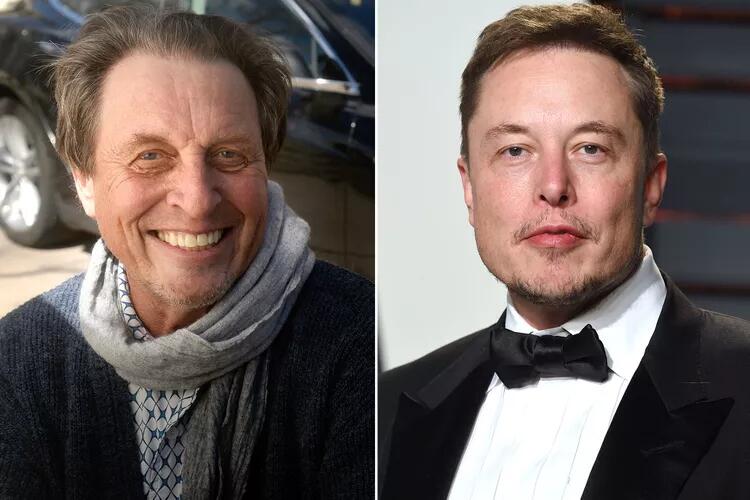
'Musk's Father Worried About Assassination After Escalating Attacks'

 The father of Elon Musk is worried for his son's safety, after he says The New Yorker painted a target on his back with an article highlighting Elon's influence on government decisions about the war in Ukraine, and implied that a conversation Musk had with Russian President Vladimir Putin means Kremliny things are afoot.

Photo: Cyrus McCrimmon/The Denver Post/Getty Images; Anthony Harvey/Getty Images

Errol Musk, 77, told The Sun that the article was "a hit job, a shadow government-sponsored opening salvo on Elon - with one Pentagon official telling The New Yorker that Elon was treated like an "unelected official." The article also claims that Musk's "influence is more brazen and expansive" than previous "meddling of oligarchs and other monied interests in the fate of nations."

When asked by the Sun whether he feared Elon's assassination by the "shadow government," he replied "Yes," suggesting that the New Yorker article was "the artillery-like softening up of the enemy before the actual attack," according.

Interestingly, The New Yorker article came out just days before the Biden DOJ sued Musk's SpaceX for allegedly discriminating against non-US citizens (as all rocket companies and the US government tend not to do).

In July, President Joe 'The Big Guy' Biden suggested that Musk could be investigated for buying X, formerly Twitter, with the help of a Saudi Arabian conglomerate.

When asked if Musk was a threat to national security, Biden said "Elon Musk’s cooperation and/or technical relationships with other countries is worthy of being looked at.

"Whether or not he is doing anything inappropriate, I’m not suggesting that.

"I’m suggesting they’re worth being looked at and that’s all I’ll say," Biden continued, adding "There's a lot of ways."

Musk has also faced assault from censorship advocates, who have accused him of allowing a rise in hate speech and disinformation since he bought X. Musk's supporters say he's protecting freedom of speech, though many have claimed they're still being suppressed by the social media giant.

The day before the DOJ sued SpaceX, the DOJ said: "We’re currently expanding our safety and elections teams to focus on combating manipulation, surfacing inauthentic accounts and closely monitoring the platform for emerging threats.

"Our work is ongoing. These increased investments in people, policy and product will further ensure our communities have access to open, accurate and safe political discourse on X."

In May, Musk's mother scolded her son for joking about assassination.

Musk getting it from all sides

Musk has previously joked to Joe Rogan that he could be assassinated after former Russian space agency head Dmitry Rogozin made a veiled threat over Musk supplying Ukraine with Starlink satellite service last May.

Elon and Errol are reportedly estranged, with Elon once calling his father a "terrible human being." That said, earlier this year Errol said that his son is a "force for good."

https://www.zerohedge.com/political/musks-father-worried-about-assassination-after-escalating-attacks

Medivir: Promising Interim Data Of Fostrox In Combination With Lenvima In HCC

 Shares of Medivir AB (MVIR) were gaining around 11 percent in the early morning trading in Sweden after the pharmaceutical company focused on cancer treatments Monday announced promising interim safety and efficacy data, including a first complete response in phase 1b/2a HCC study with fostrox in combination with Lenvima in advanced hepatocellular carcinoma or HCC.

The phase 1b/2a study of first-in-class candidate drug fostrox in combination with Lenvima in HCC patients for whom current first- or second-line treatment has proven ineffective or is not tolerable is ongoing.

The company noted that central review of the 6 patients in phase 1b dose escalation part was performed. In these 6 patients, complete response was recorded in 1 patient, partial response in 2 patients, and stable disease in 2 patients read by an independent radiologist using mRECIST.

The interim results confirmed the previously announced favorable safety and tolerability profile. The company noted that no new or unexpected safety events and the combination continues to be tolerable.

The phase 2a dose expansion part of the study is ongoing and is now fully recruited. The company plans to present data from phase 1b/2a at an upcoming scientific congress.

https://www.rttnews.com/3387877/medivir-stock-up-on-promising-interim-data-of-fostrox-in-combination-with-lenvima-in-hcc.aspx

ACR: Rheumatologists Help Reduce Emergency, Hospitalization Costs

 Rheumatology care can save health systems more than $2700 per patient per year, according to a new report from the American College of Rheumatology (ACR).

In a white paper and corresponding position statement, the organization outlined how rheumatology care delivers financial benefits for health systems. The work also highlighted prior research on the positive outcomes associated with rheumatology care, including the following:

"Many rheumatologists can attest to the value they bring to the care team at a healthcare system," said Christina Downey, MD, an assistant professor of medicine at Loma Linda University, Loma Linda, California, in a press release. She is the lead author of the white paper and chair of the ACR's Government Affairs Committee. "Our goal with the paper and position statement is to emphasize what that value looks like from a preventive and financial perspective. A rheumatologist on the care team benefits patients, practices, and the economy."

The analysis used adjusted claims insurance data to compare markets with a high vs low supply of rheumatologists. A high supply was defined as at least 1.5 rheumatologists per 100,000 population, whereas a low supply was less than this amount. On average, markets with a high supply of rheumatologists had lower emergency department (ED) and hospitalization costs per patient per year.

 ED costsHospitalization costs
Low Supply$4194$4194
High supply$2882$9542
Cost savings$1312$1450


Added together, high-supply rheumatology markets save on average $2762 in ED visit and hospitalization costs per patient per year.

Downey and colleagues also tallied the direct and downstream billings associated with rheumatologists, including office visits, consultations, lab testing, and radiology services. The average revenue generated per rheumatologist was $3.5 million per year.

"Emphasizing the impact rheumatologists have on the entire medical community is more important than ever, especially as we contend with an impending rheumatology workforce shortage coupled with an expected increase in patient demand for rheumatologic care," Downey said. "This paper supports our recruitment and sustainability efforts for the specialty by spotlighting the significant contributions we make every day and every year to patient outcomes, hospitals, and other healthcare practices."

https://www.medscape.com/viewarticle/996028

Birx Does 180, Says No New Mask Mandates

 When COVID-19 broker out, Dr. Deborah Birx, a former military AIDS researcher with no training, experience, or publications in epidemiology or public health policy, found herself leading a White House Task Force which would play a seminal role in dictating how the country locked down for the pandemic.

In March of 2020, Birx and Dr. Anthony Fauci were grinning like Cheshire Cats with Duper's Delight as they laid out an unprecedented lockdown and masking strategy which Birx later admitted they pulled out of their asses.

Now that we're revisiting mask mandates over the latest Covid-19 surge, Birx and Fauci are seemingly on different sides of the debate.

"We don't need to mandate," Birx told Newsmax on Saturday, in response to reports that an increasing number of hospitals and businesses are now requiring masks again.

"We need to actually empower people with the information that they need for themselves and their families because every family is different," she continued. "And by the way, outside is safe, and playgrounds are safe."

Meanwhile Fauci - the guy who was funding risky bat coronavirus research in Wuhan, China and was then put in charge of the Coronavirus response in which he had scientists scramble to create and bolster propaganda denying a lab leak - went on CNN to push for mask mandates, claiming "there have been many studies indicate the benefit of wearing masks."

Yet, Anchor Michael Smerconish brought up the Cochrane review of masks, one of umpteen studies that have all found that the face coverings do little to nothing against COVID transmission (via Summit News).

"When you’re talking about the effect on the epidemic or the pandemic as a whole, the data are less strong," Fauci said, sqirming. "There are other studies, Michael, that show at an individual level, for individuals they might be protective."

Sure Tony...

New Approaches To Obtain Organs For Transplantation — One Is Available Immediately

 Modern medicine has produced many high-tech miracles, among them gene therapy, electrical stimulation devices that restore significant function after traumatic spinal cord injury, and robot-performed surgery.

Another sector of medicine that needs a breakthrough is transplantation of solid organs. More than 100,000 Americans are waiting for transplants, and due to a shortage of hearts, lungs, livers, and kidneys, at least 17 die each day. Currently, donor organs – from a living person or a cadaver – must match the recipient’s tissue type and size, and often, the match is not perfect. By one estimate, approximately half of transplanted organs are rejected by recipients’ bodies within 10-12 years. Compounding the shortage, the organ procurement system in the U.S. is inefficient, inconsistent, and unaccountable – in short, a mess that causes preventable deaths.

A high-tech approach that uses organs from genetically engineered pigs for transplantation, xenotransplantation, might both eliminate the need for human organ donors and reduce the risk of tissue rejection.

Researchers at the University of Alabama at Birmingham reported in JAMA Surgery earlier this month that they had transplanted a pig kidney with 10 gene edits into a brain-dead man, where it functioned normally – producing urine and evading rejection – during a seven-day study.

That experiment was made possible by a milestone that occurred in December 2020 when the FDA approved “a first-of-its-kind intentional genomic alteration (IGA) in a line of domestic pigs” called GalSafe, which may be used for food or human therapeutics. The IGA in the animals eliminates the gene that makes α-Gal, a sugar molecule found naturally on the surface of porcine cells. It is the source of allergy in some people when they consume certain meats, and it is also involved in tissue or organ rejection after transplantation into humans. That was the first IGA in an animal approved by the FDA for both human food consumption and as a potential source for therapeutic uses.

Another limited success occurred this month, when a kidney from a pig with only a single edited gene was transplanted at NYU Langone Health in New York City into a brain-dead human recipient.  That kidney has functioned for upwards of five weeks.

These are very exciting advances. We are nearing a time when the FDA will permit clinical trials in living patients. Within the next 10 to 20 years, xenotransplantation may well be mainstream practice for kidney failure. But that is too long to wait for people languishing on dialysis today. 

Therefore, we propose a federal tax credit for living kidney donors willing to save the lives of strangers. The value of the reward should be between $50,000 and $100,000, which physicians and others who endorse donor compensation believe would be sufficient to address the shortage. Currently, only friends, relatives, and the occasional “good Samaritan” donor can donate kidneys. Under section 301(a) of National Organ Transplant Act of 1984 (NOTA), it is a federal crime for “any person to knowingly acquire, receive, or otherwise transfer any human organ for valuable consideration for use in human transplantation if the transfer affects interstate commerce.” 

An economic analysis published last year estimated that a reward of $77,000 could encourage sufficient donations to save 47,000 patients annually.

The credit would be universally available – refundable in cash for people who do not pay income tax, not phased out at high income levels, and available under the alternative minimum tax. There would be no change in NOTA’s restriction on payments by organ recipients and other private individuals and organizations – it would still be illegal for recipients to buy organs.

A qualified organ donation would be subject to stringent safeguards. Prospective compensated donors would be carefully screened for physical and emotional health, as all donors are now. A minimum six-month waiting period before the donation would filter out impulsive donations of the financially desperate.

In addition to saving lives, the credit would save the government money – about $14 billion (according to an analysis that examined disincentive removal; providing incentives would probably yield considerably more). Thus, donors would receive financial compensation from the government for both contributing to the public good and for bearing the risk of a surgical operation to remove the organ. This would be compassionate and pragmatic policy.

Moreover, it could be implemented immediately, rapidly clearing much of the backlog of Americans waiting for organs in advance of the longer-term high-tech approaches.

The organ shortage kills thousands of Americans every year. We must do all we can to alleviate it now.  

Henry I. Miller, a physician and molecular biologist, is the Glenn Swogger Distinguished Fellow at the American Council on Science and Health. He was the founding director of the FDA’s Office of Biotechnology. Sally Satel, a psychiatrist and senior fellow at the American Enterprise Institute, is a kidney recipient. She and economist Alan Viard developed the tax proposal in depth

https://issuesinsights.com/2023/08/31/we-urgently-need-new-approaches-to-obtain-organs-for-transplantation-one-is-available-immediately/

British Court Rules Competent & Conscious Patient Can Be Denied Life-Sustaining Treatment Against Will

 by Jonathan Turley,

In my torts class, I often compare the different approaches and doctrines in the United States and the United Kingdom.

One of the most pronounced is the position and authority of physicians on issues like consent and malpractice. This week produced a particularly striking example.

British doctors are seeking to take a 19-year-old critically ill female patient off the intensive care despite her objections and those of her parents.

Unlike most such cases, the woman known only as “ST” is conscious and communicative.

Yet, the doctors argue that she is not being realistic about her chances of survival from a rare disorder. 

Now a British court has agreed and ordered that she can be placed on end-of-life care against her will.

ST is suffering from a rare genetic mitochondrial disease that is progressively degenerative. The case has similarities to that of Charlie Gard, an infant who was removed from life support at the insistence of doctors despite objections from the parents. The Gard family was seeking to take Charlie to the United States for experimental treatment.

ST has been in the ICU for the past year, requiring a ventilator and a feeding tube. She also requires regular dialysis due to chronic kidney damage from her disease.

She wants to be allowed to travel to Canada for an experimental treatment but the doctors oppose the plan and say that she is not accepting the realities of her terminal illness.

They say that she is “actively dying” without any hope of resuming life outside of intensive care.

Her deeply religious family have spent their entire life savings on her care and has complained that a “transparency order” requested by the hospital barred their ability to give details on the case to help raise public funds.

What is so remarkable about this case is that it is not an infant or a comatose patient. 

The court found that ST “is able to communicate reasonably well with her doctors with assistance from her mother and, on occasion, speech therapists.”

Moreover, two psychiatrists testified that she is mentally competent to make decisions about her own care.

Despite all the difficulties which currently confront her, ST is able to communicate reasonably well with her doctors with assistance from her mother and, on occasion, speech therapists. Over the course of the last week she has engaged in two separate capacity assessments. I heard evidence from two consultant psychiatrists whose conclusions in relation to her capacity in both domains are set out in full written reports. . . .

She has been described by those who know and love her as “a fighter”. That is how she sees herself. At the heart of the issues in this case is what ST and her family perceive to be a ray of hope in the form of an experimental nucleoside treatment outside the United Kingdom which might offer her hope of an improved quality of life, albeit a life which is likely to end prematurely in terms of a normal life expectancy. She has told her doctors that she wants to do everything she can to extend her life. She said to Dr C, one of the psychiatrists who visited her last week, “This is my wish. I want to die trying to live. We have to try everything”. [Court’s emphasis] Whilst she recognises that she may not benefit from further treatment, she is resistant to any attempt to move to a regime of palliative care because she wants to stay alive long enough to be able to travel to Canada or North America where there is at least the prospect that she may be accepted as part of a clinical trial. . . .

ST is well aware that she has been offered a very poor prognosis by her doctors. She acknowledges that they have told her that she will die but she does not believe them. She points to her recovery from previous life-threatening episodes whilst she has been a patient at the intensive care unit. She believes she has the resilience and the strength to stay alive for long enough to undergo treatment abroad and she wishes the court to acknowledge her right to make that decision for herself.

Nevertheless, the judge found that she is mentally incapable of making decisions for herself because “she does not believe the information she has been given by her doctors.” 

The court appears to reject her ability to make this decision because she is making the wrong decision:

In my judgment . . . ST is unable to make a decision for herself in relation to her future medical treatment, including the proposed move to palliative care, because she does not believe the information she has been given by her doctors. Absent that belief, she cannot use or weigh that information as part of the process of making the decision. This is a very different position from the act of making an unwise, but otherwise capacitous, decision. An unwise decision involves the juxtaposition of both an objective overview of the wisdom of a decision to act one way or another and the subjective reasons informing that person’s decision to elect to take a particular course. However unwise, the decision must nevertheless involve that essential understanding of the information and the use, weighing and balancing of the information in order to reach a decision. In ST’s case, an essential element of the process of decision-making is missing because she is unable to use or weigh information which has been shown to be both reliable and true.

Accordingly, the court ruled that decisions about ST’s further care should be determined by the Court of Protection based on an assessment of her best interests. Her “best interest,” according to the doctors, is to die.

Thus, the courts have declared that ST cannot choose to continue life-extending treatment and can be forced into palliative care against her will.

The logic of the decision is chilling.

The court is told that ST has cognitive and communicative abilities to make such decisions. However, because the court disagrees with her desire to continue to fight to live, she is treated as effectively incompetent. 

It seems like the judicial version of Henry Ford’s promise that customers could pick any color car so long as it is black.

Here is the opinion: In the Matter of ST

https://www.zerohedge.com/medical/british-court-rules-competent-conscious-patient-can-be-denied-life-sustaining-treatment