Search This Blog

Friday, January 19, 2024

Congressional Tax Deal Will Boost Deficit By $140 Billion: Here's What's In It

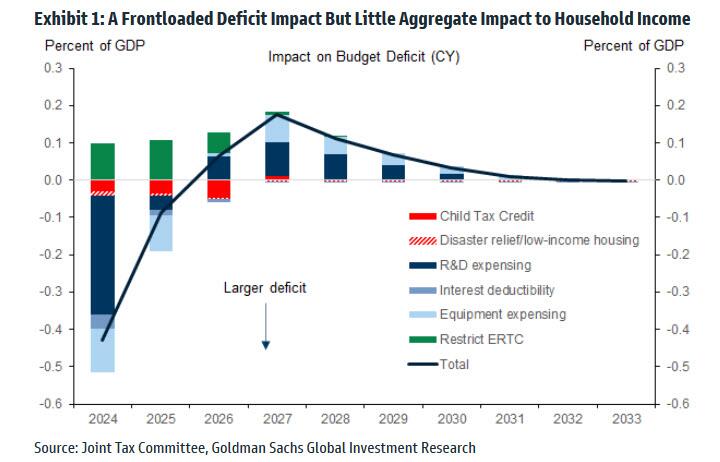
 A bipartisan group of top Republicans and Democrats from the tax-writing committees in Congress reached agreement this week on a $78 billion package that would expand a tax benefit that provides money to parents and restore three popular expired business tax breaks. That combination offers both parties an opportunity to claim wins as voters begin to head to the polls ahead of the election in November.

Specifically, on Tuesday, Senate Finance Committee Chairman Wyden (D-Or.) and House Ways and Means Chairman Smith (R-Mo.) announced an agreement to expand the child tax credit (CTC) and reinstate corporate tax provisions that the 2017 Tax Cuts and Jobs Act (TCJA) made less generous. Limits on further claims of the COVID-related employee retention tax credit (ERTC) would provide savings to reduce the budgetary impact of the changes.

Ketamine vs Esketamine: Critical Differences Explained

 In recent years, media reports touting ketamine as a fast-acting, highly effective treatment for severe depression have increased. In part, this phenomenon is due to the US Food and Drug Administration's (FDA's) 2019 approval of ketamine's cousin, esketamine (Spravato), the first antidepressant in a new drug class for treatment-resistant depression (TRD).

Yet, news coverage of ketamine for depression often fails to include important differences between these two agents, leading to confusion among patients and clinicians alike, Lisa Harding, MD, former vice president of the American Society of Ketamine Physicians, told Medscape Medical News.

While ketamine and esketamine are chemically related, they are very distinct in terms of their chemical compositions, the FDA-approved indications, dosing, and administration, as well as the level of study and data supporting their safe and effective use, explained Harding, assistant clinical professor of psychiatry at Yale School of Medicine, New Haven, Connecticut.

Ketamine is a dissociative anesthetic approved in the United States for inducing and maintaining anesthesia via intravenous infusion or intramuscular injection. It is not indicated for major depressive disorder (MDD) or TRD, although it is frequently used off-label for these indications.

Esketamine, the (S) enantiomer of racemic ketamine, is FDA-approved for adults with TRD and adults with MDD with suicidal thoughts or actions in combination with an oral antidepressant.

Administered intranasally, it has a "well-studied, proven safety and efficacy profile" across 31 global clinical trials in more than 2200 patients, said Harding.

Unlike ketamine, esketamine is administered only in a physician's office with a strict treatment protocol enforced by a mandatory Risk Evaluation and Mitigation Strategy program.

By contrast, there is no drug safety program for ketamine, and physicians continue to have flexibility in off-label prescribing.

Rapid Proliferation of Ketamine Clinics

Under relaxed Drug Enforcement Agency (DEA) guidelines introduced during the COVID-19 pandemic, DEA-licensed practitioners can prescribe ketamine via telemedicine, without an in-person evaluation.

As a result, the United States has experienced a rapid proliferation of ketamine clinics to treat depression that operate with little, to no, regulation.

Some clinics are now prescribing ketamine lozenges that patients take at home. "There is no evidence to support treating patients by that route of administration," Harding said.

"I judge patients less because all of them are just trying to get relief from depression, which is a leading cause of disability worldwide, and there are very few effective treatments. And this is a very promising treatment, but it's just not for everybody, and the person has to be evaluated appropriately," she added.

She noted that treating psychiatric patients with ketamine or esketamine is still a developing, and nuanced, skill in psychopharmacology. A psychiatric assessment to identify appropriate candidates should be completed by a trained mental health expert who understands the clinical administration of both ketamine and esketamine and their respective indications.

The rapidly changing landscape of ketamine — both as a medical therapeutic and a recreational substance — has prompted calls for increased regulation and oversight. Harding and her Yale colleagues at Yale have been at the vanguard of this initiative.

"For a long time, we've been worried about the lack of regulation and coordination among clinics that provide ketamine as an off-label therapy for mental illness," Samuel Wilkinson, MD, assistant professor of psychiatry and associate director of the Yale Depression Research Program, told Medscape Medical News.

"We have been trying to lobby regulators and funders to establish a registry for ketamine use for many years but have not had success," he noted.

Significant Promise, Serious Risk

Emerging evidence suggests ketamine is becoming more widely used as a recreational substance. As previously reported by Medscape Medical News, a recent study found ketamine poisonings in the United States increased 81% between 2019 and 2021.

"People who decide to use ketamine recreationally need to be educated about potential risks," said Joseph Palamar, PhD, with New York University Grossman School of Medicine, New York City, who led this studyWhat's particularly worrisome, said Wilkinson, is the use of take-home ketamine, which some clinics now provide.

A tragic case in point, he said, is the recent death of Matthew Perry, in which ketamine was determined to play a contributing role in the actor's death.

"We don't know if the ketamine in his system was obtained illicitly or was prescribed to him, but there are preliminary reports that a significant portion of people who use ketamine at home, purportedly for therapeutic use, under the supervision of a clinician, actually end up using more than they are supposed to. Above all else we need to be cautious," Wilkinson said.

"Given how similar ketamine and esketamine are, it's hard to justify treating a patient with ketamine in a way that is fundamentally inconsistent with the strict guidelines the FDA has placed around the use of esketamine. Certainly, I don't think it would be very defensible from a legal perspective if something were to go wrong," he added.

Gerard Sanacora MD, PhD, professor of psychiatry and director of Yale Depression Research Program, told Medscape Medical News that physicians, "need to be very careful and responsible in how we consider the balance of the patients' need for novel treatments that are effective in TRD with the potential risk ketamine poses to individuals and society as a whole."

"The problem, said Sanacora, is that "at present, we are not collecting any meaningful data that will help us better understand true risk-benefit ratio of using ketamine in less restrictive treatment protocols. At a minimum, it would seem careful tracking of all ketamine use, similar to the data collected for intranasal esketamine, seems reasonable."

Wilkinson noted that this is not the first time that the medical community has had to deal with a potential treatment that has significant therapeutic promise but also serious risk.

"The opioid epidemic is another example. Hopefully, [with ketamine], we can do a better job of erring on the side of safety," he said.

Wilkinson, Sanacora, and Palamar are authors of a viewpoint on the rapidly shifting ketamine landscape in the United States, published online on January 3 in JAMA Psychiatry. They reported no relevant conflicts of interest.

https://www.medscape.com/viewarticle/ketamine-vs-esketamine-critical-differences-explained-2024a10001is
North Korea Tests Exotic Underwater Nuclear Drone, Claims It Can Create "Radioactive Tsunami"

 North Korea says it has tested a nuclear-capable underwater attack drone, which some analysts have dubbed an 'exotic system' given there's not much known about it, in response to fresh naval exercises involving the United States off the peninsula. The testing of the "Haeil-5-23" system occurred of the country's east coast.

Korean Central News Agency (KCNA) on Friday warned of "catastrophic consequences" for the US and its "followers", also given the joint naval drills with South Korea also had Japan's participation. 

"Our army’s underwater nuke-based countering posture is being further rounded off, and its various maritime and underwater responsive actions will continue to deter the hostile military maneuvers of the navies of the US and its allies," KCNA described.

While South Korean officials have in the recent past described that the north's claims concerning the new weapon are exaggerated, it has gained the public's attention given Pyongyang has touted the weapon's ability for surprise attacks unleashing mass destruction by generating a "radioactive tsunami" through a large underwater explosion.

Reuters describes, "Dubbed 'Haeil', which means tsunami, the new drone system was first reportedly tested in March 2023, and state media said it was intended to make sneak attacks in enemy waters and destroy naval strike groups and major operational ports by creating a large radioactive wave through an underwater explosion."

According to commentary on the mysterious weapon system as cited in Al Jazeera:

While there wasn’t much in the public domain about the drone tested, “what we do know about it, if it’s close to what they tested last year, is that this underwater unmanned vehicle is likely quite slow. It’s a very exotic system,” Mason Richey, a professor at the Hankuk University of Foreign Studies in Seoul, told Al Jazeera.

“It probably runs only something around eight knots per hour, which is somewhere around 14 or 15km [8.6-9.3 miles] per hour. It’s probably quite vulnerable to anti-submarine warfare.”

Its value was more likely “political signaling”, rather that its military use, Richey noted in light of the US, South Korean and Japanese drills.

“This does not make North Korea happy, and the political signal from this message here is quite clear – that it’s going to continue to develop its nuclear arsenal in this sort of … spiral situation that we find ourselves in now,” he added.

But as for Friday's alleged test of the weapon, North Korea did not offer any proof that it actually worked, nor was there any sign of a tsunami in regional waters.

Much of the Kim Jong-Un government statement relayed via KCNA focused on denouncing the US-South Korea-Japan exercises. Pyongyang said it is "an act of seriously threatening the security" of the north, and that "The U.S., Japan and the Republic of Korea are getting frantic in their provocative military exercises."

BBC: North Korean state media published these images of the "underwater nuclear system" when the drones were revealed last April

The statement added, "The armed forces of (North Korea) will strike horror into their hearts through responsible, prompt and bold exercise of its deterrent."

The naval exercises in question included the aircraft carrier USS Carl Vinson and several warships, as well as the Japanese helicopter carrier JS HyĆ«ga. Pyongyang is especially angry that the US has docked a nuclear submarine in the south several times since last summer.

https://www.zerohedge.com/geopolitical/north-korea-tests-exotic-underwater-nuclear-drone-claims-it-can-create-radioactive

Menendez Warns Gov. Whitmer and Others That If He Goes Down, They All Go Down

 Twice-indicted U.S. Democratic Senator Robert (Bob) Menendez (D-New Jersey) took to the Senate chamber floor on Tuesday to defend himself against corruption charges. Along the way, he warned his fellow colleagues that if he goes down, they all go down.

Many of the words he spoke during his approximately 20-minute speech were aimed at his colleagues and others in politics including when he said that if he is nabbed on what they’re accusing him of, it sets a “dangerous precedent to all of you.”

What is the senator accused of doing?

Sen. Menendez was originally charged with bribery and then was indicted for conspiracy to act as a foreign agent. According to USA Today, his alleged bribes allegedly include “Cash, gold bars, payments toward a home mortgage, compensation for a low-or-no-show job and a Mercedes-Benz.” The media report added, “More than $480,000 in cash was found stuffed into envelopes and hidden in clothing, closets and a safe at Menendez’s Englewood Cliffs home.”

The senator defended himself against the charges regarding aiding the Qatar and Egypt’s governments in exchange for cash and gifts. He did so by throwing his fellow politicians under the bus during his emotional and defiant speech. He claimed that what they all do constitutes “diplomacy” and that making introductions to their constituents and going to state-sponsored events is part of their job.

Menendez: all senators do this kind of work.

“On this point, the suggestion that an introduction of a constituent to a Qatari investment company is illegal is not only wrong as a matter of law, it is dangerous to the important work all of us, as senators do” Sen. Menendez said.

The senator continued, “Under the government’s theory, it may be a crime for members of the senate to make introductions to companies, constituents in their own state, to foster investments in their state, investments that create jobs and rateables and revenues that help grow the economy.”

Others in trouble if Menendez found guilty?

Sen. Menendez even took aim at politicians like Michigan’s Democratic Governor Gretchen Whitmer when he continued to say “Indeed, if that is a crime then advocating for Boeing aircraft to be purchased by a foreign government, attracting a foreign chip manufacturer to your state, getting a country to buy agricultural products from your state, making technology investments and so many other actions that members of congress take to attract investment and economic opportunity to their states would now be a crime.”

A dangerous precedent could be set.

The lawmaker said that he was fighting not just for himself but also future precedent. He also lashed out against others in the senate who he feels are not giving him due process and pronouncing him guilty and asking him to resign, including some senate Democrats. Sen. Menendez also accused the government of poisoning the jury pool and seeking to convict him in the court of public opinion and said the prosecutor’s office is engaged “not in a prosecution but a persecution” and that it wants a “victory, not justice.”

'Senators should be able to do their job.'

Sen. Menendez said that those in the senate are not above the law “but not beneath it either.” He added that he’s not always been a friend to Qatar and Egypt over their human rights abuses and has called them out on their unsavory behavior.

He explained that using both a carrot and a stick, cajoling and rewarding other countries is “the essence of diplomacy. It is the job we all partake in every day as part of our duties in the senate.”

Sen. Menendez has refused to resign saying, “I will not step aside and allow those things to happen in the name of political expediency. I have never chosen the easy path—never have, never will, and will not do so now. I simply asked for justice to be allowed to work his way.”

The senator has, however, surrendered his chairmanship of the Foreign Relations Committee until the case is resolved. A May trial date has been set for the senator.

https://www.michigannewssource.com/2024/01/during-speech-on-senate-floor-senator-menendez-warns-gov-whitmer-and-others-that-if-he-goes-down-they-all-go-down/

Violent Pro-Palestine Demonstrations Are Not a Bug

 Anarchic, pro-Palestinian rallies have continued to intensify across the United States ever since Oct. 7, when Hamas massacred 1,200 people and took another 240 hostage. These nationwide protests, marked by highly disruptive tactics, have raised critical questions about the nature of protest, the boundaries of dissent, and the willingness of Western governments to assert and protect basic social values. When one delves deeper into the protesters’ driving ideology, it becomes clear that mass disruption is not a byproduct of their agenda, but the agenda itself.

These groups’ tactics have included blocking roads to international airports on New Year’s Day; endangering passenger planes by launching balloons over the runways; blocking highways that delayed the delivery of organ transplants to hospitals; illegally occupying a House office building near the U.S. Capitol; vandalizing stores supposedly complicit in Israel’s “genocide” of Gaza; disrupting the Macy’s Thanksgiving Day Parade and Christmas tree lighting ceremonies in major cities; and storming the World Trade Centerdefacing public monuments, targeting a cancer hospital, and attacking the White House gates while screaming “Allahu akbar” and “intifada revolution.”

What drives these protesters to such extremes, and convinces them to opt for such woefully misguided methods that—by disrupting the lives of ordinary people—appear to be counterproductive to their cause?

At the forefront of these demonstrations are various Islamic organizations often linked to the Muslim Brotherhood, as well as fringe Jewish anti-Zionist groups championing progressive causes such as climate justice and women’s rights. These groups find common ground in an ideology, ostensibly influenced by works of the French Martinican psychiatrist and post-colonial writer Frantz Fanon, that sees “liberation” and “decolonization” as a global revolutionary struggle and perceives their disruptive actions as a vital component of it. They believe that by obstructing crucial social services and public spaces, they effectively challenge superstructures deemed oppressive. This worldview is predicated on the notion that any inconvenience caused to innocent individuals is justified in the pursuit of societal transformation; their obstructive protest methods aren’t a defect, but a requirement of this worldview.

Individuals, after all, matter little in the struggle of global class and sectarian warfare. In the protesters’ eyes, “Palestine” is a stand-in, a representation of every ostensible victim class across the world fighting for their liberation from oppression. Their “solidarity” transcends geographical boundaries, making any random cause and the Palestinian cause inseparable in their eyes.

That’s why, as Seattle-based Palestinian American journalist Tariq Ra’ouf so eloquently put it when his cohorts blocked Seattle’s northbound I-5 last week: “We are going to inconvenience every single person who doesn’t give a fuck [about Gaza] until they give a fuck. That’s how this goes.”

This entire worldview was epitomized in a November 2023 statement released by the Samidoun Prisoner Solidarity Network, a proxy of the Popular Front for the Liberation of Palestine (PFLP) and leading protest organizer, which read:

The power of the US-led imperial core is declining but it continues its desperate stranglehold on capitalism. Gaza is a focal point of this stranglehold and the testing ground for a completely new tactic of extermination … It is increasingly clear that this tactic will not stay contained to Gaza. From Kashmir to Korea, fascist states like India and the US are already laying the groundwork to replicate this tactic. It is clearer every day that we are facing a coordinated effort to normalize not just the genocide of the Palestinians but the genocide of any and all people who resist the US-led imperialist world order.

Similarly, at a 300,000-person, pro-Palestinian march in Washington, D.C., in November, organizers highlighted purported similarities between Israel’s treatment of Palestinians and police treatment of Black Americans. They blathered about imperial powers, and stressed the importance of connecting with other global liberation struggles, like the Haitian and Algerian revolutions, to enhance the “collective fight for liberation.” It’s also why, in the wake of U.S. strikes against the Houthi terror group that’s been terrorizing Middle Eastern waterways for months, protesters in New York City chanted “from the river to the sea, Yemen will be free.”

Amid the rising chaos and fervor of these protests, which have been allowed to routinely disrupt life in America’s major cities for over three months now, it’s essential to consider their broader impact on the American social and political fabric. These events are not just isolated demonstrations; nor are they simply responses to the realities of Israel’s conflict with Gaza. They’re also symptomatic of a deeper shift in protest culture in the United States.

According to the Crowd Counting Consortium, between Oct. 7 and Nov. 28 there were 1,869 pro-Palestinian protests in the U.S. involving hundreds of thousands, if not millions, of people collectively. These protests have included civil disobedience, vandalism, and violent assaults, resulting in 1,600 arrests during that time period (the number is undoubtedly hundreds, if not thousands higher by January 2024). Young people are disproportionately represented in these protests, which is unsurprising since American universities have been key vectors for indoctrinating Americans into third-world sectarianism and the valorization of its violence.

Remarkably, many of these demonstrators, and the organizations that pay them and routinely bail them out, are also being supported by wealthy nonprofits such as the People’s Forum, and taxpayers (to the tune of $9 million in NYC). The highly politicized intersections of identity politics, wealthy domestic and foreign funders, and government backing certainly helps explain why these demonstrations have been allowed to continue, month after month, despite open calls for genocide and the destruction of public and private property, and the disruption they inflict on the lives of ordinary citizens.

Despite the volume of pro-Hamas protests—or maybe because of it—84% of Americans continue to support Israel over the terror group. Predictably, there’s also been a mounting backlash to the disruption inflicted by the protesters. “They antagonized people so much that they frightened people, to the point that they were not hearing what they were protesting about,” said Fernando Romero, president of Hispanics in Politics, after protesters interrupted a Jan. 5 event in Las Vegas where Sen. Jacky Rosen, D-Nev., was speaking and had to be escorted out a back door. In a viral video posted online on Jan. 8, a Black New Yorker was seen exiting his van and shoving protesters blocking traffic in New York City, yelling, “You can’t do that! It’s against the law! I have a daughter in Brooklyn … I have to get home!”

The trajectory of anti-Israel protests across America suggests a deeper, more unsettling trend. Far from a legitimate expression of opposition, they’ve morphed into a troubling display of ideological extremism and physical violence cloaked in the guise of social justice and backed by wealthy domestic radicals and by foreign states like Qatar, the primary global sponsor of the Muslim Brotherhood. The reckless tolerance of this continuing level of radicalism and disruption does a profound disservice to the principles of democracy and civil discourse. Whatever one believes the rights and wrongs of the Israeli-Arab conflict to be, allowing violent demonstrators calling for genocide and supporting terror organizations like Hamas and the Houthis to own the streets of Western democracies sends a very dangerous message—one that threatens the fabric of a society built on liberal values and legitimate dissent.

Eitan Fischberger is an international relations and Middle East analyst.

https://www.tabletmag.com/sections/news/articles/violent-pro-palestine-demonstrations

Net Neutrality

 There was a time when merely mentioning “net neutrality” would have fueled an Eakinomics adrenaline rush, when the president of the United States would release a video statement pressuring the (supposedly) independent Federal Communications Commission (FCC) to undertake a net neutrality rulemaking, and when the policy debate would have spawned dozens and dozens of AAF writings. Now is not that time.

Now is after the FCC classified broadband as a utility to be regulated under Title II of the Communications Act of 1934, after the succeeding FCC under Chairman Ajit Pai reversed this classification, and after this experimentation proved conclusively that there is no problem to which net neutrality regulation is the solution.

Instead, now is the time when conservative and progressive policy analysts look as energetic as Ali and Frazier after Manilla, and the FCC is undertaking net neutrality in a tired, desultory, check-the-box rulemaking. Jeff Westling covers all the details in his new piece (based on his excellent comments to the FCC).

The short version is very simple. There is no problem to fix, so there is no reason to classify broadband for regulation under Title II. Nevertheless, the FCC is going ahead. But this is more than a simply pointless action. It is an actively destructive move because the evidence is overwhelming that it will reduce investments in the deployment and improvement of broadband – precisely at a time when closing the digital divide is a policy priority. The Biden Administration has raised conflicting signals and policies working at cross-purposes to high art.

As Westling summarizes the argument:

To justify this change, the FCC argues that reclassification is necessary to promote an open Internet, as well as to promote public safety and national security. In both initial comments and reply comments regarding this rulemaking, I explained why the FCC’s plan would not fulfill either of these justifications. First, the light-touch framework that has largely governed broadband since its inception has led to the most robust Internet economy in the world. Second, by reclassifying broadband as a utility, the FCC would add additional costs and risk to any new investment decision. As BIAS providers invest less in their networks, both public safety and national security would be diminished, not strengthened, as the FCC claims.

The final point is that the FCC has no business trying to undertake this reclassification, as it will simply die in the courts. As Westling notes: “If the Biden Administration wishes to reclassify broadband as a utility, such regulations must be passed by Congress, and not the FCC, which lacks statutory authority.”

Pointless, destructive, and unlawful. Go FCC.

Douglas Holtz-Eakin is the President of the American Action Forum

Trump to get Tim Scott's endorsement

 Sen. Tim Scott will endorse former President Donald Trump for another four-year term on Friday, sources said, a move that strikes at fellow South Carolinian Nikki Haley as she battles Trump in Tuesday's New Hampshire primary.

Trump allies have courted Scott heavily in the days since the Republican nomination frontrunner rolled up a big win in the Iowa caucuses.

Scott, a 2024 candidate himself before bowing out of the race in November, considered a vice presidential possibility for Trump, should he go on and claim the GOP nomination.

Scott is expected to speak at a Trump rally Friday night in Concord, New Hampshire, and to campaign with the former president ahead of Tuesday's primary in Granite State.

Haley, campaigning in New Hampshire, had little initial reaction. Asked about news reports of Scott's endorsement of Trump, Haley said, "we'll wait and see if it happens," and then walked away.

Scott's endorsement is a tough pill for Haley, who has been moving up in New Hampshire polls in her bid to topple Trump.

Trump held a lead of 13.5 percentage as of Friday afternoon, according to the average of recent polls compiled by the website Real Clear Politics.

Haley, the former South Carolina governor, announced the appointment of Scott to a vacant U.S. Senate seat in late 2012. The two were considered political allies for years, but their relationship suffered when both decided to seek the presidency in 2024.

The two engaged in a notably nasty argument during a Republican debate in September.

As Scott criticized Haley's record, the former governor taunted: "Bring it, Tim."

Trump, meanwhile, held off criticizing Scott during the campaign and praised the South Carolina senator after he withdrew from the race in November.

Trump has garnered endorsements from a number of Republican lawmakers in recent weeks and months. His support list includes South Carolina's other U.S. Sen. Lindsey Graham.

https://www.usatoday.com/story/news/politics/elections/2024/01/19/tim-scott-to-endorse-donald-trump-ahead-of-new-hampshire-primary/72283502007/