Search This Blog

Saturday, January 20, 2024

Paper mills bribe editors to pass peer review

 One evening in June 2023, Nicholas Wise, a fluid dynamics researcher at the University of Cambridge who moonlights as a scientific fraud buster, was digging around on shady Facebook groups when he came across something he had never seen before. Wise was all too familiar with offers to sell or buy author slots and reviews on scientific papers—the signs of a busy paper mill. Exploiting the growing pressure on scientists worldwide to amass publications even if they lack resources to undertake quality research, these furtive intermediaries by some accounts pump out tens or even hundreds of thousands of articles every year. Many contain made-up data; others are plagiarized or of low quality. Regardless, authors pay to have their names on them, and the mills can make tidy profits.

But what Wise was seeing this time was new. Rather than targeting potential authors and reviewers, someone who called himself Jack Ben, of a firm whose Chinese name translates to Olive Academic, was going for journal editors—offering large sums of cash to these gatekeepers in return for accepting papers for publication.

“Sure you will make money from us,” Ben promised prospective collaborators in a document linked from the Facebook posts, along with screenshots showing transfers of up to $20,000 or more. In several cases, the recipient’s name could be made out through sloppy blurring, as could the titles of two papers. More than 50 journal editors had already signed on, he wrote. There was even an online form for interested editors to fill out.

“Jackpot!” Wise thought, and then, “Oh geez, I’m going to have to report this.”

AT LEAST TENS OF MILLIONS of dollars flow to the paper mill industry each year, estimates Matt Hodgkinson of the independent charity UK Research Integrity Office, which offers support to further good research practices, who is also a council member at the nonprofit Committee on Publication Ethics. Publishers and journals, recognizing the threat, have beefed up their research integrity teams and retracted papers, sometimes by the hundreds. They are investing in ways to better spot third-party involvement, such as screening tools meant to flag bogus papers.

So cash-rich paper mills have evidently adopted a new tactic: bribing editors and planting their own agents on editorial boards to ensure publication of their manuscripts. An investigation by Science and Retraction Watch, in partnership with Wise and other industry experts, identified several paper mills and more than 30 editors of reputable journals who appear to be involved in this type of activity. Many were guest editors of special issues, which have been flagged in the past as particularly vulnerable to abuse because they are edited separately from the regular journal. But several were regular editors or members of journal editorial boards. And this is likely just the tip of the iceberg.

Hodgkinson recalls hearing one publisher say it “had to sack 300 editors for manipulative behavior.” He adds, “These are organized crime rings that are committing large-scale fraud.”

Ben seemed to view co-opting editors as normal business procedure. Reached by phone, he appeared to believe he was being approached by a journal editor looking to collaborate, despite repeatedly being told he was talking to a journalist.

“I have many customers [who] want to publish,” Ben said. He added that he needed partners to help get his papers into journals.

“First time we will pay like this: after accept, half, and after paper online, half,” Ben explained, noting that the kickback’s size would depend on the journal. “You can offer your price.”

When he realized he was not speaking with a journal editor, Ben asked to switch to WhatsApp. In a written exchange he denied paying editors, claiming his company only offered advice about manuscripts, and most of the incriminating posts on his Facebook profile vanished.

But Olive Academic’s relationship with an editor named Malik Alazzam belies Ben’s claim. On LinkedIn, Alazzam describes himself as an “editor of Scopus and ISI journals,” referring to journals included in two leading reputable databases, as well as a former researcher and assistant professor in Saudi Arabia, Malaysia, and Jordan. (He did not agree to be interviewed for this story.) Alazzam’s connection to Olive Academic is apparent from the screenshots in Ben’s Facebook posts recruiting new editors and advertising to authors. One of the two papers whose titles could be discerned, “Influencing Factors of Gastrointestinal Function Recovery after Gastrointestinal Malignant Tumor,” was published in a special issue of Hindawi’s Journal of Healthcare Engineering in 2021—and edited by Alazzam. Three days after the article was accepted, the screenshots show Olive Academic paid $840 to Tamjeed Publishing; the company’s website lists Alazzam as the sole member of the team, and Alazzam’s ­LinkedIn profile says he is an editor there. Other payments, of up to $16,300, showed the first and last letters of the recipient’s name: “M” and “ZZAM.”

Alarming trend

Retractions linked to questionable publishing practices have grown disproportionately, according to Retraction Watch’s database. “Rogue editor” and “peer-review manipulation” can both signal paper mill involvement. (Multiple reasons can be assigned to a single retraction.)

(GRAPHIC) D. AN-PHAM/SCIENCE; (DATA) RETRACTION WATCH

Wise believes Tamjeed’s activity goes beyond Alazzam and that the company acts as a broker, sharing payments from the paper mills with multiple editors—including Omar Cheikhrouhou of Taif University in Saudi Arabia and the University of Sfax in Tunisia. Cheikhrouhou was the editor for the other identifiable paper from Ben’s Facebook posts, “Relationship between Business Administration Ability and Innovation Ability Formation of University Students Based on Data Mining and Empirical Research,” which brought in $1050 for Tamjeed 2 days after acceptance in a special issue of Hindawi’s Mobile Information Systems. (Cheikhrouhou stopped responding to messages after Science requested to interview him.) Cheikhrouhou and Alazzam have both edited other Hindawi special issues and are currently guest editors for several journals published by the Multidisciplinary Digital Publishing Institute (MDPI) and IMR Press.

The two identified papers were retracted on 1 November 2023, when Hindawi and its parent company, Wiley, pulled thousands of papers in special issues because of compromised peer review. (In December, Wiley announced it will “sunset the Hindawi brand.”) “Over the past year, we have identified hundreds of bad actors, present in our portfolio and others, some of whom held guest editorial roles,” a Wiley spokesperson told Science by email. “These individuals have since been removed from our systems.”

OLIVE ACADEMIC AND TAMJEED are far from the only firms employing editors with questionable credentials, or even made up from whole cloth. A Ukrainian paper mill dubbed Tanu.pro, for example, appears to have planted an editor who was either still a student or had just obtained her master’s degree, leveraging journals’ sometimes lax vetting process for editors, according to Anna Abalkina, a social scientist at the Free University of Berlin who identified and described the scheme in a recent preprint.

The editor, Liudmyla Mashtaler, accepted several papers linked to the paper mill through the email addresses used for a 2022 special issue of Review of Education, a title copublished by Wiley and the nonprofit British Educational Research Association (BERA). (The papers were retracted on 5 November 2023, after Abalkina’s preprint appeared.) Mashtaler went on to become a member of the journal’s editorial board. Abalkina found no evidence that Mashtaler has a doctorate, even though she was listed on the editorial board website as “Dr.”; a 2020 Ukrainian government document refers to her as a first-year master’s student. “This is a scandal,” Abalkina says.

Mashtaler, who disappeared from the journal’s editorial board after Science contacted the publisher for this story, continues to edit special issues, sometimes under the last name Obek. She did not respond to repeated emails. BERA said it was working “to tighten procedures for identifying fraudulent activity, including paper mills, following this experience.”

In another case, the editors of a special issue in Hindawi’s Scientific Programming identified via Olive Academic’s ads did not appear to correspond to real people at all. Wise believes the paper mill itself organized the special issue from start to finish—a tactic also described by a scientist who graduated from a medical school in China and tracks paper mills in that country. In such cases the paper mills handle all the correspondence with the journal, including proposing the issue in the first place, either through a real academic colluding with it or by inventing a fake identity for the occasion. “The latest generation paper mill, they’re like the entire production line,” says the researcher, who requested anonymity for fear of retaliation against family members in China.

The problem goes beyond special issues. Of nearly a dozen editors of special issues linked to Olive Academic through ads posted by the company on Chinese social media sites, the majority have also held regular editor posts at journals published by Wiley, Elsevier, and others. These include Oveis Abedinia, an electrical engineer at Nazarbayev University in Kazakhstan who until last year was a regular editor of Complexity, published by Hindawi in partnership with Wiley. (Abedinia did not respond to interview requests via phone or email.) Tamjeed Publishing also appears to have targeted Complexity; on social media, Alazzam listed it as one of the journals his company has “contracted” and invited researchers to publish there.

COLUMBIA UNIVERSITY Ph.D. student Siddhesh Zadey has firsthand experience of such marketing. While he was visiting his parents in India last summer, a Dr. Sarath of iTrilon reached out to him on WhatsApp, offering authorship of “readymade papers” with “100% Acceptance Guarantee.” Angling for more information, Zadey—who is also co-founder of the India-based think tank ASAR, which addresses social problems through research—pretended to be a clueless medical student. “Is the article already accepted?” he asked Sarath. “This says 100% acceptance.”

“Means we have network with Journal editors,” Sarath replied. “So we can guarantee Acceptance.”

One of the journals Sarath claimed to be working with was Health Science Reports, published by Wiley. A spokesperson for the publisher said it had recently issued retractions in the journal “due to peer review manipulation, and there are additional investigations ongoing.”

In an interview, Sarath acknowledged selling authorship but denied iTrilon colluded with editors. “Just we rely on the work,” he said.

However, papers linked to the company reveal likely editor involvement. In Sarath’s pitch to Zadey, he touted five author slots available on an already-accepted “original research article.” The paper went on to be published in the journal Life Neuroscience just 14 days after the ad was posted, with six total authors—two of whom are also high-level editors at the journal.

One of them was the paper’s corresponding and final author—Nasrollah Moradikor, director of the International Center for Neuroscience Research (ICNR) in Georgia, where Sarath told Zadey the work was conducted. (Other authors on the paper are based in India, South Korea, and Spain.) Moradikor did not agree to be interviewed. But as corresponding author, he must have been aware of the postacceptance author additions.

The other author-editor, Indranath Chatterjee, a professor of computer science at Tongmyong University in South Korea, told Science he did not know what kind of services iTrilon provides nor that his paper had been advertised by the company. But he acknowledged there had been authorship changes on the paper because “some expertise of some other people” had been required. In September 2023, he gave a talk on scientific publishing organized by iTrilon and ICNR. Both Moradikor and Chatterjee are also editors at other journals, Chatterjee as a section chief editor at Neuroscience Research Notes and Moradikor as a guest editor for publishers such as MDPI, De Gruyter, and AIMS Press.

PUBLISHERS ARE QUICK to point out that most of the tens of thousands of editors they work with are honest and professional. But they also say they are under siege. A spokesperson for Elsevier said every week its editors are offered cash in return for accepting manuscripts. Sabina Alam, director of publishing ethics and integrity at Taylor & Francis, said bribery attempts have also been directed at journal editors there and are “a very real area of concern.”

Jean-François Nierengarten of the University of Strasbourg, co-chair of the editorial board of Chemistry–A European Journal, published by Wiley, was targeted in June 2023. He received an email from someone claiming to be working with “young scholars” in China and offering to pay him $3000 for each paper he helped publish in his journal.

But Xiaotian Chen, a librarian at Bradley University who has studied paper mills in China, says publishers are not blameless. Chen points out that publishing houses have shown no sign of cutting back on the tens of thousands of special issues they put out every year in open-access journals—reportedly the preferred target for paper mills. Such issues generate hefty profits from the publication fees paid by authors. “Some of the for-profit publishers, they’re just as greedy as a paper mill,” Chen says. “And they count heavily on the contribution from Chinese authors to survive.”

China is a major market for fake papers, and critics say measures to rein in paper mills there have been largely ineffectual. According to a new preprint, more than half of Chinese medical residents say they have engaged in research misconduct such as buying papers or fabricating results. One reason is that publications, though no longer always a strict requirement for career advancement, are still the easiest path to promotion in a range of professions, including doctors, nurses, and teachers at vocational schools, according to sources in China. Yet these groups may have neither the time nor the training to do serious research, Chen says. In such a setting, paying a few hundred or even thousand dollars to see one’s name in print may seem a worthwhile investment, he says.

The towering demand for academic articles is not unique to China. In Russia and several ex-Soviet countries, for example, policies focused on publication metrics, coupled with a culture of corruption and the transition to market economy, have contributed to a similar situation, according to Abalkina. Research output is also gaining importance in India as universities there strive to climb rankings and junior doctors and scientists vie for prestigious jobs at home and abroad. Some universities even require undergraduates to publish papers as part of their curricula, a trend academics say is spreading.

“Students are really desperate to get research papers in whichever way possible,” Zadey says. “No one really cares about the outcomes,” he adds. “It’s all about outputs.”

Although publishers have ramped up their efforts against fraud, including establishing a hub for information sharing, critics say it’s too little and too late. “They were too naïve, the real editors, the real people running these journals,” says Elisabeth Bik, a microbiologist who spends her time scanning scientific papers for signs of fraud. At a meeting for journal editors she attended last year, “people were saying, ‘Yeah, we’ve been asleep at the wheel,’” Bik recalls. “And now we need to sort of deal with that damage.”

Zadey agrees with the need to tackle paper mills, but he worries about the implications for global research inequities. “There is going to be a whole lot of added scrutiny for people with my face and my name when we try to publish.”

IN JULY 2023, Wise reported his findings about Olive Academic to several major publishers. Most promised to investigate and said they would circle back to him once they knew more or if they needed further information. So far, he hasn’t heard back. “Whilst these investigations do certainly take time, I am a bit disheartened, if not surprised,” he says.

Editors trying to safeguard their journals can also get discouraged. When Jer-Shing Huang of the Leibniz Institute of Photonic Technology in Germany joined Elsevier’s journal Optik as editor-in-chief 1 year ago, his hope was to help junior scientists, particularly those in the Global South, improve their manuscripts. Instead, Huang says he ended up trying “to clean up the mess.”

It turned out that Optik, which was delisted from Web of Science in 2023, had a massive paper mill problem. Olive Academic was among its attackers. With Elsevier’s blessing, Huang says, he started “rejecting a lot of really bad papers every day,” as well as proposals for special issues. He also introduced policies requiring supervision of guest editors of special issues, which he said had been major drivers of the journal’s growth. And he set about combing through hundreds of suspect papers that had already appeared.

Before he went on vacation last summer, Huang says, he had retracted more than 20 papers. But it was grueling work, and he had no idea how many more papers were left to check. “I’m really killed by this,” he says.

Last fall, Huang told Elsevier he would resign as editor-in-chief. Not only was he spending his time fighting fires instead of doing science, he had also been attacked on the online forum PubPeer in what he believed was an act of revenge by paper mills rattled by his efforts. The publisher eventually convinced him to stay, but Huang remains conflicted. “This is not at all what I had imagined.”

https://www.science.org/content/article/paper-mills-bribing-editors-scholarly-journals-science-investigation-finds

NYC nabe turned into giant toilet as migrants litter park with poop, leave cups of urine on ‘doorsteps’

 Migrants outside an East Village intake center have been crappy neighbors.

Since November, thousands of adult migrants have waited outside the former St. Brigid’s School on East 7th Street, and overflow into Tompkins Square Park, to score a bed in the city’s shelter system after their 30-day and 60-day stay limits expired.

But s–t hit the fan – and the sidewalks and streets – last week when the city Parks Department yanked a trio of Port-a-potties from the park.

The loos had become so filthy that workers gave up on maintaining them, according to locals.

“There was a cup of what I thought was somebody’s discarded hot chocolate that turned out to be not hot chocolate,” said street cleaner John Cashvan.

“On warmer days, it can smell like a toilet over here — and not a well kept-toilet.” 

In the past week, locals and volunteers said they’ve spotted cups filled with urine around the park’s entrance near the former school, along with human-sized poop in tree beds and between parked cars.

One migrant waiting for a shelter bed said he and others have been blocked from using the bathrooms at an East Village intake center.Helayne Seidman
A street cleaner said he found a cup filled with human poop near where migrants have been congregating in the park.Helayne Seidman

“Most of them want to pee in plastic cups rather than the ground, and they leave them on people’s door steps,” said longtime resident Garrett Rosso, 64, who said he spotted a dozen cups filled with urine. 

One migrant had no problem taking an al fresco whiz on a tree Wednesday afternoon as The Post surveyed the stomach-churning scene.

The southeastern part of the park was also littered with spilled food and plastic containers.

“I’ve cut this part of the park out of my [daily] walk because of the filth,” said neighbor Michael Bartley, 73. “There’s several thousand people [coming to] this end of the park with no place to use the bathroom.”

Locals said the port-a-potties were removed last week because they had become too difficult to clean and maintian.Stefano Giovannini

“If they’re going to bring them here, [the city should] have some Sanitation people here,” he added. “Cops are here? Big f–king deal.”

Guardian Angels founder Curtis Sliwa, a former Lower East Side resident, ripped Mayor Adams for welcoming migrants with open arms, only for his administration to funnel them into neighborhoods without providing any clear aid or plans for handling the sudden influx of hundreds — or even thousands — of people.

“He’s the swagger man with no plan. Everything he does, it its a knee jerk reaction with no follow up,” Sliwa said.

Since the port-a-potties were removed, locals said they’ve found cups filled with urine dotting the area.Stefano Giovannini

“What are you doing in the neighborhood to make it easier for them to absorb [the migrants]?”

Susan Stetzer, district manager for Community Board 3, said Parks workers removed the Tompkins Port-a-potties last week because they were being trashed “to the point they could not be maintained.”

The portable bathrooms were installed in Tompkins last year to provide relief while the park’s field house is undergoing an 18-month renovation.

“The bathrooms are an issue. We’ve tried to engage administration regarding this [but] we have not as of this moment been successful,” she said, adding that migrants continuing to congregate outside in freezing temperature was a “humanitarian crisis.”

The southeast section of Tompkins had become so filthy that Michael Bartley said he cut it out of his daily walks.Helayne Seidman

The migrants, mostly from West Africa and South America and who are among the more than 100,000 who’ve been in the city’s care since spring 2022, said they’ve been blocked by intake center staff from using the building’s restrooms.

“When you want to go to the toilet [at the re-intake center], sometimes people tell you no,” said one man who gave his name as Abu Salim. “You have to go out here.” 

A Parks spokesperson said port-a-potties are difficult to maintain and clean, but that a public restroom operated by the agency was available at McKinley Playground roughly 7 minutes away.

A spokesperson for the mayor’s office said they were aware about complaints regarding a lack of showers and bathrooms, but added that many migrants are choosing to line up when they do not have to. Many are sleeping outside and standing on line despite space at short-term holding centers.

https://nypost.com/2024/01/20/metro/migrants-waiting-for-shelter-beds-are-using-this-nyc-park-as-their-bathroom/

Advocates Outraged That Feds Asked Banks To Search Customers' 'Religious Texts' Purchases

 by Mark Tapscott via The Epoch Times (emphasis ours),

Faith leaders and religious liberty advocates are up in arms over news that the federal government encouraged banks and other financial institutions to search customers’ private accounts using the search term “religious texts.”

The “religious texts” search term was among those federal officials asked financial institutions to use following the Jan. 6, 2021, breach of the U.S. Capitol, a congressional source with direct knowledge confirmed to The Epoch Times on Jan. 18.

Other terms that banks, credit card companies, and financial firms were asked to use in the searches included “MAGA” and “Trump,” according to the House Judiciary Committee. Federal officials at the Department of Justice and the Treasury Department sought the data from such searches as part of their investigation of the events of Jan. 6, 2021.

Religious liberty advocates interviewed by The Epoch Times were unanimous in condemning the searches, which were conducted without judicially authorized search warrants.

“This is beyond alarming,” Family Research Council President Tony Perkins told The Epoch Times. “If we did a word search in history of the type of activities the Biden administration is engaged in, it would return words like ‘KGB,’ ’totalitarian,‘ ’repressive,’ ‘anti-democratic,’ and ‘grave threat to freedom.’”

Family Research Council is a Washington-based nonprofit advocacy group that works on behalf of traditional values, including and especially defense of the family and religious freedom.

The last place you would anticipate this kind of government intrusion into freedom of speech is America and yet it is rife with this administration and with the ‘deep state,’” Liberty Counsel founder and Chairman Mat Staver told The Epoch Times.

“It is a very serious concern and it should be a serious concern, no matter your political beliefs because if this is permitted, then it just depends on who is in power. This is what despotic governments do to suppress people that they don’t agree with,” he said.

Mr. Staver’s organization, Liberty Counsel, is an Orlando, Florida-based nonprofit religious liberty defense foundation.

‘Mockery of Our Laws’

Kelly Shackelford, president, CEO, and chief counsel for the Plano, Texas-based First Liberty Institute, told The Epoch Times the searches exposed by the House panel represent a threat to religious freedom.

“It’s outrageous and frankly chilling that the federal government may be urging banks to monitor Americans for exercising their religious freedom by simply purchasing a Bible or other religious text,” Mr. Shackelford said.

Weaponizing the federal government against religious Americans freely exercising their constitutionally protected freedom is outrageous and a danger to all our freedoms. It makes a mockery of our laws. When religious people are attacked and religious freedom is not upheld, all other civil liberties—including economic freedom—soon start crumbling.”

“This news should serve as a wake-up call for every American,“ warned Jeremy Tedesco, senior vice president of corporate engagement for Alliance Defending Freedom. ”The revelation that the government is working with financial institutions to flag everyday American citizens as ’threats’ because they shop at Cabelas, Dick’s Sporting Goods, or buy religious texts is terrifying.

“No one should live in fear that law enforcement or a financial service provider will flag their account based on the exercise of their constitutionally protected rights.”

House Judiciary Committee Chairman Jim Jordan (R-Ohio) said in a Jan. 17 statement that the searches were sought by the Department of the Treasury’s Office of Stakeholder Integration and Engagement in the Strategic Operations of the Financial Crimes Enforcement Network (FinCEN), in conjunction with the FBI.

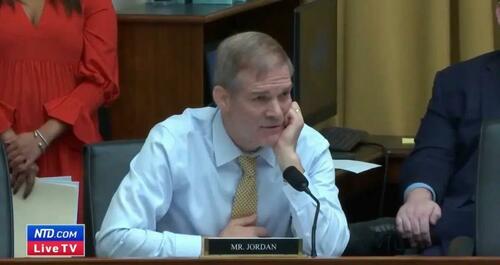
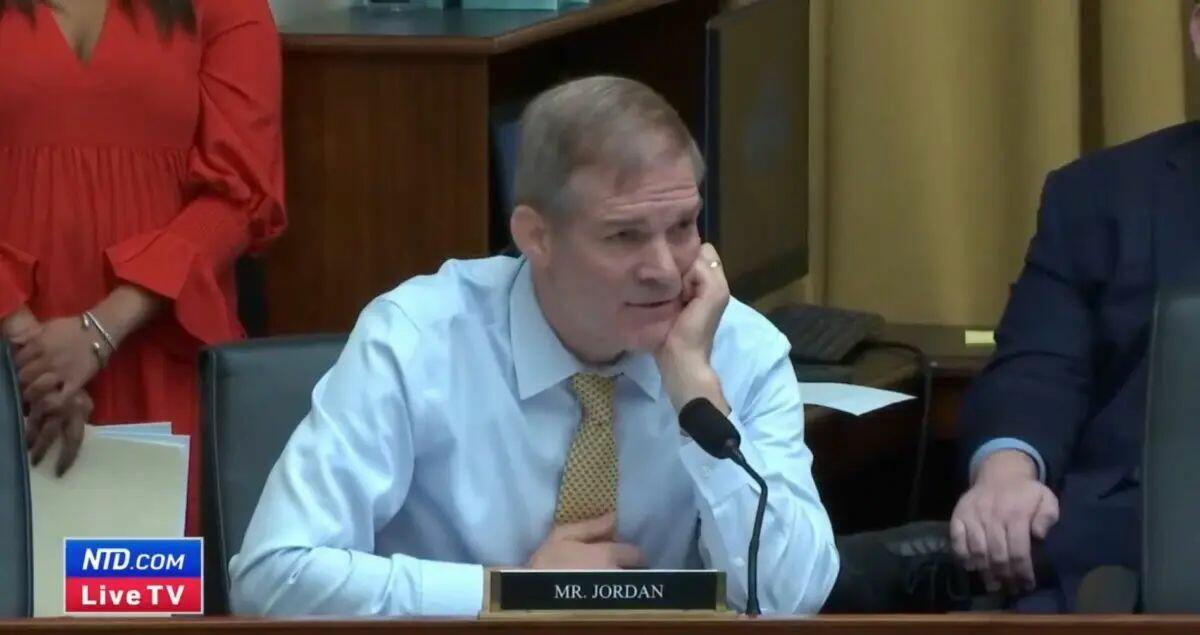
Rep. Jim Jordan (R-Ohio) accused the Department of Justice’s Civil Rights Division of politically based prosecutions while questioning U.S. Assistant Attorney General Kristen Clarke during a House hearing about “Oversight of the Department of Justice Civil Rights Division” in Washington on Dec. 5, 2023. (Screenshot via NTD)

Mr. Jordan wrote a Jan. 17 letter to Noah Bishoff, the former FinCEN director who is now the anti-money laundering officer for Plaid Inc., a San Francisco digital financial platform developer and marketer.

According to this analysis, FinCEN warned financial institutions of ‘extremism’ indicators that include ‘transportation charges, such as bus tickets, rental cars, or plane tickets, for travel areas with no apparent purpose,’ or ‘the purchase of books (including religious texts) and subscriptions to other media containing extremist views,’” Mr. Jordan wrote.

“In other words, FinCEN used large financial institutions to comb through the private transactions of their customers for suspicious charges on the basis of protected political and religious expression.”

Officials’ Testimony Sought

Mr. Bishoff was asked to provide testimony to the House Judiciary panel about the searches, as was Peter Sullivan, senior private sector partner for outreach in the Strategic Partner Engagement Section of the FBI.

“Freedom of Religion is a fundamental right enshrined in the Constitution,” Mr. Jordan told The Epoch Times. “It should frighten every American that the federal government is watching people based on their purchases. This is as wrong as it gets and we will continue to expose this blatant attack on faith and civil liberties.”

In a Jan. 17 letter to FBI Director Christopher Wray, Mr. Jordan explained that Mr. Sullivan’s testimony “will help to inform the [House Judiciary] Committee and Select Subcommittee [on the Weaponization of the Federal Government] about the FBI’s mass accumulation and use of Americans’ private information without legal process; the FBI’s protocols, if any, to safeguard Americans’ privacy and constitutional rights in the receipt and use of such information; and the FBI’s general engagement with the private sector on law-enforcement matters.”

Congressional leaders also told The Epoch Times the searches warrant further investigation and corrective action.

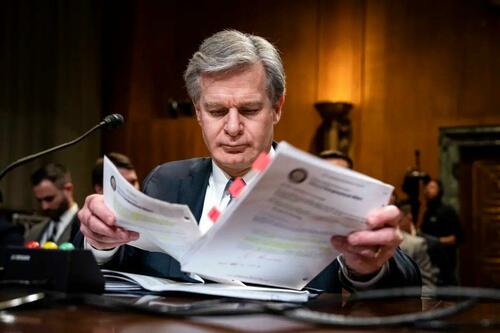
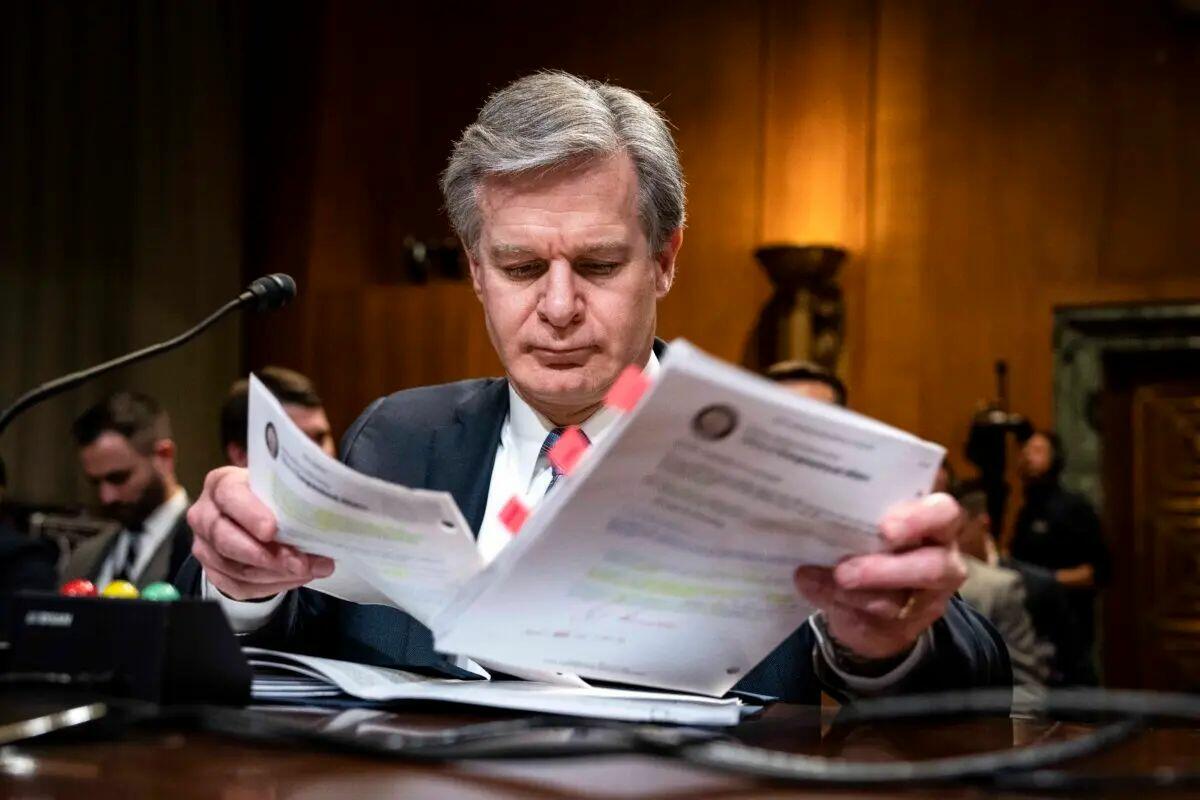
FBI Director Christopher Wray looks over notes as he arrives for a Senate Appropriations Subcommittee on Commerce, Justice, Science, and Related Agencies hearing on Capitol Hill in Washington on May 10, 2023. (Drew Angerer/Getty Images)

House Majority Whip Tom Emmer (R-Minn.) also commented.

The Biden administration is bringing back ‘Operation Chokepoint’ from the Obama-Biden era to weaponize our financial system against their political opponents. House Republicans, under the leadership of Chairman Jordan and the House Judiciary Committee, will not tolerate this un-American abuse of power.” Mr. Emmer said.

He was referring to a Department of Justice investigation in 2013 of firearms dealers, payday lenders, and other businesses thought to be vulnerable to money laundering.

Sen. Marco Rubio (R-Fla.) told The Epoch Times that “digging through American citizens’ private financial transactions, based on political phrases, is a clear weaponization of the federal government and those responsible must be held responsible.”

Sen. Ted Cruz (R-Texas) called the searches “outrageous” and claimed “the Biden administration is using federal law enforcement to engage in financial surveillance of Americans. ... Shockingly, the government is even monitoring people for purchasing religious texts like the Bible. This is an Orwellian invasion of privacy, and it should have never happened in the United States. Biden’s bureaucrats running this horrendous financial surveillance system must be held accountable.”

Similarly, Sen. Ted Budd (R-N.C.) told The Epoch Times: “This is yet another example of the federal government being weaponized against Joe Biden’s political opposition, as well as people of faith. This sort of activity is highly concerning and warrants further investigation. I applaud the House Judiciary Committee for digging into this issue and I look forward to investigators exposing and rooting out this misconduct.”

Tactics of Marxism

Shea Bradley-Farrell is an international development professional and president of the Washington-based Counterpoint Institute for Policy, Research, and Education. She told The Epoch Times that the searches are typical of the control measures used by totalitarian regimes to counter dissidents and other groups not approved by the authorities.

Weaponizing the federal government against private citizens for their political or religious beliefs is straight out of the playbook of Marxism, and was also used to identify, crush, and control the occupied peoples under the communist Soviet Union,” Ms. Bradley-Farrell said.

“As I explain in my book, ‘Last Warning to the West,’ these are totalitarian, police-state tactics used to impose ‘docility, discipline and controllability of subject populations. These are warrantless searches that violate the Fourth Amendment.”

A spokesman for Treasury Secretary Janet Yellen didn’t respond by press time to a request by The Epoch Times for comment.

https://www.zerohedge.com/political/advocates-outraged-feds-asked-banks-search-customers-religious-texts-purchases

'CDC: Consider Testing Blood for 'Forever Chemicals''

 Doctors may consider blood testing for the endocrine-disrupting chemicals per- and polyfluoroalkyl substances (PFAS) to assess community-wide exposure, the CDC recommended

opens in a new tab or window in new guidance this week.

In a new resource center detailing PFAS informationopens in a new tab or window, the CDC said clinicians can order blood testing to measure PFAS levels for patients on an individual basis through Clinical Laboratory Improvement Amendments (CLIA)-certified commercial clinical laboratories. This kind of systematic PFAS blood testing may be particularly helpful for public health officials when looking into community-wide chemical exposures, the agency said.

Exposure to PFAS, often referred to as "forever chemicals," typically comes from contaminated food or wateropens in a new tab or window. Their chemical makeup allows them to reduce friction and resist oil and water, leading them to be commonly used in nonstick cookwareopens in a new tab or window, water-resistant fabrics, stain-resistant coatings, and personal care products.

Studies have linked exposure to these chemicals to a slew of health conditions, such as increases in cholesterol levels, decreases in birth weight, lower antibody responses to vaccines, kidney and testicular cancer, pregnancy-induced hypertension, preeclampsia, and changes in liver enzymes. Other research has also suggested a link between PFAS and thyroid disease, breast cancer, and ulcerative colitis.

While blood testing for PFAS is the more common way to measure exposure, urine testing is also sometimes used. Blood testing can inform clinicians of both recent and past exposures to PFAS, which can guide patients on exposure reduction, greater recognition of associated health effects, and "possible psychological relief" for the patient.

When considering if a patient needs PFAS blood testing, the CDC recommended the clinician first evaluate exposure history on an individual basis, and determine if the results may help reduce exposure.

That being said, there are limitations to such testing, including that blood tests won't actually help identify sources of PFAS exposure and that only certain types of PFAS can be detected in the blood. Testing also won't help link a current illness with exposure, nor predict future health outcomes.

On top of that, there are currently no approved medical treatments to reduce PFAS within the body. Some tips to reduce exposure include installing a water filtration system shown to reduce PFAS levels; test private well water; limit fish, meat, eggs, or dairy known to be contaminated with PFAS; and opt for cleaning and everyday consumer products free of PFAS.

These recommendations build upon 2022 exposure and testing guidance from the National Academies of Sciences, Engineering, and Medicine (NASEM)opens in a new tab or window. In its report, NASEM called on the CDC to update its clinical guidance to advise clinicians to offer PFAS blood testing to patients who are likely to have a history of increased risk of exposure.

NASEM originally advised health screenings for patients exposed to PFAS based on the sum of certain PFAS levels: MeFOSAA, PFHxS, PFDA, PFUnDA, PFOS, PFOA, and PFNA. In their update, the CDC stated that clinicians who rely on NASEM's thresholds for making testing decisions should bear in mind that most people in the U.S. "will exceed NASEM's proposed thresholds for additional screening."

The Agency for Toxic Substances and Disease Registry said it will continue to review the latest PFAS science and provide future updates on the topic.

https://www.medpagetoday.com/publichealthpolicy/environmentalhealth/108346

Harvard urges judge to toss families' lawsuits over morgue scandal

Harvard University on Friday urged a judge in Boston to dismiss lawsuits by families accusing it of mishandling the bodies of loved ones that were donated to its medical school and whose organs and parts were then sold on the black market by the former manager of its morgue.

Martin Murphy, a lawyer for the school, told a state court judge that Harvard Medical School was "deeply sorry for the uncertainty and pain" families suffered as a result of the alleged conduct of its ex-morgue manager, Cedric Lodge, who has been indicted for selling body parts on the black market.

But Murphy said that under a Massachusetts law that governs the donation of bodies to medical schools, Harvard enjoyed broad immunity from lawsuits unless the families can show it failed to act in "good faith."

"None of them make any kind of factual allegations that plausibly suggest that anyone other than Mr. Lodge was involved in the conduct that's at issue here," Murphy told Suffolk County Superior Court Judge Kenneth Salinger.

But lawyers for the families said nothing in the state's Uniform Anatomical Gift Act supported shielding Harvard from liability for allowing donor bodies in its possession to be unlawfully displayed, dismembered, and trafficked.

Lawyer Kathryn Barnett said the families were "devastated by the shocking discoveries of what went on at Harvard" and hoped through the lawsuits to understand how Harvard could have turned a blind eye to Lodge's years-long conduct.

"These are families who are desperate now for answers," she said.

Salinger said he would issue a ruling as quickly as possible in the "very troubling and difficult case."

The 12 lawsuits were filed after federal prosecutors brought charges in June against Lodge and five others accused of buying and selling human remains stolen from Harvard Medical School and an Arkansas mortuary.

Prosecutors said Lodge from 2018 through 2022 would at times let potential buyers into the school's morgue to examine cadavers and select what parts to buy. The buyers mostly resold the body parts, prosecutors said.

They said Lodge also transported stolen remains to his home in New Hampshire, where he and his wife sold them to others. They also shipped stolen remains to people out of state, prosecutors said.

The Lodges have pleaded not guilty to conspiracy and interstate transport of stolen goods charges. They and two other defendants are slated to face trial in federal court in Williamsport, Pennsylvania, on April 1.

https://news.yahoo.com/harvard-urges-judge-toss-families-220331548.html

China widens South America trade highway with Silk Road mega port

 In September, a group of Brazilian farmers and officials arrived in the Peruvian fishing town of Chancay. The draw: a new Chinese mega port rising on the Pacific coast, promising to turbo charge South America's trade ties with China.

The $3.5 billion deep water port, set to start operations late this year, will provide China with a direct gateway to the resource-rich region. Over the last ten years, Beijing has unseated the United States as the largest trade partner for South America, devouring its soy, corn and copper.

The port, majority-owned by Chinese state-owned firm Cosco Shipping, will be the first controlled by China in South America. It will able to accommodate the largest cargo ships, which can head directly to Asia, cutting the journey time by two weeks for some exporters.

Beijing and Lima hope Chancay will become a regional hub, both for copper exports from the Andean nation as well as soy from western Brazil, which currently travels through the Panama Canal or skirts the Atlantic before steaming to China.

"The Chancay mega port aims to turn Peru into a strategic commercial and port hub between South America and Asia," Peru's trade minister Juan Mathews Salazar told Reuters.

Part of China's decade-old 'Belt and Road' drive, the new port embodies the challenge facing the United States and Europe as they look to counter Beijing's rising influence in Latin America. China's trade muscle has helped it win allies and gain leverage in political forums, finance and technology.

Full construction started in 2018 at Chancay, some 80 kilometers (50 miles) north of Lima. Workers are now laying thousands of piles and breakwaters; work signs are written in white-on-red Chinese characters.

The first phase of Chancay is set be completed in November 2024. Chinese President Xi Jinping, expected in Peru for an Asia-Pacific Economic Cooperation (APEC) summit that month, could inaugurate the port, a diplomatic source in Lima said.