by Patrick Lawrence via Consortium News,
At this moment it is hard to locate the limit of what either of the two main political parties in the U.S. will do to avoid losing...
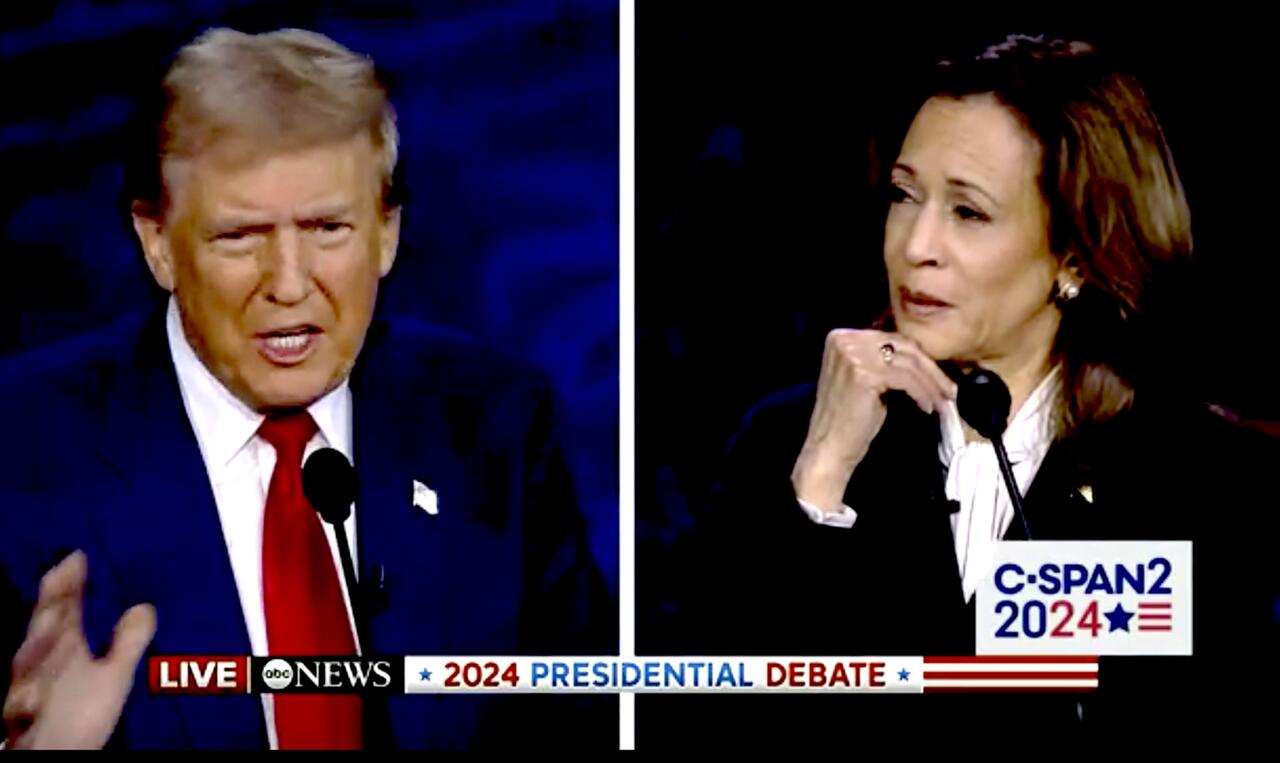
Uh-oh. The New York Times is picking up its familiar theme now that the Nov. 5 elections are but a few days out front: Those mal-intended foreigners are again “sowing discord and chaos in hopes of discrediting American democracy,” it reported in a piece published Tuesday.
The Beelzebubs haunting this political season, when everything would otherwise be orderly and altogether copacetic among Americans, are Russia, China and Iran.
Why can’t this year’s version of the old, reliable “Axis of Evil” leave us alone with our “democratic process,” the one the rest of the world envies and resents? Troublemakers, with all their “sowing.” You could probably call them “garbage” and get away with it.
Uh-oh. We’re already reading of tampered voter-registration forms and forged applications to vote by mail in two districts in Pennsylvania, the populous state where the results in 2020 could not have been blurrier and whose 19 Electoral College votes were decisive in getting Joe Biden into the White House last time around.
But not to worry. In a delightful reprise of one of the truly memorable phrases to come down to us from the 1960s, an election commissioner in one of the districts where officials uncovered the malfeasance tells us, “The system worked.”
I think I understand.
I tell you, whenever I read of people in other countries sowing anything, whether it is doubt or chaos or disinformation, and at this point even pumpkin seeds, it always turns out the same. This word “sowing” has been a favorite in the mainstream press since 2016, when we read daily — and of this we were to have no doubt — the Rrrrrussians were “interfering in our elections.”
Since then, everytime I read of someone sowing something it sows more doubt in my mind — more than I already harbored — that one can take our electoral system, as we have it in the 21st century, the slightest bit seriously.
This is to say nothing of putting one’s name on it behind a little green curtain in a voting booth.
On the one hand you have the Times, which has diminished itself over the past eight years to little more than the Democrats’ house organ, already preparing to suggest that the malign enemies of American democracy corrupted the elections. Believe me, you will hear this if Kamala Harris loses but not if she wins.
On the other hand, you have early but clear cases of attempted vote-rigging and local election officials waving these cases off as nothing at all to fret about. It is interesting to consider why said officials profess so cavalier a view.
I have thought for months that the 2024 elections, discord already in plentiful supply, could easily tip over into a degree of civil chaos beyond anything so far recorded in the American story. Just such a day of reckoning now seems to beckon.
Neither of the main parties appears prepared to lose. At this moment it is hard to locate the limit of what either party will do to avoid losing.
Remnants of Democracy
All by our lonesome selves, it seems to me, we Americans have made a mess of the remnants of our democracy these past eight years.
This is not to suggest American politics has ever been other than, let’s say, in the way of a barnyard. In this, neither of the major parties, whose function since the mid–19th century has been to circumscribe acceptable politics and policy, is free of responsibility.
But in the matter of responsibility I assign more to the Democrats than to the G.O.P. It was Hillary Clinton’s loss to Donald Trump eight Novembers ago that confirmed America’s swift drift into post-democracy.
The Democrats have never recovered from the disruption in 2016 of their dream that history was about to end and their idea of the liberal ethos would eternally prevail, all alternatives withering away the way Marx and Engels thought the communist state would.
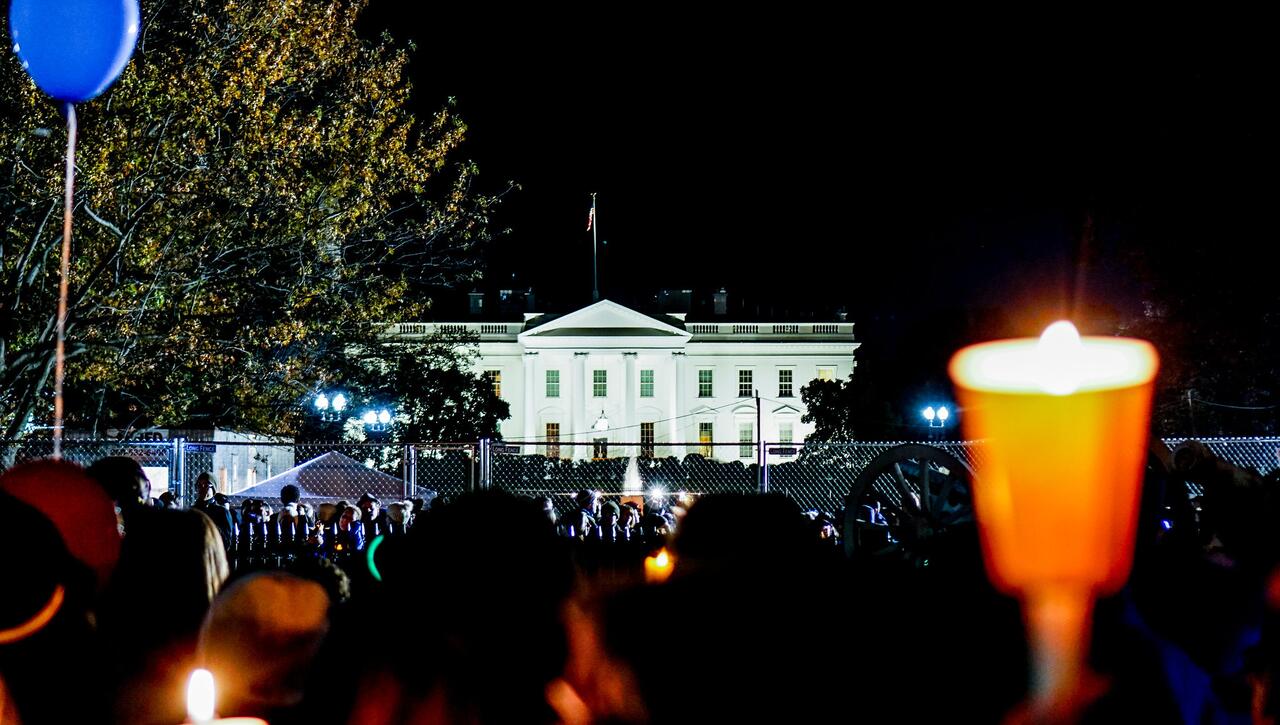
Anti-Trump protest in Washington, D.C., Nov. 12, 2016. (Ted Eytan/Flickr, CC BY-SA 2.0)
I have long detected that American liberalism has at its core a vein of illiberalism that is essential to its character.
America is simply not, to put this point another way, a tolerant nation. It does not encourage its people to think: It requires them to conform. Alexis de Tocqueville saw this coming two centuries ago in the two volumes of Democracy in America.
We are now, post–Clinton, treated to the spectacle of full-dress liberal authoritarianism, and if you do not like the term there are others. De Tocqueville, prescient man, called it “soft despotism.” I’ve always favored “apple-pie authoritarianism.”
Institutional Corruptions
There is a feature of this awful manifestation among NPR–addicted, kale-eating liberals that distinguishes our time as especially discouraging as to the future.
This is their wanton corruption of some of the institutions without which even a semblance of democratic government is impossible. I am thinking particularly of three that figure in the pre-election picture.
One is the judiciary — federal, state, county, local. Beginning with the Mueller investigation, the in-plain-sight corruption of the Federal Bureau of Investigation, the ridiculous court cases brought against Donald Trump, Attorney–General Merrick Garland’s subversion of the Justice Department to protect President Joe Biden as his son’s influence-mongering schemes came to light — all this in behalf of the Democrats:
Well, as I learned during my days as a correspondent abroad, when the judicial system goes down, the path to failed-state status opens.
Two is the intelligence apparatus and the military. Intel, from the days of James Clapper and John Brennan, has lined up unequivocally behind the Democrats ever since the brash real-estate man from New York foolishly assumed he could “drain the swamp” — his declaration that he would take on the Deep State.
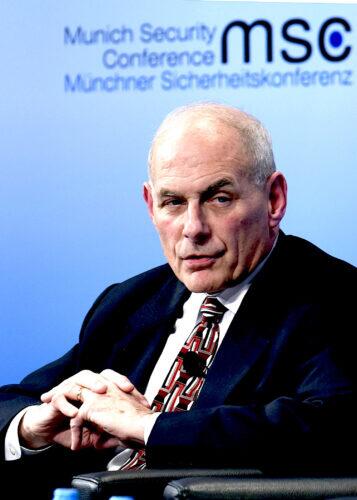
U.S. Secretary of Homeland Security John Kelly at the Munich Security Conference in Germany, Feb. 18, 2017. (U.S. Department of Homeland Security, Wikimedia Commons, Public domain)
As to the military, the generals thought nothing of declaring eight years ago, at the Democrats’ convention in Philadelphia and in open letters published in the Times, that they would refuse the commander-in-chief’s orders were Trump to win and attempt a new détente with Russia and an end to “the forever wars.”
Yes, you’ve got John Kelly, who served in Trump’s cabinet and then as his chief of staff, suddenly calling Trump a fascist — the Democrats’ favorite epithet these past weeks. Doesn’t anyone want to know why Kelly worked closely with a man he considered a fascist? Doesn’t it occur to anyone — it must, surely — that Kelly, a retired Marine general, says these things to serve the party he trusts to keep the wars going and the tax dollars flowing?
A paradox here, more apparent than real: John Kelly, H.R. McMaster, James Mattis, Mark Esper, and various others like them did not wear uniforms when they served in the Trump administration, but they never took them off.
If this election is about anything — apart from the price of groceries, of course — it is about the national-security state’s place in American politics. In our post–2016 era, intel and the military are perfectly welcome to operate openly, unabashedly, in the American political process — this because the Democratic Party gives them a wide berth to do so.
Deep-State Democracy
Now, do you think the Deep State gives a toot about democratic process? Ask the Italians and the Greeks, the Iranians and the Guatemalans, the Japanese, the South Koreans and the Indonesians, the Chileans and the Venezuelans, and… and damn, ask most of humanity at this point. As others have pointed out since the Russiagate days, what the spooks have long done abroad now visits itself upon the American polity.
The obvious follow-on: Should we be concerned as to whether the Democrats and these institutional allies would let this election go to Trump just by the vote count?
I am.
As to the third of the institutions that have corrupted themselves in the Democratic Party cause, may I let mainstream media speak for themselves? Apart from independent publications such as the one you are reading, the intent of American media is no longer to inform the public but to protect the institutions they purport to report upon from the public gaze.
Trump’s “a threat to American democracy,” Harris its savior: It’s a bust at this point. The New York Times has made itself a re-enactment of The New York Times. The Washington Post under the ownership of Jeff Bezos and this ghastly new chief executive of his, Will Lewis, cannot manage, and doesn’t seem to attempt, even a re-enactment.
I do not seem to be the only one ill-at-ease at the prospect of mayhem to come after midnight Nov. 5. The Post published a survey Wednesday, conducted in the first half of October, indicating that among voters in the states where the election could go either way, 57 percent are nervous that Trump supporters won’t accept defeat and may resort to violence, while a third of those surveyed think Harris supporters will take it to the street, as they used to say, if the candidate of joy and vibes loses.
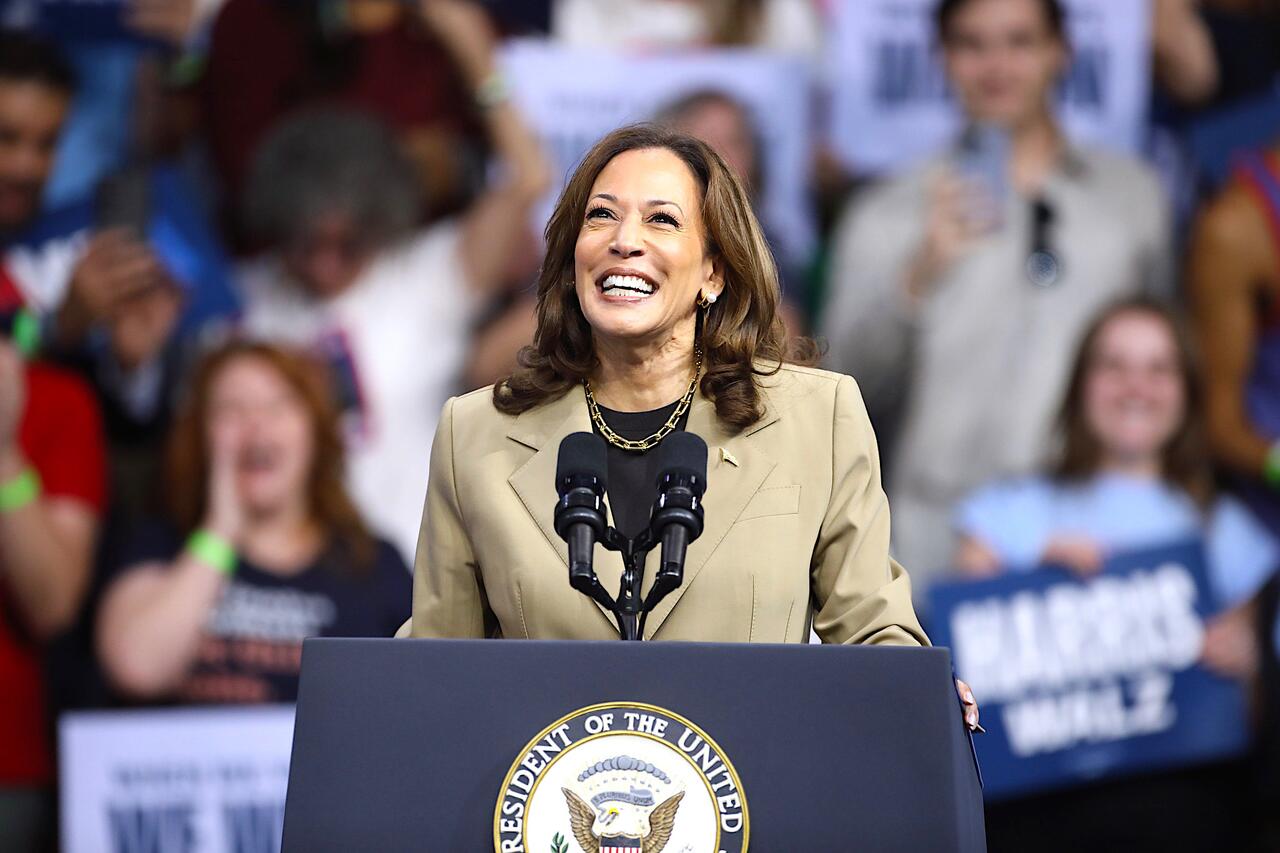
Harris campaigning in Glendale, Ariz., on Aug. 9. (Gage Skidmore, Flickr, CC BY-SA 2.0)
The numbers skewed even more dramatically when The Post asked Democrats about Trump’s people and Trump’s people about Democrats. In a survey The Associated Press published Thursday, you have 70 percent of those polled saying they are “anxious and frustrated.”
Join the party. I cannot, myself, take either candidate seriously. I take seriously the thought that a lot of people will not take the result seriously and a mess will ensue.
And in this I worry more about Democrats resorting to corrupt conduct than I do the Republicans. Why this, you may ask.
To begin with, I do not at all like the smell of that Times piece quoted at the top of this column. It reeks too strongly of the scene in 2016, when, on either side of the election, the Democrats and all manner of repellent “progressives” conjured of thin air a frenzy of Russophobia from which American has yet to recover.
Steven Lee Myers, previously of the Times’s Moscow bureau, is now some kind of “disinformation” reporter and led the work on the piece in question. And all is as it was for four years after Clinton’s defeat: no shred of independent reporting or sourcing in anything under his byline. Intel people and other unnamed officials feed this guy like a foie gras farmer feeds his geese.
This is all you get from our Stevie. And I don’t see anyone trying on this disgraceful stuff in behalf of the Trump campaign. I have suggested my conclusions.
But Jan. 6, Jan. 6, Jan 6! First of all, what happened on Jan. 6 does not rise to “coup” or “insurrection.” It was a protest, with much to suggest the presence of agents provocateurs. And second, there seems to me there was plenty to protest by that point.
Straight off the top, there was the liberal authoritarians’ perfectly legible collusion to suppress the contents of Hunter Biden’s vastly incriminating laptop computer three weeks before the vote, to the point of blanket censorship of the New York Post, the oldest newspaper in America. If this was not open-and-shut election interference someone will have to tell me what constitutes it.
On less certain ground, I have read of many election officials in many states, Pennsylvania high among them, certifying the 2020 results. But a truly convincing, here-are-the-numbers case for these results in states such as Pennsylvania is hard to come by. You never read of Trump’s claims that the Pennsylvania results were rigged. You read only and always of Trump’s “false claims” or “discredited claims” or “disproven claims” to the point you start thinking of Lady Macbeth and how she doth protest too much, methinks.
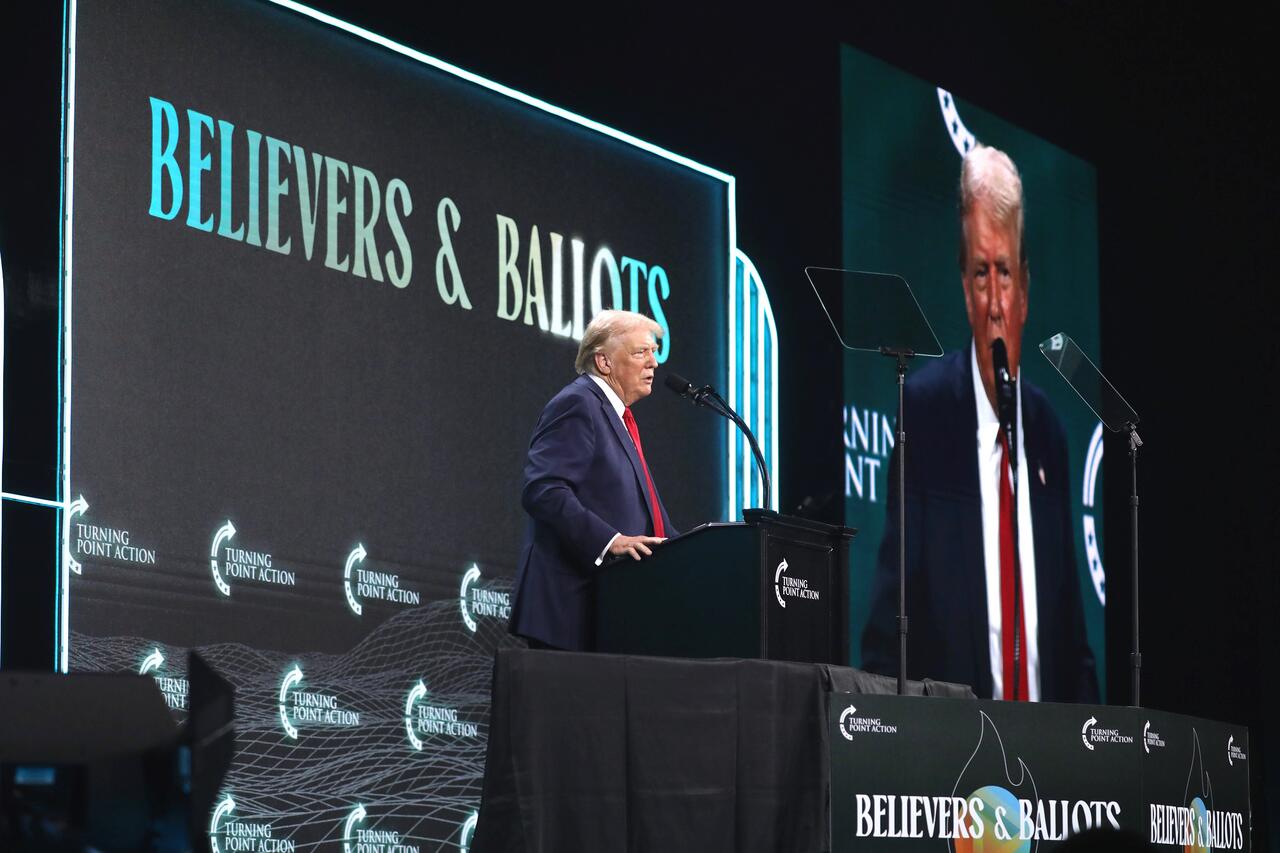
Trump addressing The Believers religious group, in July in West Palm Beach, Fla. (Gage Skidmore, Flickr, CC BY-SA 2.0)
I recall, very imperfectly, seeing research purportedly done by a computer scientist at one of the universities in Philadelphia. Just after the election he or she put out a series of screenshots on social media, time-stamped to the second, that appeared to show the results in a significant number of districts changing all at once and by enough to give Biden a swift come-from-behind victory by a margin of slightly more than 1 percent.
Genuine or a put-up job, this research? Credible or not credible? I would not dream of judging it, but this is not my point. My point is that there should be no cause to doubt such results as these and, eight years on, as I read it there still is.
Doubt recreates itself, as you may have noticed, like some organism that regenerates. So we come to the Times’ report Tuesday of attempted voter fraud in Lancaster and York counties, two populous areas of, once again, Pennsylvania.
Campbell Roberston’s piece has just about everything, starting with a headline that has Trump “sowing doubt.” He, Trump, is even “using reports about suspicious voter registrations to cast the election as already flawed.”
What a cad. What a scoundrel. What a… fascist tyrant.
It seems that some thousands of forged or otherwise fraudulent voter registration forms and requests to vote by mail arrived recently in the offices of the Lancaster and York election authorities.
So far as one can make out, some official or officials in each county brought these “large batches” of falsified government documents to light. Whereupon other officials in each case smothered this discovery as if suffocating the matter with a pillow.
Alice Yoder, an election commissioner in Lancaster, put it best, or anyway most preposterously.
“The system worked,” saith Ms. Yoder.
“We caught this.”
I honestly had to read this quotation several times to believe anyone would say this.
I would like to know a few things about this case that we are not told.
The batches of forgeries “were submitted by out-of-state canvassing groups,” Robertson reports, groups that remain unidentified.
One, what are canvassing groups and what do they do in whose behalf?
Two, what were such groups doing in Lancaster and York counties if they are not from Pennsylvania?
Three, if they are not from Pennsylvania, what were they doing with Pennsylvania election forms that were purportedly genuine?
Just two more questions.
Four, why are the election officials in these two counties not naming the guilty canvassing organizations? This seems to me very troubling.
And five, what are the party affiliations or otherwise the voting preferences of officials who will not identify the offending organizations and say things such as “The system worked.”
There are no grounds to draw any conclusions whatsoever on this point, given we know absolutely nothing about these people, but I went to the trouble of looking up Ms. Yoder’s c.v.
There is a bit of the sociologist in all of us, well– or underdeveloped as the case may be. Journalists often make use of their endowments in this line.
Drawing on mine, I would speculate that Ms. Yoder’s c.v., after a careful peruse, is highly suggestive of a Kamala Harris voter, perhaps even of a liberal authoritarian.
Could be dead right, could be dead wrong. I cannot go beyond more or less idle speculation.
And not more or less idle doubt as Nov. 5 draws close.
https://www.zerohedge.com/political/portents-chaos


