Reports Q2 revenue $141.148M, consensus $146.27M. Michael Weiss, the Company’s Chairman and Chief Executive Officer, stated, “We’re incredibly proud of the continued momentum behind BRIUMVI, which we believe is establishing itself as a leading anti-CD20 therapy in adults with relapsing MS. The strong uptake we’re seeing, combined with deepening physician confidence and compelling patient experiences, underscores the strength of our launch strategy and gives us confidence in reaching our updated 2025 full year BRIUMVI U.S. net revenue guidance of $570 to $575 million. With important innovations like our subcutaneous formulation and combined day one and day fifteen IV dosing currently being studied, we believe BRIUMVI is well positioned to lead the class and redefine treatment expectations for people living with MS.”
BioCryst reported second-quarter earnings that significantly exceeded analyst expectations, driven by record-breaking sales of its hereditary angioedema treatment ORLADEYO.
The rare disease-focused drugmaker reported adjusted earnings of $0.15 per share for the quarter ended June 30, 2025, substantially beating the analyst estimate of $0.01. Revenue reached $163.4 million, well above the consensus estimate of $149.8 million and representing a 50% increase YoY.
ORLADEYO, the company’s oral treatment for hereditary angioedema, generated net revenue of $156.8 million, up 45% YoY. The drug achieved its highest-ever quarter for new patient prescriptions, exceeding the first quarter of its launch by over 10%.
"The financial performance this quarter is the best in the company’s history resulting from better-than-expected revenue growth and very meaningful operating profit," said Jon Stonehouse, CEO of BioCryst.
The company maintained its full-year 2025 ORLADEYO revenue guidance of $580-600 million, below the analyst consensus of $608.4 million, but noted this projection accounts for the expected sale of its European business in early October.
BioCryst reported operating income of $29.8 million for the quarter, compared to $8.8 million in the same period last year. The company’s cash position stood at $287.1 million as of June 30, 2025.
The company is advancing its rare disease pipeline, with a December 12, 2025 PDUFA date for ORLADEYO granules for children with HAE aged 2 to 11. BioCryst also expects initial data from two clinical programs by year-end: BCX17725 for Netherton syndrome and avoralstat for diabetic macular edema.
President Trump on Monday said he would be "substantially raising" tariffs on India as he presses the nation over its purchases of Russian oil, effectively accusing the nation of subsidizing Russia's war in Ukraine.
"India is not only buying massive amounts of Russian Oil, they are then, for much of the Oil purchased, selling it on the Open Market for big profits," Trump alleged on Truth Social. "They don’t care how many people in Ukraine are being killed by the Russian War Machine."
Trump has trained his sites on both India and China over its purchases of Russian oil. China called the demand a key hurdle in trade talks, while India hasn’t committed to stopping purchases and is urging citizens to support local goods.
India is facing 25% tariffs on its exports to the US under plans Trump moved into action last week.
Trump signed an order to hike tariffs on Canada to 35%, while setting rates from 10% to 40% on dozens of partners. Those duties are set to come into full effect this week as Trump looks set to dramatically change the US trade landscape. US Trade Representative Jamieson Greer said that the latest round of tariffs are "pretty much set" and unlikely to change.
Absconding to -- where else -- Chicago, Democratic members of the Texas House of Representatives fled the state on Sunday to break a quorum and prevent a vote on a redistricting planthat promises to boost the GOP's share of seats in the US House of Representatives by five. In response, Gov. GregAbbott threatened to remove them from office, replace them, and pursue felony chargesagainst them, using extradition powers if need be.
Their choice of exile location is positively drenched in hypocrisy, as Illinois arguably has the worst gerrymandering in America -- to Democrats' benefit, of course. In 2024, Democrats won 53% of the popular vote in Illinois House races, but took 82% of the seats (14 out of 17).
— Dr. Rich McCormick for Congress (@RichforGA) August 3, 2025 A quorum is the minimum number of lawmakers present in order to conduct legislative business - a tactic they've used twice before in the 22 years since Republicans have controlled all of Texas state government (efforts which ultimately failed).
The Democrats plan to stay away for two weeks to run the clock on a special legislative session called by Gov. Greg Abbott (R) in order to draw the new map.
By state law, the Texas House can only conduct business when two-thirds of its 150 members are present, meaning at least 51 of the state's 62 Democrats will stay away. So far, 57 have fled the state, according to State Rep. Jon Rosenthal (D), with members fleeing to Chicago, Boston and New York. All plan to remain out of the state until Aug. 19, when the special session concludes.
"Our goal right now is to kill this session," said Rosenthal.
Abbott said if the Democrats don't return by 3pm on Monday, he will invoke a Texas attorney general opinion and "remove the missing Democrats from membership in the Texas House," and then pick their successors under power granted in the state constitution. Upping the ante, Abbott said many of the fleeing Democrats may have committed felonies, as they're soliciting donations to cover fines they face under Texas House rules -- arguing that they risk bribery charges for accepting money "to assist in the violation of legislative duties." To bring them to justice, he said "I will use my full extradition authority to demand the return to Texas of any potential out-of-state felons."Texas AG Ken Paxton (R), meanwhile, has threatened to arrest lawmakers who break quorum, though he won't have jurisdiction over them outside of the state.
The governor of gerrymandered Illinois is lecturing about gerrymandering and praising obstructionist TX Democrats who fled their state, and his state is now harboring:
Democrats dismissed the threats. “As the Texas Supreme Court has acknowledged, it is the right of legislators to deny quorum," State Rep. Chris Turner told the Dallas Morning News. "And as Governor Abbott should know, we also have separation of powers in this country.”
"Today this corruption ends," said state Rep. Gene Wu, chairman of the Democratic caucus in his chamber, at a Chicago presser at a county Democratic Party office attended by other Texas Democrats and Illinois Gov. JB Pritzker.
“This is not a decision we make lightly, but it is one we make with absolute moral clarity. Governor Abbott...is using an intentionally racist map to steal the voices of millions of Black and Latino Texans, all to execute a corrupt political deal. Apathy is complicity, and we will not be complicit in the silencing of hard-working communities who have spent decades fighting for the power that Trump wants to steal.”
Wu also accused Gov. Greg Abbott of making "hostages" out of the victims of last month's terrible floods in Kerrville, since the voting on the redistricting initiative was placed ahead of handling bills that would deliver financial aid to affected communities. The map has been swiftly advancing during the special legislative session that Abbott convened in July to handle the redistricting and flood response, among many other issues.
Republican leaders say the new map is a necessary correction, noting that the state’s population growth has warranted mid-decade changes. But Democrats contend the proposal is a blatant partisan power grab, part of a broader Republican effort in several states to shore up congressional majorities before what is expected to be a volatile midterm season.
Texas Republicans currently control 25 of the state’s 38 congressional seats; the new map would likely give them 30, all of which Mr. Trump carried by at least 10 percentage points in 2024. The GOP holds a narrow 219-212 majority in the U.S. House, with four vacancies, and party leaders see Texas as central to preserving their legislative agenda.
Before the map was unveiled, President Trump said he favored “a very simple redrawing” that would give Republicans more seats. “We pick up five seats [in Texas] but we have a couple other states where we’ll pick up seats also,” he said last month.
Texas state Representative Todd Hunter, a Republican and sponsor of the legislation, called the proposal “a good plan for Texas” and said, “The primary changes … are focused on five districts for partisan purposes.”
DNC Chair Ken Martin - of the party that continually floats packing the Supreme Court when they don't get their way - said, “Republicans thought they could just rig the maps and change the rules without the American people taking notice. They were dead wrong.”
Former Attorney General Eric Holder said Sunday on ABC that Democrats might “have to do things that perhaps in the past I would not have supported” in response to the Texas plan.
“I think we need to respond in kind,” said Gov. Laura Kelly of Kansas, and chair of the Democratic Governors Association.
The new Texas map, unveiled last week under pressure from Trump and Abbott, was approved by a legislative committee on Saturday and was expected to reach the House floor on Tuesday.
In a separate development that could have profound implications for redistricting battles across America, the US Supreme Court last week said it will consider the constitutionality of redistricting that's intentionally aimed at creating "majority-minority districts" with the goal securing power for blacks and Hispanics. In that Louisiana case filed by self-described "non-African American voters," claiming a violation of the Equal Protection Clause, the high court said it will examine whether that kind of redistricting violates the 14th or 15th Amendments to the US Constitution.
In April 2024, a federal panel of judges in the US District Court for the Western District of Louisiana ruled that purposefully creating a majority-black district was "an impermissible racial gerrymander in violation of the Equal Protection Clause of the Fourteenth Amendment.” The 15th Amendment bars governments from denying or abridgingthe right to vote based on race or color.
By Bas van Geffen, senior market strategist at Rabobank
Non-farm payrolls came in at just 73,000 jobs last month. Moreover, revised estimates for May and June came in at just 19k and 14k. This means that 258,000 fewer jobs were created in those two months than initially estimated.
So, Friday’s employment report was very disappointing, to say the least. It supports the argument of the two dissenting FOMC members, namely that the labor market outlook may be weaker than the Fed thought. It certainly raises the probability of a rate cut when the Fed’s policymakers meet again in September – something the market had started to doubt after last week’s policy decision.
Yet, Trump wasn’t exactly happy. The US president wants the central bank to cut rates. But he does not want lower rates because of concerns that the economy is cooling down. In fact, Trump either does not believe the statistics, or he really does not want to hear them. Following the poor employment report, President Trump fired the Commissioner of Labor Statistics, claiming she was a political appointee by Biden.
In short, on top of threats to the Fed’s independence, the market may now have to start worrying about the reliability of US data – and not only because statistics agencies are running into capacity constraints as a result of budget cuts.
Because Trump will get an early opportunity to take more control of the Fed. On Friday, Kugler resigned from the board, several months before her term ended. The US president will reportedly appoint her replacement (who may just become the next Fed Chair when Powell leaves), and the next Commissioner of Labor Statistics, by the end of this week.
Equity markets fell on Friday, as Trump’s tariffs and the employment report suggested that global growth could be weaker than expected. Today, European markets are opening in the green, hoping that the weak data will elicit Fed easing. Indeed, EUR/USD rose 1.5 cents after the non-farm payrolls as the market revises its outlook for US monetary policy, and perhaps further boosted by concerns about the future independence of the central bank and statistics offices.
As damaging as the firing of the BLS head may be for the trust in US statistics, it wasn’t President Trump’s scariest social media post. Last Thursday, Medvedev, currently the deputy chairman of Russia’s Security Council, said that Trump’s new ultimatum to stop the war in Ukraine is “a threat and another step towards war.” The former president also reminded Trump of Russia’s nuclear strike capabilities. Responding to Medvedev, President Trump announced that he “ordered two Nuclear Submarines to be positioned in the appropriate regions, just in case.”
Russia and China have started joint military exercises in the Sea of Japan. These war games were planned well before the escalatory rhetoric between Trump and Medvedev, but they do underscore deepening Russia-China ties.
Meanwhile, China’s control over critical raw materials is biting the US’ military dominance. Even though Beijing has loosened export controls on rare earths after the US and China agreed to a trade truce, the Wall Street Journal reports that manufacturers of military equipment still struggle to source key inputs. This leads to significantly higher production costs, and –worse– production delays.
According to US Trade Representative Greer, talks on these rare earth flows are “about halfway there,” while Treasury Secretary Bessent expressed optimism about a near-term trade deal with China.
Canadian officials sounded equally optimistic about a deal to lower US import tariffs, after talks with the USTR and Secretary of Commerce. However, Greer suggested that many of the August 1 tariffs were unlikely to be lowered. Whether that also applies to Canada remains to be seen. The Canadians have a meeting with Commerce Secretary Lutnick this week, but they don’t expect a quick resolution. A follow-up meeting will reportedly be scheduled for late August.
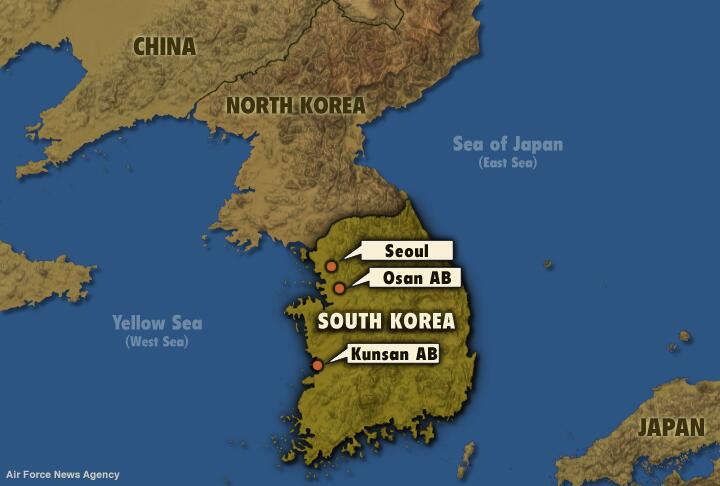
The United States is expanding its military footprint on the Korean Peninsula by establishing another elite air unit near the demilitarized zone, which is apparently in response to Pyongyang's last week announcement that it will only enter negotiations if the US abandons its demand for denuclearization.
The Department of Defense confirmed the US recently transferred 31 F-16 fighter jets from Kunsan Air Base to Osan Air Base, with a purpose to "consolidate air power and enhance combat readiness" in the region.
The Pentagon indicated this marks the second such "super squadron" the US has stationed in South Korea. Osan lies several dozen miles north of Kunsan, closer to the demilitarized zone with North Korea, and so the Kim Jong Un government will no doubt see this as a serious provocation.
Lt. Gen. David. R. Iverson, head of the Seventh Air Force and US Forces Korea deputy commander, has described this change as "an opportunity for us to see if squadrons of this size increase our training effectiveness while also increasing our combat capability if deterrence fails."
Now the Air Force is initiating phase two of the tests, with the creation of a brand new super squadron at Osan. Alongside the 31 planes, roughly 1,000 airmen from the 8th Fighter Wing at Kunsan will transfer to the northern air base as part of this build up. The Air Force described the second phase as a “temporary” shift. The second super squadron is expected to be operational by October, and the second phase will last through October 2026.
North Korea has meanwhile insisted that any future dialogue with the US remains off the table unless Washington recognizes its status as a nuclear-armed nation.
Days ago, Kim Yo-jong, who is the powerful sister of North Korean leader Kim Jong-un and a senior official in the country’s ruling Workers Party, stated that "Any attempt to deny the position of the DPRK as a nuclear weapons state, which was established along with the existence of a powerful nuclear deterrent and fixed by the supreme law reflecting the unanimous will of all the DPRK people, will be thoroughly rejected."
"The DPRK is open to any option in defending its present national position," she had added. It is by "no means beneficial" for the US and North Korea to be in confrontation, so the Trump administration should "seek another way of contact on the basis of such new thinking."
Still, even as the Pentagon is conducing a provocative force posture shift with the movement of its jet squadron, Seoul is taking steps to defuse tensions by dismantling propaganda speakers at the border:
South Korean authorities began removing loudspeakers blaring anti-North Korea broadcasts along the country’s border, Seoul’s Ministry of National Defense has said, as the new government of President Lee Jae-myung seeks to ease tensions with Pyongyang.
“Starting today, the military has begun removing the loudspeakers,” Lee Kyung-ho, spokesman of South Korea’s Defence Ministry, told reporters on Monday.
While Pyongyang has in the past reciprocated 'good-faith' actions like this, the continued large presence of American forces on the peninsula will remain a big problem - also given the fact that in recent years the US has docked nuclear-powered submarines at South Korean ports at various times.