Search This Blog

Thursday, September 4, 2025

Kohberger diagnosed with 4 mental disorders including autism and OCD before sent to prison

 Convicted quadruple killer Bryan Kohberger was diagnosed with four mental disorders months before he made his guilty plea, new court documents show.

Kohberger, 30, was diagnosed with high-functioning autism, obsessive compulsive disorder (OCD), attention-deficit/hyperactivity disorder (ADHD) and avoidant/restrictive food intake disorder (ARFID), according to the mental competency waiver he filled out before submitting the July plea.

Each of those disorders were diagnosed in February 2025, Kohberger noted on the form.

Bryan Kohberger pleaded guilty in July to murdering four University of Idaho students in cold blood.KYLE GREEN/POOL/EPA/Shutterstock

That was just four months before news broke that Kohberger had agreed to a plea deal that would see him dodge the death penalty in return for life in prison without parole.

Despite the diagnosed disorders, Kohberger did not try to claim they prevented him from pleading guilty with a sound mind.

His lawyers tried to use his conditions — particularly autism — to argue that he should not be eligible for the death penalty, but a judge knocked down that request in April.

He made his guilty plea on July 2 before being sentenced to four consecutive life terms — one for each of his victims, University of Idaho students Kaylee Goncalves, Madison Mogen, Ethan Chapin, and Xana Kernodle — and has been held at the Idaho Maximum Security Institution in Boise ever since.

The four students were butchered with a knife as they slept in November 2022.

It still remains unclear why Kohberger targeted the group, but he was arrested within weeks of the killings after the criminology student who fancied himself a criminal mastermind left an embarrassingly obvious trail of evidence that lead straight back to him.

Kohberger listed his diagnosed mental conditions, but said he was of sound mind during his guilty plea.State of Idaho
Kohberger’s victims Kaylee Goncalves, Madison Mogen, Ethan Chapin and Xana Kerndole.

Kohberger’s autism and OCD diagnosis were previously disclosed when his defense filed motions to call experts to trial who would testify that Kohberger’s piercing stare and cold demeanor were not the hallmarks of a psycho killer — but merely the effects of his conditions.

Evidence also showed Kohberger discussed some of his diagnoses in online chatrooms before he committed his crimes, while inmate accounts from his time in prison described obsessive behaviors like hours-long showers.

Kohberger was only taking one medication — levothyroxine — to treat his ailments, the plea form noted.

Levothyroxine is generally used to treat thyroid conditions, and it is unclear if it had any connection to addressing Kohberger’s mental health.

https://nypost.com/2025/09/04/us-news/bryan-kohberger-diagnosed-with-4-mental-disorders-including-autism-and-ocd/

Trump, Zelensky discuss ‘maximum protection’ for Ukraine’s skies

 President Trump and Ukrainian President Volodymyr Zelensky discussed “maximum protection” for Ukraine’s skies on Thursday during a call as the country continues to come under aerial bombardment by Russia with little progress toward peace talks in recent weeks.

Zelensky said he and the president had a “very detailed” conversation after Thursday’s meeting of the so-called “Coalition of the Willing” in Paris and that Kyiv proposed a new format for protecting its skies for Washington to consider. European leaders were also on the call. 

“First and foremost, we talked about how to push the situation toward real peace. We discussed different options, and the most important is pressure, using strong measures, particularly economic ones, to force an end to the war,” Zelensky said in a Thursday post on social platform X. “The key to peace is depriving Russia’s war machine of money, depriving it of resources.” 

“We also spoke about maximum protection for Ukraine’s skies. Until peace comes, Ukrainians must not be at the mercy of constant Russian attacks,” the Ukrainian leader added. “Russian missiles and drones must not take lives. Ukraine has proposed a format for protecting our skies for the U.S. to consider.” 

Ukraine has consistently pushed for more U.S. air defense systems to protect Ukrainian civilians from relentless Russian missile and drone attacks. Trump has balked at additional financial support for Ukraine, but encouraged NATO countries to purchase U.S. weapons for Ukraine’s defense.

French President Emmanuel Macron said at a press conference after the call that 26 countries are prepared to send troops or contribute in other ways to post-war Ukraine security guarantees. 

Zelensky, who was standing beside Macron, added that Poland, Italy and Germany are among Kyiv’s “security guarantors.”  

Trump joined the Thursday call with Zelensky and other leaders, where he pressed European nations to halt purchases of Russian oil as a way to stop Russia’s invasion of Ukraine, which has been ongoing since late February 2022. 

“President Trump emphasized that Europe must stop purchasing Russian oil that is funding the war — as Russia received €1.1 billion [$1.28 billion] in fuel sales from the EU in one year. The president also emphasized that European leaders must place economic pressure on China for funding Russia’s war efforts,” a White House official said in a statement. 

The meetings in Paris come as the efforts to negotiate a peace agreement with Russia appear to be stalled

After meeting with Russian President Vladimir Putin in Alaska last month, and days later with Zelensky and European leaders in Washington, Trump has pushed for a bilateral meeting between the Kremlin leaders and the Ukrainian president.

Putin has refused to commit to a meeting. On Wednesday, he questioned the purpose of such a huddle with the Ukrainian leader this week, but suggested it could take place in Moscow. 

During a recent interview, Trump cast doubt about the potential Putin-Zelenky meeting, but expressed more confidence in arranging a three-way huddle between the two presidents and himself. 

“Something is going to happen, but they are not ready yet. But something is going to happen. We are going to get it done,” the president said.

Zelensky said the officials during the meeting of the “Coalition of the Willing” discussed each country’s readiness to contribute to security guarantees for Ukraine. 

“We coordinated positions and reviewed elements of security guarantees. I am grateful to everyone for understanding that the main security guarantee is a strong Ukrainian army,” Zelensky said. 

“Support for Ukraine must be increased and pressure on Russia must be intensified,” the Ukrainian leader added. “Preparations for the 19th EU sanctions package are underway. Japan is also working on sanctions measures.” 

https://thehill.com/homenews/administration/5487114-zelensky-proposes-sky-protection-us/

Smaller Banks Tackle $395 Billion Bond Headache With Share Sales


Regional and community lenders are turning to stock sales to help them shore up their low-yielding bond portfolios, as the US banking sector grapples with $395 billion in unrealized losses.

At least three regional banks have sold stock in the past month ahead of revamping their balance sheets as the lenders look to partly fund buying new bonds to improve lackluster portfolio returns. Investment bankers expect more deals to follow.

https://www.bloomberg.com/news/articles/2025-09-04/smaller-banks-tackle-395-billion-bond-headache-with-share-sales

China's DeepSeek Develops Advanced AI Agents

 DeepSeek is developing an artificial intelligence model with more advanced AI agent features to compete with US rivals like OpenAI in a newer frontier of the technology, according to people familiar with the matter.

The Hangzhou-based startup is building an AI model that’s designed to carry out multi-step actions on a person’s behalf with minimal direction from the user, said the people. The system is also meant to learn and improve based on its prior actions, the people said, speaking on condition of anonymity because the information is private.

DeepSeek joins a broader industry movement to create true AI agents, considered the next stage of evolution in artificial intelligence. Liang Wenfeng, DeepSeek’s founder, is pushing his team to unveil the new software in the final quarter of this year, the people said. The impending release comes as the industry awaits the release of a successor to its R1, whose emergence in January upended the global tech industry.

That seminal platform, which mimics the human process of reasoning, purportedly cost just several million dollars to build yet matched or surpassed OpenAI products in benchmark tests. The agentic AI platform in the works underscores Liang’s determination to remain at the forefront of the highly competitive industry, though it’s unclear how or whether it can replicate the R1’s breakthroughs.

Since the R1, the Chinese upstart has only put out minor upgrades, even as rivals in the US and China have launched a flurry of new models. Local media have attributed the R2’s delay to Liang’s determination to get it right, even as he continues to run his lucrative High-Flyer Asset Management outfit. Others have speculated about various glitches in training or development.

DeepSeek did not respond to two separate emails seeking comment.

The company’s plan for a new agent-focused model, which hasn’t been previously reported, mirrors a broader shift in the tech industry.

OpenAI, Anthropic and Microsoft Corp. have each launched their own takes on agent software in recent months to streamline personal and professional tasks. Manus AI, a Chinese-founded startup, also gained global attention with what it calls a general AI agent.

https://finance.yahoo.com/news/china-deepseek-preps-ai-agent-152907224.html

Sober Revolution Is Sweeping America... And Markets Are Responding

 by Laura Williams via TheDailyEconomy.org,

For the first time in Gallup’s 90-year polling history, a majority of Americans now view moderate alcohol consumption as bad for one’s health. Just 54 percent of American adults say they drink alcohol, and 49 percent tell pollsters they’d like to cut back in 2025. 
In particular, Gen-Z seems to have gotten the memo on alcohol’s dangers. Adults under 35 are the least likely to drink, with fully 40 percent living an entirely dry lifestyle. Women are most likely to have cut back their consumption between 2020 and 2025, which fits a pattern: COVID lockdowns showed people alcohol’s ugly power.  

Many middle-aged and older folk who’ve cut back recently cited the COVID-19 lockdowns as a source of clarity about their drinking patterns. Without daily obligations or anyone to see or judge them, many people livened up the boredom and isolation with an afternoon cocktail. And then a lunchtime cocktail. And without an early commute and in-person meetings, not to mention the existential dread of a global crisis, perhaps it would be okay to stay up late and have one more in the evening. Zoom meetings became online happy hours. Everything from true crime to personal finance advice was paired with a cocktail recipe and a boozy delivery service. Disposable income rose, fueled by stimulus checks and the largely closed entertainment sector. Spending at liquor stores soared in the weeks after checks were mailed, and a survey from Wallethub estimated 24 million Americans spent some of their stimulus money on alcohol. 

Casual critics of capitalism might see the profit motive in companies keeping Americans drinking alcohol, regardless of its dangers. Young people can likely recall the denials and cynical obfuscations of Big Tobacco and might be justified in finding fault with Big Booze as well. Most people imagine alcohol execs as something like the Merchants of Death in Thank You for Smoking: shady characters representing human vices, conspiring to fill our shopping carts with vodka, cigarettes, and loaded firearms.

No doubt, alcohol is pushed on us by brands that want us to associate various formulations of ethanol with the fulfillment of every desire: be cool, popular, confident, loved, and an excellent dancer. The elixir is in the cooler full of ice near your beach volleyball game, or delivered to your table from a handsome stranger. Alcohol product placements and tippling characters saturate streaming services.  

But unlike advertising, markets are value-neutral. They don’t tell us what we should want; they deliver whatever we’re willing to pay for. Yuengling is the nation’s oldest brewery, and if tomorrow they learned that Gen-Z would be going teetotal, they’d be the nation’s largest kombucha and sparkling water distributor by next year. 

Zero-Proof Imitators 

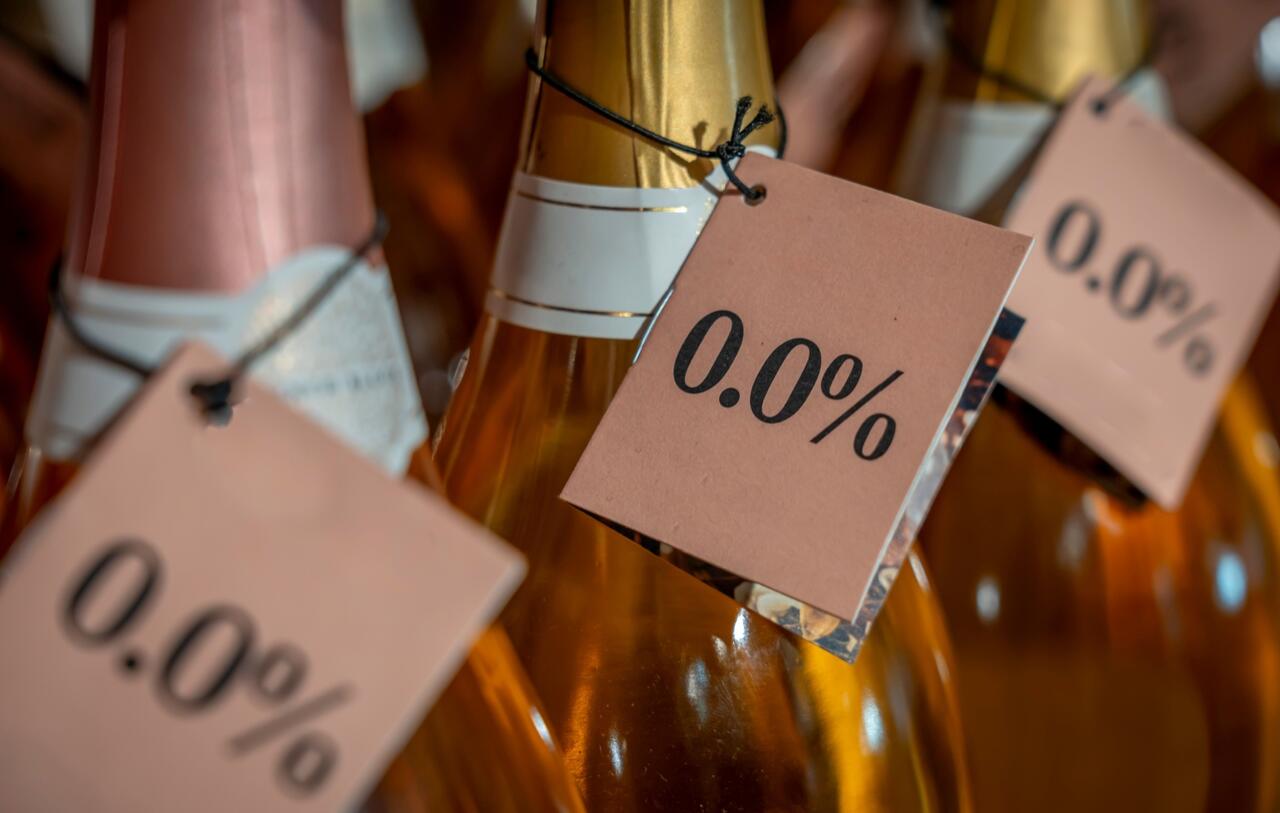
Non-alcoholic adult beverages have the same problem as atheists: it’s hard to affirmatively define yourself with a name that only says what you’re not. So it has been for “near-beer,” “zero-proof liquors,” “spirit-free analogues,” “nosecco,” and perhaps most condescending: “mocktails.” But the zero-proof market segment has entered an era of true innovation, not just imitation. “NA” and “AF” options are no longer niche

Young people want to enjoy the same adult, elevated social spaces and events they’ve associated with traditional drinks. Established brands recognized the demand for alcohol-free options that could be consumed in the same situations. Like foodways, drinking customs are part of our social and familial landscapes: being able to grab a Heineken 0.0 from the fridge along with Dad’s Coors Light preserves the social texture without the dose of poison. An alcohol-free cider or craft mocktail at the office party lets nondrinkers fully participate in the celebration, without prompting uncomfortable conversations. Sales of nonalcoholic alcohol imitators are growing fast, and national distributors of winebeer, and spirits have rolled out new offerings. 
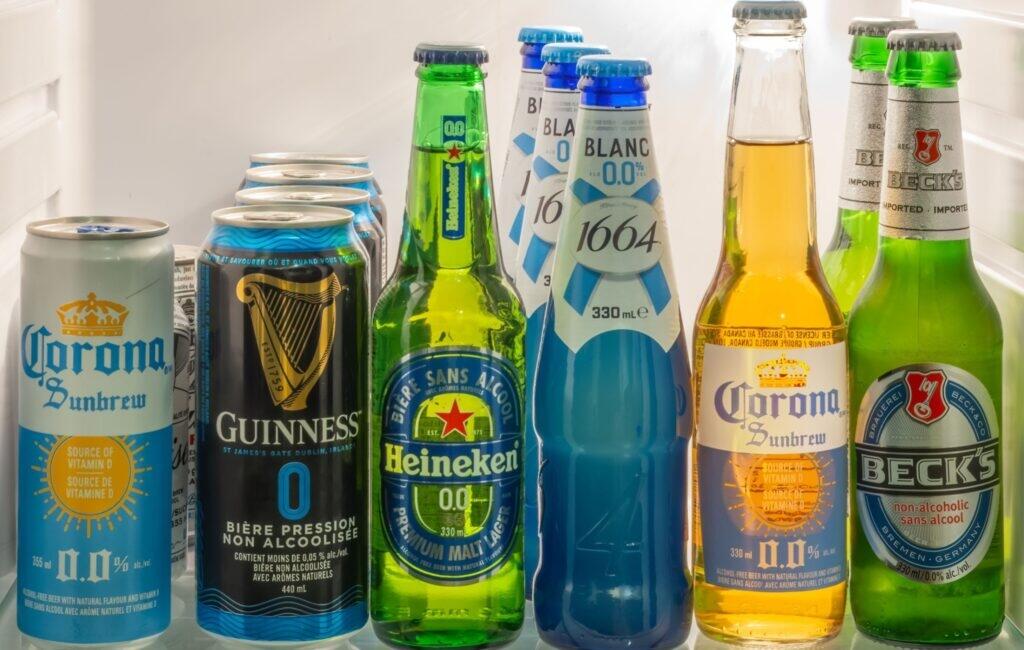
Alcohol-free offerings from several well-known beer brands.

Indeed, savvy beverage brands aren’t just de-alcoholicizing their standard offerings, but instead branching out into kombuchas, tonics, infusions, malts, probiotics, and craft sodas.

Adult Alternatives

Nondrinkers also show interest in beverages with mind-altering and mood-enhancing effects similar to alcohol, but want to avoid its downsides (which range from headaches and hangovers to cancer and coma). Drinks derived from cannabis and infused with the compounds of psychedelic mushrooms are now legal in many states, and are pretty safe compared to alcohol (no lethal dose of either is known). While the availability of recreational cannabis is known to reduce rates of alcohol consumption and abuse, cannabis consumption hasn’t risen significantly over the past five years, so it’s unlikely new users are a major contributor to drinking’s decline.

Among the less-safe iterations of this trend are products containing kava and kratomThese mild stimulants have more in common with espresso and energy drinks than alcohol, but many users report addictive properties and changes in health that look a lot like alcoholism and drug dependence. 

Markets also tend to be great at, well, marketing, so don’t be surprised by the explosion of special collections, targeted sales, and branded merch for Dry July and Sober October. Merchandisers like “Doing It Sober” and “Sober Motivation Shop” have cashed in on the trend, and so have thousands of tiny artisans who now create sobriety-minded accessories. Part of the sobriety aesthetic is smashing stigma as a service to others. The motto on one hoodie reads: “Recover loudly to keep others from dying quietly.” 

Quit Lit and Sober Influencers

Across our consumption landscapes, sober-focused communities are making themselves known. While it wouldn’t be in keeping with group norms to share links to their stories, a quick internet search turns up the online support community r/stopdrinking — perhaps the most reliably supportive, wholesome place on the internet. That Reddit forum had 30,000 members when The Washington Post profiled it ten years ago, but now boasts half a million. No prices are listed here, and the cost is measured in service: support, mutual aid, people sharing their talents freely. Free recovery forums demonstrate supply and demand in the most human way possible. 

Books and podcasts have also proliferated, with Quit Lit finding all the usual niches in bookstores: women’smen’sspiritualsubversive. Podcasts like Sober AwkwardRecovery Elevator, and This Naked Mind reach the sober-curious right in their homes and headphones, reducing the stigma of seeking help, or even self-identifying as needing help.

Creator networks like Patreon also shift the traditional model of exchange. Most of the content is free — which is a surprisingly successful money-making strategy on the participatory internet. A variety of cooperative, collaborative, commercial relationships gives people the ability to support their supporters, in a virtuous feedback loop.

Sober Socializing

Social connections can be lubricated by alcohol, so to satisfy the sober socializer, businesses are increasingly offering indulgent adult escapes that don’t center around what can be bought from the barman.

Luxury hotel groups now require their premium locations to have a “sophisticated zero-proof option for the guests that choose not to imbibe.” Non-alcoholic “soft pairings” are appearing in fine dining establishments, where pairing profiles are expected to be just as complex and intentional as the wines for which they substitute. 

According to an article in Time “there’s been a wave of sober bars opening across the US,” and this is good news for artisanal and craft beverage makers who leverage unique botanicals and hops for cultivating specialty drinks. The demand can even support whole establishments: Atlanta’s first alcohol-free bottle shop, The Zero Co, opened in 2022.

“The addition of zero-proof cocktails can attract local guests who are seeking out a non-alcoholic option—similar to the draw of local restaurants that include gluten-free or vegan options,” writes Tad Wilkes for Restaurant Hospitality

Even Nitecapp Magazine lauded the rise of non-alcoholic specialty mixology at high-end hotels, calling it a “refreshing trend…redefining the essence of indulgence.” Marketing consultancies and startup sales teams emerged to help restaurants build out zero-proof menus and experiences. 

Sober travel and tour companies promise “clear-headed, connection-rich, booze-free adventures.” Just as there is a market for the all-you-can-drink booze cruise, there’s ready money seeking out sober cruising, and companies happy to fill the gap. Recommendation companies like The Sober Curator provide insights for those who prioritize avoiding intoxicants while traveling.

And because dating is often a bar-based and boozy affair — “I’d like to get to know you better” is often shorthanded with “Can I buy you a drink?” — apps have emerged for those who’d rather do their coupling-up fully conscious: LoosidClub Pillar, and Sober Love are growing fast. 

Why Would Big Bev Support Sobriety? 

The profit motive doesn’t make liquor companies “care” about your sobriety, in the sense that they care about your happiness or good fortune, the way Adam Smith used “sympathy.” Instead, the pursuit of personal gain (profit motive) encourages market participants to care about whatever you care about. The producers of non-alcoholic beverages, the purveyors of sobriety podcasts, the luxury hotels mixing up mocktails so complicated you’ll still be willing to pay $15 for juice and herbs — they don’t have to “care” about your health or be emotionally invested in your lifestyle choices. Self-interest via economic activity mimics the effects of sympathy for strangers: people will go to extraordinary lengths to provide what you need — if you’re willing to pay for it.

If you or someone you know has tried to avoid thinking about alcohol, you’ll have noticed that American culture is absolutely saturated in the stuff. Alcohol is prominent in 87 percent of top US movies and infused into your social feedOvert ads on billboards and neon signs in restaurant windows, brand endorsements on sports stadiums: there’s plenty of money to be made in gussying up the world’s most popular Class I carcinogen

And sure, earning money is a significant motivator for the makers of SoberMummy teas, the social network Club Soda, and even “Smells Like Sobriety” candles, but it’s hard to see capitalism as the bad guy in building these networks of voluntary support and exchange. As economists are fond of telling students, McDonald’s doesn’t care whether it becomes the premier salad and smoothie outlet in the country, if that’s what you were willing to pay for. 

https://www.zerohedge.com/personal-finance/sober-revolution-sweeping-america-and-markets-are-responding

New 'Sextortion' Spyware Snaps Webcam Photos Of People Watching Porn

 If you're indulging in adult content online, you might want to slap some electrical tape over your webcam pronto, according to a new report from WIRED. Cybersecurity experts at Proofpoint, a battle-tested firm, just dropped a bombshell detailing a nasty new strain of “infostealer” malware called Stealerium. This open-source digital menace can hijack your webcam to snap photos, snoop on your browser for NSFW keywords, and capture screenshots of anything spicy - all of which could be weaponized for blackmail and extortion schemes that’ll leave victims reeling.

When it comes to infostealers, they typically are looking for whatever they can grab,” Proofpoint researcher Selena Larson told WIRED, exposing the chilling reality of this cyberthreat. “This adds another layer of privacy invasion and sensitive information that you definitely wouldn't want in the hands of a particular hacker.”“It’s gross,” Larson fumed. “I hate it.”

WIRED has more:

More hands-on sextortion methods are a common blackmail tactic among cybercriminals, and scam campaigns in which hackers claim to have obtained webcam pics of victims looking at pornography have also plagued inboxes in recent years—including some that even try to bolster their credibility with pictures of the victim's home pulled from Google Maps. But actual, automated webcam pics of users browsing porn is “pretty much unheard of,” says Proofpoint researcher Kyle Cucci. The only similar known example, he says, was a malware campaign that targeted French speaking users in 2019, discovered by the Slovakian cybersecurity firm ESET.

Larson laid bare the sinister tactics of sextortion spyware, which preys on individuals for profit while flying under the radar. “For a hacker, it’s not like you’re taking down a multimillion-dollar company that is going to make waves and have a lot of follow-on impacts,” she said. “They’re trying to monetize people one at a time. And maybe people who might be ashamed about reporting something like this.”

The malware’s creator, known as witchfindertr, identifies as a “malware analyst” based in London. To top it all off, Stealerium is freely available as an open-source tool on GitHub.

Despite the rapid pace of innovation in cyberhacking tools, spyware-driven sextortion cases remain uncommon.

In 2013, Cassidy Wolf, a 19-year-old Miss Teen USA, became a victim of sextortion involving spyware. Her former high school classmate, Jared James Abrahams, used malware to remotely control her webcam, capturing nude photos and videos without her knowledge. Abrahams then emailed Wolf, threatening to publish the compromising material unless she sent more explicit images or videos. Instead of complying, Wolf reported the threats to her mother, who contacted the police. The FBI investigated and found Abrahams had hacked into as many as 150 accounts, targeting multiple victims. Abrahams was arrested and sentenced to 18 months in federal prison for hacking and extortion

https://www.zerohedge.com/technology/new-sextortion-spyware-snaps-webcam-photos-people-watching-porn