AbbVie and Neurocrine Biosciences said Friday that Health Canada approved Orilissa for the treatment of moderate to severe pain associated with endometriosis.
The companies said Orilissa is an orally administered treatment for endometriosis, affects up to one in 10 women of reproductive age in Canada.
“Endometriosis causes a significant impact on the quality of life of women because of the debilitating and incapacitating pain. Women living with endometriosis can be sidelined by this disease,” says Dr. Nicholas A. Leyland, Chair of the Department of Obstetrics and Gynaecology at McMaster University. “Since there is no cure, the goal of treatment is to alleviate the symptoms and improve a woman’s quality of life.” He said Orilissa offer a new option for treating the condition.
The companies said Orilissa is supported by data from two replicate Phase 3 studies, which evaluated nearly 1,700 women.
Orilissa is expected to be available in Canadian retail pharmacies in early November.
The U.S. Food and Drug Administration said Friday they granted approval to a supplemental application for Gardasil 9, which expands the approved use of the vaccine to include women and men aged 27 through 45 years.
Gardasil 9 prevents certain cancers and diseases caused by the nine human papillomavirus, or HPV, types covered by the vaccine.
The FDA granted approval to Merck, Sharp & Dohme Corp. a subsidiary of Merck & Co., Inc. (MRK).
According to the Centers for Disease Control and Prevention, every year about 14 million Americans become infected with HPV; about 12,000 women are diagnosed with and about 4,000 women die from cervical cancer caused by certain HPV viruses. Additionally, HPV viruses are associated with several other forms of cancer affecting men and women.
Tens of thousands of people have signed up to a new service from two mobile-only banks designed to help problem gamblers. One former addict says this “gambling block”, available on the banks’ apps, helped him beat his addiction.
“I’d be setting my alarm to wake up at 4am to do a first bet,” says Danny Cheetham, who began placing bets in his early 20s.
“I’d plan my route to work so I could call in to a bookies which opened early for commuters.”
Danny, who is now 29, found himself betting in bookies, on slot machines and online. He gambled a lot on football, which he doesn’t even like.
He began relying on overtime from work and on payday loans. In the course of eight years, Danny, who’s from Stockport, estimates he lost more than £50,000.
He sunk into depression and moved in with his dad as he could not afford to pay rent.
It was the death of his mum Christine in 2015 that he says was the turning point for him – but he was not able to kick his habit until he signed up to a gambling block with his bank, Monzo. The so-called challenger bank is a mobile-only version of a traditional bank.
Once the block is activated by the customer, it can spot any transaction that person might try to make with bookmakers – either online or in a shop – by using merchant category codes. It instantly stops the transaction from happening, before any money has left that customer’s account.
If a customer is tempted to place a bet in the heat of the moment, there is a 48-hour cooling-off period before the block is switched off. There is also a daily limit on cash withdrawals.
Gambling addiction: The facts
430,000 problem gamblers in Britain
Two million people “at risk”
Harm can include higher levels of physical and mental illness, debt problems, relationship breakdown and, in some cases, criminality
Monzo CEO Tom Blomfield says the block was introduced because customers asked for it.
“We have a team of people who work with vulnerable customers and they were getting this feedback quite often” he says.
More than 25,000 customers have signed up to the bank’s block since it went live in June.
“Not all of those were problem gamblers [but] about 8,000 people did have a history of gambling,” says Mr Blomfield.
“We’ve… seen a 70% decline in their gambling transactions so [it’s made] a really big impact.”
Another challenger bank, Starling, is offering a similar type of block. It’s gained 20,000 users since its launch in June.
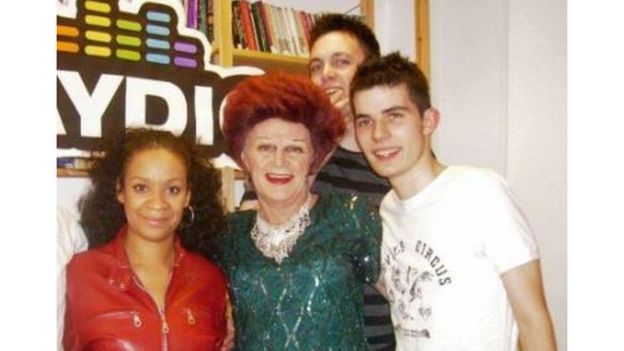
Image copyrightDANNY CHEETHAMImage captionDanny had a promising career as a radio DJ before his addiction took hold and derailed his plans
The Royal College of Psychiatrists is calling on the big five high street banks – Lloyds, Santander, HSBC, RBS Group and Barclays – to offer the same type of service.
Doctor Henrietta Bowden-Jones told BBC Radio 4’s Money Box: “If you are unable to access funds, this type of gambling block can save people’s homes and their families.”
The banks say protecting vulnerable customers is a priority and they are always looking at new ways to do that.
The Gambling Commission is talking to financial institutions about how to improve protection for problem gamblers.
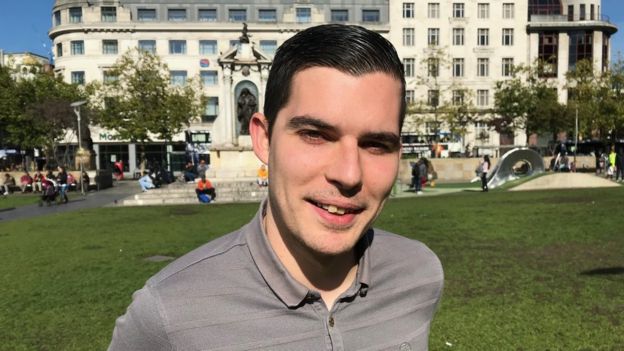
Image captionDanny says he lost more than £50,000 but has now beaten his addiction and hopes to be debt-free within a year
Three years on from taking his first steps to beat his gambling addiction, Danny says he is happy.
“And I’ve actually got money in the bank which I never thought I’d have,” he says.
“I’m well on target to being debt-free by my 30th birthday, which is my next one, and I just don’t feel depressed or helpless like I used to.”
He says he can now think about his future and – although he will have a bad credit file for up to six years – he says this will give him time to save for a deposit for his own place.
“I just don’t feel like it’s an endless battle any more.”
You can hear more on BBC Radio 4’s Money Box programme on Saturday at 12:00 BST or listen again here.
If you’re worried you might have a problem with gambling or know someone who does you can get help here.
Emergency rooms appear to be ignoring guidelines that advise physicians to treat suspected rabies patients with both the rabies vaccine and the highly costly human rabies immune globulin (HRIG), a new study found.
HRIG is seriously underutilized, with only 17% of treated patients receiving HRIG, and only 15% receiving the recommended treatment regimen of both the vaccine and HRIG, reported Christopher Blanchette, PhD, of the University of North Carolina at Charlotte, here at the American College of Emergency Physicians meeting.
“HRIG is very important in the process as it provides immediate antibodies for individuals not previously vaccinated and allows time for the body to respond to the vaccine and create antibodies on its own,” Blanchette told MedPage Today.
It’s not clear why hospitals aren’t choosing to use HRIG, Blanchette said, but there has been a worldwide discussion over the use of HRIG because of its scarcity and expense. In the U.S., the cost of the drug can run as much as $10,000 or more, often leaving patients in debt.
According to the CDC, only 1 to 3 fatal cases of rabies occur in the U.S. each year, which can include cases where the disease was contracted in other countries. From 2008 to 2017, exposure to rabid bats accounted for nearly all rabies deaths in the U.S.
Via the Nationwide Emergency Department Sample, the authors analyzed 118,710 emergency department visits in the U.S. for cases of suspected rabies from 2006 to 2015. Most cases (51%) were in the Northeast, while another 31% were in the South. More than 80% of the cases were treated in metropolitan hospitals. Just over half (53%) involved girls or women, 32% were in children. The average patient age was 34.
The study found that 77% of cases were not reported as treated, though the high rate could be misleading and due to a problem with coding, Blanchette noted.
More importantly he said, only 17% of the treated cases received treatment with HRIG. The other 82% were treated with vaccine alone.
According to the CDC, “rabies post-exposure prophylaxis consists of a dose of human rabies immune globulin and rabies vaccine given on the day of the exposure, and then a dose of vaccine given again on days 3, 7, and 14.”
HRIG is not required if a person has been vaccinated previously.
Earlier this year, the World Health Organization (WHO) recommended that HRIG only be administered after rabies exposure in certain cases such as bites, scratches, and direct exposure to bats.
Even in the absence of HRIG, the WHO report explained, data show that “wound washing with immediate vaccine administration and completion of [the vaccination protocol] saves 99% of patients.”
The study was funded by Grifols pharmaceutical company.
Blanchette reported consulting work for Grifols, United Therapeutics, and Ipsos.
Osmotica Pharmaceuticals (pending Nasdaq: OSMT), whose initial public offering is expected next week, is not your typical biotech IPO. In addition to a pipeline led by late stage candidates in multiple sclerosis and blepharoptosis (droopy eyelid), the company is notably distinguished from most of the industry offerings we’ve seen this year by (1) $246 million in revenue in 2017 from a diverse portfolio of specialty neurology treatments, women’s health products and three dozen generic formulations and (2) private equity backing rather than typical venture capital support, as the result of a 2016 merger of Osmotica and Vertical/Trigen, a portfolio company of Avista Capital Partners.
The company is offering 8.3 million shares at $14 to $16 via Jefferies, Barclays, RBC and Wells Fargo. It would be a $124.5 million IPO at the midpoint of the filing range, yielding a post-money market capitalization of $767 million. Altchem, which the Form S-1 identifies as a holding company formed by an Argentine family in 2011 who have “interests in pharmaceutical companies in several regions of the world,” owns 50% of Osmotica—41.9% post IPO (Altchem was Osmotica’s controlling shareholder before the Vertical/Trigen merger). Avista Capital, with about $4 billion invested in more than 30 healthcare businesses, owns 45.4% of the company—38.0% post IPO.
Many of Osmotica’s products are based on its proprietary osmotic-release drug delivery system called Osmodex, which the company believes is superior to other extended-release (ER) technologies. Osmotica says that the technology enables it “to manufacture tablets with one or more active drugs, and in combinations of immediate-release, controlled-release, delayed-release and extended-release.”
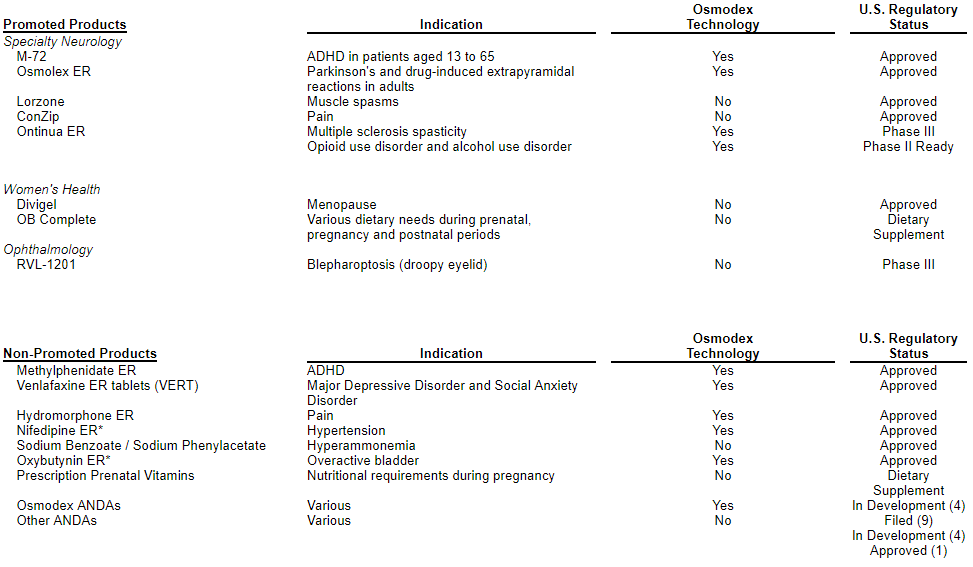
Portfolio and pipeline
Source: Osmotica Pharmaceuticals
Osmotica’s pipeline is highlighted by two Phase III candidates: Ontinua ER tablets for muscle spasticity in multiple sclerosis patients (designated as an Orphan Drug by the FDA) and RVL-1201 eyedrops for blepharoptosis, or droopy eyelid. Ontinua ER has been designated by the FDA as an Orphan Drug for muscle spstin this indication. The company is also exploring opportunities for Ontinua ER in additional indications, such as opioid and alcohol use disorders. There are currently no approved non-surgical treatment options for droopy eyelid.
One issue to consider is the closely held nature of the company and the level of influence carried by the two largest investors. Following this offering, four of the six members of the board of directors will be affiliated with Avista (two) and Altchem (two). Additionally, Osmotica’s CEO Brian Markison is an operating executive at Avista. As Osmotica’ Form S-1 states, “these directors may face real or apparent conflicts of interest with respect to matters affecting both us and Avista or Altchem, as applicable, whose interests, in some circumstances, may be adverse to ours.” There may come a point down the road when the company needs to evaluate its board composition.
The post-IPO valuation appears to be reasonable for Osmotica, given the revenue base, its experience with the FDA and the product candidates in the pipeline. The significant revenue from the specialty neurology and women’s health products gives Osmotica a dramatically different profile compared to most of the biotech IPOs that may provide investors with downside comfort against the binary event risks associated with any biotechnology company. It behooves investors, however, to keep an eye on how successful the company continues to be in fully integrating the business of complex generic formulations with the very different business of drug development.
Akcea Therapeutics (AKCA) and Ionis Pharmaceuticals (IONS), announced that the U.S. Food and Drug Administration has approved TEGSEDITM (inotersen) for the treatment of the polyneuropathy of hereditary transthyretin-mediated amyloidosis in adults. TEGSEDI is now approved in the U.S., European Union and Canada. In hATTR amyloidosis, transthyretin (TTR) protein misfolds and accumulates as amyloid deposits throughout the body. TEGSEDI targets the disease at its source by reducing the production of TTR protein. In the NEURO-TTR study, treatment with TEGSEDI produced up to a 79% mean decrease from baseline in serum TTR protein in patients regardless of TTR mutation, sex, age, or race. The FDA’s approval of TEGSEDI was based on results from the Phase 3 NEURO-TTR study in patients with hATTR amyloidosis with symptoms of polyneuropathy. Results from that study demonstrated that patients treated with TEGSEDI experienced significant benefit compared to patients treated with placebo across both co-primary endpoints: the Norfolk Quality of Life Questionnaire-Diabetic Neuropathy (Norfolk QoL-DN) and modified Neuropathy Impairment Score +7 (mNIS+7), a measure of neuropathic disease progression. https://thefly.com/landingPageNews.php?id=2800621
— Application Seeks Accelerated Approval for Selinexor as a Treatment for Patients with Penta-Refractory Multiple Myeloma —
— PDUFA Date Set for April 6, 2019 —
Karyopharm Therapeutics Inc. (Nasdaq:KPTI), a clinical-stage pharmaceutical company, today announced that the U.S. Food and Drug Administration (FDA) has accepted for filing with Priority Review its New Drug Application (NDA) seeking accelerated approval for selinexor, its first in class, oral SINE compound, as a new treatment for patients with penta-refractory multiple myeloma. The FDA also granted Karyopharm’s request for Priority Review and assigned an action date of April 6, 2019 under the Prescription Drug User-Fee Act (PDUFA). In its acceptance letter, the FDA has stated that it is currently planning to hold an advisory committee meeting to discuss this application.