Eli Lilly reports China’s NMPA approves Innovent’s Tyvyt for Hodgkin’s Lymphoma Innovent and Eli Lilly jointly announced that the co-developed Tyvyt has been granted approval for market authorization by the National Medical Products Administration of China, or “NMPA”, formerly the China Food and Drug Administration, for the treatment of patients with classical Hodgkin’s lymphoma that has relapsed or refractory after two or more lines of systemic chemotherapy. Dr. Wang Li, Senior Vice-President of Lilly China and Head of Lilly China Drug Development and Medical Affairs, said, “The efficacy and safety profile of Tyvyt is well proven in the ORIENT-1 trial. The drug provides a new immuno-oncology treatment option for patients with relapsed/refractory classical Hodgkin’s lymphoma. Lilly will continue to collaborate with outstanding local pharmaceutical companies to bring more innovative medicines to patients and help in demonstrating local R&D capabilities in global oncology community.”
Thursday, December 27, 2018

Retrophin announces first patient dosed in Phase 3 PROTECT study
Retrophin announced that the first patient has been dosed in the PROTECT study, a global, pivotal Phase 3 clinical trial evaluating the long-term nephroprotective potential of sparsentan for the treatment of IgA nephropathy, a rare kidney disorder that often leads to end-stage renal disease.
Axsome says Phase 2, Phase 3 trials of AXS-05 on track for early 2019 readouts
Axsome Therapeutics provided a clinical update for its CNS pipeline, stating that just under 90% of the target number of subjects have been randomized in the Phase 3 STRIDE-1 trial in treatment resistant depression to date, with topline results anticipated in the first quarter of 2019. Axsome also said it has completed enrollment in the Phase 2 ASCEND study in major depressive disorder and is on track to announce topline results in early January 2019, as previously disclosed. In December, Axsome announced results of an interim futility analysis for the Phase 2/3 ADVANCE-1 trial of AXS-05 in Alzheimer’s disease agitation. The interim analysis was conducted by an IDMC which recommended continuation of the AXS-05 treatment arm and no further randomization of subjects to the bupropion treatment arm. Axsome intends to follow the IDMC’s recommendation. Axsome has received FDA Fast Track designation for AXS-05 for the treatment of AD agitation. AXS-05 is also being evaluated in a Phase 2, randomized, double-blind, controlled trial for smoking cessation treatment. Top-line results are anticipated in the first quarter of 2019, as previously disclosed. Axsome is developing AXS-07 for the acute treatment of migraine.Axsome anticipates initiation of its planned Phase 3 trial of AXS-07 in patients with migraine in the first quarter of 2019, as previously disclosed, with topline results expected within approximately one year from trial initiation.
https://thefly.com/landingPageNews.php?id=2841507
H.C. Wainwright confident Spectrum BLA will be accepted and approved
After Spectrum Pharmaceuticals announced that it has submitted its Biologics License Application, or BLA, to the FDA for Rolontis, H.C. Wainwright analyst Edward White noted that the company had previously said it planned for a BLA filing by year end. White has confidence the BLA will be accepted and approved, pointing to the strength of the data and the fact it was conducted under a SPA, he tells investors. White keeps a Buy rating and $40 price target on Spectrum shares.
https://thefly.com/landingPageNews.php?id=2841541
Gilead Doubles Down On Its NASH Pipeline With $1.5B Deal
Gilead Sciences establishes strategic collaboration with Scholar Rock Holding Corporation in a deal totaling $1.5 billion.
To get the program started, Gilead only needs to give $80 million upfront to Rock Holding Corp., and then if preclinical moves along, another $25 million as a one-time payment.
Gilead’s closest NASH trial readouts are from two late-stage studies using selonsertib, which are expected to be released 1st half of 2019.
There are many other pharmaceutical companies that are set to release their own NASH fibrosis results in the 1st half of 2019 as well, which could compete against selonsertib.
Gilead is de-risked compared to other NASH biotechs in that it has multiple clinical products for NASH, while the others are limited to one drug.
Wednesday, December 26, 2018
Exosystems to Demo Gamified Physical Therapy Technology at CES 2019
South Korean healthcare wearables maker Exosystems, a member company of the K-ICT Born2Global Centre, will demonstrate its latest AI-based technology at CES 2019 next month.
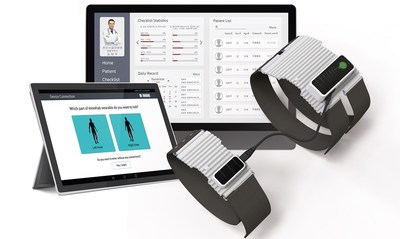
The the exoRehab device was created by the company to give patients a “Personalized Rehabilitation Guidance” during their neuromuscular rehab stint.
Most conventional rehab methods only provide firm, rigid ways to exercise and recover. exoRehab, on the other hand, aims to provide the most effective and efficient rehab by inducing joy, providing personalized physical and electrical stimulation programs based on the user’s musculoskeletal data.
To help elevate patients’ muscular rehab experience, exoRehab set out to fix one of their biggest complaints: tedious exercises. This includes repeating, boring movements in out-of-the-way hospitals. The exoRehab program will eliminate these issues thanks to features including portability, gamified exercise, and AI-based personalization.
These treatments are done using exoRehab’s electrical stimulation through a gamified treatment program. For example, a knee injury patient would wear the exoRehab device and, with the help of their doctor, activate its Training software to receive neuromuscular electrical stimulation (NMES).
The program also allows users to execute rehab training exercises based on their own body data, all while monitoring the rehabilitation progress of their affected body part.
Next step of exoRehab will be recognizing a patient’s movement patterns and inducing artificial body movements by using its finely-tuned stimulation tech based on pattern learning. This machine- learning based stimulation will improve muscles’ strength while relieving fatigue.
Along with its CES debut, the company’s inaugural rehab device is ready to hit the European and North American markets in the coming months.
The company will be holding demonstrations at Eureka Park, Sands Level 1, Booth 52708.
You can download high-res photos of exoRehab here.
Biotech IPOs for Q4 2018
The Nasdaq indicated that there was a record amount of biotech initial public offerings (IPOs) this year, including some individual record-breakers—Moderna Therapeutics, Allogene Therapeutics and Rubius Therapeutics. The total for the year is around $8.2 billion raised, breaking 2014’s record of $6.5 billion.
Here’s a look at some of the biotech IPOs that took place in this year’s fourth quarter.
Moderna Therapeutics. Moderna, based in Cambridge, Mass., broke a record for the biggest IPO in biotech history. The company sold approximately 26.3 million shares priced at $23 a share. This exceeded the revised goal of $600 million by about $4.3 million. Originally Moderna filed to raise $500 million but revised it to $600 million.
The company focuses on messenger RNA (mRNA) therapeutics. mRNA’s role is to transport genetic information from DNA to the ribosome, offering up the amino acid sequence of the eventual proteins the DNA is coding for. Moderna’s tech platform is designed to engineer mRNA to deliver whatever protein codes they want the cells to produce, in effect, turning the cells themselves into vaccine or drug-manufacturing factories.
Moderna has a development pipeline of 21 programs. Ten are in the clinic and another three have open Investigational New Drug (INDs) submissions. Nine of those in the clinic are in Phase I and one is in Phase II, according to a July corporate update.
DiaMedica. On December 7, the company launched its IPO with a price of $4 per share. The company hopes to raise about $15 million to fund clinical development of its lead drug candidate, DM199, in patients who have suffered an acute ischemic stroke.
Synthorx. Located in La Jolla, Calif., Synthorx raised $131 million. The company focuses on cancer and autoimmune disorders. Its proprietary, first-of-its-kind Expanded Genetic Alphabet platform technology expands the genetic code by adding a new DNA base pair and is designed to create optimized biologics, called Synthorins.
Tiziana Life Sciences. Based in London, UK, Tiziana raised $4.38 million. The company focuses on developing next-generation therapeutics and diagnostics for cancer and immune diseases. Its clinical programs include milciclib for patients with thymoma and foralumab for Crohn’s disease.
Taiwan Liposome Company (TLC). Headquartered in Taipei, Taiwan, Taiwan Liposome raised $21.8 million with its IPO. The company is developing a lipid-assembled drug delivery platform.
Vapotherm. Based in Exeter, NH, Vapotherm raised $64.4 million with its IPO. The company offers Hi-VNI Technology for patients in respiratory distress.
Eton Pharmaceuticals. Headquartered in Deer Park, Ill., Eton raised $21.6 million. In July, the company announced positive top-line results from its Phase III trial of EM-100 ophthalmic solution to treat ocular itching associated with allergic conjunctivitis.
Gamida Cell. Based in Israel, Gamida Cell raised $50 million to support the development of cell therapies for cancer and rare diseases. The figure was downgraded from an initial plan to raise $69 million.
LogicBio Therapeutics. This Cambridge, Mass.-based biotech company brought in $80.5 million, about $10 million over its initial expectations. LogicBio’s core platform focuses on GeneRide technology and synthetic gene-therapy vectors derived from naturally occurring human adeno-associated viruses.
Orchard Therapeutics. Headquartered in the UK, Rochard priced its shares at $14 in order to raise $200 million. The company is developing a gene therapy for Wiskott-Aldrich syndrome, a rare immune disease.
PhaseBio Pharmaceuticals. Based in Malvern, Penn., PhaseBio raised $46 million to support the development of novel therapies for orphan diseases, with an early focus on cardiopulmonary conditions. The original prospectus for the IPO was $86 million.
Osmotica Pharmaceutical. Located in Wilmington, NC, Osmotica raised $46.6 million in its IPO. Earlier this year, the FDA approved the company’s Osmolex ER for Parkinson’s disease and for the treatment of drug-induced extrapyramidal reactions in adults.
SI-BONE. On October 17, SI-Bone raised $108 million. Based in Santa Clara, Calif., the company developed the iFuse Implant System, a minimally invasive surgical system for fusion of the sacroiliac joint to treat sacroiliac joint dysfunction.
Equillium. Based in La Jolla, Calif., Equillium raised $65.4 million in its IPO. It will be used to support the development of therapies for immune system disorders. Its lead product candidate is EQ001 (itolizumab), a monoclonal antibody that targets the immune checkpoint receptor EQ001.
Allogene Therapeutics. The original IPO goal was $288 million, but the company raised $372.6 million. Based in South San Francisco, the company is developing off-the-shelf CAR-T therapy products.
Guardant Health. Also in the Bay Area, Guardant raised $237.5 million in its IPO. Guardant develops blood tests for early and recurrent cancer detection, the so-called liquid biopsies.
Kodiak Sciences. Again, in the San Francisco Bay Area, Kodiak brought in $90 million with its IPO. The company’s IPO was only weeks after it completed enrollment for its Phase I clinical trial of KSI-301 for retinal vascular diseases, including neovascular age-related macular degeneration and diabetic eye disease.
Subscribe to:
Posts (Atom)