Search This Blog

Wednesday, February 5, 2020

New study adds to evidence of diabetes drug link to heart problems

A new study published by The BMJ today adds to evidence that rosiglitazone – a drug used to treat type 2 diabetes – is associated with an increased risk of heart problems, especially heart failure.
This study is the most comprehensive evaluation of the cardiovascular risk of rosiglitazone ever done.
Rosiglitazone belongs to a class of drugs called thiazolidinediones. It helps control blood sugar levels in patients with type 2 diabetes, but it can also increase the risk of serious heart problems. This has led to suspension of the drug in Europe and previous restrictions on its use in the United States.
However, since 2007, studies have reported conflicting findings about whether rosiglitazone increases the risk of heart attacks. But these studies didn’t have access to the raw data, also known as individual patient level data (IPD), from clinical trials and mostly relied on summary level data (e.g. results reported in publications and clinical trial registries), which are not as reliable when estimating the true safety profile of drugs.
Recent efforts by GlaxoSmithKline (GSK) – the maker of rosiglitazone – to make IPD available to external investigators, prompted a team of US researchers to re-analyse the data and clarify some of the uncertainties about rosiglitazone’s cardiovascular risk.
They analysed the results of more than 130 trials involving over 48,000 adult patients that compared rosiglitazone with any control for at least 24 weeks. IPD were available for 33 trials, which included 21156 patients; the remaining trials only had summary level data available.
When the researchers analysed the IPD from trials made available by GSK, they found rosiglitazone was associated with a 33% increased risk of a composite cardiovascular event (heart attack, heart failure, cardiovascular and non-cardiovascular related death) compared with controls. This was estimated from the 274 events among 11,837 rosiglitazone patients and 219 events among 9,319 control patients.
When examining cardiovascular events independently, the analyses of the 33 GSK trials with IPD resulted in higher estimates of the risk of heart attacks than the analyses of trials with IPD and summary level data.
These findings highlight the potential for different results derived from different data sources, and demonstrate the need for greater clinical trial transparency and data sharing to accurately assess the safety of drugs, say the researchers.
“Our study suggests that when evaluating drug safety and performing meta-analyses focused on safety, IPD might be necessary to accurately classify all adverse events,” they write. “By including these data in research, patients, clinicians, and researchers would be able to make more informed decisions about the safety of interventions.”
They add: “Our study highlights the need for independent evidence assessment to promote transparency and ensure confidence in approved therapeutics, and postmarket surveillance that tracks known and unknown risks and benefits.”
###
Peer-reviewed? Yes
Evidence type: Systematic review and meta-analysis of randomised controlled trials
Subjects: Clinical trials of rosiglitazone
https://www.eurekalert.org/pub_releases/2020-02/b-nsa020320.php

Walgreens Shuffles Senior Management To Boost U.S. Pharmacies

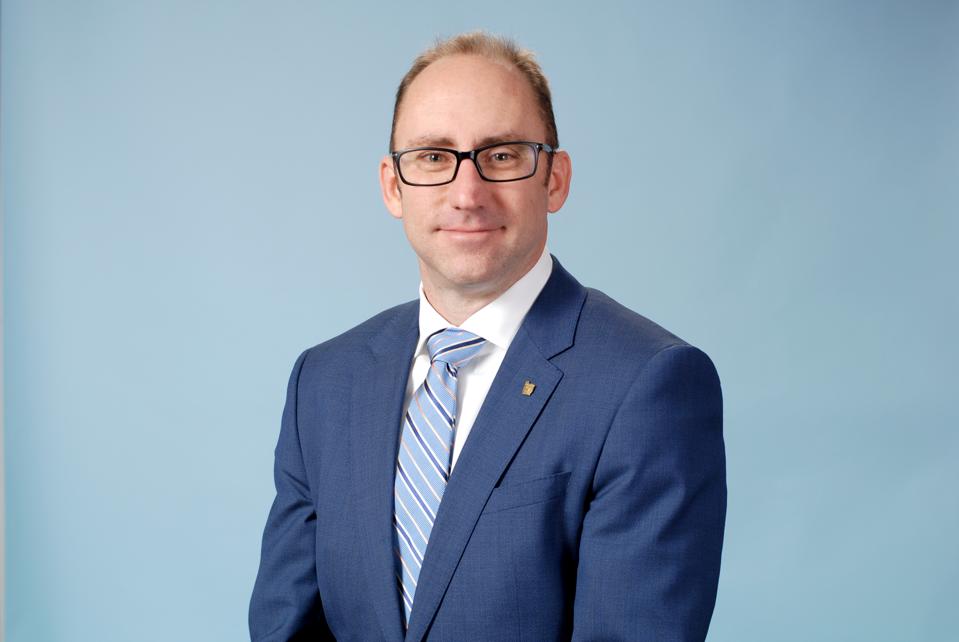
Walgreens Boots Alliance promoted Richard Ashworth, a veteran of the company’s U.S. pharmacy operations, to become President of Walgreens following an operations role he had with the global pharmacy chain.
“Ashworth will be responsible for developing the strategies and plans for all Walgreens operations and will have full responsibility for the leadership, development and management of the business,” Walgreens said in a statement Wednesday morning.
Ashworth, a pharmacist and 28-year Walgreens veteran who started as a store services clerk in 1992, will report to Alex Gourlay, who remains co-chief operating officer of the parent Walgreens Boots Alliance. Gourlay, who has been President of Walgreens since 2014, “will focus on his broader responsibilities in his role as Co-Chief Operating Officer,” the company said Wednesday.
“Richard is a strong leader who grew up with the Walgreens brand and who has a great appreciation for its storied heritage,” Stefano Pessina, executive vice chairman and CEO of Walgreens Boots Alliance said in a statement.
The decision to put a new executive in charge of Walgreens comes as the company is testing myriad new models to create what Pessina has called the “drugstore of the future.”
Walgreens has pilots or partnerships with the Kroger grocery chain to sell more food items in some U.S. stores while the drugstore chain is testing primary care concepts with the Chicago-based startup VillageMD and Humana’s Partners in Primary Care clinics for seniors. Walgreens strategy is in contrast with that of CVS Health, which bought the health insurer Aetna in 2018 and is rolling out “HealthHubs” in 1,500 markets in the next three years.
“He truly understands our customers and is passionate about the role we play in their daily lives,” Pessina said. “We are pleased to have Richard lead the Walgreens business, and lead the charge as we create the Walgreens of the future. His experience will be incredibly valuable as we continue to accelerate our ongoing transformation to best meet the needs of our customers, communities and team members.”
https://www.forbes.com/sites/brucejapsen/2020/02/05/walgreens-shuffles-senior-management-to-boost-us-pharmacies/#442797d21893

China Data Suggests Coronavirus Deaths To Slow: Nobel Scientist

Trends in the number of fatalities in China from the coronavirus suggest that the number of new deaths may decrease in the coming week, according to an analysis by Stanford University professor Michael Levitt, the winner of a Nobel Prize in chemistry in 2013.
As of yesterday, 492 deaths and some 24,000 coronavirus illnesses have been reported, with more than 97% of the deaths in hard-hit Hubei Province.  Yet there is a big difference in the death rate in and outside of Hubei. At only 0.18%, the death rate outside of Hubei “is comparable to the mortality of influenza,” he said.  By contrast, the death rate for victims in Hubei is 3%. The death rate outside of Hubei Province is 16 times lower and has stayed relatively low.
Though the number of deaths was larger than a day earlier, the rate of increase is slowing, Levitt said in a written daily analysis. “Specifically, the overall ratio of deaths today to deaths yesterday has decreased steadily” since Jan. 25, he said. “This suggests that the rate of increase in number of the deaths will slow down even more over the next week” Levitt wrote.
https://www.forbes.com/sites/russellflannery/2020/02/05/china-data-suggests-coronavirus-deaths-to-slow-nobel-scientist/#1113c47f5132

AI Predicts Coronavirus Infecting 2.5B, Killing 53M; Doctors Say Not Credible

An AI-powered simulation run by a technology executive says that Coronavirus could infect as many as 2.5 billion people within 45 days and kill as many as 52.9 million of them. Fortunately, however, conditions of infection and detection are changing, which in turn changes incredibly important factors that the AI isn’t aware of.
And that probably means we’re safer than we think.
Probably being the operative word.
Rational or not, fear of Coronavirus has spread around the world.
Facebook friends in Nevada are buying gas masks. Surgical-quality masks are selling out in Vancouver, Canada, where many Chinese have recently immigrated. United and other airlines have canceled flights to China, and a cruise ship with thousands of passengers is quarantined off the coast of Italy after medical professionals discovered one infected passenger.
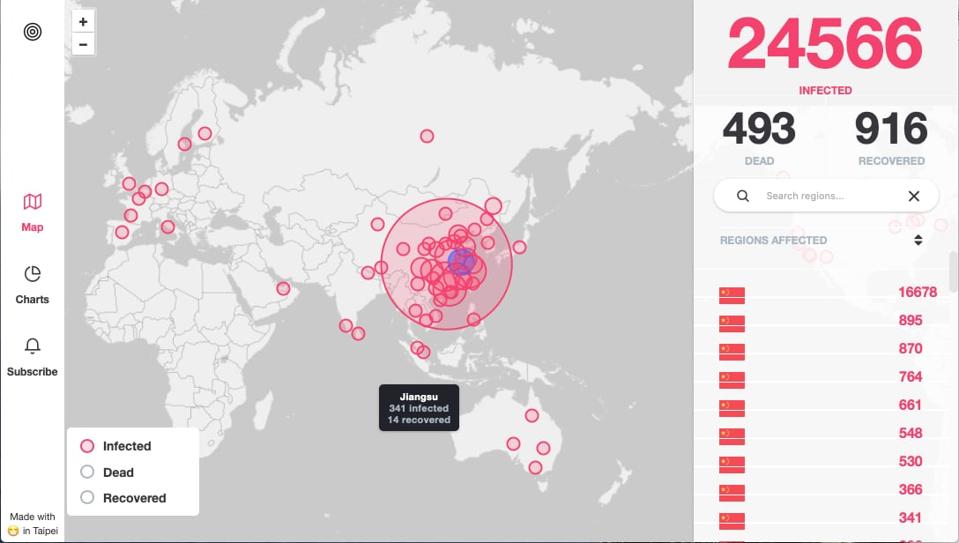
A new site that tracks Coronavirus infections globally says we are currently at 24,566 infected, 493 dead, and 916 recovered.
All this prompted James Ross, co-founder of fintech startup HedgeChatter, to build a model for estimating the total global reach of Coronavirus.
“I started with day over day growth,” he told me, using publicly available data released by China. “[I then] took that data and dumped it into an AI neural net using a RNN [recurrent neural network] model and ran the simulation ten million times. That output dictated the forecast for the following day. Once the following day’s output was published, I grabbed that data, added it to the training data, and re-ran ten million times.”
The result so far have successfully predicted the following day’s publicly-released numbers within 3%, Ross says.
The results were shocking. Horrific, even.
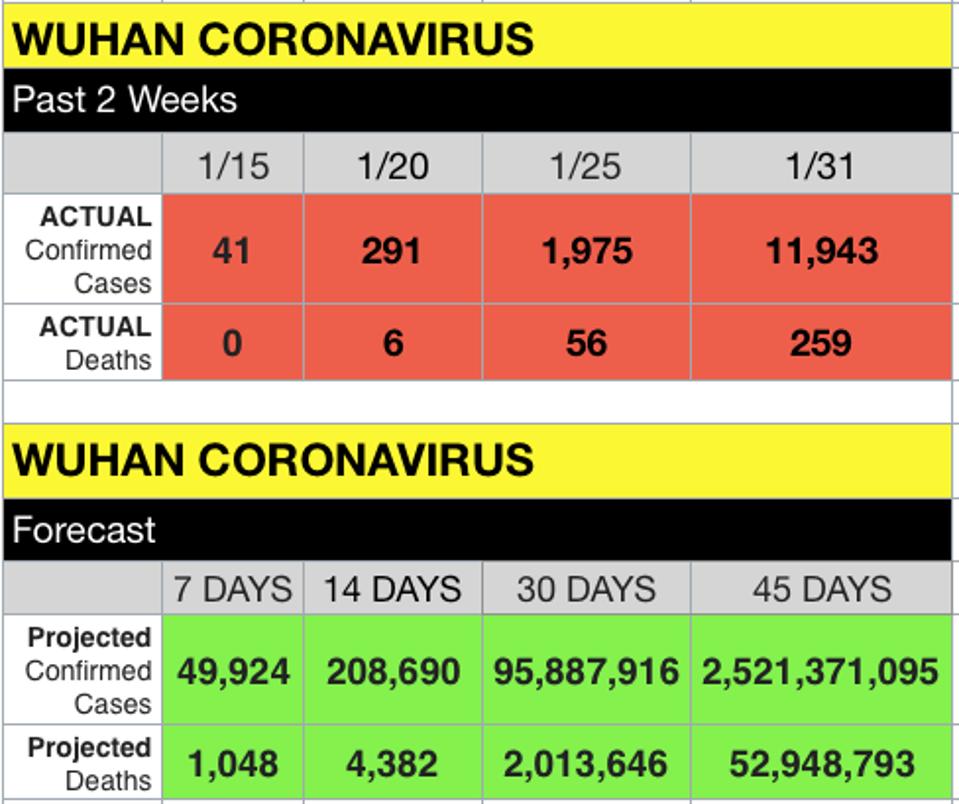
From 50,000 infections and 1,000 deaths after a week to 208,000 infections and almost 4,400 deaths after two weeks, the numbers keep growing as each infected person infects others in turn.
In 30 days, the model says, two million could die. And in just 15 more days, the death toll skyrockets.
But there is good news.
The model doesn’t know every factor, which Ross knows.
And multiple doctors and medical professionals says the good news is that the conditions and data fed into the neural network are changing. As those conditions change, the results will change massively.
One important change: the mortality rate.
“If a high proportion of infected persons are asymptomatic, or develop only mild symptoms, these patients may not be reported and the actual number of persons infected in China may be much higher than reported,” says Professor Eyal Leshem at Sheba Medical Center in Israel. “This may also mean that the mortality rate (currently estimated at 2% of infected persons) may be much lower.”
Wider infection doesn’t sound like good news, but if it means that the death rate is only .5% or even .1% … Coronavirus is all of a sudden a much less significant problem.
Also, now that the alarm has gone out, behavior changes.
And that changes the spread of the disease.
“Effective containment of this outbreak in China and prevention of spread to other countries is expected to result in a much lower number infected and deaths than estimated,” Leshem says.
Dr. Amesh A. Adalja, a senior scholar at Johns Hopkins Center for Health Security, agrees.
“The death rate is falling as we understand that the majority of cases are not severe and once testing is done on larger groups of the population — not just hospitalized patients — we will see that the breadth of illness argues against this being a severe pandemic.”
That’s one of the key factors: who are medical doctors seeing? What data are we not getting?
“The reported death rate early in an outbreak is usually inflated because we investigate the sickest people first and many of them die, giving a skewed picture,” says Brian Labus, an assistant professor at the UNLV school of public health. “The projections seem unrealistically high. Flu infected about 8% of the population over 7-8 months last year; this model has one-third of Earth’s population being infected in 6 weeks.”
All these factors combined create potentially large changes in both the rate of infection and mortality, and even small changes have huge impacts on computer forecasts, says Dr. Jack Regan, CEO and founder of LexaGene, which makes automated diagnostic equipment.
“Small changes in transmissibility, case fatality rate, etc., can have big changes in total worldwide mortality rate.”
Even so, we’re not completely out of the woods yet.
“To date, with every passing day, we have only seen an increase in the number of cases and total deaths,” Regan says. “As each sick individual appears to be infecting more than one other – the rate of spread seems to be increasing (i.e. accelerating), making it even more difficult to contain. It appears clear that this disease will continue to spread, and arguably – is unlikely to be contained and as such may very well balloon into a worldwide pandemic.”
In other words, despite all medical efforts, Coronavirus is likely to go global.
But, thanks to all those medical efforts, it’s unlikely to be as deadly as predicted.
It’s worth noting, after all, that the common flu, which has been around forever — and is blamed for killing 50 million people after World War I, is still around. So far this season, the flu has infected 19 million, caused 180,000 hospitalizations, and killed 10,000 … just in the United States.
And no-one’s buying masks, closing borders, or stopping flights for that.
As for the technologist who created the AI-driven model in the first place? No-one would be happier if its predictions turn out to be just bad dreams.
“Although AI and neural nets can be used to solve for and/or predict for many things, there are always additional variables which need to be added to fine tune the models,” Ross told me. “Hopefully governments will understand that additional proactive action today will result in less reactive action tomorrow.”
https://www.forbes.com/sites/johnkoetsier/2020/02/05/ai-predicts-coronavirus-could-infect-25b-and-kill-53m-doctors-say-thats-not-credible-and-heres-why/#bdc3e0811cd0

Bristol-Myers Squibb Q4 2019 Earnings Preview

Bristol-Myers Squibb (NYSE:BMY) is scheduled to announce Q4 earnings results on Thursday, February 6th, before market open.
The consensus EPS Estimate is $0.98 (+4.3% Y/Y) and the consensus Revenue Estimate is $6.63B (+11.1% Y/Y).
Over the last 2 years, BMY has beaten EPS estimates 100% of the time and has beaten revenue estimates 75% of the time.
Over the last 3 months, EPS estimates have seen 2 upward revisions and 5 downward. Revenue estimates have seen 3 upward revisions and 2 downward.
https://seekingalpha.com/news/3538653-bristol-myers-squibb-q4-2019-earnings-preview

Surmodics EPS beats by $0.13, beats on revenue

Surmodics (NASDAQ:SRDX): Q1 Non-GAAP EPS of $0.05 beats by $0.13; GAAP EPS of $0.01 beats by $0.12.
Revenue of $22.62M (+1.7% Y/Y) beats by $0.54M.
https://seekingalpha.com/news/3538811-surmodics-eps-beats-0_13-beats-on-revenue

Arrowhead FQ1 revenue matches views

Arrowhead Pharmaceuticals (NASDAQ:ARWR) fiscal Q1 results:
Revenue: $29.5M (-15.0%), in line with consensus.
Net loss: ($2.7M); loss/share: ($0.03).
https://seekingalpha.com/news/3538817-arrowhead-fq1-revenue-matches-views