Search This Blog

Tuesday, April 13, 2021

Demographics of Persons Vaccinated During 1st Month of US Vax Program


Abstract and Introduction

Introduction

In December 2020, two COVID-19 vaccines (Pfizer-BioNTech and Moderna) were authorized for emergency use in the United States for the prevention of coronavirus disease 2019 (COVID-19).* Because of limited initial vaccine supply, the Advisory Committee on Immunization Practices (ACIP) prioritized vaccination of health care personnel and residents and staff members of long-term care facilities (LTCF) during the first phase of the U.S. COVID-19 vaccination program.[1] Both vaccines require 2 doses to complete the series. Data on vaccines administered during December 14, 2020–January 14, 2021, and reported to CDC by January 26, 2021, were analyzed to describe demographic characteristics, including sex, age, and race/ethnicity, of persons who received ≥1 dose of COVID-19 vaccine (i.e., initiated vaccination). During this period, 12,928,749 persons in the United States in 64 jurisdictions and five federal entities§ initiated COVID-19 vaccination. Data on sex were reported for 97.0%, age for 99.9%, and race/ethnicity for 51.9% of vaccine recipients. Among persons who received the first vaccine dose and had reported demographic data, 63.0% were women, 55.0% were aged ≥50 years, and 60.4% were non-Hispanic White (White). More complete reporting of race and ethnicity data at the provider and jurisdictional levels is critical to ensure rapid detection of and response to potential disparities in COVID-19 vaccination. As the U.S. COVID-19 vaccination program expands, public health officials should ensure that vaccine is administered efficiently and equitably within each successive vaccination priority category, especially among those at highest risk for infection and severe adverse health outcomes, many of whom are non-Hispanic Black (Black), non-Hispanic American Indian/Alaska Native (AI/AN), and Hispanic persons.[2,3]

Data on COVID-19 vaccine doses administered in the United States are collected by vaccination providers and reported to CDC through multiple sources, including jurisdictions, pharmacies, and federal entities, who use various reporting methods including immunization information systems, Vaccine Administration Management System,** and direct data submission. Data on first vaccine doses administered during December 14, 2020–January 14, 2021, and reported to CDC by January 26, 2021, were analyzed to describe demographic characteristics, including sex, age, and race/ethnicity among persons who received ≥1 dose of COVID-19 vaccine. Age was calculated based on date or year of birth and date of vaccine administration and was categorized as <18, 18–29, 30–39, 40–49, 50–64, 65–74, or ≥75 years. Race and ethnicity were combined and categorized as Hispanic/Latino, White, Black, non-Hispanic Asian (Asian), AI/AN, non-Hispanic Native Hawaiian or other Pacific Islander (NH/PI), non-Hispanic multiple/other,†† or unknown (if either race or ethnicity was reported as unknown§§ or not reported because of jurisdictional policy or law).¶¶ Analyses were conducted using SAS (version 9.4; SAS Institute).

During the first month of the U.S. COVID-19 vaccination program, 12,928,749 persons received at least 1 dose of COVID-19 vaccine (Figure). Vaccination was initiated by persons in all 64 jurisdictions and five federal entities reporting data to CDC. Among 12,537,841 (97.0%) vaccine recipients with reported sex, 63.0% were women and 37.0% were men (Table). Among 12,924,116 (99.9%) persons whose age was known, 55.0% were aged ≥50 years, 16.8% were aged 40–49 years, and 28.2.% were aged 18–39 years. Among 6,706,697 (51.9%) persons whose race/ethnicity was known, 60.4% were White and 39.6% represented racial and ethnic minorities, including 14.4% categorized as multiple or other race/ethnicity, 11.5% Hispanic/Latino, 6.0% Asian, 5.4% Black, 2.0% AI/AN, and 0.3% NH/PI. Race/ethnicity was unknown or not reported for 6,222,052 (48.1%) persons initiating vaccination. Across jurisdictions and federal entities, the percentage of persons initiating vaccination with race/ethnicity that was unknown or not reported ranged from 0.2% to 100% (median = 39.6%; interquartile range = 25.3%–66.1%).
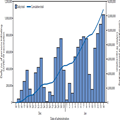
Figure.

Number of persons initiating COVID-19 vaccination, by date of vaccine administration (N = 12,928,749) — United States, December 14, 2020–January 14, 2021*
Abbreviation: COVID-19 = coronavirus disease 2019.
*Vaccines administered December 14, 2020–January 14, 2021, and reported to CDC by January 26, 2021.


Discussion

During the first month of the U.S. COVID-19 vaccination program, 12,928,749 persons received ≥1 dose of COVID-19 vaccine, representing approximately 4% of the total U.S. population and 5% of the U.S. population aged ≥16 years.*** If vaccination was only provided to persons in the Phase 1a priority groups (health care personnel and LTCF residents), coverage among the 24 million persons included in these groups might have been as high as 50%.[1] However, this is likely an overestimate because persons outside of the 1a priority group were vaccinated because of variation in implementation of national guidance at the jurisdictional and local levels (e.g., Florida and Texas expanded vaccination to all persons aged ≥65 years).†††

Among persons who received the first vaccine dose and had available data for the respective demographic characteristic variable, 63.0% were women, 55.0% were aged ≥50 years, and 60.4% were White, which likely reflects the demographic characteristics of the persons (health care personnel and LTCF residents) recommended to be vaccinated in the Phase 1a priority group.[4,5] Data from the 2019 American Community Survey show that 60% of health care workers were White, 16% were Black, 13% were Hispanic, and 7% were Asian; however, race and ethnicity varied widely by occupation and setting.[6] Women also account for approximately three fourths of persons employed in the health care industry.[7] In addition, the 2015–2016 National Study of Long-Term Care Providers found that 65% of nursing home residents were women, 75% were White, 14% were Black, and 5% were Hispanic.[8]

Interpretation of data from the analysis of COVID-19 vaccination initiation is limited by the high percentage of records with unknown or missing race/ethnicity information and the unknown proportions of priority groups (health care personnel versus LTCF residents) among early vaccine recipients. Differences in how race and ethnicity data are collected and categorized, for example 14.4% of persons initiating vaccination reported as multiple or other race/ethnicity, also make comparisons difficult. The percentage of persons initiating vaccination who were Black appears lower relative to the percentage of persons who are Black among health care personnel and LTCF residents. Overall, 39.6% of persons who were vaccinated represented racial and ethnic minorities. Because persons who are Black, AI/AN, or Hispanic have been found to have more severe outcomes from COVID-19 than persons who are White, careful monitoring of vaccination by race/ethnicity is critical.[2,9]

The findings in this report are subject to at least three limitations. First, race/ethnicity was unknown for approximately one half of the population who initiated vaccination during the first month of the COVID-19 vaccination program in the United States. In addition, the proportion of persons with unknown race/ethnicity varied across jurisdictions, including six jurisdictions that reported no race/ethnicity data.§§§ In addition, a high proportion of persons receiving vaccination were categorized as non-Hispanic, multiple or other races, whereas the population estimates from the 2019 American Community Survey¶¶¶ 1-year population were 2.8% non-Hispanic, multiple or other races. Thus, the findings presented in this study might not be generalizable to all persons initiating COVID-19 vaccination in the United States. The large proportion of missing data also might result in biased estimates of race/ethnicity, particularly if some groups are more likely than others to have race/ethnicity reported as unknown. Second, vaccine administration data reported to CDC include limited data elements and did not allow for stratification by the prioritized populations (health care personnel and LTCF residents) in the initial phase of the vaccination campaign. Therefore, it was not possible to directly compare the observed demographic patterns among persons initiating vaccination to demographic characteristics of prioritized populations. Finally, implementation of the ACIP recommendations, including subprioritization, varied by jurisdiction, with some jurisdictions changing and expanding their priority populations during the first month of the vaccination program.

Although these data reflect characteristics of persons initiating vaccination during the initial phase of the U.S. COVID-19 vaccination program and have several limitations, the findings underscore the need for more complete reporting of race and ethnicity data at the provider and jurisdictional levels to ensure rapid detection of and response to potential disparities in COVID-19 vaccine administration. Jurisdictions should monitor the demographic characteristics of vaccinated persons to identify emerging disparities. In addition, as vaccination expands to include additional groups, monitoring coverage by the Social Vulnerability Index, which uses U.S. Census Bureau variables to identify communities that might need support, will be useful to ensure equity and to identify communities where focused immunization efforts might be required.**** CDC is working with jurisdictions to use these types of analyses to help direct efforts to bring vaccines to their communities and ensure that no persons are left behind. These data from the first month of the COVID-19 vaccination program indicate substantial progress in administration of the COVID-19 vaccine. To increase coverage among persons in Phase 1a, as vaccination expands into additional populations, unvaccinated health care personnel and LTCF residents should continue to be offered COVID-19 vaccine. Equitable and sustainable COVID-19 vaccine administration in all populations requires focus on groups with lower vaccine receipt who might face challenges with access or vaccine hesitancy.

https://www.medscape.com/viewarticle/945412

Vaccine Manufacturing Woes at Emergent

 By Derek Lowe

The New York Times has a good story on the problems at the Emergent vaccine plant in Baltimore, following up on this one. They’ve uncovered a report from last summer that warned that the facility had quality control problems:

A copy of the official’s assessment, obtained by The New York Times, cited “key risks” in relying on Emergent to handle the production of vaccines developed by both Johnson & Johnson and AstraZeneca at Emergent’s Bayview plant in Baltimore.

The assessment, which has not been released publicly, was based in part on a visit to the plant just days after the government awarded Emergent a contract worth up to $628 million, mostly to prepare its factories to make coronavirus vaccines as part of Operation Warp Speed.

Addressing the problems “will require significant effort,” and the company “will have to be monitored closely,” said the report, which was written by Carlo de Notaristefani, a manufacturing expert who has overseen production of Covid-19 vaccines for the federal government since last May. Though marked as a draft, federal officials said the report was considered to be final.

You’d think that this visit might have been even more useful before the contract was awarded, but Emergent has been contracting with the government for vaccine production since 2013. But apparently the problems are longstanding as well – here’s a bit from the earlier Times story:

An audit conducted for AstraZeneca specifically highlighted the risks of viral cross-contamination, which experts believe was responsible for tainting the millions of Johnson & Johnson doses, according to a review of the confidential document by The Times. The audits and investigations also flagged a persistent problem with mold in areas required to be kept clean, poor disinfection of some plant equipment leading to growth of bacteria, the repeated approval of raw materials that had not been fully tested, and inadequate training of some employees.

The current theory is that the recent J&J production run was lost because an employee did not adequately disinfect while moving from the AstraZeneca section of the plant into the J&J section. That would most certainly do it. Anyone who’s done biologics production (or who has just worked in a busy cell culture lab) will be able to tell you stories about contaminations of this sort, some disastrous and some narrowly avoided. It’s even worse than mistaking the sugar for the salt in a kitchen, because you’re dealing with things that grow and reproduce – cells and viruses. A mixup can spread catastrophically, and that’s just what seems to have happened here.

And if the hygiene at this plant is as depicted above, they’re asking for other kinds of contamination as well. Things like adventitious yeast can rip up your cell cultures, too. In research labs, people are warned about doing any home baking or brewing, and to be sure to take serious showers before setting foot in the cell culture room after anything like that. There are mycoplasma out there ready to drop in and mess with your cells, there are viruses that you haven’t even heard of before that can ruin everything (ask Genzyme people about that). . .no, cell culture work is pretty unforgiving, and the larger the scale, the larger the worries. There is only one way around this problem, and that is rigorous cleanliness. No shortcuts, no exceptions. And walking from a part of a production plant that is dealing with one kind of cell/virus combination into a part that’s dealing with a completely different one without even taking a shower is not rigorous cleanliness.

The Times reports that Emergent’s own auditors had repeatedly detected mold in a cell culture room, repeatedly had problems with bacterial growth on equipment surfaces, and so on. This stuff will happen anywhere if you are not a complete hardass about disinfection, and if you’re running a vaccine production facility there is no excuse not to be. Fungi and bacteria never take breaks and they are the living, metabolizing definition of “opportunistic”. This attitude does not help:

But four former company officials, speaking on the condition of anonymity because they had signed nondisclosure agreements or feared retaliation, described an environment where top Emergent leadership tolerated and even encouraged the flouting of federal standards for manufacturing and marketing products.

One of the former officials said that as the company scrambled to meet the heavy demands of vaccine production, a senior manufacturing supervisor often responded to reports of quality errors by asking: “Do you want me to make drugs or fix issues? I don’t have time to do both.”

The cure for this is to stop telling your partners and clients that you can deliver on these demanding schedules when you actually can’t. That’s how you get a culture of sweeping things under the rug, because you end up having to lie (and to make others lie) in order to meet the targets you’ve publicly agreed to. You see it in industry when a toxic environment sets in over in sales and marketing: “Make your numbers or I’ll find someone who will” and all that. But trying this tough-guy business when you’re up against the constraints of science and engineering is particularly idiotic. This is the “take off your engineer hat and put on your management hat” attitude that helped blow up the Challenger space shuttle, and it’s helping to blow up vaccine production in Baltimore.

I see that J&J has taken over management of the facility, and I wish them good luck fixing these problems. We – the US and the world – need this production facility running the right way, but having it full of corner-cutting managers and overworked employees is not that way. Better to scale down the production targets and get them right, at least for now, than to run on the edge of disaster.

https://blogs.sciencemag.org/pipeline/archives/2021/04/08/vaccine-manufacturing-woes-at-emergent

GRAd-COV2 gorilla adenovirus based candidate vax against COVID-19 safe, immunogenic in young, older adults

 Simone Lanini, Stefania Capone, Andrea Antinori, Stefano Milleri, Emanuele Nicastri, Roberto Camerini, Chiara Agrati, Concetta Castilletti, Federica Mori, Alessandra Sacchi, Giulia Matusali, Roberta Gagliardini, Virginia Ammendola, Eleonora Cimini, Fabiana Grazioli, Laura Scorzolini, Federico Napolitano, Maria Maddalena Plazzi, Marco Soriani, Aldo De Luca, Simone Battella, Andrea Sommella, Alessandra Maria Contino, Federica Barra, Michela Gentile, Angelo Raggioli, Youfang Shi, Enrico Girardi, Markus Maeurer, Maria Rosaria Capobianchi, Francesco Vaia, Mauro Piacentini, Guido Kroemer, Alessandra Vitelli, Stefano Colloca, Antonella Folgori, Giuseppe Ippolito

How full FDA approval would impact vaccine mandates, competition

 Pfizer could apply for full FDA approval of its COVID-19 vaccine as early as this month, and Moderna could follow soon after.

If regulators sign off, that status change would have significant impacts on vaccine mandates in workplaces and other experimental vaccine candidates still in development.

Currently, the three vaccines on the market only have an Emergency Use Authorization (EUA), meaning they are “authorized” by the Food and Drug Administration but not “approved.”

“It's a much faster process,” explained consumer advocate and regulatory expert Dr. Sidney Wolfe, the co-founder of Public Citizen's Health Research Group.

An EUA is a shortcut that allows drugmakers to submit less safety data during an emergency than they otherwise would when seeking full approval. In this case, companies had to track volunteers for about two months after vaccination.

To get full approval, known as a Biologics License, companies will need to submit six months of data. That’s the same standard the FDA has had for years, Dr. Wolfe said, one he thinks will make a difference for people who may still feel hesitant about the vaccine.

“I think that these concerns would be lessened if they were told, we now have six months of follow up on his vaccine, which means we're more comfortable with how long it lasts, how effective it is and how safe it is,” Dr. Wolfe said.

Both Pfizer and Moderna say they now have six months of data.

Companies want full approval for several reasons. Once the pandemic is no longer officially designated as an emergency, only fully approved products can remain on the market.

And the stamp of approval from the FDA carries valuable credibility, Wolfe said.

“Aside from what benefit for marketing it does in this country, it will clearly have an international benefit,” he said.

There is a lot of legal debate about whether companies or colleges and universities can require people to get a vaccine that only has emergency authorization. But it becomes clear cut once a vaccine has full approval: they can.

Some employers already require the flu vaccine. Courts have upheld the authority of states to fine people who refuse vaccination.

The status change could also affect the experimental vaccines still under development from companies like San Diego-based Arcturus Therapeutics or Inovio Pharmaceuticals.

Federal law says companies can only get an emergency authorization if “there is no adequate, approved and available alternative.” Translation: once a vaccine gets approved, competitors have to clear a higher bar.

“There are a lot of vaccines still in the pipeline and it may be harder for those ones that are early in development to eventually get EUA authorization if there is an approved option,” said Dr. Christian Ramers of Family Health Centers of San Diego.

To get new vaccines on the market on an emergency basis, companies would need to show their candidates were better at tackling variants or better for certain populations, like people with drug allergies.

Dr. Ramers said he doesn’t expect the change to affect companies like AstraZeneca or NovaVax because of the time it takes the FDA to review a Biologics License Application.

Typically it takes the FDA about six months to review a licensure application for a high-priority drug. Pfizer said it expects to apply in the first half of 2021, and it expects a decision from the FDA in the second half of the year.

Although Pfizer and Moderna may have enough data for full approval in the coming months for adult use, approval in kids will take longer because those studies started later, Dr. Wolfe said.

https://www.10news.com/news/coronavirus/in-depth-how-full-fda-approval-would-impact-vaccine-mandates-competition

Will summer slow spread of COVID-19?

 At face value, it seems highly plausible that SARS-CoV-2 – the virus that causes COVID-19 – could behave seasonally, being more prevalent in winter and less so in summer. The four other coronaviruses that commonly circulate in humans behave in this way. We’ve also seen COVID-19 cases, hospitalisations and deaths spike over winter in the UK and other countries, which is suggestive of a seasonal effect.

Some association between viral transmission and the seasons is to be expected. Many human behaviours are seasonal. In summer, we spend more time outdoors, where risk of infection is much lower, and we are likely to lead more active lifestyles, which can raise the body’s ability to resist infection. We’re also likely to benefit from increased exposure to sunlight, which raises vitamin D levels and so can boost our immune systems.

There’s also evidence that the ultraviolet (UV) radiation in sunlight reduces how long the virus can survive on surfaces. It’s also possible that humidity and temperature may influence transmission. When combined together, these factors will likely have an effect on the virus’s spread.

But how significant is this effect? And what are the implications for controlling COVID-19 as we begin to approach the warmer months, as well as for the potential of another winter resurgence? As existing research had produced inconclusive results on whether and how the seasons affect SARS-CoV-2, my colleagues and I set out to see if we could find some more conclusive answers to these questions.

Assessing the impact of climate

Epidemiologists use something called the reproductive number, or R, to describe the growth of an epidemic – the higher the R number, the faster the spread. At the start of an epidemic, its growth won’t be affected by anyone having been exposed to the disease and developing immunity and so it will spread exponentially. At this point the R number that describes this spread is referred to as R₀.

Using data from outbreaks around the world, our new research determined R₀ for COVID-19 in 359 large cities. Each city included in our study had over 500,000 inhabitants and had experienced a significant COVID-19 outbreak in 2020.

We focused on large cities (rather than on countries or on smaller populations) because these allowed us to look at outbreaks that were big enough and sufficiently geographically varied to allow for useful comparisons. By comparing cities’ outbreak data against information on their demographics, climate and infection control measures, we could then determine whether any of these factors explained the rate of spread of the virus.

We found that increased UV radiation corresponded with a reduction in how rapidly the virus spread. On average, R₀ decreased by 0.05 for every ten kilojoules per square metre (kJ/m²) increase in daily UV radiation (cities in our dataset ranged from receiving 30kJ/m² to around 130kJ/m² of UV each day).

As UV radiation levels are higher in summer, our findings suggest there is indeed some seasonal effect on transmission. However, it’s important to note that this correlation doesn’t necessarily mean that UV radiation is the cause of this decrease in transmission, since UV radiation may correlate with other causal factors.

For example, the higher the UV radiation in a city, the hotter it tends to be. We didn’t find a separate statistically significant link between R₀ and temperature or humidity on a global level, but we can’t rule out such relationships.

Association between viral spread and temperature or humidity may have been masked by many other factors that affect R₀, as well as the strong correlation between UV radiation and temperature. Indeed, there’s some weak evidence of an association between viral spread and temperature in other studies.

So what does this mean?

While the effect of UV radiation that we observed was statistically significant, it was relatively small in comparison to other factors. The demographic features of cities, such as their size and amount of air pollution (a potential measure of industrialisation and population congestion), together with public health measures accounted for more of the observed variation we saw in R₀ values.

Government interventions accounted for about four times the explainable variation in R₀ compared to UV. Importantly, this is in our control. In the immediate future, potential further waves of the pandemic will be predominantly determined by controls that governments dictate, rather than the weather. Added to this are the effects of the COVID-19 vaccines that are now being rolled out.

In the longer term, questions still remain about whether COVID-19 will become a seasonal endemic infection similar to influenza and other coronaviruses. Our research has identified evidence for small seasonal drivers that may induce this type of variation when COVID-19 likely stabilises as an endemic infectious disease.

But predicting this behaviour for such a complex system as the world is difficult, and as we move out of the initial epidemic phase, the longer-term behaviour of COVID-19 transmission will probably depend on many other factors. These will likely include the level and duration of immunity acquired by infected individuals, as well as the efficacy and length of protection provided by current and future vaccines, and the evolution of new variants of the virus.

https://theconversation.com/will-summer-slow-the-spread-of-covid-19-new-research-sheds-light-144654