Search This Blog

Wednesday, July 28, 2021

Alzamend gets FDA nod for Phase 1 Alzheimer's study

 Alzamend Neuro, Inc. (Nasdaq: ALZN) ("Alzamend"), an early clinical-stage stage biopharmaceutical company focused on developing novel products for the treatment of neurodegenerative diseases and psychiatric disorders, today announced receipt of U.S. Food and Drug Administration ("FDA") study may proceed letter for a Phase 1 study under the Company’s Investigational New Drug application for AL001, a lithium-based ionic cocrystal oral therapy for patients with dementia related to mild, moderate, and severe cognitive impairment associated with Alzheimer’s disease.

"We are grateful to receive this timely, favorable response from the FDA to initiate a Phase 1 trial with AL001," said Stephan Jackman, the Chief Executive Officer of Alzamend. "We are advancing the process and expect that the first patient will be dosed in September 2021."

About AL001

AL001 is a patented ionic cocrystal technology delivering a therapeutic combination of lithium, proline and salicylate, known as AL001 or LiProSal, through two royalty-bearing exclusive worldwide licenses from the University of South Florida Research Foundation, Inc.

Based on preclinical data, AL001 treatment prevents cognitive deficits, depression, and irritability in APPSWE/PS1dE9 mice, and has shown an improvement of associative learning and memory and irritability compared with lithium carbonate treatments, supporting the potential of this lithium formulation for the treatment of Alzheimer’s disease and psychiatric disorders. Lithium has been marketed for more than 35 years and human toxicology regarding lithium use has been well characterized, potentially allowing Alzamend to rely upon this existing data, potentially reducing the regulatory burden for safety data.

https://finance.yahoo.com/news/alzamend-neuro-receives-fda-study-190700753.html

Mutations That Make Delta the Most Transmissible COVID Virus Yet

 Upon first inspection, the mutations in the highly contagious delta covid variant don't look that worrisome.

For starters, delta has fewer genetic changes than earlier versions of the coronavirus.

"When people saw that the epidemic in India was driven by delta, they did not suspect it would be so bad or overtake other variants," said Trevor Bedford, an evolutionary biologist at the Fred Hutchinson Cancer Research Center.

But those expectations were wrong.

Delta has kept some of the most successful mutations found in earlier variants, but also contains new genetic changes that enable it to spread twice as fast.

Delta is more dangerous in many ways. It has an incubation period of four days, rather than six, making people contagious sooner. When the pandemic began, people spread the original coronavirus to an average of two or three people. Today, people infected with delta infect six people, on average.

As of this week, the delta variant had caused at least 92% of the new infections in the United States, according to covariants.org, a research firm in Bern, Switzerland.

Although delta isn't necessarily any more lethal than other variants, it can kill huge numbers of people simply because it infects so many more, said Dr. Eric Topol, founder and director of the Scripps Research Translational Institute.

Scientists have sequenced delta's mutations but are still trying to understand their significance, said Angela Rasmussen, a virologist at the University of Saskatchewan's Vaccine and Infectious Disease Organization. "When we see the same mutations appearing repeatedly and independently, that suggests they're important," Rasmussen said.

Scientists have the best understanding of mutations on the so-called spike protein — which sticks out from the surface of the virus like a club — and which have been studied the most intensely because of its serious ramifications, Rasmussen said. The coronavirus uses the spike protein to enter human cells, and changes in the spike can help the virus evade antibodies.

Scientists believe one of the most important areas of the spike is the receptor-binding domain, the specific part of the protein that allows the virus to latch onto a receptor on the surface of our cells, said Vaughn Cooper, a professor of microbiology and molecular genetics at the University of Pittsburgh. Receptors are like sockets or docking stations that allow proteins to interact with the cell. Once the virus gains entry to the cell, it can cause havoc, hijacking the cell's genetic machinery and turning it into a virus-making factory.

Delta's Worrisome Mix

Delta's rapid spread is particularly surprising given it lacks two mutations that made earlier variants so scary.

Delta doesn't have the N501Y spike mutation found in the alpha, beta and gamma variants, which enabled them to invade cells more successfully than the original virus. That mutation changed one amino acid — a building block of proteins — in the receptor-binding domain.

Delta also lacks the E484K mutation, which has made the gamma variant so worrisome. This genetic change, sometimes called "Eek," allows the virus to spread even among vaccinated people.

(Scientists use the Greek alphabet to name variants of concern.)

"The 'D' in delta stands for 'different' and a 'detour' to a different genomic mutation path," Topol said. "But it doesn't mean 'doom,'" he said, noting that existing covid vaccines remain mostly effective against the delta variant.

Vaccines protect people from covid by providing them with antibodies that attach themselves to the spike protein, preventing the virus from entering cells. By dramatically reducing the number of viruses that enter cells, vaccines can prevent people from developing severe disease and make them less infectious to others.

Delta does share mutations with other successful variants. Like all the identified variants in circulation, delta contains a spike mutation called D614G, sometimes known as "Doug," which became ubiquitous last year.

Scientists think Doug increases the density of spike protein on the surface of viral particles and makes it easier for the virus to enter cells.

Delta also has a spike mutation called P681R, which closely resembles a mutation in the alpha variant that appears to produce higher viral loads in patients, Cooper said. People infected with delta have 1,000 times more virus in their respiratory tract, making them more likely to spread the virus when they sneeze, cough or talk.

The P681R mutation, also found in the kappa variant, is located at the beginning of a part of the genome called the furin cleavage site, Cooper said.

Furin is a naturally occurring human enzyme that gets hijacked by the coronavirus, which uses it to slice the spike protein into the optimal shape for entering the cell, Rasmussen said. The new mutation makes that sculpting more efficient, Rasmussen said.

Another delta mutation — also found in kappa and epsilon — is called L452R. Experiments suggest this mutation, which also affects the receptor-binding domain, acts to prevent antibodies from neutralizing the virus, Cooper said.

These mutations appear to be more formidable as a team than alone.

The genetic changes "are certainly doing something, but why that combination makes the delta variant more fit is not entirely obvious," Bedford said. "Putting them together seems to matter."

Delta also has developed genetic changes not seen in other variants.

One such spike mutation is called D950N. "This might be unique," Cooper said. "We don't see that anywhere else."

The D950N mutation is different than other mutations because it's located outside the receptor-binding domain in an area of the coronavirus genome that helps the virus fuse with human cells, Cooper said. Fusing with human cells allows the coronavirus to dump its genetic material into those cells.

This mutation could affect which types of cells the virus infects, potentially allowing it to harm different organs and tissues. Mutations in this region are also associated with higher viral loads, Cooper said.

Delta also contains mutations in a part of the spike protein called the N-terminal domain, which provides a "supersite" for antibodies to latch onto the virus and prevent it from entering cells, said Dr. Hana Akselrod, an infectious diseases specialist at the George Washington University School of Medicine & Health Sciences.

Mutations in this region make monoclonal antibodies less effective in treating covid and increases the delta variant's ability to escape vaccine-generated antibodies, Akselrod said. That may explain why vaccinated people are slightly more likely to become infected with delta, causing mostly mild illness but allowing them to transmit the virus.

Delta's Future Course

Scientists say it's impossible to predict exactly how delta will behave in the future, although Topol said, "It's going to get worse."

Topol noted that delta outbreaks tend to last 10 to 12 weeks, as the virus "burns through" susceptible populations.

If the United States continues to follow a pattern seen in the United Kingdom and the Netherlands, infections could rise from the current seven-day moving average of 42,000 cases to 250,000 a day. Yet Topol said the United States is unlikely to suffer the high death rates seen in India, Tunisia and Indonesia because nearly half the population here is fully vaccinated.

While some studies have concluded that the Johnson & Johnson vaccine stimulates strong and persistent antibodies against delta, a new report found that antibodies elicited by one shot may not be enough to neutralize delta. Authors of that study, from the New York University Grossman School of Medicine, suggested a second dose may be needed.

Two doses of the Pfizer-BioNTech vaccine protect 94% of people from any symptomatic infection by the alpha variant, compared with 88% against the delta variant, according to a new study in the New England Journal of Medicine. Two doses of the AstraZeneca vaccine protect 75% of people from alpha and 67% from delta.

Cooper said covid vaccines offer remarkably good protection. "I will always celebrate these vaccines as the scientific achievements of my lifetime," he said.

The best way to slow down the evolution of variants is to share vaccines with the world, vaccinating as many people as possible, Bedford said. Because viruses undergo genetic changes only when they spread from one host to another, stopping transmission denies them a chance to mutate.

Whether the coronavirus evolves more deadly variants "is totally in our hands," Cooper said. "If the number of infections remains high, it's going to continue to evolve."

By failing to contain the virus through vaccination, wearing masks and avoiding crowds, people are allowing the coronavirus to morph into increasingly dangerous forms, said Dr. William Haseltine, a former Harvard Medical School professor who helped design treatments for HIV/AIDS.

"It's getting better, and we're making it better," he said. "Having half the population vaccinated and half unvaccinated and unprotected — that is the exact experiment I would design if I were a devil and trying to design a vaccine-busting virus."

https://www.medscape.com/viewarticle/955583

COVID-19 and education: The lingering effects of unfinished learning

 As this most disrupted of school years draws to a close, it is time to take stock of the impact of the pandemic on student learning and well-being. Although the 2020–21 academic year ended on a high note—with rising vaccination rates, outdoor in-person graduations, and access to at least some in-person learning for 98 percent of students—it was as a whole perhaps one of the most challenging for educators and students in our nation’s history.1

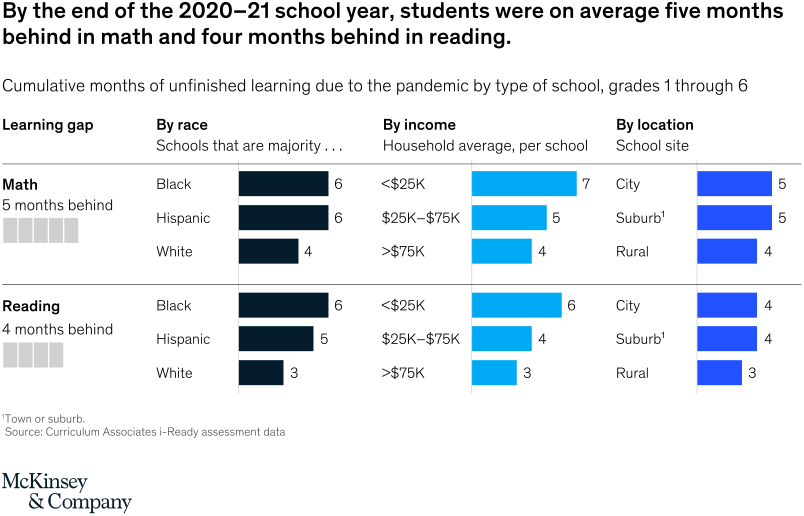
Our analysis shows that the impact of the pandemic on K–12 student learning was significant, leaving students on average five months behind in mathematics and four months behind in reading by the end of the school year. The pandemic widened preexisting opportunity and achievement gaps, hitting historically disadvantaged students hardest. In math, students in majority Black schools ended the year with six months of unfinished learning, students in low-income schools with seven. High schoolers have become more likely to drop out of school, and high school seniors, especially those from low-income families, are less likely to go on to postsecondary education. And the crisis had an impact on not just academics but also the broader health and well-being of students, with more than 35 percent of parents very or extremely concerned about their children’s mental health.

The fallout from the pandemic threatens to depress this generation’s prospects and constrict their opportunities far into adulthood. The ripple effects may undermine their chances of attending college and ultimately finding a fulfilling job that enables them to support a family. Our analysis suggests that, unless steps are taken to address unfinished learning, today’s students may earn $49,000 to $61,000 less over their lifetime owing to the impact of the pandemic on their schooling. The impact on the US economy could amount to $128 billion to $188 billion every year as this cohort enters the workforce.
Federal funds are in place to help states and districts respond, though funding is only part of the answer. The deep-rooted challenges in our school systems predate the pandemic and have resisted many reform efforts. States and districts have a critical role to play in marshaling that funding into sustainable programs that improve student outcomes. They can ensure rigorous implementation of evidence-based initiatives, while also piloting and tracking the impact of innovative new approaches. Although it is too early to fully assess the effectiveness of postpandemic solutions to unfinished learning, the scope of action is already clear. The immediate imperative is to not only reopen schools and recover unfinished learning but also reimagine education systems for the long term. Across all of these priorities it will be critical to take a holistic approach, listening to students and parents and designing programs that meet academic and nonacademic needs alike.
What have we learned about unfinished learning?
As the 2020–21 school year began, just 40 percent of K–12 students were in districts that offered any in-person instruction. By the end of the year, more than 98 percent of students had access to some form of in-person learning, from the traditional five days a week to hybrid models. In the interim, districts oscillated among virtual, hybrid, and in-person learning as they balanced the need to keep students and staff safe with the need to provide an effective learning environment. Students faced multiple schedule changes, were assigned new teachers midyear, and struggled with glitchy internet connections and Zoom fatigue. This was a uniquely challenging year for teachers and students, and it is no surprise that it has left its mark—on student learning, and on student well-being.
As we analyze the cost of the pandemic, we use the term “unfinished learning” to capture the reality that students were not given the opportunity this year to complete all the learning they would have completed in a typical year. Some students who have disengaged from school altogether may have slipped backward, losing knowledge or skills they once had. The majority simply learned less than they would have in a typical year, but this is nonetheless important. Students who move on to the next grade unprepared are missing key building blocks of knowledge that are necessary for success, while students who repeat a year are much less likely to complete high school and move on to college. And it’s not just academic knowledge these students may miss out on. They are at risk of finishing school without the skills, behaviors, and mindsets to succeed in college or in the workforce. An accurate assessment of the depth and extent of unfinished learning will best enable districts and states to support students in catching up on the learning they missed and moving past the pandemic and into a successful future.

Students testing in 2021 were about ten points behind in math and nine points behind in reading, compared with matched students in previous years.

Unfinished learning is real—and inequitable
To assess student learning through the pandemic, we analyzed Curriculum Associates’ i-Ready in-school assessment results of more than 1.6 million elementary school students across more than 40 states.2 We compared students’ performance in the spring of 2021 with the performance of similar students prior to the pandemic.3 Students testing in 2021 were about ten points behind in math and nine points behind in reading, compared with matched students in previous years.
To get a sense of the magnitude of these gaps, we translated these differences in scores to a more intuitive measure—months of learning. Although there is no perfect way to make this translation, we can get a sense of how far students are behind by comparing the levels students attained this spring with the growth in learning that usually occurs from one grade level to the next. We found that this cohort of students is five months behind in math and four months behind in reading, compared with where we would expect them to be based on historical data.4
Unfinished learning did not vary significantly across elementary grades. Despite reports that remote learning was more challenging for early elementary students,5 our results suggest the impact was just as meaningful for older elementary students.6 We can hypothesize that perhaps younger elementary students received more help from parents and older siblings, and that older elementary students were more likely to be struggling alone.
It is also worth remembering that our numbers capture the “average” progress by grade level. Especially in early reading, this average can conceal a wide range of outcomes. Another way of cutting the data looks instead at which students have dropped further behind grade levels. A recent report suggests that more first and second graders have ended this year two or more grade levels below expectations than in any previous year.7 Given the major strides children at this age typically make in mastering reading, and the critical importance of early reading for later academic success, this is of particular concern.
While all types of students experienced unfinished learning, some groups were disproportionately affected. Students of color and low-income students suffered most. Students in majority-Black schools ended the school year six months behind in both math and reading, while students in majority-white schools ended up just four months behind in math and three months behind in reading.8 Students in predominantly low-income schools and in urban locations also lost more learning during the pandemic than their peers in high-income rural and suburban schools (Exhibit 1).
Exhibit 1
By the end of the 2020–21 school year, students were on average five months behind in math and four months behind in reading.
We strive to provide individuals with disabilities equal access to our website. If you would like information about this content we will be happy to work with you. Please email us at: McKinsey_Website_Accessibility@mckinsey.com
In fall 2020, we projected that students could lose as much as five to ten months of learning in mathematics, and about half of that in reading, by the end of the school year. Spring assessment results came in toward the lower end of these projections, suggesting that districts and states were able to improve the quality of remote and hybrid learning through the 2020–21 school year and bring more students back into classrooms.
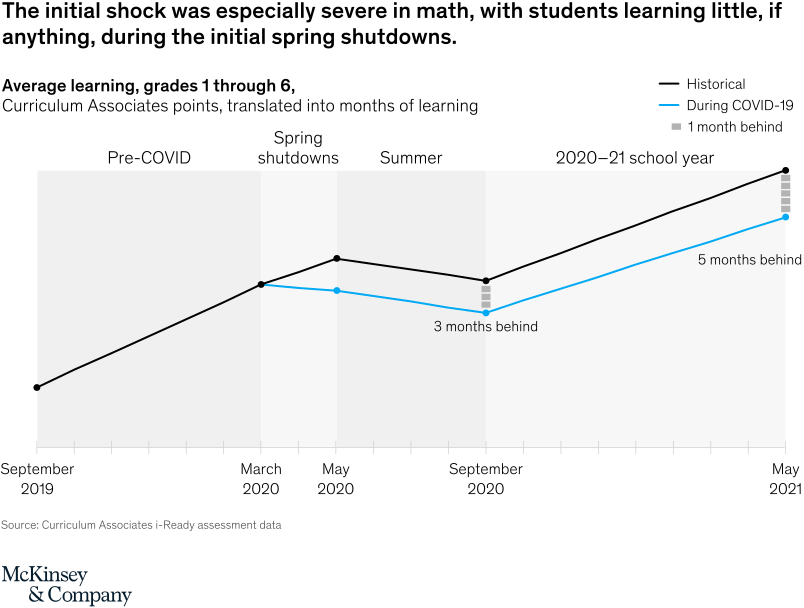
Indeed, if we look at the data over time, some interesting patterns emerge.9 Taking math as an example, as schools closed their buildings in the spring of 2020, students fell behind rapidly, learning almost no new math content over the final few months of the 2019–20 school year. Over the summer, we assume that they experienced the typical “summer slide” in which students lose some of the academic knowledge and skills they had learned the year before. Then they resumed learning through the 2020–21 school year, but at a slower pace than usual, resulting in five months of unfinished learning by the end of the year (Exhibit 2).10
Exhibit 2
The initial shock was especially severe in math, with students learning little, if anything, during the initial spring shutdowns.

Pfize: 3rd vaccine shot 'strongly' boosts immune response against delta


Pfizer said Wednesday that a third dose of its COVID-19 vaccine "strongly" boosts the immune response against the delta variant.

The company posted slides ahead of an earnings call, with data showing that antibody levels were five times higher after a third dose among people aged 18 to 55 against the delta variant, and 11 times higher among 65- to 85-year-olds.

Pfizer made waves earlier this month when it said it would be applying for Food and Drug Administration (FDA) authorization for a third dose of its vaccine.

Still, it is not fully clear yet when and if a booster dose will be needed. It is possible booster shots will only be needed for more vulnerable people like the elderly or those with compromised immune systems.

Experts also point out that antibody levels are not the only measure of protection and that there are other parts of the immune system that are activated against the coronavirus too. Some have noted Pfizer also has a financial incentive to sell more doses of its vaccine to use as boosters.

The Centers for Disease Control and Prevention and the FDA pushed back in a rare joint statement earlier this month, saying booster shots were not currently needed. But federal health officials are also leaving open the possibility that they could be needed at some point, at least in certain populations.

Data from the United Kingdom published in the New England Journal of Medicine this month found that the Pfizer vaccine was 88 percent effective against the delta variant with just two doses. The vaccine is even more effective against preventing severe outcomes.

https://thehill.com/policy/healthcare/565210-pfizer-says-third-vaccine-shot-strongly-boosts-immune-response-against

'In Another 3 Weeks We'll Be Through This'- Gottlieb Dismisses CDC's Mask Mandate As Unnecessary

 While CDC Director Rochelle Walensky and Dr. Anthony Fauci insist that Americans must get vaccinated to protect "the children" from the delta variant (although the vaccines can't offer a guarantee of protection against it), it's refreshing to hear from another public health expert who disagrees with the official approach. Often since the start of the pandemic, former FDA chief (and Pfizer board member) Dr. Scott Gottlieb has shared his often divergent views on what's appropriate with CNBC and its competitors.

"The bottom line is, the vaccine does not make you impervious to infection," Gottlieb said during an appearance on CNBC. "There are some people who are developing mild and asymptomatic infections even after vaccination."

Although he acknowledges that the vaccine "does not make you impervious" to infection by delta, Dr. Gottlieb questioned whether the general guidance on mask-wearing is a smart strategy, claiming that returning to indoor mask wearing in some areas would have only a "negligible impact" given the vaccination rates, even in the areas with lower vaccination rates and higher hospitalizations. Gottlieb also pointed to falling cases in the UK and Europe, and said that the US i

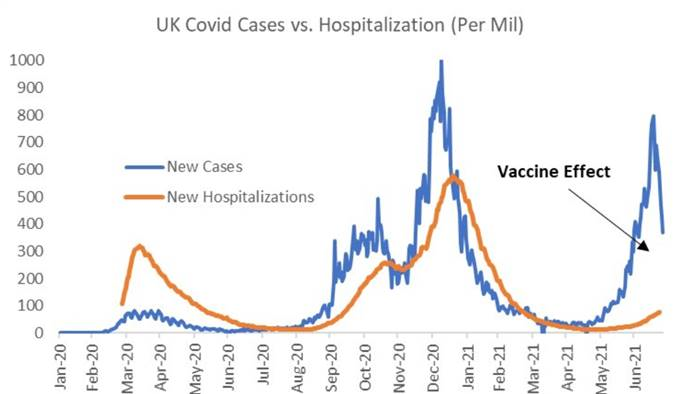
The US would get through the worst of the delta surge in a matter of weeks, Dr. Gottlieb predicted. Just look at the trend in the UK, where cases have rolled over completely. "I think in another two or three weeks we'll be through this," Dr. Gottlieb said.

Finally, he added that the new guidance from the CDC would likely have a "negligible impact" on public health and that federal officials should instead focus on more targeted messaging on guidance for high-risk areas.

"I don't think that's the case," he said. "I don't think we're going to get enough bang for our buck by telling vaccinated people they have to wear masks at all times to make it worth our while. I think we're further into this delta wave than we're picking up. I think in another two or three weeks we'll be through this."

Though he added that it's probably a good idea to mask up around an immuno-compromised individual, or somebody at heightened risk for infection.

"If you are vaccinated in a high prevalence area, in contact with virus, you think you might have the virus because you have mild symptoms--be prudent, get tested, maybe wear a mask especially if you are around a vulnerable person,"

On Wall Street and in the ivory towers of academia, many are predicting that delta won't penetrate very deeply despite the CDC's warnings about a "crisis of the unvaccinated". JPM and Goldman, among others, have projected that delta won't pose a substantial headwind to growth for any of the developed countries with high vaccination rates (Australia, notably, isn't in this group given it's low vaccination rate).

https://www.zerohedge.com/covid-19/i-think-another-3-weeks-well-be-through-dr-gottlieb-dismisses-cdcs-mask-mandate

Fed says US economy making progress as central bank ponders pullback

 The Federal Reserve on Wednesday held interest rates at near-zero, but hinted that the U.S. economic recovery is getting closer to a place where it may not need as much monetary support.

The Federal Open Market Committee on Wednesday kept its benchmark interest rate in the range of 0% to 0.25%, but provided an update on its December 2020 commitment to purchasing at least $120 billion a month in U.S. Treasuries and agency mortgage-backed securities until the recovery looked like it was making “substantial further progress.”

“Since then, the economy has made progress toward these goals, and the Committee will continue to assess progress in coming meetings,” the FOMC statement said. The decision was unanimous.

The policy-setting Federal Open Market Committee noted that inflation still appears to be the result of “transitory factors,” identical to its wording from its last policy decision six weeks ago.

A wide variety of inflationary readings since its June meeting six weeks ago have pointed to further price pressures. The Consumer Price Index, one major measure of inflation, showed prices increasing by 5.4% on a year-over-year basis in June, the fastest pace since August 2008.

Rising prices have spurred some chatter within the Fed over the possibility of more persistent inflation. But some of the high inflation readings over the past few months have been the result of price pressures from microchip shortages (i.e. in car and truck prices) and the ways in which inflation itself is measured (called “base effects”).

Fed Chairman Jerome Powell told Congress two weeks ago that the jury is still out on how persistent inflation will prove to be, arguing that the next six months will paint a clearer picture.

“It will depend on the path of the economy, it really will,” he told the House Financial Services Committee on July 14.

Standing repo facility

The Fed also made an announcement on its intention to set up “standing repo facilities” to improve the plumbing of the financial system.

2021 outlook grows murky for insurers as COVID-19 surges

 Surging COVID-19 cases are blurring the view for health insurers of how 2021 will play out.

Medicare Advantage coverage specialist Humana said Wednesday that it was maintaining its 2021 earnings forecast, citing “heightened uncertainty” about the ongoing pandemic.

That came a day after another insurer, Centene, also maintained its forecast for the year instead of raising it like rivals UnitedHealth Group and Anthem Inc. when they reported second-quarter results earlier this month.

The seven-day rolling average for daily new cases in the United States has jumped from about 24,000 shortly before UnitedHealth reported earnings on July 15 to more than 61,000 Tuesday, according to data from Johns Hopkins University.

COVID-19 cases had been falling for weeks, while insurers saw care use return to more normal levels as patients came back to surgery centers and doctor’s offices for care not related to the coronavirus. But a more contagious variant of the virus that causes COVID-19 has started to change that in the past week or so, spreading largely among people who have not received COVID-19 vaccines.

“It’s not business as usual as everybody had hoped,” Centene CEO Michael Neidorff told analysts on Tuesday, noting that the insurer has shown in the past that it can manage through “COVID-type issues.”

Centene Corp. covers or manages coverage for about 25 million people. Neidorff said about half of their customers are vaccinated.

Nationally, 60% of the adult U.S. population is fully vaccinated while 69% have had at least one dose, according to the Centers for Disease Control and Prevention.

Health insurers reaped huge profits early in the pandemic as patients cancelled or put off medical care and stayed home to avoid being exposed to the virus. That break in claims was countered a bit by increased costs for COVID-19 testing and treatment.

Humana executives told analysts Wednesday that they’ve started seeing an increase in COVID-19 cases in the last couple of weeks. It was too early to say whether that will be balanced again by a drop in care not related to the virus.

Humana CEO Bruce Broussard said 2021 is poised to be a “year of COVID-19 transition,” with next year returning more to normal.

Shares of several health insurers fell Wednesday in midday trading, led by a 6% drop from Humana Inc., which also reported better-than-expected second quarter earnings. Broader indexes were mixed.

https://apnews.com/article/business-health-coronavirus-pandemic-015ec834d2eddfdd198a8f2028e9b42f