Search This Blog

Thursday, July 29, 2021

Oxford vaccine reaches one billion doses released

 The University of Oxford’s and our partners AstraZeneca have today announced that one billion doses of the ChAdOx1 nCov-19 coronavirus vaccine have been released, to more than 170 countries, marking a key milestone as part of the University and AstraZeneca’s joint vision to make the available to the world, on a not-for-profit basis for the world during the pandemic, and in perpetuity for low- and middle-income countries. 

AstraZeneca, with their extensive world-wide development and manufacturing capabilities, have been able to have the vaccine approved and licenced for use in over 170 countries, with over 20 manufacturing sites across the world, including the Serum Institute of India, working together to release the one billion doses worldwide.

As the manufacturing of adenovirus vector vaccines is complex and requires significant investment in infrastructure and expertise to ensure the safety and quality of the vaccine, we are working together with AstraZeneca to ensure that significant technology transfer happens between the global manufacturing sites and their supply chains. 

Louise Richardson, Vice-Chancellor of the University of Oxford, said:

‘On behalf of my colleagues across Oxford I would like to offer my warmest congratulations to AstraZeneca for the extraordinary accomplishment of releasing one billion doses of our life saving vaccine. By distributing this vaccine at cost, they have made an admirable and exemplary contribution to global health. We are delighted to be in partnership with them.’

Dame Sarah Gilbert, Saïd Professor of Vaccinology, and co-developer of the vaccine, said:

‘We started to create this vaccine in January 2020 without knowing if it would ever be needed. To have reached one billion doses released only 18 months later is a phenomenal achievement on the part of AstraZeneca, who have co-ordinated manufacturing at multiple sites around the world to reach this milestone.

‘It was made possible by many years of research at Oxford University in the production of the vaccine platform technology, developing a manufacturing process and conducting clinical trials with other ChAdOx1-vectored vaccines.’

Sir Andy Pollard, Professor of Paediatric Infection and Immunity, and Director of the Oxford Vaccine Group, said:

‘There is huge satisfaction and pride for the vaccine researchers, and the members of the public who took part in the trials, to have brought a billion doses of a life-saving vaccine to the world.

‘We also pay tribute to the superhuman efforts of the teams at AstraZeneca and Serum Institute of India who are producing a phenomenal number of doses 24 hours a day and getting them to vaccine clinics in more than 170 countries. There is still so much to do, and all in the supply chain are pushing on knowing the next billion people are still waiting for their doses.’

Adrian Hill, Director of the Jenner Institute, said:

‘This extraordinary manufacturing achievement, supplying over 170 countries with a billion doses of vaccine within seven months of licensure, reflects important improvements in manufacturing process yield made in Oxford, AstraZeneca and the Serum Institute of India last year, and our engagement from March 2020 onwards with some of the world’s largest vaccine manufacturers.’

https://www.ox.ac.uk/news/2021-07-29-oxford-vaccine-reaches-one-billion-doses-released

Gottlieb Explains Why US COVID Hot Spots May Have Reached Point Where Delta Surge Reversed

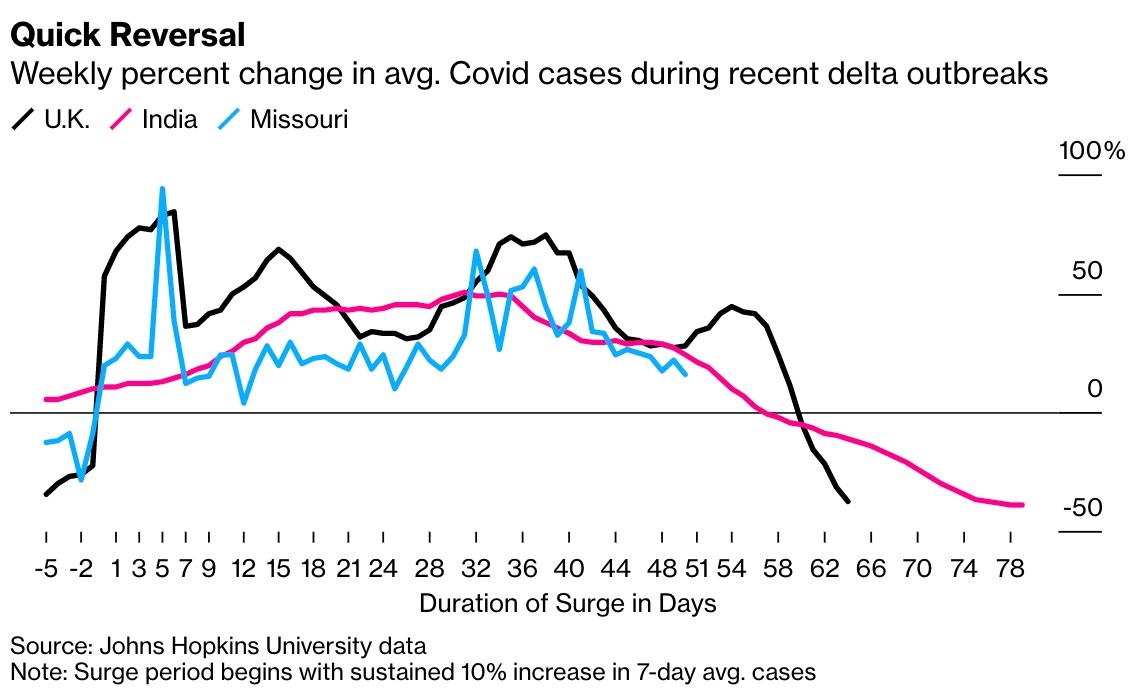
 A few days ago, we shared some analysis from Goldman Sachs and other investment banks projecting that the surge across the US in newly diagnosed COVID cases attributed to the delta variant would soon fade, just as outbreaks in the UK, Continental Europe and India all have. They've been closely monitoring the situation because it's now a key factor in their economic growth projections, and most expect delta will have a mild impact in heavily vaccinated Europe.

Now, Bloomberg has apparently caught on.

While hospitalizations and deaths are clearly higher in areas where vaccination rates are lower, rates are still well below their levels from just a few months ago. And although Dr. Anthony Fauci would have you believe that Delta might cause the end of the world as we know it, his isn't the only view on the matter. Dr. Scott Gottlieb, a former director of the FDA, believes delta will peak within the next two to three weeks.

And after breaking the data down to the regional level, Bloomberg has apparently spotted some trends that suggest as Delta's global conquest has been characterized by "hyperspeed spikes in infections that eased dramatically after about two months."

The first US outbreaks that caught officials' eye were in Missouri and Arkansas, and they both started in earnest around the end of May, per BBG.

They noted that the rest of the country will be keeping a close eye on both states (along with a handful of others, including California).

The rest of the US will be watching those states closely as infections spread. The cases are prompting authorities to reconsider masking and other public-health measures, but many state and local governments are doing so gingerly and only after outbreaks are well underway. In Florida’s Miami-Dade County, Mayor Daniella Levine Cava said Wednesday that she would require masks again at indoor county facilities such as libraries.

Bloomberg also cited the following tweet from Dr. Gottlieb where he explained how Rt, a virus's effective reproductive number, plays into forecasts of the virus's spread. The logic behind it is pretty simple: If Rt falls below 1, then the virus's spread should start to slow.

Gottlieb cited data from covidestim, a project with contributors from Yale School of Public Health, Harvard’s T.H. Chan School of Public Health and Stanford Medicine, showing the Rt rate in the worst hit states is already trending toward 1. When the numbers did this in the UK, seen as being just a few weeks ahead of the US, cases quickly started falling off. 

Just some food for thought.

https://www.zerohedge.com/covid-19/dr-gottlieb-explains-why-us-covid-hot-spots-may-have-reached-point-where-delta-surge

UHS posts Q2 profit, but executives warn delta variant could stress labor challenges


  • Universal Health Services posted a $325 million profit in the second quarter of this year, up from $251.9 million during the same time last year, according to financial results released Monday.
  • The hospital operator beat Wall Street expectations on earnings and revenue, posting revenues of $3.2 billion in the second quarter —  a 17% jump from the same time last year.
  • The company also boosted its full-year guidance, though executives cautioned on a call with investors that rising COVID-19 delta variant cases and corresponding labor pressures pose some ongoing uncertainties.

For-profit hospitals so far have reported positive second quarter earnings as non-COVID-19 volumes finally started to rebound, though rising cases of the delta variant could hamper their prospects for the rest of the year.

"During the past four to six weeks, many of our hospitals have experienced significant surges in the number of COVID patients, and it is not evident that this surge has yet reached its peak," CFO Steve Filton said on the call Tuesday with investors.

UHS' COVID-19 volumes are currently around where they were last summer, though they aren't as bad as the peak in January, CEO Marc Miller said.

But volumes in the second quarter of this year are much stronger than they were last year at the chain's 26 acute care hospitals and 334 behavioral health facilities.

Adjusted admissions at UHS acute care hospitals rose 26.4% compared to the second quarter of 2020, and adjusted patient days rose 21.6%. At behavioral health facilities, adjusted admissions rose 14.1% year over year and adjusted patient days increased 7.4%.

Expenses rose to $2.76 billion, compared to $2.37 billion during the same quarter last year. 

UHS followed HCA and Tenet in reporting positive second quarter earnings in part due to rebounding volumes, though labor woes remain as another surge could exacerbate burned out healthcare workers even further.

Nurses in particular have reported widespread burnout throughout the pandemic, with some planning to leave their jobs for other roles outside of direct patient care, or to retire.

Some systems facing dire shortages are dangling massive sign-on bonuses to attract new nurses to permanent roles as they try to rely less on travel nurses.

"The concern is with the resurgence of COVID that turnover rates could increase because we've seen turnover rates increase every time that COVID volumes increase," Miller said.

https://www.healthcaredive.com/news/uhs-posts-q2-profit-but-executives-warn-delta-variant-could-stress-labor-c/603934/

AstraZeneca COVID-19 vaccine reduces viral shedding when administered intranasally

 A team of researchers affiliated with multiple institutions in the U.S. and one in the U.K. has found that administering the AstraZeneca COVID-19 vaccine intranasally to infected hamsters and monkeys reduced viral loads in nasal swabs, suggesting reduced shedding. In their paper published in the journal Science Translational Medicine, the group describes testing they conducted with animals infected with COVID-19 and the possible implications of their work.

Many parts of the world where vaccinations against COVID-19 are widely available are currently experiencing another surge. Experts in the field suggest this is due to the arrival of new variants and wide resistance to the vaccinations. Meanwhile, the media has been reporting on so-called breakthrough infections, in which people who have been vaccinated become infected with the virus anyway. Together, the  have led to calls for mask-wearing, even for people who have been vaccinated. This is because it is not yet clear if vaccinated people can infect other people, even if they have no symptoms. In this new effort, the researchers suggest that adding intranasal inoculation to vaccination efforts might help.

Currently, the vast majority of vaccines developed and in use are intramuscular, given via shots in the arm. Recently, a team at the University of Alabama noted that vaccines given intranasally would seem to make more sense, since COVID-19 is a disease of the nose, throat and lungs. In this new study, the researchers have given an already existing COVID-19  intranasally to test animals with COVID-19 to see what would happen.

They found that administering intranasal AstraZeneca COVID-19 vaccine to infected hamsters and monkeys led to lowered  on —an indication that giving the vaccine intranasally reduces shedding, which describes viruses released into the air when an infected person breathes, coughs or sneezes. Less shedding makes it more difficult for the virus to spread to other people.

Unfortunately, prior research has also shown that vaccines given intranasally confer immunity for a shorter period of time than intramuscular vaccination. Thus, as the team in Alabama noted, the best approach might turn out to be a combination of a shot in the arm along with a puff of mist up the nose to confer both short-term and long-term protection.


Explore further

Making the case for intranasal COVID-19 vaccines

More information: Neeltje van Doremalen et al, Intranasal ChAdOx1 nCoV-19/AZD1222 vaccination reduces viral shedding after SARS-CoV-2 D614G challenge in preclinical models, Science Translational Medicine (2021). DOI: 10.1126/scitranslmed.abh0755
https://medicalxpress.com/news/2021-07-astrazeneca-covid-vaccine-viral-intranasally.html

Over 100 Drugs Given Speedy Approvals Still Lack Proof of Clinical Efficacy

 Of 253 drugs authorized through the FDA's accelerated approval pathway, 112 have not been confirmed as clinically effective, according to a new investigation.

As of the end of last year, 24 of those 112 drugs have been on the market for more than 5 years, and some have been on the market for more than 2 decades -- often with a high price tag, according to clinical reporter Elisabeth Mahase, writing in The BMJ.

Though the accelerated approval pathway allows drugs onto the market before efficacy has been proven, the manufacturer must conduct post-approval studies, or confirmatory trials. If these trials show no benefit, the drug's approval can be walked back.

However, only 16 drugs authorized through the accelerated approval pathway -- established in 1992 -- have been withdrawn, Mahase noted. Most of those that were withdrawn were shown to lack efficacy, but in some cases, confirmatory trials were never done. For example, celecoxib (Celebrex) -- which was given accelerated approval in 1999 for the treatment of familial adenomatous polyposis, a genetic disorder that carries a high risk of bowel cancer -- was on the market for some 12 years before the FDA asked Pfizer to voluntarily withdraw it for this specific indication because efficacy trials were never completed.

The BMJ asked the manufacturers of 24 drugs that have been on the market for more than 5 years whether they had conducted phase IV trials. Six drugs had been withdrawn, approved, or postponed. Of the remaining 18 drugs, relevant trial information was provided for a third. Four manufacturers of those six drugs reported patient recruitment for trials, and two reported being in discussions with the FDA over final trial design. Finally, 11 companies representing 12 drugs did not respond to The BMJ's request, said Mahase.

"We are committed to ensuring the integrity of the accelerated approval program, which is designed to bring safe and effective drugs to patients with unmet medical needs as quickly as possible," an FDA spokesperson said in a statement provided to MedPage Today. "The program allows the FDA to approve a drug or biologic product intended to treat a serious or life-threatening condition based on an outcome that can be measured earlier than survival that demonstrates a meaningful advantage over available therapies."

If post-marketing clinical trials do not verify a drug's clinical benefit or are not completed in a timely manner, the FDA may choose to initiate proceedings to withdraw a drug's approval, the spokesperson added.

"Because the FDA continues to use this pathway to accelerate access to drugs for serious and life-threatening diseases for which there is an unmet medical need, at any point in time there will be drugs that are not converted because the confirmatory trials are ongoing," the spokesperson said.

"Despite the pathway's good intentions to accelerate 'the availability of drugs that treat serious diseases,' experts are concerned that it is now being exploited, to the detriment of patients -- who may be given a drug that offers little benefit and possible harm -- and of taxpayers," she continued.

Concerns about the accelerated approval pathway include a lack of threats from the FDA to withdraw a drug should confirmatory trials not be done, the agency's use of indirect (or surrogate) measures of clinical benefit in some cases, and the potential for drug manufacturers to take advantage of the pathway when it comes to actual measures of safety and effectiveness, Mahase wrote.

However, even given these concerns, experts still concur that the accelerated approval pathway is useful and can yield benefits to patients, she noted.

Recommended changes to the accelerated approval pathway include designing, agreeing upon, and even starting confirmatory trials as part of the approval, as well as taking a closer look at the selection of surrogate measures (or endpoints), regulating drug prices, and reviewing and renewing the approval, she said.

In the latest high-profile example of debate about a drug authorized through the accelerated approval pathway, Biogen's controversial Alzheimer's disease treatment aducanumab (Aduhelm) got the green light from the FDA via the process last month. In this case, the FDA's decision was based on the surrogate endpoint of reduction of amyloid-beta plaque in the brain.

While some have maintained that the drug offers a rare bit of hope for those suffering from a largely hopeless disease, the approval has also been met with a fair share of pushback. Critics of the drug have argued that there is a lack of evidence showing that the drug slows the progression of Alzheimer's disease, and that its sky-high $56,000-a-year pricetag is simply unreasonable.

FDA's most recent data -- as of June 30 -- show that there have been 269 drugs approved through the accelerated pathway since 1992. Of these, 132 have been converted to full approval, and 115 have not yet been converted; 84 of the 115 have been approved through the accelerated pathway since 2018.


Primary Source

Amazon predicts slower sales growth as Covid boost eases

 Customers turned to Amazon and other online platforms during the Covid crisis, leading to record profits for the US giant.

But Amazon's breakneck growth is beginning to level as customers start to return to bricks and mortar shops.

Revenue climbed 27% to £113bn (£80bn) in its second quarter, but this missed analyst expectations.

Amazon shares fell 5% in after-hours trade.

Earlier in the Covid pandemic Amazon posted record profits, signed up more than 200 million customers to its Prime service, and recruited more than 500,000 workers to keep up with surging demand.

But vaccine rollouts and easing of restrictions have led some consumers to venture out to stores, while also using click-and-collect services, in competition with the speedy delivery of online orders provided by Amazon and its peers.

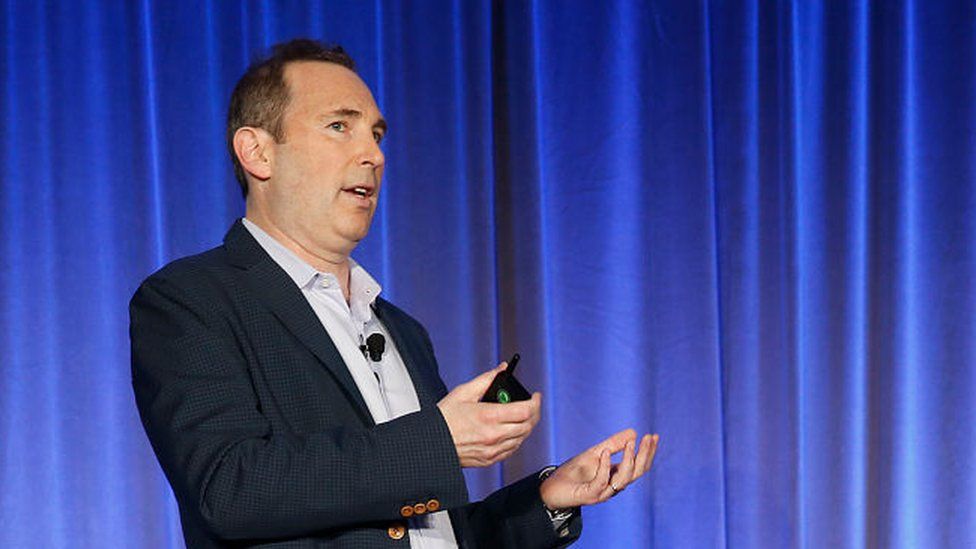
Andy JassyIMAGE COPYRIGHTGETTY IMAGES
image captionAndy Jassy took over the top job at Amazon on 5 July

Amazon's net sales rose to $113.08bn in the second quarter to 30 June from $88.91bn in the same period a year earlier. Analysts on average had expected $115.20bn.

The world's biggest online retailer had moved its annual marketing bonanza, Prime Day, to June this year, hoping to sell more goods before shoppers went on holiday.

It said the event was the biggest two-day sales period ever for merchants on its platform.

But in the second quarter analysts have seen signs of slowing demand.

North America, Amazon's largest market, saw sales increase 22% in the second quarter, versus 43% in the same period a year earlier.

But profit rose 48% to $7.8bn, the second-largest quarterly result Amazon has ever announced.

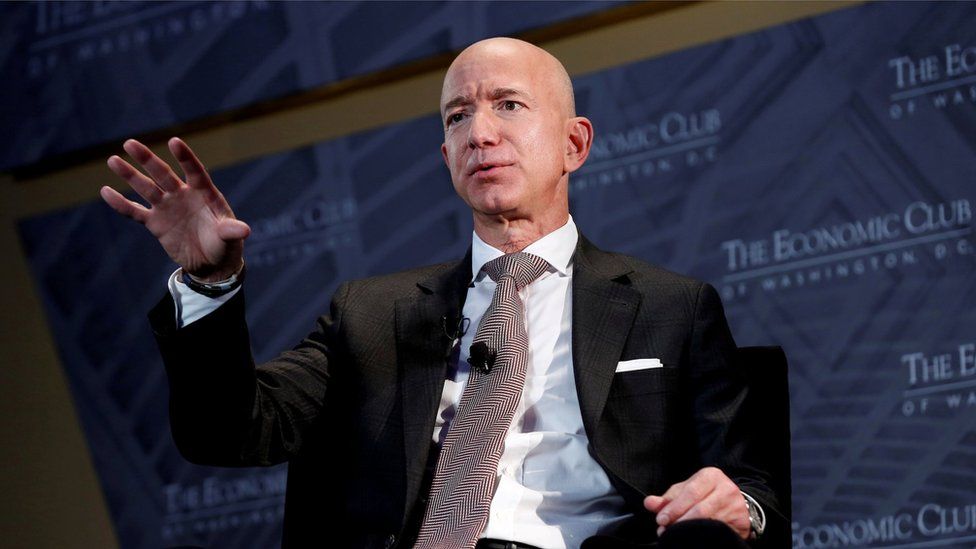
Jeff Bezos in 2018IMAGE COPYRIGHTREUTERS
image captionJeff Bezos stepped back from the chief executive role on 5 July

Bezos moves

The retail giant's founder Jeff Bezos stepped down as chief executive on 5 July, becoming executive chair of Amazon's board.

Andy Jassy took on role, after previously being in charge of Amazon's cloud computing division, Amazon Web Services (AWS).

In the second quarter AWS was a bright spot, seeing revenue rise by 37% to $14.8bn.

Mr Jassy said: "Over the past 18 months, our consumer business has been called on to deliver an unprecedented number of items, including PPE [personal protective equipment], food, and other products that helped communities around the world cope with the difficult circumstances of the pandemic.

"At the same time, AWS has helped so many businesses and governments maintain business continuity, and we've seen AWS growth reaccelerate as more companies bring forward plans to transform their businesses and move to the cloud."

Amazon's are the latest results from Big Tech this week. Apple, Microsoft and Google's parent firm Alphabet all reported soaring profits as the Covid pandemic continues. Facebook, however, said that it expects revenue growth to slow.

Nicholas Hyett, equity analyst at Hargreaves Lansdown, said: "It's saying something when you can report quarterly sales roughly equal to the annual GDP of Ukraine and 33% operating profit growth and still disappoint the market.

"You can see why Jeff Bezos would rather be jetting off into space.

"In all seriousness though, Amazon is increasingly bumping up against the law of large numbers - particularly in US retail.

"When you're only selling $1,000 of product a year, boosting sales by 40% is easy. When your annualised sales reach $400bn, finding an extra $160bn of sales is pretty difficult."

Mr Hyett said that means that Amazon is having to spend a lot to deliver future growth.

"The group's got plenty of irons in the fire for the future, it just needs to hope one of them comes off big," he added.

The top job that Mr Jassy inherited has never been bigger and more complex.

Last quarter Amazon, the biggest online retailer in the world, announced a deal to buy the film studio MGM for $8.5bn, expanding in Hollywood at the same time as it is running a grocery chain, building a healthcare business and facing scrutiny from regulators worldwide.

Costs also continue to rise. The company has offered an average $17 in hourly wages - more than double the US minimum - plus signing bonuses to attract 75,000 workers during a labour shortage.


https://www.bbc.com/news/business-58020895

Apollo Books $1.6 Billion Profit After Selling Hospital Chain To Itself

 Americans are already furious that Blackstone and its private equity rivals are buying up all the good homes, helping to drive the surge in residential real-estate prices that is helping to make buying a home even more unobtainable, especially for first time buyers who don't have wealthy parents to help with the down payment.

As Apollo struggles to rehabilitate its reputation following those unseemly Epstein tiesBloomberg reported Thursday that one of the firm's flagship funds booked a $1.6 billion profit by selling a once-struggling hospital chain to...another Apollo flagship fund?

Specifically, Apollo's eighth flagship fund completed the sale of hospital chain LifePoint to its ninth fund last month for $2.6 billion after investing a total of $975MM in the Brentwood, Tennessee-based chain. In the year or so before the deal was struck in April, LifePoint received $1.6 billion lifeline from the government during the pandemic, including more than $600MM in grants, and nearly $1 billion in loans. Management stresses that the firm paid back the loans already. Still, that's a half-a-billion dollar government hand out that's padding the returns for wealthy PE investors (a group which also includes pension funds).

The move isn't that surprising when one considers that costly "alternative" strategies like private equity are under immense pressure to maintain sky-high returns in an environment where good deal targets are few and far between, thanks in part to the SPAC boom (and the Fed's stimulus).

The Apollo fund that bought LifePoint finished raising its capital in 2017. Given the time table for these types of funds, the timing of the sale makes sense: the original investors in the 2013 fund that initially bought the hospital chain are looking to cash out. Fortunately for them, there's plenty of new money coming in.

For what it's worth, LifePoint says that $500MM+ in pandemic grants it received didn't benefit shareholders, but instead were "applied to LifePoint's communities". Whether you believe that, or not, there are plenty of critics who say private equity doesn't belong in America's hospital system.

"All grant aid we received has been applied to LifePoint's communities and only partially offset the $1.1 billion in extraordinary expenses and lost revenue that we incurred" because of the pandemic, she said.

One fact that probably helped Apollo pitch the investment to backers of its 9th flagship fund is the massive cash pile that LifePoint is sitting on. The firm has already grown substantially via acquisitions since Apollo bought it back in 2013.

The firm built LifePoint through the acquisition of three regional hospital chains in 2015, 2016 and 2018, and the company now operates 87 hospitals in small towns across the U.S. Apollo has said it can operate hospitals more efficiently by merging them. Technology and infrastructure upgrades are among a number of improvements LifePoint has made on Apollo’s watch, according to the private-equity giant, which is marketing the health-care firm as a socially responsible investment in its pitch to raise an inaugural impact fund.

LifePoint has emerged from the pandemic in a position of strength even as many rural hospitals have struggled to survive. Its cash stockpile grew significantly during the crisis as the company tapped debt markets.

Apollo told Fund IX investors that they stood to gain from their investment in LifePoint, as the hospital chain was sitting on more than $2 billion of cash that could be used to expand the business through acquisitions.

And Apollo isn't the only major PE firm engaged in the practice of flipping hospital chains.

Apollo wasn’t the only private-equity firm to orchestrate an uncommon exit from a for-profit hospital chain this year. Cerberus Capital Management and Leonard Green & Partners sold their remaining interests to insiders at the health-care companies they had backed, rather than selling to an industry competitor or pursuing an initial public offering.

Cerberus made roughly $800 million on its investment in Boston-based Steward Health Care, after paying $246 million in 2010 for what started as a chain of struggling Catholic hospitals.

With this in mind, it's perhaps not surprising that some progressive Dems are pounding the alarm about the risks of private equity firms taking over practically every hospital chain in the country.

"Private equity’s growing reach into our health-care system is concerning precisely because private equity’s mission to reap enormous profits often stands in direct conflict with the Hippocratic Oath," U.S. Representative Bill Pascrell, a New Jersey Democrat, said in an emailed statement. "We need greater transparency and more cutting oversight of these private-equity firms."

But setting aside the question of medical ethics for a moment, deals like these are certainly telling. Perhaps this is a sign that after 18 months of unprecedented deal flow buoyed by Jerome Powell's money printer, the biggest PE firms might be running out of ideas.

https://www.zerohedge.com/markets/apollo-books-16-billion-profit-after-selling-hospital-chain-itself