Search This Blog

Tuesday, October 19, 2021

Failed cancer immunotherapies cost Medicare hundreds of millions. How to revamp accelerated approvals?

 A recent FDA review of past conditional go-aheads for cancer immunotherapies has led to several withdrawals. Health policy and economics researchers see the campaign as another opportunity to push for a revamp of the agency’s accelerated approval pathway.

Across six cancer indications for four medicines through the FDA’s accelerated approval program which have since been pulled, Medicare had spent $224 million between 2017 and 2019, a new study published in JAMA Internal Medicine shows.

Describing the expenditure as “waste,” the team of researchers from Harvard University and London School of Economics and Political Science suggests the FDA should “enforce timely completion of confirmatory trials and accelerated withdrawal” if a drug fails to confirm its benefit.

The six indications span small cell lung cancer, bladder cancer, stomach cancer and liver cancer and belong to Merck & Co.’s Keytruda, Bristol Myers Squibb’s Opdivo, Roche’s Tecentriq and AstraZeneca’s Imfinzi. The $224 million didn’t calculate Tecentriq’s newly withdrawn use in triple-negative breast cancer. It also didn’t consider how Keytruda’s full approval in previously untreated bladder cancer was for a smaller patient population than its original conditional nod.

They were all part of 10 accelerated approvals that have attracted FDA scrutiny after failures in confirmatory trials; the larger group cost Medicare $569 million during the three years, the researchers found.

Since the start of the accelerated approval program in 1992, the FDA has mainly used the pathway to approve cancer drugs based on biomarkers, such as tumor response rate, which are considered “reasonably likely” to predict clinical benefit, namely, extending patients’ lives. As a condition for the early green light, drugmakers are required to prove their meds’ efficacy in confirmatory trials.

But the program has repeatedly come under fire for its lack of accuracy and follow-on oversight. A 2019 JAMA Internal Medicine study led by Harvard researcher Aaron Kesselheim, M.D., found that only 19 of 93 cancer drug indications the FDA waved through under the pathway between late 1992 to mid-2017 had positive overall survival data from confirmatory trials.

Earlier this year, the controversial approval of Biogen’s Aduhelm for Alzheimer’s disease, based on the drug’s ability to decrease amyloid plaques in the brain, sparked wide debate over the FDA’s use of a questionable surrogate marker.

Critics have also picked on the duration of time the FDA has allowed accelerated approvals to stay in place without clear efficacy data or even after confirmatory trial failures. For example, for Keytruda’s now withdrawn third-line stomach cancer indication, a confirmatory trial for second-line treatment failed in late 2017. Another trial for newly diagnosed patients bombed in April 2019. But the FDA didn’t take any action until an advisory committee meeting this April, which led to Merck’s voluntary withdrawal in July.

While the accelerated approval criticisms aren’t exactly new, the issue has seemed to gain steam this year. Amid the Aduhelm fallout, The HHS Office of the Inspector General in August launched a review of the FDA’s accelerated approval pathway, with a report expected in 2023.

In another JAMA Internal Medicine study in July, Kesselheim and collaborators returned to suggest that the FDA should incorporate better consensus in the use of biomarkers for accelerated approvals. In a point that has gained support lately, the researchers argue that the FDA should finalize confirmatory trial protocols as a condition of accelerated approval. A negative confirmatory trial readout would automatically trigger a withdrawal, the team said.

The team also suggested the Centers for Medicare & Medicaid Services and the Department of Veteran Affairs take steps to control costs of drugs with uncertain evidence. Limiting how much a drug may be reimbursed is a tactic that powerful drug cost watchdog, the Institute for Clinical and Economic Review, has recently proposed in its own list of recommendations (PDF) to improve the FDA’s accelerated approval program. 

Last week, two researchers at the Brookings Institution and the University of Pennsylvania also proposed a four-part project titled “Pay for Drugs That Work” for Medicare. The plan includes a four-year cap for drugmakers to provide confirmatory trial results before Medicare Part B stops reimbursement.

Earlier this year, citing “the risk of significant adverse drug events,” plus a “lack of evidence of a positive impact on cognition,” The Department of Veteran Affairs declined to add Aduhelm to its formulary.

https://www.fiercepharma.com/pharma/failed-cancer-immunotherapies-cost-medicare-millions-fda-revamp-accelerated-approval

U.S. CDC Considers 'Test-To-Stay' Program in Schools Instead of Quarantine

 The U.S. Centers for Disease Control and Prevention (CDC) is considering a "test-to-stay" program in schools instead of quarantine, CNN reported on Tuesday.

The program is for students who may have been exposed to COVID-19 in school and can still attend classes in person rather than quarantine at home as long as they test negative for the disease and show no symptoms, CNN said.

https://www.usnews.com/news/top-news/articles/2021-10-19/us-cdc-considers-test-to-stay-program-in-schools-instead-of-quarantine-cnn

Pfizer/BioNTech COVID-19 vaccine highly protective in 12-18 age group - CDC

 The Pfizer Inc/BioNTech SE COVID-19 vaccine was 93% effective in preventing hospitalizations among those aged 12 to 18, according to an analysis released by the US Centers for Disease Control and Prevention (CDC) on Tuesday.

The study was conducted between June and September, when the extremely contagious Delta variant of the coronavirus was predominant.
Yet, the data from 19 pediatric hospitals showed that among the 179 patients who were hospitalized for COVID-19, 97% were unvaccinated, providing reassurance of the vaccine's efficacy.

Of the roughly 16% of patients hospitalized with severe enough COVID-19 to require life support, none were vaccinated.
The CDC report builds on trials done by the companies in this age group that showed high immune response against the virus, but which were not designed to demonstrate efficacy against hospitalization.

The Pfizer/BioNTech vaccine is authorized for children as young as 12, and the companies are seeking authorization for use in those as young as five years of age.
A panel of experts advisers to the US Food and Drug Administration are expected to weigh in on data on young children later this month.
The CDC data "reinforces the importance of vaccination to protect US youths against severe COVID-19," the study authors said.

US workers face layoffs as COVID-19 vaccine mandates kick in

 Thousands of unvaccinated workers across the United States are facing potential job losses as a growing number of states, cities and private companies start to enforce mandates for inoculation against COVID-19.

In the latest high-profile example, Washington State University (WSU) fired its head football coach and four of his assistants on Monday for failing to comply with the state's vaccine requirement. The coach, Nick Rolovich, had applied for a religious exemption from the mandate earlier this month.

Thousands of police officers and firefighters in cities like Chicago and Baltimore are also at risk of losing their jobs in the coming days under mandates that require them to report their vaccination status or submit to regular coronavirus testing.

While controversial, the mandates have been effective at convincing many hesitant workers to get vaccinated against the virus, which has killed more than 700,000 people in the United States. Some 77% of eligible Americans have received at least one shot of a vaccine, White House COVID-19 response coordinator Jeff Zients told reporters last week.

In Chicago, Mayor Lori Lightfoot has been battling with the police union, which came out against the vaccine mandate for city workers. About a third of the city's 12,770 police employees missed a Friday deadline to report their vaccination status, and some officers have been put on no-pay status.

"Fundamentally, what this all is about is about saving lives. It's about maximizing the opportunity to create a safe workplace," Lightfoot said on Monday, accusing the union of tying to "induce an insurrection" by opposing the mandate.

Chicago Fraternal Order of Police union president John Catanzara did not respond to a request for comment.

The White House, which announced sweeping vaccine requirements in a bid to reduce hospitalizations and deaths from COVID-19 in the wake of a surge driven by the highly contagious Delta variant of the coronavirus, has been a major catalyst behind the inoculation push.

On Friday, some 200 Boeing Co (BA.N) employees and others staged a protest over the planemaker's requirement that 125,000 workers be vaccinated by Dec. 8, under an executive order issued by President Joe Biden for federal contractors.

The rules for another order applying to private businesses with 100 or more employees are expected to be finalized soon.

Along with the mandate for federal workers and contractors, Biden's vaccine requirements will cover roughly 100 million people, about two-thirds of the U.S. workforce. read more

The White House has been meeting with executives of several major companies to discuss Biden's private-sector vaccination plan.

A wave of layoffs has already swept through the healthcare industry, which moved more quickly than others to impose vaccine mandates given the heightened COVID-19 exposure risk for patients and staff.

Nurses and other healthcare workers who chose to leave their jobs rather than be immunized recently told Reuters they could not get past their concern over a lack of long-term data on the three vaccines available in the United States.

While the vaccines received emergency use authorization from the Food and Drug Administration in less than a year, medical experts have widely vouched for their safety, citing years of research, large clinical trials and real world data after hundreds of millions have been vaccinated worldwide.

Like WSU's Rolovich, many unvaccinated workers seeking an exemption have done so on religious grounds. It was not clear how a university committee in charge of weighing such exemptions ruled in his case.

School leaders said the mandate was aimed at ensuring the safety of its faculty and staff.

"Experience is showing that vaccine mandates help motivate people to complete the vaccination process," Marty Dickinson, WSU Board of Regents Chair, said in a statement.

https://www.presstv.ir/Detail/2021/10/19/668845/US-workers-face-layoffs-as-COVID-19-vaccine-mandates-kick-in

COVID in the ICU: Can Patients Be Too Obese for ECMO?

 Published guidelines recommend against extracorporeal membrane oxygenation (ECMO) for morbidly obese COVID-19 patients in severe distress, but a Florida researcher said his center's experience indicates that such advice needs another look.

At Orlando Regional Medical Center, mortality in COVID patients with acute respiratory distress syndrome (ARDS) and body mass index (BMI) values above 40, while not good, was no worse than previously reported for all critically ill COVID patients in a large database, said Sergio Ramirez, MD, a critical care fellow at the institution.

Speaking at CHEST 2021, the American College of Chest Physicians' annual meeting, held online this year, Ramirez said centers participating in the Extracorporeal Life Support Organization (ELSO), which issued the guideline discouraging ECMO in the morbidly obese, should "consider not using BMI as a sole exclusion criteria [sic] for candidacy to ECMO support."

ELSO released the guideline in May 2020 after reviewing more than 100 published papers related to ECMO; most of those did not address COVID-19 specifically, of course, since the novel coronavirus had only emerged a few months previously. The guideline included BMI >40 in a list of "relative contraindications" that also included age >65, advanced systolic heart failure, and immune deficiency, among others.

Faced with an onslaught of COVID-19 patients with high BMI values, Ramirez's hospital set its own ECMO eligibility criteria that allowed morbidly obese patients to receive the treatment if it wasn't otherwise contraindicated. At CHEST, Ramirez reported outcomes for these patients treated from March 2020 to April 2021.

A total of 33 patients with BMI >40 underwent ECMO at the Orlando center. Of these, 11 died while on ECMO, and one other died in hospital after surviving ECMO, for an overall mortality rate of 36%. Nineteen were either transferred to another hospital or discharged to home or a rehab facility and were considered to be ECMO survivors (57%); two of the 33 remained at the Orlando center at data analysis with their final status uncertain.

Although the 36% mortality rate was disappointing, it matched up closely with registry data compiled by ELSO in September 2020 for COVID/ARDS patients with BMI values <37, Ramirez noted. This analysis covered 1,035 patients in 36 countries, yielding an estimated 90-day mortality rate of 37%.

Similarly, the ELSO data showed a survival rate of 60%.

Other highlights of the Orlando experience with morbidly obese patients included:

  • Age was not a factor in survival probability
  • Those who survived spent as long on ECMO as those who died
  • Overall hospital stays were longer in survivors, not unexpectedly

Ramirez acknowledged that his analysis should not be the last word, however; he called for additional research on ECMO for patients with high BMI values.


Disclosures

BiondVax Advances New Pipeline Based on Innovative VHH Antibodies

 BiondVax Pharmaceuticals Ltd. (Nasdaq: BVXV), which focuses on developing, manufacturing and commercializing innovative products for the prevention and treatment of infectious diseases and other illnesses, today announced the signing of a term sheet that includes binding financial terms of contemplated definitive agreements with the Max Planck Society and the University Medical Center Göttingen in Germany. The parties intend to enter into a 5-year strategic research collaboration including an option for BiondVax to license innovative VHH antibodies. Frequently referred to as nanobodies*, VHH antibodies have the potential to serve as therapeutics and diagnostics for many diseases. The transaction is subject to execution of definitive agreements.

VHH antibodies developed by Professor Dirk Görlich, Director at the Max Planck Institute for Biophysical Chemistry and Professor Matthias Dobbelstein, Professor of Molecular Oncology at the University Medical Center Göttingen, exhibit key advantages over current industry standard human monoclonal antibodies (mAbs). These include: the ability to bind to smaller target sites; significantly higher affinity to the target; higher stability which supports novel routes of administration such as inhalation; ease and lower cost of manufacturing; and potential for improved patient safety.

Upon execution of definitive agreements based on the term sheet signed today, the collaboration will begin with BiondVax's exclusive worldwide licensing of novel COVID-19 VHH antibody candidates shown in Görlich and Dobbelstein's labs to neutralize all known major COVID-19 variants of concern at around 100-times lower drug concentrations than current COVID-19 mAbs and all other reported COVID-19 VHH antibodies. BiondVax anticipates completing preclinical proof-of-concept inhalation studies in 2022 and initiating human clinical trials in 2023.

Görlich and Dobbelstein will also conduct research on additional molecular targets for which the parties believe VHH antibodies have clear advantages over existing drugs used against various diseases. These targets are the basis for validated and currently marketed mAbs including for autoimmune conditions such as psoriasis, asthma, macular degeneration, and psoriatic arthritis. BiondVax will have an exclusive option for an exclusive worldwide license to advance these additional VHH antibodies through preclinical and clinical development, manufacturing, and commercialization. Notably, these VHH antibodies can be mass-produced through recombinant protein manufacturing in sites such as BiondVax's state-of-the-art facility in Jerusalem.

https://www.streetinsider.com/Corporate+News/BiondVax+Pharma+%28BVXV%29+Advances+New+Pipeline+Based+on+Innovative+VHH+Antibodies/19074832.html

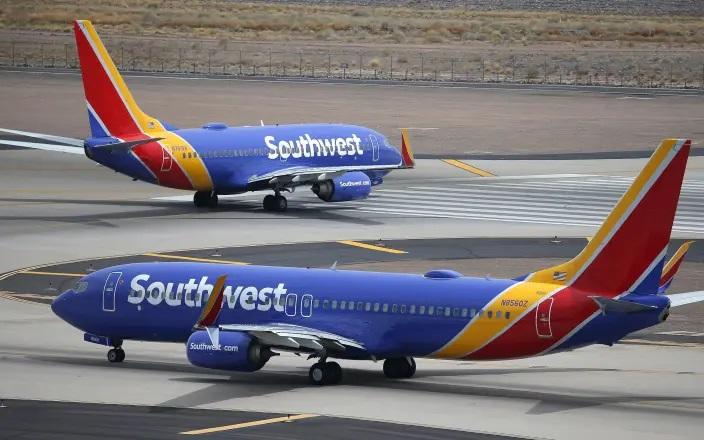
Southwest Caves on Plan To Put Unvaccinated Staff On Unpaid Leave In Dec

 One day after hundreds of Southwest Airlines employees protested outside the carrier's Dallas headquarters against the company's pending Covid-19 vaccine mandate, the company has caved.

According to CNBC, the airline has scrapped a plan to place unvaxxed employees who have applied for - but not yet received a religious or medical exemption, on unpaid leave starting Dec. 8.

Southwest Airlines and American Airlines are among the carriers that are federal contractors and subject to a Biden administration requirement that their employees are vaccinated against Covid-19 by Dec. 8 unless they are exempt for medical or religious reasons. Rules for federal contractors are stricter than those expected for large companies, which will allow for regular Covid testing as an alterative to a vaccination. -CNBC

In recent days, executives for both Southwest and American urged employees to apply for exemptions if they can't get vaccinated for a legitimate medical - or sincerely held religious belief.

In the meantime, the company has given employees until Nov. 24 to finish their vaccinations or apply for an exemption - and will continue paying them while the company reviews their requests, according to the report.

It will also allow those with rejected applications to continue working "as we coordinate with them on meeting the requirements (vaccine or valid accommodation)."

"This is a change from what was previously communicated. Initially, we communicated that these Employees would be put on unpaid leave and that is no longer the case," the company wrote in a note reviewed by CNBC.

Last week, Southwest CEO Gary Kelly said that while he personally disagrees with the vaccine mandate, the company would be forced to implement them because they're a federal contractor.

"I’ve never been in favor of corporations imposing that kind of a mandate. I’m not in favor of that. Never have been," he told CNBC. "But the executive order from President Biden mandates that all federal employees and then all federal contractors, which covers all the major airlines, have to have a [vaccine] mandate … in place by Dec. 8, so we’re working through that."

Now, Southwest has decided to lean in favor of unvaccinated employees for the time being.

Other airlines aren't deviating. United Airlines - which has a 96% vaccination rate among staff, instituted a vaccine mandate in August - one month before the Biden administration issued the Dec. 8 guidance for federal contractors. The company informed staff that they would be placed on unpaid leave if they received exemptions. Several employees sued the company over the decision, and a Ft. Worth, Texas judge issued a temporary restraining order blocking the airline from moving forward with its plan.

American Airlines CEO Doug Parker, meanwhile, met with labor union leaders last Thursday to discuss how to move forward. Airline management "indicated that, unlike the approach taken by United, they were exploring accommodations that would allow employees to continue to work," according to a Monday note by the Association of Professional Flight Attendants, the union that represents American’s mainline cabin crews. "They failed to offer any specifics as to what such accommodations might look like at that time."

https://www.zerohedge.com/political/southwest-caves-ditches-plan-put-unvaccinated-staff-unpaid-leave-dec