ShockWave Medical, Inc. (NasdaqGS:SWAV) is weighing a potential deal after receiving takeover interest, people familiar with the matter said. The company has been working with an adviser to study possibilities including a merger or partnership with another health-care company, according to the people, who asked not to be identified because the information is private. Shockwave Medical’s deliberations are ongoing, and there’s no certainty they will lead to a transaction, the people said. A representative for Shockwave Medical declined to comment.
Sunday, January 9, 2022

CDC director responds to criticisms of agency's guidance: 'This is hard'
Rochelle Walensky, director of the Centers for Disease Control and Prevention (CDC), responded to criticisms that her agency's COVID-19 guidance is "confusing," saying on Sunday that it is "hard" to provide updated recommendations throughout an ongoing pandemic.
Fox News anchor Bret Baier asked Walensky while she appeared on "Fox News Sunday" on her stated goals of restoring trust in the CDC, noting the recent criticisms that have been made regarding the agency's changing guidelines on quarantining.
"You know, this is hard. We have ever evolving science with an ever evolving variant. And my job is to provide updated guidance in the context of rapidly rising cases. And that is what we've done and I'm here to explain it to the American people and I'm committed to continuing to do so and to continuing to improve," Walensky said.
Baier also asked Walensky what she would say to the hundreds of school districts that have recently closed down in response to the rapidly spreading COVID-19 omicron variant.
"I want to remind people that in the fall of this year, we had a delta surge and we were able to safely keep our children in school before we had pediatric vaccination. Fast forward to now we have pediatric vaccination," Walensky said.
"Of course, every jurisdiction is going to have to make these decisions locally," she added. "But what I will say is the most important thing we can do is get our children vaccinated, get our teachers vaccinated, get our teenagers vaccinated and then to practice all of those layers mitigation strategies that have been proven to work."
Biden Admin Cuts Florida's Weekly Monoclonal Shipment In Half
by Jannis Falkenstern via The Epoch Times,
The federal government slashed in half the number of doses of the monoclonal antibodies therapy shipped to Florida from 30,000 to 15,000 this week, according to Gov. Ron DeSantis (R).
DeSantis said the 15,000 dozen received would be “immediately utilized to support new monoclonal antibody sites.”
“But for the federal government’s decision to restrict supply of monoclonal antibody treatment to Florida, my administration would have already opened additional monoclonal antibody treatment sites throughout the state,” DeSantis said in a press release.
The governor said that before the Biden administration “seized control of the monoclonal supply” Florida was administering 30,000 doses per week to infected patients. The treatment saved “countless lives,” he said.
“The Biden Administration is still obstructing the state of Florida’s ability to manage our own supply of monoclonal antibodies and I will continue to seek additional doses for Floridians,” he said.
The Epoch Times reported Jan. 3 that the U.S. Health and Human Services Administration had relaxed its policies on limiting the monoclonal antibody drugs paving the way for Florida to receive 30,000 treatments. The plan for those doses was to set up new treatment centers in high-need areas throughout south and central Florida.
DeSantis alleged the limits the HHS had set for Florida were “political.”
“The federal government has cornered the entire market of monoclonal,” he said in a press conference on Jan. 3.
“We’ve got the infrastructure in place. It’s just a matter of the federal government giving us more doses … for the Floridians who need it.”
The governor asked the state legislature to set aside almost $1 billion to aid in fighting COVID-19 and making monoclonal antibodies available to “every Floridian who needed it.”
But because the federal government has a contractual agreement with the makers of the monoclonal antibody treatments, it has “locked out” anyone else from buying the product, the governor said.
“We will rapidly deploy the 15,000 doses that we now have secured,” he said. “The Biden Administration commandeered the supply and distribution of monoclonal antibodies following Florida’s successful deployment of the treatment last summer and drastically cut shipments of the treatments to the state.”

Florida Gov. Ron DeSantis speaks at the opening of a monoclonal antibody site in Pembroke Pines, Fla., on Aug. 18, 2021. (Marta Lavandier/AP Photo)
The announcement of the shortfall in monoclonal antibody treatments comes one day after the governor made remarks about the Jan. 6 anniversary and how “corporate media” and Washington would celebrate the day as “their Christmas.”
“They are going to take this and milk this for anything they could to try to be able to smear Donald Trump,” he told reporters on Jan. 6.
Requests from the governor’s office on why they think Florida was shortchanged on the treatment drug were not answered by press time.
https://www.zerohedge.com/political/biden-admin-cuts-floridas-weekly-monoclonal-shipment-half
Alvin Bragg’s Recipe for Disaster
Newly elected Manhattan district attorney Alvin Bragg recently issued his “day one” memo, setting forth prosecutorial guidelines that will govern in New York County. The memo was titled “Achieving Fairness and Safety,” but Bragg’s new policies, which involve de-prosecuting entire categories of crimes and slashing sentences, are a recipe for violence and disorder. The determination of new mayor Eric Adams to erase the lawless years of Bill de Blasio has run into a serious roadblock.
Bragg modeled his memo on similar policy missives from Los Angeles’s George Gascón, Philadelphia’s Larry Krasner, and San Francisco’s Chesa Boudin—leading figures in the “progressive prosecutor” movement. The only real difference is that Bragg’s memo is encoded for New York’s penal laws, so it takes some translation to regular language.
Bragg’s directives will drive ordinary citizens and the NYPD crazy. He will not charge defendants for resisting arrest. The NYPD now can expect every arrest to be a brawl, in which the only person likely to be charged with a crime is a police officer. Bragg will also decline to charge traffic infractions. This is the sort of de-prosecution decision that has led to deadly street racing and vehicular mayhem in cities such as Chicago and Minneapolis. Finally, he will prevent the police from charging people for trespassing. A quick look at San Francisco’s parallel policy shows a predictable result: tent cities of the homeless in the green spaces and streets.
Bragg’s policies for major crimes will have even more serious consequences. Bragg has directed that armed robberies of businesses no longer be charged as robberies, but only as larcenies. If a gun-wielding robber gets away with less than $1,000, which is typically the case in a store robbery, the defendant will be charged solely with petty larceny, a misdemeanor. Felons in possession of a firearm will be charged only with misdemeanor offenses for the equivalent of unlicensed possession. Finally, drug traffickers will be charged with felony drug dealing only on the rare occasions that they are caught actually in the act of delivering drugs. Drug dealers possessing any amount of drugs and packaging material, but not caught actually delivering the drugs, will instead be charged only with drug possession, a misdemeanor. A drug dealer caught with 50 kilos of heroin would be charged with misdemeanor drug possession, not drug trafficking. It does not take a criminal genius to figure out that these policies will lead to more gun-toting, drug-dealing felons on Manhattan streets.
Who goes to jail on Bragg’s watch? Virtually no one. The only people Bragg recommends for pretrial detention and later prison sentences are murderers, shooters who actually cause serious injuries—firing 50 shots down a crowded street won’t get you locked up if you don’t hit anybody—sex offenders, and perpetrators of specific offenses such as domestic violence or public corruption. Burglars, robbers, drug traffickers, armed felons, gang offenders, and all the other categories of dangerous criminals in Manhattan won’t see the inside of a jail cell.
Even when Bragg does intend to seek jail sentences, the penalties will not be stiff. Bragg says that the maximum sentence sought for any offense will be 20 years, and that his office will never seek life without parole. If 20 years is the maximum sentence for the worst offenses, expect a severe discount on sentences for other offenses across the board.
These guidelines, Bragg says, will be followed unless the law requires stiffer measures. But those who think mandatory penalties will constrain him should think again. Every prosecutor has the ability to evade mandatory minimums. The simplest route is to have a defendant charged with or plead to a less serious offense that does not trigger the mandatory sentence. Prosecutors often also have the ability simply to waive mandatories or not file the qualifying motions that trigger them. The negative exercise of prosecutorial discretion is a virtually uncheckable power.
Alas, Manhattanites might be getting exactly what they voted for (albeit in a low-turnout election). Bragg did not hide any of his policies. He openly advertised them in his campaign materials. He ran on this platform while homicides were increasing across New York and the nation. Even as Adams promised a return of law and order, Bragg pledged to ignore the law. Now the two will have to work together, somehow.
New York often serves as a bellwether on crime and crime policy for the rest of the nation. When the city descended into chaos in the 1970s and 1980s, so did the rest of the country’s urban areas. In the 1990s and 2000s, New York led the way in showing how to control crime and reestablish safety. If Bragg is as determined to thwart the crime-control efforts of Adams and the NYPD as these early signs suggest, we can only hope that the rest of the country ignores New York’s example this time around.
Are We Really Expected To Believe This China COVID Data?
by John Mac Ghlionn via The Epoch Times,
In April of last year, something very strange happened. COVID-19 death rates in Ireland, a country I hail from, surpassed death rates in China.
Yes, Ireland, a tiny country with a population of less than 5 million people versus China—the world’s most populated country—with more than 1.4 billion citizens.
According to a John Hopkins University (JHU) report, in late April 2021, Ireland had 4,873 COVID-related deaths and close to a quarter of a million confirmed cases. Meanwhile, in China, 4,845 official deaths were reported, with 102,373 cases.
Today, almost a year on from this rather staggering report, China’s “official” (a slippery term, especially when discussing China) death toll has hardly budged. On the other hand, Ireland’s death toll is almost 6,000. How is this possible?
Of course, something is, shall we say, a little off. The people reporting death tolls, like the scientists working at JHU, can only comment on the data provided.
The Chinese Communist Party (CCP) is clearly withholding data. As you will see throughout this piece, this is not a controversial point to make. For well over two years, those in Beijing have done all in their power to hide the truth from the world. Now, though, the cat is very much out of the bag.
In a recent, rather brilliant piece for Forbes, George Calhoun, an academic with a conscience and a considerable amount of bravery, compared the mortality rates from COVID-19 in the United States and China.
Somewhat incredulously, he commented, the CCP “reports a Covid death rate overall of 0.321 per 100,000 population.” Across the pond, meanwhile, “The U.S. Covid death rate is 248 per 100,000 population–800 times higher.”
Why, Calhoun asked, have so many Western media outlets accepted such preposterous figures as valid? Especially when the CCP continues to act in a “triumphalist” manner, attributing “their success of their “zero covid” approach—marked by severe lockdowns for entire cities, travel bans, intensive contact tracing, military enforcement.”
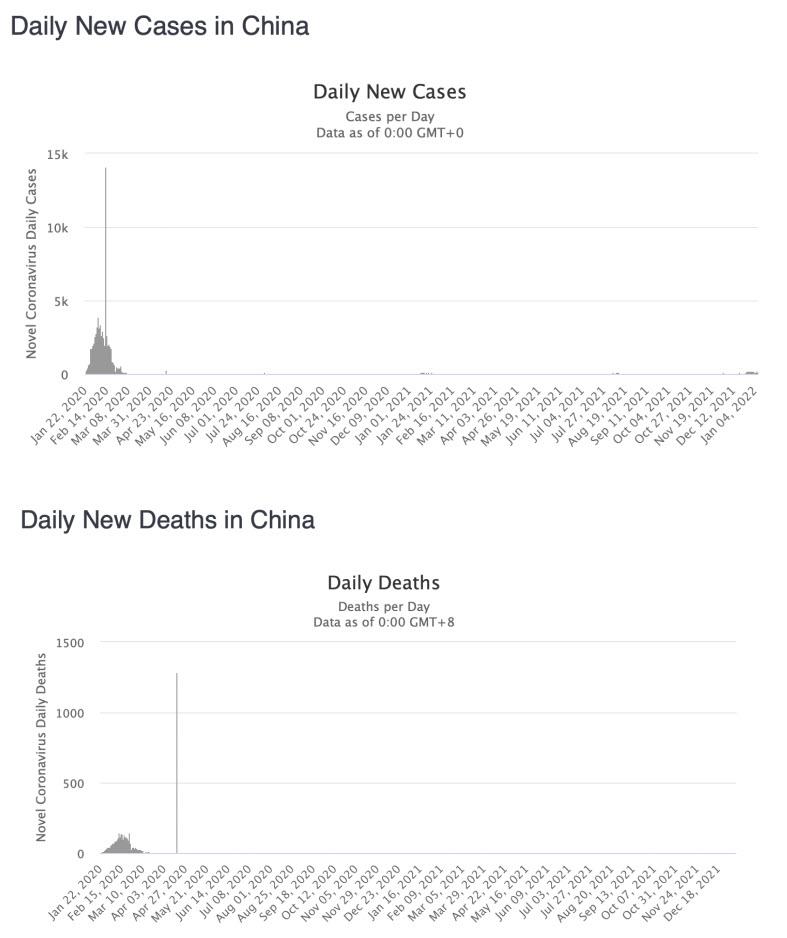
China’s COVID success is a farce. The CCP’s “zero COVID” approach carries zero credibility.
The CCP sits on a foundation of lies. Last year, Chinese leader Xi Jinping called on the Chinese people to rejoice. Severe poverty, he assured the masses, was a thing of the past. Well, it’s not. It’s still very much a thing of the present. Then, in October, the CCP started pushing a pernicious rumor regarding the origin of the SARS-CoV-2 virus. According to the experts in Beijing, the virus didn’t originate in Wuhan, instead it actually originated in Maine. Yes, Maine, a state in America. Of course, this is nonsense—such nonsense undoubtedly makes many Americans angry, as it should.
But where should this anger be directed? At the CCP, many will shout. Our real anger, I contend, should also be directed at certain news outlets in the West—especially in the United States—that have enabled the perpetuation of false narratives and deceit.
Ever since the virus originated in Wuhan, those in Beijing have gone to great lengths to hide the truth from the world. Sadly, the CCP has been assisted—unknowingly or otherwise—by many commentators in the West, including some of the biggest media outlets in the world.
Instead of focusing on the origins of the virus, some prominent authors instead chose to focus on a former president’s etiquette: how dare he say the “China virus”; what is he thinking?
No, what were they thinking?
It took Jon Stewart, a comedian, to shake millions of Americans out of a collective slumber. Stewart is a funny man but very few people are laughing across the country today. The virus has wreaked absolute chaos. People have lost their homes, their jobs, and their lives. Inflation continues to surge. The United States is struggling. Average Americans are struggling. The only people laughing are members of the CCP. China is in the ascendancy as its economy could overtake the U.S. economy by 2030, according to analysts at the British consultancy Center for Economics and Business Research.
As the United States becomes more divided—with so much of this division stemming from a virus that originated in China—those in Beijing continue to laugh at Americans. They laugh at the current president. They laugh at the state of America. And they laugh at the fact that they may never have to pay a price for arguably the greatest cover-up in recent history.
https://www.zerohedge.com/covid-19/are-we-really-expected-believe-china-covid-data
High prevalence of condition that can cause type 2 diabetes and high blood pressure
Scientists at the University of Birmingham are calling for changes to healthcare policy following research which has shown for the first time the scale of the impact of a condition associated with benign tumours that can lead to type 2 diabetes and high blood pressure.
Up to 10 per cent of adults have a benign tumour, or lump, known as an 'adrenal incidentaloma' in their adrenals -- glands situated on top of the kidneys which produce a variety of hormones. The lumps can be associated with the overproduction of hormones including the stress steroid hormone cortisol, which can lead to type 2 diabetes and high blood pressure. Previous small studies suggested that one in three adrenal incidentalomas produce excess cortisol, a condition called Mild Autonomous Cortisol Secretion (MACS).
Now, an international research team led by the University of Birmingham in the UK has carried out the largest ever prospective study of over 1,305 patients with adrenal incidentalomas to assess their risk of high blood pressure and type 2 diabetes and their cortisol production, comparing patients with and without MACS. The study is also the first to undertake a detailed analysis of the steroid hormone production in patients by analysing cortisol and related hormones by mass spectrometry in 24-hour urine samples they collected.
Their study findings, published today (January 3rd) in journal Annals of Internal Medicine, show that MACS is much more prevalent than previously reported: with almost every second patient in the study with an adrenal incidentaloma having MACS. Notably, 70% of patients with MACS were women and most of them were of postmenopausal age (aged over 50). Following their findings, the researchers now estimate that up to 1.3 million adults in the UK could have MACS. Considering that around two out of three of these patients are women, MACS is potentially a key contributor to women's metabolic health, in particular in women after the menopause.
First author Dr Alessandro Prete, of the University of Birmingham's Institute of Metabolism and Systems Research, said: "Compared to those without MACS, we observed that patients with MACS were more likely to be diagnosed with high blood pressure and to require three or more tablets to achieve an adequate blood pressure control. When we looked at patients with a diagnosis of type 2 diabetes, those with MACS were twice more likely to be treated with insulin, indicating that other medications haven't helped managing their blood sugar levels. In conclusion, our study found that MACS is very frequent and is an important risk condition for high blood pressure and type 2 diabetes, especially in older women, and the impact of MACS on high blood pressure and type 2 diabetes risk has been underestimated until now."
Senior author Professor Wiebke Arlt, Director of the University of Birmingham's Institute of Metabolism and Systems Research, said: "Previous studies suggested that MACS is associated with poor health. However, our study is the largest ever study to establish conclusively the extent of the risk and severity of high blood pressure and type 2 diabetes in patients with MACS. Our hope is that this research will put a spotlight on this condition and increase awareness of its impact on health. We advocate that all patients who are found to carry an adrenal incidentaloma are tested for MACS and have their blood pressure and glucose levels measured regularly."
The study was funded by Diabetes UK, the European Commission, the Medical Research Council, and the Claire Khan Trust Fund at University Hospitals Birmingham Charity.
Dr Lucy Chambers, Head of Research Communications at Diabetes UK, said: "This important research, funded by Diabetes UK, reveals that a condition associated with benign adrenal tumours -- Mild Autonomous Cortisol Secretion (MACS) -- is more common and may have more of a negative impact on health, including increasing the risk of type 2 diabetes, than previously thought. These findings suggest that screening for MACS could help to identify people -- particularly women, in whom the condition was found to be more common -- who may benefit from support to reduce their risk of type 2 diabetes. We look forward to further research to uncover how MACS is linked to increased risk of type 2 diabetes, which could in the future lead to new ways of treating and preventing type 2 diabetes in those with MACS. If you have MACS and are concerned about your risk of type 2 diabetes, it's important to speak to your GP or endocrinologist."
Professor Arlt added: "Now that we have established that MACS is an important risk factor for high blood pressure and type 2 diabetes, our research will focus on three main areas. First, we want to look into how MACS is linked to this increased risk by investigating how cortisol excess affects human metabolism. Second, we are working on a test that can be used in the clinic to identify early on which patients with MACS carry a higher risk of developing high blood pressure and type 2 diabetes. Third, we are testing new treatment strategies to mitigate this risk in affected individuals. Our ultimate aim is to improve the health of the many patients living with MACS."
The research, which took three years to complete, is part of EURINE-ACT, which is the largest prospective, multi-centre, international study conducted to date on patients with newly diagnosed adrenal tumours. This first of its kind research effort was achieved thanks to a collaboration with an international network of adrenal tumour specialist centres known as the European Network for the Study of Adrenal Tumours (ENSAT).
Story Source:
Materials provided by University of Birmingham. Note: Content may be edited for style and length.
Journal Reference:
- Alessandro Prete, Anuradhaa Subramanian, Irina Bancos, Vasileios Chortis, Stylianos Tsagarakis, Katharina Lang, Magdalena Macech, Danae A. Delivanis, Ivana D. Pupovac, Giuseppe Reimondo, Ljiljana V. Marina, Timo Deutschbein, Maria Balomenaki, Michael W. O’Reilly, Lorna C. Gilligan, Carl Jenkinson, Tomasz Bednarczuk, Catherine D. Zhang, Tina Dusek, Aristidis Diamantopoulos, Miriam Asia, Agnieszka Kondracka, Dingfeng Li, Jimmy R. Masjkur, Marcus Quinkler, Grethe Å. Ueland, M. Conall Dennedy, Felix Beuschlein, Antoine Tabarin, Martin Fassnacht, Miomira Ivović, Massimo Terzolo, Darko Kastelan, William F. Young, Konstantinos N. Manolopoulos, Urszula Ambroziak, Dimitra A. Vassiliadi, Angela E. Taylor, Alice J. Sitch, Krishnarajah Nirantharakumar, Wiebke Arlt. Cardiometabolic Disease Burden and Steroid Excretion in Benign Adrenal Tumors. Annals of Internal Medicine, 2022; DOI: 10.7326/M21-1737
New target may help protect bones as we age
Drugs we take like prednisone can weaken our bones and so can aging, and scientists working to prevent both have some of the first evidence that the best target may not be the logical one.
They are finding that in aging bone, the mineralocorticoid receptor, better known for its role in blood pressure regulation, is a key factor in bone health, says Dr. Meghan E. McGee-Lawrence, biomedical engineer in the Department of Cellular Biology and Anatomy at the Medical College of Georgia.
And drugs that block the receptor, like the hypertension medications spironolactone and eplerenone, may help protect bone cells, says McGee-Lawrence, corresponding author of the study in the Journal of Bone and Mineral Research.
Drugs like prednisone are glucocorticoids, which are better known for their roles in reducing inflammation and suppressing the immune response, which is why they work so well for problems like irritable bowel syndrome and arthritis. But, like aging, they can also disrupt the healthy, ongoing dynamic of bone being made and being destroyed.
Our natural glucocorticoid levels increase with age, and bone, at least when we are young, has more glucocorticoid receptors than mineralocorticoid receptors. Glucocorticoids can actually coax stem cells to make bone-forming osteoblasts, but it also causes those osteoblasts to store more fat, and too much fat in the bone, like anywhere on our body, is probably not good and typically correlates with bone loss, McGee-Lawrence says.
So reducing the impact of glucocorticoid receptors seemed like a logical way to protect bone.
The MCG scientists had already been surprised to find that the loss of functioning glucocorticoid receptors did not protect against bone loss in younger mice on calorie-restricted diets. In fact, there was increased fat accumulation in the bone marrow and worsened osteoporosis.
This time they were looking at the impact of endogenous glucocorticoids in an aging model, and found again that when the glucocorticoid receptor was blocked, older mice also experienced more fat accumulation in the bone marrow and worsening bone disease.
They also found that the mice had a smaller muscle mass, chose to move around less than mice typically do and had higher blood pressure.
Another surprise was that when they used drugs to inhibit the mineralocorticoid receptor, many of the problems were reversed.
"The only way we have found to get rid of that lipid storage by osteoblasts was to inhibit the mineralocorticoid receptor with drugs," she says, and fortunately because of the receptors' clear role in blood pressure there are already drugs that do that.
"I think what it means is if we want to understand what these stress hormones, these endogenous glucocorticoids, are doing we cannot just think about signaling through one receptor," McGee-Lawrence says. For older bone, she thinks mineralocorticoid receptors may be a better target.
"We thought that knocking out the glucocorticoid receptor would make things better, but it made them worse," McGee-Lawrence says. "We think the mineralocorticoid receptor may explain a lot of what is going wrong in aging bone."
Both receptors are members of the steroid receptor family and mineralocorticoid receptors are thought to have equal affinity for mineralocorticoids and glucocorticoids. It may be the signaling paths are different in young and older individuals, she notes.
McGee-Lawrence and her colleagues already have some evidence that bone's expression of mineralocorticoid receptors goes up, potentially significantly, as you age. They have early mixed results on whether glucocorticoid receptors go down with age and are exploring more about what happens with both receptor levels as well as learning more about the role of mineralocorticoid receptors in bone, particularly aging bone.
"We want to know what would cause bone cells to change which receptors they are expressing and how they are responding to these," she says. "But there are a lot of things that happen with aging. We know inflammation changes with aging, so there are a lot of different cues that could cause these things to change."
The whole body impact they saw from their manipulation of receptors, like a higher blood pressure from deleting the glucocorticoid receptor, also is evidence of bone's importance as an endocrine organ, she says.
"By changing glucocorticoid signaling in the bone, not only are we seeing changes in the bone, but we are seeing changes in the fat, muscle, adrenal glands, in physical activity," she says which means something from the bone is communicating with all these other body systems, an emerging role of research in her field.
In fact, the increased fat presence in the bone marrow found in osteoporosis has resulted in it also being considered a metabolic disease of the bone, much as obesity, particularly excess weight around the middle, is considered a metabolic disease. Increased fat in the bone marrow is associated with disuse, like following a spinal cord injury, a high-fat diet, taking glucocorticoids, like steroids, and aging.
While the fat is a ready energy source for bone cells, too much can hinder bone cell formation. The scientists don't yet know whether the cells are no longer using fat well or they are pulling more in, or both; they do know fat accumulating in the bone cells coincides with less bone being made, she reiterates.
"We are trying to figure out exactly why these things are going wrong so that we can pick the right avenue to pursue for a treatment strategy," she says.
There is a lot of evidence in people that the synthetic glucocorticoids we take via pill or injection, can impact bone, creating an unhealthy imbalance between the amount of bone made and the amount broken down.
A focus of the research at MCG has been examining the bone impact from our endogenous glucocorticoids, the ones we make, a less-explored area. For years, McGee-Lawrence and her colleagues have been studying bone-forming osteoblasts which, like most cells, don't function optimally as we age.
But it may be that even synthetic glucocorticoids also work through these alternative receptors to damage the bone, which means trying to prevent their damage may also mean a different target, she says, noting again that the pathway may change as the person ages.
Interestingly some other tissues that are known to have a lot of mineralocorticoid receptors inactivate glucocorticoids, which bone cannot do, but perhaps it compensates by not having a lot of mineralocorticoid receptors, at least in youth, she says.
The adrenal gland makes both glucocorticoids and mineralocorticoids, production which becomes less well-regulated as we age.
The research was supported by the National Institute on Aging and the American Diabetes Association.
Story Source:
Materials provided by Medical College of Georgia at Augusta University. Original written by Toni Baker. Note: Content may be edited for style and length.
Journal Reference:
- Jessica L Pierce, Anuj K Sharma, Rachel L Roberts, Kanglun Yu, Debra L Irsik, Vivek Choudhary, Jennifer S Dorn, Husam Bensreti, Reginald D Benson, Helen Kaiser, Andrew Khayrullin, Colleen Davis, Chase J Wehrle, Maribeth H Johnson, Wendy B Bollag, Mark W Hamrick, Xingming Shi, Carlos M Isales, Meghan E McGee‐Lawrence. The Glucocorticoid Receptor in Osterix‐Expressing Cells Regulates Bone Mass, Bone Marrow Adipose Tissue, and Systemic Metabolism in Female Mice During Aging. Journal of Bone and Mineral Research, 2021; DOI: 10.1002/jbmr.4468
Subscribe to:
Posts (Atom)