According to
The full report has an anticipated release in Q3 2022.
According to
The full report has an anticipated release in Q3 2022.
As what appears to be a sixth wave of COVID-19 in New York City gains steam, positivity rates in parts of Manhattan are back at 20%, and citywide transmission rates are back to levels last seen in late May.
Some of the city's top epidemiologists have warned over the last week that a new wave appeared to be starting, driven by the BA.5 subvariant, which some scientists consider to be the "worst version" seen yet of omicron.
Data published by the city's Health Department Tuesday seems to bear that out.
Manhattan's Yorkville neighborhood is at a 19.7% positivity rate, per new city maps, and parts of East Harlem are at 19.6% positivity. Elsewhere in the city, neighborhoods in Staten Island and Queens are getting closer to 25% rates.
Across the five boroughs, the transmission rate -- the number of new cases per 100,000 people over the last seven days -- has crossed back above 300 again for the first time since late May. In areas like Gramercy Park, that rate is actually above 450.
Though the case curve is rising again, hospitalizations and deaths (both lagging indicators) are on the decline for now.
New York City is now reevaluating its COVID alert system amid yet another pandemic wave that, unlike the others, has not seen soaring positivity rates coupled with significant increases in hospitalizations.
When GlaxoSmithKline’s consumer health spinoff Haleon launches later this month, the new business will carry more than $12 billion in debt when it lists on the London Stock Exchange.
First reported by This is Money UK, Haleon will hit the ground running with multiple well-known brand name products, including Advil, Tums, Sensodyne toothpaste, Excedrin and Nicorette gum. In 2020, that combined portfolio generated annual sales of more than £10 billion (about $13.9 billion). In 2021, sales for the Consumer Healthcare Business dipped slightly, generating £9.6 billion (about $13.08 billion). The consumer health business unit is valued at approximately $54 billion, according to GSK.
Analysts Say Business Strength will Offset Debt
Earlier this month, GSK shareholders supported the spinoff, which Chief Executive Officer Emma Walmsley said is a vindication of the company’s rejection of the Unilever bid for the consumer health business earlier this year. Walmsley said the bid “didn’t recognize the full value” of the consumer health business, the Financial Times of London reported.
GSK’s consumer health care business had been a joint venture with Pfizer, with the U.K.-based company maintaining a majority interest of 68%. Last month, Pfizer announced its intention to sell its stake in the new company in order to maintain its focus on innovative medicines and vaccines. When Pfizer announced its intention, the company did not attach a value to its stake at the time, only noting that it would seek the most advantageous sale of its share of Haleon to maximize value.
Although Haleon will launch with a significant debt load, analysts have predicted the consumer health business will be strong enough to support that debt, with sales topping more than $15 billion by 2026. Haleon is expected to have a value £38 billion and £45 billion ($45 to $53 billion), This is Money UK added.
New GSK Gains Momentum with Momelotinib
Even as GSK moves closer to spinning out its consumer healthcare business, New GSK, the pharma business, continues to strengthen its own position. This week, the company completed its acquisition of California-based Sierra Oncology. In April, GSK plunked down $1.9 billion to acquire Sierra as a complementary oncology business.
The deal centered on momelotinib, a late-stage potential new medicine with a unique dual mechanism of action that may address the critical unmet medical needs of myelofibrosis patients with anemia. Myelofibrosis is a rare blood cancer characterized by an enlarged spleen and anemia. Momelotinib is seen as a complementary drug to GSK’s Blenrep (belantamab mafodotin), which was approved two years ago as a monotherapy treatment for adult patients with relapsed or refractory multiple myeloma who have received at least four prior therapies, including an anti-CD38 monoclonal antibody, a proteasome inhibitor and an immunomodulatory agent. If approved, momelotinib will contribute to GSK’s growing specialty medicines business, with a U.S. launch anticipated in 2023.
Prior to the closing of the acquisition, Sierra Oncology submitted a New Drug Application to the U.S. Food and Drug Administration in June.
“This acquisition expands our innovative oncology portfolio, demonstrating our commitment to improving patient outcomes and creating value for shareholders. We now have a late-stage differentiated molecule in momelotinib, which could potentially address a significant unmet need in myelofibrosis patients with anaemia. Our focus is now on execution,” Luke Miels, chief commercial officer of GSK said in a statement.
Miromatrix Medical Inc. (NASDAQ: MIRO), a life sciences company pioneering a novel technology for bioengineering fully transplantable organs to help save and improve patients' lives, applauds the U.S. Food and Drug Administration (FDA) for hosting a two-day public advisory committee meeting to discuss scientific and regulatory topics relating to the field of organ transplant, specifically xenotransplantation. Opening remarks from the FDA highlighted the limited availability of human organs for transplant and recognized the tremendous unmet need for new treatments for patients with end-stage organ failure.
"We are appreciative of the FDA's significant commitment of time and resources to discuss topics that may ultimately help address the extensive shortage of organs available for transplant. We are also excited by the possibility that our proprietary decellularization and recellularization technology may provide an additional treatment alternative for organ transplant patients," said Jeff Ross Ph.D., Miromatrix's CEO. "Our proprietary decellularization and recellularization technology platform was designed in such a manner that we believe it is not classified as xenotransplantation, and it may address some of the challenges that have historically faced xenotransplantation technologies, including gene editing technologies."
Scott Nyberg M.D., Ph.D., a Mayo Clinic transplant surgeon and Miromatrix collaborator, added that "Miromatrix's two-step method of decellularization and recellularization is designed to remove the porcine cells from the organs obtained from pigs and replace them with unmodified human cells to reduce the risk of organ rejection amongst other potential benefits."
https://finance.yahoo.com/news/miromatrix-applauds-fda-continued-commitment-110100395.html
With a growing number of people realizing that the Biden administration has drained more oil from the US strategic petroleum reserve, which is meant to be used during real emergencies not fake, made up ones such as Democrats facing a catastrophic failure at the midterm elections...
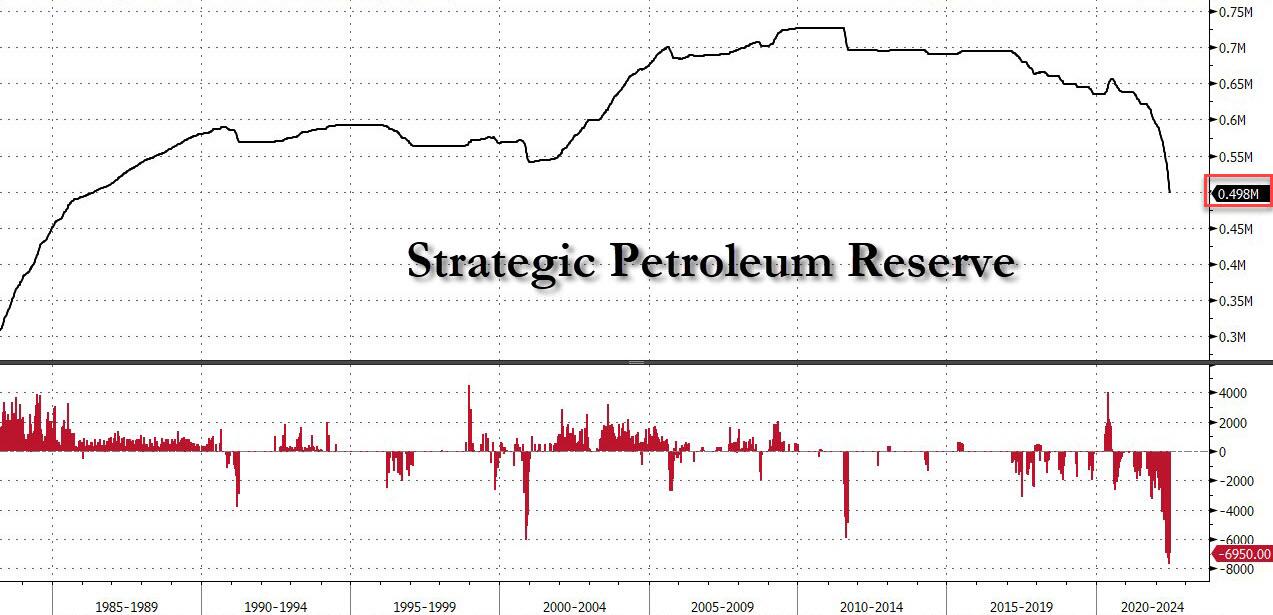
... more people are starting to ask the next big question: where is this furious liquidation of US black gold going?
Courtesy of Reuters we know: more than 5 million barrels of oil that were part of the historic U.S. SPR release were exported to Europe and Asia last month, including top US geopolitical nemesis in the global arena, China, even as U.S. gasoline and diesel prices hit record highs.
The export of crude and fuel is blunting the impact of the moves by U.S. President Joe Biden to lower record pump prices. In a widely mocked call, Biden on Saturday renewed a call for gasoline suppliers to cut their prices, drawing rightful criticism from Amazon founder Jeff Bezos, because going after mom and pop gas stores merely demonstrates just how clueless the handlers of the senile presidential puppet truly are.
About 1 million barrels per day have been drained from the Strategic Petroleum Reserve through October, an unprecedented pace. The drain means SPR inventories fell to the lowest since 1986. US crude futures are above $100 per barrel and gasoline and diesel prices above $5 a gallon in one-fifth of the nation. US officials have said oil prices could be higher if the SPR had not been tapped, and for once they are right. Still, the question looms of what happens to oil prices when the US can no longer sell the SPR amid concerns of a real emergency: we know the answer and the Biden admin won't like it.
"The SPR remains a critical energy security tool to address global crude oil supply disruptions," a Department of Energy spokesperson said, adding that the emergency releases helped ensure stable supply of crude oil.
Citing customs data, Reuters traced that the fourth-largest U.S. oil refiner, Phillips 66 shipped about 470,000 barrels of sour crude from the Big Hill SPR storage site in Texas to Trieste, Italy. Trieste is home to a pipeline that sends oil to refineries in central Europe. Meanwhile, Atlantic Trading & Marketing (ATMI), an arm of French oil major TotalEnergies, exported 2 cargoes of 560,000 barrels each. Cargoes of SPR crude were also headed to the Netherlands and to a Reliance refinery in India, an industry source said.
What is most notable is that a third cargo headed to US arch-enemy, China, which is now directly benefiting at the expense of US consumers as a result of Biden's escalating panic to undo the consequences of his catastrophic green policies by selling the most valuable US assets directly to Beijing!
But what is even more scary is the following exchange, in which the White House simply had no response when asked if the US is selling its emergency reserve oil to China.
Pointing out the obvious, Matt Smith, lead oil analyst at Kpler. said that "crude and fuel prices would likely be higher if (the SPR releases) hadn't happened, but at the same time, it isn't really having the effect that was assumed."
And while the midterms will come and go, and Democrats will suffer a historic loss, the U.S. energy picture is getting more dire by the minute thanks to the sheer incompetence and/or corruption of the executive branch: crude inventories are the lowest since 2004 as refineries run near peak levels. Refineries in the U.S. Gulf coast were at 97.9% utilization, the most in three and a half years. This means even the smallest accident can and will sell oil prices to the moon.
