Search This Blog

Monday, January 30, 2023

Government Covid Emergency Powers Need to End

 House Speaker Kevin McCarthy plans to focus the floor debate this week on COVID recovery, beginning with a joint resolution to terminate the national emergency that has been in effect for nearly three years.

With even President Biden declaring last year that “The pandemic is over,” it’s time to make it official.

We are in a very different place now in understanding how to focus protections. The Centers for Disease Control acknowledges we are past the emergency, with an estimated 95% of the American population having acquired antibodies from vaccination or previous infection. 

Nonetheless, vast federal powers and untold billions of federal dollars still are flowing because the national emergency declaration is still in place. Ditto for the public health emergency, which the “Pandemic is Over Act” also would terminate. It’s time to close the spigot and focus on reviving the economy. 

In addition, the House expects votes on two bills to speed recovery:

  • Getting federal workers to come back to the office, the “SHOW UP Act.” It would reinstate pre-pandemic telework policies for executive agencies and require a study of the productivity and costs to taxpayers of the highly lax work-at-home policies.

    Washington still feels like a ghost town with the highest work-from-home rate of any major city. With an empty downtown, the city faces economic peril.

    C. Mayor Muriel Bowser delivered a surprising ultimatum to the federal government last week: Get your employees back to in-person work or vacate your empty downtown office buildings “so we can fill the city with people again.”

  • Next, the Freedom for Health Care Workers Act would lift the COVID vaccine mandate on health care providers whose services are billed through Federal health care programs—which is pretty much all of them.

Providing arguments to buttress these actions is a new Heritage Foundation study by scholars Bob Moffit and Doug Badger, “Forging a Post-Pandemic Policy Agenda: A Road Map for COVID-19 Congressional Oversight.” It presents in one place the history of the epidemic, with an analysis of governments’ failed responses and offers a guide to improving government action going forward.

The paper identifies and explains 13 key weaknesses in government responses, from the testing debacle, mass confusion over mask mandates, determining the origin of the virus, lack of consideration of natural immunity, suppressing scientific dissent, and the collateral damage of lockdowns, especially school closures.

“Federal lawmakers must learn from this experience and adopt a broad agenda of public health reform to prepare for the next national health emergency,” Moffit and Badger explain. “Congress has a duty to reform government agencies and hold them accountable with a view to restoring public trust in America’s public health agencies.”

It's time. Maybe even the Senate will agree and also act on the House’s responsible, reasonable measures.

Grace-Marie Turner works to promote a patient-centered health sector through her work at the Galen Institute.

https://www.realclearhealth.com/articles/2023/01/30/government_covid_emergency_powers_need_to_end_111455.html

Force Workers to Pay Fees to Big Labor for Making Them 'Worse Off?'

 Because the National Labor Relations Act (NLRA) empowers union bosses to represent workers who don’t want a union, Big Labor apologists contend, union bosses must also be legally empowered to force these captive workers to pay union dues or fees. Otherwise, the workers who wish to remain union-free will get a so-called “free ride.”

Ever since Right to Work let rank-and-file employees escape compulsory union membership and forced dues payment beginning in the 1940s, this non sequitur has been the mainstay argument of union officials and other opponents of voluntary unionism.

To justify their opposition to Right to Work laws prohibiting the termination of employees for refusal to join or pay dues to an unwanted union, union officials and their allies invokeagain and again, Section 9(a) of the NLRA and an analogous provision in the federal Railway Labor Act (RLA) .

As one scholar has explained:

[U]nder Section 9(a) of the NLRA, American unions are not organizations that represent only their voluntary members.  If they are certified by a majority . . . [of those voting] in a bargaining unit they become the exclusive (monopoly) bargaining agents of all workers in the unit, whether individuals agree or not.   Individuals are even forbidden to represent themselves. . . .

Unions and their apologists . . . argue that since a certified union is forced by law to represent all workers in the bargaining unit whether they approve of the union or not, all such workers must be forced to pay the union.  Otherwise, they would get the benefits of union representation for free . . . .

One simple and obvious response to the union hierarchy’s Section 9(a) claim is to advocate repeal of this NLRA provision, and its replacement with another one establishing that unions would represent their members only. This is in fact the longstanding position of the National Right to Work Committee and other Right to Work advocates.

But even if one accepts, for the sake of argument, that Section 9(a) will remain in place despite its evident flaws, Big Labor apologists’ case for compulsory union dues is still “scarcely coherent.”

In fact, the late Dr. Clyde Summers, a Pennsylvania law professor who personally supported monopoly unionism generally and Section 9(a) in particular, used those exact words to dismiss the “free rider” claim in a 1995 review article for the Comparative Labor Law Journal.

Quoting the book he was reviewing, Dr. Summers explained that the argument is wrong first of all because, under monopoly bargaining, workers who don’t want a union are “often actually made worse off” than they were before.

He elaborated:

Full-timers may bargain to limit the jobs of part-timers, seniority provisions may disadvantage younger workers, and wage increases of the low skilled may be at the expense of the highly skilled. . . .  Determining whether the long-term benefits to a particular employee are greater than the burdens and risks of union membership is practically impossible.

Summers and Sheldon Leader, the labor-law professor whose book Freedom of Association was the subject of the former’s 1995 review, are far from the only pro-union monopoly observers of American labor relations to notice that the contract provisions union officials obtain by wielding their “exclusive” bargaining power frequently hurt many workers in order to help others.

Another even more eminent example is current U.S. Vice President Kamala Harris.

In the fall of 2015, Harris (then California’s attorney general), California Solicitor General Ed DuMont, and several of their lieutenants were working jointly with officers of the National Education Association (NEA) union and its Golden State subsidiary, the California Teachers Association (CTA), to defend the constitutionality of compulsory union dues and fees as a job condition in the public sector.

The challenge was brought forward by 10 independent-minded public educators, and the case was known as Friedrichs v. CTA. In their September 2015 merits brief to the U.S. Supreme Court, the plaintiffs drew upon passages in the NEA Handbook to make the case that the respondent unions “advocate numerous policies that affirmatively harm [many] teachers,” adding that:

“NEA considers any ‘system of compensation based on an evaluation of an education employee’s performance’ to be ‘inappropriate’ and ‘opposes providing additional compensation to attract and/or retain education employees in hard-to-recruit positions.’”

Teachers who “care more about rewarding merit than protecting mediocre teachers” should “oppose these policies,” concluded the Friedrichs plaintiffs, who were represented by a team of attorneys led by Michael Carvin of the Cleveland-based law firm Jones Day. The plaintiffs added that “teachers who specialize in difficult subjects (like chemistry or physics), but are trapped in union-obtained pay systems that stop them from out-earning gym teachers,” should also oppose those policies.

In the reply briefs they filed in November 2015, the pro-forced unionism respondents did not contest the fact that many teachers get paid less due to union monopoly bargaining.

And Harris and DuMont actually confirmed in their brief that, under statutes and case law authorizing monopolistic unionism, Organized Labor officials “do have substantial latitude to advance bargaining positions that . . . run counter to the economic interests of some employees.”

Unfortunately, even though eminent workplace-policy specialists like Summers and Leader (who cannot reasonably be accused of harboring any bias against Big Labor) and politicians like Harris and DuMont (who got elected with Big Labor’s help) share the consensus view that many workers are hurt, not helped, by union monopoly bargaining, all too many visceral opponents of Right to Work laws continue to ignore this simple, undisputed fact.

A current case in point is 31-year New York Times labor reporter and lifelong forced-unionism apologist Steven Greenhouse, who in a recent commentary published in the Detroit Free Press as well as an array of other outlets issued a call to arms to union-label Michigan Democrat state politicians.  This year, for the first time since the Wolverine State enacted its highly popular Right to Work law in late 2012, Democrats who are beholden to Big Labor simultaneously control the governorship and legislative majorities in the state House of Representatives and Senate.

Even though the vast majority of Michiganders clearly believe their Right to Work law is good policy and the Democrat legislative majorities are wafer-thin, Greenhouse insists the only thing for Democrat lawmakers and Governor Gretchen Whitmer to do is take away freedom of choice from “employees at unionized workplaces” who have opted out of forking over any money to union bosses who, he claims, without citing any evidence, do them a world of good.

Will Greenhouse and other journalists who make similar unsubstantiated contentions ever wake up and smell the coffee?

The fact is, when union officials wield the monopoly power government policy hands them over employee compensation and work rules in ways that discourage employers from making productivity-enhancing business investments, the vast majority of workers eventually end up getting hurt.

The significantly slower productivity growth and employment growth that are demonstrably linked to monopolistic unionism as it is practiced in the U.S. may well account for the fact that, in key sectors where competition is unhampered by government regulation, the average wage for union-free employees today is substantially higher than the average wage for unionized employees.

For example, the mean hourly wage for nonunion American factory workers in 2021 was $33.28, roughly 17% higher than the $28.33 average for factory workers who belong to a union, according to an analysis of Current Population Survey (CPS) data conducted by labor economists Barry Hirsch and David Macpherson. In addition to being lower than union-free factory workers’ pay, unionized manufacturing pay is declining in relative terms. 

The Hirsch-Macpherson analysis of CPS data also shows that the average hourly pay for nonunion wholesale and retail trade workers in 2021 was $23.08, 16% higher than the average for union members in this sector. There is also a relative decline over time in pay for union workers in this sector.  In fact, as recently as 2010, pay for union and union-free retail workers was roughly equal.

The bottom line is that there is no good reason to presume workers who don’t want to be subject to union monopoly bargaining are nevertheless better off because they are.  Union bosses and pundits like Steven Greenhouse who share their worldview have every right to try to destroy Michigan’s Right to Work law this year. But there is no excuse for them to smear independent-minded employees as a means of justifying their stance.

Stan Greer is senior research associate for the National Institute for Labor Relations Research.

https://www.realclearpolicy.com/articles/2023/01/30/force_workers_to_pay_fees_to_big_labor_for_making_them_worse_off_878470.html

Dems ignore crime at their peril — as well as New York’s

 The unlikely underperformance of several Democratic congressional candidates in deep-blue New York in November cost the party control of the US House of Representatives.

That’s not the opinion of conservative analysts or partisan ideologues. Rather, it’s the position of former House Speaker Nancy Pelosi, who recently blamed Gov. Kathy Hochul and New York Democrats for the midterm loss.

Republican victories in a handful of critical New York races — mostly in moderate suburban areas — did indeed propel the GOP to a House majority, including a striking upset that saw Democratic Congressional Campaign Committee Chairman Sean Patrick Maloney unseated.

Hochul won reelection by fewer than six points against a Trumpian Republican, Lee Zeldin, in the state’s closest gubernatorial contest in decades. Despite Democrats’ statewide registration advantage of 3.6 million voters, Hochul won just 325,395 more votes than Zeldin out of the 5.7 million cast.

Pelosi pinpoints Hochul’s and Democrats’ failure to address one topic in particular — public safety — as the root cause of this red ripple in a solidly blue state.

“[Crime] is an issue that had to be dealt with early on, not 10 days before the election,” Pelosi told New York Times columnist Maureen Dowd. “The governor didn’t realize soon enough where the trouble was.”

Former GOP gubernatorial candidate Lee Zeldin and other New York Republicans outperformed expectations on Election Day because they focused on surging crime in the state.
Matthew McDermott

Pelosi is spot on. Crime was one of New York voters’ top issues, especially for Zeldin backers, per post-election polling. Zeldin and other Republicans worked systematically and successfully to exploit voters’ concerns, tying the uptick in crime to Democrats’ irresponsible criminal-justice policies.

Democratic pols failed to recognize the issue’s potency and largely neglected it throughout the campaign, notwithstanding Hochul’s 11th-hour pivot to public safety, which likely didn’t move the needle.

Regrettably, there’s no indication New York Democrats have learned from their miscalculation. Neither Hochul nor Albany leaders have made any meaningful effort to advance major criminal-justice and policing reforms; thus, New York’s criminal-justice system remains bankrupt.

Several laws passed in 2019, including discovery and “speedy trial” rules in the larger bail-reform package, are correlated with an increase in crime and a decline in arrests. A new Manhattan Institute study, The Post revealed, found these laws impose enormous clerical burdens on prosecutors, which have ultimately allowed many dangerous criminals to go free.

In New York City, the case-dismissal rate rose from 44% in 2019 to 69% by mid-October 2021. For misdemeanor cases, the uptick was even more considerable, from 49% to 82%.

The Post also reports felony arrests dropped by 14% between 2019 and 2021, while shootings rose by 102% and murders by more than 51%.

This evidence is compelling — yet Democrats remain intransigent on the issue.

NYPD at the scene of a subway shooting in Manhattan on January 28, 2023.
Christopher Sadowski

While Hochul’s recent announcement her administration intends to triple state funding for local prosecutors and expand recruitment for police-academy candidates is ostensibly a step in the right direction, it’s a Band-Aid for a bullet wound.

While 2023 is not a big election year, there are local races where Republicans can be anticipated to make pickups — including a handful of City Council contests in the outer boroughs — due in large part to voters’ disillusionment with Democrats’ crime and policing positions.

Absent New York Democrats embarking on a broad course-correction before 2024 — which should involve reversing their disastrous 2019 reforms — the party will be at risk of a wholesale rebellion even greater than what it faced last year.

For the sake of our city and state, and for the party we remain proud members of, New York Democrats and the party as a whole need to embrace rational and reasonable enforcement reforms:

First, repeal cashless-bail laws. These are indefensible statutes that have caused extraordinary actual harm to local communities as well as political harm to the Democratic Party.

Second, revisit discovery and “speedy trial” laws. These policies have allowed offenders to return to the streets without facing any real penalties for the crimes they commit.

Third, reverse Raise the Age, which bars charging 16- and 17-year-olds as adults. Since it took effect in 2019, there’s been a massive 258% hike in the number of minor shooters. The law’s absurdity was illustrated this month with the immediate release of three under-18 teens who brutally assaulted Fox News meteorologist Adam Klotz.

Finally, police budgets need to be increased, not defunded, to bolster officer-training programs and ensure local police departments have a presence where they are needed. At the same time, prominent Democrats must explicitly reject the “Defund the Police” movement and anti-criminal-justice initiatives that progressives continue to advocate in New York and elsewhere.

This approach is necessary for Democrats to win back the House and have a fighting chance of holding onto their Senate majority in 2024 and to keep New York blue.

Anything less will lead to the continuance of rampant crime as well as disillusionment with the Democratic Party and could turn New York’s 2020 red ripple into a 2024 red wave.

Douglas Schoen was a senior adviser to Bill Clinton’s 1996 campaign, a White House adviser (1994-2000) and an adviser to Hillary Clinton’s 2000 US Senate campaign. Andrew Stein, a Democrat, served as New York City Council president, 1986-94.

https://nypost.com/2023/01/29/democrats-ignore-crime-at-their-peril-as-well-as-new-yorks/

AstraZeneca: Phase 3 Trial of Datopotamab Deruxtecan-Pembrolizumab Combo in Lung Cancer

 Daiichi Sankyo (TSE: 4568) today announced that the first patient has been dosed in the global, randomized TROPION-Lung07 phase 3 trial evaluating datopotamab deruxtecan (Dato-DXd) in combination with pembrolizumab with or without platinum chemotherapy, in patients with previously untreated advanced or metastatic non-squamous non-small cell lung cancer (NSCLC) with PD-L1 expression less than 50% (TPS<50%) and without actionable genomic alterations.

Datopotamab deruxtecan is a specifically engineered TROP2 directed DXd antibody drug conjugate (ADC) being jointly developed by Daiichi Sankyo and AstraZeneca (LSE/STO/Nasdaq: AZN).

Among patients with NSCLC, nearly half are diagnosed at an advanced stage and generally have a poor prognosis.1,2,3 While first-line treatment with pembrolizumab or other checkpoint inhibitors, with or without chemotherapy, has improved outcomes in patients with NSCLC without actionable genomic alterations, disease progression still occurs in the majority of patients.4,5

https://www.businesswire.com/news/home/20230127005397/en/TROPION-Lung07-Phase-3-Trial-Initiated-to-Evaluate-Datopotamab-Deruxtecan-in-Combination-with-Pembrolizumab-in-Patients-with-Previously-Untreated-Metastatic-Non-Small-Cell-Lung-Cancer

White House Targets Cryptocurrencies, Calls For Stronger Enforcement By Regulators

 by Liam Cosgrove via The Epoch Times (emphasis ours),

North Korea, fraud, and financial losses are some of the dangers emanating from the cryptocurrency industry, according to a White House blog published on Jan. 27. It argued for enhanced oversight of cryptocurrencies more broadly, requesting help from financial regulatory bodies and Congressional lawmakers.

The blog—co-written by national security adviser Jake Sullivan, National Economic Council Director Brian Deese, Office of Science and Technology Policy Director Arati Prabhakar, and Council of Economic Advisors Chair Cecilia Rouse—outlined the administration’s strategy for mitigating the risks associated with cryptocurrencies.

The White House officials described digital assets as a nascent industry with promise but one that must be reined in for the sake of consumers. Sullivan has long been sounding the alarm with respect to cryptocurrencies, which he placed on the administration’s radar back in June of 2021, following the highly publicized ransomware attack on the Colonial Pipeline.

The White House pointed to North Korea to justify the need for further legislation, highlighting that a lack of security protocols allowed North Korea to “steal over a billion dollars to fund its aggressive missile program.” This refers to allegations by South Korea’s main spy agency that their northern neighbor employed state-sponsored hackers to extract $1.2 billion from various digital asset projects.

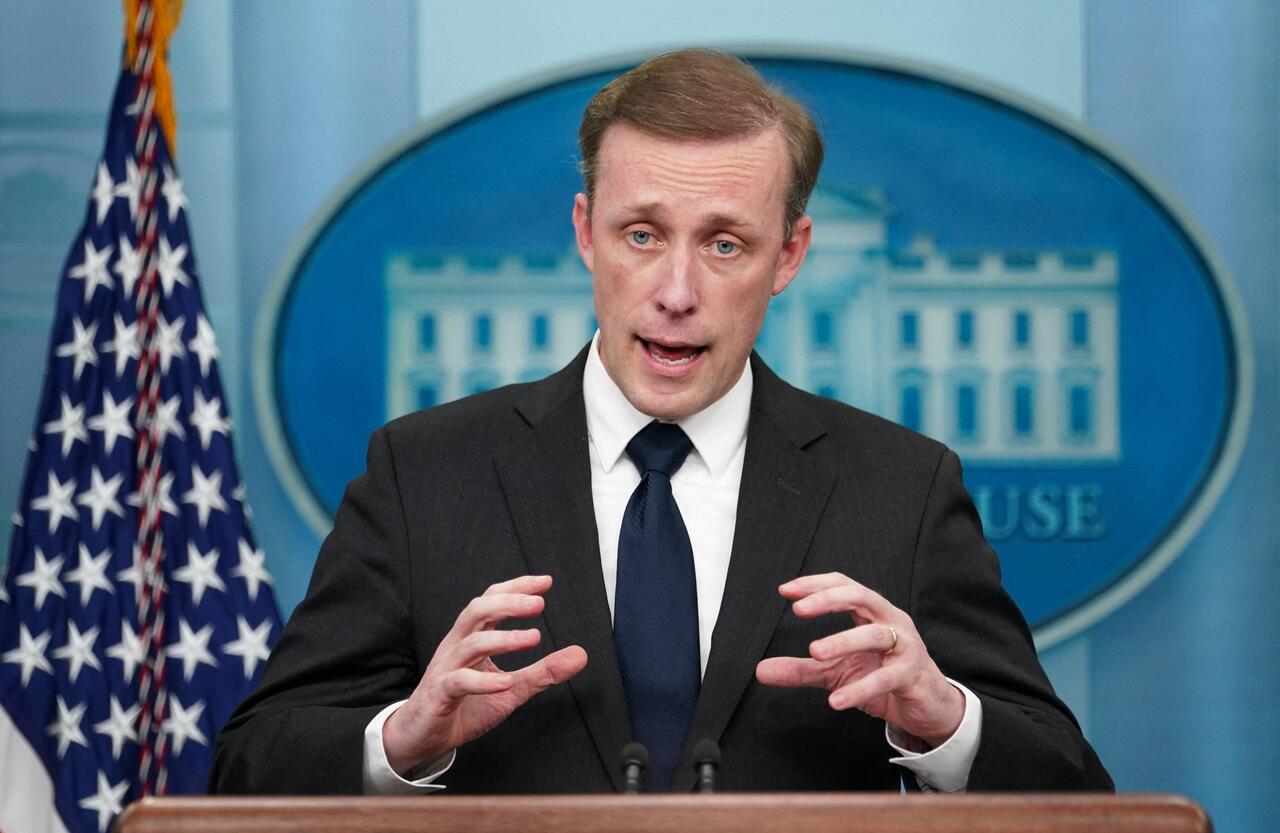
White House national security adviser Jake Sullivan speaks at a press briefing at the White House on Dec. 12, 2022. (Kevin Lamarque/Reuters)

“Privacy coins”—cryptocurrencies that algorithmically “wash” transactions to obfuscate their ownership history—appear to be in the sights of the Biden administration as well. The briefing linked to a 2022 report (pdf) that listed privacy coins under the “Malicious Acts” section of the report, mentioning that such tokens are the preferred medium of exchange for criminals and bad actors.

Proponents of the popular privacy coin Monero view the ability to transact with anonymity as one of the core tenets underpinning the crypto movement.

The White House urged Congress to pass new laws to help curb criminal activity in the digital asset space. Suggestions included steeper penalties for illicit financial affiliations and additional transparency requirements for crypto-related companies.

A push to partner with international lawmakers was a key focus of the blog as well. Many have blamed foreign nations with lax legal frameworks for facilitating much of the fraud in the space.

These foreign exchanges have virtually no regulation,” said macroeconomic strategist Jim Bianco in an interview with Wealthion. Bianco, however, recognized the risk that regulators may become co-opted by the companies they are intended to regulate, using FTX founder Sam Bankman-Fried as an example.

“A lot of people in the industry were very uncomfortable with him because they didn’t think he represented the best interests of the industry,” Bianco said. “He was going to use his vision of regulation to build a moat around FTX.”

Urging caution in regulation was a theme in the blog as well. White House officials warned that laws incentivizing further investment into crypto should be avoided.

https://www.zerohedge.com/political/white-house-targets-cryptocurrencies-calls-stronger-enforcement-regulators

Aptar Launches 1st Metal-Free Nasal Spray Pump, With Growing Need for Highly Recyclable Packaging

 Aptar Pharma, part of AptarGroup, Inc. (NYSE: ATR), a global leader in drug delivery systems, services and active material science solutions, today announces the launch of APF Futurity, its first metal-free, multidose nasal spray pump developed to deliver nasal saline and other comparable over-the-counter (OTC) formulations.

Specifically designed for recyclability, APF Futurity is Aptar Pharma’s first highly recyclable nasal spray pump, having achieved a Class AA certification from cyclos-HTP for recycling streams in Europe1.

APF Futurity is made from polyolefin materials with no metal parts or recycling disruptors, thereby minimizing separation efforts in recycling streams and supporting a higher quality of recyclates.

https://finance.yahoo.com/news/aptar-pharma-launches-first-metal-135000600.html

What happened to all the antibiotics?

 Across the world, there are reports of shortages of common antibiotics. Ben Hargreaves examines why these shortages are happening and what is being done in the background to return supply to normal.

In many countries across the world, there are shortages of common antibiotics. The problems have been reported across many countries in Europe, in the US, Canada, and Australia. Though the shortages have been more widely reported in more economically developed countries, the reality is that supply is likely limited globally. This poses significant issues for healthcare systems in those countries, as those in the Northern Hemisphere are dealing with infectious diseases that commonly occur in winter. At a time when COVID-19 is still putting a strain on health services, the more severe cases of infectious diseases that could arrive with antibiotic rationing would be an unwelcome addition.

The supply issues appear to be broadly impacting a number of different antibiotics, including amoxicillin, penicillin, and ceftolozane, among other products. As a result of the shortages, pharmacists have resorted to substituting alternative antibiotics, and dispensing alternative formulations. The supply constraints have also led some countries to approve companies sourcing antibiotics from outside of the country to ease demand, such as Health Canada’s decision to approve Juno Pharmaceuticals’ move to import 100,000 bottles of amoxicillin powder.

What is behind the shortages?

The current shortages have been spurred by a number of issues, some short-term and many long-term, that have plagued the manufacture and development of antibiotics. One of the reasons is the most evident: the winter months often lead to greater need for antibiotics, and that can lead to shortages. Moreover, more than any other medicine, antibiotics are more likely to face insufficient supply, with analysis by the US Pharmacopeia suggesting they are 42% more likely to be in shortage compared to all other drugs.

For its part, the US Food and Drug Administration (FDA) posted its drug shortage list, which contains various formulations of amoxicillin that are limited in supply. Three of the suppliers (Aurobindo, Hikma Pharmaceutical, and Teva Pharmaceuticals) posted their own reasons behind the shortages, which they stated had been due to an increase in demand for the products.

Seeking more detail on how these shortages occur, pharmaphorum reached out to the European Medicines Agency (EMA). A spokesperson for the agency stated, “Shortages can have multiple causes, including manufacturing problems causing delays or interruption in the production, shortages of raw materials, increased demand of medicines, distribution problems, labour disruptions, and natural disasters.”

More specifically on the current situation, they added, “Recently, shortages have been exacerbated by geopolitical events or trends, such as the war in Ukraine, the energy crisis, high inflation rates, as well as the recent surge of COVID-19 cases in China.”

Indeed, China plays a crucial role in the supply of antibiotics. According to Statista, the country accounts for approximately 42.2% of global antibiotic exports by value. This became an issue during the pandemic, as lockdowns limited some of the operations of facilities in the territory, and the recent rise in COVID-19 cases in the country means that a shortage of workers could be disrupting operations.

Finding a temporary fix

Different countries have reacted to the shortfall in antibiotic products in different ways. As mentioned, Health Canada has authorised the importation of certain products to alleviate shortages. The UK has expanded the list of medicines that cannot be exported or hoarded by wholesale dealers, in an attempt to ensure supply remains available.

In terms of what the European Union (EU) is doing to counteract the issue, the spokesperson stated, “EMA’s Medicines Shortages Single Point of Contact Working Party (SPOC WP) is taking a proactive approach to monitoring and reporting events that could affect the supply of medicines in the EU in accordance with the Regulation on EMA’s Reinforced Role (Regulation (EU) 2022/123). The group is continuously gathering information from Member States and industry associations to identify signals of availability issues as early as possible.”

They added, “In the light of recent potentially critical shortages of medicines, e.g. antibiotics, EMA and the Executive Steering Group on Shortages and Safety of Medicinal Products (MSSG) are encouraging the national competent authorities in the Member States to consider the use of some of the available flexibilities, as foreseen by the EU regulatory framework for pharmaceuticals. These include allowing the exceptional supply of certain medicines that may not be authorised in a particular Member State or granting full or partial exemptions to certain labelling and packaging requirements to address severe problems in respect of the availability of some medicines.”

Looking to the long-term

However, despite the issue being exacerbated by geopolitical factors, the challenge is a broad one that requires a long-term strategy to navigate. As a ready solution that could improve reaction time to potential shortages, the FDA is advising companies to warn the agency when they notice demand spikes for products, alongside the current requirements to notify the agency when supply disruptions occur. The production of antibiotics takes months, and therefore any boost to production has a delayed ability to alleviate any disruption to supply. As a result, any earlier warnings can help regulatory agencies and countries prepare ahead of problems.

Larger questions remain around the way in which to support manufacturers to invest in production capabilities for antibiotics. With the production of generic medicine being concentrated in China and India, the ability to flexibly influence the supply of generic medicine, which most antibiotics are, is relatively limited. This is crucially tied to remuneration for the products themselves – despite being vitally important to global health, developing and manufacturing antibiotics is not a lucrative business.

As such, new strategies have to be devised to encourage continued investment into the area. The UK government recently attempted something along these lines when it launched a ‘Netflix-style’ payment model for antibiotics. This model will see the NHS in England pay a fixed annual fee for access to certain antibiotic medicine, calculated on the value to the service, rather than how many units are used to treat patients. Such innovative solutions may be the future of ensuring both that new antibiotics are developed, but also in creating a secure supply of these medicines.

https://pharmaphorum.com/views-and-analysis/what-happened-to-all-the-antibiotics/