Search This Blog

Thursday, February 2, 2023

Tekcapital shares jump after Innovative Eyewear surges on NASDAQ

 Tekcapital shares jumped 22% to the highest level since September last year after shares in their portfolio company Innovative Eyewear surged in the US.

NASDAQ-listed Innovative Eyewear was over 200% higher at the time of writing on Thursday.

Tekcapital hold a 70% stake in Innovative Eyewear and today’s rise represents a gain in the value of TEK’s holding in the region of $14m.

Innovative Eyewear have developed a range of smart eyewear and partnered with major brands including Nautica, and more recently, Eddie Bauer.

“Few names are as renowned as Eddie Bauer in outdoor recreation,” said Harrison Gross, CEO of Innovative Eyewear, at the time the Eddie Bauer partnership was announced in December.

“Our Eddie Bauer smart eyewear collection, powered by Lucyd, will continue Eddie Bauer’s legacy of bold and beautiful craftsmanship, coupled with innovation, and will align perfectly with today’s adventurous lifestyles. We believe outdoor enthusiasts are looking for designer eyewear that both protects their vision and allows them to remain connected to their digital lives in an open-ear, handsfree format.”

Innovative Eyewear technology has the potential to save a great number of lives by reducing the distractions associated with handheld devices.

https://ukinvestormagazine.co.uk/tekcapital-shares-jump-after-innovative-eyewear-surges-on-the-nasdaq/

20 state AGs tell CVS, Walgreens plans to dispense abortion pills ‘both unsafe and illegal’

 Twenty Republican state attorneys general sent a letter to U.S-based pharmacy chains Walgreens and CVS on Wednesday, telling both companies their plans to distribute abortion pills through the mail are “both unsafe and illegal.” 

In the letter, the coalition wrote that federal law prohibits anyone from using the mail to send or receive any drug that will “be used or applied for producing abortion,” referring to the Comstock Act of 1873.

Last month, the Justice Department issued a legal opinion finding that mailing abortion drugs mifepristone and misoprostol does not violate the Comstock Act and said the U.S. Postal Service is legally allowed to deliver prescription abortion drugs even in states that have curtailed access to abortion.

“But the text, not the Biden administration’s view, is what governs. And the Biden administration’s opinion fails to stand up even to the slightest amount of scrutiny,” the attorneys general said in the letter.

“We reject the Biden administration’s bizarre interpretation, and we expect
courts will as well,” they added.

The coalition also wrote that using the mail to send or receive abortion drugs is unlawful in several states, including Missouri.

The letter was composed and signed by 20 Republican attorneys general, led by Andrew Bailey of Missouri and including Ken Paxton of Texas, Steve Marshall of Alabama, Dave Yost of Ohio, Patrick Morrisey of West Virginia and Daniel Cameron of Kentucky.

“We emphasize that it is our responsibility as State Attorneys General to uphold the law and protect the health, safety, and well-being of women and unborn children in our states,” the coalition wrote. “Part of that responsibility includes ensuring that companies like yours are fully informed of the law so that harm does not come to our citizens.”

The letter comes as both Walgreens and CVS plan to seek the certification required to dispense abortion bills in states where doing so is legal. The companies’ plans follow the Food and Drug Administration’s announcement of a policy last month that will allow retail pharmacies to dispense mifepristone from a certified prescriber if they meet certain criteria


To prevent a deadlier pandemic, pause gain of function research

 Last week, conservative activist group Project Veritas released a video featuring a man alleged to be Pfizer’s head of research and development. The video showed the man saying that he and others at Pfizer discussed deliberately mutating the SARS-COV-2 virus to develop tailored vaccines to treat them. Whether this “investigation” is true or not (Project Veritas has been found guilty of using deceptive practices in the past), the social media firestorm that resulted led Pfizer to put out a disclaimer that is somewhat disturbing on its own. 

We don’t think anyone should be manipulating or engineering this or any other virus. Instead, we think drug companies and others should work with what comes from nature. There are plenty of SARS-COV-2 subvariants around. And both Pfizer and Moderna have said they can produce new vaccines to cover emerging variants. And yet, Pfizer now admits to conducting “research where the original SARS-COV-2 virus has been used to express the spike protein from new variants of concern.” 

Why is this necessary, and if more than one spike protein is used at once, couldn’t that accidentally create a virus worse than the one we are already dealing with? Why is Pfizer in the process of studying potential resistance to its drug, Paxlovid, using similar experiments? It said for the Paxlovid study, “in a limited number of cases when a full virus does not contain any known gain of function mutations, such virus may be engineered to enable the assessment of antiviral activity in cells.” 

We think Pfizer and others should stick to incubating SARS-COV-2 with Paxlovid in their biosafety level 3 lab without inducing mutations. To us, that may be a form of gain of function. The risk of a lab leak is far too high no matter what precautions are taken.

Manipulating viruses to gauge their potential to infect or kill us is not a new problem but it remains highly problematic. In the past, Dr. Anthony Fauci, former head of the National Institute of Allergies and Infectious Diseases, has justified gain of function research on so-called Enhanced Potential Pandemic Pathogens (EPPP) to assess just what steps it would take for an animal virus to impact humans.

We disagree with this approach for four reasons. First, there are suspicions that gain of function of some kind may have been the direct cause of the very pandemic we are still trying to cope with and exit now. The furin cleavage site, which enables the SARS-COV-2 virus to attach easily to cells, is not typically found on a virus of this kind in nature. Second, we have learned so much in the field of virology by studying actual viruses (including SARS-COV-2) that the need to provoke viruses to gauge their potential is markedly reduced. Third, vaccine and therapeutic development can occur in real time based on the latest technology. 

Fourth, and perhaps most importantly, there is an international consortium of scientists based in the U.S., China and elsewhere which has supposedly pursued highly supervised and controlled research on EPPP — but the fact is that the National Institutes of Health and the U.S. government have limited ability to oversee research here, and zero ability to oversee it in other countries, especially in China.

We also believe NIH’s highly restricted definition of what they consider to be gain of function research is contrived to allow expanded true gain of function research to go unchecked. We applaud the recommendation by the National Science Advisory Board for Biosecurity this month to expand the definition of risky research to include more potential pathogens, including some plants and animal vectors that are not enhanced or have yet to infect humans easily. We agree with their conclusion that the current definitions of gain of function research are too narrow with an “overemphasis on pathogens that are both “likely” transmissible and likely “highly” virulent. 

But we are still concerned about the focus on “supervision” as a sufficient control justification for this research. We remain unconvinced that any supervision is foolproof, even under the strictest conditions of level 4 biosafety labs such as those found at the Centers for Disease Control and Prevention and the U.S. Army Medical Research Institute of Infectious Diseases, and certainly not anywhere else.

Species barriers are put there by nature for a reason. Science should always be guided and restricted by strict moral and ethical principles. We are calling for a moratorium on all gain of function research, where it is forbidden to deliberately alter a pathogen to provoke or assess its ability to spread among or sicken humans. This applies to research going on at pharmaceutical companies, in universities and anywhere else. 

If gain of function didn’t cause this ferocious pandemic, it most certainly can cause the next one.

Marc Siegel MD is a professor of medicine and medical director of Doctor Radio at NYU Langone Health. He is a Fox News medical correspondent and author of the new book, “COVID; the Politics of Fear and the Power of Science.” 

Robert Redfield, M.D., is an American virologist and a senior science advisor for Novavax. Redfield served as the director of the Centers for Disease Control and Prevention and the administrator of the Agency for Toxic Substances and Disease Registry from 2018 to 2021.

https://thehill.com/opinion/healthcare/3840791-to-prevent-a-deadlier-pandemic-pause-gain-of-function-research/

Roche adds to the lung fibrosis disappointment

 Clinical success in idiopathic pulmonary fibrosis (IPF) has been elusive, and Roche’s zinpentraxin alfa is the latest to fall by the wayside. The company today said it had discontinued the asset in IPF after the pivotal Starscape trial was stopped for futility, incurring a $400m write-off against the asset's acquired value. The next big hope in the disease is Fibrogen’s pamrevlumab, with the first late-stage data due this year. Since the last time Evaluate Vantage carried out this analysis, Boehringer has taken BI 1015550 into phase 3 following promising mid-stage data, while Pliant posted a phase 2a win; both projects have been linked with improvements in forced vital capacity, a measure of lung function. Roche did not show an increase in FVC in its phase 2 trial of zinpentraxin, but merely demonstrated slightly less decline than with placebo. The phase 2 study of pamrevlumab tells a similar story, which might not bode well for Fibrogen. Still, plenty of others are vying for this space, with a crowded mid-stage pipeline. Recent entrants include autotaxin inhibitors from Blade and Bridge Biotherapeutics, cudetaxestat and BBT-877 respectively; Boehringer returned rights to the latter amid toxicity concerns, however.

The late-stage IPF pipeline
ProjectCompanyMechanismTrial details
Zinpentraxin alfa (RG6354/ PRM-151)Roche (ex Promedior)Recombinant human serum amyloid PStarscape stopped for futility Q4 2022
PamrevlumabFibrogenAnti-CTGF antibodyZephyrus-1 data due mid-2023; Zephyrus-2 data due mid-2024
BI 1015550Boehringer IngelheimPhosphodiesterase 4 inhibitorNCT05321069 ends Nov 2024
Tyvaso United TherapeuticsProstacyclin mimeticTeton & Teton 2 end Jun 2025
Source: Evaluate Pharma & clinicaltrials.gov.

https://www.evaluate.com/vantage/articles/news/snippets/roche-adds-lung-fibrosis-disappointment

Kras opinions diverge

 A day after Novartis suggested that Kras inhibition only made sense in combinations, and two days after sales of the first marketed Kras inhibitor, Amgen’s Lumakras, flatlined, Roche confirmed the progression of its Kras contender into phase 3. Roche’s GDC-6036 has been added to the B-Fast study, in a new cohort comparing monotherapy against docetaxel in second-line, Kras G12C-mutant disease, the approved setting for Lumakras and Mirati’s Krazati. But Novartis seems to have put the brakes on JDQ443 – even though this, too, is already in a pivotal monotherapy NSCLC trial. While stressing that phase 3 was continuing, Novartis said it was “critical” to demonstrate efficacy in a combination. “That would really give us more confidence that [JDQ443] could be a very significant medicine.” For Roche a more immediate catalyst is overall survival data from the Skyscraper-01 trial of the anti-Tigit MAb tiragolumab, but there is no news yet: interim analysis is still scheduled for February, and “the most likely scenario is that the study will continue until final readout in the second half”, Roche said. It promises to communicate any negative result immediately, but “if you don’t hear back in February you know [Skyscraper-01] is continuing to final readout”.

Studies of four Kras inhibitors in unapproved settings
ProjectCompanyTrialSetting
LumakrasAmgenCodebreak-101Includes Keytruda combo in Kras G12Cm NSCLC (various lines)
KrazatiMiratiKrystal-71L Kras G12Cm NSCLC, Keytruda combo, vs Keytruda + chemo
RG6330/ GDC-6036RocheB-FastIncludes monotherapy in 2L Kras G12C NSCLC, vs docetaxel
JDQ443 NovartisKontrast-02Monotherapy in 2/3L Kras G12C NSCLC, vs docetaxel
Source: clinicaltrials.gov.

https://www.evaluate.com/vantage/articles/news/trial-results-snippets/kras-opinions-diverge

Manchin, Cruz Reveal New Bipartisan Bill Halting Biden Selling Emergency Oil Reserves To China

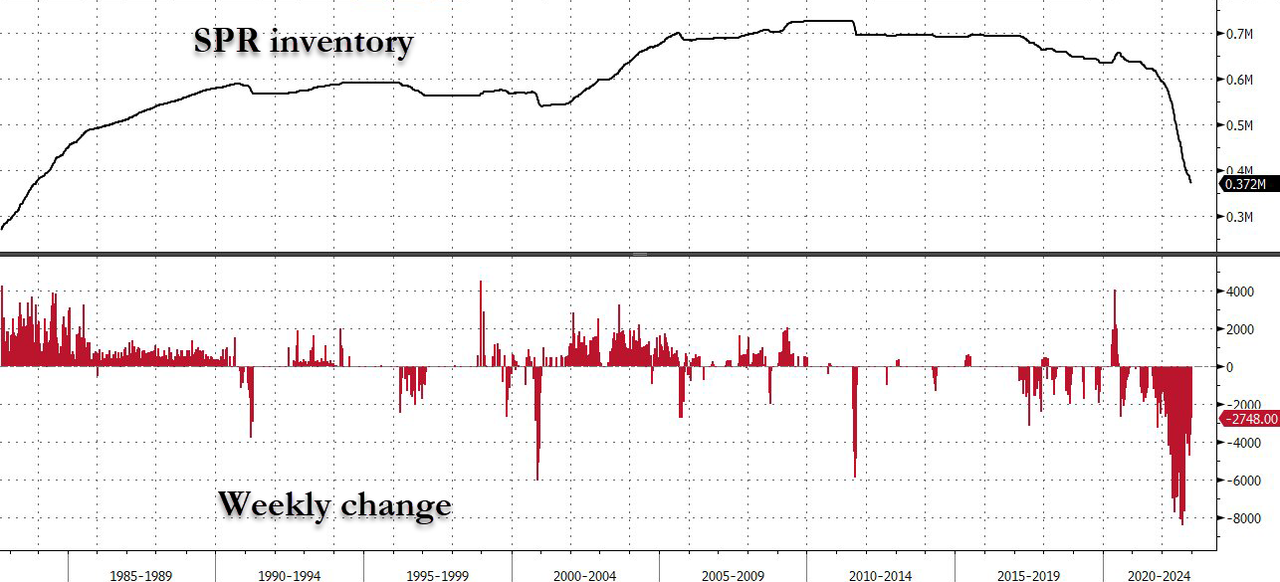
 The Biden administration's draining of the Strategic Petroleum Reserve to four-decade lows to ease market tightness drew sharp criticism from the fossil fuel industry and Republican lawmakers. What ignited controversy last summer was when one SPR shipment was delivered to an entity tied with the Chinese Communist Party

Now a group of bipartisan lawmakers wants to ensure America's emergency crude oil reserves are never sent to China again. 

On Wednesday, Sen. Joe Manchin, D-W.Va. and Sen. Ted Cruz, R-Texas, and several other lawmakers introduced the Protecting America's Strategic Petroleum Reserve from China Act. 

The bipartisan legislation would prohibit exporting crude oil from the SPR to China. A similar piece of legislation was recently passed in the US House of Representatives by a large majority, 331-97. 

"The Strategic Petroleum Reserve is a vital piece of our nation's infrastructure that bolsters our energy and national security. While the reserve has been a policy Band-Aid for rising gas prices and the global unrest caused by Russia's invasion of Ukraine, the reserve is, above-all, meant to help the United States and our allies through difficult times, not to help China power its economy," Manchin, who serves as the chairman of the Senate Energy and Natural Resources Committee, wrote in a statement. 

He continued: "This bill would ensure that we are not risking our energy security by selling our petroleum reserves to China, and the bipartisan support this legislation has received shows just how important it is for America to be energy secure and independent."

The latest Department of Energy data shows the Biden administration drained the SPR to the lowest levels since 1983, all in an attempt to ease crude market tightness.  

What sparked outrage was when Biden sent 5.9 million barrels to a Chinese firm last July. This is because strategic reserves are to ensure domestic energy security. 

"The Strategic Petroleum Reserve was intended to ensure that America had sufficient oil reserves in the event of an emergency. Under no circumstances should we sell any part of this stockpile to the Chinese Communist Party or any company under its control.

"We need to immediately act to stop this from happening in the future and unleash American energy, and I'm proud to work with my colleagues and Sen. Joe Manchin on this important, bipartisan issue," Cruz said in a statement. 

The SPR is the world's largest supply of emergency crude oil, with four storage sites in Texas and Louisiana designed to alleviate significant oil supply shortages during major geopolitical events or natural disasters. The steep declines by Biden, who blamed Russia's Ukraine war for the "price hike at the pump," has been hellbent on draining the reserves. 

Some good news: Biden Administration plans to replenish the SPR later this year. 

Remember a few years ago when former President Trump received criticism for his plan to fill up the SPR when crude prices crashed? 

Also, we might add that gas and diesel prices at the pump are elevated because the US has a refinery capacity problem

https://www.zerohedge.com/commodities/manchin-cruz-reveal-new-bipartisan-bill-halting-biden-selling-emergency-oil-reserves

'Stunning Increase' In Serious Harm Reports In Young Healthy Pilots: Army Lt. Col. Theresa Long

 by Carly Mayberry via The Epoch Times (emphasis ours),

It’s been a year since four Department of Defense (DOD) whistleblowers found a sudden increase in various diseases in the Defense Medical Epidemiology Database (DMED), which coincided directly with the introduction of COVID-19 vaccinations. Now, new data shows more evidence.

That’s according to Lt. Col.Theresa Long, M.D., MPH, a board-certified aerospace medicine doctor and Army Brigade flight surgeon with specialty training as an aviation mishap investigator and safety officer, who was one of the four whistleblowers. Long’s background has uniquely equipped her to recognize what she described as “unusual diagnoses and alarming trends only after the introduction of the COVID-19 vaccinations.”

Sharp Increase in Serious Harm Reports in Pilots: DOD Data

Long said what she has now found has led her to file yet another whistleblower complaint with Sen. Ron Johnson’s (R-Wis.) office. She described this data as “more alarming DMED data” after she “went back into the ‘fixed’ DMED again to look for signals of harm for Army aviation.”

What I found was a clear signal, that something in 2021 changed the health of service members,” Long told The Epoch Times. She said these signals were consistent with those in the Vaccine Adverse Event Reporting System (VAERS) reports. But unlike VAERS reports, DMED data showed spikes in the number of diagnoses “made by a healthcare professional within the DOD on service members.”

According to the Military Health System, the DMED provides remote access to a subset of data contained in the Defense Medical Surveillance System (DMSS). The DMSS contains up-to-date and historical data on diseases and medical events (including reportable events) and “is available to authorized users such as U.S. military medical providers, epidemiologists, medical researchers, safety officers or medical operations/ clinical support staff for surveying health conditions in the U.S. military.”

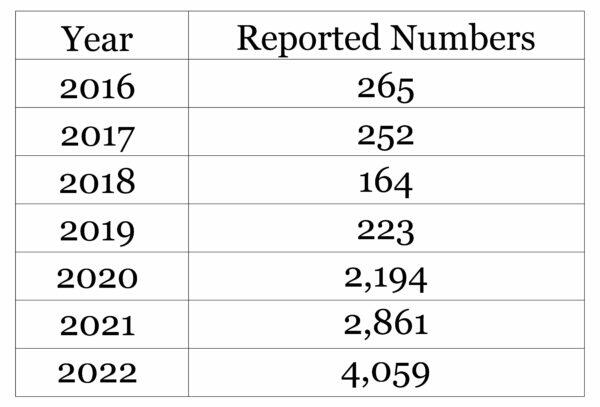
After querying all pilots across the DOD, for all-cause morbidity and mortality, I found a stunning increase in the number of reportable events, spiking from an average of 226 reportable events a year (2016-2019) to 4,059 reports in 2022,” she explained.

A DOD reportable event is any patient safety event resulting in death, permanent harm, or severe temporary harm—and all require a comprehensive systematic analysis and a follow-on corrective action implementation plan report.

The point is there is a statistically significant increase in death, permanent harm, or severe temporary harm in young healthy fit pilots,” she continued.

Such injuries were more obviously shown in this population. Because aviation pilots are required to have a superior level of health and fitness, and their health conditions are under more strict monitoring, according to Long.

What spurred Long on to pull this second round of data was when she learned the Federal Aviation Administration (FAA) had quietly made changes to the acceptable parameters of PR intervals (representative of the first part of a heartbeat, measured in seconds or milliseconds) on electrocardiograms of pilots. The FAA didn’t respond with research and data to support their decision, according to Long.

Those actions led to the press release dated Jan. 27, 2023 from Johnson in a letter to the FAA, where he stated the following details:

“Based on data from the Defense Medical Epidemiology Database, the whistleblower [Theresa Long] reported that the total number of disease and injuries [reportable events] in pilots across the DOD was 265 in 2016, 252 in 2017, 164 in 2018, 223 in 2019, 2,194 in 2020, 2,861 in 2021, and 4,059 in 2022.”
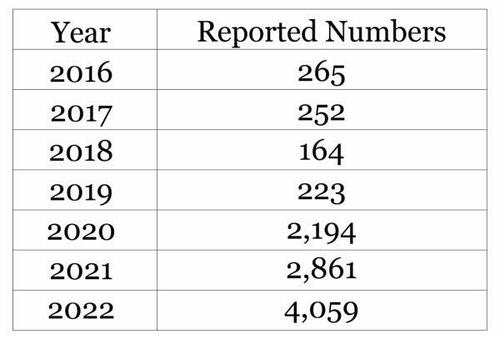
Johnson also told The Epoch Times these statistics “raise questions as to whether FAA has seen similar increases in disease and injuries in individuals in the aviation industry.”

Long noted that in the “post-glitch” DMED, the number of reportable events across the DOD had gone from a four-year average (2016-2019) of 40,813 to 110,000 in 2020 to over 200,000 in 2022.

“Some would ask why the numbers start increasing in 2020, you have to remember the Pfizer/DOD study with 43,448 participants started on July 27, 2020.”

Long emphasized that her opinions do not reflect those of the Army or the DOD.

Looking back, she said it was after being stonewalled for answers regarding adverse events from the COVID vaccine that she began performing queries in the DMED. She wanted to know if what she was seeing within her brigade were isolated anomalies or part of a wider disaster unfolding.

Whistleblowers First Report Discrepancies in DOD Data

It was in January of 2022 when Long, along with two other U.S. military doctors, Dr. Samuel Sigoloff and Special Forces flight surgeon Lt. Col. Peter Chambers, and Army Public Health Officer 1 Lt. Mark Bashaw first blew the whistle on the DOD. Together, they filed the initial whistleblower complaints regarding the DMED data, which showed an inordinate amount of negative health-related conditions related to the vaccine.

The initial DMED data given to Johnson showed a massive rise in cases of anxiety, esophageal cancer, breast cancer, female infertility, miscarriages, HIV, acute myocarditis, and Bell’s palsy among other conditions after the vaccine was mandated for U.S. military members.

Long added that after the DMED data was presented, Moderna, the pharmaceutical and biotechnology company behind one of the COVID-19 vaccinations and its mRNA immune response technology, lost $140 billion of dollars in stock.

Yet, despite the alarming data coming directly from the DOD’s own $42 million medical surveillance database, the department’s official claimed that the discovery of the data was a “data glitch” and proceeded to take the database offline, supposedly “fixing” it.

As reported in The Epoch Times, the DOD claimed that the data in DMED was incorrect for the years 2016-2020, but the 2021 number was not affected. The corrected data saw the data for prior years increased, which made the 2021 data look normal.

After Long handed over the documents to DOD, it took officials 47 days to formulate a response to the data, only to explain it was a surprise to them. 

Based on the previous DOD data, “the cluster of medical conditions represents a dramatic shift in the acuity of medical conditions we normally see,” said Long, noting that the data is “so catastrophic,” at the very least when those numbers came out, the military would reflexively pause everything and investigate.

“They didn’t pause anything and it took them [the DOD] a month to complete their sham investigation.” She said. “It’s a gross indictment and dereliction of duty.”

“We introduce a brand new drug into our very healthy population and the surveillance people aren’t even paying attention to their own $42 million-a-year system?” asked Long, who noted that during her 30 years in the Army, many of which she served as a doctor, she and other colleagues never heard of such a database provided by the system’s contractor Ussiant until 2019. “Don’t you think introducing a drug that was rushed to an entire fighting force would make it a top priority that the surveillance system is working?”

Long also asked why, if the DMED just had a “glitch” during the COVID pandemic, no one is being held accountable for this egregious medical surveillance system failure. Long’s attorney, Todd Callender, noted the DOD failed to produce a single expert IT witness that would testify under oath that the shocking data was just a “glitch.”

So if the data was that alarming, why didn’t anyone in the Defense Health Agency (DHA) sound the alarm or catch the ‘glitch,’” she continued. “How did they not see this huge spike in serious medical problems?”

Another question arises as to why military doctors like Long have not received any communication regarding this spike in reportable events, which wasn’t just limited to pilots but also general officers and those in the Special Forces.

“I was notified to comb over our inventory after a risk management alert notification alerted me to two defective earplugs found at Fort Sill, Okla.” Long said, “But I can’t even get them to send out an alert saying ‘Hey your pilots might get myocarditis from the vaccine.’”

For this story, The Epoch Times reached out for comment from Director of Defense Lloyd J. Austin, the Office of the Surgeon General, and the U.S. Department of Health and Human Services for comment.

‘I Can’t Un-see the Things I’ve Seen’

These new developments come as more physicians and patients have spoken out about a growing number of vaccine injuries while the science and research literature has simultaneously validated their claims and concerns.

Long said she was not only ignored but received threats against her career after speaking up. That’s because no action was taken on the part of military leaders to fully investigate the number and scope of adverse medical events that she, Sigoloff, Chambers, and Bashaw initially brought to their attention.

When I found the DOD data, they pulled my credentials and took all my patients off my schedule,” said Long, noting that only left her more time to thoroughly look into the data.

While Long continues to add to her count of personally witnessed vaccine injuries, she also waits for a response from government officials with her latest filing.

Since she first came forward, she has also given testimony to the Idaho Legislature and at the Alaska Medical Freedom Symposium. Appearing recently on Fox News’ Tucker Carlson Tonight, she spoke about the FAA’s change in health requirements that significantly broaden the electrocardiogram range for pilots and allows those with cardiac injury damage to fly.

“In the light of emerging and overwhelming data showing cardiac damage from COVID and COVID vaccines on cardiac muscle, I can’t imagine why they would make this move and I think it’s a question that really should be taken to Dr. Susan Northrup, senior flight surgeon for the FAA,” Long told Carlson.

https://www.zerohedge.com/medical/recent-data-shows-stunning-increase-serious-harm-reports-young-healthy-pilots-army-lt-col