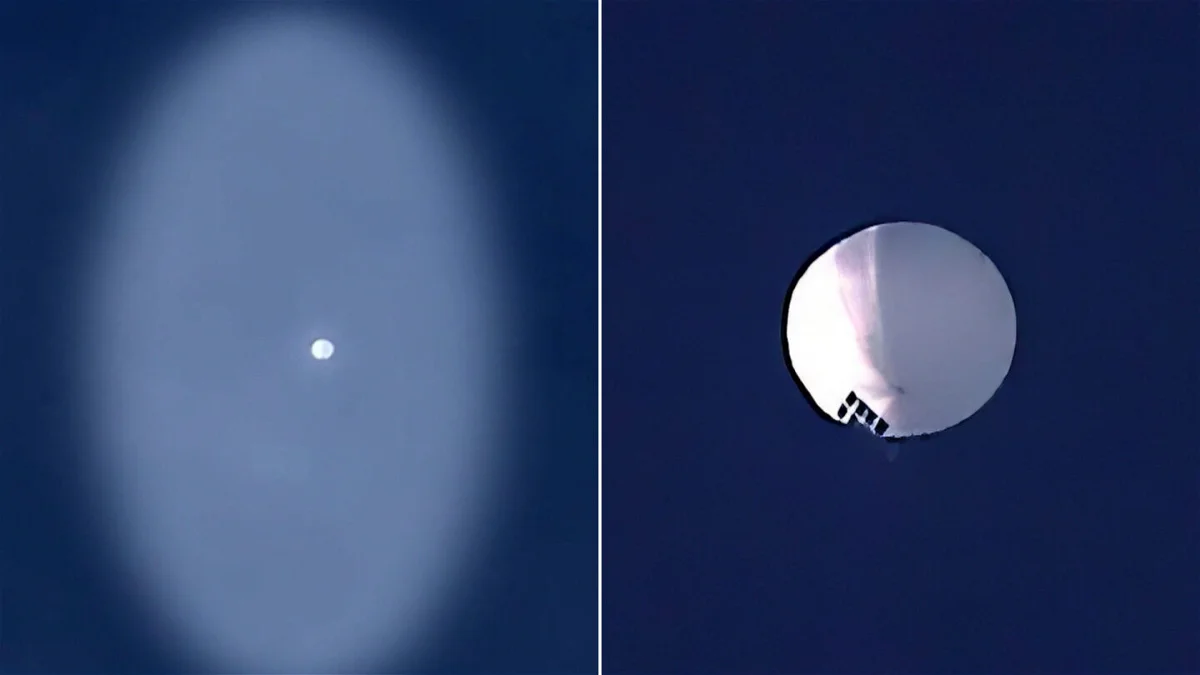
It might not have been a Sputnik moment, but Americans were unsettled to wake up to the news that a Chinese surveillance balloonwas sailing overhead, violating U.S. airspace. Their concern deepened when they learned this wasn’t the first time. Beijing has used similar aerostats to surveil U.S. military installations in Guam and Hawaii and, possibly, strategic early warning sites in Canada.
More shocking, still, was the response by the U.S. government. The Biden administration couldn't seem to explain what was going on or how to respond appropriately. If this were just an isolated let-down, we might be tempted to shrug it off and go back to our morning coffee. But there is a troubling pattern emerging here.
China is the number-one strategic threat facing the U.S. Defending the homeland is Washington’s number one responsibility. If you don't believe me, read President Biden's National Defense Strategy; it says so right there.
This raises an uncomfortable question: What is happening with strategic intelligence under Biden, particularly when it comes to reading China?
Biden's bad balloon day was not a one-off. Let's review some of his other Sino-intel blunders.
5. Whither COVID?
It’s been more than two years since "COVID-19" entered our everyday vocabulary, and still we have no clear answer to the question: What was China's role in unleashing the virus on the world? After years of denial, some U.S. officials now admit the virus may well have leaked from a Chinese lab.
Well, thanks, but many folks figured that out back in 2020. By now, you’d think the government could tell us all about the origin and spread of the disease.
Maybe they can’t, maybe they won’t. Either way, it’s a disgrace.
4. Nuke numbers?
How many nuclear weapons does China have? The U.S. government won't tell you. That may be because they don't know.
The intelligence community will tell you that China is rapidly expanding its strategic force, so much so that Beijing will match—or even overmatch—Russia’s nuclear arsenal. Ours, too. That’s no intel coup. Analysts using open source (unclassified) documents and reports have been telling us that for years.
3. Will China invade Taiwan?
The intelligence community has no consensus assessment on this rather critical matter. We have seen lots of dates thrown around, but when you look into these analyses, there’s no accounting for how they came up with the date. There’s got to be a better method than throwing darts at a calendar.
2. Invading Ukraine?
In retrospect, it's absolutely clear that Beijing gave a green light to the Russian invasion. Did we know that before the Russian invasion? If we did, why didn't we call Beijing out? And now that we do know, why isn't Washington making a big deal out of it?
1. Fallout from Hunter's laptop?
Now we all know that Hunter's laptop was, well, Hunter's laptop. And we know Hunter had lots of dealings with China. So where is the intelligence community’s assessment of the national security risks that may have been exposed?
Did the community not produce one? If they didn't, that's malfeasance. If they did, where is it? You would think that, if they did one and found no issues, it would be on the front page of the Washington Post.
If they found some and are withholding that information… Well, that's not comforting either.
When you connect all these dots, it’s not a pretty picture. Either the U.S. intelligence community is not collecting and assessing critical information about the single greatest threat to our security, or they are refusing to share their conclusions?
Is that because it's too important to share, or there is nothing to share, or it’s politically inconvenient to share?
None of these answers offers much comfort about Biden's stewardship of the intelligence community.
James Jay Carafano is vice president of foreign and defense policy studies The Heritage Foundation.
Washington has suggested deploying medium-range missiles in Japan as part of a plan to bolster defences against China along the East and South China Seas, the Sankei newspaper reported on Saturday citing unidentified people involved with U.S.-Japan relations.
The deployment to U.S. forces in Japan may include long-range hypersonic weapons and Tomahawks, the newspaper reported, adding without citing sources that Tokyo is poised to start serious discussion toward accepting the deployment.
Though the location is undecided, the Sankei said Japan was considering the southern island of Kyushu as a possibility. It was not clear from the report whether the Sankei was citing one or multiple sources.
Japan and the United States want to reinforce islands separating the East China Sea from the Western Pacific because they are close to Taiwan - a democratically governed island which China claims as its own territory - and form part of what military planners refer to as the 'First Island Chain' extending down to Indonesia that hems in China's forces.
India's Ministry of Electronics and Information Technology (MeitY) has begun a process to ban and block 138 betting apps and 94 loan lending apps with Chinese links, India's ANI reported on Sunday, citing sources.
The Ministry of Home Affairs recommended the MeitY ban and block these apps by the coming week under Section 69 of India's IT law, the report said.
The IT law allows the government to block public access to content in the interest of national security, among other reasons. Orders issued under the section are generally confidential in nature.
MeitY and the Ministry of Home Affairs did not immediately respond to requests for comment.
Since the start of political tension with China in 2020 following a border clash, India has banned popular Chinese apps in the country including TikTok and WeChat Messenger.
India last year blocked access to several Chinese mobile apps citing security concerns which was followed by China expressing concerns over bilateral economic and trade cooperation.
The term ‘superbug’ conjures images of bacteria with superpowers—able to evade the effects of the antibiotics given to destroy them. The prolific use of antibiotics is thought to be the cause, and bacteria, in a fight for their survival, have adapted—making an increasing number of antibiotics ineffective against a growing number of bacterial infections.
A new study published in PNAS on Jan. 23, 2023, has shown that antidepressants, some of the most widely prescribed medications in the world, cause antibiotic resistance, giving them the potential to become dangerous superbugs.
“Even after a few days exposure, bacteria develop drug resistance, not only against one but multiple antibiotics,” Jianhua Guo, one of the study’s authors and a professor at the University of Queensland’s Australian Centre for Water and Environmental Biotechnology, told Nature. “This is both interesting and scary.”
In the study, researchers exposed Escherichia coli or E.coli bacteria to five common antidepressants: sertraline (Zoloft), duloxetine (Cymbalta), bupropion (Wellbutrin), escitalopram (Lexapro), and agomelatine (Valdoxan), then over a two month exposure period, the team exposed the bacteria to thirteen antibiotics representing six different classes of drugs.
Every one of the antidepressants caused the E.coli to develop antibiotic resistance, but two in particular, sertraline (Zoloft) and duloxetine (Cymbalta), had the most pronounced effects, producing the largest number of resistant bacterial cells.
Guo’s interest in non-antibiotic drugs contributing to antibiotic resistance came in 2014 when his lab discovered that there were more antibiotic-resistant genes in domestic wastewater than in wastewater from hospitals—where they use more antibiotics.
This led to the discovery by his team and others that antidepressants were able to kill or slow the growth of certain bacteria, which Guo says provokes “an SOS response,” triggering defense mechanisms in the bacteria that help them survive and subsequently resist antibiotic treatments.
These findings led Gou and his team to conduct the present study to find out if antidepressants could cause bacteria to become resistant to antibiotics.
In addition to demonstrating that antidepressants cause antibiotic resistance, the study also found that the higher the dose of antidepressants, the faster the E. coli bacteria developed resistance and the more antibiotics they could resist within the two-month study window.
Interestingly, the bacteria in well-oxygenated environments developed resistance more quickly than those in low-oxygen laboratory conditions. This might be good news for humans as a low oxygen environment better represents the human intestine, where E. coli bacteria grows in the body.
The study also revealed that at least one of the antidepressants, sertraline, sold under the brand name Zoloft, encouraged the transmission of genes between bacterial cells, allowing the spread of resistance through a population. These transfers can happen between different types of bacterium, enabling resistance to jump between species, which can include going from harmless bacteria to infectious ones.
A comprehensive epidemiological study led by the University of Bristol and published in the British Journal of Psychiatry Open, analyzed data on over 200,000 people. Researchers set out to see if long-term antidepressant use (over five and ten years) was associated with the development of six health problems: diabetes, high blood pressure, coronary heart disease, stroke (and related syndromes) as well as two mortality outcomes—death from cardiovascular disease or from any cause.
Researchers found that long-term antidepressant use was associated with an increased risk of coronary heart disease, and an increased risk of dying from cardiovascular disease and from any cause. The study notes that the risks were greater for those taking non-SSRI (selective serotonin reuptake inhibitors), which include mirtazapine, venlafaxine, duloxetine, and trazodone, and that their use was associated with a two-fold increased risk of coronary heart disease, cardiovascular mortality and all-cause mortality at the 10-year mark.
According to the Pharmaceutical Journal, antidepressant prescriptions in the U.K. have increased by 35 percent in the past six years, and those prescriptions rose by 5.1 percent in 2021/2022—the sixth consecutive annual increase. These numbers highlight not only an alarming rise in antidepressant use, but the implications of the potential antibiotic resistance of these drugs.
Definitive Healthcare, who collect and analyze healthcare data, compiled a list of the top 20 antidepressants by prescription volume in the United States. The top three prescribed antidepressants for 2021 were:
The 20 antidepressant medications on the list account for nearly 130.5 million prescriptions in the United States in 2021 alone.
How Dangerous is Antibiotic Resistance?
According to the World Health Organization, antibiotic resistance is one of the biggest threats to global health, food security and development. They cite that a growing list of infections including pneumonia, tuberculosis, blood poisoning, gonorrhea and foodborne diseases are becoming harder and sometimes impossible to treat as antibiotics become less effective.
The WHO warns that “without urgent action, we are heading for a post-antibiotic era, in which common infections and minor injuries can once again kill.”
Some of the deadliest bacterial infections are tuberculosis, anthrax, tetanus, pneumonia, cholera, botulism, and pseudomonas infections. MRSA, or Methicillin-resistant Staphylococcus aureus, is one of the most common infections that have become resistant to antibiotics and the symptoms generally begin as swollen, painful red bumps on the skin that look like pimples or spider bites. Many cases are mild, but some can cause more serious infections that can be life-threatening. Because MRSA is difficult to treat and resistant to antibiotics, it is often referred to as a “superbug.”
The PNAS study states that the United States’ high consumption of antibiotics—16,850 kilograms annually in the United States alone—with the addition of their findings, highlights the need to re-evaluate the antibiotic-like side effects of antidepressants.
Implications for Humans
Considering these effects were only observed in petri dishes, more research is needed to know if antidepressants could fuel the rise of superbugs in human bodies or the environment.
Previous constant headlines of the Ukraine-Russia war were put on pause Friday into Saturday as the American public's attention and discourse got temporarily consumed by the bizarre Chinese 'spy balloon' saga, which grew more dramatic by the hour until it was shot down by the Pentagon over the Atlantic Ocean.
But few are currently asking the necessary deeper questions related to the timing. Given the last major balloon crisis to take over 24/7 network news coverage ended up being a complete hoax (remember the "balloon boy" stunt of 2009 which had the world breathless and on edge for a full news cycle?), the current context to the Chinese balloon story and the question of cui bono is worth a deeper dive...
Images: The Billings Gazette/AP
Entrepreneur and geopolitical commentator Arnaud Bertrand, who as a Westerner has spent many years living in China and frequently attempts to correct the often misleading analysis of mainstream press reports, offers an 'alternative view' of what's fast unfolding below [emphasis ZH's)...
* * *
"I took a bit of time to dissect the “spy balloon” story - both how it is portrayed in the US and China’s response," Bertrand begins a lengthy thread. As you'll see, the more you think about it, the more stunned you get at the sheer absurdity of the whole thing."
First, the US story.
China sent a “spy balloon” over highly strategic US sites. It chose to spy on these sites with a big visible balloon (reported as being “as big as multiple school buses”), that anyone can see with the naked eye from the ground, to “demonstrate it had the capability”, despite having a plethora of other more discreet ways to spy like satellites or stealth drones.
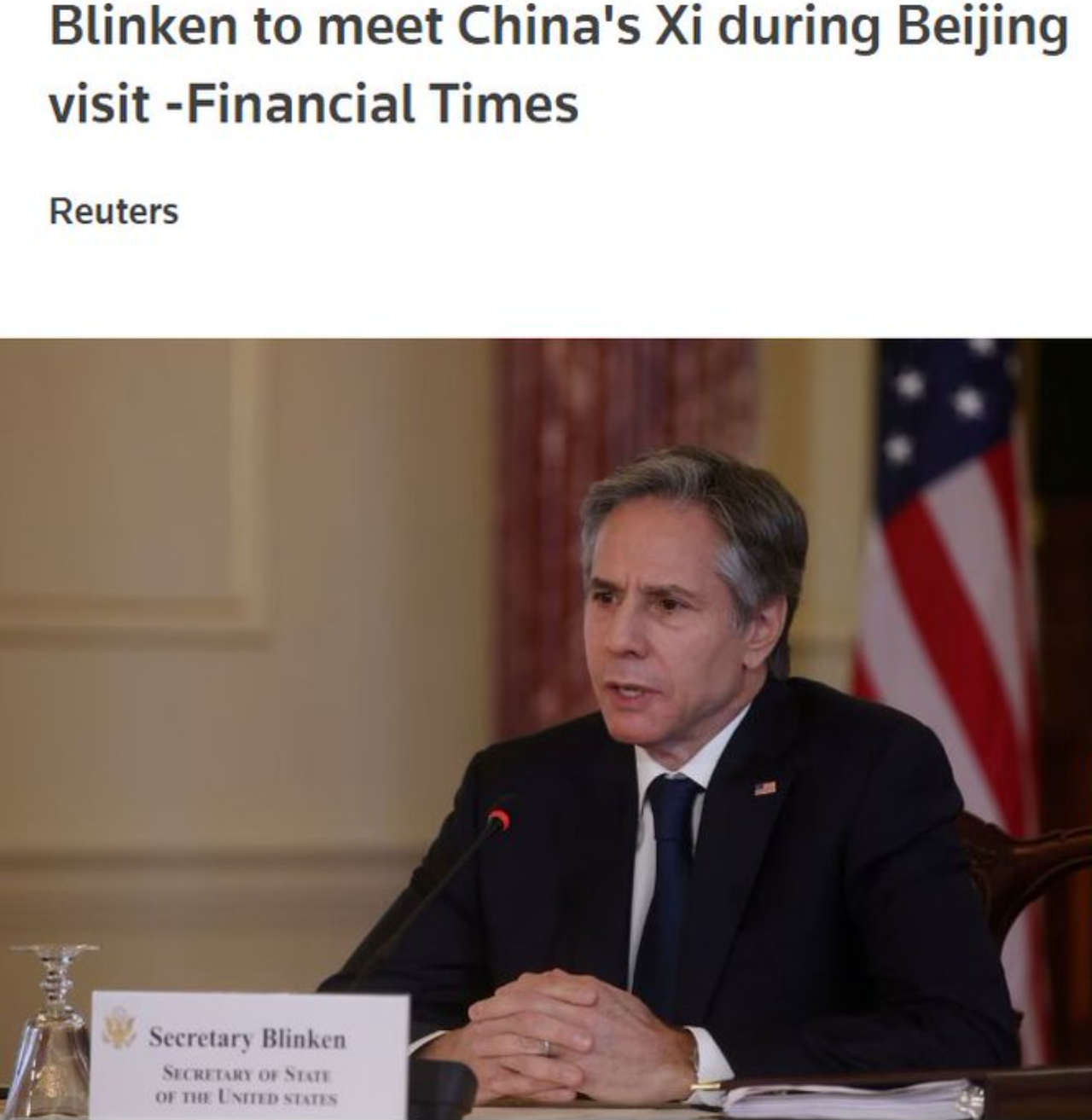
Unclear that anyone doubted China had mastered the technology of *check notes* hot air balloons and why it therefore needed to demonstrate this capability… China chose to do so on the eve of Secretary of States Blinken’s visit to China, where he was invited, and hours after signaling Blinken would also be meeting with Xi during his visit, a high-level meeting not granted to any US Secretary of States in years.
The story therefore being that China chose to disrupt a meeting with its own president and to sabotage its own efforts at détente in the US-China conflict... The Pentagon said it had been “tracking the balloon for quite some time” and that it wasn’t the first time such an incident occurred, but this time - for unclear reasons - it chose to do a public announcement. As a result, Blinken announced he was postponing his China trip.
Now the story from the Chinese side.
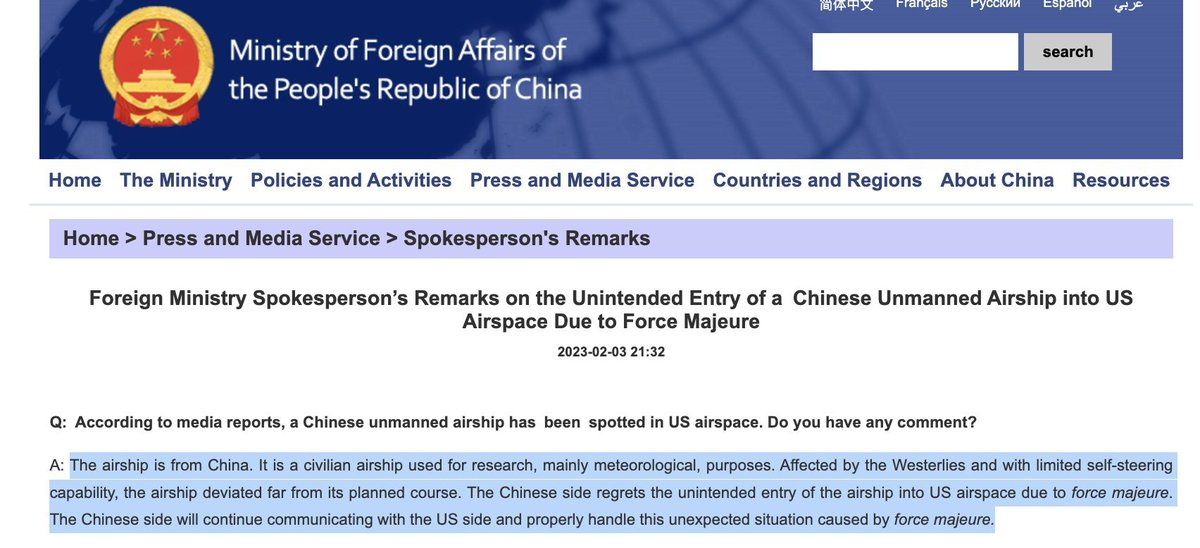
To them this is a fluke accident, the balloon being “a civilian airship used for research, mainly meteorological, purposes” that “deviated far from its planned course” because of strong “Westerlies” (wind that flows west to east) and “limited self-steering capability”, the main characteristic of a balloon being of course that it can only go up or down.
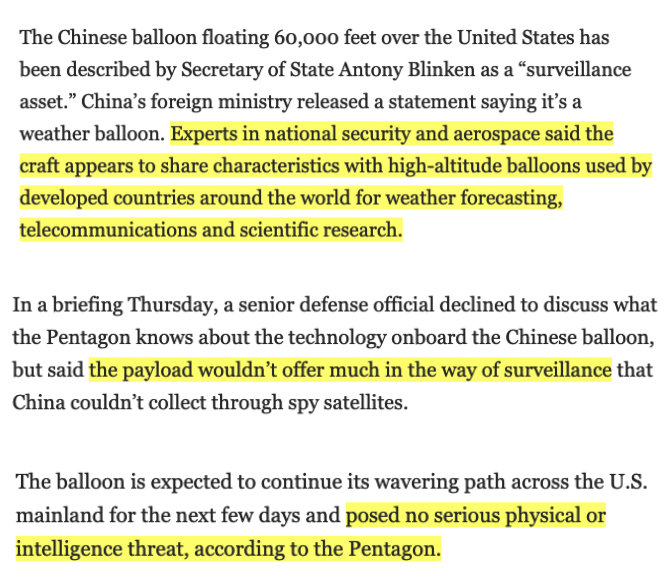
A piece in WaPo seems to confirm this, quoting “experts in national security and aerospace [who] said the craft appears to share characteristics with high-altitude balloons used by developed countries around the world for weather forecasting.”
The Pentagon itself said that “the payload wouldn’t offer much in the way of surveillance that China couldn’t collect through spy satellites” and that “the balloon posed no serious physical or intelligence threat”.
I.e. the Pentagon themselves say it would make zero sense for China to use a balloon like this for intelligence purposes when it has satellites. Kind of begs the question why they decided to make a big deal out of it in the first place…
I'll let you decide for yourself which story makes more sense… The sheer ridiculousness of this Nth “red scare” episodeis absolutely obvious to anyone with an iota of common sense. Except, sadly, common sense seems to be in critically short supply nowadays.
Also, as often, the real story is probably why this story became a story in the first place.
And the important context here is of course Blinken’s visit to China, which could - one can always dream - have been a step towards some form of de-escalation in China-US rapports. It was quite easily foreseeable that a story like this one on the eve of the trip would have made it politically very difficult for Blinken to go.
So a plausible hypothesis is that this whole episode is an attempt by internal US forces to prevent any US-China détente. One alternative hypothesis, much less likely, is that it’s internal Chinese forces trying to do the same thing by sending this big balloon.
Unlikely because:
a) China has time on its side so it gains from reduced tensions with the US and there isn’t any obvious “faction” in China who believe the contrary
b) it’d be immensely risky for anyone in China to do something like this as it’d undoubtedly be seen as an act of high treason with grave consequences for themselves
c) again, balloons like this particular one basically can’t be steered so...
To plan sending a balloon like this from China to a place over US land isn’t even doable in the first place. The last hypothesis, which I guess is also somewhat likely, is that this is a series of unfortunate events without any malice on either side.
1) Balloon deviates from course and gets in US airspace,
2) people see it and Pentagon feels it has to communicate about it
3) the media, wearing their usual “China bad” hat, decide to go all-in on the scare-mongering,
4) political opposition and China hawks jump on the bandwagon,
5) administration feels it has no other choice than to cancel the trip and doesn’t have the political courage to say “this is just a balloon that drifted off course”.
Well I guess in this scenario there is in fact malice on the media’s part and that of politicians and wider members of the blob but it’s “organic malice”, so to speak, jumping at a golden opportunity to scare-monger.
Conclusion: however you see it, this story is absolutely shameful and a sad reflection of the insane times we live in, when rather than take the time to carefully consider facts, apply reason and common sense, we instead choose as a society to incite fear and hostility.
If you walk down the right side street, the offers are plentiful, even in broad daylight. Young men in plain T-shirts draw near and call out their wares: Pills. Cocaine. Guns.
But if you wave them away and go just a few feet farther, you can walk into a pharmacy where you might get something just as dangerous.
You just won’t know it.
A Los Angeles Times investigation has found that pharmacies in several northwestern Mexican cities are selling counterfeit prescription pills laced with stronger and deadlier drugs and passing them off as legitimate pharmaceuticals.
In Tijuana, reporters found that pills sold as oxycodone tested positive for fentanyl, while pills sold as Adderall tested positive for methamphetamine. Testing conducted farther south in Cabo San Lucas and nearby San José del Cabo bore similar results, although there, even weaker painkillers — including pills sold as hydrocodone — also tested positive for fentanyl. Many are nearly indistinguishable from their legitimate counterparts.
In total, the Times investigation found that 71% of the 17 pills tested came up positive for more powerful drugs.
A team led by UCLA researchers recorded similar results in a study last week, but this phenomenon has otherwise gone largely unnoticed. The new findings could represent a dangerous shift in the fentanyl crisis.
Until now, it was unclear that the powerful synthetic opioid had made its way into pharmacy supply chains. Even though Mexican drugstores are known for selling a wide range of medications over the counter — many of which require a prescription in the United States — experts generally believed those pills were at least what store owners said they were.
Now, that’s no longer a safe bet.
“Whenever you have counterfeit products that contain fentanyl, you are going to have people use them and die,” said Chelsea Shover, a UCLA researcher and the study’s senior author.
That’s because consumers — including U.S. tourists — who unknowingly buy these adulterated pills are at a higher risk of overdose when they ingest drugs far stronger than what they’re expecting. But how often that happens is impossible to tell.
American tourists who unknowingly purchase fentanyl-laced pills from Mexican pharmacies are at a higher risk of overdose when they ingest drugs far stronger than what they’re expecting.
(Wally Skalij / Los Angeles Times)
Experts who study the effects of illicit drugs in Mexico say the country’s mortality data vastly undercount overdose deaths, which makes it difficult to understand the scope of the problem. While more than 91,000 people died of overdoses in the U.S. in 2020, Mexico reported just 1,700 fatalities that year from all drugs, including alcohol.
Fewer than two dozen of those, according to the data, were from opioids, compared with more than 68,000 opioid overdose deaths in the U.S. that year.
It’s unclear whether authorities in either country are aware of the problem. Carlos Briano, a spokesperson for the U.S. Drug Enforcement Administration, said in a statement, “We refer you to Mexican authorities on this issue.”
The U.S. State Department and the White House’s Office of National Drug Control Policy did not comment in response to detailed phone and email inquiries. Multiple local and national government agencies in Mexico also ignored requests for comment.
U.S. Rep. David Trone (D-Md.), who co-chaired the U.S. Commission on Combating Synthetic Opioid Trafficking, called the findings of the Times investigation “extremely concerning” in a statement.
State Sen. John Laird (D-Santa Cruz) described the findings as “really shocking.” Last year, he sponsored legislation that made it easier for California pharmacies to distribute any new opioid reversal agents as soon as they are federally approved.
“These places are close at hand, and Americans travel to these locations, and they are at risk in a way that wasn’t apparent before,” Laird said. “And I think that as this story comes out and we learn further details we’re going to have to look to see if there’s any state legislation that needs to be looked at to follow up.”
Fentanyl has been infiltrating the illicit drug supply for roughly a decade, since traffickers seized on the synthetic drug as a cheaper alternative to traditional opiates — and one with a higher profit margin.
The U.S. Centers for Disease Control and Prevention has described fentanyl as up to 50 times stronger than heroin. A dose as small as 2 milligrams can be fatal. Unlike heroin, making it doesn’t require the space or expense of a sprawling poppy field — only a lab and the right chemicals.
When the drug first appeared on the street, it was often mixed into illicit powders. Then, it began appearing in counterfeit pills made to look like the real thing. Getting one of those pills still required a willingness to engage in illicit street deals.
But to many users, the faux pharmaceuticals seemed safer than drugs that required shooting or snorting. Accordingly, street pills found a much larger market than powders. If those pills can now be purchased in legitimate pharmacies, that market becomes larger still.
Of the 10 drug experts reporters interviewed for this story, all but one said they’d never heard of pharmacies selling counterfeit pills.
“I haven’t seen anything like that,” said Cecilia Farfán-Mendez, who studies cartels as head of research at UC San Diego’s Center of U.S.-Mexican Studies. “I think it speaks to the lack of law enforcement monitoring what’s happening in the pharmacies.”
Finding tainted pills in a Mexican pharmacy doesn’t take much doing: Pay a visit to a certain sparse shopping plaza near Tijuana’s red light district. Stroll past the picturesque stores and yacht-lined docks of Cabo San Lucas. Amble through a shopping district bustling with wealthy tourists in San José del Cabo.
Cabo San Lucas.
(Wally Skalij / Los Angeles Times)
In tourist districts in these three cities, there are signs for farmacias seemingly every few steps. It’s not rare to see two or three on the same block. The shops’ windows and whitewashed walls are often plastered with block lettering advertising a cornucopia of pharmaceuticals. Some have sandwich board signs on the sidewalk advertising pills.
Most of them display the bright-green cross familiar to anyone who’s tried to get a prescription filled in Europe. Much of this slapdash street advertising isn’t for the big chain pharmacies, but for the smaller ones — the independent and mom-and-pop shops.
One farmacia in San José del Cabo offered mini Buddha statues, incense burners and other tchotchkes alongside brightly lighted display cases of pill bottles neatly arranged on gleaming mirrored shelves. In Cabo San Lucas, one shop near a large dockside shopping mall featured a few racks of toys inches away from stacked boxes of medication. But in many stores, most of the tile floor space sits empty; there’s little pretense of selling other wares.
Twice in January, two Times reporters traveled to Mexico with testing strips to check more than a dozen pills for dangerous adulterants.
In farmacia after farmacia in Tijuana, Cabo San Lucas and San José del Cabo, they asked for Percocet and oxy and Adderall. They asked how strong the pills were. They said they planned to split the pills or use them to study or party or in some cases didn’t give a reason why they wanted the powerful drugs. None of the pharmacists inquired further.
Invariably, the tablets were kept in some hidden spot. Though bottles of less tightly controlled medications like Xanax or Viagra or Ultram were often on display in glass cases, more powerful and more closely regulated substances like oxycodone — whether real or fake — were secreted away.
The tablets cost $15 to $35 each, depending on the shop and the alleged potency. It’s a price point high enough to be out of range for many local drug users but within the reach of many tourists. Pharmacies such as these accept payment in most any format — credit card, pesos or dollars.
At one store in Tijuana, all the drugs turned out to be legitimate — or at least they did not contain fentanyl. At another, a $25 blue pill labeled M30 and sold as “Mexican oxycodone” tested positive for fentanyl, while a $25 blue pill labeled K9 and sold as “American oxycodone” did not. A single 30-mg Adderall — for $25 — came up positive for methamphetamine.
In Cabo San Lucas, where permissive pharmacies catering to tourists seemed even easier to find, nine samples from four drugstores tested positive for adulterants: Six came up for fentanyl, and three for methamphetamine.
Twenty miles away in the resort town of San José del Cabo, ablue oxycodone pill from one store tested positive for fentanyl, while a white one from another did not. Among the three cities, several stores declined to sell the pills individually, and two refused to sell them without a prescription.
The results parallel what the UCLA-led team found in four unnamed cities in northern Mexico. Though roughly a third of the 40 pharmacies targeted in the study would not sell high-powered prescription drugs over the counter, the majority did.
And of the 45 pills tested with an infrared spectrometer, researchers found that 20 were counterfeit, including 82% of the Adderall samples and 30% of the oxycodone samples. With their more precise equipment, the researchers were able to get more granular results — and to determine that three of the oxycodone samples were positive for heroin.
They, like The Times, also found that all of the counterfeit pills came from stores in areas frequented by tourists, in locations that often featured English-language medication advertisements.
But the team’s work is a preliminary study — a pre-print that has not been peer-reviewed — and Shover said there are several important unknowns.
“We don’t know exactly when this started, and we don’t know how widespread it is,” she said. “We don’t know who’s buying these pills, we don’t know who’s taking them, and we don’t know what’s happening to the people who take them. The most important unknown is probably how many people have died or had serious health consequences from it, and we don’t have any idea.”
A pharmacy in Cabo San Lucas.
(Wally Skalij / Los Angeles Times)
Mexican death data are notoriouslyimprecise. Experts who study drug deaths say that’s partly the result of a long wave of drug-related killings that have overwhelmed the country’s forensic services and made thorough testing nearly impossible.
When somebody dies in Mexico, a physician can note the suspected cause on a death certificate, but that’s only if there’s a physician involved, said Dr. David Goodman-Meza, an assistant professor at the David Geffen School of Medicine at UCLA and one of the study’s co-authors.
If there’s no death certificate, then the country’s forensic medical service, known as SEMEFO, handles the investigation.
“However, SEMEFO is super-backlogged,” Goodman-Meza said. “The homicide numbers are incredibly high, so those likely get priority. And that means they’re not digging deep on other deaths or doing advanced toxicology to know if drugs were involved.”
Instead, overdose deaths get chalked up to broader, catchall causes.
“The default when you don’t have an explanation is to say that the person died of a cardiopulmonary arrest,” he continued. “But, I mean, we all die because our hearts stop.”
In 2020, the Mexican government attributed just 19 deaths to opioid use. The U.S. State Department, meanwhile, noted two drug-related deaths of Americans in Mexico that year.
Those figures are “probably very low,” said Romain Le Cour Grandmaison, senior expert with the Global Initiative Against Transnational Organized Crime. “I would imagine it’s a lot more, but it’s impossible to say how many.”
Cabo San Lucas is a major draw for American tourists.
(Wally Skalij / Los Angeles Times)
It’s also often impossible to know where a specific laced pill came from, but, according to a bipartisan congressional report issued last year, Mexican drug cartels are the ultimate source for many of them.
Cartels first bet big on fentanyl in the 2010s, importing the drug straight from China to mix into the powdered heroin most prevalent in East Coast drug circles. As recently as four years ago, Chinese-made fentanyl still dominated America’s illicit supply, according to the congressional report.
But cartels knew they could make more money by producing it themselves. So they began importing precursor chemicals, setting up clandestine labs and flooding the market with Mexican-made fentanyl, according to Fernando Montero Castrillo, who researches opioid markets at Columbia University’s HIV Center for Clinical and Behavioral Studies.
In the years that followed, the amount of fentanyl seized by U.S. Customs and Border Protection more than tripled, from 4,800 pounds in 2020 to 14,700 pounds last year.
“Pretty much all the fentanyl that comes into the United States comes from Mexico now,” Castrillo said. “Very little comes in from China.”
Though federal and local authorities in Mexico did not respond to requests for comment, the Mexican government has previously said it is working to stem the flow of chemicals used to produce fentanyl.
Cartels are almost certainly the source of the counterfeit pills appearing in drugstores, said Farfán-Mendez.
But pharmacy owners are most likely not buying directly from the criminal organizations. There are typically networks of middlemen, she said, so it’s unclear how many pharmacists even know they are selling laced pills.
When reporters visited last month, at least a few drugstore workers seemed aware their over-the-counter offerings were unusually potent.
“This one’s very strong,” cautioned a man working one afternoon behind the counter at a pharmacy less than half a mile from the U.S.-Mexico border in Tijuana. He was differentiating between two pills he presented when asked for oxycodone: the one he pointed out, which later tested positive for fentanyl, and one that came up negative.
The fact that reporters and researchers were so easily able to find drugstores selling fentanyl-laced tablets in multiple Mexican cities “signals that [customers] go into these pharmacies looking for counterfeit oxys,” said Farfán-Mendez. “So I can see the incentive to supply it.”
But cartels could be moved to reconsider that approach “if we start seeing a number of deaths in a certain area, especially if they are American tourists” and police crack down on the practice.
Given the shortcomings in Mexican death data, spotting those deaths could be difficult — which means cartels will have little reason to curb their pill trade.
“If it’s profitable and there’s not a lot of enforcement,” she said, “they’re going to keep doing it.”