Search This Blog

Saturday, February 18, 2023

Environment Police Want to Reduce Car Ownership Because EVs Are Not Enough

 For the sake of climate justice, transit justice, environmental justice, and Indigenous justice, the environment police want to reduce car ownership by making EV cars travel less before a charge.

More Batteries Not Enough, We Want Your Car

A consortium of California university professors and the Climate Community project say that more EVs alone will not solve the climate crisis. They are coming after your car.

Please consider Achieving Zero Emissions with More Mobility and Less Mining.

A crucial aspect of electrified transportation is new demand for metals, and specifically the most nonreplaceable metal for EV batteries—lithium. If today’s demand for EVs is projected to 2050, the lithium requirements of the US EV market alone would require triple the amount of lithium currently produced for the entire global market. This boom in demand would be met by the expansion of mining. 

Large-scale mining entails social and environmental harm, in many cases irreversibly damaging landscapes without the consent of affected communities. 

If today’s conditions are projected to 2050, US EV demand for lithium alone would require triple the amount of lithium produced today for the global market 

This report finds that the United States can achieve zero-emissions transportation while limiting the amount of lithium mining necessary by reducing the car dependence of the transportation system, decreasing the size of EV batteries, and maximizing lithium recycling. 

Increasing mass and active transit as well as keeping passenger vehicles smaller makes for safer communities. Reducing the size of passenger vehicles also can make the roads far safer because smaller cars have fewer and less severe crashes. Making bus routes, metros, and electric bikes faster, safer, and more convenient will disproportionately support low-income and non-white community members—who are more likely to live near high traffic areas and bear the environmental health burdens of relatively poorer air quality compared to higher-income and white counterparts. 

The Climate and Community Project’s 2022 report, “A Green New Deal for Transportation,” outlined just such a vision for a green, environmentally just mobility network, with specific recommendations for public policy and programs to transform the US transportation sector.

Ultimately, climate, transit, and Indigenous justice can be aligned. 


We Want to Reduce the Size of Your House Too

Our findings show that reducing dependence on private vehicles, densifying low-density suburbs while allowing more people to live in existing high-density urban spaces, and improving EV efficiency and reducing battery sizes are the most effective pathways to reducing future lithium demand. 

Maximal Justice

This report intends to empower people and policymakers across the country with the arguments, evidence, and proposals they need to advocate for a maximally just transportation future.

Don't kid yourself. 

This vision is precisely what President Biden, the socialists, and the Marxists want. If you want the same thing, then vote for Democrats in 2024. 

https://mishtalk.com/economics/environment-police-want-to-reduce-car-ownership-because-evs-are-not-enough

South Korea approves its first digital therapeutic

 An app to treat insomnia has become the first digital therapeutics (DTx) to be approved for marketing by the Ministry of Food and Drug Safety (MFDS) in South Korea.

The software as a medical device (SaMD) app – Aimmed’s Sommz – relies on a cognitive behavioural therapy (CBT) approach that has been put through its paces in clinical trials conducted within South Korea.

The app was among a crop of digital therapeutics that were reviewed via a new process for innovative medical devices that was introduced last year, and provides a framework of assessing and approving artificial intelligence (AI), big data, and digital health technologies.

The MFDS works alongside Korea’s Ministry of Health and Welfare, the Korea Health Industry Development Institute, the Health Insurance Review and Assessment Service, and the Korea Health and Medical Research Institute during the review process.

Sommz was given a provisional green light in December along with another insomnia app from Samsung spin-off WELT Corp, called PilLow Rx, as well as an artificial intelligence-powered software to aid in the diagnosis of stroke from medical imaging developed JLK Co.

The three digital health products are from a batch of eight that were filed using the new pathway shortly after it came into effect last October.

Aimmed’s app provides a six- to nine-week course of CBT after an initial consultation to help users improve sleep quality.

CBT is recognised as an effective therapy for insomnia, but in South Korea – like most countries around the world – demand for CBT far outstrips the availability of licensed therapists. The aim is to identify feelings, thoughts, and behaviours that are contributing to poor sleep, and finding ways to circumvent them.

DTx apps that can provide CBT without a therapist being present offer a way to broaden access, and are being rolled out by health services around the world including, for example, in the UK, which cleared NHS use of Big Health’s Sleepio app last year. They can help avoid the use of sleep medicines, which are only recommended for short-term use, can have unwanted side-effects, and do not address the underlying cause of insomnia.

Approval via the new process is, however, only the first hurdle for Aimmed. While the company can now market the app on a paid basis to customers in South Korea, widespread use will rely on securing reimbursement approval, which is still in the early stages for DTx, with a guideline in the final stages of being drawn up by the MFDS.

Minister of Health and Welfare Cho Kyu-hong said last December that the review framework will help South Korea’s digital health sector achieve “global competitiveness” and provide “an opportunity to lead the world in the field of advanced technology”.

https://pharmaphorum.com/news/south-korea-approves-its-first-digital-therapeutic

CMS eyes lower prices for drugs with accelerated approval

 The Centres for Medicare and Medicare Services (CMS) has flexed its regulatory muscles once again with a proposal that any drug that gets an early, accelerated approval in the US should be offered at a discounted price.

In a guidance document, the agency said that the approach would provide the twin benefits of reducing spending on prescription medicines and encouraging pharma companies to carry out confirmatory trials to switch their products from accelerated to full approval more promptly.

It is one of three models being considered for reducing the prices of medicines in the US, along with a fixed co-pay of $2 per month for generic therapies for chronic conditions like high blood pressure and high cholesterol under the Medicare Part D voluntary outpatient prescription drug benefit, and an access model for highly expensive cell and gene therapies.

The accelerated approval programme (AAP) proposal would adjust Medicare Part B payment amounts for these drugs, which are approved “before they have established evidence of improvement in a clinical endpoint,” said the CMS.

“Working in consultation with FDA, CMS could consider various approaches to adjust payments to the provider for AAP drugs, seeking to balance incentives for developing novel treatments with potential harms of delayed confirmatory clinical trials” it said.

The results of a review carried out by the Health and Human Services (HHS) Office of Inspector General (OIG) – published last September – found that out of 278 drug applications granted accelerated approval since the AAP started in 1992, 104 had incomplete confirmatory studies.

Around a third of those incomplete programmes had at least one study that was delayed beyond its agreed completion date, and four were more than five years overdue. And 13% of all accelerated approvals have been withdrawn, half of those since January 2021 when the FDA started to crack down on the laggards and programmes whose confirmatory trial didn’t back up the drug’s early promise.

The same report estimated that Medicare and Medicaid paid out more than $18 billion between 2018 and 2021 on 18 drugs – across 35 drug applications – with incomplete confirmatory trials.

Former FDA Commissioner Scott Gottlieb was among commentators who supported the move in principle, tweeting: “Structured right, this CMS proposal could allow drug pricing to match the level of evidence; enabling patients to access breakthrough drugs earlier, at lower prices, and as stronger confirmatory clinical evidence emerges, permit prices [to] adjust to reflect the proof of wider benefit.”

https://pharmaphorum.com/news/cms-eyes-lower-prices-drugs-accelerated-approval

Blue Cross Blue Shield Backtracks On Racist Grant Program, Opens Up To White People

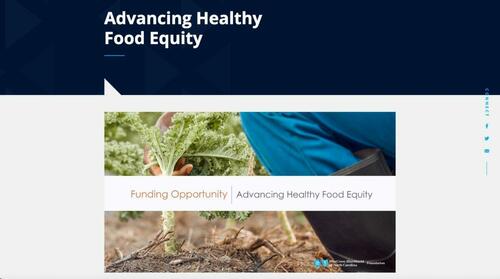
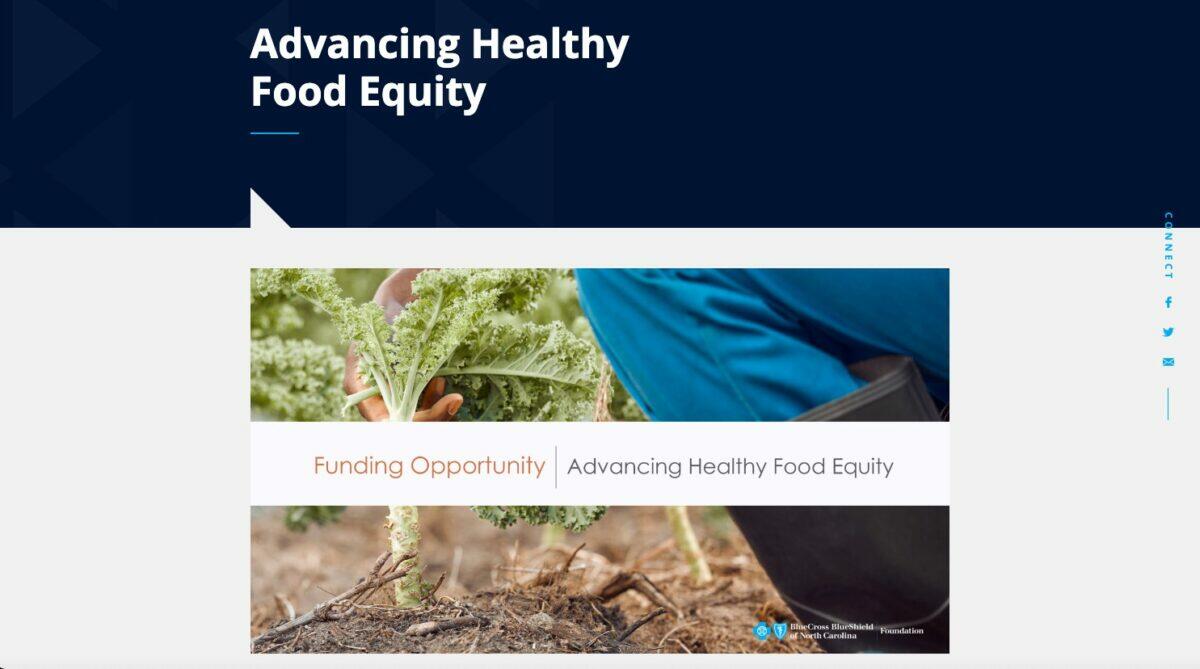
 Earlier this week, the leader of a medical watchdog organization called out Blue Cross Blue Shield (BCBS) of North Carolina over a racist grant program which only applied to organizations run by non-whites.

"If ever there was a bad idea, the notion that we should start to separate our country along racial lines is amongst the worst," said Dr. Stanley Goldfarb, a former associate dean for curriculum at the Perelman School of Medicine at the University of Pennsylvania.

The webpage for Advancing Healthy Food Equity, a grant program run by the Blue Cross Blue Shield of North Carolina Foundation, in 2023. (Screenshot/The Epoch Times)

FDA gives green light to Chiesi's Lamzede

 US regulators have approved Chiesi's Lamzede (velmanase alfa-tycv) as the first enzyme replacement therapy for the treatment of non-central nervous system manifestations of alpha-mannosidosis (AM) in adult and paediatric patients.

The decision follows a thorough priority review process, which began late last year.  

Affecting approximately one in every 500,000 to one in every one million babies born worldwide, AM is a rare inherited metabolic disorder caused by a deficiency of the enzyme alpha-mannosidase. This enzyme is involved in breaking down certain groups of complex sugars. Without enough alpha-mannosidase, these complex sugars accumulate in the body's cells and tissues, leading to progressive damage and dysfunction.

"Alpha-mannosidosis presents with a variety of symptoms, including impaired hearing, speech, and mobility, that progress from childhood into adulthood and is often under-recognised, causing some patients to be left undiagnosed or untreated," said Giacomo Chiesi, head of Chiesi Global Rare Diseases. "Lamzede is designed to provide an exogenous source of the α-mannosidase enzyme, and we look forward to offering this medicine to patients in the United States who are eagerly awaiting a treatment option."

The effects of AM vary from patient to patient, with common symptoms including recurrent chest and ear infections, hearing loss, distinctive facial features, muscle weakness, skeletal and joint abnormalities, visual abnormalities, and cognitive abnormalities.

Lamzede (velmanase alfa-tycv) is a recombinant form of human alpha-mannosidase designed to replace or support the function of the natural enzyme and prevent the build-up of mannose–rich oligosaccharides in various tissues in the body.

"We are thrilled to witness this milestone for the alpha-mannosidosis community," said Mark Stark, treasurer at the International Society for Mannosidosis & Related Disorders (ISMRD) and father of a son living with AM. "I have watched first-hand how alpha-mannosidosis can progress and impact daily life with my son, and this approval gives hope to patients, caregivers, and families impacted by this devastating disease. ISMRD is excited to continue to collaborate with Chiesi, and we are thankful for their efforts to develop Lamzede to give patients in the US a much-needed treatment option."

The treatment is already approved for use in Europe where, in 2018, Chiesi received marketing authorisation from the European Commission for Lamzede for the treatment of non-neurological manifestations in patients with mild to moderate AM.

This latest regulatory achievement marks a significant milestone for Chiesi's Boston-based rare disease division, which was formed in 2020 to diversify away from the company's traditional focus on respiratory medicines and further its ambition to grow in the US.

https://pharmaphorum.com/news/fda-gives-green-light-chiesis-lamzede

Lynparza under siege in first-line prostate cancer

 Battle lines are being drawn up in metastatic castration-resistant prostate cancer (mCRPC), with AstraZeneca and Merck & Co’s market-leading PARP inhibitor Lynparza firmly in the sights of newer rivals.

New data on Lynparza (olaparib), as well as PARP drugs from Pfizer and Johnson & Johnson, were presented this week at the 2023 ASCO Genitourinary Cancers Symposium (ASCO GU) in previously-untreated patients with mCRPC, which represents a big new market for the drugs.

Currently holding the higher ground is Lynparza, which was approved for mCRPC associated with homologous recombination repair (HRR) mutations in 2020 and which got a green light in the EU last December for a broader, all-comer population based on interim results of the PROpel trial.

The FDA is also reviewing the data and due to deliver a verdict soon, after delaying its decision by three months.

At ASCO GU, AZ and Merck reported final overall survival (OS) results from PROpel, showing that Lynparza in combination with anti-androgen therapy Zytiga (abiraterone) and prednisone or prednisolone was associated with a median OS of 42.1 months, compared to 34.7 months with abiraterone plus placebo.

That 7.4 month difference did not, however, achieve statistical significance, despite a significant 34% reduction seen with AZ and Merck’s drug on radiographic progression-free survival (rPFS), which formed the basis of regulatory filings. The biggest benefit on rPFS was seen in patients with BRCA mutations, as would be expected given the drug’s mechanism.

Despite the miss, AZ and Merck insisted the data reinforced the profile of Lynparza as an add-on to first-line hormonal therapy for mCRPC, which analysts have suggested could be a blockbuster market for PARP drugs.

Against that backdrop, two potential challengers have emerged in the first-line, all-comer setting. Pfizer reported new data at ASCO GU from the TALAPRO-2 study of its PARP drug Talzenna (talazoparib) in combination with its Astellas-partnered androgen inhibitor Xtandi (enzalutamide) as a first-line therapy for mCRPC on top of hormonal therapy.

The results revealed a 37% improvement in rPFS at a mid-study analysis compared to placebo plus Xtandi, as well as a trend to improved overall survival, so far roughly mirroring Lynparza. Talzenna has also been filed for approval based on the interim data, with a decision due later this year, and has previously been cleared for BRCA-mutated breast cancer. 

J&J, meanwhile, announced updated results from the MAGNITUDE study of niraparib plus Zytiga and prednisone, which revealed a 45% improvement in rPFS among patients with BRCA mutations at a second interim update, plus a trend towards improved OS.

So far, there is no significant effect of the drug on patients without HRR mutations, so close attention will be paid to that data as it matures, along with results from a cohort of patients treated with a fixed-dose combination of niraparib plus abiraterone. In the meantime, J&J and the investigators are pointing to the results as evidence that genomic testing of mCRPC patients remains critical. 

J&J acquired rights to niraparib in prostate cancer from Tesaro in 2016, ahead of the company’s acquisition by GSK in 2019. The PARP is already sold by GSK as Zejula to treat ovarian, fallopian tube, and peritoneal cancers.

For now, it’s not clear whether the newer drugs will pose a serious challenge to Lynparza, although Talzenna seems to be the biggest threat – particularly if it can translate its OS trend to a significant difference at the final analysis.

In Lynparza’s favour is that it is already used in a broad range of indications across ovarian, breast, fallopian tube, peritoneal, and pancreatic cancers. The drug has become AZ’s third-biggest drug, with sales rising 6% to almost $2.6 billion last year.

https://pharmaphorum.com/news/lynparza-under-siege-first-line-prostate-cancer

Americans Turn To Social Media For News, Despite Lower Trust

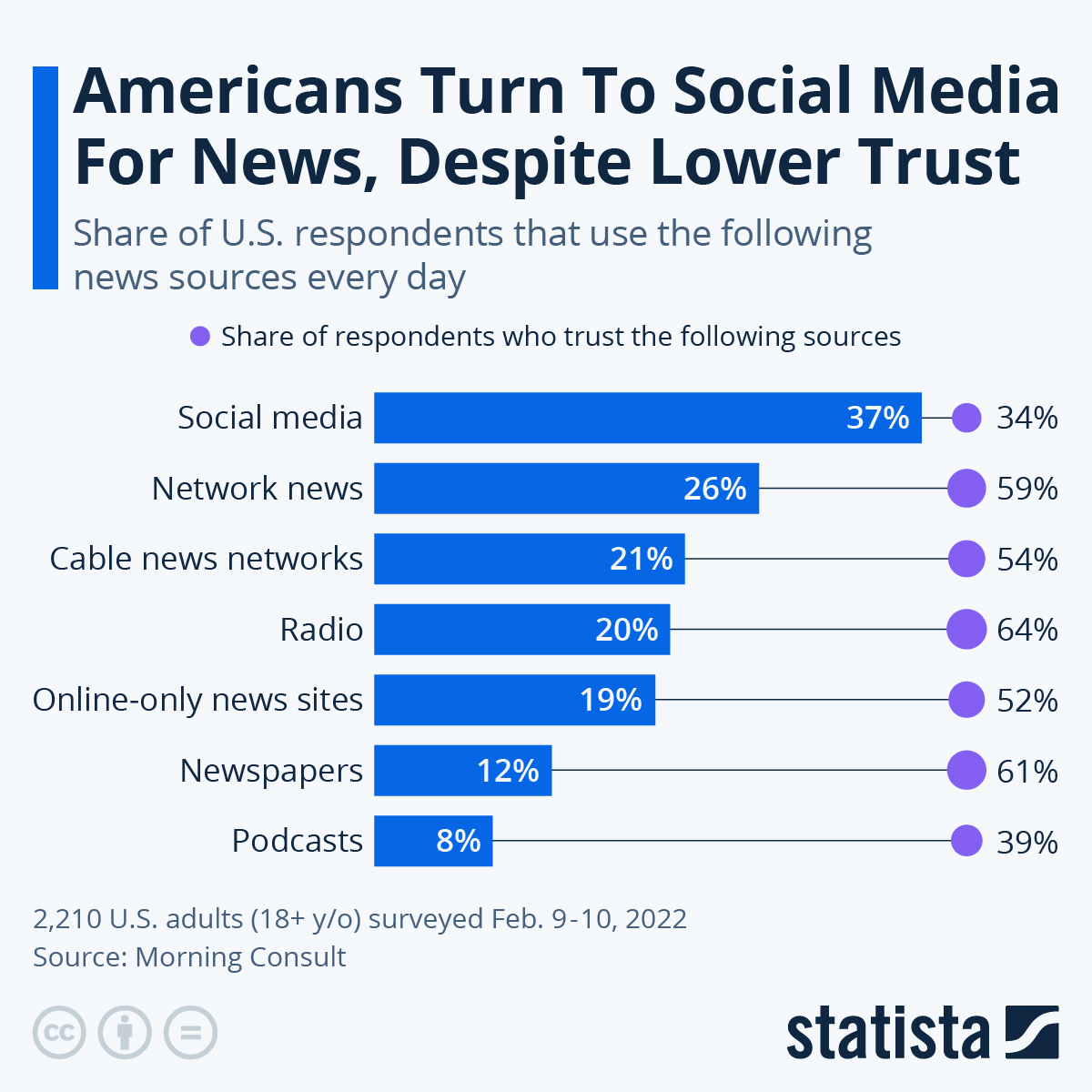
 Social media is the most commonly used news source among U.S. respondents that consume the news daily, according to a poll by Morning Consult.

This was followed by network news (26 percent), cable news networks (21 percent) and radio (20 percent).

However, as Statista's Anna Fleck shows in the infographic belowhigh usage doesn’t necessarily equate to a strong perception of trustworthiness...

Infographic: Americans Turn To Social Media For News, Despite Lower Trust | Statista


Where the radio was considered the most reliable source - despite being listened to regularly by a smaller group - the opposite was true of social media, which had a higher usage but half the share of people that trusted it.

A 2021 UNICEF-Gallup survey drew a similar conclusion, this time looking at several countries around the world. It found that while a higher share of young people (15-24 year olds) relied on social media rather than other sources to stay informed about current events, they did not necessarily trust the information they found there.

Not included in the chart but still worthy of note is the generational divide between go-to news sources.

According to Morning Consult’s data, older adults were more likely to opt for traditional media such as cable news networks (32 percent for 65+, 24 percent for 45-64 year olds, 18 percent for 35-44 year olds, 12 percent for 18-34 year olds) and newspapers (21 percent of 65+, versus 9-10 percent in the other age groups), while younger audiences were most drawn to social media platforms (45 percent for 18-34 year olds, 44 percent 35-44 year olds, 33 percent 45-64 year olds, 24 percent 65+).

https://www.zerohedge.com/political/americans-turn-social-media-news-despite-lower-trust