BioNTech receives exclusive licenses from DualityBio for two investigational antibody-drug conjugate assets (DB-1303 and DB-1311) directed against targets expressed in a broad range of human cancers
Collaboration will add a new class of precision medicine therapeutics to BioNTech’s clinical-stage oncology portfolio, expanding the breadth of its immunotherapy toolkit with synergistic potential
DualityBio receives upfront payments totaling $170 million, and will be eligible to receive development, regulatory and commercial milestone payments potentially totaling over $1.5 billion as well as single-digit to double-digit tiered royalties on potential future product sales
Goldman Sachs analysts up their Brent oil forecast to $95 by the end of 2023
Energy Secretary Jennifer Granholm last month said it would be difficult for the U.S. to take advantage of low oil prices to replenish the Strategic Petroleum Reserve because of maintenance at two of the four sites.
The Financial Times reported, citing people familiar with Saudi Arabia's thinking, that Riyadh was "irritated" by that comment. In any case, it came on top of stress in the financial sector that had dragged oil prices as low as $64 in March.
And while prices did bounce back -- ending the month at nearly $76 -- OPEC's producers felt the need to act, which they did in voluntary moves to reduce production by over 1 million barrels starting in May
Light sweet crude was trading just over $80 a barrel on Monday, and Brent was trading above $84.
The question now is the degree that OPEC will follow through with its pledge. Henri Patricot, an analyst at UBS, says there's reason to think they will, as the countries that announced the voluntary reduction were producing close to their quotas. "As such, we would expect the actual production cut to be close to the headline number this time," said Patricot.
Granted, some analysts said the real surprise was that OPEC hadn't already acted. "Since last November our global oil supply-demand balance suggested a strong policy action was needed to keep global oil surpluses in check," said JPMorgan analysts led by Natasha Kaneva, who left their oil price view unchanged that the Brent contract will end the year at $96.
The move sent off a domino of reactions, most notably in the bond market, where traders fretted about the impact to already stubbornly high inflation. The yield on the 2-year Treasury rose 8 basis points to 4.10%.
Unlike the last time OPEC and its allies acted preemptively -- in October -- the momentum in global oil demand is up not down with a strong China recovery, as well as backwardated forward curve and resilient refining margins, said analysts at Goldman Sachs led by Daan Struyven.
Backwardization is when the current price is higher than prices trading in the futures market. The Goldman team took their Brent forecast for the end of the year up by $5 to $95, and to $100 from $97 for the end of 2024.
NeuroBo Pharmaceuticals, Inc. (Nasdaq: NRBO), a clinical-stage biotechnology company primarily focused on cardiometabolic diseases, today announced that it has submitted an Investigational New Drug (IND) application to the U.S. Food and Drug Administration (FDA). The IND application supports a Phase 2a clinical trial of DA-1241, a novel G-Protein-Coupled Receptor 119 (GPR119) agonist, in development for the treatment of nonalcoholic steatohepatitis (NASH).
INmune Bio, Inc. (NASDAQ: INMB) (the “Company”), a clinical-stage immunology company focused on developing treatments that harness the patient’s innate immune system to fight disease, today announced that the Company has submitted an Investigational New Drug (IND) application to the U.S. Food and Drug Administration (FDA) for the use of INKmune™ to treat metastatic castration-resistant prostate cancer (mCRPC).
Vertex Pharmaceuticals Incorporated (Nasdaq: VRTX) and CRISPR Therapeutics (Nasdaq: CRSP) today announced the completion of the rolling Biologics License Applications (BLAs) to the U.S. Food and Drug Administration (FDA) for the investigational treatment exagamglogene autotemcel (exa-cel) for sickle cell disease (SCD) and transfusion-dependent beta thalassemia (TDT). The BLAs include requests for Priority Review, which if granted, would shorten the FDA’s review of the application to eight months from the time of submission versus a standard review timeline of 12 months.
Opioid Halo Is Indicated for the Detection of Opioid-Induced Respiratory Depression, with Escalating Alarms to Alert Loved Ones That Help Is Needed
De Novo Authorizes Both Over-the-Counter (OTC) Use, on Adults and Children Age 15 and Up, and Prescription Use
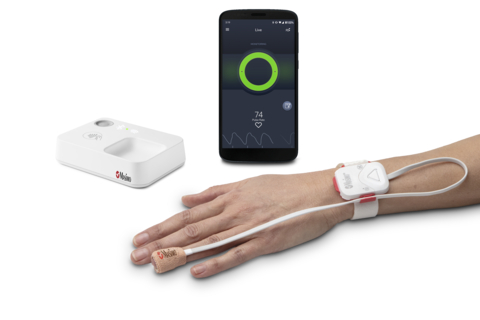
Masimo (NASDAQ: MASI) today announced that Masimo Opioid Halo™, an opioid overdose prevention and alert system, has been granted a De Novo by the FDA – making it the first and only FDA-cleared monitoring solution for detecting opioid-induced respiratory depression, the leading cause of death from opioid overdose. With the De Novo, Masimo also becomes the first winner of an FDA Opioid Innovation Challenge to have an authorized solution designed to help solve the U.S. opioid crisis. The De Novo authorizes Opioid Halo to be made available over the counter (OTC) without a prescription, for use on adults and children age 15 and up, and an Rx version for use by prescription from a healthcare provider. Opioid Halo advances the forefront of continuous monitoring through its unique Opioid Halo engine, an advanced pattern recognition algorithm which helps detect and quantify the risk of severe opioid-induced respiratory depression. Combined with its innovative distributed architecture, Opioid Halo helps to manage and send escalating alarms to family members, friends, and caregivers, notifying them that help may be needed due to an opioid overdose – including triggering an automatic wellness call, which may lead to EMS being dispatched.
Joe Kiani, Founder and CEO of Masimo, said, “We are very excited to be able to offer this solution to our fellow Americans and the community heroes who are helping to battle the opioid crisis – a crisis so devastating in its impact on the young that it has lowered overall life expectancy in the U.S. Now, with Opioid Halo, we hope to help make a big difference by providing a much needed tool that can help millions, whether they are taking prescribed opioids or struggling with illicit opioid use. In 2018, we were honored to be chosen by the FDA, based on our expertise in patient monitoring technologies, to develop a device that could help prevent opioid overdose, as part of their Innovation Challenge addressing the opioid epidemic. And today, we are delighted to have received the first De Novo for our response to that Innovation Challenge, Masimo Opioid Halo. Between then and now, the COVID-19 pandemic accelerated our development and refinement of the Masimo SafetyNet® family of remote patient management and telehealth solutions, helping save many COVID patients’ lives. We thank the FDA for taking on the opioid epidemic and granting this De Novo – a clearance that is a huge step forward in preventing overdose deaths and helping to end the opioid crisis.”
Opioid overdose is the leading cause of accidental death in the US, responsible for more than 80,000 of the approximately 100,000 drug-related deaths in 2021, from both illicit opioids, such as fentanyl and heroin, and prescription opioids. Hundreds of thousands more suffer non-fatal overdose events, or the loss of a family member or friend to opioids.1 Opioids are readily prescribed in the US, with more than 143 million opioid prescriptions written in 2020,2 because they can be an effective way to help people manage pain, including after surgery or for chronic conditions. However, opioids also carry serious side effects, especially opioid-induced respiratory depression – slowed or stopped breathing –which is the leading cause of death from opioid overdoses.3 Anyone taking opioids, prescription or illicit, is at risk of experiencing an accidental overdose, the signs of which are unpredictable and can be difficult to detect.
Masimo Opioid Halo is designed to help family and friends identify the symptoms of an opioid overdose by detecting physiological markers present during opioid-induced respiratory depression and ideally, helping them know when it’s time to intervene – for example, by administering a potentially life-saving dose of naloxone. Opioid Halo can be used at home or in the hospital or another care setting, by patients prescribed opioids after surgery or managing a chronic or prolonged condition, as well as people suffering from opioid use disorder.
The Opioid Halo system consists of four components: 1) a tetherless, adhesive fingertip sensor; 2) a reusable Masimo SET® pulse oximeter and Bluetooth® chip; 3) a Bluetooth-to-Wi-Fi Masimo Home Medical Hub; and 4) a smartphone app. The fingertip sensor provides real-time monitoring for opioid-induced respiratory depression, enabled by the Opioid Halo pattern recognition algorithm and Masimo SET®, Signal Extraction Technology® – even during movement, when hands are cold, and on all skin pigmentations. Data from the sensor and chip are wirelessly relayed to the Masimo Home Medical Hub and the smartphone app, which continuously analyzes the user’s physiological data for trends and patterns associated with the physiology of an opioid-induced respiratory depression event to quantify the risk of an opioid overdose. As the level of risk rises, the app and hub provide alerts. Upon early onset, an audible and visual alarm, designed to trigger early intervention opportunities for the user to self-recover or get help, is provided. If the Opioid Halo risk score continues to worsen, in addition to the repeated alarms, automatic texts are sent to designated friends and family members, letting them know it may be time to intervene, for example by administering naloxone or taking other action. Finally, if the severity of the risk level progresses even further, there is an optional setting that can be activated during setup that enables a service center to place an automatic wellness call to the user, the outcome of which may lead to EMS being dispatched.
With several recent milestones,Intellia Therapeuticsis setting a solid foundation for gene editing in rare diseases like hereditary angioedema (HAE) and transthyretin (ATTR) amyloidosis with an eye toward broader patient populations.
Laura Sepp-Lorenzino, Ph.D., EVP and chief scientific officer, joined Intellia in 2019 after leading RNAi and gene therapy efforts at Vertex, Alnylam and Merck. She told BioSpace she’d had an eye on Intellia since the company’s founding in 2014 and was drawn by its full-spectrum approach, which includes both in vivo and ex vivo efforts.
“I was impressed because they were daring,” she said. “This was a lot to take on for a start-up, but they kept making steady progress.”
When approached by John Leonard, president and CEO, Sepp-Lorenzino saw a great opportunity to help catalyze these emerging platforms.
Laura Sepp-Lorenzino, Ph.D.
A Full-Spectrum Approach
This full-spectrum approach has enabled Intellia to be a gene editing pioneer.
In June 2021, the company announced the first-ever clinical data supporting the safety and efficacy of in vivo CRISPR gene editing in humans.
Intellia began by targeting severe diseases for which there is a clear genetic driver and critical unmet medical need.
“Starting in diseases in which there is a clear risk/benefit [profile] was very important for us,” Sepp-Lorenzino said.
On the in vivo side, this includes NTLA-2001, a collaboration with Regeneron for ATTR amyloidosis, and NTLA-2002 for HAE.
On the ex vivo side, Intellia is utilizing lipid nanoparticles (LNPs) to transiently deliver CRISPR/Cas9 to a range of cells, including T cells and NK cells. As opposed to the more common electroporation technique, this approach enables a large number of edits to be introduced, Sepp-Lorenzino said.
“Electroporation is harsh on the cells. They take a significant hit with regards to viability and expansion potential and there is DNA damage,” she said. “The beauty of [the LNPs] is that now the cells are in really good shape so we can expand many, many-fold from one donor.”
As needed, Intellia also can deploy its base editor to do multiplex knockouts, maintaining high fidelity in the edits and eliminating structural variants. Cell therapy is often prohibitively expensive and Sepp-Lorenzino explained that this innovation could help lower costs.
Opening More Therapeutic Avenues
These platforms are stepping stones to Intellia’s ultimate goal, which is to harness the full potential of CRISPR-based technologies to create new classes of genetic medicine.
With both NTLA-2001 and NTLA-2002, Intellia is using a gene knockout technique, which is a technique to inactivate a specific target gene.
“By having demonstrated we can do that, it now opens up a new avenue for other diseases in which introducing an in vivo [approach] could be transformative,” Sepp-Lorenzino said.
It also allows Intellia to increase the complexity of its edits to treat more diseases.
The company is also leveraging its in vivo liver insertion technology in alpha-1 antitrypsin deficiency. This platform enables scientists to insert a missing or defective gene, Sepp-Lorenzino said.
Another advantage of in vivo gene editing is that liver cells are expected to repopulate carrying the edit made, she added. This is in contrast to traditional AAV gene therapy where there is a loss of expression over time as the cells divide.
“Insertions are also relevant for childhood diseases in which the liver and kidneys are growing. You want to make sure that the edits made have the potential to lead to permanent expression,” she said.
Stepping Stones
More common diseases are also on the horizon for Intellia.
“As we begin to demonstrate safety and efficacy in these rare diseases where the benefit/risk justifies bringing a new technology to patients, it opens up the opportunity to develop CRISPR-based therapies for more prevalent applications,” Sepp-Lorenzino said.
This could include cardiovascular and metabolic diseases or chronic infections.
Before targeting these broader populations, however, Sepp-Lorenzino said it is important for Intellia to demonstrate a solid safety profile and the long-term behavior of its gene editing therapies in different populations.
Intellia also continues to build its gene editing and delivery toolkits.
Its gene editing portfolio includes multiple Cas enzymes, a base editor, and a DNA writing platform. Intellia gained the latter in the February 2022 acquisition of Rewrite Therapeutics and further developed it internally, leveraging the company’s expertise.
On the delivery side, Intellia has pioneered the use of LNPs for in vivo and ex vivo use. Its aim for in vivo is to “modify the characteristics of those particles so you can use them for other organs, in addition to the liver,” Sepp-Lorenzino said.
This approach has potential in sickle cell disease (SCD).
Sepp-Lorenzino was involved with the development of Vertex and CRISPR Therapeutics’ SCD gene therapy, exa-cel. While exa-cel has the potential to be “game changing,” she said it would not be accessible to the majority of patients. This is because exa-cel leverages an ex vivo approach, which she said is incredibly costly.
Intellia’s in vivo SCD approach involves redirecting LNPs from the liver to the bone marrow in sufficient quantities to introduce an edit.
If successful, patients would get an infusion and “that would be it,” Sepp-Lorenzino said.
“The reality is that the prevalence of sickle cell disease is enormous outside of first world countries…so it’s important we find ways of addressing everybody.”
With myriad tools and modalities available in gene editing today, Sepp-Lorenzino said she is like a kid in a candy store.
“What's important for Intellia is to not be limited by the type of edit that we need to introduce,” she said. “We’re not a cleavase-based company. We're not a base editing company. We're not a DNA writing company. The point is to be a gene editing company with the ability to make the best therapies for patients.”