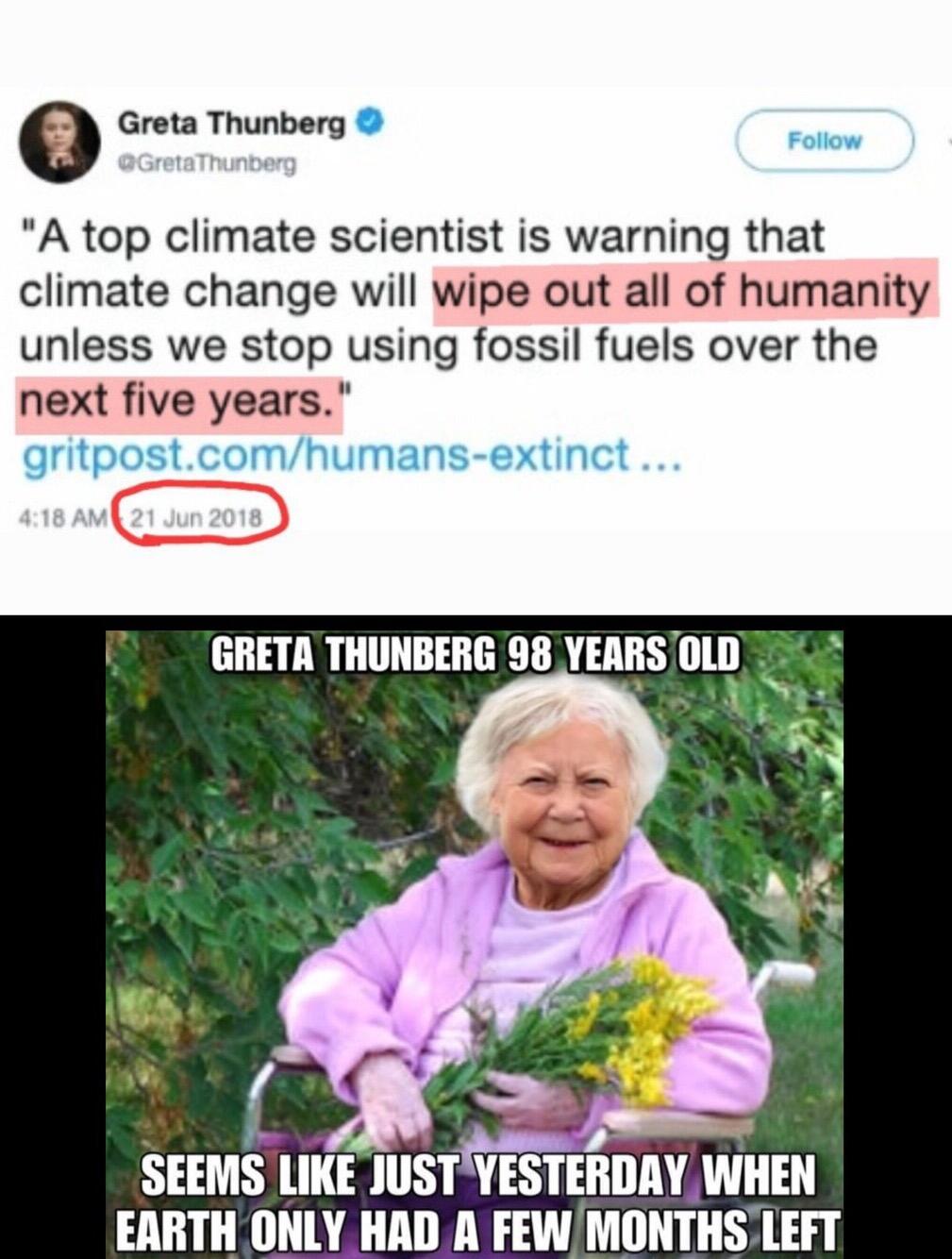
Politicians 'north of Richmond', corporate media outlets, climate crusaders like Greta Thunberg, and new and improved 'Greta 2.0' (Sophia Kianni) cheerleaded fuzzy 'climate math' at the peak of the Northern Hemisphere summer to warn heat and extreme weather events were alarming milestones of impending climate disaster.
In mid-July, when the Northern Hemisphere summer began to peak, ABC, The New York Times, Axios, and Bloomberg cited questionable climate math from a computer model that enabled them to declare "hottest day ever." However, the math was so fuzzy that the National Oceanic and Atmospheric Administration couldn't even stand behind the claim, telling AP News, "Although NOAA cannot validate the methodology or conclusion of the University of Maine analysis, we recognize that we are in a warm period due to climate change."
Remember the flood of climate doom headlines in July?
Such propaganda from corporate media would've had anyone believe the Earth was on the brink of a climate disaster -- but it wasn't. Just hysteria pushed with fake news.
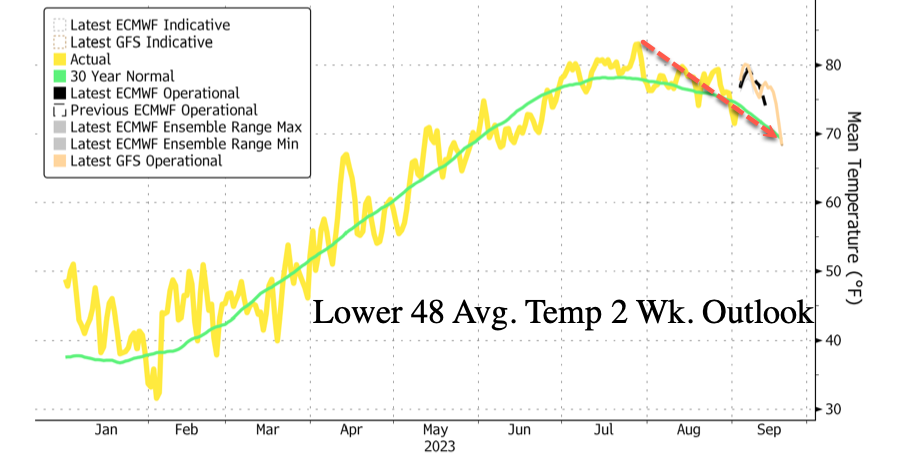
Bloomberg data shows temperature across the Lower 48 versus a 30-year mean didn't deviate excessively higher than the norm -- clearly a different story than what was pitched by corporate media and climate alarmists. In fact, temperatures have been sliding across the country since early August.
One inconvenient truth the corporate media failed to cover this summer: wildfires across the US burned the lowest amount of acres in a decade.
Bjorn Lomborg, president of the Copenhagen Consensus and visiting fellow at Stanford University's Hoover Institution, said where have you seen this reporting in the news? ... nowhere.
"Have you seen that reported anywhere?" he asked, referring to Copernicus' wildfire data is absent from corporate presses. It's an inconvenient truth that destroys the climate change narrative.
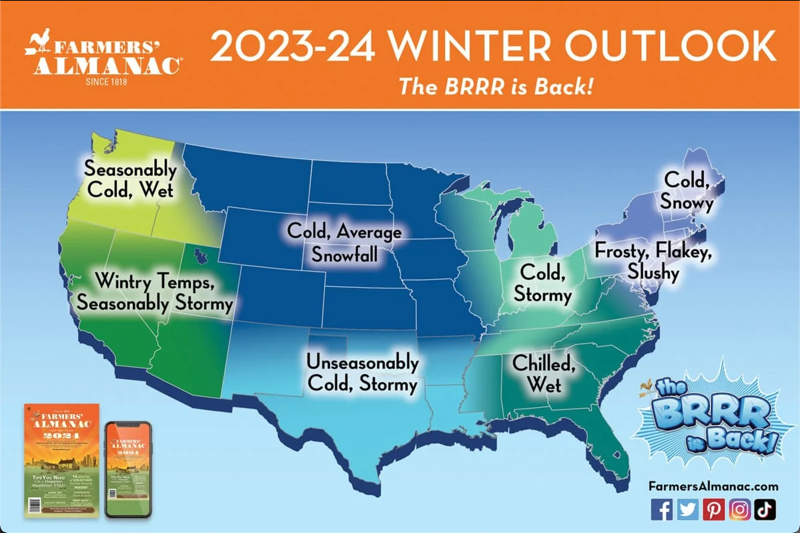
Looking ahead, Peter Geiger, editor of the Farmer's Almanac, published a note explaining the latest extended weather forecast for the winter 2023-24 season shows cold temperatures, snow, and damp conditions across the Lower 48.
Geiger wrote in the note, "The 'brrr' is coming back! We expect more snow and low temperatures nationwide."
Meanwhile, corporate media is responsible for producing a young generation that suffers from "climate anxiety."
Don't worry. Corporate media will attribute the changing of seasons from warm to cold to 'climate change.' For some context, these climate doomers once spewed the Earth would move into a new ice age by the 21st century.
It's big businesses to spread climate misinformation. Just ask Al Gore.
They're routinely wrong and have zero accountability.
One morning in June, barely 5 months after the first dispensary for recreational cannabis opened in New York state, neuroscientist Yasmin Hurd spoke via Zoom to an audience of educators and specialists who work with or run programs for children. The session’s organizers, alarmed by how many children in their South Bronx community were now getting their hands on cannabis, had sought Hurd’s expertise on the drug’s effects.
Hurd put up a slide of the human brain, its bumps and grooves tinged blue, green, yellow, and red to indicate the distribution of the receptors to which tetrahydrocannabinol (THC), the psychoactive ingredient in cannabis, binds. She showed how they exist throughout the brain—in the folds of the cerebral cortex, where much of cognition lies; the cauliflower-shaped cerebellum, the seat of motor coordination; the hippocampus, Grand Central for memory; and the amygdala, a crucial hub for emotional regulation.
The receptors, said Hurd, who heads an addiction research lab at the Icahn School of Medicine at Mount Sinai, are “really critical for so many processes in the brain.” And when a person uses cannabis—in any of its edible, dabbable, smokable forms—the drug overwhelms them and disrupts their ability to calibrate neuronal activity.
That, in turn, can be profoundly problematic for the developing brain, Hurd’s research suggests. She sees growing evidence in the field that cannabis use puts children and adolescents at risk for a variety of psychiatric problems, from dependence on that drug and others to schizophrenia. In utero exposure, she believes, can ignite mental health problems in childhood and beyond. In studies with rats, human fetal tissue, and children, her lab has begun to uncover changes in gene expression, as well as alterations in the brain’s chemical communication systems and wiring, that may underlie some of these effects.
Hurd’s work is especially compelling because she has been able to link results across species, colleagues say. “It’s so hard to be able to go back and forth between animal models and effects in humans,” says Susan Tapert, an addiction researcher at the University of California, San Diego. “She’s really one of the leaders in the field in being able to pull those very different kinds of studies together.” Tapert agrees the evidence for harmful effects on the developing brain are concerning, although she says the harm likely varies widely from one individual to another. The risks for adults are lower, she says, as the drug’s influences on memory, mood, sleep, and motivation tend to wane within about a month of discontinued use.
Research on cannabis’ developmental effects has grown in recent years, but Hurd “definitely pioneered this field,” says Miriam Melis, a neuroscientist at the University of Cagliari. Hurd also had to prove herself as a Black woman in a discipline then dominated by white men, Melis says. “For me she’s an inspiration of a woman in science.”
Her work has become increasingly relevant, as U.S. states—23 so far, plus Washington, D.C.—legalize cannabis for adult recreational use. Hurd’s findings raise “big red caution flags,” says Eric Nestler, an addiction researcher and director of the Friedman Brain Institute, which Hurd’s lab is a part of. Legalization is “not a free decision. It is a decision that, according Yasmin’s data—and I would agree with her data—will bring costs.”
Some adults might be able to use cannabis quite safely, experts say, yet the legalization trend has made the drug increasingly accessible to pregnant people and also children, who may ask adults to buy it, take it from parents, or use fake IDs to get it. In the Bronx, kids as young as age 11 or 12 know which shops will sell to minors, according to Davon Russell, president of the Women’s Housing and Economic Development Corporation, a Bronx community development organization, who invited Hurd to speak. At the same time, the potency of the products on offer has risen sharply (see graphic, below) and is only loosely regulated by states. Customers “have no clue about the substances they are consuming,” Hurd says. She has seen the consequences firsthand: Besides running her lab, she directs Mount Sinai’s Addiction Institute, overseeing inpatient and outpatient treatment centers, as well as programs for kids.
Higher times
Cannabis plants, resins, and oils have gotten far more potent over the past quarter-century, according to an analysis of illegal samples seized by the U.S. Drug Enforcement Administration. Concentrations of tetrahydrocannabinol (THC), the main psychoactive ingredient, have risen as states have legalized cannabis use.
(GRAPHIC) D. AN-PHAM/SCIENCE; JULIA GREENWOOD/SCIENCE; (DATA) POTENCY MONITORING PROGRAM QUARTERLY REPORT #153, NATIONAL INSTITUTE ON DRUG ABUSE
Although Hurd opposes the criminalization of cannabis use and possession, she believes legalization has come with underappreciated downsides. She’s concerned it has fanned a permissive culture and a perception that the drug is generally safe. “I am worried about how cavalier we’re becoming and that there is a cannabis smoke shop now practically, in some places, on every other block,” she says. “I feel frustrated that people are willing to sacrifice kids and young people for their quote-unquote right to get high.” Her science, she hopes, will foster a greater awareness of the potential harms.
HURD REMEMBERS HER FIRST science experiment. At about age 6, she set up tin pans with rice outside her home in Jamaica, varying the amounts of water and shade to see how using sunlight to cook rice under differing conditions affected its quality. She was an inquisitive child who liked to question the rules. Why, she recalls asking her parents, did she have to drink milk? Did they know that humans are the only species that drinks other species’ milk?
In the early 1970s, when Hurd was about 10, her parents divorced and she moved to New York City with her mother and siblings. She loved it from day one. “I’m definitely not a stereotypical Jamaican, in that some Jamaicans are just like, ‘No problem man, tomorrow, tomorrow.’ I came to New York, and everyone was moving, moving, moving,” she says, and thought: “This is my place!”
At South Shore High School in Brooklyn, she was the only Black person in her honors classes. “You are a Black girl and they are always challenging you that you really know anything,” she says. Yet she excelled in her science classes and studied German so she could read classic experiments in their original language. Hurd says her family valued education, and their high expectations helped propel her to college.
At Binghamton University, she convinced administrators to create a new degree for her: a B.A. in biochemistry and behavior. It was meant to blend her two main interests, chemistry and behavior—but she now jokes that it was essentially a neuroscience major before that became a thing. In graduate school at the Karolinska Institute in Stockholm, her colleagues gave her another lesson in expectations—this one not based on her skin color. “They said, ‘You’re American; therefore, you must be the best,’” Hurd says. Their high expectations motivated her to measure up.
In grad school, Hurd helped develop techniques for measuring neurotransmitters in the rat brain. In some of her experiments, she used amphetamine or cocaine to artificially raise dopamine levels. She was fascinated to see a mild-mannered rat suddenly become hyperactive, and at higher doses, aggressive and ready to pounce. “If you’ve never seen a paranoid rat,” she says, “it was just ferocious.”
As a postdoc at the National Institute of Mental Health in the early 1990s, she learned some of the then-new molecular biology tools to study how cocaine affected cells and receptors in rodent brains. But she wasn’t satisfied. “I needed it to have a human relevance,” Hurd recalls.
After finding a National Institutes of Health pathologist who had started a brain bank that included cocaine users, she set out to measure messenger RNA (mRNA) transcripts lingering in the tissue after death, hoping to gauge gene expression in the users’ brains. Other scientists told her she was on a fool’s errand because, they said, mRNA becomes unstable after death. But she proved them wrong, and was able to identify molecular changes in humans that matched findings in rats exposed to cocaine, as well as some key species differences in reward regions of the brain.
Neuroscientist Yasmin Hurd (bottom right) examines a slide of donated human brain tissue with students in her lab at the Icahn School of Medicine at Mount Sinai.DREW GURIAN
When Hurd returned to Karolinska as an assistant professor in the early 1990s, she set up her own brain bank, consisting primarily of users of amphetamine and heroin. “She was really a pioneer in using human brain tissue to understand the neurobiology of drug addiction,” Nestler says. Her brain collection, which she expanded at Mount Sinai, “provided assurance that mechanisms scientists study in the lab, say in rodent models, really focused on things that had human relevance.”
It was rodents alone, however, that enabled Hurd to make her first mark on the broader debate about cannabis. Epidemiological studies had suggested people who use cannabis early in life are more likely to later become addicted to drugs such as cocaine and heroin, inspiring the so-called gateway hypothesis. Many scientists and laypeople believed the effect was strictly environmental—that is, using cannabis is likely to introduce people to a drug-using crowd and to a dealer who also hawks harder drugs. But Hurd thought there might also be a biological connection. What if, she thought, cannabis changes the developing brain in a way that made some people vulnerable to addictive substances more generally?
To investigate, Hurd’s team exposed adolescent rats to THC and found the rodents later self-administered heroin at increasing rates, reaching dosages far higher than controls. Early THC exposure also altered gene expression in a reward center of the brain, they found, suggesting the drug can alter the brain’s endogenous opioid system, which is involved in the perception of reward, stress, and pain. Reviewers were skeptical, Hurd says, but the manuscript finally came out in 2007 in Neuropsychopharmacology, the year after she became a professor at Mount Sinai.
It was some of the first strong biological support for the gateway hypothesis, Nestler says, helping convince researchers, educators, and policymakers that biology was part of the picture.
SPEAKING TO THE AUDIENCE of educators in June, Hurd painted cannabis dependence as a biological condition. “Many people think, ‘Oh you can’t become addicted to cannabis,’” she says, “but when you look at the numbers out there, cannabis use disorder is actually quite common.” Estimates vary widely, but up to 30% of users become unable to stop using the drug despite negative effects on their health and well-being, according to the National Institute on Drug Abuse.
Adolescents are especially vulnerable, Hurd told the Zoom audience, because the endocannabinoid system—a network of natural signaling molecules structurally similar to THC, along with their receptors—plays a central role in brain development. It fine-tunes the maturation of the prefrontal cortex, a brain area involved in self-control and decision-making. In 2019, Hurd and her colleagues reported that repeated THC exposure during adolescence in rats changed the shape and function of neurons in the animals’ prefrontal cortex. In her presentation, Hurd showed a neon green–and–yellow neuron with sparse, stunted branches next to its much bushier normal counterpart. The simpler structure, Hurd explained, means fewer contacts with other neurons.
Neurons in the prefrontal cortex of young adult rats with repeated exposure to tetrahydrocannabinol (THC) during adolescence have fewer and shorter branches than those of unexposed rats.BENJAMIN CHADWICK AND MICHAEL MILLER
Her study also revealed a pattern of gene expression in the rats’ THC-exposed neurons that overlapped significantly with gene expression profiles seen in people with schizophrenia. It was a hint that early cannabis use might sometimes pave the way to this psychiatric disorder, as epidemiological studies have suggested. Human studies also support concerns that early use might have lasting effects. A longitudinal study of 799 European adolescents published in 2021 linked cannabis use with a thinning of the prefrontal cortex in regions where cannabinoid receptors are expressed, and with higher levels of impulsiveness.
Yet much is not known about adolescent risk, Tapert says. She adds that a longitudinal look at nearly 12,000 U.S. children called the Adolescent Brain Cognitive Development Study, launched in 2016, should provide critical data on how cannabis use interacts with characteristics such as a person’s genetics, history of trauma, stress, and family mental health history.
However such factors shift the balance, the increasing potency of cannabis likely adds to the risks. In a 2022 paper published in Molecular Psychiatry, Hurd along with Jacqueline-Marie Ferland, a neuroscientist in her lab, reported that exposure to high-dose THC (equivalent to a strong recreational human dose of about 20 milligrams, or four typical gummies), but not low-dose (equivalent to one 5-milligram edible), once every 3 days made rats unusually sensitive to environmental stressors such as isolation. After such stress, the rats tended to avoid other animals—a sign of social anxiety—and to consume more sugar than controls, indicating increased sensitivity to reward. Earlier this year, Ferland, Hurd, and their colleagues reported in JAMA Psychiatry that high-dose THC also caused rats to make risky decisions in a “rat gambling task,” in which a rat must choose between risky and safe strategies for winning sugar pellets, behavior similar to that seen in human study participants with cannabis use disorder gambling for money.
The opening of the first recreational cannabis dispensary in New York City in December 2022 drew long lines. Inside, a worker organized jars of cannabis flower. REUTERS/EDUARDO MUNOZ
High- and low-dose THC also have distinct effects on the rat brain, they showed. High doses altered the shape of neuronal support cells called astrocytes and caused changes in gene expression that suggest disruptions to signaling by the inhibitory neurotransmitter GABA. Low-dose consumption, on the other hand, primarily distorted the shape and gene-expression patterns of neurons and spurred changes in the opioid system. It’s not yet known whether such changes also happen in the human brain, but Hurd thinks the rat studies hint at worrisome biological connections between cannabis use and neurotransmitter systems involved in a wide range of behaviors.
IN A 2019 STUDY, 7% of girls and women ages 12 to 44 reported using cannabis while pregnant. That proportion doubled between 2002 and 2017, the researchers found, and it may be even higher today. The fetus, inevitably, is exposed: THC readily passes through the placenta to the fetal brain.
To look for possible effects, Hurd began a collaboration in the early 2000s with Diana Dow-Edwards, a neuropharmacologist at the SUNY Downstate Health Sciences University. At the time, Dow-Edwards had access to fetal tissue from women with a history of drug use who had chosen to have an abortion. In women who had smoked cannabis, Hurd and Dow-Edwards found alterations to the fetal brain’s dopamine system, including reduced expression of dopamine receptors in the amygdala and nucleus accumbens, a reward center. The finding hints that in utero cannabis exposure could interfere with emotional regulation and boost vulnerability to addiction.
It’s just part of the havoc the two researchers uncovered in the fetal brain. THC reshuffled gene expression in its natural opioid system. It also tampered with the cytoskeleton, or internal scaffold, of developing neurons, reshaping their long extensions and thereby altering the neuronal wiring in parts of the fetal cerebral cortex.
When Hurd’s group tried to re-create the effects of maternal cannabis use in rodents, they saw behavioral consequences. Male rats exposed to THC in the womb more readily self-administered heroin as adults than controls. And in work published just last year in Biological Psychiatry, rats exposed to THC in utero showed low motivation, depressionlike traits, and increased sensitivity to stress as adults.
The cannabinoid type 1 receptor, a target for the psychoactive ingredient in cannabis, is found throughout the adult human brain (warm colors represent higher concentrations).YASMIN HURD
Soon after she arrived at Mount Sinai, Hurd got the opportunity to find out whether something similar happens in children exposed to cannabis in utero. A young assistant professor there, Yoko Nomura, had started an ambitious longitudinal study of pregnant women to examine how various aspects of the prenatal environment such as stress, toxins, and maternal obesity affect children. Nomura kept running into Hurd at meetings and was immediately drawn to her affable personality. “She is very approachable,” says Nomura, now a professor of psychology at Queens College at the City University of New York. The two joined forces.
For 15 years, Nomura, Hurd, and their colleagues followed the women and their 724 children, evaluating them annually. They also sequenced mRNA in their placentas to monitor the activity of thousands of genes. In a paper published in 2021 in the Proceedings of the National Academy of Sciences, Hurd, Nomura, and their colleagues reported that mothers’ cannabis use was associated with hyperactivity and heightened anxiety and aggression among their children at ages 3 to 6, along with increased cortisol, a stress hormone, in hair samples. It also reduced expression of placental genes involved in immune function, which the endocannabinoid system helps regulate. These changes correlated with the children’s future anxiety and hyperactivity levels.
Superstorm Sandy, which hit the New York metropolitan area in 2012, enabled Hurd and Nomura to show that stress exacerbates these prenatal effects. Women who were pregnant during the storm used cannabis at high rates, likely as a coping mechanism, and in the years since, their children have shown signs of trouble. At ages 2 to 5, Hurd and Nomura reported in May, these children were 31 times more likely to meet the criteria for disruptive behavior disorders and seven times more likely to have an anxiety disorder than kids exposed to neither cannabis nor Sandy in utero. “It’s a drastic synergistic increase,” Nomura says.
That work suggests the effects of cannabis on children may also be amplified in communities and families with “much greater psychosocial challenges,” Hurd says. These may include neighborhoods of color beset by poverty, violence, and a disproportionate number of arrests, she says.
ALARMED AS SHE IS about these many risks, Hurd does not support rolling back legalization. Criminalizing cannabis possession, she notes, has exacted disproportionate costs to communities of color. It also hurts people grappling with drug addiction. “It’s absurd in a civilized society that we think that locking people up for substance use will cure the problem. It actually worsens the problem,” she says. Instead, she favors regulations that limit potency and using tax revenues from the sale of cannabis to educate people about the risks, and for treatment and research to help those harmed by its use.
Hurd spends much of her time fighting for space for Mount Sinai’s addiction treatment centers. It’s a constant, depressing battle against the stigma of substance use disorders, she says, despite an overdose epidemic that has gripped the nation. A big part of the problem is money. “Addictions are not a clinically profitable specialty,” she says.
But she’s determined to keep fighting. “There are a lot of people who have a substance use disorder who would give everything to get back a normal life. Everything,” Hurd says. “That’s why I’m so committed to this career. It’s to help give people their lives back.”
Yasmin Hurd has spent much of her career documenting the harms caused by the psychoactive compound in cannabis, tetrahydrocannabinol (THC). Ironically, she believes another cannabis ingredient, cannabidiol (CBD), could help break cannabis dependence. Her initial focus, though, is on testing it to help heroin users.
In a seminal study published in 2009, she showed CBD could reduce drug-seeking behavior in rats previously exposed to heroin, perhaps by reducing craving triggered by cues they had associated with the drug. “CBD could actually do the opposite of THC,” says Hurd, who heads an addiction research lab at the Icahn School of Medicine at Mount Sinai. In 2019, she and her clinical team reported that compared with a placebo, a CBD capsule taken once a day for 3 days reduced drug cravings and anxiety in 45 human heroin users.
Hurd’s ballooning clinical crew is gearing up for larger trials. First up is a trial of CBD in 200 people with opioid use disorder, followed by larger scale trials with long-term follow-up that will not only look at substance abuse and anxiety, but also general life outcomes such as employment, parenting, and avoiding trouble with the law. Mount Sinai neuroscientist and former social worker Keren Bachi, who helps direct this effort, is impressed by Hurd’s ability to think like a clinician. “She has the vision of designing the studies in a way of seeing whether this intervention would make a meaningful difference in the lives of people,” Bachi says.
Myeloid cell populations control immunosuppression in the tumor microenvironment (TME), and targeting the TME is a promising therapeutic for immunosuppressed tumors. To this end, Juric et al. developed an afucosylated humanized monoclonal antibody, PY159, against triggering receptor expressed on myeloid cells-1 (TREM1), a proinflammatory receptor expressed on many myeloid cells. Treatment of a syngeneic mouse models with PY159m promoted antitumor efficacy, suggesting a promising strategy for future immunotherapy that requires further study. —Dorothy Hallberg
Abstract
Myeloid cells in the tumor microenvironment (TME) can exist in immunosuppressive and immunostimulatory states that impede or promote antitumor immunity, respectively. Blocking suppressive myeloid cells or increasing stimulatory cells to enhance antitumor immune responses is an area of interest for therapeutic intervention. Triggering receptor expressed on myeloid cells-1 (TREM1) is a proinflammatory receptor that amplifies immune responses. TREM1 is expressed on neutrophils, subsets of monocytes and tissue macrophages, and suppressive myeloid populations in the TME, including tumor-associated neutrophils, monocytes, and tumor-associated macrophages. Depletion or inhibition of immunosuppressive myeloid cells, or stimulation by TREM1-mediated inflammatory signaling, could be used to promote an immunostimulatory TME. We developed PY159, an afucosylated humanized anti-TREM1 monoclonal antibody with enhanced FcγR binding. PY159 is a TREM1 agonist that induces signaling, leading to up-regulation of costimulatory molecules on monocytes and macrophages, production of proinflammatory cytokines and chemokines, and enhancement of T cell activation in vitro. An antibody against mouse TREM1, PY159m, promoted antitumor efficacy in syngeneic mouse tumor models. These results suggest that PY159-mediated agonism of TREM1 on tumoral myeloid cells can promote a proinflammatory TME and offer a promising strategy for immunotherapy.
A panel’s recommendations earlier this year to tighten U.S. rules for funding research on dangerous pathogenssparked concernsthat some of the changes would hamper routine studies important to public health. Now, the White House is looking at ways to narrow the swath of federally funded research that would undergo the heightened reviews proposed in afinal reportreleased in March by the National Science Advisory Board for Biosecurity (NSABB).
A notice posted today in the Federal Register by the Office of Science and Technology Policy (OSTP) seeks comments by 16 October on a range of issues, including the following.
Dual-use research
Current U.S. policy on pathogen research requires special reviews by local institutional committees and funding agencies if the proposed studies are considered “dual-use research of concern” (DURC)—the results from them could, in theory, be used to cause harm. The existing policy covers just seven types of experiments, such as those that would make a pathogen resistant to drugs, involving only 15 pathogens or their toxins.
But NSABB recommended expanding the reviews beyond those 15 “select agents” to cover proposals to studyanyhuman, animal, or plant pathogen in the seven types of experiments. One scientist has called this“a potential for disaster”because it would require reviews of routine, relatively low-risk studies, such as certain experiments on cold viruses and viruses modified to fight cancer.
Today’s White House notice suggests that, instead, institutions could limit DURC reviews to the standard select agents and other pathogens so risky that they must be studied in facilities with the highest biocontainment conditions, known as biosafety level-3 and biosafety level-4 laboratories.
Gain of function
An existing Department of Health and Human Services (HHS) policy, known as the Potential Pandemic Pathogen Care and Oversight (P3CO) framework, requires a high-level government review of potential gain-of-function (GOF) research, where the concern is that scientists may modify already dangerous pathogens in ways that make them riskier. It currently limits such reviews to pathogens that are likely to be both highly transmissible and highly virulent, such as certain experiments with H5N1 avian influenza
NSABB recommended expanding the HHS policy to include pathogens that are only “moderately” transmissibleand/orvirulent. Supporters of that idea note, for example, that the SARS-CoV-2 virus is not covered by the policy because it kills less than 1% of people it infects. Such examples underscore the idea that even moderately virulent pathogens can cause a global pandemic, backers of expanding the policy say. Like the DURC proposals, however, the recommendation hasdrawn an outcryfrom microbiologists concerned about overreach.
To limit the P3CO policy, the White House notice suggests including only respiratory pathogens, which can be spread through the air or in saliva droplets. But that change would exclude research on deadly viruses such as Ebola, which is transmitted by contact with body fluids, and the less potent but fast-spreading strain of mpox that spread globally this year mainly through sexual contact. (A proposed GOF experiment on mpox has stirred controversy in the past year.)
Vaccine and surveillance research
The current P3CO policy exempts from review GOF studies involving pathogen surveillance, such as monitoring of flu viruses in wildlife, and vaccine development or production. For example, vaccine developers must create versions of viruses that grow well in cells to make vaccines. And to find out whether SARS-CoV-2 vaccines will work against new variants, company researchers have added the surface protein from those variants to the original SAR-CoV-2 virus.
NSABB recommends removing this exemption. Critics of that move worry it would impede the public health response to pandemics. The White House notice asks for feedback on whether some exemptions should remain, for example for vaccine production.
The definition of “reasonably anticipated”
The current DURC and P3CO definitions cover studies “reasonably anticipated” to result in some undesirable outcome, such as creation of a potential pandemic pathogen. Some policy experts and a federal watchdog have said the “reasonably anticipated” standard is too vague.
The OSTP notice suggests a lengthy definition for “reasonably anticipated” that specifies that “an individual with scientific expertise relevant to the research in question would expect this outcome.” Although the definition would “not require high confidence that the outcome will definitely occur,” it would exclude “technically possible, but highly unlikely” outcomes.
The White House also seeks input on adding “in silico” research to the policies, which would cover efforts using computers to design a new, dangerous pathogen. The final DURC and P3CO policies are due out in December.
The American Society for Microbiology, which has raised concerns about the NSABB recommendations, “welcomes the RFI [request for information] and the opportunity it offers for the community to weigh in on how the NSABB recommendations could be implemented and how current policies, grounded in science, should be updated to enable vital research on pathogens in the U.S. to continue while ensuring appropriate oversight and security guardrails,” says Mary Lee Watts, director of federal affairs for the society.
A significant development brings hope to the one billion individuals with obesity worldwide. Researchers led by Director C. Justin LEE from the Center for Cognition and Sociality (CCS) within the Institute for Basic Science (IBS) have discovered new insights into the regulation of fat metabolism. The focus of their study lies within the star-shaped non-neuronal cells in the brain, known as 'astrocytes'. Furthermore, the group announced successful animal experiments using the newly developed drug 'KDS2010', which allowed the mice to successfully achieve weight loss without resorting to dietary restrictions.
The complex balance between food intake and energy expenditure is overseen by the hypothalamus in the brain. While it has been known that the neurons in the lateral hypothalamus are connected to fat tissue and are involved in fat metabolism, their exact role in fat metabolism regulation has remained a mystery. The researchers discovered a cluster of neurons in the hypothalamus that specifically express the receptor for the inhibitory neurotransmitter 'GABA (Gamma-Aminobutyric Acid)'. This cluster has been found to be associated with the α5 subunit of the GABAA receptor and was hence named the GABRA5 cluster.
In a diet-induced obese mouse model, the researchers observed significant slowing in the pacemaker firing of the GABRA5 neurons. Researchers continued with the study by attempting to inhibit the activity of these GABRA5 neurons using chemogenetic methods. This in turn caused a reduction in heat production (energy consumption) in the brown fat tissue, leading to fat accumulation and weight gain. On the other hand, when the GABRA5 neurons in the hypothalamus were activated, the mice were able to achieve a successful weight reduction. This suggests that the GABRA5 neurons may act as a switch for weight regulation.
In a new surprising and unexpected turn of events, the research team discovered that the astrocytes in the lateral hypothalamus regulate the activity of the GABRA5 neurons. The numbers and sizes of the reactive astrocytes are increased, and they begin to overexpress the MAO-B enzyme (Monoamine Oxidase B). This enzyme plays a crucial role in the metabolism of neurotransmitters in the nervous system and is more predominantly expressed in reactive astrocytes. This ends up in the production of a large amount of tonic GABA (Gamma-Aminobutyric Acid), which inhibits the surrounding GABRA5 neurons.
It was also discovered that suppressing the expression of the MAO-B gene in reactive astrocytes can decrease GABA secretion, thereby reversing the undesirable inhibition of the GABRA5 neurons. Using this approach the researchers were able to increase the heat production in the fat tissue of the obese mice, which allowed them to achieve weight loss even while consuming a high-calorie diet. This experimentally proves that the MAO-B enzyme in reactive astrocytes can be an effective target for obesity treatment without compromising appetite.
Furthermore, a selective and reversible MAO-B inhibitor, 'KDS2010', which was transferred to a biotech company Neurobiogen in 2019 and is currently undergoing Phase 1 clinical trials, was tested on an obese mouse model. The new drugs yielded remarkable results, demonstrating a substantial reduction in fat accumulation and weight without any impacts on the amount of food intake.
Postdoctoral researcher SA Moonsun said, "Previous obesity treatments targeting the hypothalamus mainly focused on neuronal mechanisms related to appetite regulation." She added, "To overcome this, we focused on the non-neuronal 'astrocytes' and identified that reactive astrocytes are the cause of obesity."
Center Director C. Justin LEE also said, "Given that obesity has been designated by the World Health Organization (WHO) as the '21st-century emerging infectious disease,' we look to KDS2010 as a potential next-generation obesity treatment that can effectively combat obesity without suppressing appetite."
Journal Reference:
Moonsun Sa, Eun-Seon Yoo, Wuhyun Koh, Mingu Gordon Park, Hyun-Jun Jang, Yong Ryoul Yang, Mridula Bhalla, Jae-Hun Lee, Jiwoon Lim, Woojin Won, Jea Kwon, Joon-Ho Kwon, Yejin Seong, Byungeun Kim, Heeyoung An, Seung Eun Lee, Ki Duk Park, Pann-Ghill Suh, Jong-Woo Sohn, C. Justin Lee. Hypothalamic GABRA5-positive neurons control obesity via astrocytic GABA. Nature Metabolism, 2023; DOI: 10.1038/s42255-023-00877-w
A new article published inRadioGraphics, a journal of the Radiological Society of North America (RSNA), examines the use of monoclonal antibody therapies for treating Alzheimer disease and alerts physicians to be on the lookout for a potential side effect: amyloid-related imaging abnormalities (ARIA).
Alzheimer disease is a progressive, irreversible brain disorder that slowly degrades memory and cognitive function. It is the most common form of dementia worldwide. While previous treatment methods focused on addressing Alzheimer disease symptoms, recent approvals of monoclonal antibodies have provided a path to target the underlying disease itself.
The main pathologic feature of Alzheimer disease is a buildup of toxic amyloid-B. Disease-modifying drugs like monoclonal antibodies work by clearing toxic amyloid-B protein from the brain. In June 2021, the U.S. Food and Drug Administration (FDA) gave accelerated approval for aducanumab (Aduhelm) as a treatment for Alzheimer disease. The FDA has determined that there is substantial evidence that aducanumab reduces amyloid-B plaques in the brain and that the reduction in these plaques is likely to result in benefits to patients.
"FDA-approved drugs such as aducanumab, as well as upcoming newer-generation drugs, have provided an exciting new therapy focused on reducing the amyloid plaque burden in Alzheimer disease," said Amit K. Agarwal, M.B.B.S., M.D., lead author of the article and neuroradiologist at Mayo Clinic in Jacksonville, Florida.
Although this groundbreaking new therapy has shown benefits in Alzheimer's patients, it is not without complications. Increased use of monoclonal antibodies led to the discovery of amyloid-related imaging abnormalities (ARIA). The abnormalities have been further classified into two categories, ARIA-E, representing edema (swelling) and/or effusion, and ARIA-H, representing hemorrhage. ARIA is thought to be caused by increased vascular permeability following an inflammatory response, leading to the leakage of blood products and fluid into surrounding tissues.
Patients with ARIA sometimes have headaches, but they are usually asymptomatic and only diagnosable with MRI.
"It is essential for the radiologist to recognize and monitor ARIA," Dr. Agarwal said. "As the use of monoclonal antibodies becomes more widespread, close collaboration between neurologists and radiologists is needed before and during therapy to plan for image monitoring per established guidelines."
ARIA-E is the most common side effect of monoclonal antibody treatment. In two phase III trials, 35% of patients on the approved dose had ARIA-E. These trials also showed that most ARIA-E cases were clinically asymptomatic and that 98% were resolved at follow-up imaging. ARIA-E occurred most frequently between three and six months of treatment, with incidence sharply dropping after the first nine months. ARIA-H typically occurs in about 15 to 20% of patients treated with monoclonal antibodies. Unlike ARIA-E, ARIA-H is not transient and does not resolve over time.
Most patients with asymptomatic ARIA meeting specific radiographic and clinical criteria may continue to receive treatment. The vast majority of patients with ARIA-E can continue therapy either with or without temporary suspension. However, in ARIA-H patients, therapy decisions depend on the severity of ARIA-H and whether it is stabilized. The detection of 10 or more new microhemorrhages requires permanent discontinuation of therapy.
"Immunotherapy is becoming more prevalent in managing dementia, and the recently approved monoclonal antibody therapy offers an exciting new frontier," Dr. Agarwal said. "Identifying and monitoring ARIA plays a vital role in safety monitoring and management decisions in anti-amyloid monoclonal antibody trials and clinical practice."
According to Dr. Agarwal, when ARIA is present, a conservative monitoring plan should be established with a multidisciplinary approach that includes neurologists and radiologists familiar with the clinical and imaging aspects of the condition.
Journal Reference:
Amit Agarwal, Vivek Gupta, Pavan Brahmbhatt, Amit Desai, Prasanna Vibhute, Nelly Joseph-Mathurin, Girish Bathla. Amyloid-related Imaging Abnormalities in Alzheimer Disease Treated with Anti–Amyloid-β Therapy. RadioGraphics, 2023; 43 (9) DOI: 10.1148/rg.230009