Mayor Eric Adams threw up his hands Friday after hislatest trip to Washington, DCto plead for federal aid to handle the migrant crisis — admitting “help is not on its way.”
The fed-up mayor had been invited to a last-minute sit down with Biden administration officials Thursday as he was already in the nation’s capital to attend a holiday party thrown by the federal Office of Intergovernmental Affairs.
“I did not leave with optimism,” Hizzoner said Friday about his meeting.
“I left with the cold reality that help is not on the way in the immediate future. It is going to be, at this moment, it’s going to be up to New Yorkers and this administration to continue to navigate this challenge that we’re facing,” he told a gaggle of reporters at the end of an unrelated press conference.
Thursday marked the 10th time Hizzoner was in DC to seek help with the crush of asylum seekers that has overwhelmed New York City’s shelter system and led to unpopular budget cuts.
He had a meeting on the books with FEMA Administrator Deanne Criswell, which he previously said he hoped would open up a “menu” of options by which the federal agency could assist the city, but didn’t make the specifics public.
Adams said he “did not leave with optimism” following his trip to Washington DC.Robert Miller “We did not walk out from D.C. with any level of optimism that anything is going to drastically change. It is clear that for the time being, this crisis is going to be carried by the cities,” Adams added Friday.
The mayor, whose approval rating is tanking, pointed to the migrant crisis as the source of the Big Apple’s budget woes.
“We are at an untenable situation right now,” Adams said.
The 56-page indictmentof Hunter Biden for tax evasion makes for racy reading, with the special counsel describing a four-year criminal pattern directed at maintaining Biden’s “extravagant lifestyle.”
That lifestyle included massive expenses for strippers, sex clubs, fast cars and other distractions.
The steps taken by Hunter to evade taxes are impressive, but not nearly as impressive as the efforts of the Justice Department to evade any direct implications for his father, President Biden.
In that sense, the indictment itself is a marvel of evasion.
There are three glaring omissions in the indictment that tend to shield critical payments and conduct that implicate the president.
The Burisma-Ukrainian money
First, the special counsel only indicts tax evasion that occurred in recent years.
That’s because the long “investigation” into Hunter inexplicably allowed the statute of limitations to expire on the most controversial payments from Ukraine gas company Burisma.
Hunter Biden faces a maximum penalty of 17 years in prison if convicted on all counts.AP
Recent testimony from IRS whistleblowers suggests that wasn’t an accident. Investigators were stonewalled, they claimed, and the Justice Department was previously moving to reject any charges against Hunter Biden.
Exploring those earlier Ukrainian payments opens up questions about Hunter’s influence peddling and would have highlighted the conflict in his father’s extraordinary move to force the Ukrainians to fire a prosecutor investigating Burisma by holding back a billion dollars in aid for the country.
There is still no explanation why special counsel David Weiss would allow the statute of limitations to run out.
But this recent indictment keeps the focus squarely on taxes not paid, not how the money was “earned” in the first place.
Hunter the foreign agent
Also missing in the indictment is any charge against Hunter Biden as an unregistered foreign agent.
Recently, the Justice Department added a charge to the indictment of Sen. Bob Menendez (D-NJ) that he ran afoul of FARA, the Foreign Agents Registration Act. FARA also was used to go after Donald Trump associates such as Paul Manafort.
The problem with charging Hunter with FARA is obvious.
It opens up questions about the millions of dollars going to the Biden family from foreign sources, a topic that Attorney General Merrick Garland has spent years avoiding.
In the second indictment, Weiss spends more time detailing the salacious use of this money rather than how and why it was given to the Bidens.
President Biden, with son Hunter Biden, arrives at Hancock Field Air National Guard Base in Syracuse in February 2023.AFP via Getty Images
He just matter-of-factly describes millions flowing through these accounts from China, Romania, Ukraine, Russia and other countries.
The unindicted co-conspirator
By focusing on tax evasion alone, Weiss again avoids any direct reference to the focus of the influence-peddling used to raise these millions of dollars.
Even without mentioning the president, the implications of the indictment are devastating for the narrative and denials of Joe Biden.
The president has continued to maintain that he had no knowledge or interaction with these dealings. Those statements are clearly and knowingly false.
That is also untrue, according to the Justice Department and Hunter himself.
Yet Weiss continues to avoid any need to address the person who was the selling point of the influence peddling.
It was the same person who repeatedly called in to dinners and meetings, repeatedly attended events, and held meetings and photo shots for these clients.
Instead, Weiss indicts the failure to pay taxes on the proceeds of these dealings without addressing that underlying corruption.
It is akin to arresting a bank robber for speeding away from the crime scene without mentioning the reason for his flight.
Hunter Biden spending spree
Instead of paying his taxes between 2016 and 2019, the indictment alleged that the embattled first son spent his money on:
$1.64 million in ATM withdrawals
$683,212 for “payments to various women”
$397,530 for clothing and accessories
$309,277 on tuition/education
$237,496 on health, beauty and pharmacy products
$236,634 on miscellaneous retail purchases
$214,923 on food, groceries and restaurants
$188,960 on adult entertainment
$71,869 on drug and alcohol rehab
$42,856 on home improvement
$24,445 on entertainment
$23,567 on sports and recreation
In a scandal with dozens of references to the presidents and millions sent for influence and access, it took a steady hand for Weiss to avoid ever touching on President Biden’s role.
This was a truly Homeric feat — unseen since the Greek hero Odysseus won a competition by shooting an arrow through the tiny hole in a dozen ax heads.
It takes perfect aim not to avoid any contact. It is itself the very model of evasion.
Jonathan Turley is an attorney and professor at George Washington University Law School.
A woman who went berserk and threw a bowl of hot food into the face of a Chipotle worker has been sentenced by a judge not only to a month in jail, but also two months working in a fast food job.
Rosemary Hayne was caught on video screaming at Chipotle worker Emily Russell on September 5 of this year. She threw food at the worker's face from close range and the 39-year-old mother of four subsequently pleaded guilty to misdemeanor assault charges.
Judge Timothy Gilligan in Parma, Ohio gave her "the choice of a 90-day jail sentence or a 30-day sentence on top of 60 days working in a fast food job," according to a report from ABC News' local affiliate.
The judge commented about the hearing: "Every time you watch the video, it makes you more and more upset. I was thinking, 'What else can I do rather than just have her sit in jail.'"
"You didn't get your burrito bowl the way you like it, and this is how you respond?" he asked.
Gilligan asked her at the hearing: "Do you want to walk in her shoes for two months and learn how people should treat people, or do you want to do your jail time?"
To which Hayne responded: "I'd like to walk in her shoes."
Judge Gilligan, who has been on the bench for three decades, expressed his displeasure at frequently coming across such cases. He recalled a similar incident where a customer assaulted a McDonald's employee over a missing cookie in a Happy Meal, resulting in a 90-day jail sentence for the assailant.
Chipotle, commenting on the case, emphasized their commitment to employee safety and expressed satisfaction with the court's decision.
The victim, Russell, reported ongoing stress and trauma from the incident, leading her to quit her job at Chipotle and seek another position. She is considering counseling to cope with the aftermath of the attack.
"Let's give her the opportunity to not let this one day define the rest of her life," Hayne's attorney, Joseph O'Malley, commented to CNN. "I don't see her as any greater risk than anyone who walks in off the street. I looked at it as someone who lost her cool."
Russell concluded: "She's going to get what she deserves. She didn't get a slap on the wrist. She's going to learn to work in fast food, and hopefully it will be good."
Treatment with Eli Lilly’s JAK inhibitor Olumiant has been shown to preserve the function of insulin-producing pancreatic beta cells in patients with type 1 diabetes, potentially opening up a whole new avenue of therapy.
The investigator-led, placebo-controlled BANDIT phase 2 trial found that Olumiant (baricitinib), which is already approved to treat rheumatoid arthritis, was able to slow down the progression of type 1 diabetes, a disease in which the body’s immune system progressively destroys beta cells.
The researchers from St Vincent’s Institute of Medical Research in Melbourne, Australia, described the finding as “a huge step-change” in how type 1 diabetes is managed, as it could delay the need for insulin injections or reduce the dose required.
While insulin injections are life-saving for people with the disease, they can also be hazardous if too much or too little is administered, and also place a considerable burden on patients and their carers. Olumiant is thought to work by reducing the immune system’s attack on beta cells with a single daily dose.
“When type 1 diabetes is first diagnosed, there is a substantial number of insulin-producing cells still present,” said Professor Thomas Kay, the lead author of a paper on the study published in the New England Journal of Medicine.
“We wanted to see whether we could protect further destruction of these cells by the immune system,” he added. “We showed that baricitinib is safe and effective at slowing the progression of type 1 diabetes in people who have been recently diagnosed.”
In the study, 91 patients with type 1 diabetes diagnosed within the last 100 days and aged between 10 and 30 were given either Olumiant at an oral dose of 4 mg per day over 48 weeks or a matched placebo. They were able to continue their insulin therapy, and the main outcome measure was the C-peptide level in plasma – a marker for the body’s ability to produce insulin – after a test meal.
After 48 weeks, the Olumiant group had significantly improved C-peptide levels (a median of 0.65 nmol per litre per minute compared to 0.43 nmol per litre per minute in the placebo group), indicating preserved beta cell function.
That was accompanied by a secondary finding that patients taking Lilly’s drug needed significantly less insulin therapy and decreased blood glucose fluctuations at 12 and 24 weeks compared to placebo.
“We are very optimistic that this treatment will become clinically available,” said Professor Helen Thomas, preclinical lead on the trial. “We believe it shows promise as a fundamental improvement in the ability to control type 1 diabetes.”
Last month, type 1 diabetes research network TrialNet launched a study called JAKPOT T1D that is testing two other JAK inhibitors – Pfizer’s Cibinqo (abrocitinib) and Litfulo (ritlecitinib) – to see if they can preserve insulin function in newly diagnosed patients.
Medtech giant Medtronic has decided not to go ahead with a planned acquisition of EOFlow, a developer of patch-based insulin pumps, saying that there have been “multiple breaches” of their takeover agreement.
The deal was first announced in May and had been due to be completed by the end of the year, with Medtronic offering $738 million for the business, saying it would combine EOFlow’s tubeless, wearable, and fully disposable EOPatch with its continuous glucose monitor (CGM) devices and artificial intelligence algorithms to create a “seamless” system to help patients manage their illness.
Now, it has said in a regulatory filing that it has “exercised its right to terminate the agreements” with the South Korean company and does not believe any termination fee will be payable.
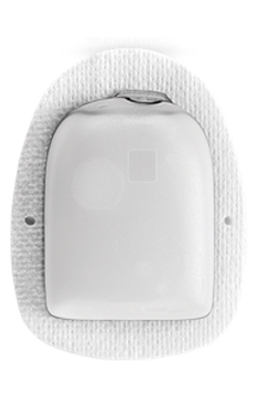
Insulet's Omnipod
The deal has been axed a few weeks after a federal judge in the US blocked EOFlow from selling its insulin patch pump in a lawsuit brought by Insulet, which sells a rival product.
The lawsuit, filed in August, claims that EOFlow’s product is very similar to Insulet’s Omnipod pump and infringes three US patents on the device. It also alleges that EOFlow was originally developing an alternative device, but changed direction after stealing Omnipod trade secrets.
Wearable patch pumps are smaller and more discreet than conventional insulin pumps, which tend to be bulky and worn on a belt or carried. Insulet’s Omnipod was seen as a revolutionary new product when it reached the market a few years ago and has grown rapidly into a blockbuster, with sales topping $1.1 billion in the first nine months of this year.
That has left Medtronic and others in the insulin pump market scrambling to catch up, and the deal with EOFlow was the company’s solution to bridging the gap, with analysts suggesting that Medtronic’s marketing muscle could spell trouble for Insulet.
At the time the deal was first announced, Medtronic said it was “excited to introduce a differentiated wearable patch option to provide more patient choice and drive further innovation for those who want to use technology to make living with diabetes easier.” Now, the company will have to look elsewhere for a technology that can rival Insulet’s product.
EOPatch is already authorised for sale in Europe and other markets, including South Korea, Indonesia, and the United Arab Emirates (UAE), but earlier this year Insulet also claimed a court victory against EOFlow – which included an injunction on sales – in Germany. The company has not commented on the outcome of the lawsuits or Medtronic’s decision to abandon its takeover.