Agrivalle, a leading Brazilian agricultural biologicals company, today announced a new partnership with Ginkgo Bioworks (NYSE: DNA), which is building the leading platform for cell programming and biosecurity. Together, the companies will collaborate on building cutting edge technologies to advance Agrivalle's biological products, including next-gen fertilizers and biocontrol agents.
Ginkgo is bringing its suite of advanced biology tools to the partnership with Agrivalle. Ginkgo will leverage itsStrain Optimization Servicesto improve the efficacy of Agrivalle's biocontrol products. In planned future projects, Ginkgo intends to work with Agrivalle to discover and optimize plant-compatible microbes that can provide crop nutrition, and to engineer organisms that can make compounds to specifically target certain pests. This, in turn, could help Agrivalle enhance the breadth and efficacy of their novel biological products and enable them to sell and license products to major players in agriculture across the globe.
Median duration of response, progression free survival, and overall survival rate not reached with median follow-up after CART-ddBCMA (anito-cel) infusion of 26.5 months –
-- The estimated median progression free survival by Kaplan-Meier is 28 months --
-- Oral presentation at ASH will be on Monday, December 11, 2023 at 5 p.m. PT --
-- Company to host a live webcast event with an expert panel of clinicians on Monday, December 11 at 8 p.m. --
Arcellx will host a live webcast event with an expert panel of clinicians to discuss the clinical results on Monday, December 11, 2023 at 8 p.m. PT. The event will be accessible from Arcellx's website at www.arcellx.com in the Investors section. A replay of the webcast will be archived and available for 30 days following the event.
In 1988, I was a third-year anesthesia resident on a casual weekend bike ride with my fiancé and two friends, on the scenic Maryland back roads. The next thing I remember is waking up in the recovery room after a head-on car collision, a helicopter ride to Shock Trauma, and emergency surgery for a ruptured spleen with internal hemorrhage.
Three things saved my life that day: my helmet, which cracked when my head hit the pavement; a series of blood transfusions; and the skilled medical teams providing first class trauma care. By my calculations, I lost 10 units of blood that day, or essentially all the blood in my body (about 5 liters or just over a gallon), so I am no doubt lucky to have survived the accident. My story was one of three patient stories included in a 2020 Report to Congressopens in a new tab or window on the importance of the national blood supply, at a time when we were facing the worst blood shortage in over a decade.
Fast forward 35 years later, and I now direct the comprehensive patient blood management program for the Johns Hopkins Health System, where we like to say that "blood saves lives when you need it, but only increases risks and costs when you don't." Since 2008, there has been a 33% dropopens in a new tab or window in blood use across the U.S., where we've gone from approximately 15 million to 10 million units a year transfused.
Why is this happening, and if blood saves lives, why are we giving so much less of it? About 10 years ago, the Joint Commission named blood transfusion as one of the top 5opens in a new tab or window overused medical procedures, right up there with antibiotics for the common cold. This is mostly based on what are now 14 landmark randomized trialsopens in a new tab or window published in top journals like NEJM and JAMA, which all show that "less is more" for transfusion, and that giving extra blood to patients results in either the same outcome (in 10 studies) or a worse outcome (in four studies).
At Johns Hopkins, since our patient blood management efforts began in 2012, we launched two distinct programs running side by side synergistically. The first program aims to reduce avoidable transfusions for the roughly 99% of patients who accept blood, while the second program provides optimal care for the remaining 1% of patients who wish to avoid transfusion for personal or religious reasons, the vast majority of whom are Jehovah's Witnesses. These "bloodless patients" are incredibly grateful when we honor their wishes and treat them with respect when they ask to avoid transfusions.
In fact, we owe them tremendous gratitude for teaching us lessons on "doing more with less," since what is good for them is good for all patients. For example, treating preoperative anemia with $4 worth of iron tablets to avoid using $400 worth of blood just makes sense. Wouldn't you rather come to surgery with your own red blood cells, rather than needing a transfusion with someone else's?
"Keeping the blood in the patient" is the other major concept behind patient blood management. Simple things can reduce bleedingopens in a new tab or window, such as keeping patients warm during surgery; lowering the blood pressure (controlled hypotension); tranexamic acid (an inexpensive medication that reduces bleeding by about 30%opens in a new tab or window); Cell Savers to return surgical blood loss to the patient; and using smaller phlebotomy tubes to send lab tests. All of these strategies can be bundled together to achieve this goal.
After a decade of experience, we crunched the numbers to assess our return on investment (ROI) with our comprehensive patient blood management program, while also looking at patient outcomes. The bottom line was a 7.5-fold ROIopens in a new tab or window, meaning that for every dollar spent on patient blood management, over $7 were either saved or generated in return. This calculation is based on a $3 million annual reduction in blood acquisition cost, along with a $5 million annual net margin on revenue generated by caring for patients under the Center for Bloodless Medicine and Surgery.
At the same time, clinical outcomes were either the same or better while giving less blood. Heart attack, stroke, thrombotic events, and respiratory and kidney problems were unchanged, while the incidence of hospital-acquired infection decreased. This latter finding is very believable based on high-level evidenceopens in a new tab or window (meta-analysis of 18 randomized trials) that transfusions predispose patients to infections. Furthermore, by avoiding transfusions for those who do not need them, we make more blood available for those who really do -- like trauma victims and cancer patients.
Return on investment and clinical outcomes with a comprehensive patient blood management program.
Given the ongoing blood shortages that we are facing, which has been called a "crisisopens in a new tab or window" in the blood industry, patient blood management looks like a giant step towards the triple aim in medicine: improving the patient experience, clinical outcomes, and cost. In this era of healthcare moving from volume to value, patient blood management is another classic example of how "less can be more."
Steven Frank, MD,opens in a new tab or window is a professor of anesthesiology and critical care medicine at the Johns Hopkins University School of Medicine in Baltimore. He is also director of the Johns Hopkins Health System Blood Management Program and director of the Center for Bloodless Medicine and Surgery.
Disclosures
Frank serves on a scientific advisory board for Haemonetics, a company involved with patient blood management.
Countries clashed on Saturday over a possible agreement to phase-out fossil fuels at the COP28 summit in Dubai, jeopardising attempts to deliver a first-ever commitment to eventually end the use of oil and gas in 30 years of global warming talks.
Saudi Arabia and Russia were among several countries insisting that the conference in Dubai focus only on reducing climate pollution - and not on targeting the fossil fuels causing it, according to observers in the negotiations.
On the other side, at least 80 countries including the United States, the European Union and many poor, climate-vulnerable nations are demanding that a COP28 deal call clearly for an eventual end to fossil fuel use.
COP28 President Sultan al-Jaber told nations late on Saturday to speed up their work to find a final deal, saying there were "still more areas of divergence than agreement".
"The window is closing to close the gaps," he told the summit.
OPEC Secretary General Haitham Al Ghais earlier said in comments read out to the summit delegates by an official: "We need realistic approaches to tackle emissions. One that enables economic growth, helps eradicate poverty and increases resilience at the same time."
Earlier this week, the oil producer group sent a letter urging its members and allies to reject any mention of fossil fuels in the final summit deal, warning that "undue and disproportionate pressure against fossil fuels may reach a tipping point".
It was the first time OPEC's Secretariat has intervened in the U.N. climate talks with such a letter, according to Alden Meyer of the E3G climate change think tank. "It indicates a whiff of panic," he said.
European Union officials reached a landmark deal Friday on regulating artificial intelligence rules aroundartificial intelligence (AI)in systems like ChatGPT and facial recognition.
The proposals lay the groundwork for the Artificial Intelligence Act, which will be voted on by the European Parliament and Council next year and will come into effect in 2025.
The legislation, if passed, would be the world's first comprehensive rules to regulate the use of artificial intelligence, paving the way for legal oversight of AI technology.
Businessman touching the brain working of Artificial Intelligence (AI) Automation, Predictive analytics, Customer service AI-powered chatbot, analyze customer data, business and technology (Shutthiphong Chandaeng/iStock / iStock)
"Deal!" European Commissioner for Internal Market Thierry Breton posted on X just before midnight Friday.
"The EU becomes the very first continent to set clear rules for the use of AI."
The law would ban applications that use cognitive behavioral manipulations as well as systems that use facial images from the internet or CCTV footage in order to create facial recognition databases.
Other banned systems would include those that use social scoring biometric categorization systems to infer political, religious, philosophical beliefs, sexual orientation and race.
The law would also limit the use of biometric identification systems used by law enforcement, a key sticking point that resulted in negotiations pausing on Thursday as some member states had advocated for its use. However, there are exemptions for targeted searches of victims in abduction, trafficking and sexual exploitation cases, as well as preventing specific and present terrorist threats.
European Commissioner for Internal Market, Thierry Breton, speaks during a news conference in San Francisco, California, on June 22, 2023. Breton welcomed the deal on social media. (JOSH EDELSON/AFP via Getty Images / Getty Images)
Consumers would have the right to launch complaints, while fines for violations would range from $8.1 million or 1.5% of turnover to $37.7 million euros or 7% of global turnover.
The European Union has been pushing to draw up guardrails for artificial intelligence for years, and with the recent advances in chatbots such as ChatGPT, the efforts have taken on more urgency.
Generative AI systems like OpenAI’s ChatGPT have exploded into the world’s consciousness, dazzling users with the ability to produce human-like text, photos and songs but raising fears about the risks the rapidly developing technology poses to jobs, privacy and copyright protection and even human life itself.
The accord requires foundation models such as ChatGPT and general purpose AI systems (GPAI) to comply with transparency obligations before they are put on the market. These include drawing up technical documentation, complying with EU copyright law and disseminating detailed summaries about the content used for training.
Screens displaying the logos of OpenAI and ChatGPT. ChatGPT is a conversational artificial intelligence software application developed by OpenAI. (LIONEL BONAVENTURE/AFP via Getty Images / Getty Images)
Brando Benifei, an Italian lawmaker co-leading the body’s negotiating efforts, welcomed the deal.
"It was long and intense, but the effort was worth it," Benifei said.
"Thanks to the European Parliament’s resilience, the world’s first horizontal legislation on artificial intelligence will keep the European promise, ensuring that rights and freedoms are at the center of the development of this ground-breaking technology. Correct implementation will be key. The Parliament will continue to keep a close eye, to ensure support for new business ideas with sandboxes, and effective rules for the most powerful models."
Dragos Tudorachem, a Romanian lawmaker involved in the negotiations, said the rules will safeguard citizens and E.U. democracies against any abuses of technology by public authorities.
"It protects our SMEs (small and midsize enterprises), strengthens our capacity to innovate and lead in the field of AI and protects vulnerable sectors of our economy," Tudorachem said.
"The European Union has made impressive contributions to the world; the AI Act is another one that will significantly impact our digital future."
Nine Customs and Border Patrol agents told Congressional investigators that the lack of consequences for crossing the U.S. border illegally is to blame for the historic surge of illegal immigrants pouring into the United States, according to transcript excerpts obtained by The Epoch Times.
Investigators on the House Homeland Security and Oversight Committees conducted the interviews earlier this year, over the course of five months. The Customs and Border Patrol (CBP) interviewees included nine supervisory and line agents assigned to duty at key border stations from California to Texas.
While both Democrat and Republican staffers took part in the questioning, the excerpts provided to The Epoch Times were selected by the Republicans. The Epoch Times has requested the full transcripts of the interviews. Committee Democrats did not respond to a request for comment.
"We wanted to interview these agents due to their deep expertise as Border Patrol agents and the experience their senior positions afforded them to speak about operations in their sectors," a Republican committee spokesman told The Epoch Times.
The agents were not questioned under oath and appeared voluntarily after being reminded that it is illegal to provide false information to Congress.
At the heart of the issues described in the interviews is President Joe Biden's reversal of immigration policies instituted by his predecessor, President Donald Trump. Republicans credit President Trump's policies for reducing the flow of illegal immigrants.
One of the Trump policies was a requirement for people seeking to enter the United States to remain in Mexico, pending resolution of their cases. Another policy required strictly enforcing anti-drug and other criminal statutes against illegal immigrants. The Trump administration also began, and made significant progress on, building a border wall, and induced Mexico to use its law enforcement and military resources to block migrant caravans at that country's southern border with Belize and Guatemala.
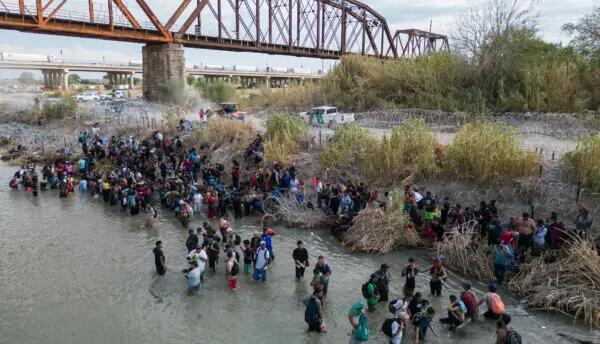
Migrants wait in the Rio Grande for an opening in the razor wire barrier, to cross into the United States, in Eagle Pass, Texas, on Sept. 25, 2023. (Andrew Caballero-Reynolds/AFP via Getty Images)
In a July 26 interview, Tucson Sector Patrol Chief John Modlin told investigators that after Mr. Biden took office, his Arizona border station experienced an unprecedented increase in illegal immigrants during the hottest months of the year, a time when the flow of such crossings would normally be at its lowest levels.
"[In] Tucson, because of the incredible amount of heat out there, the summer months tend to be very low. What’s happening now is unheard of, you know. I looked at 10 years of data to what the summer months should be, and, you know, so where we’re at now in July, you know, should be about—we should have about 17,000 apprehensions in July, you know, given 10 years of data aggregated. Instead, we’re at 26,000. So this time of year, the most dangerous time of year, is seeing one of the most significant flows that we’ve seen," Mr. Modlin said, according to the transcript.
When asked, "Is it frustrating for you as the leader of the Tucson Sector when the encounters have kept increasing over a lengthy period of time?" Mr. Modlin replied by describing staggering increases in the number of illegal immigrants coming into the United States at his station.
"Yes, absolutely. I think, when I look at 2018, 2019, and 2020, those years were about 60,000 people a year, more or less, within a thousand or two in either direction. And then 2021 happened ... and it jumped to 190,000. So it was three times the previous year, which was absolutely—for us—shocking in Tucson," he said.
Advertisement - Story continues below
But then came 2022, and even more illegal immigrants came through his station, Mr. Modlin explained.
"And then, thinking it couldn’t go higher, it then went to 250,000 last year, and that did not include the 55,000 that we took from Yuma to help them out and the 170,000 "got-a-ways" recorded last year in that as well. And this year we’re on pace to probably hit 300,000. So if that’s the case, then we’ll be five times what we did just in 2020. So that is significant," he continued.
Unprecedented Border Crossing Numbers
But the pre-COVID surges pale by comparison, he said, noting that temporary increases in border crossings were "certainly not unprecedented" but "the volume that we’re seeing recently, in my opinion, in my career when I’ve seen is what I would consider unprecedented."
Agents interviewed all but universally agreed that the lack of negative consequences for illegally entering the United States is a major—if not the major—factor causing the swelling flood of crossings today.
Asked why returning illegal crossers to the Mexican side of the border or to their country of origin is important, Chief Patrol Agent Aaron Heitke of the San Diego Sector said in a May 9 interview that doing so is essential to stopping the current torrent.
"There needs to be a consequence to the illegal activity, otherwise it won’t stop. And when you look at a population that’s coming, the only real consequence that we have is to send them back to their home country," Mr. Heitke said.
The United States doesn't have "enough detention [capacity] in our country to detain everybody. And even if there was, it would be short-term. Many of these folks come and have traveled for six months or a year to get here. A day or two in detention is not a penalty to them. They're more willing to do that. Fines, obviously, are not going to be effective when the individuals have everything they own with them," he continued.
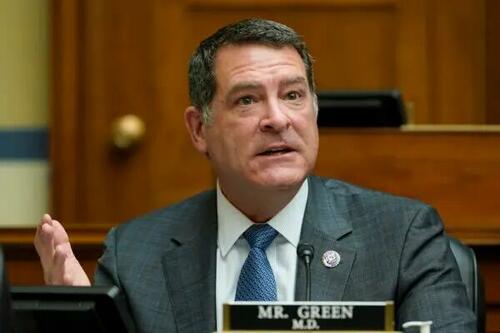
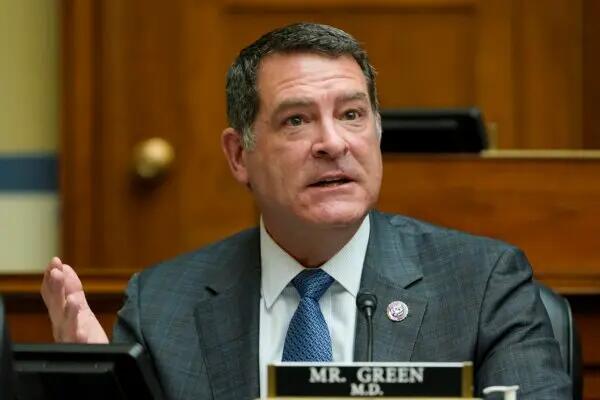
Rep. Mark Green (R-Tenn.) speaks during a House Select Subcommittee on the Coronavirus Crisis hearing in the Rayburn House Office Building on Capitol Hill in Washington on May 19, 2021. (Susan Walsh/Pool/Getty Images)
For that reason, the San Diego Sector Chief Patrol Agent said, "The only real consequence we have is to send them back to their home country. And if somebody has traveled from wherever for an entire year and you fly them all the way back to their country, it’s a significant penalty."
Another Chief Patrol Agent, Jason Owens of the Del Rio (Texas) Sector, was asked in a May 5 interview whether "the likelihood of release into the United States after a short stay in custody would incentivize someone to try to illegally cross into the United States?" Mr. Owens replied, saying "So, what I will tell you is this: I think that if there is no consequence for an action, there’s no deterrence for a person to not commit that action."
Homeland Security Chairman Rep. Mark Green (R-Tenn.) told The Epoch Times that "these chief patrol agents’ testimonies make it clear consequences are essential to deterring illegal immigration, and when those disincentives are absent, historic numbers of people will enter our country unlawfully. That is exactly what has taken place at America’s borders for almost three years."
While President Biden is the ultimate policymaker for his administration, Mr. Green points to Department of Homeland Security (DHS) Secretary Alejandro Mayorkas as most immediately accountable for the consequences of the policies.
“Under this secretary, illegal aliens know that after crossing the border, they will likely be released into the interior of the country to await their court date. Further, even if they fail to appear for their hearing, there is little to no risk of pursuit, detention, and removal due to Secretary Mayorkas’ restrictive policies limiting DHS's ability to do its job. It should serve as no surprise to anyone that CBP has recorded more than 7.8 million encounters since February 2021, including more than 6.5 million at the Southwest border alone," Mr. Green said.
“The importance of consequences is basic common sense and a foundational aspect of law enforcement. Secretary Mayorkas either doesn’t understand this reality, or he simply does not care. Either way, he is no longer fit for the office he holds and must be swiftly and decisively held accountable for his dereliction of duty,” the Tennessee Republican added.
Impeachment
On Nov. 13, the House of Representatives referred the proposed Articles of Impeachment against Mr. Mayorkas to Mr. Green's committee. The committee spokesman told The Epoch Times that "the committee will take up those articles, and we look forward to the opportunity to educate even more Americans about how the secretary has intentionally and willfully opened America’s borders through his reckless decision-making and legally dubious actions. Congress should also take a serious look at using our power of the purse to compel Secretary Mayorkas and his lieutenants to enforce the law."
A spokesman for Mr. Mayorkas, who asked not to be named, provided a detailed response to Mr. Green, saying the "CBP is prioritizing smart border security solutions, making historic investments in technology, taking the fight to cartels and smugglers, and doing more with our regional partners than ever before."
The spokesman insisted that "individuals encountered at the border are screened and vetted, and those without a legal basis to stay are processed for removal. Consequences include a minimum five-year bar on re-entry, loss of eligibility to access lawful pathways, and prosecution for repeat offenders."
Individuals who are "provisionally released from CBP are screened and vetted, remain in immigration removal proceedings, and have strict reporting requirements," the spokesman added. "Since the end of the [COVID] public health emergency on May 12, DHS has executed a comprehensive strategy that has led to record levels of removals under Title 8 authorities of individuals encountered at the border."
The Biden administration has asked Congress to authorize hiring an additional 1,600 Asylum Officers and their support staff, as well as additional detention beds and more funding for deportation flights. The administration is also asking Congress to approve hiring 1,470 additional immigration lawyers and support staff.
The Egypt–Israel peace treaty which was the result of the historic Camp David Accords of 1978 has for decades since been considered the cornerstone ensuring regional peace and stability of Arab relations with Israel.
But even such treaties with large state actors (also Jordan) are increasingly under threat due to Oct.7 and the ongoing Gaza War, as Egypt has reportedly warned the US and Israel that if the floodgates break on Palestinian refugees pouring into its country, "a rupture" in relations between Egypt and Israel would likely result.
A scenario wherein a huge amount of Gazan refugees flee into Sinai would be seen as a serious threat to Egypt's national security, Axios reports.
"The close relations between Egypt and Israel, especially between the military and intelligence services, have been critically important at several points in the war, including around the release of hostages," the report underscores.
There have long been accusations and media reports saying that Israel's military is seeking to push Gazans en masse into Sinai and that among strategy 'options' would be the establishment of tent cities for Palestinians in the Sinai desert.
"An Israeli government ministry has drafted a wartime proposal to transfer the Gaza Strip’s 2.3 million people to Egypt’s Sinai peninsula, drawing condemnation from the Palestinians and worsening tensions with Cairo," The Associated Press had learned in late October.
Netanyahu's office had confirmed that it was a real discussion, but among many potential paths:
Prime Minister Benjamin Netanyahu’s office played down the report compiled by the Intelligence Ministry as a hypothetical exercise — a "concept paper." But its conclusions deepened long-standing Egyptian fears that Israel wants to make Gaza into Egypt’s problem, and revived for Palestinians memories of their greatest trauma — the uprooting of hundreds of thousands of people who fled or were forced from their homes during the fighting surrounding Israel’s creation in 1948.
A number of human rights organizations and activists have condemned this scenario as a form of ethnic cleansing, given it would likely result in permanent removal of these populations from the land. The thinking is that massive groups of Palestinians being pushed into Sinai would not ever be allowed to return by the Israeli security apparatus.
Already the United Nations' refugee office has estimated that some 85% of the Gaza Strip's population has been displaced by the IDF ground operation and aerial bombardment. This is nearly 1.9 million people. Many of these have fled to Rafah, which is the main city and crossing which sits on the border with Egypt.
Egyptian Foreign Minister Sameh Shoukry on Thursday issued a rare preemptive condemnation concerning Israeli war plans. He told the Aspen Security forum in Washington, DC that it would be "inappropriate and in contradiction of international law" if Palestinian civilians were displaced to Egypt.