Search This Blog

Monday, January 22, 2024

As China Stocks Crash, Beijing Proposes Multi-Trillion Market Rescue Package

 Earlier today, we lamented the latest implosion in Chinese markets, which we discussed in "China Stocks Crash Through 'Snowball Derivatives' Trigger Levels Overnight", in which we pointed out the unprecedented failure of the centrally-planned market to halt its collapse be it through short selling bans, or even the latest impotent intervention by the "National Team", China's Plunge Protection Team, which today failed to spark even a modest rebound in the relentless selling which had triggered key liquidation levels.
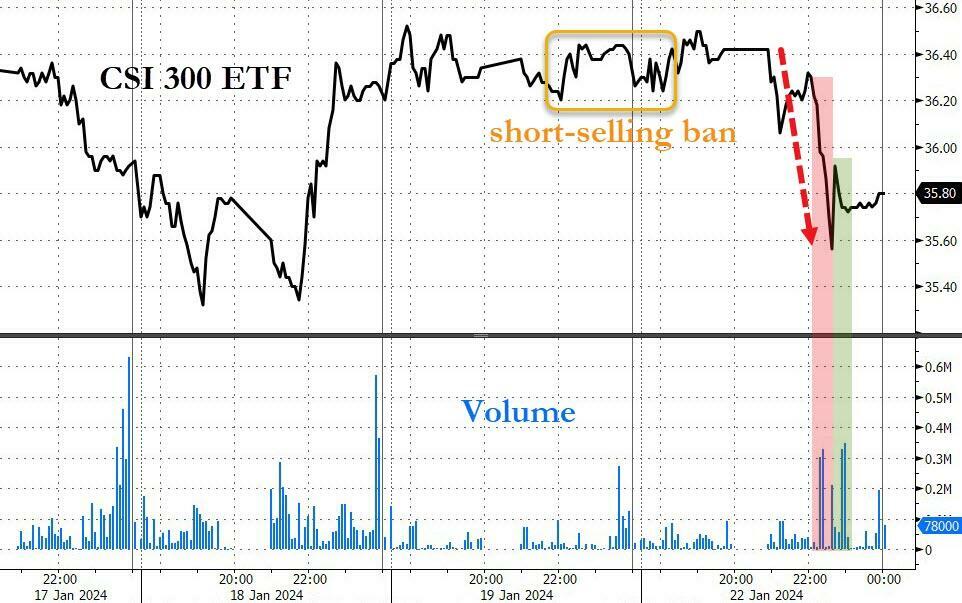
We then summarized just how badly Beijing had boxed itself, noting that "after short selling ban did nothing, China PPT stepped in... and couldn't do jack. Beijing trapped." We concluded that "either they watch liquidation cascade as snowball derivatives are knocked in sparking rout and leading to social unrest, or they stop talking and finally do something."


Well, just a few hours later we were proven correct again, because shortly after China reopened on Tuesday, Bloomberg reported that according to "people familiar with the matter, asking not to be identified" - i.e., government sources eager to do a market test, China is considering a package of measures to stabilize the plummeting stock market, after earlier attempts to restore investor confidence fell short and prompted Premier Li Qiang to call for “forceful” steps.

Specifically, Beijing is reportedly seeking to "mobilize" about 2 trillion yuan ($278 billion), mainly from the offshore accounts of Chinese state-owned enterprises, as part of a stabilization fund to buy shares onshore through the Hong Kong exchange link; it has also earmarked at least 300 billion yuan of local funds to invest in onshore shares through China Securities Finance Corp. or Central Huijin Investment Ltd.

In other words, what was already a nationalized stock market is about to get even more nationalized, and instead of ad hoc interventions by the Plunge Protection Team, such market purchases by official state authorities will now become institutionalized.

Or maybe not: after all, China isn't actually doing anythjing. Yes, it is mulling stuff, just like it has been mulling a 1 trillion yuan fiscal stimulus and a 1 trillion yuan "special "bond stimulus. but nothing has actually happened yet, because Beijing is absolutely terrified of the market reaction if and when the country with the 300% debt/GDP stats layering on more trillions in debt. Alas, at this point that's just a matter of time, because either Beijing keeps mulling stuff and does nothing as it watches it cities burn amid the recent surge in strikes and protests...
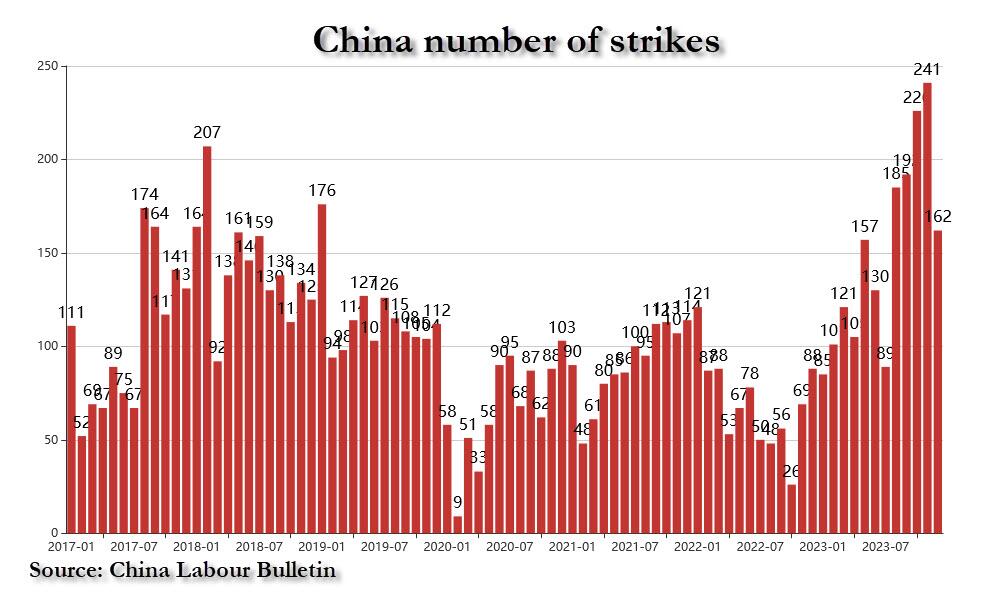
... or it goes back to what it has been doing for the past 25 years, and floods the economy with new debt to boost contain the property crash, stabilize the economy and normalize the soaring youth unemployment. And since it really has no choice, it will be the latter... the only question is how much pain will Beijing suffer first before it capitulates.

Anyway, going back to the official Bloomberg report, it notes that "officials are also weighing other options and may announce some of them as soon as this week if approved by the top leadership", but again, "the plans are still subject to change." And they will, because either stocks soar and don't drop, thereby obviating the need for an actual rescue package, or they resume their plunge and China will be forced to do even more when it actually does something in the very near future.

In any case, the report of panicked deliberations underscores that just as we predicted earlier today, there is an "elevated level sense of urgency" among Chinese authorities to stem a selloff that sent the benchmark CSI 300 Index to a five-year low this week. Calming the nation’s retail investors - many of whom have also been bruised by the protracted property downturn - is also seen as key to maintaining social stability. And if there is anything Beijing fears more than anything in this world, it is 1 billion angry lower and middle-class Chinese heading toward Beijing, armed with torches and pitchforks.

Which brings us to the next question: as even Bloomberg admits, it is unclear is these measure will be enough to end the rout is far from certain. We can help Bloomberg: it won't be anywhere near enough, and indeed, after a modest bounce in the Shanghai Composite which pushed it in the red on the Bloomberg report, the index has once again slumped in the red, just as we said it would.
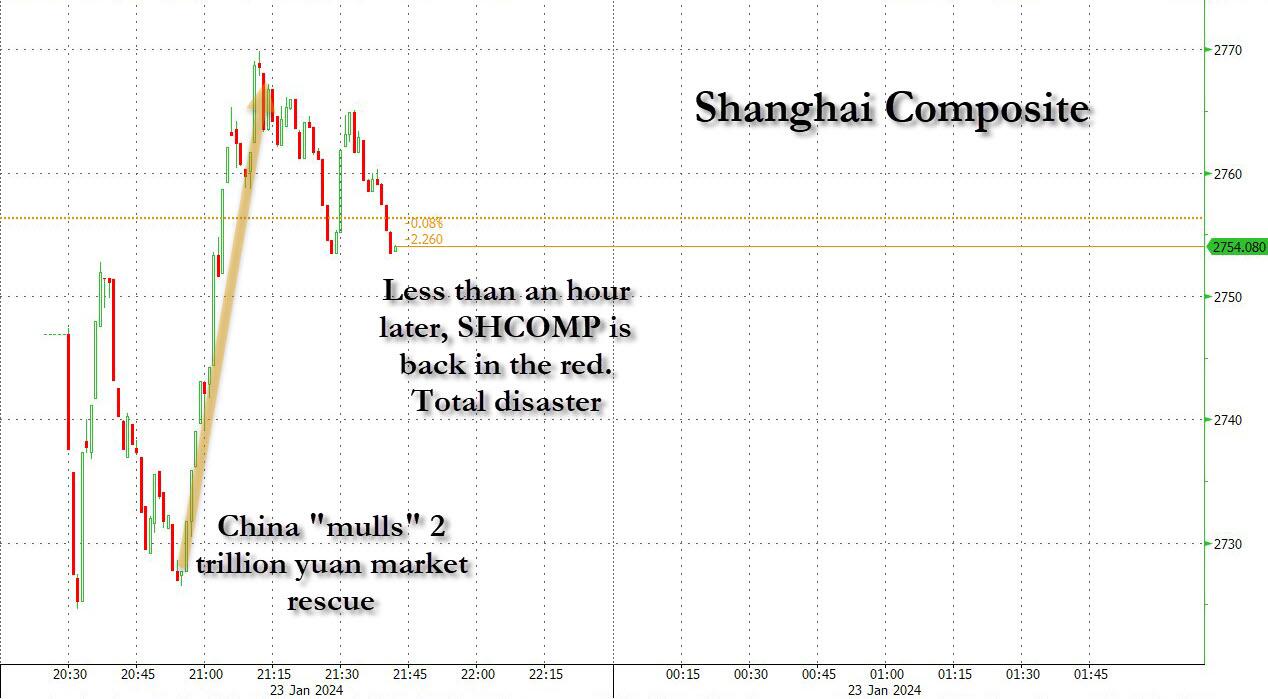
We weren't the only ones to unleash a gusher of cynicism in response to the news: others agreed as well that this is a disaster..

Daisy Li, fund manager at EFG Asset Management HK.

“The biggest question I have is how the SOEs will come up with 2 trillion yuan from their offshore accounts and why they will choose to invest onshore through the Hong Kong exchange link. We are in need of a white knight to boost some confidence, given how bad things have been."

Aninda Mitra, a macro and investment strategist at BNY Mellon

“The stock market package is a welcome measure, and shows some responsiveness from the authorities. But at under 2% of its GDP, we fear this is still inadequate. This amount falls short of even the reduction in the market cap, from early December to now, of Chinese enterprises listed in the Hong Kong stock exchange. These measures also need to be twinned with longer-term reforms to boost confidence in broader corporate sector.”

Michelle Lam, economist at SocGen’s HK Branch.

"Larger stimulus aimed at turning around the economy is needed for a sustained rally. What I think is critical for us to see a turnaround in market confidence is a step-up in PBoC’s PSL to support project completion and urban village redevelopment and a decisive increase in fiscal deficit which partly support household income."

Rajeev De Mello, macro portfolio manager at GAMA

"The boost to China’s markets from any rescue package will only lead to a short-term rebound as more fundamental changes are needed. Frequently, packages which target the stock market do have an effect but it can be very short-lived if not accompanied by more fundamental changes.Without more forceful economic and regulatory policy actions, it will not lead to the beginning of a bull market in China.

Alvin Tan, head of Asia FX strategy at RBC in Singapore

“I am doubtful that the rebound in Chinese equities on the back of this rescue package news is sustainable so long as the fundamental growth trajectory doesn’t change"

And now that the market has called Beijing's bluff in less than an hour, the panic will be truly palpable and instead of just focusing on the market, China will now be bombarded on all sides by a relentless collapse: the property crisis, depressed consumer sentiment, tumbling foreign investment and diminished confidence among local businesses after years of volatile policymaking are exerting strong downward pressure on both the economy and financial markets.

Which means China now has two options: pretend that the failed policies it has been doing (or pretending to do) so far has been successful, which it likely will until there is just too much blood on the streets, or it will finally capitulate and unleash the biggest fiscal stimulus ever seen in China: we are talking multiple trillions here, and in dollars not yuan, consequences be damned, because we are nearing the point of peak panic where Beijing will do anything at all to buy social order and stability for just a few more months. And once all those tens of trillions in Chinese deposits start fleeing, that's when the real meltup in non-fiat assets - read gold, silver, crypto, fine art, wines, etc - will truly start.

https://www.zerohedge.com/markets/china-stocks-crash-beijing-proposes-multi-trillion-market-rescue-package

Lawmakers Push Funding To Replace The Ultra-Expensive Weapons Used In Yemen

 Via The Libertarian Institute,

As the White House has started an open-ended and unauthorized war in Yemen, some members of Congress are pushing for legislation that would provide funding to replace the munitions dropped on the Middle East’s poorest nation. 

Politico reports, "As American warships burn through expensive missiles against Houthi targets in the Red Sea and Yemen, lawmakers, lobbyists, and the Navy are angling to use a multibillion-dollar national security supplemental to replenish the military’s inventory of munitions."

In November, the Houthis announced that Yemeni forces would target Israeli-linked shipping in the Red Sea until Tel Aviv ends its military campaign in Gaza. Two weeks ago, President Joe Biden, without consulting Congress, authorized strikes on the Houthis. 

In response, the Houthis began targeting American-linked shipping transiting the region. The White House is ordering attacks on Yemen nearly every day. However, the White House claims it is not at war with Yemen, and it does not need Congressional authorization for the operations. 

Biden’s war in Yemen could drag on for some time. US officials told the Washington Post the administration has "no end date" and "little exit strategy" for its military operations in Yemen. President Biden has admitted that the strikes are not deterring the Houthi attacks. 

Additionally, the US operations against Yemen are expensive. Washington has combated drone and missile attacks from Yemen on ships in the Red Sea by using expensive interceptors to down the inexpensive Houthi munitions. The White House has largely relied on ship-fired Tomahawks to hit targets in Yemen. Some lawmakers worry the operations against the Houthis will impact Wasington’s ability to dominate the globe. 

Senate Minority Leader Mitch McConnell (R-KY) said fighting in Yemen means Congress needs to add further spending for munitions to a supplemental military funding package. "As I’ve warned for weeks, using million-dollar missiles to defend against thousand-dollar drones strains an already insufficient inventory of long-range capabilities," he added. "The supplemental is our chance to expand our capacity to meet the national security challenges we face."

Sen. Mark Kelly (D-AZ) argued that additional missiles are needed to confront China. "We’re looking — one of the parts of the supplemental is to make sure we have the rounds we need, whether it’s [the Long Range Anti-Ship Missile] or possibly things like [the] Tomahawk that we have for the Western Pacific." He continues, "And that is a capability we would need if we ever got in a conflict with China."

Sen. Dan Sullivan (R-AK) said "a big plus up" in munitions funding is imperative for Tomahawks, Naval Strike Missiles, and Harpoons. He also explained that the weapons are needed for global dominance. "And those kinds of weapons systems are critical everywhereTaiwan in particular," the Senator said. 

Politico notes that Pentagon officials and lobbyists for arms makers are also pushing for increased funding for munitions production in a supplemental defense spending bill.

https://www.zerohedge.com/political/lawmakers-push-funding-replace-ultra-expensive-weapons-used-yemen

Sofosbuvir for Hepatitis C: Breakthrough Drug Whose Full Promise Remains Unrealized

 Prior to 2013, the backbone of hepatitis C virus (HCV) therapy was pegylated interferon (PEG) in combination with ribavirin (RBV). This year-long therapy was associated with significant side effects and abysmal cure rates. Although efficacy improved with the addition of first-generation protease inhibitors, cure rates remained suboptimal and treatment side effects continued to be significant.

Clinicians and patients needed better options and looked to the drug pipeline with hope. However, even among the most optimistic, the idea that HCV therapy could evolve into an all-oral option seemed a relative pipe dream.

The Sofosbuvir Revolution Begins

The Liver Meeting held in 2013 changed everything.

Several presentations featured compelling data with sofosbuvir, a new polymerase inhibitor that, when combined with RBV, offered an all-oral option to patients with genotypes 2 and 3, as well as improved efficacy for patients with genotypes 1, 4, 5, and 6 when it was combined with 12 weeks of PEG/RBV.

However, the glass ceiling of HCV care was truly shattered with the randomized COSMOS trial, a late-breaker abstract that revealed 12-week functional cure rates in patients receiving sofosbuvir in combination with the protease inhibitor simeprevir.

This phase 2a trial in treatment-naive and -experienced genotype 1 patients with and without cirrhosis showed that an all-oral option was not only viable for the most common strain of HCV but was also safe and efficacious, even in difficult-to-treat populations.

On December 6, 2013, the US Food and Drug Administration (FDA) approved sofosbuvir for the treatment of HCV, ushering in a new era of therapy.

Guidelines quickly changed to advocate for both expansive HCV screening and generous treatment. Yet, as this more permissive approach was being recommended, the high price tag and large anticipated volume of those seeking prescriptions were setting off alarms. The drug cost triggered extensive restrictions based on degree of fibrosis, sobriety, and provider type in an effort to prevent immediate healthcare expenditures.

Given its high cost, rules restricting a patient to only one course of sofosbuvir-based therapy also surfaced. Although treatment with first-generation protease inhibitors carried a hefty price of $161,813.49 per sustained virologic response (SVR), compared with $66,000-$100,000 for 12 weeks of all-oral therapy, its uptake was low and limited by side effects and comorbid conditions. All-oral treatment appeared to have few medical barriers, leading payers to find ways to slow utilization. These restrictions are now gradually being eliminated.

Because of high SVR rates and few contraindications to therapy, most patients who gained access to treatment achieved cure. This included patients who had previously not responded to treatment and prioritized those with more advanced disease.

This quickly led to a significant shift in the population in need of treatment. Prior to 2013, many patients with HCV had advanced disease and did not respond to prior treatment options. After uptake of all-oral therapy, individuals in need were typically treatment naive without advanced disease.

This shift also added new psychosocial dimensions, as many of the newly infected individuals were struggling with active substance abuse. HCV treatment providers needed to change, with increasing recruitment of advanced practice providers, primary care physicians, and addiction medication specialists.

Progress, but Far From Reaching Targets

Fast-forward to 2022.

Nearly 10 years after FDA approval, 13.2 million individuals infected with HCV have been treated globally, 82% with sofosbuvir-based regimens and most in lower-middle-income countries. This is absolutely cause for celebration, but not complacency.

In 2016, the World Health Assembly adopted a resolution of elimination of viral hepatitis by 2030. The World Health Organization (WHO) defined elimination of HCV as 90% reduction in new cases of infection, 90% diagnosis of those infected, 80% of eligible individuals treated, and 65% reduction of deaths by 2030.

Despite all the success thus far, the CDA Foundation estimates that the WHO elimination targets will not be achieved until after the year 2050. They also note that in 2020, over 50 million individuals were infected with HCV, of which only 20% were diagnosed and 1% annually treated.

The HCV care cascade, by which the patient journeys from screening to cure, is complicated, and a one-size-fits-all solution is not possible. Reflex testing (an automatic transition to HCV polymerase chain reaction [PCR] testing in the lab for those who are HCV antibody positive) has significantly improved diagnosis. However, communicating these results and linking a patient to curative therapy remain significant obstacles.

Models and real-life experience show that multiple strategies can be successful. They include leveraging the electronic medical record, simplified treatment algorithms, test-and-treat strategies (screening high-risk populations with a point-of-care test that allows treatment initiation at the same visit), and co-localizing HCV screening and treatment with addiction services and relinkage programs (finding those who are already diagnosed and linking them to treatment).

In addition, focusing on populations at high risk for HCV infection — such as people who inject drugs, men who have sex with men, and incarcerated individuals — allows for better resource utilization.

Though daunting, HCV elimination is not impossible. There are several examples of success, including in the countries of Georgia and Iceland. Although, comparatively, the United States remains behind the curve, the White House has asked Congress for $11 billion to fund HCV elimination domestically.

As we await action at the national level, clinicians are reminded that there are several things we can do in caring for patients with HCV:

  • A one-time HCV screening is recommended in all individuals aged 18 or older, including pregnant people with each pregnancy.

  • HCV antibody testing with reflex to PCR should be used as the screening test.

  • Pan-genotypic all-oral therapy is recommended for patients with HCV. Cure rates are greater than 95%, and there are few contraindications to treatment.

  • Most people are eligible for simplified treatment algorithms that allow minimal on-treatment monitoring.

Without increased screening and linkage to curative therapy, we will not meet the WHO goals for HCV elimination.

Nancy S. Reau, MD, is chief of the hepatology section at Rush University Medical Center in Chicago and a regular contributor to Medscape. She serves as editor of Clinical Liver Disease, a multimedia review journal, and recently as a member of HCVGuidelines.org, a web-based resource from the American Association for the Study of Liver Diseases (AASLD) and the Infectious Diseases Society of America, as well as educational chair of the AASLD hepatitis C special interest group. She continues to have an active role in the hepatology interest group of the World Gastroenterology Organisation and the American Liver Foundation at the regional and national levels.

https://www.medscape.com/viewarticle/999756

'No Compelling Evidence of Pancreatic Cancer Risk With GLP-1s'


TOPLINE:

New data provide no support for an increased risk for pancreatic cancer with use of a glucagon-like peptide-1 receptor agonist (GLP-1 RA) for up to 7 years, although longer-term data are needed, researchers said.

METHODOLOGY:

  • Some studies have raised concern about a possible increased risk for pancreatitis and pancreatic cancer in patients taking a GLP-1 RA. 
  • Investigators behind this population-based cohort study assessed the association of GLP-1 RA treatment with pancreatic cancer incidence over a median of 7 years in 543,595 adults (mean age, 59.9 years; 51% women) with type 2 diabetes
  • Treatment with basal insulin was used as an active comparator. 
  • The analyses accounted for major confounding factors and time-related biases and adjusted for treatment with other glucose-lowering medications and a history of pancreatitis. 

TAKEAWAY: 

  • During the study period, 33,377 patients (6.1%) used GLP-1 RAs and 106,849 (19.7%) used basal insulin, with 1665 of all patients diagnosed with pancreatic cancer. 
  • There was no evidence that GLP-1 RA use increased pancreatic cancer risk compared with basal insulin. 
  • The estimated hazard ratio (HR) for pancreatic cancer associated with incremental use of one defined daily dose per day of GLP-1 RA compared with basal insulin in years 5-7 was 0.50 (95% CI, 0.15-1.71). 
  • New-user and prevalent new-user analyses showed HRs from year 5 onward following initiation of a GLP-1 RA vs basal insulin was 0.52 (95% CI, 0.19-1.41) and 0.75 (95% CI, 0.37-1.53), respectively. 

IN PRACTICE: 

Using several analytical approaches, these findings do not suggest an increase in pancreatic cancer incidence over 7 years following the start of GLP-1 RA treatment, according to the investigation. "However, monitoring for pancreatic cancer risk beyond 7 years following initiation of treatment is still required," the authors wrote.

SOURCE:

The study, with first author Rachel Dankner, MD, MPH, Gertner Institute for Epidemiology and Health Policy Research, Sheba Medical Center, Israel, was published online on January 4, 2024, in JAMA Network Open

LIMITATIONS: 

Data on the exact type of GLP-1 RA were not available. The analyses accounted for history of pancreatitis but not alcohol use or exposure to pesticides/chemicals. Because of the risk for bias due to reverse causation, an emphasis was placed on drug effects several years after their initiation. However, this reduced the number of pancreatic cancer cases available and led to estimated HRs with wider CIs. 

DISCLOSURES: 

The study received no specific funding. The authors disclosed no relevant conflicts of interest.

https://www.medscape.com/viewarticle/no-compelling-evidence-pancreatic-cancer-risk-glp-1s-2024a10001l8

Trial data raises questions about Imfinzi in liver cancer

 AstraZeneca is trying to blaze a new trial for immunotherapy in liver cancer with its EMERALD-1 trial, but the jury is out on its prospects. 

The study of PD-L1 inhibitor Imfinzi (durvalumab) plus bevacizumab as an add-on therapy to transarterial chemoembolisation (TACE) hopes to move immunotherapy into earlier stages of hepatocellular carcinoma (HCC) from its well-entrenched role in metastatic disease.

EMERALD-1 hit its main endpoint by showing a statistically significant improvement with the main test regimen in the primary endpoint of progression-free survival (PFS) compared to TACE, a sponge-like device to block the hepatic artery and deliver chemo, which has been standard therapy for HCC for decades.

The study – presented at the American Society of Clinical Oncology Gastrointestinal Cancers Symposium – involved 616 patients with unresectable, loco-regional HCC, a disease that is known to pose a high risk of disease progression or recurrence within the first year of treatment.

Approximately 20%-30% of the 900,000 or so patients diagnosed each year with HCC, the most common type of liver cancer, are eligible for embolisation therapy.

Adding Imfinzi and bevacizumab to TACE resulted in a 23% reduction in PFS, with a median of 15 months for the test group compared to 8 months with TACE alone, while the time to progression (TTP) of disease was 22 months versus 10 months, respectively.

ASCO GU’s gastrointestinal commentator, Cathy Eng, of Vanderbilt-Ingram Cancer Centre in the US, said that the results “have the potential to establish a new standard of care for the treatment of unresectable hepatocellular carcinoma.”

Imfinzi plus TACE disappoints

The question comes in the performance of a second arm, comparing Imfinzi plus TACE to TACE alone, which was unable to show a statistically significant improvement on PFS with AZ’s drug. That raises the suggestion that much of the benefit from the triplet regimen might be due to bevacizumab, an off-patent VEGF inhibitor.

The implications of that are hard to gauge at the moment, but raise the possibility at least that regulators may want to see additional data proving that Imfinzi is adding something significant to the therapy before approval.

AZ’s head of oncology R&D, Susan Galbraith, has previously suggested that each constituent part of the regimen would have to show a benefit if a filing for accelerated approval was to proceed on the basis of PFS data alone.

The researchers, led by Riccardo Lencioni, from the Pisa University School of Medicine in Italy, are continuing to follow patients on the EMERALD-1 trial for the secondary endpoint of overall survival (OS) and are also studying different immune checkpoint inhibitors and embolisation-based approaches.

“We are discussing [this] positive EMERALD-1 data with global regulatory authorities while awaiting the final overall survival results from the trial,” commented Galbraith.

AZ has another iron in the fire for TACE-eligible HCC patients, namely the 725-subject EMERALD-3 study that is looking at Imfinzi, AZ’s CTLA4 inhibitor Imjudo (tremelimumab), Eisai’s multikinase inhibitor Lenvima (lenvatinib), and TACE in this setting. The first data from that trial is due next year.

Imfinzi is already approved by the FDA for use in combination with Imjudo for unresectable, advanced HCC.

https://pharmaphorum.com/news/trial-data-raises-questions-about-imfinzi-liver-cancer

Next stage in GSK’s Zantac defense gets underway today

 A hearing will get underway in Delaware later today in the latest phase of GSK’s attempts to defend itself from allegations that its Zantac drug caused cancer in patients.

The three-day hearing comes a few months after GSK decided to settle a complaint brought in California on similar grounds, rather than proceed with a jury trial, without admitting any liability. It said at the time that the decision to settle was taken to “avoid distraction related to protracted litigation” over the claimed link to cancer, which first hit the headlines in 2022.

The common claim in the lawsuits is that a contaminant in Zantac (ranitidine) called N-nitrosodimethylamine (NDMA) – as well as other ranitidine products – increased the risk of cancer.

Last May, Delaware judge Vivian Medinilla laid out a way forward to handle approximately 77,000 Zantac lawsuits filed in the state, including a process for identifying so-called ‘bellwether’ plaintiffs that can be used for a trial to determine whether Zantac products caused cancer.

Federal court Zantac lawsuits were dismissed after a hearing last year in a judgment that has gone to appeal, while in Canada the Supreme Court of British Columbia ruled that lawsuits against GSK and Sanofi lacked sufficient evidence of a link.

Zantac was originated by GSK and launched by the company in the early 1980s, which sold it as a prescription and over-the-counter (OTC) product for indications like heartburn and acid indigestion over the years, before selling off rights to other companies. Along with GSK, Pfizer, Boehringer Ingelheim, Sanofi, and Patheon are appearing as defendants at the hearing.

Ranitidine was also widely available in generic form from several manufacturers before the NDMA contamination was identified and the FDA banned sales in 2020. The link with cancer has been disputed by the FDA as well as other regulators, including the EMA in Europe.

The Delaware hearings are viewed as the greatest near-term chance that the class actions against ranitidine manufacturers will be revived, and whether GSK may consider additional settlements.

They will include testimony claiming that “testing by regulators, ranitidine manufacturers, and independent laboratories shows that one ranitidine 300 mg tablet can contain tens of thousands of nanograms (ng) of NDMA, greatly exceeding the FDA’s daily acceptable intake limit of 96 ng,” according to law firm Wisner Baum, which is representing plaintiffs in the litigation.

A recent update from analysts at Shore Capital argued that concerns about the Zantac litigation were weighing too heavily on the stock, pointing out that it is given that its stock is trading at around nine times earnings, well below the approximately 15 multiple seen with its peers.

The investment group said that the federal multi-district litigation (MDL) ruling in favour of GSK suggests the worst-case scenario of tens of billions of dollars in liability is unlikely to materialise.

https://pharmaphorum.com/news/next-stage-gsks-zantac-defense-gets-underway-today

Trump in Laconia NH, Jan 22 2024


https://www.youtube.com/watch?v=0fsiKiakFBU