Transcenta Holding Limited("Transcenta") (HKEX: 06628), a clinical stage biopharmaceutical company with fully-integrated capabilities in discovery, research, development and manufacturing of antibody-based therapeutics, andAgilent Technologies, announce a collaboration to develop a Claudin18.2 (CLDN18.2) companion diagnostic to support TranStar301 global Phase III pivotal trial of Osemitamab (TST001) in combination with Nivolumab and chemotherapy as first-line treatment in patients with CLDN18.2 expressing locally advanced or metastatic gastric or gastroesophageal (G/GEJ) adenocarcinoma.
Transcenta has developed a mouse anti-CLDN18.2 monoclonal antibody, clone 14G11 which specifically binds to CLDN18.2 but not CLDN18.1. This antibody, generated against a linear epitope located on the extracellular domain of loop 1, has a binding site that overlaps with the binding site of therapeutic antibody Osemitamab (TST001).
Transcenta has been collaborating with Agilent, a world leader in CDx development, to further develop this antibody for use in a companion diagnostic assay. Agilent is developing Claudin18.2 IHC 14G11 pharmDx, an immunohistochemistry (IHC) assay for the detection of CLDN18.2 protein in gastric and gastroesophageal junction (GEJ) adenocarcinoma with the potential for other indications. Agilent and Transcenta presented the early results of the Claudin18.2 IHC 14G11 pharmDx assay at AACR Annual Meeting. Claudin18.2 IHC 14G11 pharmDx for Investigational Use Only/for Performance Evaluation Only will be used for patient selection in the phase III trial of gastric/GEJ adenocarcinoma where applicable ethics committee and regulatory approvals have been granted.
Republican National Committee (RNC) co-chair Lara Trump said Sunday that election integrity is a top priority in the upcoming November election and the committee is focused on it “like a laser.”
During an interview with Fox News’ “Sunday Morning Futures” on April 7, Ms. Trump said that the committee will dedicate all of its resources to its Election Integrity Division “as needed.”
“When you talk about election integrity, it is vital. It is the number one thing that we are focused on, aside from getting out the vote, which, of course, Donald Trump himself will do for us,” Ms. Trump said.
“We are making sure that we leave nothing to chance because we have to understand the importance of this election,” she added.
Former President Donald Trump raked in a massive $50.5 million in funds for his reelection bid on Saturday. With this funding, Ms. Trump, the daughter-in-law of President Trump, said the RNC can now afford to ensure that poll workers are trained and lawyers are present in every voting precinct.
“Prior to last night, the largest single event fundraiser in politics ever was the one that Joe Biden had. And he needed three presidents to haul in $26 million,” she said, referring to President Biden’s fundraiser in March, which included former presidents Barrack Obama and Bill Clinton.
“We needed one man, Donald J. Trump, one president, to double that,” Ms. Trump added.
Ms. Trump said that the outcome of this fundraiser event reflects a shift where “people are not sitting on the sidelines anymore.”
“They understand what’s at stake. It’s a must-win election. And from the election integrity perspective, we’re focused on it like a laser at the RNC,” she added.
Under a joint-fundraising agreement, funds from the fundraiser event will go to the Trump campaign, the former president’s Save America PAC, the RNC, and state GOP parties.
RNC chair Michael Whatley, who was also present for the interview, said the committee will spend “every dollar” raised on two “critical core” missions: increasing voter turnout and protecting the ballot.
Mr. Whatley said that the RNC is working with state legislatures, boards of elections, and secretaries of state to ensure the implementation of the rules of the road.
The committee will file lawsuits if the rules are not adhered to, he said, adding that the RNC had filed over 80 lawsuits in 24 states “to make sure that we have the ground ready to go for safe elections.”
The committee has also been recruiting and training thousands of observers and attorneys “to make sure that we are in the room” when a vote is cast and counted, Mr. Whatley said.
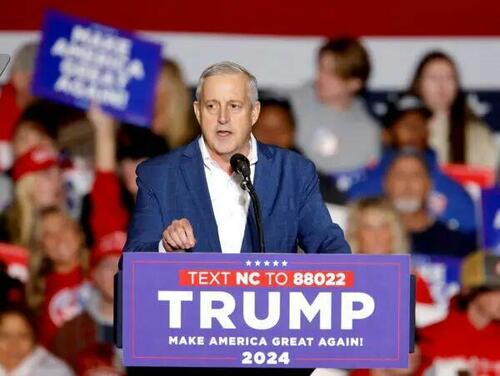
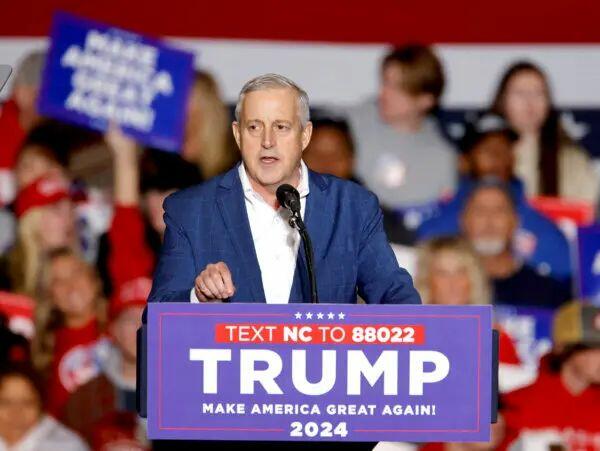
Michael Whatley, speaks before former President Donald Trump's arrival for a rally in Greensboro, N.C., on March 2, 2024. (Jonathan Drake/Reuters)
“What we want are fair, accurate, secure, and transparent elections. And when we have it, then we’re going to protect the sanctity of that ballot. We’re going to make it easy to vote and hard to cheat,” he added.
President Trump’s campaign’s fundraiser, dubbed the “Inaugural Leadership Dinner,” was held in hedge fund billionaire John Paulson’s $110 million home in Palm Beach, Florida, on Saturday.
Thie event is a much-needed boost for President Trump, who has been routinely outraised by President Biden amid a financial squeeze due to ballooning lawyer fees and legal payouts from his criminal and civil court cases.
Mr. Paulson told The Epoch Times on Saturday that the event has now claimed the position of being the most successful political fundraiser in U.S. history.
“This sold-out event has raised the most in a single political fundraiser in history. This overwhelming support demonstrates the enthusiasm for President Trump and his policies,” he remarked.
Melanie Sun, Janice Hisle, and Reuter contributed to this report.
Google parent Alphabet's contemplated acquisition of marketing software company HubSpot would likely spark opposition from regulators even as many experts agree it would not curb competition, and would require the technology giant to open a new front in its battle with antitrust watchdogs.
Reuters reported last week that Google was mulling an offer for HubSpot, which has a market value of $34 billion. Google has been weighing the antitrust risks of a potential deal and has yet to decide if it will make an offer.
Nearly a dozen antitrust experts and industry analysts said in interviews and analyst notes that it was unlikely that an acquisition by Google would hamper competition.
They said this is because the so-called customer relationship management (CRM) software sector in which HubSpot operates is already served by several major players, including Salesforce, Adobe, Microsoft and Oracle. Google does not compete in CRM, and the acquisition could make HubSpot a more formidable player thanks to Google's cloud-computing resources, improving offerings and prices for customers, they added.
According to technology researcher Gartner, HubSpot, which focuses on smaller customers, had a 4.9% market share in 2022 in the CRM marketing software industry, while Salesforce and Adobe each held a 15% share.
Yet these experts also said it is very likely that a Google deal for HubSpot would trigger challenges from U.S. and European antitrust regulators, given their growing aversion to technology giants getting bigger through acquisitions.
They added that Google would have to be willing to argue for the merits of the deal in a long court battle, and would need to convince HubSpot to do the same.
"My initial reaction is such a deal would face a pretty tough reception from the antitrust regulators," said Seth Bloom, a former general counsel of the U.S. Senate antitrust subcommittee who now runs his own advisory firm.
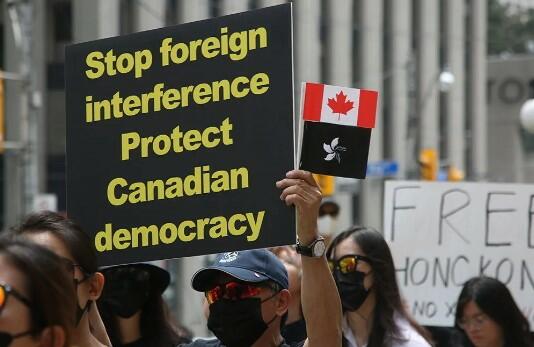
A new document given to Canada's Foreign Interference Commission suggests that Chinese officials may have offered $250,000 to "threat actors" in 2018 and 2019, according to anew report from The Globe and Mail.
The Canadian Security Intelligence Service document on election interference said that prior to and during the 2019 election “a group of known and suspected People’s Republic of China related threat actors in Canada, including PRC officials, worked in loose coordination with one another to covertly advance PRC interests though Canadian democratic institutions.”
“Some of these threat actors received financial support from the PRC,”and says “reporting indicated that 11 political candidates and 13 political staff members were assessed to be either implicated in or impacted by this group of threat actors," the document says.
The report suggests the $250,000 from Chinese officials in Canada was likely for foreign interference rather than political donations.
It describes the complex routing of these funds through various individuals to mask their origin, eventually reaching a staff member of a 2019 federal election candidate and an Ontario MPP, via an influential community leader, the Mail wrote.
According to the document, the implicated candidates include seven Liberals and four Conservatives, with some knowingly participating in foreign interference activities, while others were oblivious due to the secretive nature of the operations.
The federal government initiated the Foreign Interference Commission inquiry in September, led by Justice Marie-Josée Hogue, in response to reports by The Globe and Mail on Chinese interference in Canadian democracy.
The inquiry, which took place on Thursday, featured testimonies from senior officials of CSIS, the RCMP, the Department of Global Affairs, and the Communications Security Establishment (CSE), Canada's electronic intelligence agency.
Dan Rogers, a former CSE official and now the deputy national security adviser, revealed the CSE had intelligence post-2021 election about alleged fund distributions, which was shared with the RCMP and CSIS, though specifics weren't disclosed. RCMP Commissioner Michael Duheme stated that no criminal investigations into foreign interference were opened for the 2019 or 2021 elections, as no intelligence received warranted such actions.
However, an investigation into foreign interference was launched following the last general election when Conservative MP Michael Chong reported being targeted by China.
Too bad the Biden family doesn't do business in Canada - the PRC probably could have gotten influence a lot easier that way, though it may have cost a bit more due to the need to support Hunter's "lifestyle" and "social agenda".
Last week, central bankers, especially in the US, made a series of outbursts that somewhat blurred their rhetoric and sowed doubts in the minds of investors. The high level of inflation now seems (less) compatible with an immediate cut in interest rates, even if this remains the general trajectory. To put it plainly, there's no guarantee of a first rate cut in June.
The debate on inflation and the expected cut in key interest rates is still raging. The publication of an ISM manufacturing index for March, which was in expansionary territory for the first time in 16 months, set off a firestorm that has since been fanned by several of America's leading monetary authorities. Even those classified as more doves than hawks seem more wary of future rate cuts. Thus, before the release of the employment report last Friday, the odds of a rate cut in June had fallen to 60% from over 75% just two weeks ago.
And what about employment?
The US created 303k non-agricultural jobs in March, against a forecast of 214k. On the other hand, both the unemployment rate and average hourly earnings came out in line with expectations, at +3.8% and +4.1% annualized respectively.
Instead of fueling the scenario of a soft landing for the US economy, investors now see any resilience as an impediment to a rapid easing of key interest rates. The immediate effect is to put pressure on world stock markets, with government bond yields refusing to give up ground. For example, the US 10-year yield had the luxury of briefly breaching 4.35% to touch 4.40/43%. The chart structure remains constructive above 4.07%, even if, in an ideal world, upside potential should be limited to the 4.55/60% threshold, whose breach alone would call into question our long-term bearish scenario.
The recent stringent Environmental Protection Agency’s (EPA) carbon emissions standards for internal combustion engines defy economic realities. The EPA would have us believe that coercing folks to buy electric vehicles (EV) will somehow reduce alleged climate change extremes. The new rules will negatively affect California and the entire nation.
Obviously, most folks want to maintain clean air, land, and water ecosystems. However, scientists haven’t agreed on what degree human activity adversely impacts global climate change as opposed to natural causes for extreme climate events. Several dire predictions of rising seas haven’t panned out over several decades, while cooling and warming trends haven’t been too much out of the ordinary.
The new EPA standards are part of a government plan to make EVs two-thirds of new car sales by 2032. Thirty percent of heavy duty commercial vehicles have to be emissions-free by 2032 and 40 percent of short-haul trucks by the same time frame. Emission particulates must be reduced to nine micrograms for each cubic meter of exhaust. Spokespersons from the American Petroleum Institute stated that the new regulation “threatens consumer freedom, energy reliability and national security.”
These EPA goals are unlikely to eventuate due to several factors. First, Americans bristle when they are pressured into purchasing products that haven’t proven their worth over an extended period of time. Electric vehicles can be expensive and heavy due to large batteries that are costly to repair when they break down. They take too long to charge up when contrasted with diesel or gas refilling times. How will the grid handle millions of EVs when it can’t even cope with current electricity demands?
Next, electric vehicles lose power in wintry weather, thus increasing the already existent range anxiety. What if an owner needs to charge up the vehicle and the charger doesn’t work at a chosen location, or it has an incompatible charger? Moreover, owners must keep in mind that criminals cut charger cables for the materials, something they aren’t tempted to do at diesel or gasoline filling stations.
The car rental company Hertz learned a hard lesson when it purchased a fleet of EVs and hardly anyone wanted to rent them for reasons already noted. Hertz is now trying to sell 20,000 of these vehicles and adding back gasoline-powered cars. Other car rental companies will likely see the writing on the wall and follow suit. A similar scenario is unfolding with some bus and van companies as well.
Third, purchasing these vehicles benefits China, because the PRC controls most of the rare earth minerals that go into batteries, as well as the lithium battery industry. Products that are manufactured in China might have questionable quality control standards as they move through the production process. How reliable are these heavy batteries, and how often do they catch on fire? It is unwise to surrender critical facets of our national and technological security to the Chinese Communist Party (CCP).
Fourth, mandating a rapid transition to EVs puts government policies way ahead of actual innovation in the free market. Consumers want choices when it comes to making big purchases, and if they want an EV or hybrid vehicle that’s fine, but buying an internal combustion vehicle ought to be an option, too. With decreasing options, the costs of energy will skyrocket and healthy competition will be stifled.
Fifth, although the new EPA guidelines would further reduce carbon emissions, the earth needs these emissions because plants turn CO2 into oxygen. Furthermore, climate alarmists ignore the fact that fossil fuel emissions have become much cleaner over the last four or five decades due to catalytic converters and pollution controls on industry. Extracting and refining fossil fuels have undergone a purer process.
Sixth, has the EPA thought about the pollution generated by the recycling of large batteries, car bodies, solar panels, and wind turbines? Fossil fuel energy will be needed to carry out this process, just as oil products keep the electric grid in operation. Solar and wind power are unreliable sources of energy and would result in brownouts and power shortages if petroleum products are left out of the energy equation.
Seventh, do government officials and well-heeled climate “progressives” truly believe what they are preaching? Most of them have fine cars, big homes, and they jet around the world leaving a huge carbon footprint in their wake. Their hypocrisy is staggering as they attempt to impose a minimalist lifestyle on other Americans while they live the high life. They don’t have to face the repercussions of their shortsighted mandates, yet they want the masses to regress back to a pre-industrial stage of existence.
Finally, America has plentiful supplies of natural gas and petroleum that could last more than a century. Transitioning to an emissions-free society will take several decades if it happens at all. Until then, cleaner and reliable fuel sources will be in constant demand to drive a modern economy and lift people out of poverty. Indeed, energy autonomy is a crucial aspect of economic, informational, and national security.
Social media posts urging people not to take ivermectin as a treatment for COVID-19 have been taken down by the U.S. Food and Drug Administration (FDA).
The FDA removed posts from X (formerly Twitter), Facebook, Instagram, and LinkedIn that stated: “You are not a horse. You are not a cow. Seriously y'all. Stop it.”
The posts had remained up even after the regulatory agency agreed to take them down as part of a settlement in a legal case brought by doctors who said the posts wrongly interfered with their practice of medicine.
The March 21 settlement said the FDA would take down specific posts within 21 days. The posts were made in August 2021.
The FDA has also deleted the following posts:
An Aug. 21, 2021, Instagram post that said: “You are not a horse. Stop it with the #ivermectin. It’s not authorized for treating #COVID.”
An April 26, 2022, Twitter post that said: “Hold your horses ya'll. Ivermectin may be trending, but it still isn’t authorized or approved to treat COVID-19.”
The posts directed people to an FDA webpage titled, “Why You Should Not Use Ivermectin to Treat or Prevent COVID-19.” The page itself acknowledged that the FDA has approved ivermectin for some uses but said “taking a drug for an unapproved use can be very dangerous” and “currently available data do not show ivermectin is effective against COVID-19.”
The agency pointed to a database of clinical trials testing ivermectin against COVID-19; some of the trials showed the drug works against the illness.
Doctors commonly prescribe FDA-approved drugs for a range of purposes, including some outside the scope of approval. The practice is known as off-label prescription.
The FDA’s ivermectin posts gained tremendous traction across social media and news outlets, prompting internal excitement, emails obtained by The Epoch Times showed. Millions of people saw the posts. “That was great! Even I saw it!” Dr. Janet Woodcock, the agency’s acting commissioner at the time, said in one missive.
The FDA has not alerted its followers on social media that it removed the posts.
2022, celebrated the development.
The case “sets an important legal precedent which should deter them from attempting this stunt again anytime soon,” she wrote on X. In another post, she said that “the terms we were asking for were met when we agreed to settle” and “we were not optimistic about what we would get in discovery.”
But while the posts and page have been removed, the FDA has created a new page about ivermectin and COVID-19.
Published on April 5, it states: “One of the U.S. Food and Drug Administration’s jobs is to carefully evaluate the scientific data on a drug to be sure that it is both safe and effective for a particular use. There continues to be interest in a drug called ivermectin for the prevention or treatment of COVID-19 in humans. The FDA has not authorized or approved ivermectin for use in preventing or treating COVID-19 in humans or animals.”
The page repeats the statement that “the FDA has determined that currently available clinical trial data do not demonstrate that ivermectin is effective against COVID 19 in humans,” but lacks the link to the database showing mixed results from trials.
The page also says that “health care professionals may choose to prescribe or use an approved human drug for an unapproved use when they judge that the unapproved use is medically appropriate for an individual patient.”
An FDA spokesperson previously told The Epoch Times that the settlement was not an admission of a violation of law or any other wrongdoing.
“FDA has not changed its position that currently available clinical trial data do not demonstrate that ivermectin is effective against COVID-19,“ the spokesperson said. ”The agency has not authorized or approved ivermectin for use in preventing or treating COVID-19.”