Search This Blog

Monday, April 15, 2024

Conservatives Seek To Ban Private Funding Of Elections Ahead Of 2024 Races

 by Steven Kovac via The Epoch Times (emphasis ours),

During the pandemic-plagued 2020 election season, hundreds of millions of dollars from private sources were granted to big cities, an action that many Republicans believe unfairly tipped the scales in favor of Democrats.

Distributed for the stated purpose of protecting public health and assisting people to vote safely, the private funds helped popularize mail-in voting, ballot drop boxes, and ballot harvesting at a scale never seen before.

In the years since 2020, either by legislation or referendum, Republicans have outlawed such private funding in 28 states.

Twenty-two states still allow the practice, raising concerns among Republicans about the integrity of future elections.

The people of the remaining states should be angry at their legislatures for not banning private money to fund their elections. No government officials should be accepting private payments to do their jobs,” Hans von Spakovsky, a senior legal fellow at The Heritage Foundation and former member of the Federal Election Commission, told The Epoch Times.

“When you allow private entities to give large donations for local election administration, the money can be used to manipulate the practices of local election officials for political advantage.”

Mr. von Spakovsky said many nonprofits are, in reality, political advocacy groups that have no limit on what they can donate and little reporting accountability.

They receive unlimited sums of charitable, tax-deductible contributions and then grant them to localities. which has turned out to be a way to move the get-out-the-vote campaign of political parties or candidates into government offices. It’s wrong to use government officials to do that,” he said.

Former Michigan state senator and election integrity activist Patrick Colbeck, a Republican, told The Epoch Times that he believes a larger scheme to privatize the execution of America’s election system is well underway and pointed out another of its perils.

Nongovernmental organizations are not subject to Freedom of Information requests. They are thus able to operate behind an effective veil of secrecy on what should be the most transparent process in government of them all—our elections,” he said.

Parker Thayer, an investigative researcher with think tank Capital Research Center, said allowing half the country to use private funding in elections is “a national security risk.”

“A 501(c)(3) organization can accept money from anywhere, including foreign sources like Russian oligarchs. Imagine such money being funneled to targeted jurisdictions in Alaska that are about to decide an oil-related referendum,” he told The Epoch Times.

“Since 2020, the hide-the-ball approach of a few big nonprofits regarding where their money comes from has inspired many copycats. It’s only a matter of time before the next copycat does not have America’s best interest at heart. That’s something that all Americans should be worried about.”
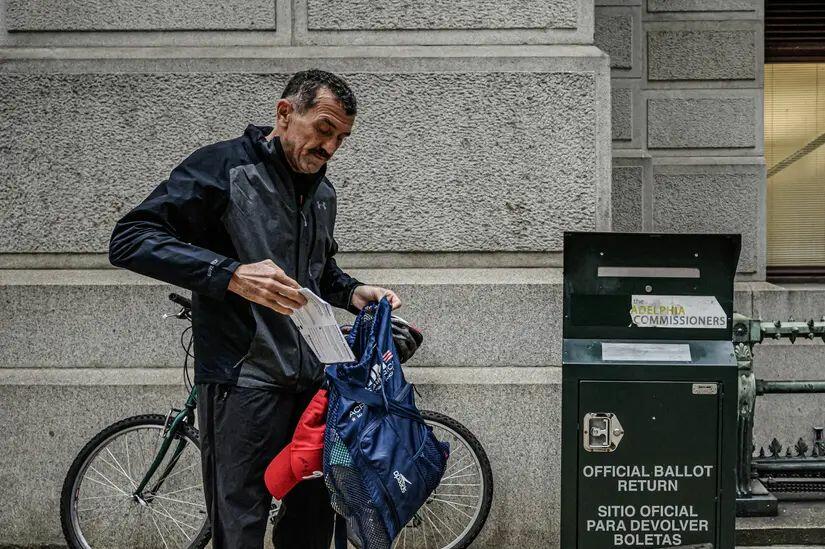
A voter casts his ballot at a drop box outside Philadelphia City Hall on Oct. 24, 2022. (Ed Jones/AFP via Getty Images)

Mr. Thayer said the injection of nonprofits into the 2020 system exposed a flaw in the system, reduced trust, and made the running of elections much more partisan.

In Wisconsin, 90 percent of 2020 nonprofit grant funding was given to the state’s largest cities; areas that turned out heavily for Joe Biden. Per capita, $3.75 went to big city dwellers and 55 cents to out-state residents, according to Capital Research.

After 2020, Wisconsin legislators twice passed bills to prohibit private money in elections. Twice, Wisconsin Gov. Tony Evers, a Democrat, vetoed the bills.

On April 2, primary election voters in the state approved two veto-proof constitutional amendments that stops private money in elections and prohibits privately funded staff from helping run state elections. The amendments passed with 54 percent and 58 percent approval, respectively.

Wisconsin has spoken, and the message is clear … Wisconsinites have turned the page on Zuckerbucks and secured our elections from dark money donors,” state GOP chairman Brian Schimming said in a statement following the referendum.

Opponents of the amendments stated that the vaguely-worded ban on private funding of elections would create confusion, deprive clerks of badly needed dollars required to conduct elections, and will result in a scaling back of voter outreach programs designed to boost participation.

Before the passage of the Help America Vote Act in 2002, local officials never received federal funding to pay for federal elections.

“They got along just fine for all those years. What has happened in our states and localities?” Mr. von Spakovsky said.

Local election officials should talk to their legislators rather than going to private donors for money to run their elections.

Highlighting the partisan divide on the issue, Wisconsin Democratic Party chairman Ben Wikler said in a statement before the referendum, “Rather than work to make sure our clerks have the resources they need to run elections, Republicans are pushing a nonsense amendment to satisfy Donald Trump.”

The former president made a campaign stop in Green Bay on the day of the primary. He was a strong proponent of the two amendments and urged his supporters to get out and vote.

Public ire against the use of private funding in Wisconsin was first stirred in the summer of 2021 when former Brown County Clerk Sandy Juno, a Republican, came forward with allegations that out-of-state political operatives funded by donations from the nonprofit Center for Tech and Civic Life (CTCL) took control of much of the administration of the November 2020 presidential election in Green Bay and other large cities in Wisconsin.
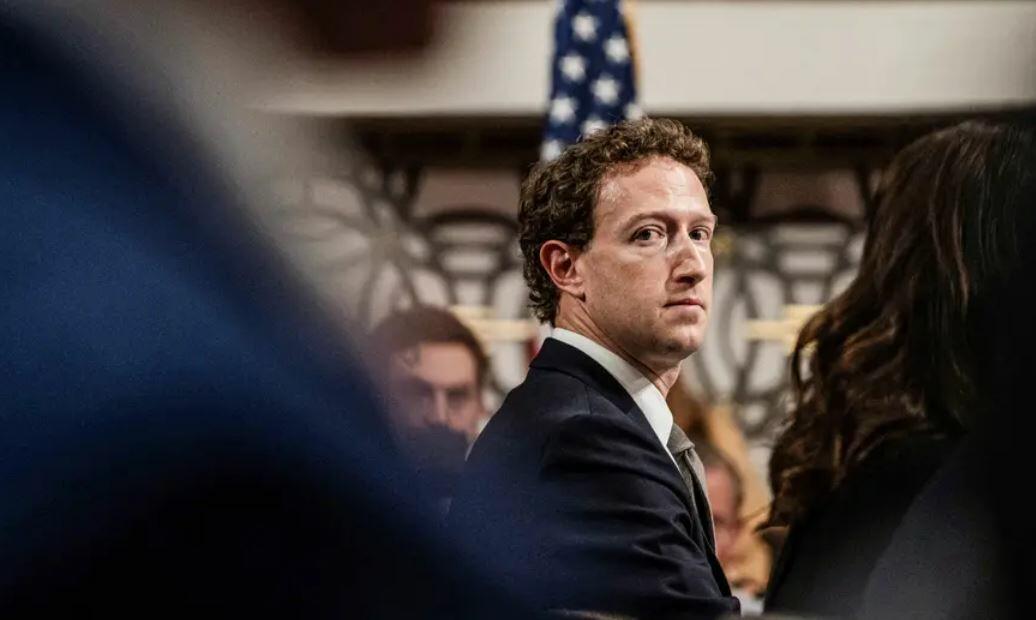
Mark Zuckerberg, CEO of Meta, testifies at a hearing at the U.S. Capitol on Jan. 31, 2024. (Roberto Schmidt/AFP via Getty Images)

CTCL and another nonprofit organization called the Center for Election Innovation and Research (CEIR) were gifted a total of $420 million by billionaires Mark Zuckerberg and his wife, Priscilla Chan.

The money, which has since been labeled “Zuckerbucks” by critics, was ostensibly granted to local election offices throughout the United States to purchase personal protection equipment and pay for other means to help local jurisdictions conduct safe and healthy elections during the COVID-19 pandemic.

In a post-election accounting, Green Bay reported spending only 0.8 percent of its $1 million “Zuckerbucks” grant on personal protection equipment.

More Abuses Come to Light

Ms. Juno’s allegations were corroborated by special counsel Michael Gableman, a former Wisconsin Supreme Court Justice, who was commissioned by the state legislature in 2021 to investigate possible violations of the law and other irregularities in the conduct of the November 2020 election.

Read more here...

https://www.zerohedge.com/political/conservatives-seek-ban-private-funding-elections-ahead-2024-races

How Widespread Is Underage Drinking?

 Alcohol abuse is a behavioral risk factor connected to 2.4 million deaths in 2019, according to the latest Global Burden of Disease study from the Institute for Health Metrics and Evaluation of the University of Washington.

While consuming large quantities of alcohol over a long period might not necessarily lead to a shortened lifespan, it hampers cognitive and motor function in its consumers.

Additionally, as Statista's Florian Zandt reports, multiple studies suggest that it also prevents proper brain development when abused by adolescents and young adults since the brain is among the last organs of the body to mature. Nevertheless, alcohol use and even heavy and binge drinking are especially common among U.S. residents aged 21 to 25, as the most recent National Survey on Drug Use and Health shows.

Statista's chart below, based on the results of this study, shows that the share of respondents using alcohol or participating in binge and heavy drinking in the last month from when they were surveyed is significantly higher for adults between 21 and 25 than for those aged 26 or older.

61 percent of young adults consumed alcohol, while almost ten percent drank four to five drinks in a short timespan every day for at least five days in a row. The sudden spike between the age cohorts of 18 to 20 and 21 to 25 can be explained by the United States' legal drinking age being set at 21.

What's harder to explain is that three percent of the respondents aged 12 to 17 participate in binge alcohol use.

Infographic: How Widespread Is Underage Drinking? | Statista


The National Institute on Alcohol Abuse and Alcoholism suggests that parents and teachers can play a decisive role in preventing children from abusing alcohol.

The results of a comprehensive study published in the journal Alcohol, Clinical and Experimental Research analyzing if parents allowing their 14-year-old children to drink leads to unhealthy drinking behaviors are clear:

"Adolescents who were allowed to drink were more likely to have transitioned quickly from their first drink to consuming 5 or more drinks at one time and to drinking heavily 3 or more times in the past year", say the study's authors in their conclusion.

"Given well-documented harms of adolescent heavy drinking, these results do not support the idea that parents allowing children to drink alcohol inoculates them against alcohol misuse."

https://www.zerohedge.com/medical/how-widespread-underage-drinking

Israel’s Defenses Repel Iranian Attacks, Vindicating Reagan's Theory

 Those of us of a certain age will remember a time, some 40 years ago now, when President Ronald Reagan advocated the Strategic Defense Initiative, Project High Frontier, and various other related programs, all built around the basic concept that we should have defenses against incoming missile attacks.

Throughout all of human history, military preparedness has involved both offensive and defensive elements. An army might have swords and longbows for offense, while being equipped with shields for defense. Cannons and cannonballs made up the offense, fortresses and moats provided a defense.

Thus it has been for thousands of years, but this common sense approach was inexplicably stopped cold -- with the dawn of the nuclear age.

All of a sudden, our betters came to the conclusion that we should not try to defend ourselves against intercontinental ballistic missiles, nuclear bombs, and similar ultra-modern threats. Instead of designing a defense, overwhelming arsenals and the fear of retaliatory strikes should be enough to dissuade any foe from launching such an attack.

President Reagan came to the conclusion that this theory -- Mutually Assured Destruction, known as MAD -- was exactly that, and a major thrust of his presidency was an effort to put an end to such a dangerous policy, once and for all.

The president believed that if America had an offense, it ought to have a defense as well. Period.

In the budget battles and political fights of the 1980s, President Reagan was never fully successful in implementing the multiphase missile defenses that he advocated, but even so, we were finally able to break free of the foolishness of the anti-ballistic missile (ABM) treaty, and roll out some valuable defense capabilities, not only here in the United States, but abroad, for the benefit of our allies.

This commitment to a robust defense posture –- specifically against incoming missiles -- was among the key drivers in forcing the collapse of our then-greatest enemy, the Soviet Union.

Our friend Israel embraced the technology with vigor, and Israel has used several of these tools to defend itself against its many enemies ever since.

On April 13, 2024, after many years of funding, supplying, and directing attacks against Israel by its many puppets, the Islamic state of Iran decided to finally attempt a full-fledged direct attack against Israel itself.

This weekend, Iran launched hundreds of drones, rockets, and ballistic missiles directly at Israel.

All over the world, friends of Israel prayed for her safety, and wondered what the retaliation would be like. Iran has attacked Israel directly; Israel now has the undeniable moral high ground, the right to do everything we’ve known it could do for years. Israel might take out Tehran‘s Air Force, perhaps its rocket launch sites, maybe its power plants, and hopefully all of its nuclear weapon development sites. Israel has the right, and the free world would breathe much easier if it happened at last.

But as the reports came in, there was a surprise: Israel’s defenses are working, even better than expected. They’ve always worked well, of course, but the numbers this weekend are staggering.

Between Israel’s famous Iron Dome and other related tools, plus an assist in the Mediterranean from the US Navy, 99% of Iran’s rockets, missiles, and drones were destroyed before even penetrating Israel’s airspace.

Back in the 1980s, when this was a serious topic of discussion in American political dialogue, we made the point that such defenses don’t have to be 100% effective. Even if they are just 20% or 30% effective, the knowledge that some portion of incoming shots would be rendered ineffective should be enough to put doubt in the minds of our enemies. You don’t need 100% effectiveness; you just need enough to make it harder for your enemy to know how big an attack he needs, to be certain of success. And the more effective your defense, the harder it is for your enemy to perform that calculation.

At press time, Israel’s response to Iran’s attacks were still running 99% effective. That’s incredible.

There are a number of lessons to learn from this.

The obvious, of course, is that it’s never a good idea to bet against Israel.

But perhaps less obvious, but more generally applicable to other areas of debate, is the lesson that technological advances can surprise you. In the 1980s, we imagined a complex system, from MX railways underground to space satellite defenses launching “brilliant pebbles” from beyond the atmosphere.

What we did not anticipate was how incredibly accurate computer technology was to become in the years ahead, and how wonderfully the world of science could develop defenses against not only superpowers like Russia, but against maniacal rogue states like Iran.

Imagine how that room full of homicidal mullahs in Tehran must’ve taken the news this weekend: “How much damage did we do? What? None? What do you mean, none? None at all? That’s impossible!” (Please forgive the literary license; I’m sure it sounded much different in Farsi.)

Israel’s Iron Dome, along with all the rest of Israel’s many defense systems and processes, spring from not only technology, but also culture, history, and ethics.

Israel focuses as much on defense as it does on offense, because Israel values human life is much as it values that eventual victory.

Israel would no more focus entirely on offense than our own President Reagan would. Their necessary Realpolitik is tempered with a commitment to the Judeo-Christian worldview.

Is it too confident, too religious, to posit that perhaps these ethics, in addition to the scientific achievements, share the credit for this amazing 99% success rate?

The Left told us in the 1980s that this was impossible. They fought President Reagan’s funding requests for research and development; they fought the programs, they fought the very concept. The Left didn’t believe we could -- or should -- deflect even so much is 30% or 40% of incoming missiles; they feared it would jeopardize their beloved strategy of MAD. But 99% success? Even its biggest fans didn’t think that was possible. Nobody would have dared imagine that result 40 years ago.

Except perhaps President Reagan. Fully vindicated here this weekend, long after his death. on yet another issue, Ronaldus Magnus has been proven to have been right all along.

John F. Di Leo is a Chicagoland-based international transportation manager, trade compliance trainer and speaker. A one-time Milwaukee County Republican Party chairman, he has been writing a regular column for Illinois Review since 2009. Read his book on vote fraud (The Tales of Little Pavel) and his political satires on the current administration (Evening Soup with Basement Joe, Volumes I and II), and the recently released Volume Three.

https://www.americanthinker.com/articles/2024/04/israel_s_defenses_repel_iranian_attacks_vindicating_reagan_s_theory.html

Mexican cartel violence is now spilling into San Diego -report

Plenty of people think Joe Biden's open borders is mainly about millions of illegals rolling into the U.S., while the billions rolling into Mexico's notorious crime cartels as a result is Mexico's problem, not ours.

But that's not quite what's going on.

Mexico's cartels have grown so big and so powerful from migrant and drug smuggling that they not only threaten Mexico, they are now taking their internecine warfare on the road into the U.S., which now faces a Tijuana-like future. If you recall the sight of all those Tijuana cars burning as that city shut down from cartel warfare, obviously it can happen here, too.

In a little-noted San Diego Union-Tribune frontpager from Sunday, headlined "Tijuana drug violence bleeds into San Diego County with recent cartel shootings":

Three shootings that left two people dead and three wounded over the past couple of months in San Diego County were linked to Mexican drug cartels and involved a drug cell embroiled in a vicious dispute with its rivals in Baja California, according to sources with knowledge of cartel activity and the ongoing investigations.

One of the shootings wounded James Bryant Corona, an alleged drug cell leader with dual U.S.-Mexican citizenship, according to sources on both sides of the border with knowledge of the investigation. Baja California Deputy Attorney General Rafael Orozco Vargas described Corona as “one of the main generators of violence” in Tijuana and greater Baja California.

Another attack killed 35-year-old Christian Espinoza Silver, a reputed member of the same drug cell, after a gunman opened fire on him inside a BMW near the parking garage of a pricey high-rise apartment complex in University City.

University City is the wealthy area just east of ultra-wealthy La Jolla, and nowhere near the border badlands where such activity wouldn't be that surprising. These kinds of rubouts have been unheard of up until now, although there was a good report from investigative reporter Ioan Grillo at Crashout Media about cartel kidnapping and 'stewmaker' activity going on in Chula Vista just south of San Diego and closer to the Mexican border in the past couple years, writing at the time.

After strangling the two victims, the gangsters threw their bodies head-first into barrels of acid, using the techniques of an infamous Tijuana killer known as “El Pozolero” or “The Stewmaker.” They buried the remaining bones and flesh in arid ground under a horse ranch. The macabre burial site was not in Mexico however but north of the border in San Ysidro on the outskirts of San Diego.

I commented on that last month here.

The U-T report is long and interesting, but subscriber-only. (The U-T can be very left-biased, but does good work on Navy and some border issues and has some good subscription deals and trials that might be worth looking at.)

The story explains why the matter is important:

While Tijuana and Baja California have for decades been plagued by such violence related to organized crime, rarely in recent years has it bled over so publicly and brazenly into San Diego County, sparking concern among some U.S. authorities and those familiar with Mexican drug trafficking organizations.

To summarize, the cartel thugs who've terrorized Mexico are now openly operating here in San Diego, too, and that includes their gun battles and rubouts. Cartels have been known to recruit their worst triggermen from the San Diego side of the border. Some have dual citizenship or serve as anchor babies for their illegally present parents, which makes catching them harder. Worse still, the Mexican cops may be looking for them as the ringleaders for various murders, but as cartel kingpins, they aren't wanted for any trigger-pulling murders over here, so they skate easily.  

Obviously, there are some legal things that need to be ironed out, based on that report, but anyone asking for it is probably going to be as lucky as the residents of Imperial Beach have been in trying to get the Biden administration to halt Tijuana sewage from fouling their U.S. beach. The Biden swamp doesn't pay much attention to what is going on so far away over here, we are just another Lahaina.

One official quoted, a former lawman named Steve Duncan, said that only the integrity of the U.S. courts kept this region from becoming a third-world hellhole. 

“The only thing that’s keeping (the violence) from getting out of control here is we have integrity in our system,” Duncan said, adding that it’s important that investigators share information and solve the shootings. “It has to be investigated and prosecuted ... We have to set an example.”

Which is good food for thought. Anyone want to say the judicial system is as pristine as it used to be back when it was a two-party city?

Justice in fact is collapsing here, as it is in all blue cities, meaning, the cartels are going to feel increasingly comfortable operating here and taking their violence here, too as the quest for dominance over profits from the illegal drug trade and the illegal alien trade continue to drive cartel warfare.

Which means the cartel violence will get bolder and more brazen and more over here than ever. There could be headless bodies hanging from bridges and narco banners hung from overpasses as somehow nothing gets done about it, and there could be burning cars and gunfire raging through the city with very little done about it as this city gets bluer.

And there is no doubt that these kinds of crimes are happening that hadn't happened before:

According to the Union-Tribune:

Erubiel Tirado, a security expert and professor at Mexico’s Universidad Iberoamericana, said cartel violence in a U.S. border city would be a “huge change” in the pattern of how criminal trafficking organizations operate.

“Traditionally American cities ... were ... kind of sanctuaries (for) the kingpins and some important members of each dominant Mexican organization,” Tirado wrote in an email. “In that sense, the non written rule was do not ‘heat’ (those) territories with violence and criminal activities.”

All of that is a direct result of Joe Biden's open border and the spillover effects that follow just as surely as those busloads of illegals from China and 100 other countries.

It's not just illegals who are coming. It's what they are bringing with them as they come that stands to turn San Diego and every other blue city into cities with Tijuana-like violence driven by the quest for drug and illegals profits.

https://www.americanthinker.com/blog/2024/04/mexican_cartel_violence_is_now_spilling_into_san_diego_report.html

Newsom’s minimum wage hike jeopardizes public school food services for needy children

 Who doesn’t care about the tots and their school lunches now?

Gavin Newsom’s little minimum wage hike for certain restaurants (just not his and not those of his political donors) is having quite the negative ripple effect—menu prices are rising, people are losing their jobs to automation, and small businesses are closing their doors after being community fixtures for decades—but according to a report by Craig Bannister at Media Research Center, there is another major “unanticipated consequence” of the new legislation:

But, one unanticipated consequence of the mandated wage hike is the negative impact it will have on California’s school food services.

School districts, which are already dealing with tight budgets and food service staff shortages, will have to compete for employees with fast food chains paying a minimum of $20 an hour.

Here’s this, from Associated Press via a local California outlet:

Lost in the hubbub surrounding California’s new $20-per-hour minimum wage for fast food workers is how that raise could impact public schools, forcing districts to compete with the likes of McDonald’s and Wendy’s for cafeteria workers amid a state budget crunch.

The minimum wage law that took effect Monday guarantees at least $20-per-hour for workers at fast food restaurant chains with at least 60 locations nationwide. That doesn’t include school food service workers, historically some of the lowest-paid workers in public education.

[T]hese [cafeteria] jobs typically have lots of turnover and are harder to fill. The minimum wage boost for fast food workers could make that even more difficult.

‘They are all very worried about it. Most are saying they anticipate it will be harder and harder to hire employees,’ said Carrie Bogdanovich, president of the California School Nutrition Association.

Well, well, well.

Whenever the politicians in Congress want to pass a massive spending bill, always with a price tag in the trillions, the reliable yes-votes are routinely met with dissent by the reliable no-votes (like Senator Rand Paul and Rep. Thomas Massie). Naturally, adding trillions more to a record-high debt (cruising toward $35 trillion as I write this) is the very opposite of the fiscal conservatism promoted by people like Paul and Massie; and like clockwork, the Democrats (lockstep yes-votes) will hurl tried-and-true slander against the Republican holdouts, accusing them of withholding food from needy school children, unconcerned if innocent little poverty-stricken kindergarteners go hungry, all so Republican politicians can score a cheap political point on uncontrolled spending.

Now the numbers don’t actually matter to Democrats, because school lunches are a fraction of one percent—literally. For instance, if we look at FY 2022, we see that federal outlays totaled “nearly $6.3 trillion” per the CBO, and, if we look at what the federal government spent on the national school lunch program for the same year, that number came in right around $28.7 billion, per Statista. (I’m not a math whiz, but I think that works out to be .46%.) If only our annual budget were less than $30 billion! Congressmen like Paul and Massie aren’t no-voters because of a school lunch program, they’re no-votes because of almost everything else!

And of course, it doesn’t matter that Democrats do not care about children whatsoever: How many fight to protect babies in the womb from the instruments of the abortionist? How many stand in between the salivating perverts in drag and precious children? How many rip into the racial divisions sown by the Obama cabal that are now consuming our youth? Zero.

File this story under the “more Democrat hypocrisy” tab.

https://www.americanthinker.com/blog/2024/04/newsom_s_minimum_wage_hike_jeopardizes_public_school_food_services_for_needy_children.html 

Supply Shock? 4 Maritime Chokepoints Flash Red As Escalating Conflict Looms

 Just two days after Iranian commandos hijacked the Israeli-linked container ship MSC Aries in the Strait of Hormuz, it's important to highlight that chaos continues to erupt at key global maritime chokepoints. 

The hijacking of the Aries container ship was lost in the noise of the widely unsuccessful Iranian missile and drone strike against Israel on Saturday evening. It will likely be forgotten as the world focuses on what appears to be an imminent Israel counterattack against Iran. 

Sal Mercogliano, a professor at Campbell University and shipping expert, wrote on X about an alarming number of maritime chokepoints under threat across the Middle East and Black Sea region. 

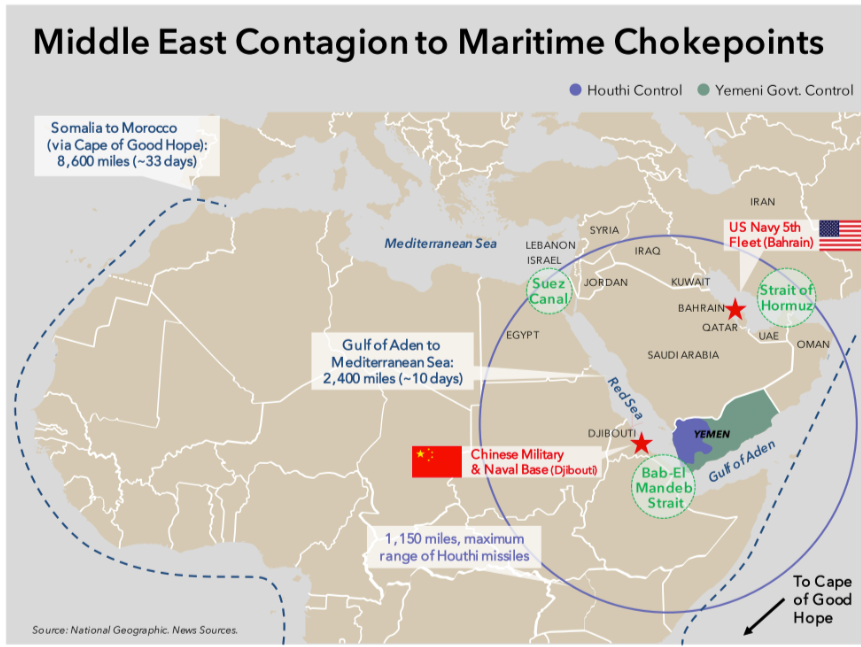
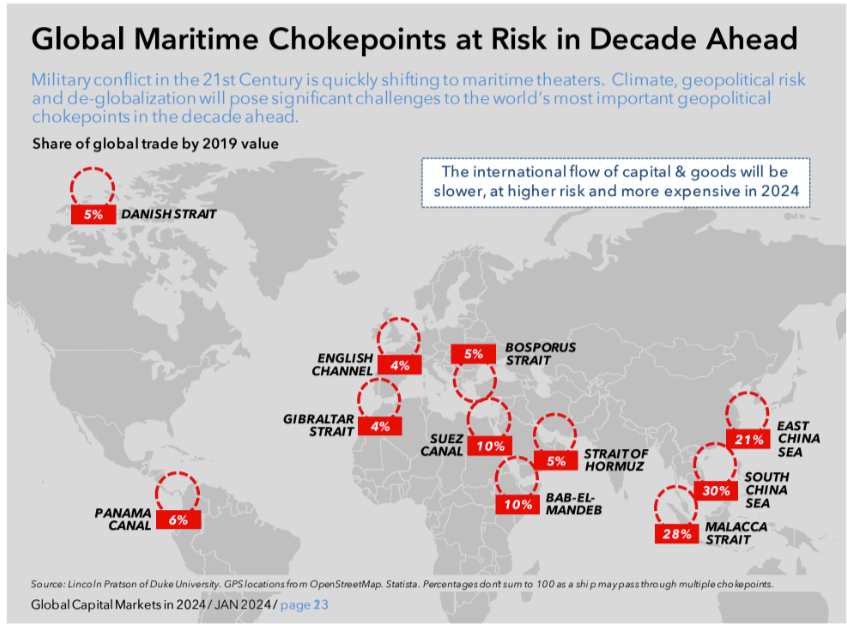
Mercogliano pointed out four maritime chokepoints: the Bab el-Mandeb, the Strait of Hormuz, the Suez Canal, and the Bosphorus Strait, which are each experiencing some form of direct and/or indirect disruption due to the escalating chaos in the Middle East and Eastern Europe. 

Let's begin wit the latest fare up in maritime violence on Saturday morning. Iranian commandos hijacked Aries as it was heading towards the Strait of Hormuz. This incident will keep focus on the world's busiest shipping lane and a critical chokepoint for the world's oil supply.  

"If the Straits become an unreliable oil trading channel the outcome is binary. All previous Hormuz sabre-rattling has come to nought and I sincerely hope this is the same outcome; to the degree it becomes real and the Strait of Hormuz become blocked, crude will shoot past US$100/bbl without stopping for breath," Liberum's Joachim Klement wrote in a note to clients on Sunday. 

Meanwhile, Iran-backed Houthis have been targeting US, UK, and Israeli-affiliated ships for the last five to six months, disrupting global trade flows in and around Bab el-Mandeb Strait. The conflict has forced many Western vessels to sail around the Cape of Good Hope to avoid conflict in the region. Ship diversions have also led to sinking activity on the Suez Canal. 

In the Black Sea region, Turkey's Bosporus and Dardanelles straits have seen a lull in activity as the war rages on between Russia and Ukraine. 

In the Middle East, 25% of global trade flows through the Suez Canal, Bab-El Mandeb Strait, and Strait of Hormuz, all of which are experiencing either conflict or some form of heightened risk (read the MUFG note here). 

Here's a snapshot of the world's chokepoints. 

An escalating conflict between Israel-Iran could quickly seize up one or more of these maritime chokepoints, spark supply chain chaos, and trigger an inflationary shock (maybe in the energy markets) across the West - something that would ruin Biden's reelection odds or whatever is left of them and destroy Fed Powell's ability to arrest inflation. 

https://www.zerohedge.com/geopolitical/heading-supply-shock-four-maritime-chokepoints-flash-red-escalating-conflict-looms

Is Paxlovid A Dud?

 by Maryanne Demasi via The Brownstone Institute,

Of all the antiviral drugs for Covid-19, Pfizer’s Paxlovid has been the most successful.

Not for its safety and efficacy, but for its ability to earn the company billions in profits despite being largely ineffective for most people.

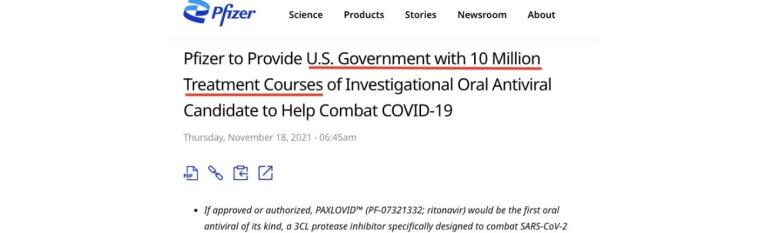
In November 2021, before any data had emerged, the Biden Administration committed to purchasing 10 million treatment courses of Paxlovid worth $5.3 billion, pending authorisation by the US drug regulator.

One month later, Paxlovid was granted emergency use authorisation (EUA) by the FDA for use in adult and paediatric populations, 12 years or older.

The authorisation was based on early trial data showing the drug could reduce hospitalisations or death (89% relative risk reduction, 6% absolute risk reduction) in high-risk patients who were unvaccinated and had no prior exposure to Covid-19.

But the problem was, most Americans by that time (Dec 2021) had already been vaccinated against Covid-19 or had prior exposure to the virus, making the trial results irrelevant to the majority of people.

Pfizer had to prove its drug could benefit a broader market. 

The manufacturer commenced the EPIC-SR trial, investigating the use of Paxlovid in unvaccinated people and vaccinated people with at least one risk factor for Covid-19 [clinicaltrials.gov].

By July 2022, however, Pfizer stopped enrolling participants “due to a very low rate of hospitalization or death observed in the standard-risk patient population.”

In a press release, the company announced that Paxlovid failed to impact its “novel primary endpoint of self-reported, sustained alleviation of all symptoms for four consecutive days.”  

In other words, Paxlovid – a combination of nirmatrelvir and ritonavir – made no significant difference in alleviating symptoms of Covid-19 compared to placebo among non-hospitalised patients.

Pfizer stated that it was difficult to find benefit in a population that was already at a low rate of hospitalisation or death from Covid-19.

One year later, in August 2023, Pfizer quietly published the unfavourable findings on clinicaltrials.gov, without any fanfare or media attention. In fact, the media continued to promote the benefits of Paxlovid to the wider public.

The New York Times, for example, ran multiple stories during the pandemic about the “Power of Paxlovid,” encouraging more people to take the drug and criticised its under-use.

Simultaneously, Pfizer stoked public fear by overinflating the risk of Covid-19, paving the way for doctors to prescribe drugs like Paxlovid to manage the disease. Sometimes, the claims were misleading.

Pfizer, for example, tweeted that 3 out of 4 American adults were at “high risk” for severe Covid-19, but then cited a study in the advertisement that did not support the claim – so far, the misleading tweet has been viewed 11.6 million times.

“This is ridiculous,” tweeted Walid Gellad, Professor of Medicine at the University of Pittsburgh, “I don’t know how it is legal…3 out of 4 adults are not at high risk of severe Covid.”

That didn’t stop FDA commissioner Robert Califf from taking to social media to promote the benefits of Paxlovid.

He tweeted the drug could reduce the risk of developing ‘long covid’ based on weak evidence, and admitted to ‘cheerleading’ the use of Paxlovid because he felt overall “the evidence was strong.”

Califf copped criticism for his lack of impartiality as the head of the regulator, but justified his actions in a “public health emergency.”

Regulatory affairs expert Jessica Adams said it was a poor excuse.

“Something is really wrong with public health ‘leadership’ if it thinks that every norm can be thrown out the window in an emergency,” said Adams. “The FDA has learned nothing during the pandemic and is setting terrible precedents for future emergencies.”

By 2023, reports of people experiencing “rebound” symptoms after using Paxlovid, were increasing. Authorities could no longer claim it was “rare.”

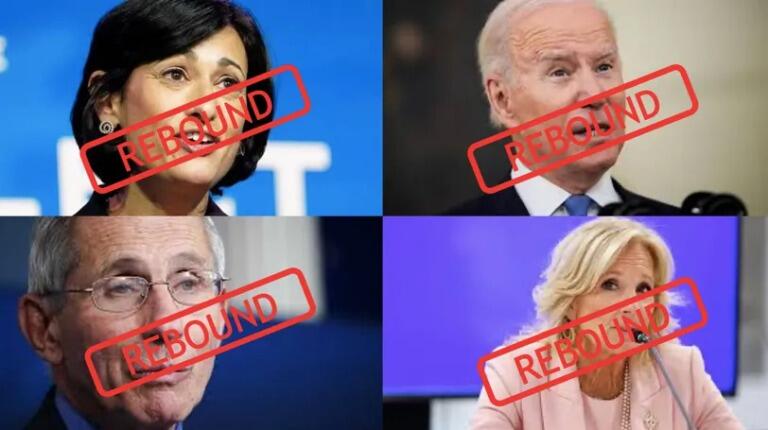
High-profile officials such as former CDC director Rochelle Walensky, former NIAID director Tony Fauci, President Joe Biden and First Lady Jill Biden all had reported a rebound of Covid symptoms after completing a course of Paxlovid.

Califf dismissed concerns about rebound, saying it was all just a “distraction,” but a study published in JAMA Network showed that symptomatic rebound in people with mild to moderate Covid-19 was as high as 25% after taking Paxlovid.

In May 2023, the FDA granted Paxlovid full approval for managing mild to moderate Covid-19 infections in adults at high risk of developing severe disease (including vaccinated adults, despite no data showing benefit in this population).

Last week, Paxlovid was back in the spotlight after the EPIC-SR trial was finally published in the New England Journal of Medicine, almost two years after Pfizer announced the futility of the study in July 2022.

Regardless of all the positive media coverage and promotion of Paxlovid by public health officials and government advisors, the evidence is clear.

Paxlovid, which now costs $1,400 for a 5-day course, has only shown benefit in a very rare population – that is, unvaccinated people who’ve never encountered the virus and are at high risk of serious Covid-19.

https://www.zerohedge.com/covid-19/paxlovid-dud