Search This Blog

Wednesday, January 22, 2025

Trump says US problems ‘all solvable’ in first interview as president with Sean Hannity

 President Trump made the case Wednesday that the nation’s problems are “all solvable,” touting the “very unified” Republican caucus in Congress.

“They’re all solvable problems … with time, effort, money — unfortunately — but they’re all solvable,” Trump asserted during an interview on Fox News.

“We can get our country back,” he argued. “But if we didn’t win this race, I really believe our country would have been lost forever.”

Trump sat down with Sean Hannity inside the Oval Office.Fox News

Trump’s sitdown with Sean Hannity, taped Wednesday morning at the White House, is his first television interview as the 47th president.

00:00
04:02

In his first term, Trump participated in 29 interviews with Hannity, according to White House historian Martha Kumar. 

Later in the interview, Trump praised House Speaker Mike Johnson (R-La.) as a “terrific” leader of the lower chamber, arguing that he’s effectively “unified” Republicans on Capitol Hill.

He also praised House Speaker Mike Johnson (R-La.) for how he’s “unified” Republicans on Capitol Hill.
“You know, these are not easy people,” he said of GOP lawmakers.

“This is a tough group … but they’re very unified.”

Unlike his predecessor, Trump hasn’t been shy about engaging with the press throughout his action-packed first three days back at 1600 Pennsylvania Ave.

“We can get our country back,” he argued. “But if we didn’t win this race, I really believe our country would have been lost forever.”Fox News
The interview marked Trump’s first since he reclaimed the White House following Monday’s inauguration.X / @margomartin

Trump, 78, answered a flurry of questions from reporters in the Oval Office Monday night as he signed dozens of Day 1 executive orders, including withdrawing the US from the World Health Organization; declaring Mexican drug cartels as foreign terrorist organizations; and directing the Justice Department not to enforce the TikTok “divest-or-ban” law for 75 days.

The president also took questions Tuesday after unveiling a $500 billion artificial intelligence infrastructure project at the White House alongside reps from OpenAI, SoftBank and Oracle.

Former President Joe Biden held the fewest formal interviews and press conferences of any modern president.

Trump also praised House Speaker Mike Johnson, acknowledging that he’s “unified” Republicans on Capitol Hill.Fox News

Biden, 82, waited until February 2021 to give his first television interview as president, which aired on CBS ahead of the Super Bowl.

His first full press conference didn’t take place until late March of that year.

When asked by Hannity about whether he preferred separate bills or one standalone piece of legislation to fund California wildfire relief, border security, implement his energy policy agenda and cut taxes, Trump indicated that he didn’t have a strong preference. 

“I don’t care as long as we get to the final answer,” the president responded, adding that he likes “the concept” of “one big beautiful” bill. 

Former President Joe Biden, 82, didn’t conduct his first interview after being sworn in until February 2021.Fox News

Trump went on to slam how the Federal Emergency Management Agency was run under Biden.

“FEMA has not done their job for the last four years,” he argued. 

“FEMA is getting in the way of everything, and the Democrats actually use FEMA not to help North Carolina,” Trump continued, referring to the federal government’s response last fall to devastating Hurricane Helene. 

The president noted that he plans to visit the hurricane-ravaged state later this week, which will be the first trip of his second term. 

Trump indicated that he’s not sure if or when he’ll meet with Democratic California Gov. Gavin Newsom – whom he described as an “idiot” for the way he handled the devastating Los Angeles wildfires. 

The president ridiculed Newsom for diverting fresh water flowing from the north into the Pacific Ocean because of his desire to save the endangered delta smelt fish, a claim the California governor has denied, and floated tying federal relief aid to the Golden State changing the practice. 

“I don’t think we should give California anything until they let water flow down,” Trump said. 

On Biden’s border policies, the president argued the previous administration engaged in “a gross miscarriage of common sense to allow people to come in.”

Trump further criticized Biden that under his predecessor’s regime, “FEMA has not done their job for the last four years,” while also noting Biden’s border policies led to “People pouring in.”Fox News

“People pouring in,” Trump said of the border crisis under Biden, “some of whom, I won’t get into it, but you can look at them and you can say, ‘Could be trouble’ …

“There are people coming in with tattoos all over their face. … typically, you know, he’s not going to be head of the local bank.”

Asked about when he plans to release secret government files on the assassinations of former President John F. Kennedy and civil rights leader Martin Luther King Jr., Trump indicated that he would grant the public access to the highly sought-after documents imminently — as soon as his team can get ahold of the material. 

“I’m going to release them immediately upon getting — we’re going to see the information — we’re looking at it right now.”

https://nypost.com/2025/01/22/us-news/trump-gives-first-interview-since-returning-to-the-white-house-in-sit-down-with-sean-hannity/

LinkedIn accused of using private messages to train AI

 A US lawsuit filed on behalf of LinkedIn Premium users accuses the social media platform of sharing their private messages with other companies to train artificial intelligence (AI) models.

It alleges that in August last year, the world's largest professional social networking website "quietly" introduced a privacy setting, automatically opting users in to a programme that allowed third parties to use their personal data to train AI.

It also accuses the Microsoft-owned company of concealing its actions a month later by changing its privacy policy to say user information could be disclosed for AI training purposes.

A LinkedIn spokesperson told BBC News that "these are false claims with no merit".

The filing also said LinkedIn changed its 'frequently asked questions' section to say that users could choose not to share data for AI purposes but that doing so would not affect training that had already taken place.

"LinkedIn's actions... indicate a pattern of attempting to cover its tracks," the lawsuit said.

"This behaviour suggests that LinkedIn was fully aware that it had violated its contractual promises and privacy standards and aimed to minimise public scrutiny".

The lawsuit was filed in a California federal court on behalf of a LinkedIn Premium user and "all others" in a similar situation.

It seeks $1,000 (£812) per user for alleged violations of the US federal Stored Communications Act as well as an unspecified amount for breach of contract and California's unfair competition law.

According to an email LinkedIn sent to its users last year, it has not enabled user data sharing for AI purposes in the UK, the European Economic Area and Switzerland.

LinkedIn has more than one billion users around the world, with almost a quarter of them in the US.

In 2023, the company attracted $1.7bn in revenue from premium subscriptions.

It has also said that the number of premium subscribers has been growing rapidly as it continues to add more AI features.

https://www.bbc.com/news/articles/cdxevpzy3yko

Taiwan: Will Xi Or Won't Xi?

 by Grant Newsham via RealClearDefense,

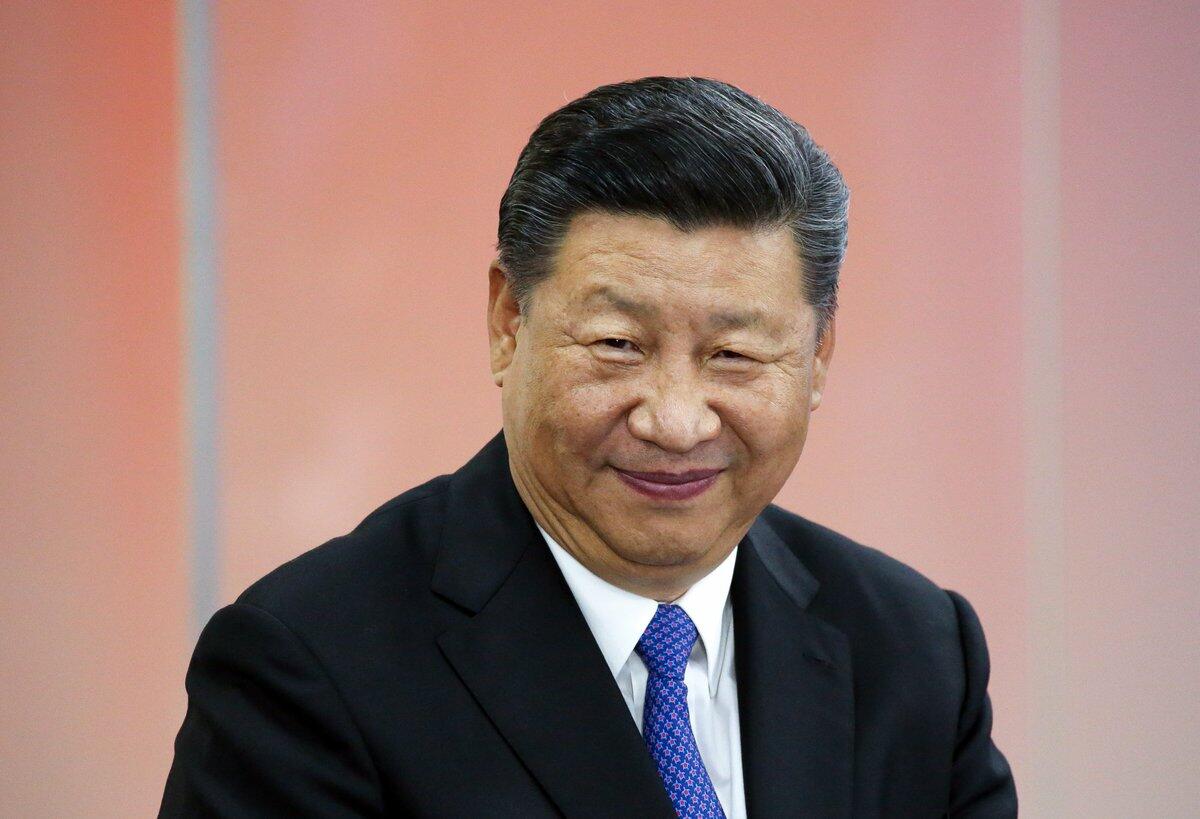
Chinese leader, Xi Jinping has been clear that he intends to get Taiwan – one way or another.

He has good reasons.
It would establish Xi as one of the immortals by accomplishing something Mao Tse Tung couldn’t. By taking Taiwan, China breaks through the first island-chain – the island nations stretching from Japan to Taiwan and on to the Philippines and Malaysia – that constrain China’s freedom of access to the Pacific and beyond. Break the chain and the PLA then gets easy access to the Pacific and potentially can surround Japan, cut-off Australia and move onwards.

These are operational advantages.

As important are the political and psychological advantages. Take Taiwan and Beijing has demonstrated the U.S. military couldn’t save the 23 million free people of Taiwan. Neither could American economic and financial pressure. And U.S. nuclear weapons didn’t stop China either.

In capitals all over Asia, the calculus will change, and many will cut the best deals they can and turn ‘red’ overnight rather than try to withstand Chinese pressure on their own. The United States will be finished as a Pacific power. And globally nobody will trust a U.S. promise of protection – explicit or implicit.

Can China Take Taiwan?

The recently released 2024 DOD China Military Power Report presents a grim picture of a rapidly developing Chinese military.

But the report assesses that while Taiwan is a prime target, the Chinese military just isn’t ready for operations against the island. 

No matter how much progress the PLA makes, it seems it’s never quite ready to attack Taiwan.

China experts can rattle off the reasons why a Chinese assault on Taiwan won’t be coming in the near future.

Here’s the bingo card of reasons. And why, perhaps, the arguments may not be all they seem.

1.  There are only two short windows during the year (April and October) when the weather is good enough for an invasion force to get across the Taiwan Strait.

When asked about this, a Taiwanese oceanographer noted: “Look at the ferry schedules. They run all year.”  And someone should have told Dwight Eisenhower about the weather in June 1944. He only needed 72 hours of decent weather to get across the English Channel.

2.  Only a tiny number of narrow beaches on Taiwan's west coast are suitable for an amphibious landing.

Amphibious forces sometimes don’t need much of a beach…or one at all…if you’ve hit the defender hard enough or deceived him. The U.S. Marines pushed a division across a beach about 200 yards wide in one day at Tinian in 1944. And amphibious operations include troops delivered by helicopter, airborne, and infiltrated in advance along with fifth columnists.

3.  PLA needs to seize a port -- and that'll never happen because 1) it's a port and Taiwan is presumably defending it; 2) The Chinese are not smart enough to have their fifth column, including organized crime, already in place to open up, say, Kaohsiung. 

The “barges” China is building can, in combination with redundant ships, be used to build breakwaters and other components of an artificial port.

4.  PLA hasn't got the 'lift' – enough ships - to take troops and equipment across the strait.

A Marine Corps University professor in the late 2010’s had a PowerPoint presentation making this case. He was counting the wrong ships. Add in ‘old’ amphibious ships and civilian ships and boats that were integrated under the ‘military-civil fusion’ doctrine and the PLA had plenty of lift. It’s got even more now. And the world’s second largest merchant marine has more than enough shipping to deliver up to six brigades and 60 days of supplies (particularly if they build an artificial harbor).

5.  Amphibious operations are the hardest, most complex military operation known to man.

This argument boils down to ’the Chinese just aren’t as smart as us.’  That’s mistaken and when it comes to amphibious operations read Toshi Yoshihara’s book on how they performed in the Chinese Civil War.

6. PLA can't do joint operations.

Look at recent exercises and ongoing training. They’re getting better. In fact, they’ve been doing joint training for going on two decades and intensely since Xi came to power 12 years ago. And you don’t have to be perfect. Just good enough to do a specific task in a specific place.

7.  PLA can't do 'joint logistics over-the-shore.' 

Once again, the Chinese aren’t smart enough and can’t possibly be our equals.

8.  The PLAN has aircraft carriers but they’re nowhere near our level.

Do you see a pattern? The Chinese aren’t intelligent or capable enough. Just as was said about the Japanese in 1941.  Remember, the PLA’s carriers will be operating within and along the edge of the First Island Chain and with the support of the PLAAF and PLA Rocket Force.

9.  PLA hasn't got combat experience.

Neither does the U.S. Navy, except against the Houthi Navy. And the rest of the U.S. military hasn’t fought a high-end opponent in decades.

10.  The PLA is corrupt.

Andrew Erickson at the Naval War College gets it right: “If Xi and the PLA were in the disarray that some myopically focused on their system’s chronic corruption imagine, there’s no way China’s military could be developing, deploying, exercising, and otherwise preparing in the ways that the CMPR chronicles.”

11.  Xi Jinping can't trust his generals and admirals.

Neither could Hitler or Stalin. One almost got to Moscow. The other took Berlin.

12.  The PLA is ‘restive’ and pushing back at Xi’s efforts to give himself total power.

Have we ever seen any real evidence that any PLA officer has “pushed back”? And on our side, how many U.S. Navy admirals pushed back against the systematic degrading of their service’s capabilities over the last 30 years? It was also said before 1939 that the Wehrmacht Generals – the elite of the elite – would never actually let ‘that Corporal’ run things.

13.  The Chinese can't innovate. They can only copy.

There’s ‘Chinese ingenuity’ just as there was ‘Yankee ingenuity.’ It works well enough, no matter who invented the thing improved upon. the PLA Strategic Rocket Force has been very innovative…anyone heard of the DF-21D, DF-26, and DF-17? Or the new Type 076 amphibious assault carrier that is going to carry and launch drones, fixed wing, and helicopters and put amphibious vehicles on the beach?

14.  PLA officers and NCOs won't take the initiative -- like ours will.

Maybe. But have you ever heard a Korean War vet say he wanted to fight the Chinese again?

15.  China won’t attack Taiwan until 2027, 2035, 2049.

It’s always some years off. Xi is said to have told his military to be ready to go against Taiwan by 2027. In fact, Hu Jintao in 2008 and Xi in 2013 ordered the PLA to be ready to take Taiwan in 2020. The shoe could drop at any time. Would Xi really tell us his attack date in advance? Remember that the British assessed in the 1930’s that Germany would not be ready to fight a war until 1943.

16.  China has so many one-child families that Xi wouldn’t dare attack.

The popular anger over families losing their only child would be too hard for Xi and CCP leaders to handle, it is argued. But make them ‘heroes of the revolution’ and provide a house and a handsome pension- and complain about it and disappear.

17.  Economic costs would be too high.

Tough, yes, but Xi is sanctions-proofing the country. And he’s telling his people to toughen up and get ready for what’s coming. What is never discussed is the economic benefits that taking Taiwan and establishing the PRC’s global domination over the global trading system would mean for the PRC. It is always viewed in the negative…but they don’t consider that Xi and the CCP see it as a step towards economic supremacy.

18.  The blow to China’s reputation will be too high.

As if the CCP cares about its reputation. If the CCP doesn’t mind the flack that comes from taking organs out of live prisoners and selling them, the criticism from taking Taiwan won’t move the needle much. Nor is there likely to be much. Who is still talking about the subjugation of Tibet or the strangling of Hong Kong?

19. Taiwan has a million reservists.

999,000 of whom get about four days training a year.

20.  Taiwan military and civilians will fight like tigers.

Maybe. But the Taiwanese may not be the Ukrainians or the Finns, especially if outside support doesn’t come quickly.

21.  Taiwan has mountains. Mountain combat is tough.

Just too hard for the Chinese, it seems. However, selected PLA brigades train in the mountains annually and unless there is a war with India, they might be deployed to Taiwan after the beaches are secure.

22.  Taiwan has cities. Urban combat is tough.

The Americans, the Russians, and many others have figured out urban combat. But it’s too hard for the Chinese?

23. The U.S. military has a qualitative superiority with its hardware, training, and experience.

The French thought 'elan' would overcome the German Maxim guns in 1914. It didn’t. They also had faith in the fact their tanks were superior in 1940. And these days, America’s technological superiority is eroding almost daily.

24.  The U.S. military calculated that taking Formosa from the Japanese in 1944/1945 would have been a herculean effort.

True. But perhaps Xi thinks it’s worth it for him. And what he thinks matters. And it probably is worth more to the PRC and Xi these days than Formosa was to the U.S. in 1944/1945. Also, let’s not forget that our invasion force had to travel 1200nm to the invasion beaches on Taiwan versus 120nm for the PLA. We only had carriers for air support for the first week. Again, the PLA has the full strength of the Eastern and Southern Theater Command Air Forces as well as the PLARF (PLA Rocket Force). We had nothing to compare to the PLARF in 1944-45.

25.  The American invasion of Sicily in 1943 was really hard...so the PLA can't possibly do an invasion of Taiwan.

Really. One fellow wrote a piece about this a few years ago.

26.  The Japanese will step in.

With what? And not if Japan’s business community and the ‘Ministry of Foreign Affairs’ ‘China club’ and the ‘political class’ China sympathizers have anything to say about it.

These are all practical articles of faith for a sizeable chunk of the U.S. China analyst community. And they create  ‘threat deflation’ - as retired U.S. Navy Captain James Fanell and Dr. Bradley Thayer call it - that justifies complacency.

It is of course possible that some combination of these reasons may dissuade Xi Jinping from attacking Taiwan. And nothing in war is easy – not least an assault across the Taiwan Strait.

But one imagines a similar ‘bingo card’ could have been created to demonstrate why the Chinese wouldn’t or couldn’t attack across the Yalu River into Korea in 1950. It’s equally dangerous to underestimate the PRC in 2025.

So, the United States has a choice: start acting like the threat to Taiwan (and to us) is immediate and not a couple years or more into the future – and move a lot faster.

Or, if that’s too hard, just read and re-read reasons 1-26 until you are lulled into a comfortable stupor. No points for guessing which one Xi would prefer.

Grant Newsham is a retired U.S. Marine officer and senior fellow at The Center for Security Policy, The Japan Forum for Strategic Studies, and The Yorktown Institute. He is the author of When China Attacks: A Warning to America.

https://www.zerohedge.com/geopolitical/taiwan-will-xi-or-wont-xi

Trump Repeals Embarrassing Biden Policy Allowing Transgenders To Serve In US Military

 Sometimes the pen truly is mightier than the sword.  After Donald Trump's inauguration celebration on January 20th the newly appointed US President went straight to work, spending hours in the Oval Office signing over 200 executive orders while simultaneously answering random questions from reporters.  Among those ledgers were multiple orders essentially vaporizing DEI from the federal government; ending four years of woke cultism imposed by the Biden Administration.  

Executive orders included the federal government legally recognizing only two genders/sexes and the closure of all DEI related offices.  In tandem with these actions which basically end the open transgender presence within most aspects of the government, Trump also reversed a Biden order allowing transgenders to join the US military.  The reversal sets the stage for the administration to bring back Trump's original ban on trans military personnel.


Any skeptic thinking woke is "not dead" is getting a lesson today in how quickly things can change.  Most commentators on the hailstorm of executive orders from Trump note that they are "getting whiplash" from the 180 degree turnaround from the previous presidency.  The US military in particular was in a downward spiral by the end of the Biden era, with most branches struggling to meet recruitment quotas and military brass openly embracing woke ideology and CRT initiatives. 

The trend has stood as a national embarrassment on the global stage, with foreign adversaries increasing their recruitment efforts across the board while America has concerned itself with taxpayer funded gender affirming care for clownish trans military members.  Such medical care is often cited as the only reason many trans activists joined the military in the first place.

These actions along with the potential confirmation of Pete Hegseth open the path to a far more serious US military based on merit, not DEI.  This includes the end to waivers from physical fitness standards for transgender recruits experiencing "negative side effects" from hormone replacement therapy (which, of course, they get for free after joining).  There is an estimated 15,000 trans military members currently serving, a number which ballooned under Joe Biden.  There is an unfortunate number of trans personnel in leadership positions. 

If a country wants to avoid war and maintain peace, one of the surest strategies is to project strength and competence.  It is increasingly difficult for the US to appear strong while the armed forces are actively recruiting people who are getting pumped full of estrogen.  It is also difficult to appear competent while catering to the finicky mental illnesses of over-emotional activists. 

Trump's executive orders are a return to normalcy that Americans have desperately needed, but also with a few stokes of a pen he has made the US far more safe.

https://www.zerohedge.com/military/trump-repeals-embarrassing-biden-policy-allowing-transgenders-serve-us-military

Morgan Stanley's Michael Grimes in talks for role in Trump administration, WSJ reports

 Michael Grimes, a technology banker with Morgan Stanley, is in talks to leave the bank for a position in U.S. President Donald Trump's administration, the Wall Street Journal reported on Wednesday, citing people familiar with the discussions.

It wasn't immediately clear what specific role Grimes is pursuing, the report said, but suggested that he may be working with the Department of Government Efficiency, or DOGE, an advisory group focused on implementing significant cuts to the U.S. government.

DOGE, led by Tesla CEO Elon Musk, has ambitious goals of dismantling entire federal agencies and cutting three-quarters of federal government jobs.

A few sources told the WSJ that Grimes' role in the administration could also be something more general.

Last November, Trump named Musk to the role aimed at creating a more efficient government, further boosting the influence of the world's richest man, who had donated millions to support Trump's election campaign.

Musk was supposed to co-lead the department with former Republican presidential candidate Vivek Ramaswamy, though the latter recently stepped down to campaign for elected office.

https://www.streetinsider.com/Reuters/Morgan+Stanleys+Michael+Grimes+in+talks+for+role+in+Trump+administration%2C+WSJ+reports/24236550.html